Kickstarter Headphone Bags: Protection Cases as Campaign Merchandise
A headphone case is the most efficient physical reward in a tech campaign catalogue: it is small, cheap to freight, quick to sample and carries a logo every time the backer uses it. That combination makes it the strongest merchandise line available to an audio brand, and the weakest if it is specified carelessly. At MOQ 500 pcs per style and colourway, sampling 6-10 working days and production 35-50 days, a case reward is usually the fastest physical item a campaign can put into production.
- The small case is the most efficient reward in the catalogue
- Hard case versus soft case: what protection means at this size
- Sizing to real headphone geometries
- Shell materials: EVA, PU, moulded and fabric-covered
- Interior: moulded tray, elastic loops and cable storage
- Zip, carabiner and the carry method
- Branding surface on a small-format case
- Unit cost at 500 pcs and the add-on margin
- Bundling the case into higher tiers
- Inspection criteria for small-format cases
- Timeline from sampling to delivery for a case reward
The small case is the most efficient reward in the catalogue
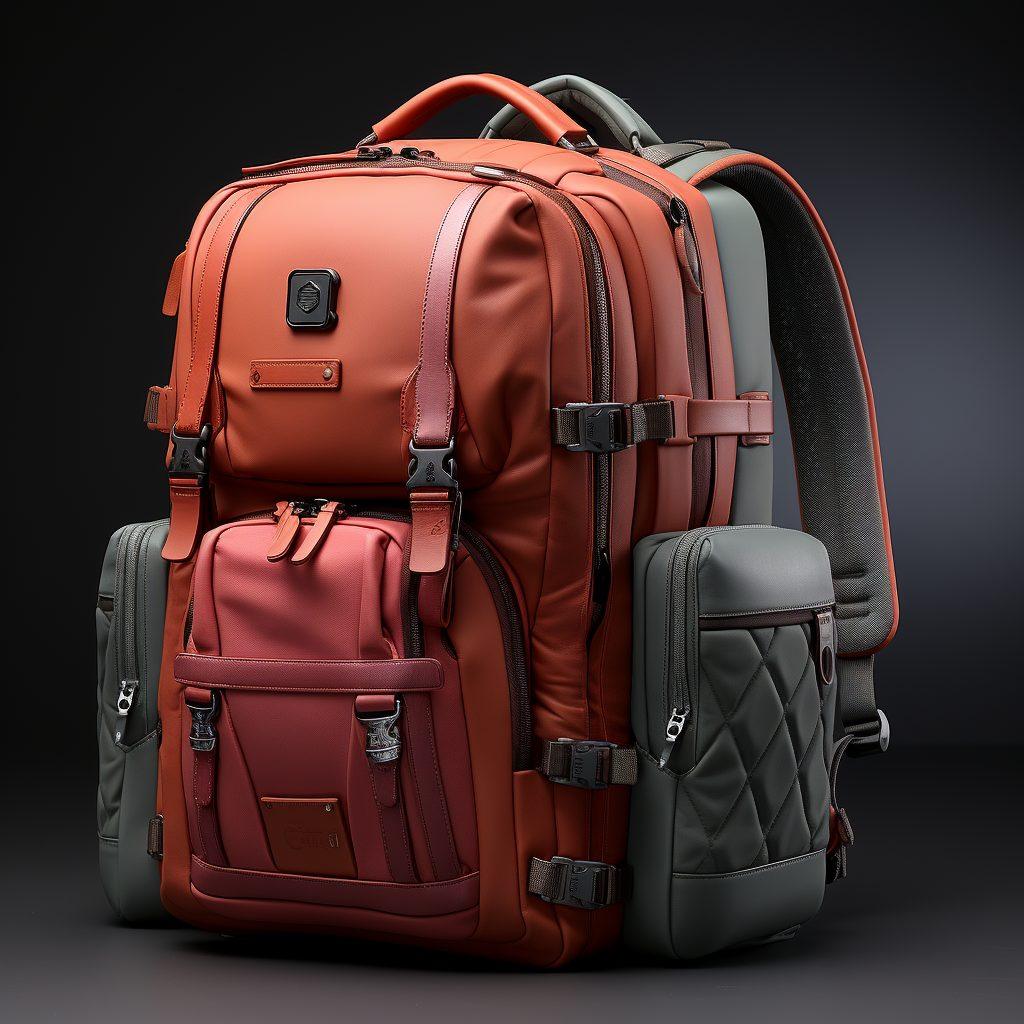
Reward economics reward small objects. A headphone case occupies roughly a tenth of the carton volume of a backpack, weighs a fraction as much, survives transit without special packaging and costs a fraction to produce. Every one of those properties compounds: lower unit cost, lower freight per unit, lower damage rate and a shorter production window. For a campaign with a fixed funding target and a tight delivery promise, that is the most favourable combination available in the physical reward catalogue.
There is a second advantage that matters more than the cost saving. A case is used every day, in public, next to the product it protects. A tote is used occasionally and a backpack is one of several; a case travels with the headphones themselves. For an audio brand building recognition, that repetition is the whole point of merchandise, and it is why a case often outperforms a larger item on perceived value per dollar spent.
The risk is that the category looks easy and is specified casually. A case has to close over a specific object with millimetres to spare, protect it from a crush load in a bag, and survive being opened and closed several thousand times. Those are three genuine engineering requirements compressed into a cheap object, and a campaign that treats the case as an afterthought receives complaints about fit and zip failures in roughly that order.
Positioning matters too. A case works best as an add-on or as a component of a higher tier, not as the headline reward, because its price point does not carry a campaign on its own. Used as intended, it lifts the average pledge value without adding meaningful production risk. Our hub for custom bags for Kickstarter places small-format cases against pouches, organisers and full-size bags on cost and lead time.
Hard case versus soft case: what protection means at this size
Protection at case scale has three distinct meanings and campaigns routinely conflate them. Crush protection resists a compressive load, which is what happens when headphones are inside a backpack under a laptop. Impact protection resists a drop onto a hard surface. Scratch and dust protection resists daily handling. A soft pouch delivers the third and almost none of the first two; a rigid moulded case delivers all three at a higher unit cost and a larger packed volume.
| Construction | Crush | Impact | Unit cost band | Packed volume |
|---|---|---|---|---|
| Fabric pouch with drawcord or flap | Very low | Very low | Lowest | Smallest; ships flat |
| Padded soft pouch, 3-5 mm foam | Low | Low-moderate | Low | Small; compresses in the carton |
| Semi-rigid EVA shell with lining | Moderate-high | Moderate | Mid | Fixed; does not compress |
| Moulded EVA clamshell with tray | High | High | Mid-high | Fixed and bulky per unit |
| Hard shell with die-cut foam | Highest | Highest | Highest | Largest; freight cost rises sharply |
For most audio campaigns the semi-rigid EVA shell is the right default. It survives the realistic failure mode, which is compression inside another bag, it accepts an embossed or printed logo on a flat panel, and it does not require the tooling decision a fully moulded clamshell does. A moulded clamshell is justifiable when the headphones themselves are expensive enough that backers expect a hard case, but it raises freight per unit because the volume cannot be compressed.
Be honest about the claim on the campaign page. Shockproof, waterproof and drop-proof are adjectives that cannot be tested at inspection. State the construction, the shell material and the padding thickness, and if a drop figure is claimed, name the height and the surface. This audience includes people who read specification sheets, and a defensible claim converts better than an inflated one.
One test settles the choice during sampling: press the closed case between both hands with moderate force, then between a hard surface and a forearm. A case that deforms onto the contents at that load provides scratch protection only, whatever the copy says, and a case that holds its shape is doing the job a protection case is bought for.
Sizing to real headphone geometries
Headphones do not pack into a rectangle. Over-ear models fold in at least two different ways, some collapse flat and some rotate, and the folded footprint differs by 20 to 40 mm between the two. Gaming headsets are larger again and often have a boom arm that does not detach. In-ear models are small but usually ship with a charging case that is larger than the earbuds themselves. Sizing to a nominal category rather than to the actual folded object is the single most common cause of a failed case reward.
| Format | Typical folded footprint | Recommended internal size | Notes |
|---|---|---|---|
| In-ear with charging case | Roughly 60 x 45 x 25 mm | 75 x 60 x 35 mm | Small; a mesh pocket for spare tips is worth adding |
| On-ear, folding | Roughly 160 x 140 x 60 mm | 180 x 160 x 75 mm | Check the headband fold direction before cutting |
| Over-ear ANC, flat fold | Roughly 180 x 165 x 70 mm | 200 x 185 x 85 mm | The most common premium target |
| Over-ear ANC, rotating fold | Roughly 170 x 150 x 90 mm | 190 x 170 x 105 mm | Deeper rather than wider; get the fold direction right |
| Gaming headset with boom arm | Roughly 200 x 180 x 100 mm | 220 x 200 x 115 mm | Size for the arm attached or state it must be removed |
Clearance of 8 to 15 mm per dimension is the working range on a semi-rigid shell. Less than that and the case will not close over a headband that has been folded slightly differently; more than that and the contents rattle, which reads as poor fit even when the protection is adequate. The right test is to close the case over the actual product with a cable inside it, because a cable coiled in the same cavity adds several millimetres of effective height.
If the campaign headphones are still in development, freeze the folded geometry before the case is specified. A case designed against a prototype that later changes by 5 mm cannot be corrected after the fabric is cut, and the tooling for a moulded shell cannot be corrected at all. Where the product is not final, a soft pouch with generous clearance is the safer commitment and can be upgraded to a shell on a second run.
Shell materials: EVA, PU, moulded and fabric-covered
Four material routes cover almost every case reward, and the choice sets both the unit cost and the branding options. EVA is the workhorse: a moulded or die-cut ethylene-vinyl acetate shell covered in a fabric or PU skin, offering real crush resistance at a moderate cost. PU-coated fabric over a thin foam gives a softer hand feel and a lower cost with less crush protection. A fabric-covered shell looks and feels premium and accepts embroidery or a woven label, which matters for merchandise.
- EVA shell, fabric covered. The premium-feeling default; accepts embroidery, a woven label or a debossed patch.
- EVA shell, PU skin. Wipes clean and takes a print or deboss well; slightly less premium in hand feel.
- PU fabric over foam. Softest and cheapest; suitable for a pouch-style reward rather than a structured case.
- Neoprene or stretch knit. Cheapest of all, form-fitting, scratch protection only; a good entry-tier add-on.
- Recycled PET fabric shell. Higher material cost; worth it when the campaign's positioning is built on sustainability.
Shell thickness drives both protection and cost. A semi-rigid case typically uses 3 to 5 mm of EVA under a lining and a skin; dropping to 2 mm is visible as a floppy lid and is the specification most likely to be quietly reduced when a quotation is squeezed. State the thickness in the tech pack and have it measured at inspection, because a shell that has been thinned is not a cosmetic defect, it is the failure.
Interior lining deserves one line in the specification. A brushed or tricot lining prevents scuffing on glossy plastic and metal headbands, and it also hides minor interior marks on the case itself. Light-coloured linings show dirt; dark linings hide small items. For a case that will hold black cables and adapters, a mid-tone lining is usually the practical compromise.
Interior: moulded tray, elastic loops and cable storage
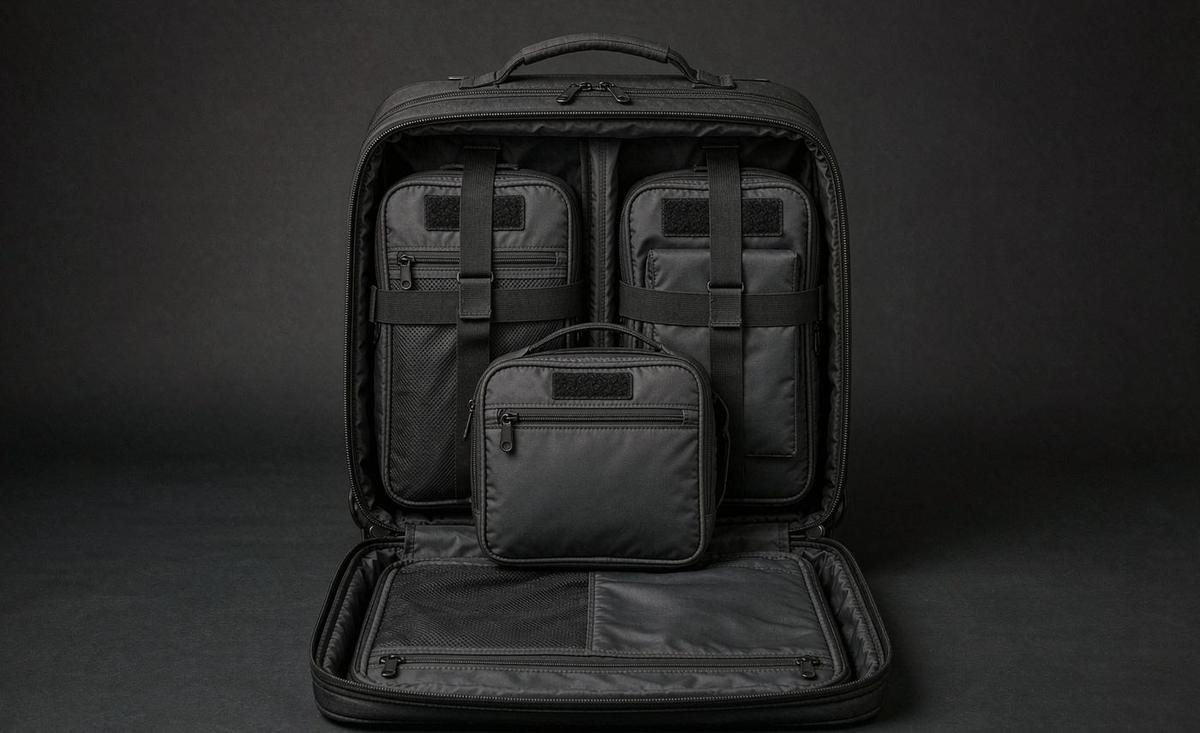
The interior is where a case reward earns its reviews. A bare cavity lets the headphones move and the cable tangle. A moulded tray sized to the folded product holds it in place, and an elasticated retaining strap across the middle keeps it from lifting when the case is opened. Both are inexpensive and both are immediately visible when a backer opens the case for the first time, which is the moment the reward is judged.
Cable and accessory storage is the second decision. A zip mesh pocket on the lid panel is the standard solution and costs one panel plus one zip. Elastic loops in two widths handle a USB-C cable, an analogue lead and an airline adapter. For in-ear products, a small slip pocket for spare tips is worth including because it prevents the most common annoyance with a small case, which is loose tips rattling around the main cavity.
- Moulded or die-cut tray. Holds the folded product in a fixed position; no tooling if die-cut, tooling if moulded.
- Elastic retaining strap. Stops the product lifting when the case opens; a single webbing strap with a snap or hook-and-loop.
- Lid mesh pocket. One zip pocket sized to the supplied cable and adapters.
- Elastic loop panel. Two widths, for a charging cable and a thinner audio lead.
- Slip pocket for small parts. Spare tips, a dongle or a wireless adapter.
Resist over-organising. A case with six interior pockets is harder to assemble, harder to inspect and no more useful than one with three, because the object being stored is a single product with two accessories. The three that matter are the product cavity, one pocket for cables and one place for small parts. Everything beyond that adds cost without adding perceived value.
Zip, carabiner and the carry method
On a case, the zip is the component that fails. It is opened and closed several times a day, often by a corner, and a case with a broken slider is a case with no function at all. Specify a branded or quality generic slider at a stated gauge, a reverse-coil or covered zip where dust matters, and a pull that can be gripped. Then test it: run the zip through 500 to 1,000 open-and-close cycles during sampling, which takes minutes and catches the failure before it reaches 500 backers.
Closure geometry around a curved shell is the technical risk. A zip running around a tight radius on a semi-rigid case will bind if the tape is not eased properly, and binding appears only when the case is packed, not when it is empty and flat on a table. Test the zip on a packed case during the first sampling round, and specify an eased tape or a slightly larger radius if it binds. This is a five-minute check that prevents a large share of field complaints.
Carry method is the last choice and it is cheap to get right. A webbing loop with a press stud attaches the case to a bag strap or a belt; a carabiner clip does the same with more hardware cost and a more technical look; a wrist strap suits a pouch. For an audio campaign, the webbing loop with a stud is usually the best value, and it doubles as a branding position if a woven label is set into it.
Branding surface on a small-format case
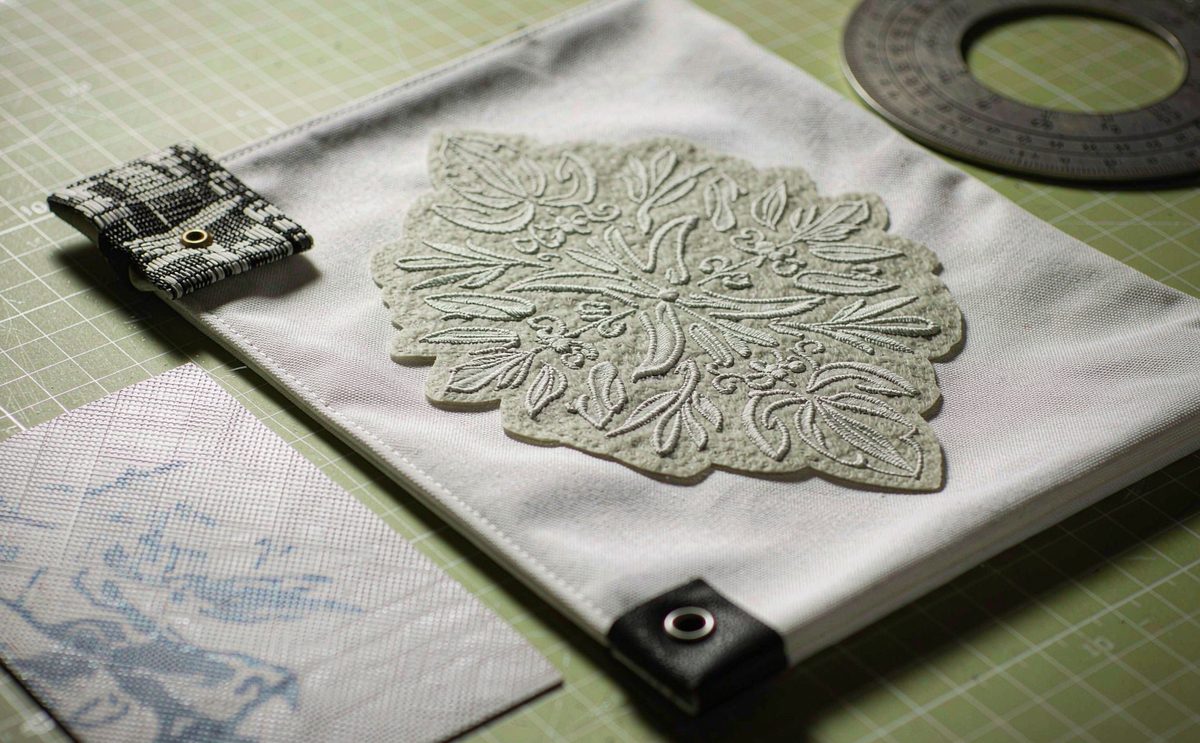
A case offers a small but high-quality branding surface, and the method chosen should follow the shell material. Debossing or embossing works on EVA and PU and looks deliberate. A woven label or an embroidered patch works on a fabric-covered shell and reads as premium. Heat transfer and screen print work on flat panels and are the cheapest options, but they sit on top of the material and wear at the edges first.
| Method | Suitable shell | Durability | Cost impact at 500 pcs |
|---|---|---|---|
| Debossed or embossed logo | EVA, PU skin | High; part of the shell | Tooling plus a small per-unit charge |
| Woven label or embroidered patch | Fabric-covered shell | High | Low-moderate per unit; no tooling |
| Silicone or rubber badge | Most shells | High; tactile | Moderate; tooling for the badge |
| Heat transfer print | Flat PU or fabric panel | Moderate; edges lift first | Lowest; no tooling |
| Metal plate or rivet badge | Structured shells | High; premium perception | Highest per unit |
Placement matters as much as method. A logo on the lid centre is the obvious choice and works for a clamshell case. On a pouch or a slimmer shell, a logo on the lower right corner or on the webbing loop is often more visible in use, because the lid centre is covered by a hand. Decide placement from a photograph of the case being held, not from a flat artwork mock-up.
Keep the artwork simple at this scale. A logo with fine detail loses its legibility below about 25 mm, and a two-colour mark outperforms a four-colour mark on every method except printing. If the campaign has a detailed mark, prepare a simplified lockup for the case and supply it as vector artwork with the RFQ, because artwork that arrives as a raster file adds days to the sampling window.
Colour is the cheapest branding decision available. A black shell with a coloured zip tape, pull and binding reads as designed and costs nothing beyond the trim choice, whereas a second shell colourway is a second 500-pcs commitment under the standard minimum.
Unit cost at 500 pcs and the add-on margin
A case reward is priced as an add-on, and the margin test is different from a headline product. The relevant question is not whether the case carries a campaign on its own, but whether it lifts average pledge value by more than its landed cost. Landed cost means unit cost plus per-unit freight plus platform fee plus a share of the sampling charge, and at 500 pcs the sampling charge amortises to a small figure per unit, which is one reason case rewards are so forgiving.
| Cost element | Typical share | Comment |
|---|---|---|
| Shell, lining and foam | 30-40% | Driven by EVA thickness and shell size |
| Hardware: zip, pull, loop, stud | 15-22% | Zip grade is the line worth funding |
| Labour and assembly | 20-28% | Rises with pocket and loop count |
| Branding | 4-12% | Debossing carries tooling; print does not |
| Packaging per unit | 3-6% | Polybag, header card or printed box |
| Freight allocation per unit | 6-14% | Low for a case; rises sharply for hard shells |
Two levers move the number more than any other. The first is zip grade, which is worth funding because failure is visible and terminal. The second is shell construction: a moulded clamshell can cost 40 to 80 percent more than a die-cut semi-rigid shell of the same size, and most of that difference is tooling and cycle time rather than material. On a first campaign at 500 pcs, the die-cut route gives most of the perceived quality at a much lower commitment.
Volume planning is straightforward at this scale: 500 pcs is one style and one colourway, and a second colour is a second 500-pcs commitment unless the split is declared before the shell material is ordered. Because a case is cheap per unit, campaigns often over-order relative to the add-on take-up rate, so model the add-on at 15 to 35 percent of total backers rather than assuming every backer wants one.
The margin test should be run before the tier is published rather than after it funds: take the add-on price, subtract unit cost, per-unit freight, the platform fee and a share of the sampling charge, and check the remainder is positive at the worst-case take-up rate rather than the expected one.
Bundling the case into higher tiers
The case earns its keep inside a bundle. Pairing it with the product tier lifts the perceived completeness of the pledge; pairing it with a cable organiser and a pouch creates a small kit that reads as considered rather than assembled. Because all three items are small and cheap to freight, a bundle of three often ships for little more than one larger item, which is the strongest argument for bundling in this part of the catalogue.
- Case plus product. The default; the case is presented as the protection the product deserves.
- Case plus cable organiser. Two small items, one carton, a strong perceived-value step for a few dollars of cost.
- Case plus pouch plus strap. A three-piece kit that reads as a system rather than as merchandise.
- Case as a stretch goal. Unlocks a second colourway or a debossed variant without changing the base run.
- Case as a backer survey add-on. Lets backers self-select after funding, which sharpens the quantity estimate.
Use the backer survey to refine quantity. Offering the case as a survey add-on after funding means the final number is closer to demand, and because the case samples and produces quickly, the survey window can often run in parallel with sampling. That is a rare case where a crowdfunding timeline works in the creator's favour, and it is worth designing the tier structure to exploit.
For campaigns that also run a bag tier, keep the specifications consistent rather than duplicated. A case and a laptop bag from the same campaign should share fabric, hardware finish and branding method so the set reads as one product family. Our page on custom laptop bags for Kickstarter covers how the device compartment is specified, which is the piece that differs most from a small case.
Inspection criteria for small-format cases
Pre-shipment inspection runs at AQL 2.5 to ISO 2859-1, and on a case the defect classes should be weighted towards function. Cosmetic marks matter less on an object that will be scratched in a bag within a week; a zip that binds or a shell that does not close matters immediately. Agree the functional criteria in writing before the run begins rather than raising them after cartons are packed.
| Check | Method | Why it matters |
|---|---|---|
| Closes over the real product | Insert the headphones with a cable, close the case | Fit failures are the top complaint and cannot be corrected after packing |
| Zip function under load | Open and close with the case packed | Catches binding around a curved shell |
| Shell thickness | Measured against the tech pack | The specification most quietly reduced when a quote is squeezed |
| Branding placement and adhesion | Checked against the approved artwork and a rub test | A peeling logo on merchandise is a visible failure |
| Interior tray and strap present | Counted and fitted | Missing interior parts are invisible in a carton count |
| Loop and stud strength | Pull test at a stated force | The attachment point that fails in daily use |
A case is small enough that a statistical sample can be checked quickly and thoroughly, which is another advantage of the format. Ask for the inspection report to include photographs of the packed case from two angles, so fit and closure can be judged without opening cartons on arrival. Our page on Kickstarter campaign bag QA and QC sets out how functional criteria are documented alongside standard cosmetic classes.
Two further criteria are worth adding because both fail silently. The first is shell recovery: compress the closed case and confirm it returns to shape, which catches a shell that has been thinned or a foam that has been substituted. The second is interior component count, because a missing mesh pocket or retaining strap is invisible in a carton count and obvious to the backer on day one.
Ask for the report to record the packed weight against the published figure as well. A case that arrives 30 g heavier than advertised is a small discrepancy, but on a reward this visible it is the kind of detail that appears in a review and colours everything else the reader is told.
Timeline from sampling to delivery for a case reward
Case rewards move faster than bag rewards for a structural reason: fewer panels, fewer operations and no harness or load-bearing structure. Sampling runs 6-10 working days for a standard build, and a die-cut semi-rigid case typically sits in the lower half of that band. A moulded clamshell moves into the 12-15 working day complex band because mould parameters have to be set and verified on the production material.
- Send the folded product dimensions and vector artwork with the RFQ. These two items decide whether the first sample is right.
- Approve the construction sample. Geometry, closure and interior layout, before any branding is applied.
- Approve the branded pre-production sample. Logo placement, colour and adhesion checked against the artwork.
- Release bulk after sample approval and deposit. production 35-50 days from that point.
- Book inspection before cartons close. Functional criteria checked at AQL 2.5 to ISO 2859-1.
- Ship FOB Xiamen on T/T 30/70 terms. Confirm the carton and the per-unit freight before the run starts.
The common scheduling error is treating the case as the last item to be specified, then finding it on the critical path. Because it samples quickly, the opposite order works better: specify the case first, get it into production early, and let the longer-lead items catch up. A case reward that is ready before funding closes can even be shown as a physical sample in a late campaign update, which is a persuasive thing to publish.
For campaigns planning a retail re-order after the campaign, the case is the easiest item to repeat. The die or tooling exists, the artwork is approved and the material is known, so a second run quotes quickly and samples in a shorter window. That makes a case one of the few rewards that improves economically on the second order rather than simply repeating.
Scope a headphone case reward
Send the folded product dimensions, preferred shell construction, branding method and target quantity. You get construction options, a unit cost band at three volumes and the sampling window within one business day. Write to service@junyuanbags.com or use the quote form.
- Minimum order quantity
- 500 pcs per style / colourway
- Sampling
- 6-10 working days (12-15 for complex builds)
- Bulk production
- 35-50 days after deposit + approved pre-production sample
- Inspection
- AQL 2.5 to ISO 2859-1
- Trade term
- FOB Xiamen
- Payment
- T/T 30/70
- Capacity
- 200,000 pcs per month
- Production floor
- 4,950 m2, SGS-verified
- Campaigns supported
- 20+ crowdfunding campaigns
Frequently Asked Questions
Should a Kickstarter headphone case be hard or soft?
A semi-rigid EVA shell is the right default for most audio campaigns. It resists the realistic failure mode, which is compression inside another bag, accepts a debossed or embroidered logo and needs no tooling. A soft pouch is cheaper and ships flatter but gives almost no crush protection; a moulded clamshell protects best and costs 40 to 80 percent more.
How much clearance should a headphone case have?
Eight to fifteen millimetres on each dimension over the folded product. Below that the case will not close over a headband folded slightly differently; above that the contents rattle and the fit reads as poor. Test by closing the case over the actual product with a cable coiled inside, because the cable adds effective height.
Which measurements do I need before specifying a headphone case?
The folded footprint in millimetres, front, side and top views, plus the fold direction. Over-ear models fold flat or rotate, and the two differ by 20 to 40 mm. Gaming headsets are larger and a boom arm may not detach, so state whether the published size assumes the arm attached or removed.
What shell thickness should a headphone case use?
Three to five millimetres of EVA under a lining and a skin. Dropping to 2 mm produces a floppy lid and is the specification most likely to be quietly reduced when a quotation is squeezed. State the thickness in the tech pack and have it measured at inspection, because a thinned shell is not a cosmetic defect.
How is zip quality specified on a small case?
State the slider gauge and brand or grade, specify a reverse-coil or covered zip where dust matters, and require a cycle test of 500 to 1,000 open-and-close operations during sampling. Also test the zip on a packed case, because binding around a curved shell only appears when the case is full.
Which branding method works best on a headphone case?
Debossing on an EVA or PU shell and a woven label or embroidered patch on a fabric-covered shell both perform well. Heat transfer is cheapest and wears at the edges first. Keep the artwork simple: fine detail loses legibility below about 25 mm, so use a simplified lockup supplied as vector artwork.
What does a headphone case cost to produce at 500 pcs?
Shell, lining and foam typically account for 30 to 40 percent of unit cost, hardware 15 to 22 percent, labour 20 to 28 percent and branding 4 to 12 percent. A moulded clamshell costs 40 to 80 percent more than a die-cut semi-rigid shell of the same size. Ask for three volumes before fixing the add-on price.
Can a headphone case be offered as an add-on reward?
Yes, and it is usually the best use of the format. It lifts average pledge value without adding production risk, and it can be offered in the backer survey after funding so the final quantity matches demand. Model take-up at 15 to 35 percent of backers rather than assuming everyone wants one.
How long does a headphone case take from sample to delivery?
Sampling runs 6-10 working days for a standard die-cut build and 12-15 working days for a moulded clamshell. production 35-50 days after deposit and approved pre-production sample. Because it samples quickly, specify the case early rather than treating it as the last item.
What interior features should a headphone case include?
A moulded or die-cut tray holding the folded product, an elastic retaining strap, a lid mesh pocket for the cable and adapters, and a slip pocket for small parts such as spare tips. Three storage positions are enough; additional pockets add assembly time and inspection criteria without adding perceived value.
Which checks belong in a headphone case inspection?
Closure over the real product, zip function with the case packed, shell thickness against the tech pack, branding placement and adhesion, interior tray and strap presence, and loop or stud strength. Run at AQL 2.5 to ISO 2859-1 and agree the functional criteria in writing before the run starts.
Is a waterproof headphone case claim defensible?
Rarely. Water-resistant is honest for a coated shell with a covered zip. Waterproof requires welded seams and a water-resistant closure throughout, which moves sampling into the 12-15 working day band and raises unit cost substantially. For a case carried inside another bag, water-resistant is the claim that matches real use.
People Also Ask
Are headphone cases a good Kickstarter merchandise reward?
Yes. They are small, cheap to freight, quick to sample and used daily next to the product, so the logo is seen repeatedly. The risk is casual specification: fit and zip failures are the two complaints that follow a badly specified case.
How do I know the case will fit my headphones?
Measure the folded product in millimetres from three views and add 8 to 15 mm clearance. Test the sample by closing it over the actual product with a cable inside, since a coiled cable adds effective height.
Is a moulded hard case worth the extra cost?
Only when the headphones are expensive enough that backers expect one. It costs 40 to 80 percent more than a die-cut semi-rigid shell and increases freight, because the packed volume cannot be compressed.
What is the cheapest branding option for a case?
Heat transfer print on a flat panel. It needs no tooling and costs least, but it sits on the surface and wears at the edges first. Debossing costs more upfront and lasts longer because it becomes part of the shell.
Should the case be a separate tier or part of a bundle?
Part of a bundle or a survey add-on. Its price point does not carry a campaign alone, but it lifts average pledge value and bundles efficiently with a cable organiser or pouch in the same carton.
Can I re-order the case after the campaign for retail?
Yes, and it is the easiest reward to repeat. The die or tooling exists, artwork is approved and materials are known, so a second run quotes faster and samples in a shorter window than the first.