Kickstarter Power Bank Bags: EDC Organisers for Gadget Backers
A power bank pouch is the archetypal everyday carry reward: small, specific, used daily and easy to justify at a low pledge. It also carries one requirement most bag categories do not, which is that the object inside it is a lithium battery with its own documentation. At MOQ 500 pcs per style and colourway, sampling 6-10 working days and production 35-50 days, an EDC pouch is a fast, low-risk reward once the battery question is settled before the RFQ.
- Where a power bank pouch sits in an EDC reward line
- What gadget backers actually carry
- Sizing to power bank form factors
- Padding, ventilation and battery safety considerations
- Cable pass-through and internal routing
- Materials: shell, lining and anti-scratch interiors
- Closures, grab handles and attachment points
- Unit cost and the add-on economics at 500 pcs
- Compliance and documentation for battery-adjacent rewards
- Sampling and inspection for a small tech pouch
- Positioning the EDC tier beside a laptop bag
Where a power bank pouch sits in an EDC reward line
Everyday carry is not a product category so much as a behaviour. The audience organises, photographs and discusses what is in their pockets and bags, and they buy small items repeatedly rather than large items occasionally. A power bank pouch sits at the centre of that behaviour because the power bank itself is the single most carried gadget accessory, and it is almost always carried loose.
That makes the pouch a reward with an unusually clear value proposition. It does not ask the backer to imagine a use case; it organises an object they are carrying today. Rewards with a pre-existing use case convert better than rewards that require the backer to construct one, and this is why small EDC items routinely outperform larger, more expensive items on conversion rate even at a fraction of the pledge value.
The commercial role is usually as a companion rather than a headline. A pouch at 19 to 39 USD does not fund a campaign, but it lifts the average pledge, adds a second physical item to the line-up and makes a larger tier feel complete. It is also the cheapest way to give a campaign a second physical SKU without a second large production commitment.
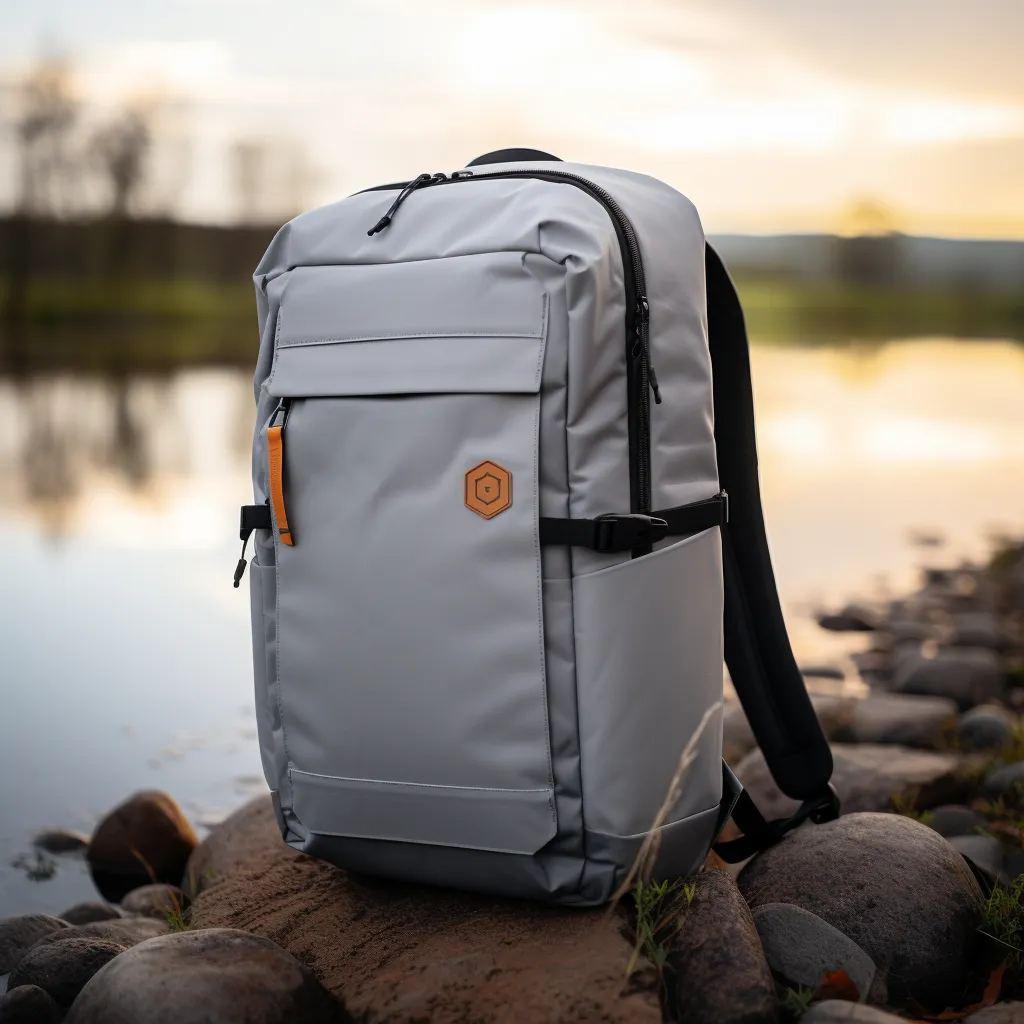
One structural advantage deserves emphasis: the pouch shares materials and branding with the rest of the line. Fabric, zip finish, webbing and logo method can be common across a bag, a pouch and an organiser, which means a single material order and a single branding setup serve three rewards. Our hub for custom bags for Kickstarter sets out how a reward family is planned around one material specification.
What gadget backers actually carry
Designing an EDC pouch starts with an inventory of what the audience carries, and that inventory is remarkably consistent. A power bank, two cables, a wall charger, a pair of earbuds in a small case, a USB-C hub or dongle, a memory card or a small card reader, a pen or a stylus, and sometimes a small multitool. Eight items, of which one is heavy and rectangular, two are floppy and five are small and easy to lose.
| Item | Typical size | Storage need | Design consequence |
|---|---|---|---|
| 10,000 mAh power bank | Roughly 140 x 70 x 15 mm | Padded main compartment | Sizes the pouch; the heaviest item |
| 20,000 mAh power bank | Roughly 160 x 80 x 22 mm | Padded main compartment, deeper | Requires 20-30 mm more internal depth |
| USB-C cable, coiled | Coil roughly 60 mm diameter | Elastic loop | Needs a loop, not a pocket |
| Wall charger with folding pins | Roughly 50 x 50 x 30 mm | Deep loop or small pocket | Bulky for its footprint |
| Earbud case | Roughly 60 x 45 x 25 mm | Mesh or slip pocket | Should not share with metal items |
| USB-C hub or dongle | Roughly 60 x 30 x 12 mm | Slip pocket | Flat; a loop will lose it |
| Memory card and reader | Small and flat | Slip pocket | Needs a flat home, not depth |
| Pen, stylus or small tool | Long and thin | Narrow loop | One loop is enough |
Notice that only one item in the list needs padding and only one needs depth. That is the defining characteristic of the category and it should drive the design: a pouch that is uniformly padded is heavier and bulkier than it needs to be, while a pouch that pads only the battery compartment and organises everything else is lighter, cheaper and better to use.
The second observation is that five of the eight items are flat and small. Flat slip pockets are therefore more valuable per unit of cost than deep ones, and a design with two slip pockets and three loops will serve the inventory better than one with five loops. This is the opposite of the instinct most first-time creators have, which is to specify loops everywhere.
Write the inventory down before designing anything, because it is the only document that prevents over-specification. A pouch designed against a written list of eight items has eight storage positions; one designed against a general sense of what people carry has fourteen and none of them in the right place.
Sizing to power bank form factors
Power banks come in two dominant form factors and the difference between them is enough to decide the pouch. A 10,000 mAh bank is typically near 140 x 70 x 15 mm and weighs around 200 to 240 g. A 20,000 mAh bank is typically near 160 x 80 x 22 mm and weighs around 350 to 420 g. A pouch sized to the smaller will not close over the larger, and a pouch sized to the larger wastes volume for everyone else.
The decision is a campaign positioning question rather than a design one. If the campaign is selling a power bank, the pouch is sized to that bank and the question is settled. If the pouch is a universal organiser, size to the larger common form factor and state it plainly: fits power banks up to 165 x 85 x 25 mm. A stated upper dimension converts better than a vague claim, because the backer can measure their own bank against it in seconds.
Clearance of 5 to 10 mm per dimension is right here. A power bank is a rigid object with square corners, unlike a cable, so it either fits or it does not; there is no compression to exploit. Too much clearance lets it rattle inside the compartment, which is audible and reads as poor fit. Specify the internal compartment in millimetres and have it measured on a drawn sample at inspection.
Weight distribution is the detail creators miss. A 400 g power bank in a pouch with a single webbing loop puts a concentrated load on one attachment point, and on a strap that load swings. A wider loop, a bar-tacked attachment and a pouch shape that keeps the bank flat against the body all reduce that. State the bar-tack count at the attachment in the operation sheet, because it is cheap to add and is the first thing to fail.
Padding, ventilation and battery safety considerations
A pouch for a lithium battery has requirements a general organiser does not. The battery should be held so it cannot be crushed, it should not be pressed against hard or sharp objects, and it should not be sealed into an unventilated space where heat has nowhere to go. None of these requirements are exotic and all of them are satisfied by ordinary construction choices made deliberately.
- Padded battery compartment. 3-5 mm of closed-cell foam on the faces of the compartment, not necessarily throughout the pouch.
- Separation from sharp objects. A tool or a set of keys should not be able to press into the battery compartment.
- Ventilation. Do not specify a fully sealed, non-breathable laminate around the battery; allow an air path at the closure.
- No metal-on-terminal contact. Keep the battery out of the same pocket as coins, tools or spare screws.
- Removability. The bank must come out easily for charging and for air travel, so a deep slot is the wrong shape.
Be careful about the word ventilation. A pouch does not need vents or mesh panels, and adding them invites dust and looks odd. What is required is simply that the pouch is not a sealed laminated enclosure: a fabric shell with a zip closure breathes adequately for normal use. The requirement is worth one line in the tech pack and no design change at all.
Heat is the reason the requirement exists. A power bank charging a phone while inside a bag generates warmth, and a pouch that traps that warmth against a non-breathable laminate is a poor specification. Fabric shell, fabric lining, a zip that can be left partially open: that is sufficient, and it is what a normal pouch already is.
Cable pass-through and internal routing
The feature that turns a power bank pouch into a designed product rather than a container is cable routing. A pass-through grommet or a short channel that lets a cable run from the battery compartment to the outside means a phone can be charged from a bank that stays in the pouch. It is a small component, it costs a fraction of a dollar, and it is the detail most likely to be mentioned positively in a review.
Two arrangements are common. A rubber or plastic grommet set into the shell with a reinforced surround is the cleaner look and protects the cable from the fabric edge. A simple bound slit in the shell is cheaper and works, but it frays over time and should be reinforced with binding or a bar-tack at each end. Specify whichever suits the price point and test it with the thickest cable the kit includes, not the thinnest.
Internal routing matters as much as the exit. A cable from the battery to the outside should run along a channel rather than across the pouch interior, so it does not tangle with the other items when the pouch is opened. One webbing bridge or a bound channel running to the grommet is enough, and it is a single operation in assembly.
If the campaign also offers a bag, consider whether the pouch should integrate with it. A pass-through that lines up with a bag's internal cable channel is a genuinely integrated system, and it is the kind of detail that earns coverage in EDC communities. It does require the two specifications to be developed together, so decide during the design phase rather than after both are sampled.
Materials: shell, lining and anti-scratch interiors
The material specification for a pouch is driven by what the contents do to the interior. A power bank has a hard plastic or aluminium shell with square corners; a phone cable has a metal connector; a multitool has edges. All three abrade a cheap lining within weeks, which is why the lining choice matters more here than it does on a tote or a pouch for soft items.
- Shell. 300D to 600D polyester or nylon with a light PU coating; heavier denier adds structure at low cost.
- Lining. A brushed tricot or a smooth polyester that resists scuffing from metal connectors and square corners.
- Padding. 3-5 mm closed-cell foam on the battery compartment faces only, not throughout.
- Webbing. A stated width, typically 20-25 mm for a loop on a pouch of this size.
- Binding. Bound internal seams, because raw edges inside a small pouch look unfinished and fray.
Lining colour is a practical decision rather than an aesthetic one. A dark lining hides wear but hides small dark items such as a memory card or a dongle; a light lining makes small items findable but shows scuffing. A mid-tone lining with a light-coloured base panel is a reasonable compromise, and it is worth deciding consciously because it affects daily usability.
Abrasion resistance is the one test worth running at fabric selection. ISO 12947-2 Martindale at a cycle count appropriate to the stated denier is the standard method, and a lining that fails early is a visible quality problem within a month. It costs little to specify and prevents a category of review that no amount of branding recovers.
Closures, grab handles and attachment points
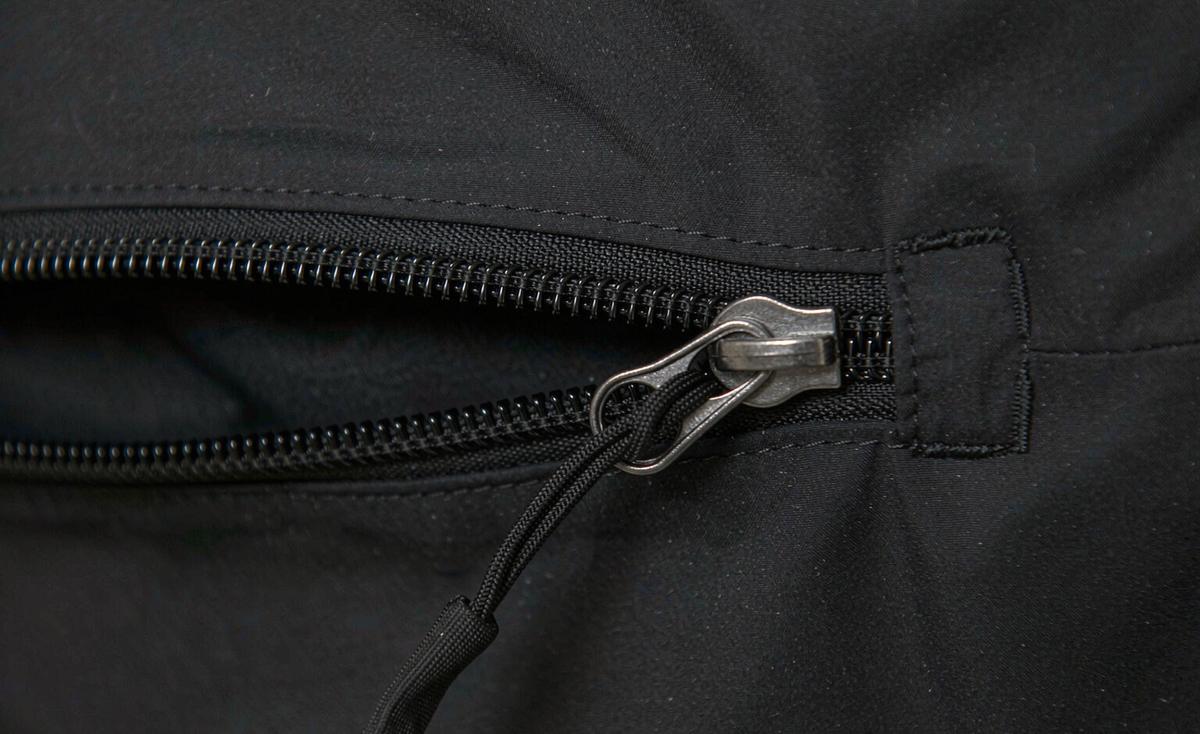
On a pouch used several times a day, the closure is the most-touched component and the one that fails. A zip is the default and should be a quality generic or branded slider at a stated gauge with a pull that can be gripped. A hook-and-loop flap is cheaper and faster but wears, collects lint and is noisy, which matters in an office or on a call. A magnetic or snap closure is quieter than hook-and-loop and weaker than a zip.
| Closure | Durability | Noise and feel | Cost impact |
|---|---|---|---|
| Zip with a branded pull | Highest | Quiet; positive feel | Moderate; worth funding |
| Zip, reverse-coil covered | High | Quiet; sheds dust | Moderate-high |
| Hook-and-loop flap | Moderate; wears and collects lint | Noisy in quiet settings | Lowest |
| Snap or magnetic closure | Moderate | Quiet; light feel | Low-moderate |
| Elasticated opening | Low-moderate | Silent; casual feel | Lowest |
Attachment determines whether the pouch is carried at all. A webbing loop with a press stud is the most useful because it fits a bag strap, a belt or a harness without removing anything. A carabiner clip reads as more technical and costs more. A plain grab handle suits a pouch that lives inside a bag rather than outside it. For most campaigns the webbing loop with a stud is the best value and doubles as a branding position.
Whatever the attachment, specify the reinforcement. A loop carrying 400 g of power bank on a moving strap needs a bar-tacked root and, ideally, the webbing carried into a seam rather than stitched onto a face panel. Write the bar-tack count into the operation sheet; it is the cheapest durability specification available and the most likely to be omitted when a quotation is squeezed.
If the pouch is designed to live inside a bag rather than on a strap, the attachment can be simplified to a grab handle, which costs less and removes a failure point. Decide the carry mode first and the closure and attachment follow from it.
Unit cost and the add-on economics at 500 pcs
A pouch is priced as an add-on and the economic test is whether it lifts average pledge value by more than its landed cost. Because the unit cost is low and the packed volume is small, the answer is usually yes, provided the specification is disciplined. The two cost drivers at this scale are the number of storage elements and the hardware grade, not the fabric.
| Cost element | Typical share | Note |
|---|---|---|
| Shell, lining and foam | 22-30% | Foam only on the battery compartment keeps this low |
| Zip, pull and hardware | 14-22% | The line worth funding; failure is visible |
| Elastic, webbing and trim | 10-16% | Quality elastic and bar-tacked webbing |
| Labour and assembly | 26-36% | Driven by loop and pocket count |
| Branding | 4-10% | Print cheapest; woven label marginally more |
| Packaging per unit | 3-7% | Polybag or a printed header card |
Labour again dominates, and the same discipline applies: design the interior against the inventory and stop. Adding two slip pockets and one loop beyond what the kit needs can add 10 to 20 percent to unit cost while adding almost nothing to perceived value. The pockets that matter are the battery compartment, one mesh pocket, two slip pockets and three loops.
Volume planning is straightforward but worth stating: 500 pcs is one style and one colourway. A second colour is a second commitment unless the split is declared before the fabric order. Because the pouch is cheap and samples quickly, a backer survey add-on offered after funding is a good way to sharpen the quantity estimate before bulk release.
The add-on test should also account for the survey effect. Offering the pouch as a backer survey add-on after funding converts at a lower rate than offering it during the campaign, but it produces an accurate quantity, and on an item this cheap an accurate quantity is usually worth more than a higher conversion rate.
Freight deserves a specific note because it flatters this format. A pouch ships flat and light, so the incremental freight of adding it to an existing shipment is small, and a bundle of a bag and a pouch often costs barely more to ship than the bag alone.
Compliance and documentation for battery-adjacent rewards
This is the section that separates a power bank pouch from every other small reward. If the campaign ships a lithium battery as part of a reward, the battery itself carries documentation requirements that sit entirely outside the bag specification: UN 38.3 for transport, IEC 62133 for cell and pack safety, and in many markets a mark such as CE, UKCA or FCC depending on what the device contains.
The bag cannot satisfy any of those. It is worth saying plainly because campaigns do occasionally assume that a pouch marketed for battery carry carries some certification of its own. It does not, and no bag specification does. What the pouch can do is support safe carriage: padded separation, no metal contact, removability for charging and for air travel.
- Battery documentation. Held by the battery supplier, not by the bag programme; obtain it before the tier is published.
- Transport classification. Lithium cells ship under dangerous-goods rules; confirm how the fulfilment partner handles them.
- Country marks. CE, UKCA, FCC or others apply to the device, not to the pouch.
- Pouch claims. State construction and fit only; do not imply the pouch is certified for battery carriage.
- Lead time. Battery sourcing and certification have their own calendar, separate from the 35-50 day bag run.
If the campaign ships the pouch without a battery, which is the more common and far simpler case, none of this applies to the bag programme at all. The pouch is then an ordinary soft goods item, and the only obligations are the general product ones any reward carries. Decide early which model the campaign is using, because the answer changes the documentation workload substantially.
Either way, plan the calendars separately. Battery sourcing and certification run on their own timetable and are frequently longer than the bag programme's 35-50 day bulk window. A campaign that assumes the two will finish together usually ends up shipping the pouch first and the battery months later, which is an avoidable disappointment.
Sampling and inspection for a small tech pouch
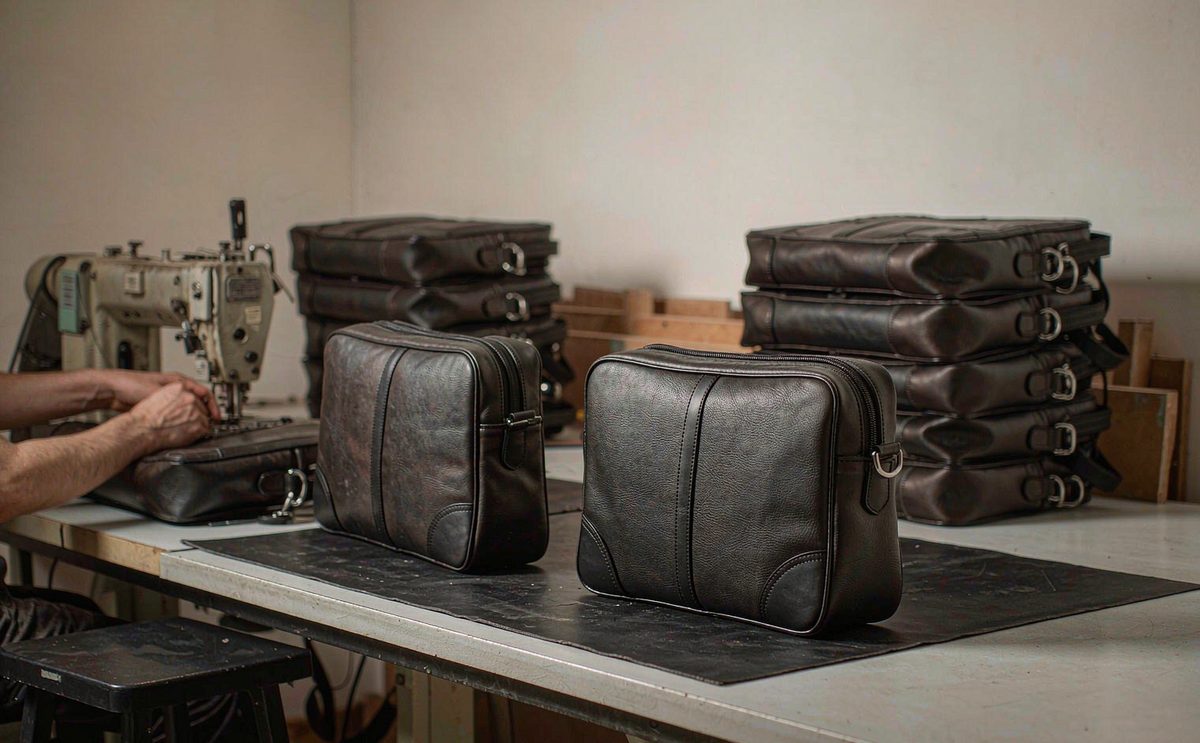
Sampling runs 6-10 working days for a standard build, and a pouch with a padded compartment and a grommet sits comfortably inside that band. Complex builds take 12-15 working days, but a pouch rarely qualifies unless it involves welded construction or a moulded element. That speed makes the pouch a useful first item to sample, because it establishes fabric, hardware and branding decisions that other items in the line can then share.
- Fit the actual power bank. The largest one the campaign claims, inserted and removed several times.
- Check the grommet with the thickest cable. The heaviest cable in the kit, not a thin phone lead.
- Test zip function when packed. An empty pouch closes smoothly; a full one reveals binding.
- Check the attachment under load. Hang the loaded pouch from a strap and move it; the load should not swing loose.
- Confirm padding on the battery faces. Measured against the tech pack, since padding is quietly reduced.
- Confirm branding placement and adhesion. Checked against the approved artwork and a rub test.
Pre-shipment inspection runs at AQL 2.5 to ISO 2859-1 and the functional criteria should be agreed before the run. On a pouch the criteria are quick to check and worth checking properly, because a low unit cost does not reduce the cost of a complaint: the backer pays the same shipping either way and the campaign carries the reputational cost. Our page on Kickstarter campaign bag QA and QC sets out how functional criteria are documented alongside standard cosmetic classes.
One check is peculiar to this category and easy to miss: the grommet surround. A grommet set into a shell without reinforcement tears out under cable movement, and it tears after weeks rather than days, which means it surfaces as a review rather than as a return. Specify a reinforced surround and require a pull test at inspection.
Positioning the EDC tier beside a laptop bag
EDC rewards and device-carrying rewards serve the same backer at different scales, and the most effective campaigns run both rather than choosing. A laptop bag solves the big-organisation problem; a pouch solves the small one; the backer who owns the first immediately wants the second. That adjacency is why pouch attach rates inside campaigns that already sell a bag tend to be higher than standalone pouch campaigns.
- Share the material specification. One fabric, one hardware finish and one branding method across the family.
- Publish the upper battery dimension. Fits power banks up to 165 x 85 x 25 mm converts better than a vague claim.
- Show the pouch attached to the bag. Integration is what earns coverage in EDC communities.
- Offer it as a survey add-on. Sharpen the quantity estimate after funding before bulk release.
- Photograph the approved sample. Stitch line, zip and panel shape are all visible at this scale.
- State what it does not do. No certification claims for battery carriage.
For campaigns building the larger item, our custom laptop bags for Kickstarter page covers how the device compartment is specified, and the custom cable organiser bags for Kickstarter route is the natural third item in the same family. Three small and medium items sharing one material specification is usually a stronger line-up than one large item with a stretch goal attached.
Finally, keep the delivery promise honest. production 35-50 days after deposit and approved pre-production sample, and a pouch is usually the first item ready rather than the last. Publishing a realistic sequence, pouch first and bag second if that is how the calendar falls, sets expectations that the campaign can actually meet.
Scope an EDC pouch reward
Send the largest power bank dimensions, the carry inventory, branding method and target quantity. You get construction options, a unit cost band at three volumes and the sampling window within one business day. Write to service@junyuanbags.com or use the quote form.
- Minimum order quantity
- 500 pcs per style / colourway
- Sampling
- 6-10 working days (12-15 for complex builds)
- Bulk production
- 35-50 days after deposit + approved pre-production sample
- Inspection
- AQL 2.5 to ISO 2859-1
- Trade term
- FOB Xiamen
- Payment
- T/T 30/70
- Capacity
- 200,000 pcs per month
- Production floor
- 4,950 m2, SGS-verified
- Campaigns supported
- 20+ crowdfunding campaigns
Frequently Asked Questions
What size should a Kickstarter power bank pouch be?
Size it to the largest bank the campaign claims. A 10,000 mAh bank is typically near 140 x 70 x 15 mm and a 20,000 mAh bank near 160 x 80 x 22 mm. Allow 5 to 10 mm clearance per dimension, since a power bank is rigid and cannot be compressed into a tight compartment.
Should the whole pouch be padded or only the battery compartment?
Only the battery compartment. Three to five millimetres of closed-cell foam on the compartment faces is enough, because only one item in a typical EDC inventory needs impact protection. Padding throughout makes the pouch heavier and bulkier without improving the experience.
Does a power bank pouch need ventilation?
It needs to avoid being a sealed laminated enclosure, which any fabric shell with a zip closure already achieves. Do not specify vents or mesh panels; they invite dust. The concern is that a bank charging a phone generates warmth that should not be trapped against a non-breathable laminate.
Can a bag be certified for carrying lithium batteries?
No. UN 38.3 and IEC 62133 apply to the cell and pack and are held by the battery supplier. A pouch can support safe carriage through padded separation, no metal contact and removability, but it should not imply certification for battery carriage on the campaign page.
What is a cable pass-through and is it worth specifying?
A grommet or reinforced slit letting a cable run from the battery compartment to the outside, so a phone charges while the bank stays in the pouch. It costs a fraction of a dollar and is the detail most often praised in reviews. Test it with the thickest cable in the kit.
Which closure is best for an EDC pouch?
A zip with a grippable pull. It is the most durable and quietest option, which matters in offices and on calls. Hook-and-loop is cheapest but wears, collects lint and is noisy; magnetic closures are quiet but weaker. Specify the gauge and test the zip with the pouch packed.
What does a power bank pouch cost to produce at 500 pcs?
Labour is the largest line at 26 to 36 percent, driven by loop and pocket count. Shell, lining and foam run 22 to 30 percent, zip and hardware 14 to 22 percent, and branding 4 to 10 percent. Design the interior against the real inventory and stop, because extra pockets add cost without adding value.
How should the attachment point be specified?
A webbing loop with a press stud, 20-25 mm wide, with a stated bar-tack count at the root and the webbing carried into a seam rather than stitched onto a face panel. A 400 g bank on a moving strap puts real load on that point, and it is the first thing to fail if unreinforced.
What lining should a power bank pouch use?
A brushed tricot or a smooth polyester that resists scuffing from metal connectors and square corners. All three of the most carried items abrade a cheap lining within weeks. A mid-tone lining with a light base panel balances wear visibility against being able to find small dark items.
Should the pouch be a standalone reward or an add-on?
Usually an add-on or a bundle component. At 19 to 39 USD it does not fund a campaign, but it lifts average pledge value and attach rates are higher inside campaigns that already sell a bag. A survey add-on after funding also sharpens the quantity estimate before bulk release.
Which checks belong in a power bank pouch inspection?
Fit with the largest claimed bank, grommet function with the thickest cable, zip function when packed, attachment under load, padding thickness on the battery faces and branding adhesion. Add a pull test on the grommet surround, because it tears after weeks and surfaces as a review rather than a return. Run at AQL 2.5 to ISO 2859-1.
How long does a power bank pouch take from sample to delivery?
Sampling runs 6-10 working days and a pouch with a padded compartment and a grommet sits inside that band. production 35-50 days after deposit and approved pre-production sample. Battery sourcing, if the campaign ships one, runs on its own longer calendar and should be planned separately.
People Also Ask
Will my 20,000 mAh power bank fit an EDC pouch?
It will if the internal compartment is at least 170 x 90 x 32 mm. Check the published upper dimension on the campaign page rather than the capacity claim, since 20,000 mAh banks vary by 10 to 20 mm between brands.
Do I need special certification to sell a power bank pouch?
No, if you ship the pouch alone. If you ship a battery with it, UN 38.3 and IEC 62133 apply to the battery and are held by the battery supplier. The pouch carries no certification of its own.
Is a cable pass-through worth the extra cost?
Yes. It costs a fraction of a dollar, makes the pouch feel designed rather than generic, and is the feature most often mentioned positively in EDC reviews. Reinforce the surround so it does not tear out.
Should the pouch pad the whole interior?
No. Pad the battery compartment faces with 3 to 5 mm of closed-cell foam and organise the rest. Uniform padding adds weight and bulk for no benefit, because only the battery needs impact protection.
Why do EDC pouches fail at the attachment loop?
Because a 400 g rigid bank puts a swinging point load on one stitch line. Specify a bar-tacked root with the webbing carried into a seam, and state the bar-tack count in the operation sheet.
Should I sell the pouch alone or with a bag?
With a bag, if you have one. Attach rates are higher when the backer already owns the larger item, and sharing fabric and branding across the family keeps the material order and setup simple.