Custom EDC Bags for Crowdfunding: Everyday Carry Niche Strategy
Everyday carry is a behaviour before it is a category, and that is why it behaves differently on a crowdfunding page. The audience compares hardware, stitching and pocket logic in detail, buys small items repeatedly and reviews publicly. A custom EDC bag reward works when the specification matches that scrutiny and the tier structure matches that buying pattern. At MOQ 500 pcs per style and colourway, sampling 6-10 working days and production 35-50 days, the niche rewards precision over scale.
- What EDC means as a campaign category
- Why the EDC audience behaves differently
- Formats in the EDC space
- Sizing an EDC bag: volume, silhouette and pocket logic
- Materials and hardware the EDC audience inspects
- Modular and attachment systems
- Pricing and tiering an EDC reward
- Photography and content for an EDC campaign
- Production planning for small-format EDC bags
- Community, updates and post-campaign re-orders
- An EDC campaign checklist
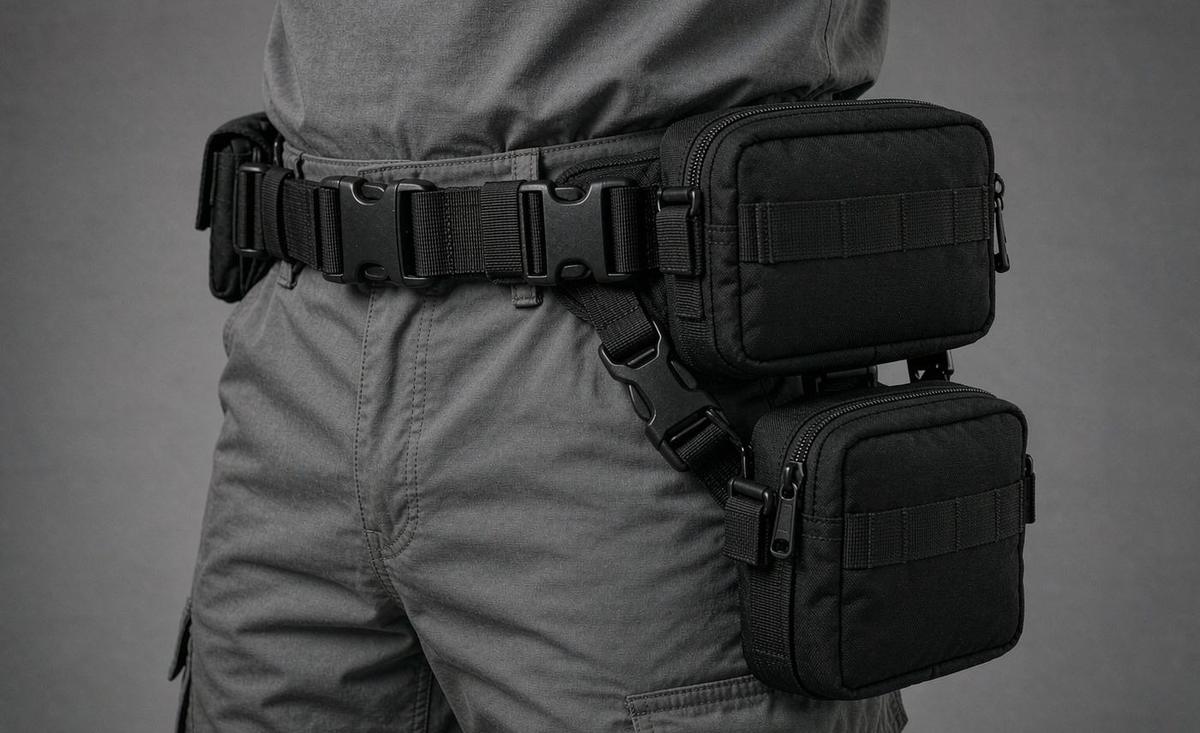
What EDC means as a campaign category
Everyday carry describes a behaviour rather than a product. It is the practice of curating and carrying a small set of objects deliberately, and the community around that practice is unusually engaged: it photographs what it carries, discusses pocket layout and hardware choice, and reads specification sheets for pleasure. A bag sold into that community is not competing on price or on capacity; it is competing on whether the design decisions are defensible.
That has a direct consequence for how a campaign is built. A general-purpose bag campaign wins on breadth: many sizes, many colours, a lifestyle promise. An EDC campaign wins on specificity: one format executed properly, with every decision explainable. A creator who publishes why a pocket is where it is, why a zip gauge was chosen and why a panel is constructed a particular way is speaking the audience's language, and that is worth more than an extra colourway.
The second defining feature is scale. EDC items are small: slings, pouches, organisers and mini backpacks in the 2 to 14 L range. That keeps unit cost and freight low, which lowers the funding target a campaign needs and lowers the risk if the campaign underperforms. It also means the 500-pcs minimum is a smaller absolute commitment than it is in the backpack category, which makes the niche accessible to a first-time creator.
None of this makes EDC an easy category. The audience is the most specification-literate in bags, it notices a downgraded zip immediately, and it publishes its findings. Campaigns that treat EDC as a styling exercise rather than a specification exercise get found out in the first community review. If the format question is still open, our crowdfunding bag guide sets out how pouches, slings and small backpacks compare on cost, lead time and audience.
Why the EDC audience behaves differently
Three behaviours distinguish this audience and each one has a production implication. First, it buys repeatedly rather than occasionally, so the lifetime value of a satisfied backer is high and the cost of disappointing one is higher. Second, it reviews in public and in detail, often with photographs of stitching and hardware, which means quality problems are documented rather than merely complained about. Third, it asks questions before pledging and expects them answered in the comments or in an update.
| Behaviour | What it means | Campaign response |
|---|---|---|
| Buys repeatedly | High lifetime value per backer | Plan a re-order and a second season, not a one-off |
| Reviews in detail | Quality problems become public documents | Specify hardware and seams properly; inspect functionally |
| Asks before pledging | Specification questions outnumber price questions | Publish dimensions, materials and hardware up front |
| Compares across brands | The bag is judged against owned gear | State what makes each decision defensible |
| Shares photographs | Visual detail drives organic reach | Photograph the approved sample, not a render |
The question pattern is worth preparing for, because it is consistent across campaigns in this niche. Backers ask for the exact dimensions, the denier and type of the shell fabric, the zip brand or gauge, whether the hardware is metal or plastic, the capacity in litres, the empty weight, and whether a specific device or water bottle fits. Six of those seven are answerable from a tech pack, and a campaign that publishes them answers the comments section before it opens.
There is one behaviour that works in the creator's favour. This audience is unusually tolerant of a realistic timeline and unusually intolerant of an optimistic one. Publishing the real calendar, sampling at 6-10 working days plus production 35-50 days plus the shipping leg, is read as competence rather than as weakness. A campaign that promises an impossible date and misses it loses this audience permanently; a campaign that promises a real date and meets it earns a second purchase.
Answering questions well is itself a marketing activity here. A detailed reply in the comments is read by dozens of people who did not ask it, and it signals that the campaign knows its specification, which is the single strongest conversion signal available in this niche.
Formats in the EDC space
Four formats account for most of the category, and they serve different carry patterns rather than different budgets. A sling carries across the body and swings to the front for access; it is the signature EDC format and the most photographed. A tech pouch organises small items and lives inside another bag; it is the cheapest and the most frequently bought. A mini backpack carries more with two straps and reads as urban rather than technical. An organiser insert transforms any bag it is placed in.
| Format | Typical capacity | Carry pattern | Production note |
|---|---|---|---|
| Sling or crossbody | 4-9 L | Across the body; swings to the front | Harness geometry is the design problem |
| Tech pouch or organiser | 0.5-3 L | Inside another bag | Cheapest; highest re-order rate |
| Mini backpack | 10-14 L | Two straps; urban carry | Shares construction with a full backpack |
| Organiser insert | 1-4 L | Transfers between bags | No harness; simplest build of the four |
| Belt or hip pouch | 1-3 L | On the belt or across the body | Small; attachment is everything |
The sling is the format most associated with the category and the one where the design is hardest to get right, because the harness geometry determines whether it works. A sling that rides too high chafes the neck; one that swings too much is unusable when walking; one with a strap that cannot be adjusted quickly under load is annoying every time it is put on. That is a pattern and geometry problem rather than a materials problem, and it is what sampling should be spent on.
The pouch is the format to lead with if the campaign is a first campaign. It is the cheapest to produce, the fastest to sample, the easiest to inspect and the most likely to be bought again. It also carries the lowest consequence if something is imperfect, because a pouch with a minor flaw is still useful where a sling with a harness problem is not. Many successful EDC campaigns launch a pouch and follow with a sling in the second season.
Sizing an EDC bag: volume, silhouette and pocket logic
Size in this category is a statement of intent rather than a capacity claim. A 5 L sling says minimal; a 14 L mini backpack says all-day. Backers read the number and immediately know whether the bag is for them, which is why the capacity figure should be published and accurate. Capacity in litres is measured, not estimated: a stated 6 L that holds 4.5 L is a discrepancy this audience will find and report.
Silhouette matters as much as volume. A flat, wide bag disappears under a jacket; a deep, narrow one prints visibly. An EDC audience that values discretion will choose the flat silhouette every time at equal capacity, and a campaign that publishes side-profile photographs will win that comparison. Publish the depth dimension specifically, because it is the one that determines whether a bag looks like it is carrying anything.
- Publish capacity and dimensions together. Litres tell the audience the intent; millimetres tell them whether it fits.
- Publish depth separately. It decides whether the bag prints under clothing.
- Size pockets to named objects. A phone, a passport, a 500 ml bottle, a power bank; not small, medium and large.
- Keep pocket count honest. Six to ten is the useful range on a sling; beyond that the bag organises nothing.
- State what does not fit. Saying a 16-inch laptop does not fit prevents the most common complaint.
Pocket logic is where EDC bags are won. A pocket sized to a named object is a designed bag; a pocket sized generously is a bag with pockets. The discipline is to write the inventory first, phone, wallet, keys, power bank, cables, pen, notebook, glasses, bottle, and then give each item a home of the right shape. A pen needs a narrow loop, not a small pocket. A bottle needs a pocket with depth and a base, not a flat sleeve.
One specification is worth calling out because it is the most common complaint in this niche: a pocket that shares a wall with a rigid object. A phone pocket adjacent to a water bottle pocket means the phone is pressed every time the bag is set down. Specify separation between rigid and fragile items, and test it during sampling by packing the bag fully and setting it down.
Materials and hardware the EDC audience inspects
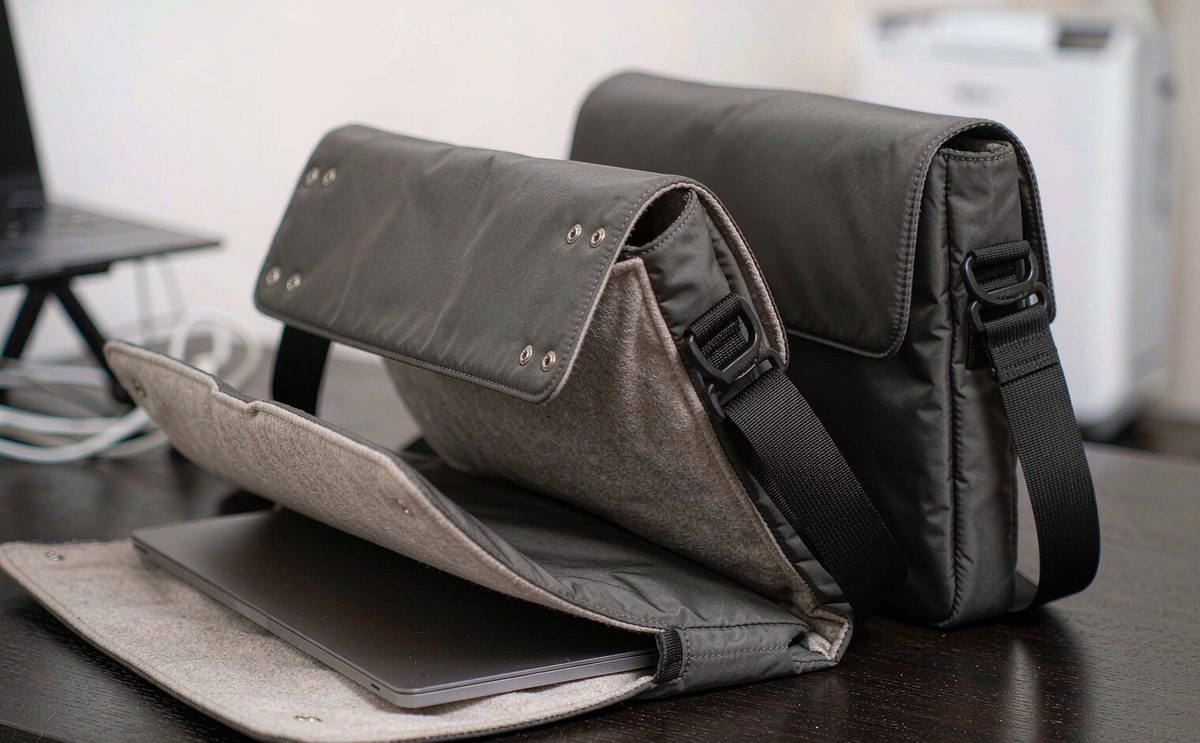
This audience inspects hardware before fabric. It checks whether the zip is a recognised brand or an unbranded slider, whether the hardware is metal or acetal, whether the webbing is dense and whether the stitching is even and bar-tacked at load points. Those are the details that appear in community photographs, and they are also the details that determine whether the bag survives a year of daily use.
| Item | What to specify | Why it is noticed |
|---|---|---|
| Zip | Brand or grade and gauge; reverse-coil where dust matters | The component that fails first and most visibly |
| Hardware | Metal or stated acetal; finish and load rating | Photographed and compared across brands |
| Shell fabric | Denier and type, with a coating figure | Read as durability; 500D to 1000D is the common band |
| Webbing | Width and density; bar-tacked at load points | Visible at every strap and attachment |
| Stitching | Stitch count and bar-tack count at load points | The detail most often photographed in reviews |
| Lining | Colour and type; a light lining aids visibility | Affects daily usability more than appearance |
Fabric choice in this niche runs heavier than in general bags. A 500D to 1000D nylon or polyester with a PU or TPU coating is the common band, because the audience equates denier with durability and because these bags are set down on concrete regularly. A recycled PET option is well received where the campaign's positioning supports it, and it carries a modest material cost increase.
The counter-intuitive advice is to spend on hardware before fabric. Moving from 500D to 1000D raises material cost and weight and is only partly visible to the user. Moving from an unbranded slider to a graded zip changes how the bag feels every single time it is opened, and it is the difference between a bag that lasts a year and one that lasts five. On a 500-pcs run the hardware upgrade is usually the cheaper of the two as well.
Stitch count is the other specification this audience reads. Stating stitches per inch and a bar-tack count at every load point costs nothing to write and is the detail most often photographed in community reviews, because it is the clearest evidence of how a bag was built.
Modular and attachment systems
Modularity is the defining technical trend in EDC and the single best way to make a small bag feel like a system. A loop field, a set of attachment points or a compatible clip interface lets a backer add a pouch, move an organiser between bags and reconfigure the carry. It costs a webbing panel and some stitching, and it converts a product into a platform, which is what drives repeat purchase in this niche.
- Webbing loop field. Rows of webbing on a panel; cheap, robust and universally understood.
- Hook-and-loop panel. Allows patches and internal dividers; choose a quality hook tape that does not snag.
- Daisy chain. External attachment points for a carabiner or a strap.
- Compression straps. Serve double duty as an attachment point for a jacket or a tripod.
- Standardised spacing. If the campaign plans accessories, fix the spacing and publish it.
The commercial argument for modularity is that it creates a second sale. A backer who owns a sling with a loop field will buy the matching pouch, and the pouch is the cheapest item in the catalogue to produce and to ship. That is a far more reliable revenue path than a second colourway, and it is available to any campaign willing to fix and publish an attachment standard at the design stage.
One caution: do not adopt a proprietary interface without thinking through the accessory plan. A custom clip system looks distinctive and locks the backer into buying only your accessories, which is good commercially and bad if the accessories never get made. A webbing loop field is less distinctive but interoperable with what the backer already owns, and for a first campaign interoperability usually wins.
Pricing and tiering an EDC reward
EDC pricing is unusual because the audience has a clear internal reference for what a pouch or a sling should cost and it is not easily shifted by branding. A tech pouch is expected to sit in the 19 to 45 USD band, a sling in the 55 to 120 USD band and a mini backpack in the 79 to 149 USD band. Those bands are wide enough to work with and tight enough that stepping outside them requires a justification the audience will accept.
The structure that works is a small entry item, a core item and a bundle. The entry item, usually a pouch or an organiser, converts browsers into backers at a low threshold. The core item, usually the sling, carries the funding. The bundle combines them at a price that makes the combined purchase obviously better value than buying them separately, which lifts average pledge value without discounting anything.
| Tier | Contents | Indicative pledge band | Role |
|---|---|---|---|
| Entry | Tech pouch or organiser with branding | 19-45 USD | Converts browsers; low production risk |
| Core | Sling or mini backpack | 55-149 USD | Carries the funding target |
| Bundle | Sling plus pouch plus a strap or patch | 99-199 USD | Lifts average pledge value |
| Add-on | Extra pouch, patch or strap | 12-35 USD | Survey add-on; sharpens quantity estimates |
| Stretch | Second colourway or a modular accessory | Unlocks | Only after the base commitment is covered |
Add-ons are disproportionately valuable in this niche, because the audience buys accessories as a matter of course. Offering an extra pouch, a patch or a strap as a survey add-on after funding costs almost nothing in production planning and reliably adds revenue. It also sharpens the quantity estimate before bulk release, which is worth more than the revenue itself on a first campaign.
Keep the early-bird discount inside the margin. A 20 to 30 percent early-bird on the core tier is normal and effective, but the discounted price must still clear landed cost including unit cost, freight allocation, platform fees and the sampling charge amortised across the run. A campaign that sells 200 units below landed cost has made its funding target and its problem at the same time.
Photography and content for an EDC campaign
Content is the distribution channel in this niche, because the audience shares photographs of gear and reads detailed reviews. That makes the campaign's own photography the most valuable marketing asset it owns, and it makes one rule non-negotiable: photograph the approved sample, never a render. This audience can tell, and a campaign caught presenting a render as a product loses credibility that no subsequent update recovers.
- Photograph the packed bag. Layout and pocket logic are the product; an empty bag shows nothing.
- Show scale against a hand or a phone. Capacity claims are judged visually before they are read.
- Photograph detail. Zip, hardware, stitching and bar-tacks at load points, in focus.
- Show the bag worn. Front, side and back, on a real body, at a normal distance.
- Publish a dimension graphic. A simple drawing with millimetres beats a paragraph of copy.
- Show the interior empty and full. Both states are evaluated before pledging.
Video should demonstrate use rather than describe it. Fifteen seconds of a sling being swung to the front and opened, or a pouch being unpacked onto a table, answers more questions than a minute of narration. This audience watches for function and reads specification separately, so the video should show what the bag does and the page should state what it is made of.
Update cadence matters as much as launch content. Give a specification update when sampling completes, a construction update when production starts and a photography update when the first bulk units are finished. Three substantive updates across the production calendar keep the comments productive, and each one is an opportunity to explain a decision, which is exactly what this audience wants.
Production planning for small-format EDC bags
Small formats are forgiving in production and that is worth exploiting. A pouch or a sling has fewer panels, no complex load path in the pouch case and no large foam structure, so sampling runs at the faster end of the 6-10 working day window and bulk at the shorter end of the 35-50 day range. That speed is the niche's main structural advantage over backpack campaigns.
The minimum is still 500 pcs per style and per colourway, and the same rules apply: a second colourway is normally its own commitment unless the split is declared before the fabric order. Because EDC items are cheap per unit, the absolute commitment is smaller than in the backpack category, which means a campaign can run two formats, a sling and a pouch, without a large exposure. That two-format structure is the most common and the most successful in this niche.
| Format | Sampling band | Bulk band | Freight sensitivity |
|---|---|---|---|
| Tech pouch or organiser | 6-8 working days typical | 35-45 days typical | Lowest; packs flat |
| Sling or crossbody | 8-10 working days typical | 40-50 days typical | Moderate; strap hardware adds volume |
| Mini backpack | 8-10 working days typical | 40-50 days typical | Moderate-high |
| Belt or hip pouch | 6-8 working days typical | 35-45 days typical | Lowest |
Inspection runs at AQL 2.5 to ISO 2859-1 and the criteria should include the items this audience inspects: zip function when packed, hardware finish, bar-tack count at load points, stitch consistency, dimensional accuracy and branding placement. Those are quick to check on a small item and are exactly what a community review will examine, so agreeing them before the run is cheap insurance.
For campaigns running a device-carrying item alongside, keep the family consistent. Fabric, hardware finish and branding method shared across a sling and a laptop bag make the line read as one product family and simplify the material order. Our custom laptop bags for Kickstarter page covers how the device compartment is specified, and the Kickstarter power bank bags route is the natural small-format companion in the same line.
Community, updates and post-campaign re-orders
The EDC community is small, connected and has a long memory. A campaign that delivers a well-specified product and communicates honestly earns distribution that lasts years; one that misses its date silently or ships a downgraded component is remembered in the same communities the next campaign will need. That asymmetry is the reason to treat the post-campaign period as part of the product rather than as an afterthought.
Practically, it means three things. Communicate early when something slips, with a reason and a new date rather than silence. Answer specification questions in the comments and then fold the answers into an update, so the information persists. And publish a photograph of the finished bulk unit before the first shipment lands, because that single post defuses most of the anxiety a delayed campaign generates.
- Confirm the re-order plan early. This audience buys again; a second season is normal, not optimistic.
- Keep the tech pack and the retained sample. Both make the re-order quote faster and cheaper.
- Expect shade variation between fabric lots. Agree a tolerance and keep the first-run unit as the reference.
- Plan accessories. A pouch or patch released six months later sells into the existing backer base.
- Ask for feedback publicly. The community will give detailed, usable specification feedback for free.
The re-order economics are favourable. No new pattern, no new tooling, a known fabric and hardware set and a line that has run the style before, which means a faster quote, a shorter pre-production window and a lower unit cost. A second run at 500 pcs often prices better than the first did at the same quantity, and the accessory items from the first run can be reordered alongside at almost no additional set-up.
One strategic point closes the loop. Campaigns in this niche that treat the first run as the beginning of a product line rather than the end of a campaign consistently outperform those that treat it as a one-off. The 500-pcs minimum is not a barrier to that; it is the entry ticket, and everything the campaign learns in the first run compounds in the second.
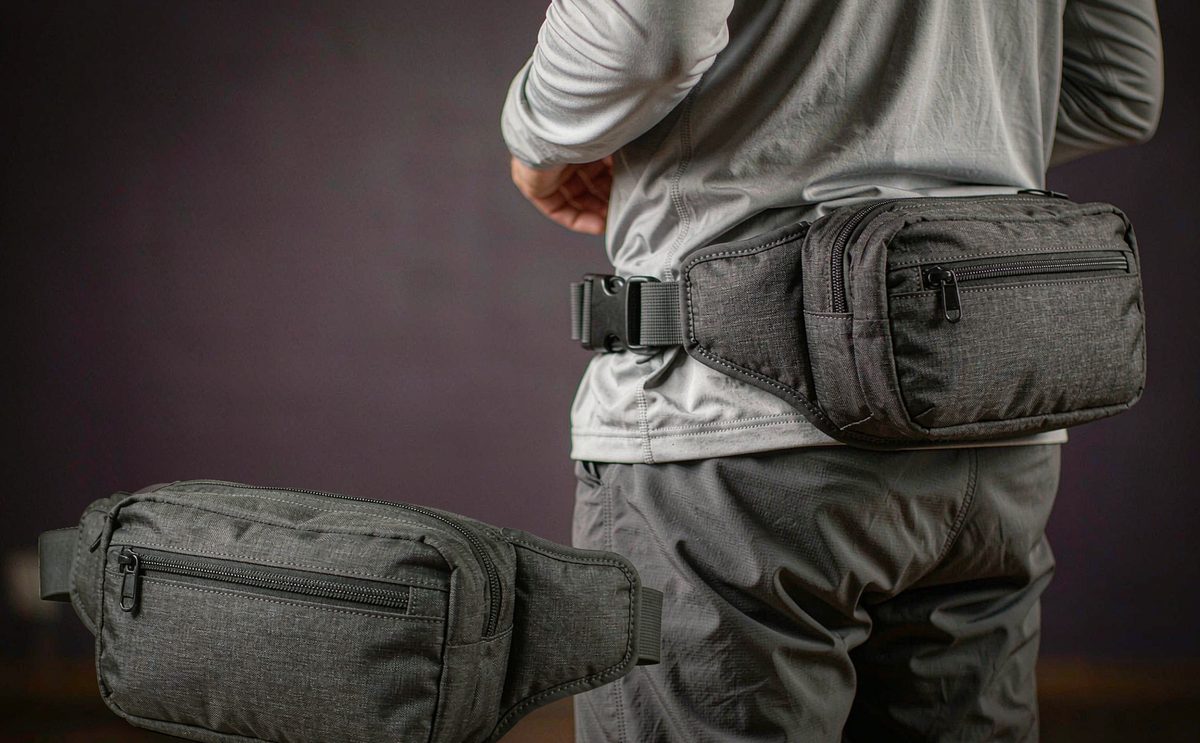
An EDC campaign checklist
The checklist below is what separates a specification-led EDC campaign from a styling-led one. Every item is answerable before launch and every item is something this audience will ask about. Working through it before the RFQ is sent is the fastest way to compress both the quotation and the sampling window.
| Item | Why it matters | If missing |
|---|---|---|
| Format and capacity in litres | States the intent to the audience | Backers cannot tell what the bag is for |
| Dimensions in millimetres, including depth | Decides fit and whether the bag prints | Fit complaints after delivery |
| Named inventory the pockets are sized to | Turns pockets into design | Generic pockets that organise nothing |
| Shell fabric denier and coating | Read as durability | Assumed stock fabric |
| Zip brand or grade and gauge | The component that fails first | Substitution risk at quotation |
| Hardware material and finish | Photographed and compared | Perceived as cheap |
| Quantity per style and colourway | Sets the 500-pcs commitment | Cannot quote a firm unit price |
| Attachment or modular standard | Enables the accessory second sale | No repeat accessory revenue |
With that list complete, a production partner can return fabric and hardware options, a unit cost band at three volumes and a confirmed sampling window of 6-10 working days for a standard build. Without it, the answer is a range, and a range cannot support a funding target in a category where the audience reads every number.
The final item is the one campaigns forget: publish what the bag is not. State the largest device that does not fit, the load it is not designed for and the conditions it is not built to survive. In a niche where the audience compares everything, a campaign that draws its own boundaries is trusted, and a campaign that overclaims is tested.
Add two operational items to the list: vector artwork for the branding, and the delivery window. Artwork arriving as a raster file is the most common avoidable delay in the whole programme, and a stated delivery window gets a production slot rather than a promise.
The checklist is also the RFQ. A production partner receiving it complete can return fabric and hardware options, a unit cost band at three volumes and a confirmed sampling window quickly; one receiving a description returns a range, and a range cannot support a funding target in a category where every number is read.
Scope an EDC bag line
Send the format, capacity, the inventory the pockets must hold, hardware targets and quantity per colourway. You get construction options, a unit cost band at three volumes and the sampling window within one business day. Write to service@junyuanbags.com or use the quote form.
- Minimum order quantity
- 500 pcs per style / colourway
- Sampling
- 6-10 working days (12-15 for complex builds)
- Bulk production
- 35-50 days after deposit + approved pre-production sample
- Inspection
- AQL 2.5 to ISO 2859-1
- Trade term
- FOB Xiamen
- Payment
- T/T 30/70
- Capacity
- 200,000 pcs per month
- Production floor
- 4,950 m2, SGS-verified
- Team
- 137 staff / 7 production lines / 149 machines
Frequently Asked Questions
What makes everyday carry different from other bag niches on crowdfunding?
The audience buys repeatedly, reviews in public detail and asks specification questions before pledging. That means a campaign wins on defensible design decisions rather than on breadth of range. It also means quality problems become documented rather than merely complained about, so hardware and seam specification matter more than in most categories.
Which EDC format should a first campaign launch with?
A tech pouch or organiser. It is the cheapest to produce, the fastest to sample, the easiest to inspect and the most likely to be bought again. A sling is the signature format of the category but its harness geometry is harder to get right, so many campaigns launch a pouch and follow with a sling in a second season.
What capacity should an EDC bag be?
Pouches and organisers run 0.5 to 3 L, slings 4 to 9 L, mini backpacks 10 to 14 L. Publish the measured capacity and the dimensions together, including depth, because depth determines whether the bag prints under clothing and this audience reads that number specifically.
What fabric do EDC bags use?
A 500D to 1000D nylon or polyester with a PU or TPU coating is the common band. The audience equates denier with durability and these bags are set down on concrete regularly. Spend on hardware before fabric: moving from 500D to 1000D is only partly visible, while a graded zip changes how the bag feels every time it opens.
Why does hardware matter so much in the EDC niche?
Because it is what the audience photographs and compares, and because it is what fails first. Zip brand or grade and gauge, metal versus acetal hardware, webbing density and bar-tack counts at load points all appear in community reviews. Spending on hardware is usually cheaper per unit than upgrading fabric and has a far larger effect on perceived quality.
Should an EDC bag use a modular attachment system?
Yes, if the campaign plans accessories. A webbing loop field costs a panel and some stitching and turns a product into a platform, which drives the second sale. For a first campaign prefer a webbing loop field over a proprietary clip, because interoperability with what the backer already owns usually wins.
How should an EDC reward be priced?
Inside the bands the audience expects: a pouch at 19 to 45 USD, a sling at 55 to 120 USD and a mini backpack at 79 to 149 USD. Structure the campaign with a cheap entry item, a core item carrying the funding and a bundle lifting average pledge value, plus survey add-ons that sharpen quantity estimates.
How many pockets should an EDC sling have?
Six to ten is the useful range. Beyond that the bag organises nothing, because every pocket needs a named object to justify it. Write the inventory first, give each item a home of the right shape, and keep rigid items such as a bottle separated from fragile ones such as a phone.
Should I photograph a render or a sample for an EDC campaign?
Always the approved sample. This audience can tell the difference and will say so publicly. Photograph the bag packed, show scale against a hand or a phone, include detail shots of the zip, hardware and bar-tacks, and publish a dimension graphic with millimetres.
How long does production take for small EDC items?
Sampling runs 6-10 working days and a pouch typically sits at the faster end at 6 to 8. production 35-50 days, with pouches nearer 35 to 45 and slings nearer 40 to 50 because strap hardware adds operations. The minimum is 500 pcs per style and per colourway regardless of format.
Which checks belong in an EDC bag inspection?
Zip function when packed, hardware finish, bar-tack count at load points, stitch consistency, dimensional accuracy and branding placement. Run at AQL 2.5 to ISO 2859-1 and agree the criteria before the run, because these are exactly the items a community review will examine.
Is a re-order after the campaign worthwhile?
Usually yes, and this niche rewards it. The audience buys repeatedly, and a re-order has no new pattern, no new tooling, known materials and a line that has run the style, so the quote is faster and the unit cost lower. Expect a small shade variation between fabric lots and keep a first-run unit as the reference.
People Also Ask
Is everyday carry a good crowdfunding niche?
Yes for specification-led campaigns. The audience is engaged, buys repeatedly and shares content, while the small formats keep unit cost, freight and the funding target low. The price of entry is scrutiny: hardware and seam decisions are examined closely.
Sling or pouch for a first EDC campaign?
Pouch. It samples faster, costs less and carries the lowest consequence if something is imperfect. A sling is the signature format but its harness geometry is the hardest thing to get right on a first run.
What denier should an EDC bag use?
500D to 1000D with a PU or TPU coating. The audience reads denier as durability. Spend on zip grade and hardware before going heavier on fabric, because hardware is felt every time the bag opens.
Do modular systems actually help sales?
Yes, mainly by creating a second sale. A backer with a loop field will buy the matching pouch, which is the cheapest item to produce and ship. Publish the spacing so accessories remain compatible.
How much should an EDC sling cost backers?
Typically 55 to 120 USD, against 19 to 45 USD for a pouch and 79 to 149 USD for a mini backpack. Those bands are wide enough to work with and tight enough that stepping outside them needs a justification the audience accepts.
Can I reorder EDC items after the campaign?
Yes, and it is usually cheaper than the first run. Pattern, tooling and materials are all known, so the quote returns faster and the unit cost is lower. Keep a retained sample as the shade reference.