Laptop Bag QC for Kickstarter: Drop, Zipper and Fabric Testing
A laptop bag has one job no other campaign perk has: it must protect a rigid, heavy, expensive object that can crack from a single bad impact. That changes the quality plan. Run a loaded drop test at 0.8 to 1.0 metre across six orientations, flex-test the main zipper for 3,000 to 5,000 cycles, set an abrasion target of 30,000 rubs or above for the body fabric, and inspect to AQL 2.5 to ISO 2859-1 before shipment. The minimum quantity is 500 pcs per style and per colourway, sampling runs 6 to 10 working days, and bulk production runs 35 to 50 days after deposit and written sample approval.
- Why a laptop bag fails differently from a general-purpose bag
- The loaded drop test and the protocol to specify
- What actually breaks and what that means for your design
- Zipper flex testing, cycles and realistic failure modes
- Abrasion resistance: Martindale rub counts by fabric
- Seam efficiency, strap anchorage and carry load testing
- Colourfastness, water repellency and hardware corrosion
- AQL 2.5 to ISO 2859-1: the sampling plan in numbers
- Writing the quality specification into your tech pack
- Pre-shipment inspection day: what gets checked
- What a failed quality gate costs you in backer terms
- From first run to re-order: locking quality across batches
Most creators specify a laptop bag by fabric, colour and pocket count, then discover during fulfilment that the bag performs beautifully empty and badly loaded. Quality control for this category is not a generic bag checklist with a laptop line added. It is a set of tests built around impact, suspension and the hard rectangular shape that sits at the centre of the product. When our team reviews a first technical pack, a campaign bag specialist looks for three things before anything else: a stated drop height, a stated zipper cycle target, and a stated abrasion target for the body fabric. If those three numbers are missing, the rest of the spec is decoration.
This guide sets out the protocol we recommend to creators running a laptop or tablet bag as a campaign reward. It covers the numbers, the failure modes behind them, and how to write them into your pack so the supplier you eventually sign with knows exactly what the pass condition is. If you are still working out which construction route to choose, read custom laptop bags for Kickstarter first, because the quality targets below assume the dimensions there.
A quality target written into the sample approval is enforceable. The same target discussed verbally and not written down is a preference, and preferences lose arguments in week six of production.
Why a laptop bag fails differently from a general-purpose bag
A general backpack carries soft loads. Clothes, cables and lunchboxes deform on impact and absorb energy, so the bag itself sees lower peak forces. A laptop does none of that. It is rigid, dense and concentrated at one point, typically between 1.2 and 2.4 kg for a 14 or 16 inch machine. When the bag lands on a corner, the whole of that mass arrives through a small contact area in perhaps 15 to 25 milliseconds. The padding has one job in that window: extend the deceleration distance so the peak force stays below the screen and hinge limits.
That is why the two things that actually protect a machine are rarely mentioned on a campaign page. The first is corner clearance, the air gap between the laptop edge and the outer shell. The second is base suspension, which lifts the bottom of the machine off the lowest panel so the bay never touches the floor when the bag is put down hard. A bag can use excellent foam and still fail if either one of those is missing, because the foam is simply not in the load path at the moment of impact.
The competitive consequence is sharp. A laptop bag is one of the few crowdfunding rewards where the backer can test your claim in the first week with equipment they already own, and where a failure is expensive, personal and very visible. If you want the wider framework we use for this whole category, our Kickstarter campaign bag QA and QC page sets out where each check sits in the production calendar.
| Device class | Typical mass range | Typical chassis thickness | Consequence for the bag spec |
|---|---|---|---|
| 13 to 14 inch ultrabook | 1.1 to 1.5 kg | 14 to 17 mm | Standard 6 to 8 mm foam in a suspended bay is usually adequate |
| 15 to 16 inch workstation | 1.9 to 2.4 kg | 17 to 21 mm | Move to 8 to 10 mm foam plus a rigid base insert |
| 17 to 18 inch gaming machine | 2.6 to 3.6 kg | 22 to 40 mm | Wide gusset plus a power brick pocket, or the zipper will bow |
| Tablet with keyboard folio | 0.6 to 1.1 kg | 6 to 12 mm | Corner impact matters more than drop energy |
| Tablet with external SSD rig | 1.0 to 1.6 kg | 15 to 30 mm | Treat as a laptop spec, not an accessory spec |
The row that causes the most trouble in practice is the 17 to 18 inch gaming machine. Those campaigns attract enthusiastic backers and the machines themselves are heavy, thick and often carried with a large external power supply. Our production partner sees far more failures there than anywhere else, because the cross bay dimension pushes the main zipper sideways under load. If your audience includes gamers, read Kickstarter gaming laptop bags before you lock a gusset width.
The loaded drop test and the protocol to specify
A defined test beats a vague one. Write this into your technical pack as a standalone clause: fill the laptop bay with a rigid block or dummy weight matching the mass and dimensions of the largest machine you claim to fit, then drop each sample from a stated height onto a stated surface in six orientations. Typical campaign specifications use 0.8 to 1.0 metre onto concrete, which is tougher than most real accidents but cheap to run and gives you margin. The bag passes if the dummy machine shows no damage and the bag shows no structural failure.
Structural failure should also be defined, because that is where arguments start. We recommend listing four conditions as automatic fails: any seam opening of more than 10 mm, any split or popped stitch, any hardware breakage including buckles, sliders and D rings, and any permanent deformation that stops a zipper running. Cosmetic scuffing on the outer face is usually accepted as a pass, and saying so explicitly saves a pointless dispute later. Where your budget allows, specify two samples per orientation set rather than one, because single-sample results are noisy enough to mislead you by a wide margin.
The useful extension is a loaded carry abuse test, which nobody runs and everybody benefits from. Load the bag to 120 per cent of your stated carry capacity, carry it for 30 minutes, set it down hard six times on its base and once on each corner, then inspect. This catches base panel creep and handle stitching issues that a clean vertical drop never triggers. It costs almost nothing and it is the closest thing you have to a day in a commuter's hands.
- Define the load. State the dummy mass in kg and its dimensions in mm, and match it to the largest machine in your fit claim.
- Define the height and surface. 0.8 to 1.0 metre onto bare concrete is a typical campaign target.
- Define the orientations. Base, top, two long sides, one corner and one end should be the minimum set of six.
- Define the sample count. Two sets of samples gives you a result you can act on; one set gives you an anecdote.
- Define the pass criteria in millimetres. Seam opening less than 10 mm, no hardware failure, zipper still runs.
- Write it into the sample approval document. A signed approval that names the test locks it for bulk production.
Sampling to this standard is not slow. Standard development runs 6 to 10 working days, and structurally involved builds such as moulded backs, hard shell hybrids or integrated power routing run 12 to 15 working days. Ask for the drop protocol to be executed on the second round sample rather than the first, because the first sample is usually a construction proof and will not yet carry final padding densities.
What actually breaks and what that means for your design
Across the failure reviews our team has run on campaign bags, three components account for most structural failures, and none of them is the body fabric. The first is handle and strap anchorage, where the stitch box that transfers load into the body panel is too small or runs into a seam allowance instead of a reinforcement patch. The second is slider failure on the main chain, usually because the slider catches the very edge of a welt and levers open. The third is buckle or ladderlock cracking at the point where a webbing tail is folded and loaded in tension rather than shear.
Each of those three has a cheap design fix that costs nothing at 500 pcs and a lot of money once you have shipped 4,000 units. Handle anchorage wants an internal reinforcement patch of at least 50 by 70 mm, bartacked at the corners, with the stitch box extending onto that patch rather than onto the shell. Main zipper appearance wants a properly engineered welt, wider than the slider travels, with a clean rounded end. Webbing tails want a bartack or box stitch rather than a single pass, and a fold that puts the load on the bar rather than the teeth.
Foam behaviour is the part nobody thinks about until it goes wrong. Closed cell EVA and PE foams lose thickness under repeated load, and low density grades can lose 10 to 20 per cent of their effective thickness across a typical ownership period. That is why we specify compressed permanent set as well as initial thickness for any laptop bay padding. If your 8 mm foam creeps to 5.5 mm after eight months of commuting, your corner clearance has quietly gone from good to marginal, and the backer discovers it at the worst possible moment.
Zipper flex testing, cycles and realistic failure modes
The main zipper is the single most used mechanical component on a laptop bag and the one most often excluded from the test plan. Zip flex testing is simple: mount the bag or a sub assembly, open and close the slider through the full travel, and count cycles until something fails or until you hit your target. A realistic campaign target for a mid specification laptop bag is 3,000 to 5,000 cycles on the main chain and 1,500 to 2,500 cycles on secondary pockets. Numbers above that band are achievable but they usually mean paying for branded chain, which moves unit cost in a way most first campaigns do not need.
What matters more than the headline cycle count is where the failure happens. Three modes dominate. First, slider wear, where the pull body or the slider throat deforms and the slider stops closing the teeth fully. Second, welt intrusion, where the fabric flap slips into the travel path and either jams or is chewed. Third, tape delamination, where the fabric tape separates from the coil or teeth near a high stress corner, typically where the bag curves from a front panel into a gusset.
Two specification details cut those risks sharply and neither costs meaningful money. Use a reverse coil zipper rather than a visible metal chain for the main opening: the teeth sit on the underside of the tape, the welt engages more cleanly, and the whole assembly is far less sensitive to grit. Then specify an auto lock or semi auto lock slider for any slide that carries load, so pressure inside the bag cannot walk the slider open. Pull handling is a separate decision, and it belongs with your branding plan: see Kickstarter tech bag branding options for the detail on custom pulls and plates.
| Zipper position | Cycle target | Common failure mode | Mitigation |
|---|---|---|---|
| Main laptop bay opening | 3,000 to 5,000 cycles | Slider opens under internal pressure | Reverse coil with auto lock slider |
| Front accessory pocket | 1,500 to 2,500 cycles | Welt intrusion into slider path | Wider welt, rounded end, bar tacked corners |
| Internal organiser zipper | 1,000 to 2,000 cycles | Tape delamination at the curve | Reinforce the curve with binding tape |
| Water bottle or side pocket | 800 to 1,500 cycles | Slider pull snagging on lining | Short pull plus recessed garage |
| Hidden back security pocket | 1,000 to 1,800 cycles | Teeth misalignment under body tension | Add ease to the panel on the zip path |
Do not skip the salt spray check if your campaign ships to coastal or humid markets. A typical programme asks for 24 to 48 hours of neutral salt spray against ISO 9227 with no red rust on visible plated hardware. It is cheap, it takes almost no calendar time in parallel with everything else, and it prevents the specific complaint that ruins a review section three months after delivery: hardware that has gone green in a humid climate.
Abrasion resistance: Martindale rub counts by fabric
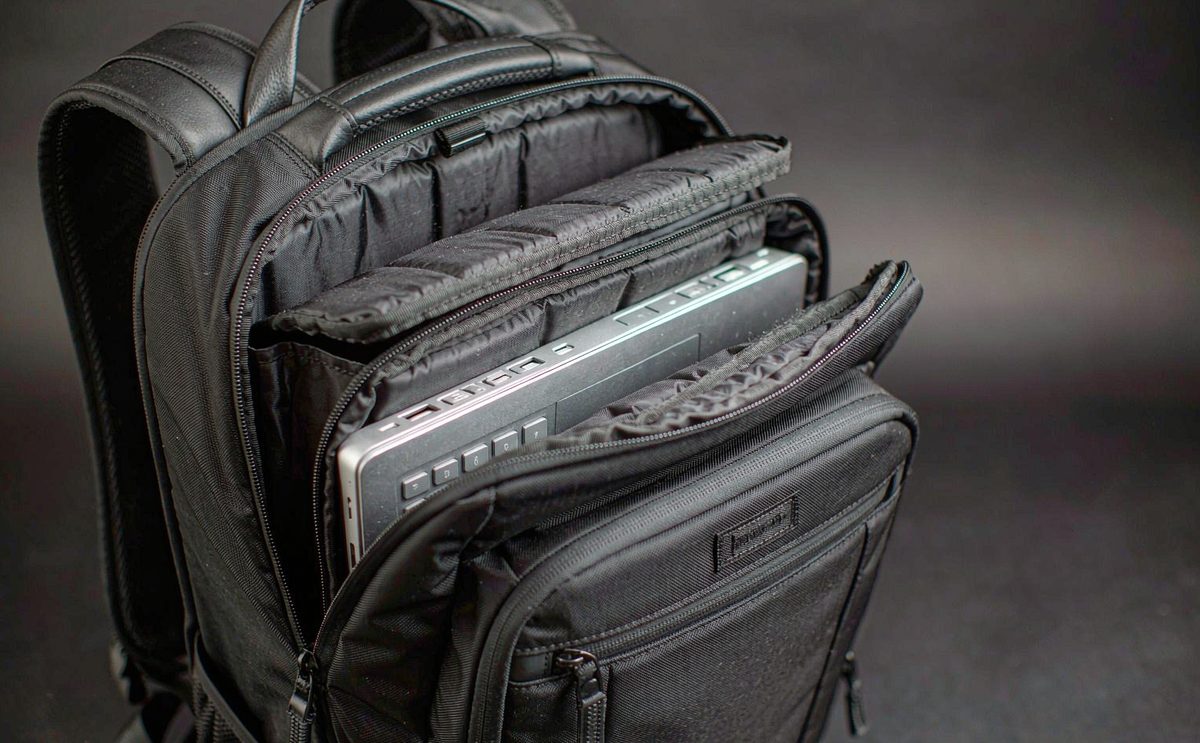
Abrasion is the specification most campaigns overpay for or under buy, usually because nobody translates the rub number into a real scenario. The Martindale rub test rubs a fabric against a standard abradant under a fixed load and counts cycles to a defined endpoint, typically two broken threads or a stated visual change. A body fabric landing at 20,000 rubs survives occasional shoulder strap contact and light daily use, but it will show right at the lower corner panel where every bag meets a desk edge. Aiming one step higher is nearly always the better commercial decision.
Our usual recommendation for a laptop bag aiming at a professional or commuter audience is at least 30,000 rubs on the body fabric, with higher numbers on panels that contact the ground or a chair back. That target is comfortably reachable with mainstream 600D polyester coating and construction, and it costs far less than the jump to a premium branded nylon. If you do choose a premium branded fabric, specify the brand name and grade in writing, because substitutions at this level are common and invisible to a receiving inspection.
| Fabric | Typical rub range | Best used for | Cost signal |
|---|---|---|---|
| 210D to 300D polyester | 20,000 to 30,000 rubs | Linings, light sleeves, low cost carryalls | Lowest material cost |
| 600D polyester with PU backing | 35,000 to 50,000 rubs | Body panels on most campaign laptop bags | Good value default |
| 900D to 1200D polyester | 45,000 to 70,000 rubs | Bases, high wear corners, tool heavy builds | Moderate uplift |
| 500D cordura style nylon | 80,000 to 120,000 rubs | Premium cases where brand recognition sells | Significant uplift |
| 840D ballistic weave nylon | 50,000 to 100,000 rubs | Structured gussets and premium bases | Moderate to high uplift |
| Recycled RPET equivalents | Matched to parent denier | Sustainability led campaigns | Uplift varies by mill |
Two secondary durability numbers belong in the same clause. Tear strength protects against a small puncture becoming a large rip, and a typical target for a body fabric lands in the range of 25 to 45 newtons depending on denier and coating. Colourfastness to rubbing protects against dye transferring onto a light shirt or a pale backpack panel; ask for grade 4 or above dry and grade 3 to 4 wet against ISO 105 X12. Both are standard mill level checks and neither should add material lead time to a normal programme.
If you are undecided on material at this stage, the trade offs between polyester, recycled PET and higher denier nylons are covered in detail across our crowdfunding bag guide, including how each choice shifts both unit economics and the perceived value of the reward tier.
Seam efficiency, strap anchorage and carry load testing
Every seam is a perforation line. Every stitch hole removes fibre from the fabric, and any seam is weaker than the material around it, so the useful measurement is seam efficiency: seam strength expressed as a percentage of the base fabric strength. For a laptop bag body panel, asking for seam strength in the region of 180 to 250 newtons, measured on a standard grab test, puts most 600D constructions comfortably in range. Below that, stitching becomes the predictable first point of failure under an overload that should never have caused damage.
Strap anchorage deserves its own line item because it carries the whole dynamic load. A shoulder strap sees multiples of the static bag weight when the wearer walks, and considerably more when they run for a train. Our team recommends specifying a static pull test on each anchorage point at three to five times the expected loaded bag mass, held for a stated dwell time, with no stitch elongation beyond a stated tolerance. This is the single cheapest insurance available on any campaign bag, and it costs a few minutes of laboratory time.
- Seam strength target. Typically 180 to 250 newtons grab test on body panels for a 600D build.
- Anchor pull test. Three to five times the loaded mass, held for dwell, no structural failure.
- Stitch density. Eight to ten stitches per inch on load bearing seams, checked on the approved sample.
- Thread specification. Bonded polyester at the appropriate ticket size, not cotton covered polyester.
- Bartack count. Corner bartacks on every webbing tail, handle and strap anchor without exception.
Thread choice is invisible and decisive. Bonded polyester thread resists moisture, retains strength under UV exposure far better than alternatives, and runs cleanly at standard stitch densities. Cotton covered polyester thread looks traditional and degrades noticeably faster in damp conditions, which matters for a bag that will sit outside a beachside cafe for three hours. This is a specification line with negligible cost impact and a long ownership tail, which makes exactly the kind of detail worth arguing for during sampling rather than after the pre shipment inspection.
Colourfastness, water repellency and hardware corrosion
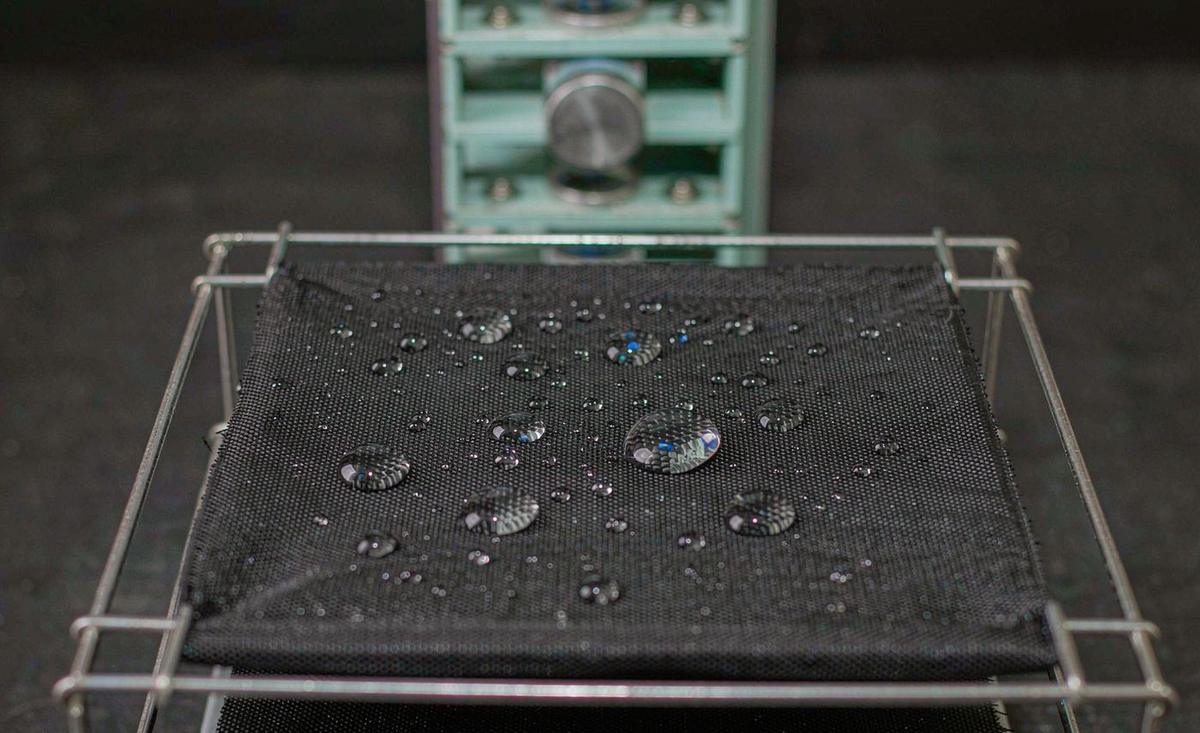
Appearance failures drive more backer complaints than structural failures, mostly because every backer notices them and nobody notices a seam that held. Your pack should carry three finish level targets. Colourfastness to rubbing as already noted, at grade 4 dry and grade 3 to 4 wet. Water repellency, expressed as a spray test grade against ISO 4920 or as a stated hydrostatic head value for coated fabric; a durable water repellent finish rated at grade 4 or better on a spray test handles a shower rather than a downpour, which is the honest claim to make. Finally, hardware plate integrity, requiring the absence of sharp edges, correct plating thickness and, where relevant, nickel free or lead compliant plating for the markets you ship to.
Compliance should be planned early rather than discovered late. If your campaign ships into the EU and the UK, metal components and coated fabrics in contact with skin or used by children fall under specific restricted substance regimes. Our 4,950 m2 SGS verified workspace supports documents against common standards, and we maintain restricted substance compliance documents from accredited bodies for the components we specify. Ask your own compliance consultant which standard applies to your pledge destinations, then make sure the component list in the technical pack names every material so the correct testing can be ordered against it.
One practical warning about water claims. A laptop bag that keeps a machine dry in a genuine downpour needs a coated zipper, sealed seams on the laptop bay, and usually a roll top or storm flap. That is a different product from a water resistant commuter bag and it costs materially more. If you only claim water resistance, deliver water resistance well; if you want waterproof, design and price for it from the start. Backers will test whichever claim the campaign page made, usually within a week.
AQL 2.5 to ISO 2859-1: the sampling plan in numbers
Testing tells you whether the design works. Statistical inspection tells you whether the shipment matches the approved design. Every laptop bag programme we run is inspected to AQL 2.5 to ISO 2859-1 at general inspection level II, which sets the sample size and the accept and reject numbers by lot size. The critical detail is classification: defects are agreed in advance as critical, major or minor, and each class carries its own acceptance number. A critical defect such as a broken load bearing stitch or a zipper that will not close has a zero acceptance number regardless of lot size. With that structure in place, a 500 pcs first run draws a 50 piece sample.
| Lot size (pcs) | Code letter | Sample size | Accept | Reject |
|---|---|---|---|---|
| 151 to 280 | G | 32 | 2 | 3 |
| 281 to 500 | H | 50 | 3 | 4 |
| 501 to 1,200 | J | 80 | 5 | 6 |
| 1,201 to 3,200 | K | 125 | 7 | 8 |
| 3,201 to 10,000 | L | 200 | 10 | 11 |
| 10,001 to 35,000 | M | 315 | 14 | 15 |
Read that table carefully, because it explains a common misunderstanding. AQL 2.5 does not promise a shipment with fewer than 2.5 per cent defects. It defines a sampling plan that will, most of the time, reject lots whose defect rate is materially worse than 2.5 per cent, and accept lots materially better. To move the actual quality bar you either tighten the level, specify level III for a larger sample on complex builds, or combine AQL inspection with defined inline checks on the specific operations that historically fail on your construction.
Inline inspection is where the real leverage sits for a laptop bag. Panel level checks catch issues before they are sewn into a closed sub assembly, where rework is expensive and slow. Our usual inline gate list for this category includes zipper installation, handle bartacks, laptop bay foam placement, suspension base stitch line and binding alignment. Each gate is a five minute check per operator per hour, and together they prevent most of the defects that would otherwise surface at pre shipment with 35 to 50 days of production already sunk.
Writing the quality specification into your tech pack
A quality clause should read like a test instruction, not like an aspiration. Put it in a clearly headed section of your technical pack, list each requirement with its numeric target and its test method, and require that every target be demonstrated on the approved sample before bulk starting materials are cut. Where a standard exists, name it, because standard names remove ambiguity about test conditions. Where a standard does not exist for your specific method, describe the method yourself in enough detail that a second party would reproduce it and reach the same result.
- Minimum quantity
- 500 pcs per style and per colourway
- Sampling lead time
- 6 to 10 working days, 12 to 15 for complex builds
- Bulk production lead time
- 35 to 50 days after deposit and approved sample
- Inspection standard
- AQL 2.5 to ISO 2859-1, general inspection level II
- Critical defects
- Zero acceptance regardless of lot size
- Trade term
- FOB Xiamen, payment T/T 30/70
- Indicative lined fabric target
- 30,000 Martindale rubs or above on body panels
Then make the sample approval letter carry it. The practical pattern that works is a single document listing every specification line, each with a column for target, a column for measured result on the approved sample, and a signature. Once signed, that document becomes the reference against which inspections happen and against which any shipping dispute is settled. If you later ask for a change, issue a written revision and re measure, because a verbal change at this point usually costs more than the change itself.
One section creators consistently forget is packaging. A laptop bag can pass every functional test and arrive scuffed, creased or misshapen because it was compressed into a carton too tightly. Specify the polybag grade, the carton specification, the units per carton, and whether the laptop bay should ship with internal stuffing to hold its shape. Then add the packed drop test: cartons dropped on one face and one corner from a stated height, typically 0.5 to 1.0 metre depending on total carton mass. Your logistics plan sits inside our crowdfunding rewards fulfilment resources if you need the downstream picture.
Pre-shipment inspection day: what gets checked
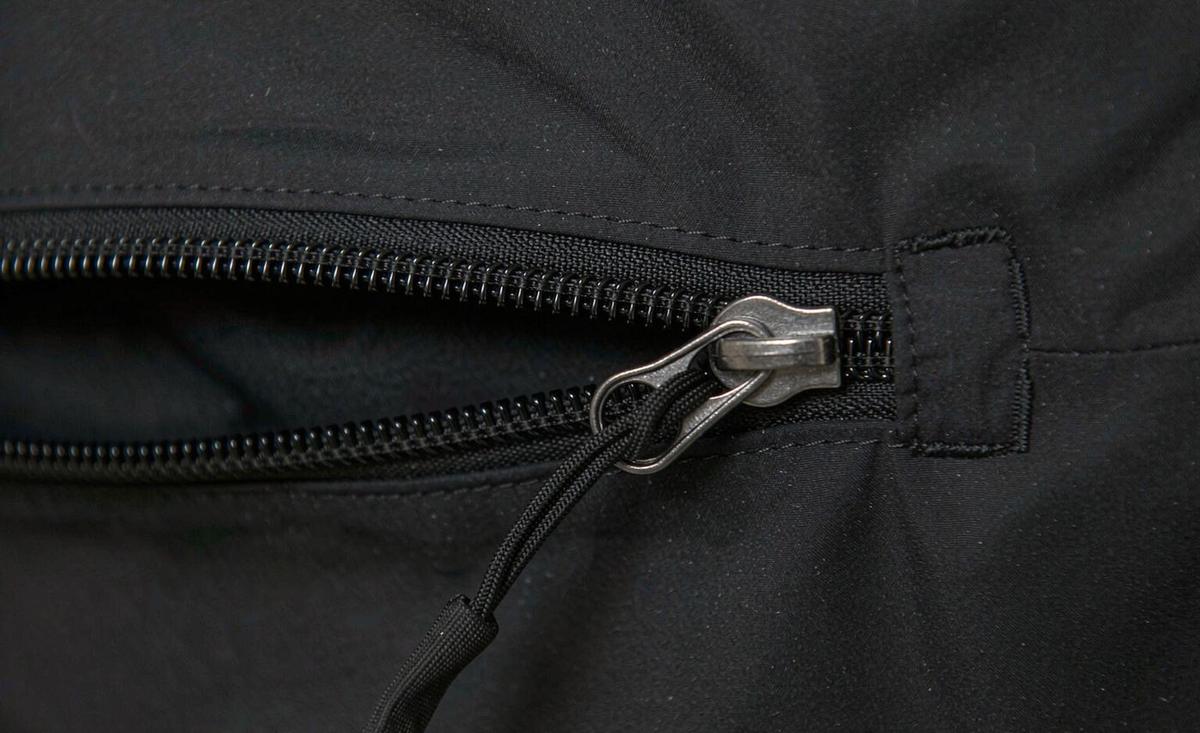
The pre shipment inspection is a defined sequence, and knowing the sequence helps you prepare. The inspector first verifies quantity and packing, counting cartons and units against the packing list and checking unit per carton consistency. Then comes workmanship and appearance, where each sampled unit is reviewed against an agreed acceptance criteria list and a set of reference photographs from the approved sample. Then functional checks, which for this category means every zipper run, every buckle release, every strap adjustment and every magnetic or hook closure on the sampled units.
Then come dimension and fit checks. The inspector measures external dimensions against your tolerance, then measures the laptop bay internally and inserts a gauge or a real device matching your stated maximum fit. This is the step that catches the quiet disaster: a bay that is 4 mm short of the machine you advertised at the top of the campaign page. Always list the largest supported device explicitly in the technical pack, and always have the bay checked against that exact model rather than against a generic measurement.
- Quantity and carton count verified against the packing list, with mixed cartons flagged.
- Appearance review against the golden sample and agreed reference photographs.
- Functional operation of every zipper, buckle, adjuster, magnetic closure and strap.
- Critical dimensions including external size, bay internal size and strap length range.
- Labelled fit test using the largest device named in your campaign copy.
- Marking and labelling including care labels, country of origin and any required compliance marks.
Finally the inspector records the result against each defect class and issues the report. If a lot fails, you have three realistic options and all of them cost calendar time: a full re-screening of the lot by your team, a rework of the specific defect, or in the worst case a partial remake. Rework is common and usually viable for appearance defects. Remake is rare and painful, and the reason the inline gates described earlier exist. Every one of those paths runs past your 35 to 50 day production window, which is why responsible schedules build slack before the declared ship date.
What a failed quality gate costs you in backer terms
Creators often treat quality decisions as an engineering question, when they are really a cash flow and reputation question. Consider a typical mid size campaign shipping 2,000 laptop bags. If 3 per cent arrive with a defect that the backer considers disqualifying, that is 60 units. If the shipped cost including freight and duty is in the region of USD 25 per unit, replacement stock plus reshipping lands somewhere between USD 2,000 and USD 3,500. That is survivable. The expensive part is the second order effect, because those 60 backers write comments, and comments on a live campaign influence the conversion of every visitor who reads them.
Compare that with the cost of prevention. On a 500 pcs minimum first run, moving from a commodity chain to a better slider, adding a base suspension panel and reinforcing every handle with a bartacked patch typically moves unit cost by a figure in the low single digits of dollars. Spread across the run it is a rounding error relative to your pledge revenue. Our low MOQ bag production for creators page shows how those small upgrades interact with the 500 pcs threshold, because the answer is usually that the MOQ constrains colourways far more than it constrains durability upgrades.
Key takeaways
- Prevention costs a small amount of unit cost once. A failure refund costs unit cost, freight, duty and reputation on every affected pledge, and it lands in the comments section where future backers read it.
There is also a timing asymmetry worth internalising. A defect found during sampling, which means before about day 12 to 15 of your calendar, costs you a revised sample and perhaps another week. The identical defect found at pre shipment inspection, roughly 40 days later, costs you a rework window in the best case and a missed declared delivery date in the worst. Identical defect, perhaps USD 0.20 of material, but two completely different business outcomes depending only on when you looked.
From first run to re-order: locking quality across batches
Most successful campaigns reorder, and a reorder is where quality silently drifts. Fabric comes from a different dye lot, a zipper brand is swapped for an equivalent, an operator changes, and six months later you are shipping a bag that is close to but not exactly the bag your reviewers praised. The defence is simple and it costs one line in your reorder document: reference the previous production batch number and require material and construction equivalence in writing. When our team handles a reorder, we pull the previous approval sample from retained record and inspect the new batch against it, not against the specification alone.
The economics of a reorder also change the quality conversation in your favour. At 500 pcs every tooling and setup cost is spread thinly, which pushes creators toward off the shelf components. At 1,000 and 2,000 pcs those same costs are absorbed, and upgrades become affordable. The next step is to understand exactly how that curve behaves, which we set out with real numbers in custom laptop bag pricing by quantity, including where the useful break points actually are.
Finally, plan the calendar honestly. First articles run 6 to 10 working days, complex builds run 12 to 15 working days, and bulk production runs 35 to 50 days after deposit and written sample approval. Add sampling review time on your side, defect allowance time, and freight time, and you arrive at a realistic delivery promise. Our team has supported more than 20 crowdfunding programmes through exactly this schedule, and the campaigns that land on time are the ones whose quality plan was written down before the first cut.
Test the bag before you promise it
Send us the laptop model you need to fit, your target quantity and your planned reward tier. As your production partner we will return a costed technical specification with the drop, zipper and abrasion targets written in, a sampling estimate at 6 to 10 working days, and a booked 35 to 50 day production window inspected to AQL 2.5. Write to service@junyuanbags.com.
Frequently Asked Questions
What drop test height should a Kickstarter laptop bag be specified to?
A loaded drop at 0.8 to 1.0 metre onto bare concrete, in six orientations, is a typical campaign target. Six drop samples per orientation set is sensible budget practice. The key is to load the bag with a dummy block matched to the mass and dimensions of the largest machine your campaign page claims to fit, because an empty drop tells you almost nothing about real behaviour.
How many zipper cycles should I specify for the main laptop compartment?
Aim for 3,000 to 5,000 open and close cycles on the main laptop bay zipper and 1,500 to 2,500 on secondary pockets. Specify a reverse coil construction with an auto lock or semi auto lock slider so internal pressure cannot walk the slider open. Above 5,000 cycles you are usually paying for branded chain, which rarely pays back on a first campaign run of 500 pcs.
What is the minimum quantity for a first laptop bag production run?
The minimum is 500 pcs per style and per colourway. Two colourways means two separate 500 pcs commitments unless a variant swap within a single production run is agreed at quotation stage. Most first programmes open with one hero colourway, then add a second on a confirmed reorder once the first run has shipped and the backer response is known.
How long do sampling and bulk production take for a laptop bag?
Standard sampling runs 6 to 10 working days. Structurally involved builds such as moulded back panels, hard shell hybrids or integrated light and power routing run 12 to 15 working days. Bulk production runs 35 to 50 days after deposit and written sample approval. Add your own review time, a defect allowance window and freight before you set the delivery date in the campaign copy.
What does AQL 2.5 to ISO 2859-1 actually mean for my shipment?
It defines a statistical sampling plan, not a guarantee of defect free product. At general inspection level II, a 500 pcs lot draws a 50 piece sample with an accept number of 3 and reject of 4 for major defects. Critical defects such as a broken load bearing stitch have zero acceptance at any lot size. A 2,000 pcs lot draws 125 pieces with 7 accept and 8 reject.
What abrasion target should I set for the body fabric?
Ask for 30,000 Martindale rubs or better on body panels for a commuter oriented laptop bag. That is readily achieved with a 600D polyester construction and PU backing at a sensible cost. If your campaign positions the bag as premium, move to higher denier polyester or a branded nylon with 80,000 rubs or more, but name the specific grade in writing so substitutions can be caught.
Should I use third-party inspection or rely on my production partner?
Use both. Inline checks during production catch defects while they are cheap to fix, and an independent third party pre shipment inspection gives you an unbiased reading against the approved sample. Hold to AQL 2.5 to ISO 2859-1 as the shared standard so that both parties measure against the same plan and disagreements become factual rather than subjective.
What is usually the first component to fail on a laptop bag?
Handle and strap anchorage is the most common structural failure, followed by main zipper slider failure and then buckle or adjuster cracking at the webbing fold. None of the three is usually the body fabric. All three are prevented cheaply at design stage with bartacked reinforcement patches, wider welts and box stitching on webbing tails.
How do I make sure the warranty-shaped claims on my campaign page are safe?
Only claim what your specification can demonstrate. If you say the bag fits a 16 inch machine, have the internal bay dimension written into the tech pack and measured during inspection against that exact model. If you say water resistant, do not ship a product designed for a downpour. Backers test the largest claim you make, usually within days of delivery.
Can I upgrade quality on a reorder without changing the whole design?
Yes, and a reorder is usually the best moment to do it. At higher quantities tooling and setup costs amortise further, so better sliders, denser foam and reinforced panels become affordable. Reference the previous batch number and require written material equivalence for everything you are not changing, and inspect the new shipment against the retained previous approval sample.
How should the laptop bay be checked during inspection?
Measure the internal bay dimensions in millimetres, insert a gauge or a real device matching the largest supported model, and confirm the corner clearance still exists in three axes. Check that the suspension base holds the machine off the lowest panel and that the retention strap is anchored through the reinforcement layer. Record any bay that is more than 5 mm short of the stated fit.
Who pays when a shipment fails inspection?
Terms depend on your contract, but the practical commercial answer is that responsibility for defects against an approved sample sits with whoever produced the goods. This is precisely why the signed sample approval document matters. Write defect classes, remediation method and timeline into the contract before deposit, so a failed inspection triggers a defined rework rather than a negotiation.
People Also Ask
Is a drop test necessary for a laptop bag reward?
Yes. A laptop bag carries a rigid, heavy, fragile object, so impact performance is the core functional claim rather than a bonus. A loaded drop at 0.8 to 1.0 metre across six orientations is the cheapest way to find out whether the padding and suspension design actually work before you commit 500 pcs to production.
What is a realistic zipper cycle target?
Between 3,000 and 5,000 open and close cycles for the main laptop bay is realistic and commercially sensible. Higher targets usually require branded chain, which pushes unit cost up without a matching benefit at a first campaign quantity.
Does AQL 2.5 mean 2.5 per cent defects are acceptable?
No. AQL 2.5 describes a sampling plan that will usually accept good lots and reject materially bad ones. Critical defects carry a zero acceptance number at any lot size, and separate inline controls are what actually push real defect rates down.
How much does better quality add to unit cost?
Typical durability upgrades such as reinforced anchors, better sliders and suspension panels move unit cost by low single digit dollar amounts at 500 pcs. That is small compared with the replacement freight, duty and reputation cost of even a 3 per cent failure rate across a 2,000 unit shipment.
Should I name the largest laptop model in the campaign copy?
Yes. Ambiguity like fits most laptops drives both refund requests and bad reviews. Write the largest supported model into the technical pack and have the internal bay dimension inspected against that exact device before shipment.
Can packaging damage a good bag?
It can, and frequently does. Over-tight cartons crease structured bags and flatten foam. Specify polybag grade, carton board, units per carton and internal stuffing for the laptop bay, then add a packed carton drop test between 0.5 and 1.0 metre depending on total carton mass.
How long does the whole quality process add to my timeline?
Inline checks and pre-shipment inspection add roughly two to four days to a standard 35 to 50 day production window. That is minor compared with the rework window triggered when a defect surfaces after shipment, which can run several weeks and can be missed entirely by a declared delivery date.