Gaming Laptop Bags on Kickstarter: Where RGB Actually Pays
Gamers read specifications, not adjectives, and they punish vague fit claims harder than any other campaign audience. Build the bag around the real machine: a 17 to 18 inch gaming laptop weighs 2.6 to 3.6 kg and can be 40 mm thick, and its power brick adds another 0.8 to 1.2 kg. Integrated RGB lighting typically adds USD 3.50 to 9.00 per unit plus real reliability risk. Minimum quantity is 500 pcs per style and per colourway, sampling runs 6 to 10 working days, and inspection follows AQL 2.5 to ISO 2859-1.
- What makes the gaming audience different on crowdfunding
- Specifications, not adjectives: how this audience reads a page
- Sizing for 17 and 18 inch machines: depth, thickness and gusset
- The power brick problem that only this category has
- RGB and EL lighting: what it really takes in a soft product
- Power, wiring and the reliability risk that comes with it
- Cooling clearance and whether ventilation belongs in a bag
- Structure and fabric choices for heavy daily loads
- Peripheral layout: mouse, headset, controller and cables
- Pricing a gaming bag against what this audience pays
- Quality control specific to gaming builds
- Validating the design with your community before you commit
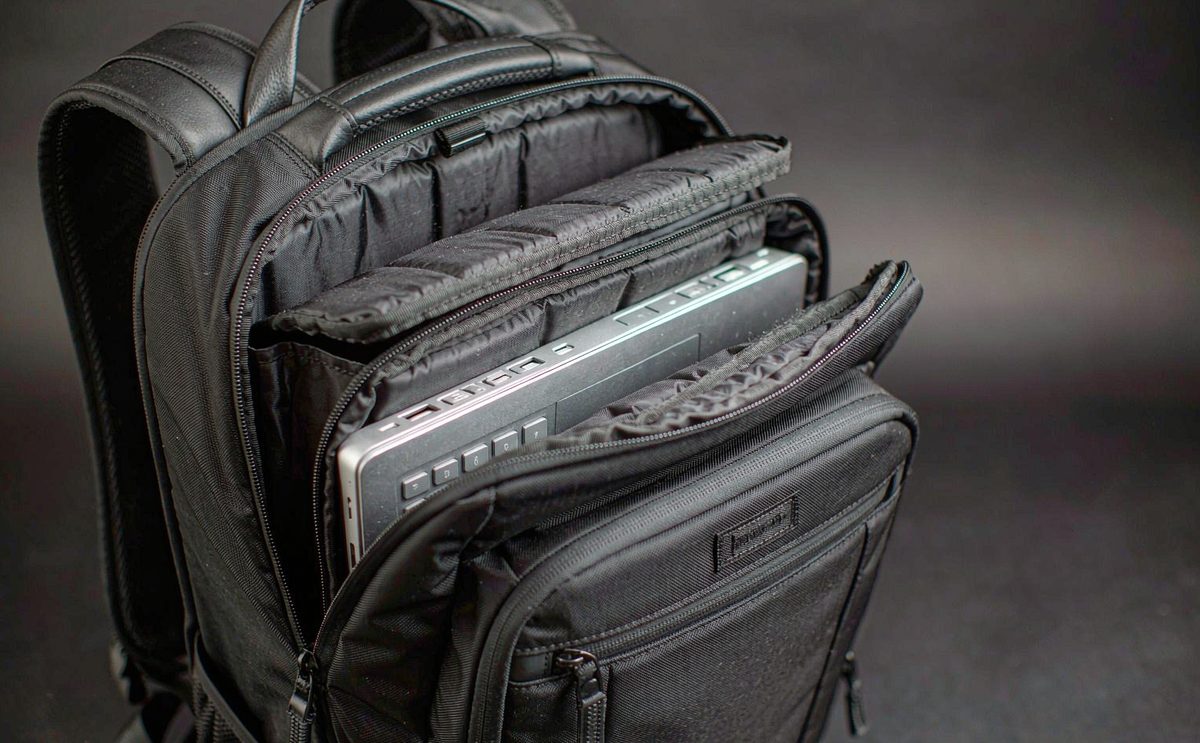
Gaming campaigns are attractive to creators because the audience is large, engaged and highly visible online, and hostile to creators because the same audience is technically literate and unforgiving of imprecision. That combination produces a specific brief. If you tell this audience a bag fits an 18 inch machine, they will measure it, they will post the measurement, and they will expect the manufacturer to have considered the power brick, the cooling geometry and the cables before they thought about anything decorative.
This article is written for creators building a bag reward into a gaming hardware, peripheral or content campaign. It covers the sizing discipline that this category demands, the genuine cost and risk of integrated lighting, and how to price a bag for an audience that knows what premium components cost. Read it alongside custom laptop bags for Kickstarter, which covers the construction fundamentals this article assumes.
On a gaming campaign, a specification table is marketing copy. Every number you publish becomes a promise that this audience will verify with a tape measure.
What makes the gaming audience different on crowdfunding
Three behaviours define this audience and all three change your campaign plan. The first is specification literacy. Backers here routinely know component model numbers, thermal design figures and chassis dimensions, and they treat missing numbers as concealment rather than brevity. A campaign page that says generously padded and spacious will underperform a page that states 8 mm closed cell foam, internal bay 410 by 290 by 42 mm, corner drop tested at 1.0 metre loaded.
The second is community amplification. Gaming audiences cluster in Discord servers, subreddits and comment threads where one detailed negative review reaches thousands of interested readers. This is a genuine advantage for a well executed product, because a respected community member validating your dimensions is worth more than any advertisement. It is also a genuine risk, because the same mechanism propagates a single fit failure across your entire addressable audience before you can respond.
The third is hardware attachment. Very few audiences care as much about protecting an object costing between USD 1,500 and USD 4,000. That attachment converts into willingness to pay for genuine protection, and simultaneously into intolerance of anything that might scratch, press or overheat the machine. Where an office commuter might accept a slightly loose fit, this audience will not, because their machine is both expensive and personally configured. Plan your updates around that behaviour. Weekly progress posts with measured results outperform emotional appeals with this audience, because what they want to see is evidence that the numbers on your page still hold.
Specifications, not adjectives: how this audience reads a page
Write the campaign page as though you are writing the technical pack, because for this audience the two are closer than usual. Publish internal bay dimensions in millimetres, largest supported model numbers, foam thickness and type, external dimensions, empty weight, fabric denier and construction, and any test results you hold. Every one of those lines converts browsers who were previously uncertain, and every one costs nothing but writing time.
- Internal bay dimensions in millimetres measured at the narrowest point, not at the mouth.
- Largest supported model by name, plus a compatibility list rather than a size category.
- Padding specification including material type and thickness in millimetres.
- External dimensions and empty weight, because these decide whether it fits under a seat.
- Fabric denomination and coating, since this audience compares against known materials.
- Drop and zipper test results with the protocol stated, not simply a pass claim.
Be explicit about what the bag does not do. Saying this bag is designed for commute and event transport, not for checked airline handling, costs you nothing and prevents a category of complaint you cannot otherwise win. Gamers respect honest boundaries far more than broad claims. Our experience across supported campaigns is that precise and modest language converts better than expansive language with this segment, every time. One further rule: never publish a figure you have not physically verified on a sample. This audience will test it, and a number that turns out to be optimistic damages credibility far more than omitting it would have.
Sizing for 17 and 18 inch machines: depth, thickness and gusset
The core engineering challenge is that gaming machines are not merely larger versions of office machines. A typical thin and light 14 inch laptop measures around 320 by 220 by 16 mm and weighs perhaps 1.4 kg. A 17 or 18 inch gaming machine measures closer to 400 by 290 by 30 to 42 mm and weighs 2.6 to 3.6 kg. The mass roughly doubles, but the volume nearly triples, and the difference in how that load behaves in a soft product is not linear.
| Device class | Body dimensions (mm) | Mass range | Bay specification implication |
|---|---|---|---|
| 14 inch thin and light | About 320 x 220 x 16 | 1.1 to 1.5 kg | Standard 6 to 8 mm foam bay is adequate |
| 16 inch workstation | About 355 x 250 x 20 | 1.9 to 2.4 kg | 8 to 10 mm foam plus suspended base |
| 17 inch gaming machine | About 395 x 275 x 30 | 2.6 to 3.2 kg | Reinforced bay, wide gusset, strong base |
| 18 inch flagship gaming | About 410 x 300 x 40 | 3.2 to 3.6 kg | Dedicated bay with rigid insert and retention strap |
| Power brick for above | Varies widely | 0.8 to 1.2 kg | Separate padded pouch away from the machine |
Three consequences follow directly. First, the bay must be suspended and reinforced, because 3.5 kg sitting unsupported in a soft panel will sag the bottom seam within months. Second, the gusset must be wider than intuition suggests, because a 40 mm thick chassis inside a bag whose total depth is 60 mm leaves almost nothing for padding on both faces. Third, shoulder strap width matters, because carrying 4.5 kg on 25 mm webbing for twenty minutes is genuinely painful, and this audience does carry that load.
We recommend specifying a minimum 50 mm wide shoulder strap with a padded section for any build above 4 kg total load, along with a sternum strap so the weight can be stabilised. These are not premium features here, they are functional requirements. Skipping them produces reviews that say hurts my shoulders, and shoulder complaints in reviews are disproportionately damaging because every reader can picture them immediately.
The power brick problem that only this category has
Almost every product designed for gamers forgets the power supply until the first sample arrives. A high performance gaming laptop ships with a substantial external brick, frequently measuring around 160 by 80 by 30 mm and weighing 0.8 to 1.2 kg, plus a mains cable and often a second regional lead. It is heavy, it is awkwardly shaped, and it is rigid with sharp corners. Put it in the same compartment as the laptop and its corners press directly into the machine's lid.
The correct answer is a dedicated external pocket with its own padding, positioned on a different face of the bag from the laptop bay, ideally at the base where its weight sits low and improves rather than degrades carrying comfort. Give it a retention strap so the brick does not migrate, and size it generously, because brick dimensions vary considerably between generations and a pocket sized to one model will exclude its successor.
Then think about cable routing. Gamers carry the brick plus at least one mains lead, frequently a second, and often a USB cable and a small hub. A cable channel that runs down the inside of the bag's back panel, separate from the main volume, keeps those leads from tangling with the machine and from abrading the aluminium lid. This is a low cost feature, it photographs beautifully in a campaign video, and it solves a problem every single person in this audience has actually experienced. Weight distribution is the final consideration. Because the brick is the densest single object carried, locating it low and close to the back panel measurably improves comfort, and it also stops the bag swinging when the wearer walks quickly.
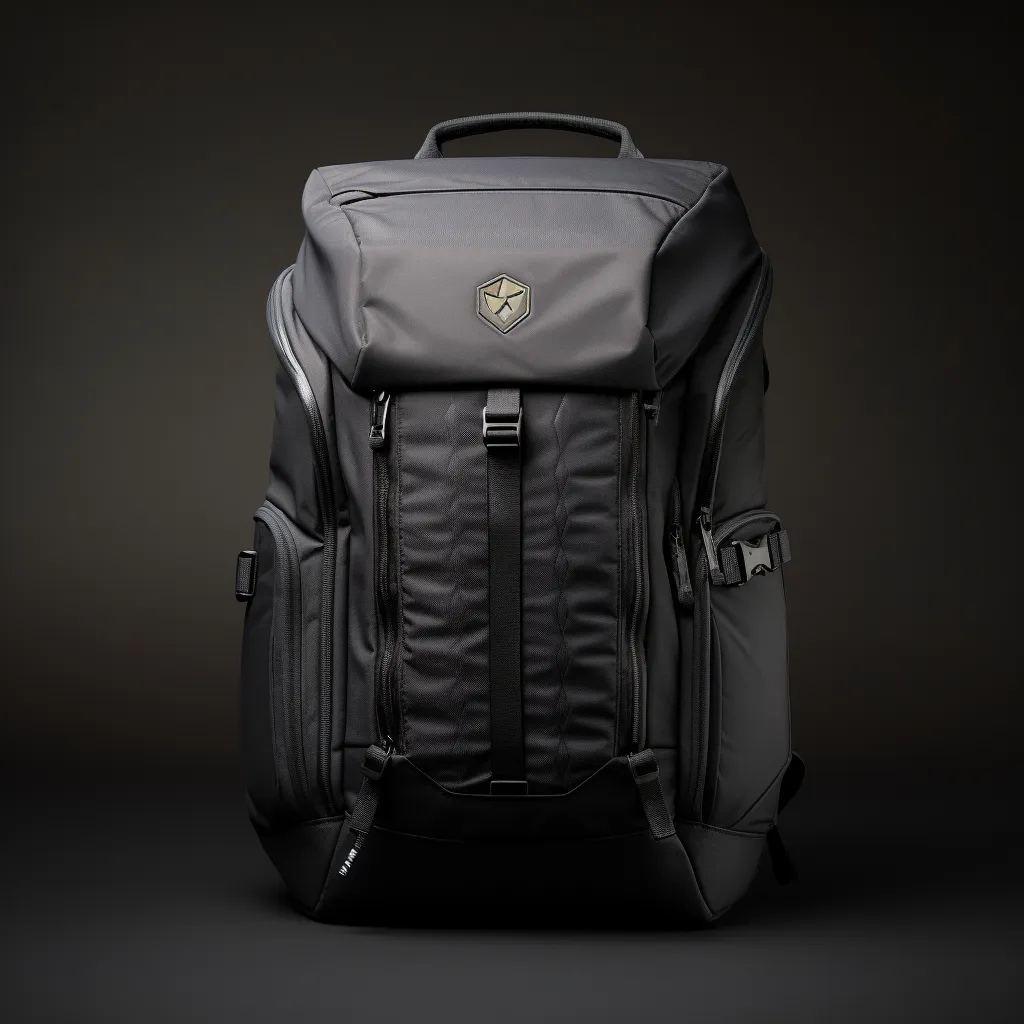
RGB and EL lighting: what it really takes in a soft product
Integrated lighting is the most requested feature in gaming bag briefs and the one most often removed after costing. The reason is that lighting turns a sewn textile product into a soft electronics product, and soft electronics are hard. A LED strip attached to a panel must survive flex, impact and folding during packing. Every solder joint or connector becomes a candidate failure point, and unlike a rigid product there is no housing to absorb strain.
Realistically budget USD 3.50 to 9.00 per unit for a lighting implementation once you include the diffuser, the wiring harness, the controller, a power source, the extra assembly labour and the additional quality steps. Expect the project to involve electronic components whose own minimum order quantities frequently exceed your bag quantity. And plan for a compliance conversation, because powered goods entering major markets require appropriate electrical conformance documentation, which is a cost and a calendar item rather than a formality.
- Diffuser quality decides the look. A visible dot pattern reads as cheap; a silicone diffuser reads as designed.
- Connectors fail before LEDs do. Strain relief at every joint is more important than the LED specification.
- Removable is safer than integrated. A removable light module can be replaced, upgraded and left at home.
- EL wire is cheaper but dimmer. It suits accent lines rather than anything a buyer expects to be bright.
- Component minimums often exceed 500. Ask before you quote, since this changes unit economics sharply.
Our standing recommendation is to start without integrated lighting. Reflective piping, retroreflective webbing and a dark tonal design with a single accent colour deliver much of the visual identity at a fraction of the cost and none of the reliability risk. If the campaign succeeds, lighting becomes a natural second generation feature. Several creators we have supported have taken exactly that path, proving demand first and adding complexity only once reorder volumes justified it.
Power, wiring and the reliability risk that comes with it
Where lighting genuinely earns its place, usually on a high price tier aimed at streamers or event attendees, design for serviceability from the beginning. Specify a removable module with a defined connector rather than a permanently sewn harness. Route wiring through a channel that can be opened for repair. Keep the power source in its own pocket with a pass through port, so the buyer supplies their own power bank and you never ship a lithium cell inside a textile product.
That last point deserves emphasis. Shipping bags containing lithium cells converts your fulfilment into dangerous goods logistics with its own packaging, labelling, documentation and carrier restrictions, and dramatically raises both freight cost and regulatory exposure. Providing a pocket and a cable route while letting the backer supply the power bank avoids that entire regime, keeps your declared value lower, and is generally better received by audiences who already own multiple power banks.
Testing then changes shape. A lighting module needs its own functional test, ideally every unit rather than a sample, plus a flex test on the wired assembly and a defined inspection step for connector seating. Our default is to require 100 per cent functional testing for any powered feature, because AQL sampling cannot meaningfully protect you against intermittent connection faults. Build that cost into the unit price at quotation, because adding it later surprises nobody's budget pleasantly. Cost that profile honestly before quoting a tier. A replaceable light module that can be serviced costs slightly more per unit than a sewn harness and is far cheaper than replacing returned units at your own expense.
Cooling clearance and whether ventilation belongs in a bag
High performance laptops expel a substantial volume of hot air, commonly through rear and side vents, and a poorly designed bag can block those vents. The practical risk is real but often overstated: the machine is almost always off and cool while carried. The genuine requirement is simply clearance and no pressure. Design so that no pad presses against vent locations, keep the bay slightly larger than the machine to allow air movement, and avoid placing anything that traps heat directly against the chassis.
What you must avoid is marketing language implying active cooling. Phrases suggesting the bag cools your machine invite a dispute you cannot win, because any enclosure raises rather than lowers temperature for a powered device. State honestly that the design preserves clearance around vent areas and that machines should be powered down and cool before packing. This audience will respect a correct technical explanation, and will ridicule a claim contradicting basic thermodynamics. Where you want additional assurance, ask for a simple temperature observation test during sampling rather than any claim of active performance, and keep the honest explanation visible in the campaign copy. Keep the wording simple and passive: say the design leaves clearance around vent zones, rather than implying that the bag improves anything thermal. That one sentence has saved more campaigns from disputes than any measurement we could put on the page.
- Bay clearance
- Keep clearance around vent zones, no pad pressure
- Recommended position
- Machine powered down and cool before packing
- Avoid
- Claims implying active cooling or temperature reduction
- Lighting added cost
- Typically USD 3.50 to 9.00 per unit installed
- Powered feature testing
- 100 per cent functional test recommended
- Total load guidance
- 50 mm or wider strap with padding above 4 kg
Structure and fabric choices for heavy daily loads
Load drives every material decision here. Where a commuter laptop bag might use 600D polyester throughout, a gaming bag carrying 4.5 kg benefits from higher specification material on the load path panels and at the base. Our usual recommendation is 900D to 1200D polyester or a high density equivalent on base and back panels, with standard 600D on low wear areas, which balances cost against the additional abrasion that heavy bags inevitably see.
Then specify the internals. A rigid or semi rigid base insert spreads load and prevents the sag that makes a heavy bag feel worse than it is. Reinforced back panel stiffening protects both comfort and the laptop, and moulded padding here is genuinely worth its cost once you are above 1,000 units. Finally, insist on a suspended bay design that keeps the heavy machine's mass anchored to the frame rather than hanging from a seam, which is the difference between a bag lasting two years and one lasting six months.
Durability expectations should also be written down. This audience understands material specifications and compares them directly. Publishing a rub count target of 30,000 cycles or higher, along with a stated drop protocol, is normal here and costs nothing beyond honesty. The detailed protocol we recommend for large machine builds is set out in laptop bag drop and zipper testing, which covers loaded testing with realistic masses. Hardware also needs a step up. Larger machines put more tension through buckles and adjusters, so specify metal or high grade acetal components on load bearing positions rather than the lighter parts used on commuter bags.
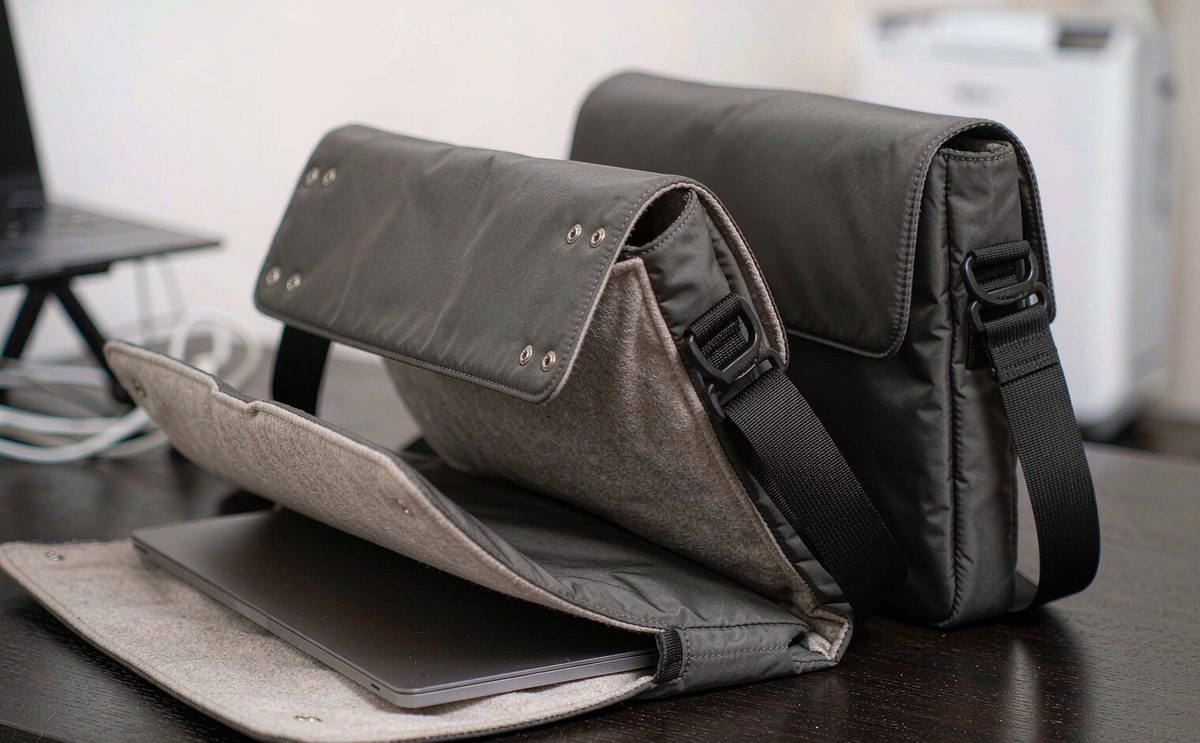
Peripheral layout: mouse, headset, controller and cables
The machine is only part of what travels. A gaming bag needs to carry a mouse and its receiver, a headset, frequently a controller, assorted cables, sometimes a small external drive, and often a folding or travel keyboard. Each of those has a shape that resists being stuffed into a generic pocket, and the layout is where most designs succeed or fail with this audience.
- Give the headset its own shaped pocket. A large rigid pocket with soft lining, away from the laptop face.
- Secure the mouse with elastic loops. Loose mice rattle and their cables tangle around everything else.
- Allow space for a compact controller. Approximately 160 by 110 by 65 mm is a reasonable planning envelope.
- Run a dedicated cable channel. Separate from the main volume, ideally along one internal edge.
- Protect.screen faces from keys. Nothing hard should ever be able to press into the lid.
- Keep a small parts pouch. Receiver dongles and USB adapters disappear in open pockets.
The unifying rule is separation. Every hard object must have a place where it cannot meet the laptop lid, because even a modest keycap pressed through fabric can mark a display permanently. Draw the internal layout from a realistic kit list with all of those items, then check during sampling by packing every single one. Sampling for these layouts runs alongside our standard 6 to 10 working days window for most builds, extending to 12 to 15 working days when moulded components are involved. Document the layout in the technical pack as a drawing rather than as a list, because a list leaves relationships unspecified. Panel order, pocket orientation and cable path all need to be visible before first cutting starts.
Pricing a gaming bag against what this audience pays
This audience is comfortable paying for performance, but they compare against known alternatives and detect padding quickly. A well specified gaming backpack with no electronics typically lands somewhere in the USD 20 to 34 per unit range at 500 pcs exported FOB Xiamen, falling to roughly USD 17 to 29 at 1,000 pcs. Adding integrated lighting pushes those figures up by the USD 3.50 to 9.00 discussed earlier, before the compliance and testing costs are counted.
Retail anchors for comparable bags sit well above those figures, which leaves room for a healthy campaign margin at pledge levels this audience accepts. The important discipline is to price the honesty, meaning that the room you leave should visibly come back to the backer in specification rather than in decoration. Better padding, wider straps and a real brick pocket are things this audience values; a larger logo is not.
Do model the landed cost carefully, particularly if you ship internationally, because gaming audiences are global and your freight assumptions will decide whether the tier works. Movement across quantity tiers behaves in the same way as for any laptop bag, and the full curve is documented in laptop bag pricing by quantity. Standard terms remain T/T 30/70 with bulk production taking 35 to 50 days after deposit and sample approval. If you are still deciding whether this audience warrants a bag at all, our crowdfunding bag guide sets out the comparison against other reward categories before you commit to a minimum run.
Quality control specific to gaming builds
Gaming builds need two additions to a standard bag quality plan. The first is loaded testing at realistic mass. Do not test at 1.5 kg when the bag will carry 4.5 kg; the failure modes are genuinely different, because seam loading, strap anchorage and zipper bowing all scale non linearly. Specify a dummy load matched to the largest supported machine plus peripherals, and drop test with that load in place.
The second is electronic function testing where lighting is included. As noted, our recommendation is 100 per cent rather than sampled, because intermittent faults escape sampling by definition. Then add a flex test on any wired assembly, and require the inspector to check connector seating visually on every unit. Build these steps into the quoted unit cost rather than discovering them at pre shipment inspection, which is the wrong and expensive place to discover anything.
Standard inspection to AQL 2.5 to ISO 2859-1 still governs appearance and construction classification. Define critical defects to include any strap anchorage weakness, any failure of the laptop retention system, and any internal bay dimension outside the stated tolerance. Then publish a compatibility list and hold the finished goods against the exact machine model named at the top of that list, because a 5 mm shortfall discovered by a backer is a campaign problem rather than a quality statistic. Publish the results wherever possible. A short inspection summary in a campaign update is cheap evidence that the numbers on your page were checked rather than assumed, which is exactly what this audience rewards.
Validating the design with your community before you commit
The single highest return activity available to a gaming campaign is community validation before tooling or production. Publish your proposed dimensions and ask whether the largest machines in your community fit them. Post the internal layout drawing and ask what is missing. Our team has repeatedly seen this process change a specification materially, usually by catching a device generation that the creator did not own and had not measured.
Run it as a structured survey rather than an open thread. Ask for the device model, measured dimensions in millimetres, whether the owner carries a power brick, and what peripherals they travel with. Reward participation with a discount or early access. You will end up with a data set that both improves the product and becomes campaign proof that the design was built with rather than for the community.
Then hold to a specification freeze date. Community input is valuable until it paralyses; at some point you must stop adding machines to the compatibility list and commit to a number. Freeze the specification once you have covered the large majority of your community's devices, publish the list honestly, and move into sampling. Our team can support the transition from validated brief to physical sample inside the standard 6 to 10 working days window for most builds.
Key takeaways
- This audience will measure everything you publish. Give them millimetres, model numbers and test protocols, and treat every published number as a commitment.
- Start without integrated lighting. Ship the structural quality first, then add powered features when reorder volumes justify the reliability and compliance cost.
Engineer the bag around the real machine
Send us the largest laptop you need to fit, whether the power brick travels with it, your peripheral list and your target quantity. As your production partner we will return a costed specification with bay, gusset and anchorage defined, sampling at 6 to 10 working days and a booked 35 to 50 day production window on FOB Xiamen terms. Write to service@junyuanbags.com.
Frequently Asked Questions
What size laptop bay do I need for an 18 inch gaming laptop?
Plan around roughly 410 by 300 mm of internal floor space with 40 mm of depth, plus 4 to 8 mm of ease. An 18 inch flagship machine typically weighs 3.2 to 3.6 kg, so specify a suspended bay with a semi rigid base insert and a retention strap rather than a simple sleeve pocket.
Should I include RGB lighting in a first gaming bag campaign?
Usually not. Integrated lighting adds USD 3.50 to 9.00 per unit plus component minimums, electrical compliance costs and real reliability risk. Reflective piping and a strong accent colour deliver much of the visual identity for very little. Add lighting on a second generation when reorder volumes justify it.
How much does a gaming laptop bag cost to manufacture?
A well specified gaming backpack without electronics typically lands around USD 20 to 34 per unit at 500 pcs FOB Xiamen, falling to roughly USD 17 to 29 at 1,000 pcs. Heavy loads need upgraded base fabric, a suspended bay and wide padded straps, all of which sit at the upper end of those ranges.
How heavy is a typical gaming laptop compared with an office one?
A 14 inch thin and light machine weighs 1.1 to 1.5 kg. A 17 or 18 inch gaming machine weighs 2.6 to 3.6 kg, and the power brick adds another 0.8 to 1.2 kg. Total carry load frequently reaches 4.5 kg, which changes strap width, anchorage and base structure requirements.
How predictable is the production schedule for a gaming bag build?
Reliability comes from booked capacity rather than from raw output figures. Our production programme runs across seven lines with 149 machines and monthly output around 200,000 pcs, which is what lets us commit a specific 35 to 50 day window after deposit and written sample approval instead of competing for ad hoc slotting.
Where should the power brick go in a gaming bag?
In a dedicated padded pocket on a different face from the laptop bay, ideally low on the bag so its weight improves carrying stability. Keep it separated from the machine by padding and structure, add a retention strap, and size it generously because brick dimensions vary between generations.
Do I need to worry about blocking laptop cooling vents?
Design for clearance rather than for cooling. Ensure no pad presses against vent locations, keep some air space around the chassis, and state that machines should be powered down and cool before packing. Avoid any claim implying the bag actively cools a running device, since that contradicts basic thermodynamics.
Can I ship a bag containing a lithium battery power bank?
We recommend against it. Shipping lithium cells converts your fulfilment into dangerous goods logistics with extra packaging, labelling, documentation and carrier restrictions. Provide a pocket and a cable pass through instead, and let the backer supply their own power bank.
What strap specification suits a 4.5 kg total load?
At least 50 mm wide webbing with a padded section, plus a sternum strap for stability. Standard 25 mm tape carrying that mass is uncomfortable within twenty minutes and generates the shoulder complaints that dominate negative reviews in this category.
How should I state laptop compatibility on my campaign page?
List specific model numbers and internal dimensions in millimetres rather than screen sizes. Publish a compatibility list including any notable exceptions. Then have inspectors check the finished goods against the exact machine at the top of that list, because this audience will do exactly that check themselves.
What testing should a gaming bag be specified to?
Loaded drop testing with a dummy mass matched to the largest supported machine plus peripherals, not an empty or nominal load. Add strap anchorage pull tests, main zipper flex testing, and any functional testing for powered features. Standard construction inspection follows AQL 2.5 to ISO 2859-1.
How do I know which devices my community actually carries?
Run a structured survey asking for model, measured dimensions in millimetres, whether the power brick travels, and which peripherals are carried. Offer early access as a reward for responses. Freeze the specification once the large majority of reported devices are covered, then move to sampling.
People Also Ask
Is RGB lighting worth it on a gaming laptop bag?
Usually not for a first run. It adds USD 3.50 to 9.00 per unit, component minimums, compliance costs and genuine reliability risk. Reflective detailing and a bold accent colour give most of the look. Add lighting later when reorder volume justifies the engineering.
What do gamers dislike most about laptop bags?
Vague fit claims, shoulder discomfort under heavy loads, and nowhere for the power brick. All three are solvable at specification stage for very little money, which is why doing the specification properly matters more in this category than in almost any other.
How much will this audience pay for a good bag?
More than most audiences, provided the value is visible in specifications rather than in decoration. They respond to stated foam thickness, robust anchorage, wider straps and genuine brick storage, and they discount a large logo entirely.
Can one bag fit both 15 and 18 inch machines?
Technically yes, but it is a poor product. An oversized bay lets the smaller machine move, which defeats the padding. Either offer two sizes or choose the size your community survey shows is most common and say so clearly.
Should the headset have its own compartment?
Yes. A large rigid pocket away from the laptop face keeps the headset from pressing into the lid and stops its cables tangling with everything else. This single layout decision resolves many of the most common complaints in this category.
How do I avoid excess inventory on a gaming bag?
Validate demand with your community first, run one hero colourway at the 500 pcs minimum, and keep the design usable as an everyday bag so unsold units remain sellable. Add second colourways and complex features only on confirmed reorders.
Does the bag need to be waterproof for this audience?
Water resistant is sufficient and honest. Fully waterproof requires coated zippers and sealed seams, which materially changes cost and usability. Claim what your construction actually delivers and describe the test that supports it.