Kickstarter Luggage Campaigns: 10 Lessons From Funded Travel Brands
Luggage campaigns fail on the same small set of decisions, and they succeed on the same small set of disciplines. The ten lessons below come from travel bag programmes that funded and delivered: specify before you design the page, test the carry-on claim against a sizer, treat the wheel and handle assembly as the product, photograph the production sample, price from landed cost, treat a colourway as a doubling, put sampling on the calendar, treat inspection as the reputation event, design the shipper, and book the re-order before the campaign closes. Minimum 500 pcs per style and colourway, sampling 6 to 10 working days, bulk 35 to 50 days.
- What funded luggage campaigns share
- Lesson 1: fund the specification before you fund the page
- Lesson 2: carry-on claims must survive a physical sizer
- Lesson 3: the wheel and handle assembly is the product
- Lesson 4: photograph the production sample, not the render
- Lesson 5: price the reward from landed cost, not FOB
- Lesson 6: a second colourway is a doubling, not an option
- Lesson 7: sampling is a calendar item, not a formality
- Lesson 8: inspection is where the campaign reputation is decided
- Lesson 9: fulfilment packaging is part of the reward
- Lesson 10: plan the re-order before the campaign closes
What funded luggage campaigns share
Travel is one of the most crowded categories on Kickstarter and Indiegogo, and it is also one of the most forgiving of genuine specification. A backer comparing three carry-on rewards at similar prices is not comparing colours, they are comparing evidence: dimensions, materials, hardware, test results and whether the campaign has clearly thought about what happens after funding. That is why a campaign with a modest page and a rigorous specification regularly outperforms a campaign with a beautiful page and a vague one.
The campaigns that fund and then deliver share a second characteristic, which is more mundane and more predictive: they treat the production programme as a schedule with dates rather than as a sequence of steps to be started when the previous one finishes. Sampling has a start date and a completion date. Materials are booked against a deposit. Bulk production has a window. Inspection has a date and a recipient. Freight has a cut-off. Each of those is a line a coordinator can chase, and a campaign without them is a campaign guessing.
What follows are ten lessons drawn from travel bag programmes that reached their backers. They are ordered roughly in the sequence in which they matter, from the specification work done before launch through to the re-order decision taken after it. Each one has a number attached, because every one of them is a cost or a calendar consequence rather than a matter of taste. Start with the category context on our custom travel bags for Kickstarter pillar page if you are still deciding the format.
Key takeaways from funded travel programmes
- Specify first, design the page second; a page built before a specification generates claims the sample cannot support.
- Every colourway is a separate 500 pcs commitment and doubles the programme.
- The wheel and handle assembly on a wheeled case is where warranty claims concentrate; budget and test accordingly.
- Price from landed cost: FOB plus freight plus duty plus fulfilment plus a warranty reserve.
- Inspection at AQL 2.5 to ISO 2859-1 is the last point at which the campaign can still fix something.
- Minimum order quantity
- 500 pcs per style and per colourway
- Sampling
- 6-10 working days (12-15 for complex builds)
- Bulk production
- 35-50 days after deposit and approved pre-production sample
- Inspection
- AQL 2.5 to ISO 2859-1
- Trade term
- FOB Xiamen
- Payment
- T/T 30/70
- Ocean transit
- 18-30 days to US West Coast, 28-38 days to Northern Europe
- Air transit
- 3-8 days for a partial shipment
- Production floor
- 4,950 m² SGS-verified, 137 staff, 7 lines, 149 machines
- Monthly capacity
- 200,000 pcs per month
Lesson 1: fund the specification before you fund the page
The most expensive mistake in this category is writing the campaign page before the specification. A page written first makes promises about dimensions, capacity, weight and features that the sample then has to satisfy, and when the two disagree the campaign either ships something different from what was sold or eats a redesign. Both outcomes are worse than writing the specification first and letting the page describe it.
The discipline is simple and it costs an extra week at the front of the project. Write the tech pack first: external dimensions with a tolerance, capacity as a separate claim, material set, hardware schedule, opening geometry, internal layout and branding placement. Take that pack to a sampling quote. Then write the page from the pack, using the same numbers in the same units. The page will be less flowery and far more persuasive, because every sentence in it is checkable.
There is a conversion argument for this as well as a risk argument. Travel backers are comparison shoppers who read specification tables, and a page with real numbers converts better with this audience than a page with adjectives. Campaigns that publish a genuine specification table also attract fewer post-funding questions, which matters because a campaign team answering the same hundred questions about dimensions is a team not working on the production schedule.
Lesson 2: carry-on claims must survive a physical sizer
Carry-on is the single most valuable word in travel marketing and the single most dangerous word in a travel specification. Airlines publish their own cabin baggage allowances and they differ, sometimes by several centimetres in each direction, and a bag designed to one airline's figure will be gate-checked on another. The widely used industry reference point is the IATA cabin baggage suggestion of a bag around 55 x 40 x 20 cm including handles, wheels and any protrusion.
The lesson from funded campaigns is that the claim should be tested physically before it is written. Build or buy a sizer at the sample stage, place the packed bag in it, and record the result with a photograph. A bag that fits the sizer empty and fails it packed is a bag that will generate complaints, because backers do not travel with empty luggage. The growth is real: a soft bag gains 2 to 5 cm in depth when filled, and a structured bag with an external pocket gains whatever the pocket holds.
- Measure the sample empty at three points, including handles, wheels and any external pocket.
- Pack the sample to capacity and measure again; record both figures.
- Test against a physical sizer and photograph the result for the campaign page.
- State capacity in litres separately from external dimensions, so the two claims cannot be confused.
- Write designed to fit most major carry-on sizers rather than guaranteed compliant.
- Re-measure the pre-production sample, not only the first sample, before the page goes live.
The wording matters legally as well as practically. A claim of guaranteed carry-on compliance is a promise the campaign cannot honour across several hundred airlines with differing rules, and it is the kind of promise that turns a product disappointment into a dispute. A claim of designed to fit most major sizers, backed by published dimensions and a photograph of the bag in a sizer, is both honest and more persuasive to an audience that knows airlines differ.
Lesson 3: the wheel and handle assembly is the product
On a wheeled carry-on, the body is a container and the wheel and handle assembly is the product. It is also where the warranty claims concentrate, by a wide margin. Funded luggage campaigns that underestimated this learned it in the first month after delivery: a wheel housing that cracks, a telescopic handle that jams, or a bearing that seizes after a season is a failure the backer experiences every single trip.
| Component | Failure mode | Specification response |
|---|---|---|
| Wheel housing | Cracks at the mounting boss | Reinforced housing, stated material, mounting plate through the base |
| Wheel tread | Wears flat, splits | Stated durometer and material; replaceable wheel where possible |
| Bearing or axle | Seizes, squeaks | Sealed bearing stated, with a corrosion expectation |
| Telescopic handle | Jams, wobbles at extension | Stated tube gauge, button mechanism and wobble tolerance |
| Handle grip | Cracks, becomes sticky | Stated overmould material and a temperature range |
| Top grab handle | Tears at the attachment | Bar-tacked through the frame, not the lining |
The specification response costs money, and funded campaigns budget for it deliberately. A quality wheel and handle assembly is a meaningful share of the unit cost of a wheeled case, and it is the line most often shaved when a campaign is trying to hit a price point. The lesson is that shaving it costs more later: a replacement programme on even 3 per cent of a 2,000 unit order, shipped at the campaign's expense, exceeds the saving several times over.
The practical instruction is to specify the assembly as a tested sub-assembly rather than as a list of parts. Ask for the wheel roll test distance, the handle extension cycle count and the wobble tolerance, and test them on the sample. Our article on sampling tests for zippers, handles and wheels sets out the protocols in detail, including roll distance and cycle counts that are realistic for a 6 to 10 working day sampling round.
Lesson 4: photograph the production sample, not the render
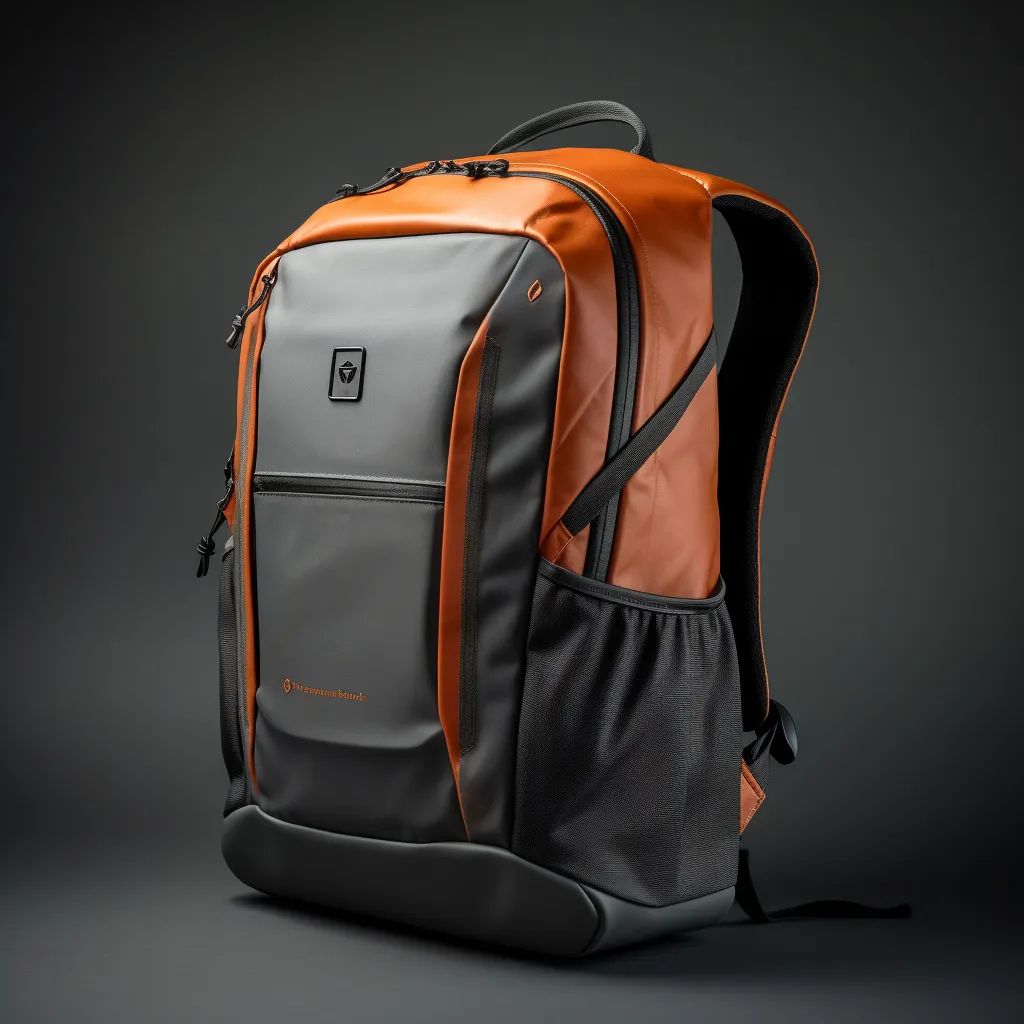
Every funded travel campaign faces the same temptation: the render is ready in week two and the sample arrives in week eight, so the page is built on the render. It is a decision that costs credibility in the category with the most comparison-shopping backers. A render has no seam, no stitch line, no hardware reflection and no fabric drape, and travel backers who have been disappointed before know exactly what a render is hiding.
The funded campaigns that handle this well do it in one of two ways. Either they delay the page until the first sample exists and photograph it, accepting a later launch for a stronger one; or they build the page with the render clearly labelled as a visualisation and publish a sample update the moment photography exists. Both work. What does not work is a page that presents a render as though it were a photograph and never corrects it.
There is a production benefit to waiting as well. Photographing the sample forces the campaign team to look at the real stitching, the real hardware and the real drape, and that review routinely finds two or three specification issues a render would never show. Those issues then go onto the revision list for round two rather than into the backer's hands. The cost of waiting is a later launch; the cost of not waiting is a first production run built on an unreviewed design.
Lesson 5: price the reward from landed cost, not FOB
The most common arithmetic error in crowdfunding is pricing a reward from the FOB unit cost plus a margin. FOB Xiamen means the goods are delivered on board at Xiamen and risk transfers there. Ocean freight, insurance, customs clearance, duty and inland delivery to the fulfilment warehouse are all on the campaign's side of that line, and on a bulky travel product they are a large share of the total.
| Element | Typical share of landed cost | Note |
|---|---|---|
| FOB unit cost | 45-60% | The figure most campaigns price from |
| Ocean or air freight | 8-18% | Billed on chargeable weight |
| Duty and customs clearance | 5-15% | Depends on classification and destination |
| Inland delivery to the warehouse | 3-8% | Depends on distance from port |
| Pick, pack and despatch | 6-12% | Per unit at the fulfilment centre |
| Platform and payment fees | 8-10% | On gross pledge value |
| Warranty and returns reserve | 2-4% | Frequently omitted entirely |
A campaign that prices from FOB alone and applies a 2.5x multiple is, on those shares, pricing below its own landed cost once freight and duty are included. The correction is to build the price from the bottom: FOB unit cost, plus freight at the actual chargeable weight, plus duty at the correct classification, plus inland delivery, plus pick and pack, plus platform fees, plus a reserve. Then apply the margin. The resulting number is usually higher than the one the campaign wanted, which is useful information to have before launch rather than after it.
The freight line deserves one specific note because travel products are bulky and chargeable weight is billed on the greater of actual and volumetric. A carry-on case with a volume of roughly 45 litres has a volumetric weight far above its actual weight, so the shipment bills on volume. Budget 18 to 30 days port to port to the US West Coast and 28 to 38 days to Northern Europe by sea, or 3 to 8 days by air for a partial shipment if the delivery date demands it. Our crowdfunding rewards fulfilment page covers the destination side.
Lesson 6: a second colourway is a doubling, not an option
The minimum is 500 pcs per style and per colourway, and that sentence contains a decision most campaigns make too late. A colourway is a style for minimum purposes. One bag in one colourway is a 500 pcs commitment; the same bag in two colourways is 1,000 pcs; three colourways is 1,500 pcs. A campaign that offers four colours on the page without reading that sentence has committed to 2,000 units before it has sold one.
| Styles | Colourways | Total pcs | Assessment |
|---|---|---|---|
| 1 | 1 | 500 pcs | Lowest risk; one colour on the page |
| 1 | 2 | 1,000 pcs | Standard; two colours on the page |
| 1 | 3 | 1,500 pcs | Needs proven demand |
| 2 | 2 | 2,000 pcs | Retail-scale commitment |
| 2 | 3 | 3,000 pcs | Only with a pre-order signal |
The funded campaigns that managed this well did one of two things. Either they offered one colourway on the page and used the survey after funding to allocate a second colourway from the same 500 pcs commitment, which keeps the commitment intact and still gives backers a choice; or they offered two colourways and priced the programme knowing the commitment had doubled.
The lesson is not that colourways are bad, it is that a colourway is an inventory decision before it is a marketing one. Two colours lift conversion because the page looks richer and because backers like choosing. They also double the material purchase, the cutting room setup, the inspection sub-lots and the risk. Decide which of those you are buying with the same clarity you would apply to any other doubling of spend.
Lesson 7: sampling is a calendar item, not a formality
Sampling runs 6 to 10 working days for a standard build and 12 to 15 working days for a complex one. Campaigns that treat that as a formality consistently lose three to five weeks, because they start sampling without a written specification, review the sample visually rather than physically, and return an unnumbered revision list. Campaigns that treat it as a calendar item with agreed dates, a test protocol and a numbered list finish inside the window.
- Agree the sampling start date and completion date in writing before the deposit is released.
- Send a complete tech pack; a sample started without one is a sample that will be wrong.
- Review the sample physically: measure it, load it, cycle the zips, roll the wheels, extend the handle.
- Return one numbered revision list, each item naming a component and a required change.
- Budget for two rounds. One round is optimistic on a travel bag and three is a planning failure.
- Approve the pre-production sample in writing and keep it as the inspection reference.
The single largest lever on sample count is the precision of the revision list. A list that says improve the handle produces another sample and another two weeks. A list that says increase the bar-tack width at the top handle attachment to 12 mm and extend the webbing tail 40 mm into the base panel produces one corrected sample. Funded campaigns that finished on time wrote lists of the second kind, and they wrote them against a reference unit rather than from memory.
Lesson 8: inspection is where the campaign reputation is decided
Inspection at AQL 2.5 to ISO 2859-1 is the last point in the programme at which the campaign can still fix something. After it, the goods are on a vessel and the only remedy is a replacement programme paid for by the campaign and experienced by the backer. Funded travel campaigns that treat inspection as a formality and those that treat it as the reputation event are distinguishable in their review sections within a month of delivery.
- Agree the defect class list before inspection day, not during it; a class agreed afterwards will be disputed.
- Size the draw under general inspection level II and confirm the sample size before the visit.
- Use the approved pre-production sample as the reference for shade, branding and construction.
- Inspect the packing outcome as well as the product: piece count, carton marking, bagging and insert.
- Require the report to be issued to you before the 70 per cent balance is released.
- Photograph any defect found and keep the images with the report; they are the evidence if a dispute follows.
The defect classes that matter most on a travel product are the ones backers notice on first use rather than the ones that appear in a photograph: zip action, handle attachment, wheel rotation, telescopic handle extension, and shade match between panels and between colourways. A pre-shipment inspection that checks appearance and skips function will pass a shipment that generates complaints, which is why the class list should include functional checks with a stated method.
One procedural point decides whether the inspection has any force: the payment structure. With T/T 30/70, the 30 per cent deposit falls due on written approval of the pre-production sample and the 70 per cent balance falls due after a passed inspection and before cargo release at FOB Xiamen. That structure gives the campaign real leverage, and it only works if the campaign actually waits for the report. Our Kickstarter campaign bag QA and QC page lists the defect classes we log.
Lesson 9: fulfilment packaging is part of the reward
A travel reward arrives through a network that is not gentle with bulky soft goods. The funded campaigns that understood this specified the shipper: carton strength, units per carton, internal protection, bagging and whether the product ships flat or assembled. The ones that did not discovered that a crushed corner on a structured bag is a defect the backer attributes to the product rather than to the journey.
The specification is not expensive and it is entirely within the campaign's control. State the carton grade and strength, the units per carton, whether each unit is individually bagged, whether corners are protected, and the drop and compression expectation for the packed carton. State also whether cubes and accessories ship nested inside the body or as a separate pack, because that decision affects both protection and freight volume at once.
There is a second dimension to this lesson, which is unboxing. In the travel category the arrival photograph is a meaningful share of the campaign's organic reach, and a bag that arrives in a plain brown carton with no insert produces a less shareable moment than one that arrives with a printed card and a considered presentation. The cost difference is small, typically well under a dollar per unit, and it is one of the cheapest marketing lines in the whole programme.
Lesson 10: plan the re-order before the campaign closes
The last lesson is the one that separates a campaign from a brand. A travel bag that funds well can sell again: to a post-campaign store, to late backers, to a second campaign. The campaigns that captured that upside agreed the re-order price, the re-order lead time and the validity period in writing during the original RFQ, before the campaign closed, rather than asking for a price after the fact when they had no leverage and no time.
A re-order on an existing style with existing materials and an existing marker is materially faster than the first production window, and it avoids the worst outcome in the category: a sold-out campaign with no ability to restock while demand is visible on the page. Agree the figures, agree the validity period, and put a date in the calendar by which the option is either exercised or allowed to lapse.
The same logic applies to the add-on upside. Where a campaign offers a packing cube set or an accessory, agree the re-order terms for those at the same time, because the add-on is the item most likely to outsell its forecast. Our article on packing cube sets as an AOV lever models that arithmetic, and the crowdfunding bag guide covers the pledge ladder mechanics from the campaign side.
Taken together, the ten lessons describe one habit: write the number down. Dimensions, abrasion cycles, wheel specifications, landed cost shares, colourway commitments, sampling dates, defect classes, carton strength and re-order terms are all numbers that can be written down, checked and chased. The funded travel campaigns that reach their backers on time are not the ones with the best ideas; they are the ones where every one of those numbers exists in a document before it is needed.
If you are preparing a travel bag programme, send the tech pack to request a quotation with your target delivery month and you will receive a unit cost, a sampling estimate and a booked 35 to 50 day production window. Our production team works from 4,950 m² of SGS-verified floor with 137 staff across 7 lines and 149 machines, running 200,000 pcs per month, and has supported 20+ crowdfunding campaigns since 2014.
Put your travel programme on a dated schedule
Send us the tech pack and your target delivery month. As your campaign bag specialist we will return a unit cost, a sampling plan with dates and a booked production window, with re-order terms agreed in writing.
Frequently Asked Questions
What is the minimum order quantity for a Kickstarter luggage campaign?
500 pcs per style and per colourway. One case in one colourway is a 500 pcs commitment; two colourways is 1,000 pcs. A two-size range in two colourways is 2,000 pcs, which is a retail-scale commitment and should only be booked against a pre-order signal.
How long does a travel bag programme take from sample to delivery?
Sampling runs 6 to 10 working days for a standard build and 12 to 15 for a complex one, bulk production runs 35 to 50 days after the deposit and approved pre-production sample, and ocean transit adds 18 to 30 days to the US West Coast or 28 to 38 days to Northern Europe.
Can a campaign promise airline carry-on compliance?
Not safely. Airlines publish differing allowances, and the widely used industry reference is the IATA cabin baggage suggestion of roughly 55 x 40 x 20 cm. Honest copy says designed to fit most major carry-on sizers, with measured dimensions published and a photograph of the packed bag in a sizer.
Why do wheeled luggage campaigns get so many warranty claims?
Because the wheel and handle assembly carries the whole use experience and is the most cost-pressured line in the build. Housing cracks, bearing seizure and telescopic jams concentrate the claims. Specify the assembly as a tested sub-assembly, with roll distance and extension cycle counts.
How should a travel reward be priced?
From landed cost, not from FOB. Build FOB unit cost, plus freight at chargeable weight, plus duty and clearance, plus inland delivery, plus pick and pack, plus 8 to 10 per cent platform and payment fees, plus a 2 to 4 per cent warranty reserve. Then apply the margin.
How much of landed cost is freight and duty on a travel bag?
Indicatively 8 to 18 per cent for ocean or air freight and 5 to 15 per cent for duty and clearance, against 45 to 60 per cent for the FOB unit cost. Travel products are bulky and freight bills on chargeable weight, the greater of actual and volumetric.
Should a campaign offer more than one colourway?
Only with the commitment understood. Each colourway is a separate 500 pcs style, so two colourways is a 1,000 pcs commitment. A lower-risk route is one colourway on the page and a post-funding survey allocating a second colourway within the same commitment.
How many sampling rounds should a travel bag programme plan for?
Two. One round is optimistic for a travel bag with hardware and structure, and three is a planning failure. Keep it to two by sending a complete tech pack and returning one numbered revision list in which each item names a component and a required change.
What should the pre-shipment inspection actually check?
Function as well as appearance: zip action, handle attachment, wheel rotation, telescopic handle extension, and shade match between panels and colourways. Agree the defect class list before inspection day and require the report before the 70 per cent balance is released.
What does FOB Xiamen mean for a crowdfunding shipment?
The goods are delivered on board at Xiamen and risk transfers there. Ocean or air freight, insurance, customs clearance, duty and inland delivery to your fulfilment warehouse are arranged and paid on your side of that line, and should be in the landed cost build.
How important is the shipping carton specification?
More than most campaigns expect. State carton grade and strength, units per carton, whether each unit is bagged, and the drop and compression expectation. A crushed corner on a structured bag is a defect the backer attributes to the product, not to the journey.
Should I agree re-order terms before the campaign closes?
Yes. Agree the re-order unit price, lead time and validity period in writing during the original RFQ, while you have leverage and time. A re-order on an existing style with existing materials and marker runs materially faster than the first production window.
People Also Ask
What makes a Kickstarter luggage campaign succeed?
Evidence over adjectives. Publishing a real specification table, testing the carry-on claim against a sizer, photographing the production sample and pricing from landed cost are the disciplines that separate funded campaigns that delivered from those that did not.
How many units should a first luggage campaign commit to?
500 pcs in one style and one colourway is the lowest-risk start. Two colourways doubles it to 1,000 pcs. Book the smallest commitment that supports the page, and hold a re-order option priced in advance for the upside.
How long before launch should sampling start?
Start it early enough that two rounds fit before the page goes live and before the promised delivery date. At 6 to 10 working days per standard round and 12 to 15 for a complex build, two rounds plus revisions is realistically three to five weeks.
Is it better to launch with one colour or several?
One colour on the page, with a post-funding survey to allocate a second within the same 500 pcs commitment, keeps inventory risk low while still giving backers a choice. Offering three colours commits you to 1,500 pcs.
What is AQL 2.5 in plain terms?
An acceptance quality limit under ISO 2859-1 defining how many minor and major defects allow a shipment to pass at a given sample size. It is the standard used for crowdfunding bag inspection, sized under general inspection level II.
Do travel campaigns need a warranty reserve?
Yes. Budget 2 to 4 per cent of unit cost into the reward price and decide the replacement policy before launch. On a wheeled product, warranty claims concentrate on the wheel and handle assembly, and a reserve is cheaper than an ad-hoc replacement programme.
Should the campaign page use renders or photography?
Photography of the production sample. If a render is used before the sample exists, label it clearly as a visualisation and publish a sample update as soon as photography is available. Travel backers compare specification tables and recognise a render.