Kickstarter Minimalist Backpack: Designing for Urban Backers
A minimalist urban backpack lives or dies on subtlety: expect a 16-22 litre body, a suspended laptop sleeve, hardware that costs 9-16% of unit cost and stitching visible from arm's length. Because there is no decoration to distract the eye, tolerances tighten and sampling takes 6-10 working days. Minimum order is 500 pcs per style and colourway, production 35-50 days, inspection at AQL 2.5.
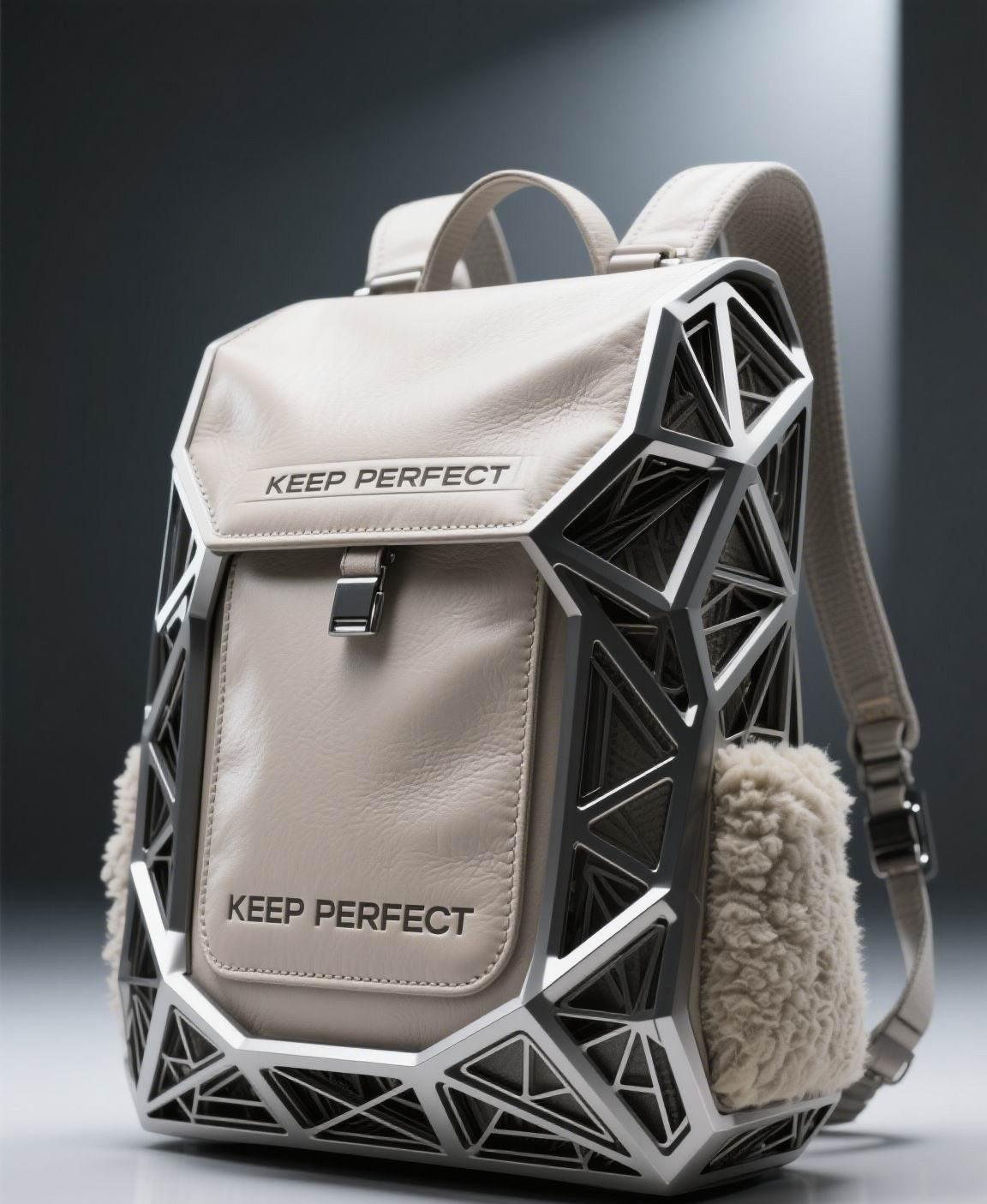
- Who the urban minimalist backer really is
- Choosing a volume that fits city use
- Silhouette decisions that photograph well
- Laptop protection without added bulk
- Fewer pockets, placed with more intent
- Fabric choices that read premium in person
- Hardware as the loudest part of a quiet design
- Cost drivers inside a minimalist build
- Colourway strategy against a 500-piece minimum
- Comfort targets for real city loads
- Sampling priorities when there is nowhere to hide
- Inspection criteria tightened for flat surfaces
Key takeaways
- Urban minimalist buyers judge a pack in the first three seconds of handling it, long before they read a feature list.
- 16-22 litres covers daily city carry for the majority of desks-based commuters; going larger loses the audience you are targeting.
- Hardware typically absorbs 9-16% of unit cost and drives perceived quality more than any other single line.
- Every visible stitch is a design element once decoration is removed, so specify stitch density and seam placement deliberately.
- Colourway expansion is constrained by the 500 pcs minimum per colourway, so launch with one core shade plus one accent.
- Flat uninterrupted panels show every fabric fault, which argues for tighter inspection tolerances than a busy technical pack needs.
Who the urban minimalist backer really is
The buyer behind a quietly specified city pack is not the adventure traveller your creative director may imagine. Typically they commute by train or bicycle, carry a 13 or 14 inch laptop, a charger, a notebook and a water bottle, and want none of that to be visible from outside. They are buying a reduction in friction, and they evaluate it with their hands rather than with a checklist.
That has a direct sourcing implication. Because the promise is restraint, the reward cannot rely on feature count to justify price. Price justification has to come from tactile quality: fabric hand, edge finishing, hardware weight and closing precision. Those attributes cost real money, and they must be specified explicitly rather than left to whoever interprets your tech pack.
Positioning follows from that. Campaigns in this category usually succeed at either end of the price spectrum: an honest value option around 65-85 dollars built on credible materials, or an unapologetically premium option above 140 dollars built on recognised branded components. The awkward middle is where minimalism struggles, because buyers comparing at that level expect visible specification and instead receive restraint they cannot immediately justify to themselves.
Before committing either way, model the landed figure rather than the production figure. Freight, duty and platform fees together frequently add 30-45% to the FOB Xiamen cost before any margin is applied, so a design that appears comfortable at unit level can evaporate once those layers are included. Building that arithmetic early is far cheaper than discovering it after rewards have been published.
Understand also that this audience is unusually sensitive to inconsistency. An outdoor audience tolerates a slightly uneven seam because it reads as rugged. The minimalist buyer reads the same seam as carelessness. This is why the design approach described in our crowdfunding bag guide recommends documenting tolerances in writing for this category before any bulk cut begins, rather than resolving disputes afterwards.
Choosing a volume that fits city use
Volume is the first real decision and the one most campaigns get wrong. Go too small and the pack fails its primary job of carrying a laptop and charger. Go too large and it reads as a travel pack, which abandons the audience you are courting. For daily urban carry, the working band sits between 16 and 22 litres, with around 18 litres being the safest single choice for a first campaign.
| Volume | What comfortably fits | Audience response |
|---|---|---|
| 14-16 L | 13 inch laptop, slim charger, notebook, small bottle | Reads sleek; risks feeling cramped |
| 17-19 L | 14 inch laptop, charger, lunch, 500 ml bottle, light layer | Strongest fit for office commuters |
| 20-22 L | 16 inch laptop, full-size charger, gym kit or groceries | Versatile; risks drifting towards daypack territory |
| 23-26 L | Everything above plus travel essentials | Generally reads as a travel pack, not minimalist city carry |
Verify volume by measurement rather than by assertion. Filling a sample with measured litre beads and recording the result often reveals that a claimed 20 litre design actually holds closer to 17 litres once lining, foam and sleeve thickness are accounted for. Publish the measured figure, and you will find that reviewers who actually test bags tend to reward accuracy far more than they reward round numbers.
Internal dimensions deserve equal attention. A sleeve advertised for a 16 inch laptop must clear a 16 inch device with its case on, which usually means specifying internal clear space roughly 15 to 20 mm larger than the nominal screen diagonal across both width and height. Those extra millimetres are cheap when designed in and impossible to add later.
Silhouette decisions that photograph well
A minimalist pack succeeds when it holds a clean outline both loaded and empty, which is harder than it sounds. Structured designs achieve this with foam or a frame sheet, adding weight and cost. Unstructured designs rely on fabric body and careful pattern shaping, which is cheaper but collapses under light loads and photographs poorly when half empty.
- Decide whether the base should sit flat unaided; this single choice shapes the entire lower pattern.
- Keep the top line either gently curved or deliberately squared, since an accidental compromise between the two reads as unresolved.
- Minimise visible panel breaks on the front face; one continuous panel is more expensive to cut but photographs considerably better.
- Match strap width to the body width, since mismatched proportions are noticed instantly even by untrained eyes.
- Plan where the zipper line sits, because a closing seam across the middle of a clean front face destroys the effect.
Photography realities should inform these decisions. Large flat panels in mid-tone colours under controlled lighting look superb, but the same panels under retail lighting reveal every crease and any shade variation between panels. Cutting all visible panels from the same roll and keeping a directional marker through the cutting stage costs virtually nothing and removes most of that risk.
One further decision belongs here: how much structure comes from pattern versus from material. A skilled pattern cutter can coax surprising rigidity from geometry alone by using curved seams that pull slightly against each other, which keeps weight down without adding foam panels. The trade-off is that curved panels generate more cutting waste and require more skilled operators, so the saving in material cost can be partly offset in labour. Ask for both approaches to be quoted so the comparison is explicit rather than assumed.
Laptop protection without added bulk
Sleeves are where minimalist designs most often fail their users. The elegant solution is a suspended sleeve: attached at the top edge only, hanging inside the body so that a dropped pack does not transmit impact directly through the sleeve seam into the device corner. It costs a little more in fabric and labour than a simple stitched divider and it is worth every cent.
- Specify the foam layer explicitly: closed-cell EVA or PE foam in a stated density and thickness, typically 6-10 mm for this category.
- Suspend the sleeve rather than seaming its base into the pack body, with the base clearance stated in millimetres, commonly 20-30 mm.
- Line the sleeve with low-abrision material to prevent scuffing of anodised aluminium surfaces over repeated insertion.
- Add a binding rather than a raw edge at the sleeve mouth, because that edge touches the hands constantly.
- Verify device clearance by physical test with the actual laptop models you plan to list, not by name alone.
A useful reference point is the padding discussion in our Kickstarter camera backpack guide, which covers how divider construction behaves under repeated shock. The same principles apply to laptop sleeves, and teams already producing those designs usually learn that access geometry matters as much as padding thickness. For die-cut solutions, tooling appears as a separate line in your quotation.
Fewer pockets, placed with more intent
Restraint rules inside too, but it is often misapplied. Removing pockets entirely produces a sack that users hate. The aim is not fewer pockets for its own sake, but pockets sited where the hand naturally falls, with no unnecessary external zippers breaking the surface. A single well-placed quick-access pocket at the top rear, plus two or three internal slip pockets, usually satisfies daily carry far better than a maze of dividers.
| Layout | Added labour | User benefit |
|---|---|---|
| Single open cavity with slip pocket | Lowest | Minimal cost, but loose items migrate to the base |
| Suspended sleeve plus two slip pockets | Moderate | Strong daily utility for office commuters |
| Sleeve plus zipped internal security pocket | Moderate | Useful for passports and cards during travel |
| Full divider with organisational panel | Higher | Risks contradicting the minimalist positioning |
| Hidden rear-access pocket against the back panel | Moderate | High perceived value for wallets and phones |
Accessibility deserves one warning. A hidden pocket against the back panel delivers excellent perceived value, but it also places a hard object against the wearer's spine. Keep such pockets flat and soft-lined, and never advertise them for bulky items. Specifying a soft brushed tricot lining in that position costs little and prevents the most common comfort complaint in this category.
Describe each pocket by the action a user performs: reach without removing the pack, see immediately on opening, forget about until needed. Supplying that intent alongside dimensions gives sample technicians far more to work with than a dimensioned drawing alone, and it consistently reduces revision rounds.
Fabric choices that read premium in person
Fabric selection for this category trades durability against hand and appearance. Common options span recycled polyester twill, high-density nylon with a dull finish, canvas blends and coatings that add structure. Each has an established look, and the wrong choice undermines a minimalist silhouette more quickly than any other decision.
- High-density nylon with a matte finish: excellent clean appearance and good abrasion performance, usually the default choice.
- Recycled polyester twill: strong sustainability story and soft hand, though prone to showing creases on flat panels.
- Waxed canvas or canvas blends: distinctive texture and ageing behaviour, heavier, and can transfer finish in heat.
- Coated ripstop: technical appearance that can conflict with restrained urban positioning.
- Branded abrasion-resistant nylon such as Cordura variants: recognised durability claim with higher material cost.
The nylon versus polyester decision has real cost and sustainability consequences, and the comparison set out in our nylon, polyester and rPET reference is worth working through before you finalise materials. Whichever route you choose, insist that the sample is built in the production fabric, because flat panels amplify differences between lookalike stock material and the real article.
Hardware as the loudest part of a quiet design
When decoration disappears, hardware becomes the visual signature. Hardware and trims typically absorb 9-16% of unit cost, and within a minimalist build that share often rises towards the top of the band because the cheapest components look cheapest precisely when nothing else distracts the eye.
| Option | Appearance | Durability and cost |
|---|---|---|
| Standard black-coated zinc alloy | Neutral and unobtrusive | Adequate; lowest cost option |
| Anodised aluminium | Clean metallic edge, premium feel | Higher cost; can abrade adjacent fabric |
| Custom moulded POM components | Distinctive, brandable shapes | Tooling cost, favours larger runs |
| Coated metal with laser-etched logo | Subtle branding opportunity | Moderate uplift; watch coating wear |
| Sewn webbing loops instead of metal | Softest, quietest appearance | Lowest cost; harder to adjust precisely |
Specify plating and coating durability, not just colour. A black-coated buckle that reveals bright metal after a month of strap adjustment ruins an otherwise excellent product, and it is exactly the kind of failure that appears in backer comments six weeks after delivery. Ask for abrasion data on the finish and specify a minimum standard in writing.
Zippers deserve separate treatment. YKK is the reference brand most buyers recognise, and specifying genuine branded hardware in your tech pack removes an entire category of substitution risk. Silent running matters here too: a rattle from a metal slider against a metal stop is audible in a quiet office, and small moulded dampers solve it cheaply.
Cost drivers inside a minimalist build
Costs in this category often surprise first-time creators because removing features does not necessarily reduce labour. Fewer external pockets can mean larger, more precisely aligned panels, and larger panels increase material waste during cutting. Clean appearance is produced by precision, and precision is purchased with labour minutes.
| Cost line | Indicative share | Notes for minimalist designs |
|---|---|---|
| Shell fabric | 22-34% | Larger panels raise cutting waste above technical packs |
| Lining | 6-11% | Soft-touch linings raise the figure within this band |
| Hardware and trims | 9-16% | Tends towards the upper end of the range |
| Zippers | 5-9% | Branded reverse-coil increases both cost and perceived quality |
| Foam and reinforcement | 6-12% | Depends on whether structure is shaped or flat |
| Cut, make and trim labour | 18-28% | Precision alignment pushes labour minutes and cost upwards |
| Finishing and packing | 3-7% | Higher-polybag and carton care to protect flat faces |
Note the target range for this category: a well-specified clean urban pack frequently lands rather above the unit cost of a decorative pack with more visible features. That is not a defect, it is the cost of restraint. Build the reward tier around a landed figure including freight rather than around the FOB Xiamen number alone, since shipping cost per unit does not fall simply because the design is plain.
Creators setting tier prices should sanity-check the whole ladder before locking it. Our guidance on reward tiers that maximise pledge value walks through how a higher specification shifts the entry price of a premium tier, and where stretch goals can absorb cost increases without eroding margin.
Colourway strategy against a 500-piece minimum
Colourways are where ambition collides with arithmetic. The minimum order sits at 500 pcs per style and colourway, so offering four colourways across 1,200 units means each colourway falls short of the minimum and none of them can be produced economically from the same run.
- Launch with one core neutral plus one accent; two colourways across 1,000 units is a defensible opening position.
- Use material contrast rather than dye lots for variety: a black body with a contrasting lining reads as two products.
- Offer additional colourways as stretch goals, so the funding curve funds the extra minimum rather than your margin.
- Remember that fabric mills impose their own minimum dye quantities independent of the assembly minimum.
- Keep custom-dyed shades out of a first campaign unless you have already validated demand from a survey.
Stretch goal colourways work particularly well for this category because audiences respond strongly to restrained options: charcoal with ochre lining, navy with grey binding, black with a bright interior that photographs beautifully on opening. Each of those effects uses existing materials in new combinations rather than new dye lots, which is the cheapest variety available to a first campaign.
Validate the preference before you fund it rather than after. A short backer survey offering three candidate combinations typically generates enough signal within a week, and asking people to rank rather than to pick produces clearer data. Whichever option wins, confirm with your production partner that the additional colourway can be run from materials already qualified, since introducing an untested lining delays sampling by anything up to a full round.
Comfort targets for real city loads
Urban carry loads are modest but sustained, typically 4-7 kg over thirty to fifty minutes twice daily. Comfort therefore depends less on peak load than on pressure distribution and moisture management. Specify strap width in the 45-60 mm band for this audience, use a foam that resists compression set, and keep the strap edge soft rather than sharply bound.
Back panels deserve similar care. A flat padded panel is cheap and comfortable enough for light loads. A shaped panel with vertical channels costs more but noticeably improves airflow, which matters for anyone cycling or walking uphill in summer. Whichever you choose, test it loaded for twenty minutes rather than judging it empty on a table.
Load testing belongs in sampling. Hang the pack with 7 kg for thirty minutes, measure strap spread and panel deformation, then compare the figures against a target you set before you started. Those numbers also become part of the evidence you can show backers when explaining why the design costs what it does.
Two details are repeatedly overlooked. The first is strap attachment geometry: webbing anchored too narrowly concentrates load onto a small area of the body panel, which both deforms the silhouette and creates a wear point that shows quickly on plain fabric. Anchor webs should run well beyond the visible junction and be box-stitched rather than bar-tacked alone. The second is adjustability range: commuting layers vary by season, so specify a usable strap length range wide enough to accommodate both a t-shirt and a winter coat without the adjuster sitting at its extreme.
Sampling priorities when there is nowhere to hide
Sampling follows the standard rhythm of 6-10 working days per round, extending to 12-15 working days where moulded components or shaped foam are involved. For minimalist designs, spend that time on three things specifically: panel alignment, edge finishing and how the empty pack holds its outline after forty-eight hours hanging.
- Check symmetry by measuring left and right seam positions against each other, targeting a tolerance around 3 mm.
- Inspect every binding and turn-over edge for consistent width, since irregular edging is immediately visible on plain surfaces.
- Hang the pack empty for forty-eight hours and photograph it before making any judgement about the silhouette.
- Compare all visible panels side by side under daylight, since variance between rolls shows clearly on flat faces.
- Run zippers fifty cycles under light load and note any slider wobble or stop rattle.
Full mechanics for running those rounds, including how change notes should be formatted, are set out in our crowdfunding bag sample prototyping reference. Creators working on laptop-centric designs may also want the additional specification detail in our custom laptop bags for Kickstarter notes.
Inspection criteria tightened for flat surfaces
Pre-shipment inspection runs at AQL 2.5 under ISO 2859-1, defining the sampling plan and the accept and reject thresholds. What AQL does not do is tell you which defects matter for your specific product. That list is yours to write, and for a minimalist pack it should be stricter on appearance than a technical pack would need.
| Observation | Proposed class | Why this classification |
|---|---|---|
| Visible shade variation between adjacent panels | Critical on appearance line | Immediately obvious and unfixable after delivery |
| Stitch density below agreed minimum on visible seams | Major | Indicates weak joining on the most seen areas |
| Binding width inconsistent by more than 2 mm | Major | Reads as poor workmanship on plain designs |
| Hardware coating worn through before packing | Critical | Predictable premature failure in use |
| Minor crease from packing, resolving on hanging | Minor | Cosmetic and self-correcting |
| Laptop sleeve dimensions outside tolerance | Critical | Functional failure of a primary advertised feature |
Hand that classification to whoever inspects before bulk finishes, not on the day. Inspection is a checklist exercise, so the quality of the outcome is bounded by the quality of the list. Teams that write theirs early consistently report fewer disputes and faster resolutions, because both parties agreed what acceptable meant before any carton was opened.
Standard programme terms then close the loop: 500 pcs minimum per style and colourway, 6-10 working days of sampling at 12-15 for complex builds, 35-50 days bulk after deposit and approved pre-production sample, AQL 2.5 inspection to ISO 2859-1, and FOB Xiamen shipment against T/T 30/70 payment. Reach our team at service@junyuanbags.com with drawings for a costed review.
- Crowdfunding bag guide
- Custom laptop bags for Kickstarter
- Nylon versus polyester versus rPET
- Reward tiers that maximise pledge value
- Crowdfunding bag sample prototyping
- Request a quotation
- Minimum order quantity
- 500 pcs per style / colourway
- Recommended volume band
- 16-22 litres for daily urban carry
- Laptop sleeve
- Suspended, 6-10 mm foam, 20-30 mm base clearance
- Hardware share of cost
- 9-16%, tending towards the upper end
- Sampling lead time
- 6-10 working days (12-15 days for complex builds)
- Bulk production
- 35-50 days after deposit and approved pre-production sample
- Inspection standard
- AQL 2.5 to ISO 2859-1
- Trade term and payment
- FOB Xiamen; T/T 30/70
- Production capacity
- 4,950 m2 SGS-verified floor, 137 staff, 7 lines, 149 machines, 200,000 pcs monthly
- Company foundation
- 2014, trade roots since 2004
- Contact
- service@junyuanbags.com
Turn your urban carry design into a costed specification
Send drawings, target volume and colourway plan. Our production team returns a component-level quote, a cutting waste estimate for your large panels and a sampling calendar built around the precision this category demands.
Frequently Asked Questions
What is the right volume for a minimalist urban backpack?
The working band is 16-22 litres, with roughly 18 litres the safest single choice for a first campaign. That comfortably carries a 14 inch laptop, charger, notebook and a 500 ml bottle without drifting into travel-pack territory. Verify by filling a sample with measured litre beads, since lining and foam typically reduce actual capacity below the drawn figure.
How large should a laptop sleeve be for a stated screen size?
Specify internal clear space around 15-20 mm larger than the nominal diagonal across both width and height, so a cased device fits without forcing. Pair that with 6-10 mm closed-cell foam and a suspended construction leaving 20-30 mm clearance above the pack base. Always test with the specific laptop models you intend to list.
Why does a minimalist backpack sometimes cost more than a feature-rich one?
Because precision costs labour minutes. Larger uninterrupted panels increase cutting waste above technical designs, and symmetry, binding consistency and invisible internal structures all require slower, more controlled operations. Hardware share also rises towards the upper end of its 9-16% band, since cheap components are more obvious when no decoration distracts attention.
How many colourways should a first campaign launch with?
Two is generally defensible: one core neutral plus one accent, split across at least 1,000 units so each colourway clears the 500 pcs minimum. Create additional variety through contrasting linings and bindings rather than new dye lots, and unlock further colourways as stretch goals so extra funding covers the additional minimum order.
How long does sampling take for a clean urban design?
Standard builds take 6-10 working days per round, extending to 12-15 working days where moulded components or shaped foam are involved. Add courier transit of three to six days plus your review time. Plan two or three rounds, then 35-50 days of bulk production after deposit and approved pre-production sample.
Should the laptop sleeve be suspended or sewn into the base?
Suspended is strongly preferable. Attach the sleeve only at its upper edge and leave 20-30 mm clearance above the pack base, so a dropped pack does not drive impact through the sleeve seam into a device corner. It costs slightly more than a stitched divider across 500 pcs and prevents the most commonly reported failure among office commuters.
Which fabric best suits a minimalist urban pack?
High-density nylon in the 420D-840D range with a matte finish is the usual default, offering clean appearance and good abrasion performance. Recycled polyester twill suits sustainability-led campaigns but creases more visibly on flat panels. Branded abrasion-resistant nylon costs 20-40% more per metre and adds a recognised durability claim. Insist samples use production fabric.
How does AQL 2.5 apply to appearance defects?
AQL 2.5 under ISO 2859-1 sets the sampling plan and defect thresholds, but you must define which observations count as critical, major or minor for your product. For plain designs we recommend treating shade variation between adjacent panels and worn hardware coating as critical, and inconsistent binding width above 2 mm as major.
What strap specification suits daily city commuting?
Target 45-60 mm strap width with foam that resists compression set, and specify soft rather than sharply bound edges. Loads typically sit at 4-7 kg sustained over thirty to fifty minutes, so pressure distribution matters more than peak strength. Test by hanging the sample with 7 kg for thirty minutes and measuring strap spread and panel deformation.
How do I stop panel shade variation across a flat front face?
Cut all visible panels from one roll, keep a directional marker through cutting to the line, and agree colour deviation against a physical reference rather than a description, typically targeting a Delta E below 1.5 commercially. Verify on the pre-production unit under daylight, then have inspectors treat variation between adjacent panels as a critical defect across all 500 pcs.
Can I offer four colourways across 1,200 units?
Not economically, because the minimum is 500 pcs per style and colourway. Four ways across 1,200 units means 300 units each, which requires either surcharges or a negotiated combined order before costing. Either launch two colourways or plan additional ones as stretch goal unlocks that fund the extra minimum.
What should I photograph to evidence build quality to backers?
Shoot the empty pack hanging for 48 hours, close-ups of binding edges and strap anchors, each panel compared under daylight, and a 50-cycle zipper run with the slider audible. Those four subjects address the defects urban buyers care about and demonstrate that somebody measured things rather than merely asserted quality.
People Also Ask
Is a minimalist backpack harder to produce than a technical one?
Yes, in tolerance terms. Busy designs hide inconsistency behind pockets and webbing, while flat panels and clean edges expose every irregularity. That means tighter written tolerances, stricter defect classification and more careful cutting controls across a 500 pcs run.
Do backers really notice hardware quality?
They notice it within seconds. Weight, plating durability and slider sound are immediate tactile signals, and hardware typically absorbs 9-16% of unit cost. A coated buckle revealing bright metal after a month generates exactly the kind of comment that damages later reward tiers.
Should I build zipped external pockets into a minimalist design?
Keep external openings minimal, preferably one rear quick-access pocket high on the body. External zippers break the clean surface, so internal organisation plus a single well-placed access point usually reads better and costs less labour than multiple cut-and-set closures.
How much volume does lining and foam really consume?
Enough to matter. A design drawn at 20 litres frequently measures close to 17 once foam, suspended sleeve and lining are installed. Always publish a measured figure obtained with litre beads, because reviewers who actually test capacity reward accuracy over round numbers.
What makes an urban pack feel comfortable rather than just padded?
Even pressure distribution and moisture management. Wide straps with compression-resistant foam, soft edges, and a shaped back panel with airflow channels outperform thicker flat padding under sustained loads of four to seven kilograms over thirty to fifty minutes.