Mesh Fabric Bags: Breathability, Drainage and Where It Works
Mesh earns its place on a bag for two reasons only: it lets air through and it lets water out. Polyester mesh is the default for gym, swim and beach use because it dries fast and resists UV and chlorine better than nylon, while nylon suits tougher, softer applications. Openness buys airflow and drainage but costs tear strength and snag resistance, so mesh belongs on panels, wet compartments and full-body builds and never on a load-bearing base. Bind every edge, brand with labels or tape rather than print, and judge permeability by method. MOQ is 500 pcs, sampling 6 to 10 working days, bulk 35 to 50 days.
- What Mesh Fabric Is: Constructions and Openness
- Polyester vs Nylon Mesh: the Fibre Decision for Wet Use
- Airflow, Drainage and Drying: What Openness Actually Buys
- Weight, Strength and the Snag Problem
- Where Mesh Belongs on a Bag: Panels, Pockets and Full Builds
- Gym, Swim and Beach: Three Application Profiles
- Seams, Binding and Edge Finish on Mesh
- Colour, Print and Branding on Mesh
- Testing Mesh: Snag, Tear, Wash and Odour
- Cost, Yield and Where Mesh Saves Money
- Sampling, Bulk and the Mesh Specification Line
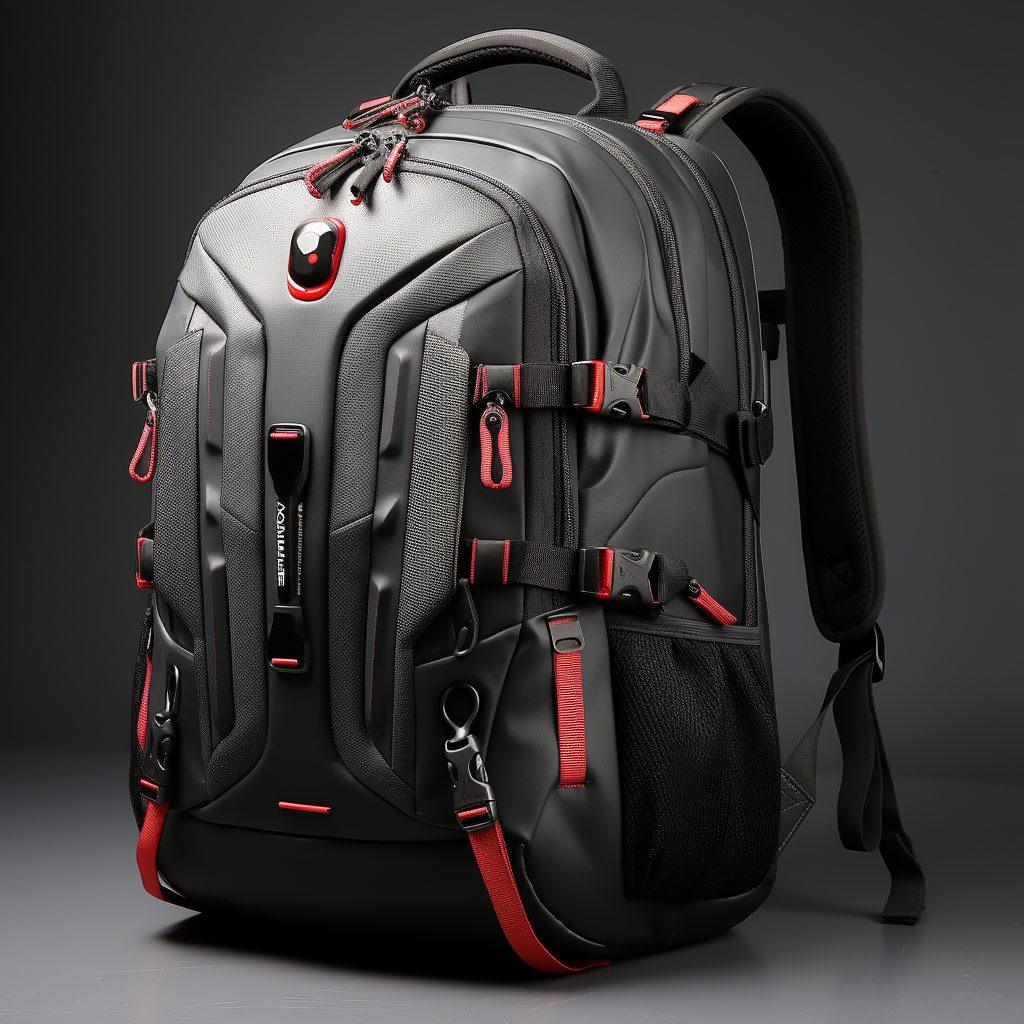
Mesh earns its place on a bag for exactly two reasons: it lets air through and it lets water out. Everything else about it is a compromise. Mesh is weaker than a woven fabric of similar weight, it snags, it shows its contents, and it needs binding or welding at every edge because it unravels. Where a campaign needs ventilation, drainage or visible contents, those compromises are worth making; where it does not, mesh is decoration that will fail early. This guide sets out the mesh constructions, the fibres that survive wet environments, the airflow and drying behaviour you can realistically promise, and the seam and finishing details that stop mesh panels becoming warranty claims.
Mesh is a functional material, not a styling detail. Put it where air or water has to move, bind every edge, and never ask it to carry load.
What Mesh Fabric Is: Constructions and Openness
Mesh is not one fabric, it is a family defined by how the holes are made. Warp-knitted mesh, often called tricot mesh, is the common, stable, fine-hole material used for pocket linings and ventilation panels. Raschel mesh is the coarser net with visible diamond or hexagonal openings, used for laundry bags, beach bags and gear bags where openness and drainage matter more than appearance. Power mesh adds elastane and stretches, which suits compression pockets and stretch bottle holders.
Then there are the thicker constructions. Air mesh or spacer mesh is a three-dimensional knit with two faces joined by pile yarns, giving a compressible cushion with continuous air channels. It is the material used in technical back panels and in shoulder strap padding because it moves air while it spreads pressure. It is much thicker and more expensive than a flat mesh, and it behaves completely differently in a sewing machine.
No-see-um mesh, at the fine end, is a tightly woven or knitted insect mesh used where ventilation must not admit anything else. It appears on outdoor and travel products and on food-related bags. Its small aperture blocks airflow more than a coarse mesh does, which is the trade you accept for keeping contents in and insects out.
The measurable property that connects all of them is air permeability, normally expressed as a volume of air passing through a defined area at a defined pressure difference, measured by a standard air permeability method. Coarse nets sit at the high end of that scale and fine insect mesh at the low end. When a campaign page claims breathability, this is the number behind it, and it should be quoted with the method and the pressure condition.
Our custom bags for Kickstarter campaigns overview places material selection inside the wider sequence of decisions, and our gym bag guide shows how mesh panels fit into a compartment layout.
Polyester vs Nylon Mesh: the Fibre Decision for Wet Use
Most mesh is polyester or nylon, and the choice matters more here than it does in a shell fabric because mesh lives in wet, chlorinated and salty environments. Polyester mesh is the default. It resists ultraviolet degradation well, it keeps its strength when wet, it dries quickly, and it holds up acceptably against chlorine and salt. It is also the cheaper of the two, which matters when mesh is used across large panels.
Nylon mesh is tougher and more abrasion resistant, and it has a softer, more flexible hand that some designs need. Against that, it absorbs more water, dries more slowly, and it is more sensitive to both ultraviolet light and chlorine. On a swim bag that lives in a chlorinated pool bag and dries in the sun, that combination shortens service life noticeably.
Whichever fibre you choose, ask about finishes. An antimicrobial or odour-control finish is common on gym and swim products, and while it helps, it is not a substitute for drainage and drying: a mesh panel that stays damp because the compartment cannot drain will smell regardless of what it was treated with. Treat any such finish as a supporting measure and confirm what claims the treatment supports before you publish them.
- Polyester mesh: default for wet use, better UV and chlorine behaviour, dries fast.
- Nylon mesh: tougher and softer, but absorbs water and degrades faster in sun and chlorine.
- Elastane blends: for stretch pockets, with the usual elastane ageing caveats.
- Finishes: odour control helps, but drainage and drying design matter far more.
Airflow, Drainage and Drying: What Openness Actually Buys
The physics is simple and it is worth stating precisely on a campaign page. Airflow reduces the temperature and humidity build-up inside a compartment. Drainage lets liquid leave rather than pool. Drying is the outcome of both, plus exposure, and it is what backers actually care about because it is what stops odour and mildew.
The engineering mistake is to add mesh and assume the problem is solved. A mesh panel on the front of a sealed compartment does almost nothing, because air needs a path through the compartment, not just across one face. A wet pocket needs mesh on at least two sides, or a mesh face plus a drain path at the lowest point, and ideally an air gap between the wet compartment and the rest of the bag.
This is why the best-performing designs put the wet compartment at the bottom or the end of the bag, where gravity helps, with a drainage path that does not leak into the main volume. A mesh panel high on the side wall looks good in a photograph and does very little for drying. Our swimming bag guide at mesh, drainage and poolside features shows this applied to a full product.
There is a realistic claim limit to respect. Mesh speeds drying, it does not eliminate drying time, and a bag packed damp will smell whatever it is made of. We advise creators to promise ventilation and drainage, both of which are demonstrable, rather than a drying time, which depends on the climate the backer lives in.
Weight, Strength and the Snag Problem
Mesh trades strength for openness, and the trade is severe enough that it drives where the material can be used. Flat mesh is light, commonly well under the weight of a comparable woven lining, and its tear resistance is low because a cut or a snag propagates through the structure easily. Once a hole starts, it grows.
The practical consequence is that mesh should not be used where it will be abraded, snagged or loaded. That rules out the base of a bag, the mouth of a heavily packed compartment, and any point where a key, a zipper pull or a carabiner will catch it. It is fine on a side panel, a pocket face, an internal divider and a full-body beach bag where nothing sharp is carried.
Where mesh does need some robustness, the levers are a heavier denier yarn, a tighter knit, and a coated or reinforced edge. A polyester mesh at a heavier construction will resist snagging much better than a fine one, at the cost of some openness. Reinforcing the perimeter with binding tape is the single most effective measure, because most mesh failures start at an edge.
| Construction | Openness | Weight band | Best use | Avoid where |
|---|---|---|---|---|
| Fine warp-knit mesh | Low to mid | Light | Pocket linings, internal dividers | Any snag or sharp contents |
| Raschel net mesh | High | Light to mid | Beach bags, laundry bags, gear bags | Load-bearing panels |
| Power mesh | Mid, stretch | Light to mid | Stretch bottle and compression pockets | Long-term elastane fatigue |
| Spacer air mesh | Mid, 3D | Heavier | Back panels, strap padding | Flat seam construction |
| No-see-um mesh | Very low | Light | Insect-proof ventilation | Where maximum airflow is needed |
Where Mesh Belongs on a Bag: Panels, Pockets and Full Builds
There are four placements that consistently work. Ventilation panels on a gym bag or a shoe compartment let damp air escape. Wet pockets and drain compartments use mesh as the functional face, usually combined with a waterproof or coated lining on the opposite face so the moisture does not migrate into the main volume.
Internal dividers and pocket faces in mesh make contents visible, which is a real usability benefit on a travel or organiser bag, and they save weight against a solid woven lining. Full-body mesh builds are the beach, laundry and gear-bag category, where openness, drainage, sand shedding and low weight are the entire product proposition.
Two placements that usually disappoint are worth naming. Mesh on the base wears through quickly and lets grit in. Mesh as an exterior decorative overlay on a structured bag catches on everything and is the most common source of a snag complaint. If you want the look of mesh without the risk, use a coarse mesh bonded to a stable backing so the structure carries the load and the mesh is purely visual.
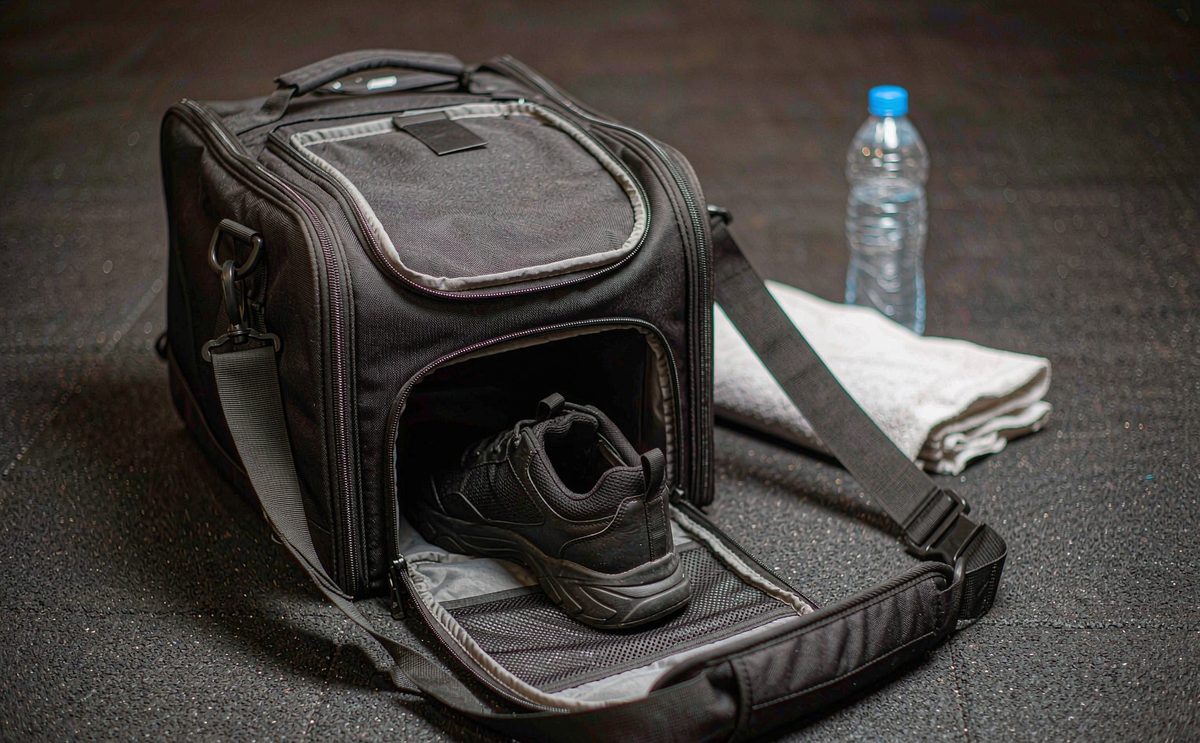
Finally, consider what mesh does to the perceived value. On a technical or outdoor product it reads functional and appropriate. On a premium commuter bag, a large mesh panel can read cheap. That is a positioning judgement, and it is worth making deliberately rather than by default. A useful test is to ask what the panel does functionally; if the honest answer is nothing, the mesh is decoration and should be replaced with a solid fabric that lasts.

Gym, Swim and Beach: Three Application Profiles
Gym bags use mesh for the shoe compartment and for dirty-kit separation. The requirements are ventilation and odour control, and the design detail that matters most is that the compartment has its own air path and can be wiped clean. A coated or taped base inside the mesh compartment keeps sweat from reaching the main lining, and a mesh face lets it dry.
Swim and surf bags are the harshest environment: chlorinated or salt water, sun, sand and a damp bag left in a car. Polyester mesh is the right fibre here, drainage at the lowest point is essential, and the hardware and thread have to be corrosion and chlorine tolerant as well. The failure mode is not the mesh failing, it is everything around it degrading.
Beach bags are the classic full-mesh build, and the specific benefit is sand shedding: contents come home, sand does not. The design requirements are a mesh aperture small enough to hold the items and large enough to pass sand, a base that survives being set on a rough surface, and handles that do not cut into a loaded shoulder. Our beach bag guide at mesh and sand-proof pockets covers that layout in detail.
Across all three, the recurring specification error is treating the mesh as the whole solution. The lining, drainage path, hardware and thread decide whether the product works, and mesh is only the face that lets air and water move. Where a campaign is choosing between the three, the environment should decide the fibre first and the design should follow it.
Seams, Binding and Edge Finish on Mesh
Mesh edges are the weak point, and finishing is where a cheap mesh bag separates from a good one. Cut mesh unravels and curls, and a raw edge will fray into the seam. The standard fixes are binding tape over the edge, turning and stitching the edge, or welding or heat-sealing where the fibre content allows it.
Binding is the most common and the most forgiving. It adds a visible edge line, which can be used as a design feature or hidden inside a seam. Welding gives a cleaner, flatter finish and removes the bulk of a folded edge, but it requires a compatible thermoplastic content and it produces a stiffer seam, which matters on a soft, draping bag.
Seam type matters too. A plain lockstitch seam across a mesh panel can pull the holes open under tension, so a mesh panel that meets a woven panel under load should be reinforced along the join. Where a mesh panel is set into a shell, a binding or a facing tape carries the load and the mesh hangs off it, which is the construction we recommend for anything structural.
One more practical note: mesh slips under a presser foot and it is easy to sew with puckers or skipped stitches. This is a known production risk that shows up as wavy seams. If your design depends on a flat mesh panel, review it on a pre-production sample made by the line that will run the order, not on a hand-made prototype.
Colour, Print and Branding on Mesh
Mesh is a difficult branding surface and it is worth planning for rather than discovering. Screen printing on an open mesh is unreliable because ink bridges the holes, stiffens the panel and partly blocks the airflow the mesh was specified for. Where a printed logo is needed, print on a solid label, tape or patch attached to the mesh rather than on the mesh itself.
Woven labels, rubber or silicone patches and printed tape are the reliable options. A branded binding tape along a mesh edge is a particularly elegant solution, because it finishes the edge and brands the product in a single component. Heat transfer films can work on tighter meshes but need adhesion and flex testing, and both should be checked after washing rather than only when new.
Colour on mesh reads differently from colour on a woven fabric, because the open structure lets whatever is behind it show through. A light grey mesh over a dark lining looks mid-tone. That is a design opportunity, but it means the mesh colour must be approved assembled over the actual lining, not as a flat swatch. Our bag lining materials guide covers the backing choice that sits behind it.
Finally, remember visibility. Mesh shows contents, which is sometimes the selling point and sometimes a privacy problem. If your product is a bag for gym kit or laundry, decide deliberately whether the contents should be visible, and choose the aperture accordingly. A finer mesh hides contents but slows airflow, so this is a genuine specification trade-off rather than a free choice.
Testing Mesh: Snag, Tear, Wash and Odour
Four checks cover most mesh risk. Snag resistance predicts how the panel behaves when something sharp catches it; it is measured by a dedicated snag test method and rated on a scale. It matters most on exposed panels and on any bag that will share space with keys, tools or sports equipment.
Tear and tensile strength on mesh is measured by the same families of method used for woven fabrics, but the values are much lower and they must be read with the construction in mind. Rather than chasing a high number, specify a minimum coupled with a seam strength requirement, because the seam is usually where a mesh panel actually fails.
Washing and colour fastness matter for gym and laundry applications, where the bag will be laundered. Require a laundering fastness grade and, if the mesh is dark against a light lining, a rubbing fastness grade as well. Chlorine and salt water exposure deserve their own check on swim products, and any odour-control finish should be tested after washing rather than only when new.
Our bag material testing guide explains how to read those reports, and our bag print quality and fastness guide covers the grading scales used for colour. Add one practical check of your own: rub a key across a mesh sample a few times, because no laboratory rating predicts that result as well as doing it. Where mesh sits inside a wet compartment, require the seam and the edge finish to be checked after laundering rather than only when the panel is new.
Cost, Yield and Where Mesh Saves Money
Mesh is generally an inexpensive material, and it can reduce cost in two ways beyond its own price. It is light, which reduces finished bag weight and therefore freight, and it replaces heavier woven linings in large internal panels. On a big gym or beach bag, those savings are real.
Against that, mesh adds process cost. Binding every edge, reinforcing joins and handling a slippery material at the machine all add labour minutes. A design with many small mesh panels can cost more to assemble than the same design in a woven lining, which is why we usually advise fewer, larger mesh panels rather than many small ones.
There is also a waste consideration. Mesh nests poorly relative to a solid fabric because the pattern has to align with the apertures in some constructions, and off-grain cutting is more visible on an open structure. Ask for the marker and the waste assumption in the quote so the comparison is honest. Mesh is also more prone to handling damage in transit than a woven fabric, so allow a slightly higher packing specification in the cost model. Where a design needs many small panels, reconsider the layout, because consolidation usually cuts material waste and assembly minutes at the same time.
One more cost lever is worth stating: mesh lets you down-spec elsewhere. A ventilated compartment does not need the same coated lining as a sealed one, and a full-mesh beach bag needs almost no lining at all. Those savings are only visible if you compare total material content rather than the price of the mesh roll.
Sampling, Bulk and the Mesh Specification Line
Sampling runs 6 to 10 working days for standard builds and 12 to 15 working days for complex ones, and bulk runs 35 to 50 days after approval. Mesh in common colours and constructions is usually stocked, but a specific aperture, a custom colour or a bonded mesh carries its own lead time, so confirm availability before the sampling clock starts.
Finished goods are inspected to AQL 2.5 to ISO 2859-1, and the mesh-specific defects worth naming are snagged or pulled yarns, unravelling edges, wavy or puckered seams, and holes that have started at a seam. Because mesh damage is progressive, an inspection that accepts a small snag is accepting a defect that will be larger when the backer opens the box.
A complete mesh line names the construction, the fibre, the aperture or permeability target with the method, the weight, the edge finish, and the seam construction and reinforcement. Approve it against a physical swatch assembled over the actual lining, because colour and openness both read differently in isolation.
- Construction: warp-knit, raschel, power mesh, spacer or insect mesh.
- Fibre: polyester for wet and sun exposure, nylon where toughness dominates.
- Aperture or permeability: a target with the measurement method stated.
- Weight and seam strength: minimum values with the test methods named.
- Edge finish and join reinforcement: binding, welding or facing, shown on the pattern.
Commercials are standard across our programme: FOB Xiamen with T/T 30/70. Our campaign bag specialist can review a mesh specification and flag the risk points before it goes to sampling; send us a brief through the contact page.
Designing a gym, swim or beach bag with mesh? Send us your layout and quantity and we will come back with a costed material plan.
Frequently Asked Questions
What is the best mesh fabric for a gym bag?
Polyester mesh is the right default for a gym bag. It resists ultraviolet light, keeps strength when wet, dries quickly and holds up better than nylon against sweat and repeated laundering. Use a fine warp-knit mesh for pocket linings and dividers, and a coarser raschel net where drainage and airflow matter more. Bind every edge and pair the mesh with a coated compartment floor.
Is nylon or polyester mesh better for a swim bag?
Polyester is the better choice for swim and surf products. Nylon is tougher and softer, but it absorbs more water, dries more slowly and degrades faster under both ultraviolet exposure and chlorine. A swim bag also needs corrosion-tolerant hardware and thread, because the failure in that environment is usually everything around the mesh rather than the mesh itself. Confirm the thread type as well as the mesh, because standard thread can degrade in that environment.
Does a mesh panel actually make a bag dry faster?
It helps, but only if air can move through the compartment rather than across one face. A single mesh panel on a sealed pocket does very little. Put mesh on at least two sides, place the wet compartment low so gravity helps, and add a drainage path. Promise ventilation and drainage, which are demonstrable, rather than a drying time, which depends on climate.
How do I stop mesh from snagging and tearing?
Avoid mesh on the base, on load-bearing panels and anywhere keys or hardware will catch it. Choose a heavier construction with a tighter knit, reinforce the perimeter with binding tape, and let a facing tape carry load where mesh meets a woven panel. Most mesh failures start at an edge, so edge finishing is the single highest-value measure you can take.
Can you screen print a logo onto mesh fabric?
It is unreliable. Ink bridges the holes, stiffens the panel and blocks the airflow the mesh was specified for. Brand the bag with a woven label, a rubber or silicone patch, or a printed binding tape along the mesh edge instead. Heat transfer films can work on tighter meshes but need adhesion and flex testing before approval, and a printed binding tape along the edge usually brands the bag better than printing into the panel.
What does air permeability mean for mesh fabric?
Air permeability is the volume of air passing through a defined area of fabric at a defined pressure difference, measured by a standard permeability method. Coarse nets sit at the high end and fine insect mesh at the low end. If your campaign claims breathability, quote the figure with the method and the pressure condition, not the word alone. Compare only like with like, because permeability results depend heavily on the test conditions used.
Should a beach bag be made entirely from mesh?
Usually yes, because openness, drainage, sand shedding and low weight are the whole product promise. The requirements are an aperture small enough to hold contents and large enough to pass sand, a base that survives rough surfaces, and handles wide enough not to cut in when loaded. Reinforce the base perimeter because that is where wear concentrates, and choose an aperture small enough that small items cannot work their way out through the net.
How should mesh edges be finished on a bag?
Cut mesh unravels and curls, so it needs binding tape over the edge, a turned and stitched edge, or heat sealing where the fibre content allows it. Binding is the most forgiving and can be used as a design feature. Welding gives a flatter finish but stiffens the seam, which matters on a soft draping bag. Whichever method you use, approve it on a production sample rather than on a hand-made prototype.
Is mesh strong enough to use as a bag lining?
It is strong enough for pocket linings and internal dividers, and it saves weight against a woven lining. It is not strong enough for load-bearing areas, and its tear resistance is low, so a small cut propagates. Specify a minimum seam strength alongside the fabric strength, because the seam is usually where a mesh panel actually fails, so reinforce any join where mesh meets a woven panel.
What is the MOQ for a bag with mesh panels?
The MOQ stays at 500 pcs per style and per colourway. Standard mesh constructions and colours are usually stocked, but a specific aperture, a custom colour or a bonded mesh carries its own minimum lot and lead time, which sits in front of the 6 to 10 working day sampling window rather than inside it. Ask for the mill minimum in writing before you finalise artwork or colour.
How long does sampling and bulk take for a mesh bag?
Sampling runs 6 to 10 working days for standard builds and 12 to 15 working days for complex ones once materials are available, and bulk runs 35 to 50 days after approval. Confirm mesh availability before the sampling clock starts, because a special aperture or colour is often the longest-lead item in the specification. Bulk then runs to the standard 35 to 50 day window once the sample is approved.
What inspection standard applies to mesh bag production?
Finished goods are inspected to AQL 2.5 to ISO 2859-1. Name mesh defects as their own classes with acceptable limits: snagged or pulled yarns, unravelling edges, wavy or puckered seams and holes starting at a seam. Treat a small snag as rejectable, because mesh damage is progressive and will be worse when the backer opens the box, and verify panels against the approved swatch at incoming inspection as well.
People Also Ask
What is mesh fabric used for on bags?
Ventilation panels, wet and shoe compartments, internal dividers and full-body beach or laundry bags. It is chosen for airflow and drainage, not strength.
Is polyester or nylon mesh better?
Polyester for wet, sunny or chlorinated use because it dries fast and resists UV and chlorine. Nylon where toughness and a softer hand matter more.
Does mesh really dry a bag faster?
Only with a through-path for air. Use mesh on two sides, put the wet compartment low and add drainage rather than relying on one panel.
Can you print a logo on mesh?
Not reliably. Ink bridges the holes. Use a woven label, silicone patch or printed binding tape along the mesh edge instead.
How do I stop mesh snagging?
Keep it off the base and off load-bearing panels, use a tighter heavier knit, bind the perimeter and let facing tape carry the load.
Is mesh cheaper than a woven lining?
The material is cheaper and lighter, but binding every edge and handling slippery material adds labour. Fewer, larger panels usually cost less than many small ones.
How many mesh bags do I need to order?
The minimum is 500 pcs per style and per colourway, with any custom aperture or colour carrying its own mill minimum on top.