Bag Lining Materials: Choosing 210D, Velvet or Waterproof Linings
210D polyester at roughly 70 to 90 gsm is the right default lining for most reward bags, stepping up to 420D at 110 to 160 gsm for gym and duffle interiors that carry hard objects and to 600D only where the lining does structural work. Velvet and brushed linings belong in laptop sleeves, eyewear pockets and camera inserts where they deliver perceived value without abrasion, and they need bound or taped seams because they shed at cut edges. A genuinely waterproof interior needs a TPU film laminate of about 0.10 to 0.30 mm plus welded or taped seams, not merely a PU coating. Every lining upgrade still runs on a MOQ of 500 pcs per style and per colourway, with 6 to 10 working days of sampling and 35 to 50 days of bulk production.
- Why the Lining Is Judged Differently From the Shell
- Reading a Lining Spec: Denier, Filament and Weight
- 210D Polyester Lining: The Default Workhorse
- Stepping Up: 420D and 600D Linings for Load-Bearing Interiors
- Velvet, Brushed and Sueded Linings: Optics and Their Price
- Waterproof Linings: TPU Film, PU Coating and PVC
- Lining Colour Logic: Visibility, Stains and Photography
- Yield, Cutting Efficiency and What Lining Really Costs
- Testing Linings Before Bulk: Abrasion, Yellowing, Odour and Migration
- Writing the Lining Line So Nobody Guesses
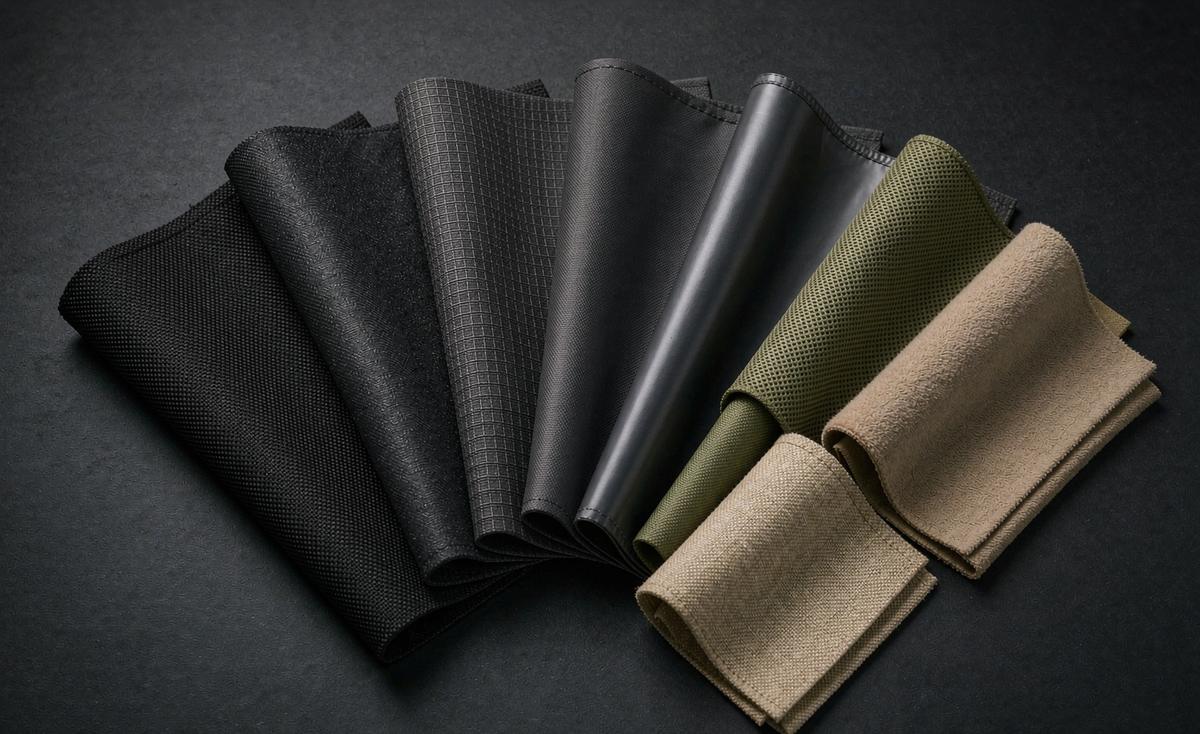
Shell fabric gets the attention in a campaign video and lining gets the reviews six months later. Backers rarely praise a lining, but they notice immediately when it frays at the zip tape, when a dark interior swallows a set of keys, or when a pale lining shows every pen mark. This guide covers the lining options our production team quotes most often for crowdfunding rewards: 210D polyester as the default workhorse, higher denier options for structural liner work, velvet and brushed finishes for premium optics, and waterproof film linings for wet compartments.
Lining choice is a durability decision disguised as a colour decision. Specify both at the same time, because a beautiful lining that abrades through in month three costs you more than the upgrade you skipped.
Why the Lining Is Judged Differently From the Shell
The shell of a reward bag has to survive weather, kerbs and camera lights. The lining has to survive repetition. It is rubbed every single time a backer slides a laptop out, drags a charger across the base, or digs keys out of the bottom of a pocket. That difference matters because abrasion resistance and hand feel pull in opposite directions: the softest linings are usually the least durable, and the most durable linings are usually the ones nobody writes home about.
There is also a perceived value effect that is hard to replicate with any other specification change. A contrasting lining colour reads as designed rather than assembled. A brushed or velvet lining reads as premium at first touch, even when nobody can articulate why. If your reward tier is positioned above roughly USD 80 retail equivalent, lining choice is one of the cheapest ways to justify that price in a backer's hands, typically adding USD 0.40 to 1.80 per unit depending on material and coverage area.
The third reason lining deserves real attention is that it is structurally involved. In many constructions the lining is not decorative at all; it carries the pocket bags, hides the interfacing seams, reinforces zip attachments and sometimes forms the base structure itself. If you treat it as decoration you will end up with a bag whose pockets deform after a month. Our overview of custom bags for Kickstarter campaigns sets out how the lining decision sits alongside shell choice, hardware and printing in the overall spec.
- Repetition exposure: lining sees contact cycles, not weather, so abrasion and seam strength lead the spec.
- Visibility paradox: a lining colour that photographs beautifully can make small items invisible in use.
- Structural role: in many bags the lining carries pockets, interfacing seams and zip supports.
- Cost leverage: at typical reward volumes the difference between a basic and a premium lining is often under USD 1.50 per unit.
Reading a Lining Spec: Denier, Filament and Weight
A lining line in a tech pack that says nothing more than black polyester is not a specification. Three numbers do most of the work. The first is denier, which is the weight in grams of 9,000 metres of a single filament. Higher denier means thicker yarns and generally heavier, tougher fabric. The second is filament count, which tells you whether each yarn is a bundle of many fine filaments or one thick monofilament, and this drives hand feel more than denier does. The third is fabric weight in grams per square metre, which is the number that most directly correlates with durability and cost.
For bag linings the practical range runs roughly from 60 to 120 gsm. Below about 60 gsm you are buying something closer to a garment lining, which is fine inside a cosmetic pouch and marginal inside a gym bag. Above about 120 gsm you are spending money on weight that will behave more like a second shell fabric, and you should ask honestly whether that money would be better spent upgrading the shell instead.
Weave matters too. Plain weave linings are stable and cheap, which is why most stock linings use them. Twill linings drape better and hide minor creasing. Ripstop linings with a reinforcement grid give genuine tear resistance at very low weight, and they are our usual recommendation for lightweight tech organisers where every gram counts. When in doubt, put two candidate linings side by side in a material sample kit and rub them against the shell fabric you plan to use, because compatibility between the two is a real failure mode and not a theoretical one.
210D Polyester Lining: The Default Workhorse
If you do not know what lining to specify, 210D polyester is where most crowdfunding bag programmes start, and there are good reasons. It is widely stocked in many colours, which means short fabric lead times and predictable pricing. It typically lands around 70 to 90 gsm, which is light enough to avoid adding bulk while heavy enough to survive normal use. It sews cleanly at standard stitch densities, it takes a heat-cut edge without much fraying, and it does not fight the operator when turning narrow pocket bags.
The limitations are equally real. 210D shows abrasion patches at contact points relatively quickly, particularly along the top edge where a laptop or tablet slides in repeatedly. It also tends to have a slightly shiny face, which some creators love because it makes the interior look bright, and others dislike because it reads as inexpensive. Finally, low-cost 210D can vary in hand between lots, so if you care about consistency across a second production run, say so early and we will hold a reference swatch.
Practical guidance: use 210D for cosmetic pouches, toiletry bags, lightweight slings, tote linings and any compartment that mostly holds soft items. Avoid it as the base lining of a bag that will regularly carry a laptop by a corner, or as the liner for a gym compartment holding shoes and kit. In those positions step up to a heavier denier or add a reinforcement patch, and specify it on the pattern rather than hoping the machining takes care of it.
Stepping Up: 420D and 600D Linings for Load-Bearing Interiors
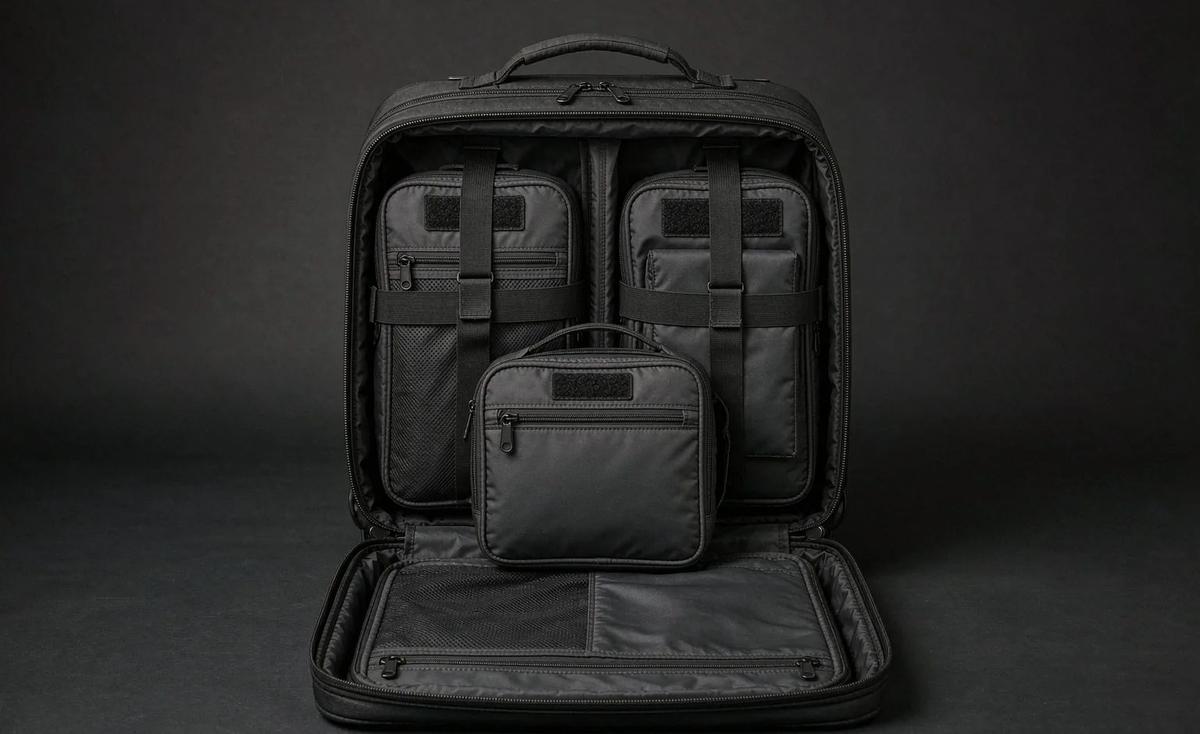
The jump from 210D to 420D roughly doubles yarn thickness and typically moves the fabric into the 110 to 160 gsm range. What you buy with that money is tear resistance at stitch lines and significantly slower wear at contact points. We recommend it for the interior of gym bags, for duffle interiors that take shoes, and for any design where the lining itself is doing structural work rather than just covering seams.
At 600D you are effectively specifying a second shell fabric, generally in the 180 to 250 gsm band depending on coating. This is the right call for bags with a rigid or semi-rigid structure, for tool-bag interiors, and for premium tiers where the backer will compare your bag to something from a specialist outdoor label. It is rarely the right call across an entire lightweight pack, because the weight penalty compounds: adding 100 gsm of lining across roughly 0.6 square metres of liner adds around 60 grams of empty weight, and that number is often quoted back at you in reviews of travel bags.
One more practical check before committing to a heavy lining across the whole interior: hold the bag open, then count how many internal panels actually touch anything abrasive during normal use. On most designs it is the base, the lower third of the front and back panels, and effectively nothing else. That observation is usually worth more than any durability chart, and it explains why our team rarely quotes a full heavy lining without asking the question first.
A smarter pattern we often propose is hybrid lining: 420D or 600D only on the base and lower side panels where abrasion concentrates, with 210D everywhere else. Because cutting markers isolate those panels anyway, the added complexity is usually one extra line item and a small amount of extra handling, and it puts durability money exactly where failure actually starts rather than spreading it thinly across the whole bag.
Velvet, Brushed and Sueded Linings: Optics and Their Price
Velvet and sueded linings exist almost entirely for the first three seconds after a backer opens the bag. Against a tech payload, a jewellery pouch or a camera insert, a soft raised face communicates care in a way flat polyester never does. The typical material is a knit-backed velvet or a brushed tricot, often around 150 to 220 gsm, and it is commonly priced meaningfully above smooth polyester but still comfortably within a reward-tier budget.
Now the honest part. Brushed surfaces hold dust and lint, and on a dark colour they show it visibly. They also shed slightly at cut edges, which means the finishing method matters: we recommend bound seams or tape-covered seams rather than raw edges inside a velvet-lined compartment. Pile crush is the third issue, and once a velvet lining has been compressed flat by a heavy object it does not always recover, so these linings suit compartments that stay light rather than ones that carry dense daily loads.
Placement strategy therefore matters more than material choice here. Use velvet or brushed lining in a laptop sleeve, a top pocket, an eyewear compartment or a camera insert, where it is seen and touched but not abused. Keep it out of shoe compartments, gym bag bases and any area a backer will wipe down. Done that way the upgrade typically costs far less than it would across a full interior, and it delivers nearly all of the perceived-value benefit.
- Best placements: laptop sleeve, top pocket, eyewear pouch, camera insert lining.
- Worst placements: shoe compartment, gym bag base, anything regularly wiped or washed.
- Finishing requirement: bound or taped seams, never a raw cut edge exposed to use.
- Colour caution: very dark velvet shows lint and light dust clearly in photographs.
Waterproof Linings: TPU Film, PU Coating and PVC
A wet compartment is one of the most requested features in crowdfunding bag briefs and one of the easiest to get wrong. Adding a water-resistant coating to the inside of an existing lining is not the same thing as building a sealed wet compartment, and creators who sell the former as the latter are the ones dealing with return requests.
The three families behave differently. PU coating is sprayed or knife-coated onto a woven base at typically 10 to 30 grams per square metre, cheap and flexible, but it is spray-resistant rather than submersible and it can hydrolyse over time. TPU film lamination bonds a solid film to the base fabric, typically 0.10 to 0.30 mm thick, and genuinely holds water, but it is stiffer and considerably more expensive. PVC sits between the two on cost and has declined in popularity because of its environmental profile and plasticiser odour, which many backers now notice immediately.
Then there is the part that decides whether any of it works: the seams. A TPU-lined compartment sewn with ordinary stitches leaks at every needle hole. Making it genuinely watertight needs welded seams, seam tape applied to the interior, or a construction that avoids low seams entirely by using a drop-in liner with a rolled top. Budget accordingly, because seaming method typically costs more than the material difference. Our companion article on waterproof travel bags, seam and coating specs covers that territory in more depth.
| Option | Typical weight | Strength profile | Typical cost effect | Best application |
|---|---|---|---|---|
| 210D polyester | 70 to 90 gsm | Moderate abrasion, can patch at contact edges | Baseline reference cost | Cosmetic pouches, totes, light slings |
| 420D polyester | 110 to 160 gsm | Good tear resistance at stitch lines | Roughly 20 to 40 percent above baseline | Gym bags, duffle interiors, structured pockets |
| 600D polyester | 180 to 250 gsm | Approaching shell-fabric performance | Roughly 50 to 90 percent above baseline | Tool bags, premium structured interiors |
| Brushed or velvet knit | 150 to 220 gsm | Low abrasion but excellent optics | Moderate premium, higher finishing cost | Laptop sleeves, top pockets, camera inserts |
| PU coated lining | Base plus 10 to 30 gsm coating | Spray resistant, not submersible | Small premium over base lining | Light weather protection inside pockets |
| TPU film laminate | Base plus 0.10 to 0.30 mm film | Genuinely holds water with sealed seams | Highest cost option, requires seam sealing | Wet compartments, swim and gym bags |
Lining Colour Logic: Visibility, Stains and Photography
The single most useful piece of lining advice we give creators is this: a mid-tone lining hides almost everything. Black linings look deliberate and hide stains, but they make a black bag interior effectively a cave, and backers report losing small items in them constantly. Very light linings look expensive in photographs and make contents visible, but they show pen marks, makeup and dirt almost immediately, so they age badly.
Mid-tone options, particularly tan, warm grey, olive and muted rust, solve both problems at once. They read clearly against most shell colours, they hide the kind of everyday marks a bag collects, and they photograph well because they bounce light back into the interior. Where the reward tier is a cosmetic or toiletry bag, a slightly lighter lining is defensible because it makes spills visible enough to clean.
Colour also interacts with dye-lot control. If your shell and lining are supposed to coordinate, approve them together and hold both physical standards, because a second production run with a different dye lot can break a pairing that looked perfect the first time. Our guide to Pantone matching, lab dips and dye lots explains how we hold those references across a campaign and its second run.
There is also a straightforward photography argument. Campaign video shot with the bag open reads very differently depending on lining tone, because the interior is the largest single colour area visible in a hero shot. A mid-tone lining bounces light back toward the camera and makes contents legible, whereas black interiors read as a void on screen unless you add interior lighting, which most campaign shoots do not bother with. If your hero shot is planned around an open bag, pick the lining before the shoot and not after.
Yield, Cutting Efficiency and What Lining Really Costs
Lining rarely appears as a large line item, which is exactly why it surprises people. The cost is driven less by material price per metre and more by how many pattern pieces the lining has. A simple drop-in liner might use around 0.4 square metres of fabric, while a fully pocketed interior with organiser panels, elastic loops and a padded sleeve can easily exceed 1 square metre for the same external bag volume. Every additional pocket bag is another piece to cut, another set of edges to finish and more handling minutes.
Material usage therefore interacts with cutting marker efficiency. Narrow pieces such as elastic loops and pen slots are awkward to nest, and on small runs the waste percentage rises. Because our programme runs at a MOQ of 500 pcs per style and per colourway, that waste is spread across a relatively modest quantity, which is one reason the per-unit effect of an over-complex interior is larger at 500 pieces than a creator expects. Simplifying pocket count by two or three pieces often saves more than downgrading the lining material would.
A practical way to think about it is a complexity ladder. A plain lining with one slip pocket sits at the bottom. Adding a zip pocket moves you up meaningfully because it adds a zip, a pocket bag and a facing. Adding elastic loops, mesh slip pockets and a padded laptop sleeve each add labour minutes that dominate material cost completely. If you need to cut cost before you launch, trim pocket count first and keep the lining material quality intact, because that sequence is far less visible to a backer than the reverse.
Testing Linings Before Bulk: Abrasion, Yellowing, Odour and Migration
Lining failures tend to arrive late, so they need catching early. Four checks cover most of the risk. The first is abrasion resistance, commonly assessed with a Martindale or similar rub method, where we generally look for meaningful appearance retention after several thousand rub cycles at the contact points that matter. Specify which points those are, because testing the middle of a panel tells you nothing useful.
The second is rub fastness, using a crockmeter for both dry and wet transfer. This is the one that protects you from a lining that bleeds colour onto a light item a backer puts inside. The third is yellowing and light stability, which usually only becomes visible after weeks, and which most often affects white and pale linings with certain finishes. The fourth is odour and chemical behaviour, because a lining with a strong residual smell will generate complaints regardless of how well it performs, and because plasticiser migration in some coated linings can affect items stored inside.
All of this sits under the same production controls as the rest of the bag: bulk inspection runs at AQL 2.5 to ISO 2859-1, sample approval happens within the standard 6 to 10 working day sampling window for ordinary builds or 12 to 15 working days for complex ones, and bulk runs 35 to 50 days after approval. Our article on lining, zipper and leak-proof pocket QC for makeup bags shows how these same checks are applied on a product where the lining basically is the product.
Writing the Lining Line So Nobody Guesses
A complete lining specification is short. It needs composition, denier, weight, colour reference, finish and seam treatment, and anything beyond that is usually decoration. Here is the set our campaign team asks for before quoting:
- Composition and denier, for example 100 percent polyester 210D, not just black lining.
- Weight in grams per square metre, so both sides are pricing the same fabric.
- Colour reference, ideally a pantone number plus a physical swatch you have approved.
- Finish: plain, brushed, sueded, PU coated or TPU laminated, with the coating weight or film thickness if relevant.
- Seam treatment inside the compartment: bound, taped, bound-and-taped or raw.
- Panel-level exceptions, such as a heavier lining on the base and a velvet sleeve panel.
The most common omission is the seam treatment, and it causes more arguments than any other line. If you expect bound seams inside a premium interior and the quote assumed raw edges, the bag will still be made correctly against that quote and you will still be unhappy. Write it down. The second most common omission is what happens at the zip, specifically whether the lining meets a zip facing or tucks behind it, because that junction is where lining failure usually begins in real use.
If you are still deciding between options, ask for two versions in one sampling round rather than sampling sequentially. The additional cost is modest, the 6 to 10 working day clock runs once instead of twice, and comparing physical samples tells you more in thirty seconds than another week of email can.
Send us your lining target, shell fabric and reward quantity and we will quote two lining options side by side, on FOB Xiamen terms with T/T 30/70 payment and AQL 2.5 inspection included in the number.
Frequently Asked Questions
What is the best lining material for a custom reward bag?
For most reward bags, 210D polyester at roughly 70 to 90 gsm is the right default because it is widely stocked, easy to sew and light. Step up to 420D at around 110 to 160 gsm for gym bags and duffles where the interior takes shoes and hard objects. Use a brushed or velvet lining selectively in laptop sleeves and top pockets for perceived value, and reserve TPU laminate for genuine wet compartments.
How much does upgrading a bag lining add to unit cost?
Moving from 210D to 420D typically adds roughly 20 to 40 percent to lining material cost, and moving to 600D can add around 50 to 90 percent. A velvet or brushed lining usually carries a moderate material premium plus higher finishing cost because it needs bound seams. At reward volumes the total effect is often under USD 1.50 per unit, which is why lining is one of the most cost effective upgrades available.
Is 210D lining strong enough for a gym bag?
Not on its own for the main compartment carrying shoes and kit. Use 420D or heavier for gym bag interiors, or use a hybrid approach with heavier fabric on the base and lower side panels and 210D elsewhere. Because cutting markers isolate those panels anyway, hybrid lining usually adds only one extra line item and a small amount of handling.
Do velvet linings wear badly?
They wear differently rather than badly. Brushed surfaces hold dust and lint, shed slightly at cut edges and can crush flat under sustained compression without fully recovering. That makes them excellent in a laptop sleeve, an eyewear pocket or a camera insert, and poor in a shoe compartment or gym base. Always specify bound or taped seams rather than raw edges with these materials.
What makes a lining actually waterproof?
Material and seaming together. A PU coating of roughly 10 to 30 grams per square metre resists spray but is not submersible, while a TPU film laminate around 0.10 to 0.30 mm genuinely holds water. Either one leaks through ordinary needle holes, so a true wet compartment needs welded seams, taped seams or a drop-in liner with a rolled top, and the seaming usually costs more than the material upgrade.
Should I use a black or light coloured lining?
Usually neither extreme, and the reason is practical rather than aesthetic. Very dark linings hide stains well but make the interior hard to search, so backers lose small items in them. Very light linings show pen marks, makeup and dirt almost immediately, which means the bag looks aged within weeks of delivery. Mid-tone colours such as tan, warm grey, olive or muted rust hide everyday marks while still reflecting light into the interior, so contents stay visible and easy to organise.
What is the MOQ for a custom lined bag?
Our production programme runs on a MOQ of 500 pcs per style and per colourway, so lining choice never lowers the order floor. Sampling takes 6 to 10 working days for standard builds and 12 to 15 working days for complex ones, bulk takes 35 to 50 days after sample approval, and bulk inspection runs at AQL 2.5 to ISO 2859-1.
How do I stop lining from tearing at the zipper?
Specify how the lining meets the zip. Whether the lining attaches to a zip facing or tucks behind it is the detail that decides where stress concentrates, and omitting it is one of the most common causes of a lining failing in real use. Ask for reinforcement at zip ends, keep lining allowance generous at those junctions, and check the sample by pulling laterally rather than just looking.
Does lining colour need Pantone matching like the shell?
Yes, and it should be approved at the same time as the shell so coordination holds across dye lots. Give a pantone reference plus a physical approved swatch in the spec, not only a digital colour, because screen rendering is unreliable. This matters most when you plan a second production run, since a new dye lot can silently break a shell and lining pairing that looked perfect initially.
Can I mix two lining fabrics in one bag?
Yes, and it is often the smartest approach. A heavier 420D or 600D base with 210D elsewhere puts durability where abrasion actually concentrates, and a velvet panel in the laptop sleeve adds perceived value at low cost. The only real cost is one extra line item plus additional handling during cutting and machining, which is modest next to the benefit.
How much extra fabric does a fully pocketed interior use?
A simple drop-in liner might use around 0.4 square metres of fabric while a fully pocketed interior with organiser panels, elastic loops and a padded sleeve can exceed 1 square metre for the same bag volume. Every pocket bag adds cutting, edge finishing and handling minutes, so if you need to reduce cost, trim pocket count before downgrading the lining material.
What lining tests should I request before bulk production?
Ask for abrasion resistance at the specific contact points that matter, dry and wet rub fastness to check colour transfer, light and yellowing stability especially for pale linings, and an odour check for coated materials. These run inside the standard 6 to 10 working day sample window, with bulk then taking 35 to 50 days and inspection at AQL 2.5 to ISO 2859-1.
People Also Ask
What does 210D mean in bag lining?
It is the yarn thickness, measured as the weight in grams of 9,000 metres of one filament. In lining terms it usually means roughly 70 to 90 gsm fabric, light enough to avoid bulk and heavy enough for normal daily use.
Is 210D or 420D better for a laptop bag?
420D is safer for the laptop compartment because it resists tearing at stitch lines and wears more slowly where the laptop slides in. Many designs use 420D at the base and sleeve with 210D elsewhere to keep weight down.
Are velvet linings practical or just decorative?
Both, depending on placement. They are genuinely protective against scratches for eyewear and screens, but they shed at cut edges, hold lint and crush under compression, so they need bound seams and light-duty compartments.
Does a PU coated lining make a bag waterproof?
No. PU coating at roughly 10 to 30 grams per square metre resists spray but not immersion or sustained contact. True waterproof performance needs a TPU film laminate plus sealed seams, usually welded or taped.
Why does my lining tear near the zip?
Because the junction where lining meets zip facing was never specified. Stress concentrates at zip ends, and without reinforcement or adequate allowance the fabric splits there. Always state how lining attaches at the zip.
How much weight does a heavier lining add?
Adding roughly 100 gsm across about 0.6 square metres of liner adds around 60 grams of empty bag weight. That is usually negligible in a gym bag and very noticeable in a travel bag review.
What lining colour should I choose for a dark shell?
A mid-tone such as tan, warm grey or muted rust. It reads as designed against a dark shell, makes contents easy to find, and hides everyday marks far better than very light tones.