How to Make Recycled PET Bag Claims That Survive Backer Scrutiny
A recycled PET claim survives scrutiny when three things line up: the fabric carries a recognised recycled content standard such as GRS or RCS, a transaction certificate covers the exact lot cut into your bags, and the published percentage matches that certificate by weight. Recycled PET is chemically identical to virgin polyester, so no photograph, hand feel or laboratory test on the finished cloth proves anything about where the polymer came from. Budget for the reality: certified fabric typically carries a 10-30% premium over the virgin equivalent, sourcing and certification add roughly 5-15 days, and orders start at 500 pcs per style and per colourway with sampling in 6-10 working days and production 35-50 days. This article sets out the specification, the documents, the environmental numbers and the wording.
- What recycled PET means in a bag specification
- Feedstock streams and why the source matters
- Denier, filament and yarn data: rPET versus virgin
- GRS versus RCS: choosing a standard
- Transaction certificates: the workflow that proves it
- Carbon and water figures without the overclaim
- Greenwashing exposure: FTC Green Guides and EU rules
- Physical performance: strength, colour and coating
- Cost, MOQ and colourway limits on recycled yarn
- Wording the claim on page, label and packaging
- Answering backer challenges with a verification pack
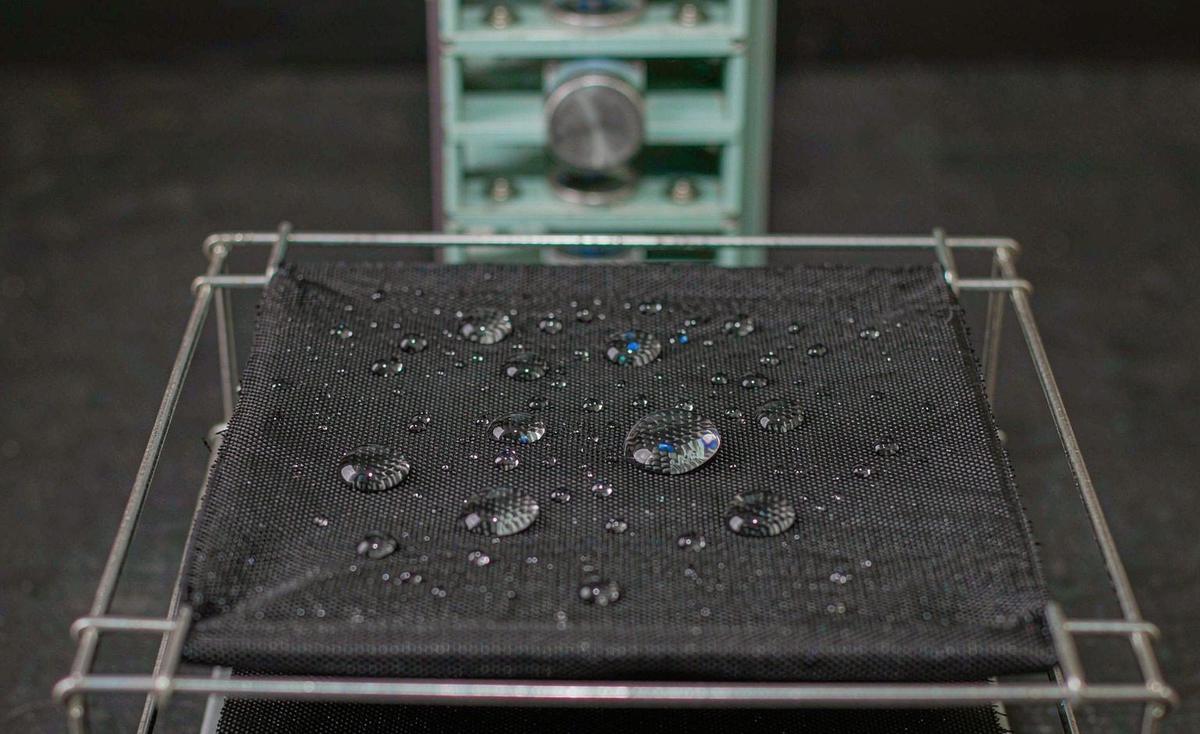
Sustainability is now one of the first three questions a reward bag audience asks, and it is also the area where creators get caught out. The reason is physical rather than moral. Recycled PET is not a different polymer from virgin polyester. It is the same polyethylene terephthalate made from recovered feedstock, with the same repeat unit, the same melting behaviour in the region of 255 C, and the same response to disperse dyes. Nothing you can see, touch or photograph on a finished bag tells anyone where the polymer came from.
That has a useful consequence for a creator who does the work properly. Because verifiable claims are rare in this category, they are disproportionately persuasive. A campaign that states its recycled percentage, names the standard, can produce the transaction certificate for the exact lot and volunteers which parts of the bag the figure does not cover stands clearly apart from one that prints eco-friendly across a hero image and hopes nobody asks. Sophisticated backers are the ones who ask, and they are also the ones who post the answer in the comments.
It also has a commercial consequence worth planning for at quotation stage rather than after artwork approval. Certified cloth costs more, takes longer to source, and narrows your colour and trim choices. All three are manageable if decided early and expensive if decided late, because changing fabric once a tech pack is approved resets sampling and, in the worst case, resets the certification trail. The rest of this article walks through the specification, the documents, the environmental numbers and the wording, using the figures our sourcing partner applies when quoting a recycled PET reward bag at 500 pcs per style and per colourway.
Treat a sustainability claim as a procurement document with a marketing headline attached, not as a marketing line that procurement has to catch up with later.
What recycled PET means in a bag specification
Recycled PET, usually written rPET, is polyester produced from recovered PET feedstock instead of fresh petrochemical monomers. In a technical specification it is recorded exactly like any other polyester: denier, filament count, weave or knit construction, coating, finish, grammage and colour reference. What a recycled specification adds is two fields that a virgin specification does not have. The first is the certified recycled percentage by weight in the fabric. The second is the standard under which that percentage is certified, plus the identity of the document covering this particular lot.
Without those two added fields you have bought polyester. That sounds pedantic until you consider how a claim is challenged. A backer does not ask whether your fabric is made from bottles; a backer asks what percentage is certified, under which standard, and whether you can show the certificate for the batch that went into this production run. If your specification never asked the mill those questions, the honest answer at that point is that you do not know, and every line on your campaign page becomes unprovable at once.
The next distinction quietly shapes the whole bill of materials. Fabric can carry a certificate; most components cannot. Zip tape, webbing, foam padding, buckles, thread, elastic and coatings may exist in recycled versions, but rarely in every denier, width and colour you need, and rarely with a matching certificate in stock. This is why the defensible and actually more persuasive approach is a component-level claim: state which parts carry recycled content and what share of finished bag weight that represents. A bag that says shell and lining fabric are 100% certified recycled PET, representing about 62% of finished bag weight, is harder to attack and easier to prove than one that says the bag is recycled.
Denier availability also belongs in the specification conversation early, because certified ranges are narrower than virgin ones. Fine deniers in the 300D to 600D band are widely available with certification and cover most totes, pouches, daypacks and lining work. Heavier constructions such as 900D, 1000D and 1680D exist in recycled versions but are stocked by fewer mills, in fewer colours, and often with a dye-lot minimum that a small campaign will struggle to clear. If your reward is a structured travel pack that needs a 1680D base panel, decide at quotation whether that specific denier is available certified, rather than discovering it after the tech pack is signed off. Our campaign bag specialist raises this in the first RFQ round for exactly that reason.
Key takeaways
- A
- r
- e
- c
- y
- c
- l
- e
- d
- s
- p
- e
- c
- i
- f
- i
- c
- a
- t
- i
- o
- n
- i
- s
- a
- n
- o
- r
- m
- a
- l
- f
- a
- b
- r
- i
- c
- s
- p
- e
- c
- i
- f
- i
- c
- a
- t
- i
- o
- n
- p
- l
- u
- s
- r
- e
- c
- y
- c
- l
- e
- d
- p
- e
- r
- c
- e
- n
- t
- a
- g
- e
- ,
- s
- t
- a
- n
- d
- a
- r
- d
- ,
- c
- e
- r
- t
- i
- f
- i
- c
- a
- t
- e
- i
- d
- e
- n
- t
- i
- t
- y
- a
- n
- d
- a
- c
- o
- m
- p
- o
- n
- e
- n
- t
- -
- b
- y
- -
- c
- o
- m
- p
- o
- n
- e
- n
- t
- s
- t
- a
- t
- e
- m
- e
- n
- t
- o
- f
- w
- h
- a
- t
- t
- h
- e
- p
- e
- r
- c
- e
- n
- t
- a
- g
- e
- c
- o
- v
- e
- r
- s
- .
Feedstock streams and why the source matters
Two feedstock categories appear on certificates and they are not equivalent in price, availability or marketing value. Post-consumer recycled material comes from PET that has completed a use cycle with a consumer, overwhelmingly drinks bottles collected through deposit schemes, kerbside streams or informal collection. Post-industrial recycled material is factory waste: offcuts, rejected preforms, film trim and fibre waste that never reached a consumer. Post-consumer material is what backers assume when they read recycled, it is the more contested and usually more expensive stream, and claiming one while buying the other is the single fastest way to lose an argument in your comments section.
Supply dynamics explain why rPET pricing behaves differently from virgin polyester. Virgin PET resin tracks petrochemical feedstocks, so its price moves with crude, PTA and MEG markets. Recycled flake tracks collection and sorting economics, which means bale quality, seasonality, labour costs and, critically, competition from beverage brands trying to secure food-grade flake for bottle-to-bottle mandates. When bottle brands bid aggressively, fibre-grade flake tightens and premiums widen. That is why a quotation for certified fabric should carry a validity window, typically 30 days, and why a price agreed in month one cannot always be honoured in month six.
Two conversion routes exist. Mechanical recycling sorts, washes, grinds and re-melts PET into flake and then into chips or filament; it dominates because the plants exist and the process is mature. Chemical recycling depolymerises PET back toward its monomers or oligomers before re-polymerising, giving virgin-equivalent material at a substantially higher cost and far lower availability. For a reward bag produced in 2026, mechanically recycled filament is the realistic choice in nearly every case. One process detail is worth knowing because it explains most quality variation: every melt cycle shortens the polymer chains, so intrinsic viscosity drops with each reprocessing pass, and mills manage that with solid-state polymerisation, chain extenders or blending with virgin chip. Ask which route a mill uses and in what proportion.
- Post-consumer feedstock is the stream backers assume; post-industrial is cheaper and easier to source but must be labelled as such
- Mechanical recycling is the default for bag fabrics; chemical recycling is available in limited volumes at a significant premium
- Recycled flake pricing is driven by collection and sorting economics, not only by oil, so quotations need a validity window
- Each melt cycle reduces intrinsic viscosity, which is why recycled filament quality varies more between mills than virgin filament does
- Contamination risk in the input stream is the reason recycled inputs attract extra chemical testing rather than less
Denier, filament and yarn data: rPET versus virgin
Denier is the weight in grams of 9,000 metres of a single yarn, and decitex is the weight in grams of 10,000 metres; both appear on Asian mill data sheets, so read whichever is offered and convert rather than assuming. Filament count matters as much as denier. Two 600D yarns with 72 filaments and 192 filaments behave differently in abrasion, hand feel and coating take-up, and the finer-filament version usually feels softer and drapes better while costing more. When you specify a recycled version of a fabric you already like, specify denier, filament count, weave density and coating weight together, because mills substitute freely within a denier band and a substitution is invisible once the bag is sewn.
The measurable difference between recycled and virgin polyester is not dramatic, but it is real and it is directional. Mechanically recycled filament typically sits at the lower end of the tenacity band, and the spread between lots is wider, so the coefficient of variation matters more than the average. In a bag application the difference is usually not detectable in ordinary use, which is precisely the point: you are not buying a weaker fabric, you are buying a fabric whose lower tail you should control by specification. Set a minimum tenacity rather than an average, cap the variation, and require a mill test report for each lot rather than a generic assurance.
The table below gives indicative bands rather than guarantees. Treat every row as a question to put to your mill, and treat any supplier who cannot produce lot data for the specific construction as a signal to keep looking. Where a certified recycled option is used on a load-bearing panel, our production team asks for the tensile and tear data on the certified roll before approving the fabric for bulk, in the same way it would for a virgin construction at the same price point.
| Property | Typical virgin polyester | Typical recycled PET | Test reference | What to write in the RFQ |
|---|---|---|---|---|
| Tenacity | 4.5 to 7.0 cN/dtex | 3.5 to 6.0 cN/dtex | ISO 2062 / ASTM D2256 | State a minimum, not an average |
| Elongation at break | 18 to 30% | 15 to 30% | ISO 2062 | Request the mill test report per lot |
| Intrinsic viscosity | 0.60 to 0.68 dL/g | 0.58 to 0.66 dL/g | ASTM D4603 | Reject lots below the stated floor |
| Tenacity variation (CV) | 3 to 5% | 4 to 8% | Mill databank | Cap the CV in the fabric specification |
| Abrasion resistance | 20,000 to 40,000 cycles | 15,000 to 35,000 cycles | ISO 12947-2 | Define the endpoint, e.g. yarn break |
| Base shade of the greige | Bright white | Slight grey or yellow cast | Spectrophotometer / grey scale | Approve a colour tolerance up front |
One practical consequence of the base-shade row deserves its own paragraph, because it causes more campaign delays than any strength question. Recycled greige cloth is rarely as bright as virgin, so a pale or fluorescent shade that works beautifully on virgin polyester can come back dull or off-hue on recycled. Plan for one extra lab dip round on pale shades, approve against a physical standard under controlled light rather than a photograph, and remember that a shade you approve on a swatch has to survive a full dye lot several weeks later. If the reward has multiple colourways, this is where the schedule is most likely to slip.

GRS versus RCS: choosing a standard
Two standards dominate recycled content claims in sewn goods, both owned by Textile Exchange and both delivered through independent certification bodies rather than by the mills themselves. The Recycled Claim Standard verifies recycled content and chain of custody. The Global Recycled Standard covers the same traceability requirements plus environmental criteria covering processing, wastewater and energy, and social criteria covering working conditions. GRS is harder to hold, audits more, and is therefore more valuable as evidence. Both standards use percentage thresholds and label tiers, with RCS generally permitted at a lower recycled content floor than GRS, so confirm the threshold in the version of the standard your mill currently holds rather than relying on a figure quoted second-hand.
Chain of custody is the part that matters operationally. Every business in the chain, from the recycler to the chip producer to the spinner to the weaver or knitter to whoever sells you the fabric, must hold its own scope certificate and must pass the claim along with the goods. A mill that shows you its own certificate is demonstrating that its site is certified, not that your particular roll is certified. The gap between those two statements is where most greenwashing in this category lives, and it is an easy gap to close on a page if you simply publish the transaction certificate alongside the mill certificate.
Reading a scope certificate takes about two minutes once you know what to look for. Check the legal entity name and address match the company invoicing you, because trading entities and production entities are frequently different companies. Check the certified product categories actually include the process being claimed, for example weaving, dyeing, finishing or trading, since a certificate that covers trading alone tells you nothing about the material being processed. Check the validity dates, because an expired certificate is not evidence. Check the certification body name and licence number, and if the document is a PDF someone forwarded, ask for it to be reissued to your order rather than accepting a copy addressed to another buyer.
- Scope certificate: certifies a site and its systems for a period, usually one year; it does not certify your roll
- Transaction certificate: certifies one shipment of one product between named parties, and is the document a backer can check
- GRS adds environmental and social criteria on top of traceability; RCS covers content and traceability only
- Percentage thresholds and label tiers differ by standard and version, so confirm against the current version before printing a logo
- Using a standard logo on a finished product normally requires the finished product itself to be certified and the logo use to be approved
Transaction certificates: the workflow that proves it
The transaction certificate, usually shortened to TC, is the closing document in a recycled content claim. It is issued through the certification body for one specific shipment of certified material and it names the buyer, the seller, the product, the quantity and the recycled content percentage. It is the only document in the chain that connects a percentage to the actual metres that were cut into your bags, which is why it is the document to ask for, to file and eventually to publish. Everything upstream of it is infrastructure; the TC is the proof.
The workflow runs in a fixed order and each step has a failure mode. First, confirm at quotation stage that a certified yarn allocation exists for your denier and colour, because an allocation is a real reservation of material and it is what separates a quotation from a wish. Second, place the fabric order referencing the supplier scope certificate number, so the chain starts from a document that matches the entity you are paying. Third, ensure each transfer in the chain generates its own TC, because a missing link anywhere upstream means the final document cannot be issued. Fourth, request the final TC while the fabric is being shipped, within the window the certification body allows, since a certificate requested months later is often impossible to obtain once the lot has been cut, dispersed and reconciled.
- Reserve the certified yarn allocation at quotation, not after sample approval, and record the denier and colour against it
- Issue the fabric purchase order with the supplier scope certificate number printed on it
- Require an intermediate transaction certificate at every handover: recycler to chip producer, chip to spinner, spinner to weaver, weaver to dyer
- Request the final transaction certificate at the point the fabric ships, and diarise the certification body deadline
- Verify the quantity on the certificate covers your full order plus cutting waste before the fabric is released for cutting
- File the certificate with the tech pack and the test reports, and publish it as a PDF if you intend to make a public claim
Two failure modes deserve specific warnings. The first is quantity mismatch: if the certificate covers less material than you actually cut, the surplus is uncertified by definition, which means part of your production run cannot support the claim. The second is silent substitution: if the certified lot runs short mid-production and an uncertified equivalent is quietly substituted, the entire claim is invalidated even though most of the bags really were made from certified cloth. Prevent both by booking the full requirement including waste before cutting starts, and by requiring written confirmation of lot coverage before the 70% balance is released under T/T 30/70 terms. Our programme coordinator treats that confirmation as a payment gate rather than a paperwork exercise.
Ask for the transaction certificate before the fabric is cut, not after the bags ship. Retrospective certificates are the most common reason a genuine recycled claim cannot be proved.
Carbon and water figures without the overclaim
This is the section where otherwise careful creators publish a number that cannot be defended, usually because they copied it from a headline rather than from a study. Environmental comparisons between recycled and virgin polyester are real, but they are boundary-dependent, meaning the size of the saving moves substantially with choices the study author made before calculating anything. Publish a number without its boundary and you have published something that looks like a fact but behaves like an opinion the moment someone reads the underlying paper.
With that caveat, the direction is consistent and safe to state. Credible life cycle assessments generally place recycled PET filament below virgin polyester on greenhouse gas emissions and energy demand, with published results commonly clustered in a roughly 30% to 60% lower band for emissions and a roughly 30% to 50% lower band for energy, depending heavily on the electricity grid assumed for spinning and weaving. Water figures are far more scattered, with credible studies reporting anywhere from modest savings to very large ones depending on whether irrigation, cooling water and process water are counted. That spread is not a reason to avoid water claims; it is a reason to publish the definition alongside the number.
Two objections from informed backers should be anticipated rather than dodged. The first is that bottle-to-fibre recycling is often a one-way trip, because polyester fibre is difficult to recycle again at end of life, so the material moves from a bottle to a bag and then to landfill or incineration. Some assessments therefore treat fibre as downcycling and score it less generously than bottle-to-bottle recycling. The honest response is to acknowledge the point and explain that your claim is about input rather than end of life. The second objection is freight: shipping a bag to a backer can carry a carbon cost comparable to a meaningful fraction of the material saving, so a claim about the fabric should not be stretched into a claim about the delivered product.
| Boundary question | Answered one way | Answered the other way | Effect on the published number |
|---|---|---|---|
| Cradle-to-gate or cradle-to-grave | Fibre production only | Includes use phase and end of life | Can move the saving by tens of percentage points |
| Functional unit | One kilogram of filament yarn | One finished bag delivered | Bag-level figures add trims, freight and packaging |
| Allocation method | Cut-off approach | Avoided burden credit | Changes whether recycling scores better or worse |
| Electricity grid assumed | Regional grid for spinning and weaving | Global average grid | Energy dominates the greenhouse gas result |
| Water definition | Process water only | Includes cooling and irrigation | Explains most of the spread in water claims |
| Comparison baseline | Virgin polyester | A different fibre entirely | A different baseline is simply a different claim |
The sentence that keeps you safe is short and worth memorising: according to public life cycle assessments, recycled PET typically shows materially lower greenhouse gas emissions and energy demand than virgin polyester, with the size of the saving depending on the assessment boundary, the allocation method and the electricity grid assumed. That sentence is true, it survives a backer who reads the underlying studies, and it does not commit you to a single number that a critic can isolate. Follow it with the practical statement that your bag is shipped from the production site, which is the honest way to close the loop on transport.
Greenwashing exposure: FTC Green Guides and EU rules
A sustainability claim on a campaign page is advertising, and advertising is regulated. In the United States the relevant framework is the FTC Green Guides at 16 CFR Part 260, which set out how environmental claims must be qualified and substantiated under Section 5 of the FTC Act. The principles that matter for a bag campaign are straightforward: claims must be supported by competent and reliable evidence at the time they are made; claims must be qualified if an unqualified version would overstate the benefit; broad terms such as eco-friendly, green or sustainable should not be used without a specific, verifiable benefit attached; recycled content claims should identify whether the content is pre-consumer or post-consumer; and recyclability claims should not be made unless collection is available to a substantial majority of consumers.
In the European Union the position tightened with Directive (EU) 2024/825 on empowering consumers for the green transition, which amends the consumer protection framework to prohibit generic environmental claims that are not substantiated, prohibit sustainability labels that are not based on an independent certification scheme, and restrict claims of carbon neutrality that rest on offsetting. Member States transpose and apply it on published timelines, and the separate proposed Green Claims Directive has moved through the legislative process, so confirm the current status with counsel before printing anything that will still be on a carton two years from now. A UK-facing campaign should also read the CMA Green Claims Code, whose six principles require claims to be truthful, accurate, clear, unambiguous, substantiated and honest about the full life cycle.
None of this should push a creator away from saying anything at all. It should push towards a specific shape of sentence. Compare three versions of the same fact. The first, our bag is eco-friendly and sustainable, is unqualified and indefensible. The second, our bag saves 30 bottles from landfill, is specific but derived from arithmetic you must show and a standard does not certify. The third, the shell fabric is 100% recycled PET certified to the Global Recycled Standard, representing approximately 62% of finished bag weight, with the remaining weight in uncertified hardware and trims, is qualified, verifiable and still reads well on a campaign page. The third version is the one that survives contact with a regulator, a marketplace reviewer and a sceptical backer.
- Avoid unqualified eco-friendly, green, planet-friendly or sustainable without a specific benefit and a number next to them
- Avoid carbon neutral unless the claim follows a recognised standard and is not simply purchased offsets presented as reduction
- Avoid biodegradable on a coated polyester bag; it is not accurate for the material and invites a complaint
- Avoid recyclable unless kerbside collection for that material is genuinely available where your backers live
- Avoid a standard logo on the product unless the finished product is certified and logo use has been approved
- Avoid bottle counts as the headline figure, because no standard certifies them and the arithmetic is rarely shown
Physical performance: strength, colour and coating
Once the paperwork is settled, the fabric still has to survive the same tests any bag fabric would face. Three areas deserve specific attention on recycled polyester. Strength and abrasion sit at the lower end of the virgin band with more lot-to-lot variation, so the mitigation is a minimum in the specification and a test report per lot rather than a reassurance. Colour is affected by the greige base shade and by dye uptake differences, which matters most on pale, bright and fluorescent shades. Coating adhesion deserves attention because recycled feedstock can carry higher levels of oligomers and residual contaminants that migrate to the surface and interfere with a PU or TPU bond.
Coating is worth unpacking because it is where recycled bags most often fail quietly. A PU coating applied to a recycled base cloth can show good initial adhesion and then lose it after a few weeks as oligomers bloom to the surface, presenting as a cloudy film, a tacky handle or edge lift after flexing. The mitigation is not exotic: specify the coating weight and the adhesion requirement, run an adhesion test after accelerated ageing rather than only on a fresh sample, and approve a coated swatch from the certified lot rather than from a laboratory roll that was never part of your order. Our production team also asks for a flex test on coated recycled panels before bulk cutting.
The test plan below is the one we would run for a recycled PET reward bag with a coated shell. It is deliberately short, because an overlong test plan delays sampling and adds cost without protecting the claim. Run it at fabric approval and again on the production lot, and keep the reports with the transaction certificate, because together they form the evidence pack that answers a backer challenge in one reply instead of ten. If you need a fuller comparison of how recycled polyester behaves against nylon and standard polyester in the same construction, see our analysis of nylon, polyester and recycled PET for crowdfunding backpacks.
| Risk on recycled PET | Test | Method reference | Typical acceptance | When to run |
|---|---|---|---|---|
| Lower or uneven tenacity | Yarn and fabric tensile strength | ISO 2062, ISO 13934-1 | Within 10% of the agreed baseline | Fabric approval |
| Shade drift between dye lots | Instrumental colour difference | ISO 105-J03 / AATCC 173 | Delta E under 1.0 against the standard | Every dye lot |
| Fading on an outdoor bag | Colour fastness to light | ISO 105-B02 | Grade 4 or better | Fabric approval |
| Rub-off onto light clothing | Colour fastness to rubbing | ISO 105-X12 | Grade 4 dry, grade 3-4 wet | Fabric approval |
| Coating peeling or blooming | Coating adhesion and flex | ISO 2411 plus a flex cycle | Above the agreed force per 50 mm | Coated fabric approval |
| Seam failure under load | Seam strength | ISO 13935-2 | Set from the intended load case | Prototype and pre-production sample |
Production inspection follows the same discipline as any other campaign run: AQL 2.5 to ISO 2859-1, with the visual and functional checks agreed in advance and recorded on the inspection report. Nothing about recycled content changes the inspection standard, and no claim should ever be allowed to substitute for inspection. Where recycled fabric does add a step is traceability: keep the roll numbers, the cutting record and the transaction certificate together, so that if a backer ever asks which lot their bag came from, the answer exists in a file rather than in someone's memory. That linkage is also what lets you re-order a colourway later with confidence.
Cost, MOQ and colourway limits on recycled yarn
Certified recycled fabric carries a premium, and it helps to know exactly where it comes from. The raw recycled chip or filament costs more than virgin because collection, sorting and washing are expensive. Certification itself carries audit and licence costs that are amortised across smaller volumes. And recycled yarn is produced in allocated runs, so a spinner may require a minimum quantity per denier, commonly in the region of one to two tonnes, before it will schedule a certified lot at all. At the fabric stage that translates into a dye-lot minimum that is often higher than the equivalent virgin minimum, particularly for custom shades.
In practice, on a reward bag quoted at 500 pcs per style and per colourway, the certified fabric premium typically lands in the 10% to 30% range over the same construction in virgin polyester, with the lower end applying to widely stocked deniers and shades and the upper end to heavy deniers, custom colours or solution-dyed yarn. Because fabric usually represents a substantial minority of unit cost rather than the majority, the movement in total unit cost is smaller than the fabric premium suggests. There is also administrative cost per lot for certification and transaction certificate handling, which is why consolidating colourways saves more than it appears to.
Colourway strategy is therefore the main lever a creator has. Certified recycled colour cards are narrower than virgin ones: where a virgin polyester programme might offer hundreds of shades from stock, a certified recycled programme may offer a few dozen, and a solution-dyed recycled programme fewer still. The practical approach is to choose from the stocked certified shade card wherever possible, reserve custom dye lots for the hero colourway, and design stretch goals around available shades rather than promising a colour that needs a bespoke run. If your campaign needs small runs across many colours, read our guidance on low MOQ bag production for creators before you publish the reward tier, and model the whole programme from the custom bags for Kickstarter hub.
- Certified fabric premium: typically 10% to 30% over the virgin equivalent at the same construction, wider for heavy deniers and custom shades
- Recycled yarn allocation: commonly one to two tonnes per denier per run, which is why small custom lots are hard to book
- Dye-lot minimum: frequently higher than virgin, and it is the constraint that most often breaks a multi-colourway campaign
- Stocked certified shades: a narrower card than virgin, so design stretch goals around what exists
- Administrative cost: certification and transaction certificate handling are charged per lot, not per unit, so fewer lots cost less
- Order minimum: 500 pcs per style and per colourway, with sampling in 6-10 working days and 12-15 working days for complex constructions
Wording the claim on page, label and packaging
A defensible claim has four parts, in this order. First, the certified statement: what percentage, of which component, under which standard. Second, the scope statement: what that percentage represents as a share of the finished bag. Third, the boundary statement: what is not recycled and why. Fourth, the evidence: a link to the certificate and the test reports. Put all four on the campaign page, ideally in a short section near the material description, and reuse the same wording on the hang tag, the carton and any insert so that a backer comparing them finds consistency rather than drift.
Here is a template that works. Shell and lining fabric: 100% recycled PET, certified to the Global Recycled Standard, transaction certificate available on request. Recycled content represents approximately 62% of finished bag weight; zips, webbing, foam and hardware are not certified recycled. Environmental comparisons are based on public life cycle assessments of recycled versus virgin polyester and depend on the assessment boundary. That paragraph is short, specific, verifiable and honest about its own limits. Notice that it volunteers the weak points, which is what makes readers believe the strong ones.
Labels carry their own rules. Fibre composition labelling in the European Union falls under the Textile Regulation, and in the United States under textile fibre and care labelling rules, and in both cases the composition statement is about fibre type rather than origin, so a declaration such as 100% polyester with a recycled qualifier printed nearby is normally the safe structure. If you plan to print a fibre content label, check the requirements in our guide to fibre content labelling for custom bags before artwork is finalised. Remember also that recycled content does not remove chemical obligations: REACH documentation for the EU and CPSIA lead and phthalates testing for the US apply exactly as they do to virgin polyester, and recycled inputs sometimes attract extra scrutiny because contamination is a known risk in the feedstock.
Packaging deserves the same discipline as the bag. A recycled claim on a polybag or carton is still a claim, and a recyclable claim is only defensible where collection actually exists for that format in your backers' markets. Keep the printed area small enough that a correction is cheap: a hang tag or insert is far cheaper to reprint than a printed shell panel, which is worth remembering because certification figures are sometimes not final at artwork approval time. Our team sequences hang tags and inserts last in the approval chain for exactly this reason, so the numbers on the packaging are the numbers on the certificate rather than the numbers on an early draft.
One placement tip specific to crowdfunding: use the Risks and Challenges section. It is the one part of a campaign page that readers already expect to be candid, so a sentence there about certification boundaries, shade variation between dye lots or the fact that hardware is not certified recycled reads as competence rather than as weakness. Creators who hide limitations look like they have more to hide; creators who publish them convert better and field fewer hostile comments. The same paragraph can be reused in a campaign update if a backer raises the question publicly, which saves you writing a defensive reply under time pressure.
Answering backer challenges with a verification pack
Assume a backer will ask, in public, for proof. Prepare a single folder now rather than assembling it under pressure: the mill scope certificate, the transaction certificate for your lot, the fabric specification and test reports, the production inspection report at AQL 2.5 to ISO 2859-1, and a one-page statement of the environmental boundary you are relying on. Host it as a PDF and link it from the campaign page. A creator who answers a challenge with a file rather than a paragraph usually ends the thread in one message, while a creator who answers with adjectives starts a week of argument.
The four questions that come up repeatedly have short, honest answers. Can you prove it? Yes, here is the transaction certificate for the lot, and it names the quantity. Is the whole bag recycled? No, the certified fabric is the shell and lining, representing about 62% of finished weight, and here is why the hardware is not. How many bottles is that? We do not lead with a bottle count because no standard certifies one; here is the fabric weight and the arithmetic if you want to work it out. Is this just marketing? Here are the test reports and the inspection report as well, including the results that were not perfect.
Finally, plan the calendar with the certification steps inside it rather than after it. Sampling runs 6-10 working days for standard constructions and 12-15 working days where the build is complex, provided certified cloth has been reserved at quotation stage; if it has not, add the sourcing time first. Bulk production runs 35-50 days from approval, quoted FOB Xiamen with T/T 30/70 payment terms. Our partner workshop runs seven lines with roughly 200,000 pcs per month of capacity, and our production team has supported 20-plus crowdfunding programmes through exactly this sequence, which is why we insist on reserving certified fabric before the campaign launches rather than after it funds. If you want the claim, the specification and the certificate planned together, request a quote with your denier, colourway count and target recycled percentage, and review the campaign bag QA and QC process alongside it.
Publish the certificate, not the adjective. A backer who can check a claim stops arguing about it, and a backer who cannot will keep arguing however good the product is.
- Recycled content
- Stated as a percentage by weight on the fabric, matching the transaction certificate
- Standard
- GRS or RCS, current version, with the site scope certificate checked
- Construction
- Denier, filament count, weave density and coating weight specified together
- Tenacity floor
- Minimum in cN/dtex with a cap on lot variation
- Colour fastness
- ISO 105-B02 grade 4 or better for outdoor reward bags
- Documents
- Scope certificate, transaction certificate, test reports, AQL 2.5 inspection report
Send your denier, colourway count and target recycled percentage, and our team will return a quotation with certified fabric options, MOQ and a realistic calendar.
Frequently Asked Questions
What makes a recycled PET claim on a Kickstarter reward bag verifiable?
Three documents working together: a recycled content standard such as GRS or RCS, a scope certificate for the site that made the fabric, and a transaction certificate naming the exact lot, quantity and percentage used in your order. The published percentage must match the certificate by weight, and it should state which components it covers, because hardware and trims are rarely certified.
Is recycled PET chemically different from virgin polyester?
No. It is the same polymer, which is exactly why documentation rather than inspection is the evidence. Records typically show recycled filament at the lower end of the tenacity band, around 3.5 to 6.0 cN/dtex against 4.5 to 7.0 for virgin, with wider lot-to-lot variation. Specify a minimum and a variation cap rather than accepting an average. Both are issued through independent certification bodies rather than by the mill, and both are re-audited annually.
What is the difference between GRS and RCS?
The Recycled Claim Standard verifies recycled content and chain of custody. The Global Recycled Standard adds environmental criteria covering processing, wastewater and energy, plus social criteria on working conditions, so it is harder to hold and more useful as evidence. Both use percentage thresholds and label tiers that vary by version, so confirm the current version before printing a logo.
When should I ask for the transaction certificate?
At the point the fabric ships, not after the bags are finished. Certification bodies work to a defined window after shipment, and a certificate requested months later is often impossible to obtain once the lot has been cut and dispersed. Tie written confirmation of lot coverage to the release of the 70% balance under T/T 30/70 terms. Diarise that deadline the day the fabric ships, because a late request is the single most common cause of a genuine claim that cannot be proved.
Can I claim that the whole bag is recycled?
Usually not, and claiming it is the fastest route to a credibility problem. Shell and lining fabric can often be certified, while zips, webbing, foam, buckles, thread and coatings usually cannot. The defensible version states the certified components and their share of finished bag weight, for example 100% recycled shell fabric representing about 62% of the total. Volunteering the uncertified share costs you nothing and removes the obvious line of attack.
How much more does certified recycled fabric cost?
Typically 10% to 30% over the virgin equivalent at the same construction, with the low end applying to widely stocked deniers and shades and the high end to heavy deniers, custom colours or solution-dyed yarn. Certification and transaction certificate handling are charged per lot rather than per unit, so consolidating colourways reduces cost more than it appears to. Consolidating colourways usually saves more than negotiating the fabric price does.
Does using recycled PET change my minimum order quantity?
The order minimum stays at 500 pcs per style and per colourway, but certified yarn and fabric carry their own constraints on top. Spinners commonly require one to two tonnes per denier for a certified run, and fabric dye-lot minimums for recycled shades are frequently higher than for virgin, which is the constraint that most often breaks a multi-colourway campaign.
How should I quote carbon and water savings without overclaiming?
Quote a range with the boundary attached. Public life cycle assessments commonly place recycled PET roughly 30% to 60% below virgin polyester on greenhouse gas emissions and roughly 30% to 50% below on energy, with water savings scattered far more widely depending on the definition used. Print the boundary, the allocation method and the grid assumption next to any figure.
What does the FTC Green Guides position mean for a campaign page?
It means claims must be substantiated before they are published and qualified so they do not overstate a benefit. Avoid unqualified eco-friendly, green or sustainable, specify pre-consumer or post-consumer content, and do not call a bag recyclable unless collection is available to a substantial majority of your backers. UK campaigns should also follow the CMA Green Claims Code principles. Print the boundary sentence next to the figure so a reader can see exactly what is being compared.
Does EU Directive 2024/825 affect how I word a recycled claim?
Yes if you sell to EU backers. It prohibits generic environmental claims that are not substantiated, prohibits sustainability labels not based on an independent certification scheme, and restricts carbon neutrality claims that rest on offsetting. Member States transpose and apply it on published timelines, and the separate Green Claims proposal has moved through the legislative process, so confirm current status with counsel before printing packaging.
Does recycled PET affect strength, colour fastness or coating adhesion?
It can. Tenacity and abrasion typically sit at the lower end of the virgin band with more variation, the greige base shade is less bright so pale shades need an extra lab dip round, and residual oligomers can interfere with PU or TPU coating adhesion over time. Test the certified lot for tensile, ISO 105-B02 light fastness and ISO 2411 coating adhesion.
How do I answer a backer who demands proof in the comments?
Reply with a file rather than a paragraph. Host a folder containing the scope certificate, the transaction certificate for your lot, the fabric test reports and the AQL 2.5 inspection report, and link it from the campaign page. Answer the four standard challenges directly: proof, coverage, bottle counts and whether the hardware is certified, volunteering the limits rather than waiting to be pressed on them.
People Also Ask
Is rPET the same thing as recycled PET?
Yes. Both terms describe polyester made from recovered PET feedstock, most often post-consumer drinks bottles. The abbreviations are interchangeable on specification sheets.
Can a laboratory test prove a fabric is recycled?
Not reliably. The polymer is identical to virgin polyester, so only chain of custody documentation proves origin. Radiocarbon dating exists but is used for verification sampling, not routine release.
What percentage of recycled content can I claim?
Whatever the transaction certificate states for your lot, by weight. Do not round up, do not average across uncertified components, and do not carry a fabric percentage over to the finished bag.
Are bottle counts per bag reliable?
They are derived marketing figures that no standard certifies. If you use one, publish the fabric weight, the assumed bottle weight and the conversion loss so the arithmetic can be checked.
Is recycled PET weaker than virgin polyester?
It typically sits at the lower end of the same band, with more variation between lots. In bag applications the difference is rarely detectable in use when a minimum tenacity is specified.
Do recycled bags still need REACH or CPSIA testing?
Yes. Recycled content changes where the material came from, not what it must comply with, and recycled feedstock sometimes attracts extra scrutiny because contamination is a known risk.
Can I use the GRS logo on the bag?
Only if the finished product itself is certified to the threshold and the logo use has been approved. A certified fabric alone does not entitle you to put the mark on the bag.