Reward Packaging Checklist: Bags, Inserts, and Protection
What does a bag reward need in its packaging, and in what order? Four layers: a primary pack that protects, void control that stops movement, inserts that carry the information, and a carton spec that survives transit. Specify all four before bulk, test one packed carton to ISTA 3A, and hold the packing line to AQL 2.5 to ISO 2859-1. This article is the checklist, line by line, with the cost and calendar effects of each decision.
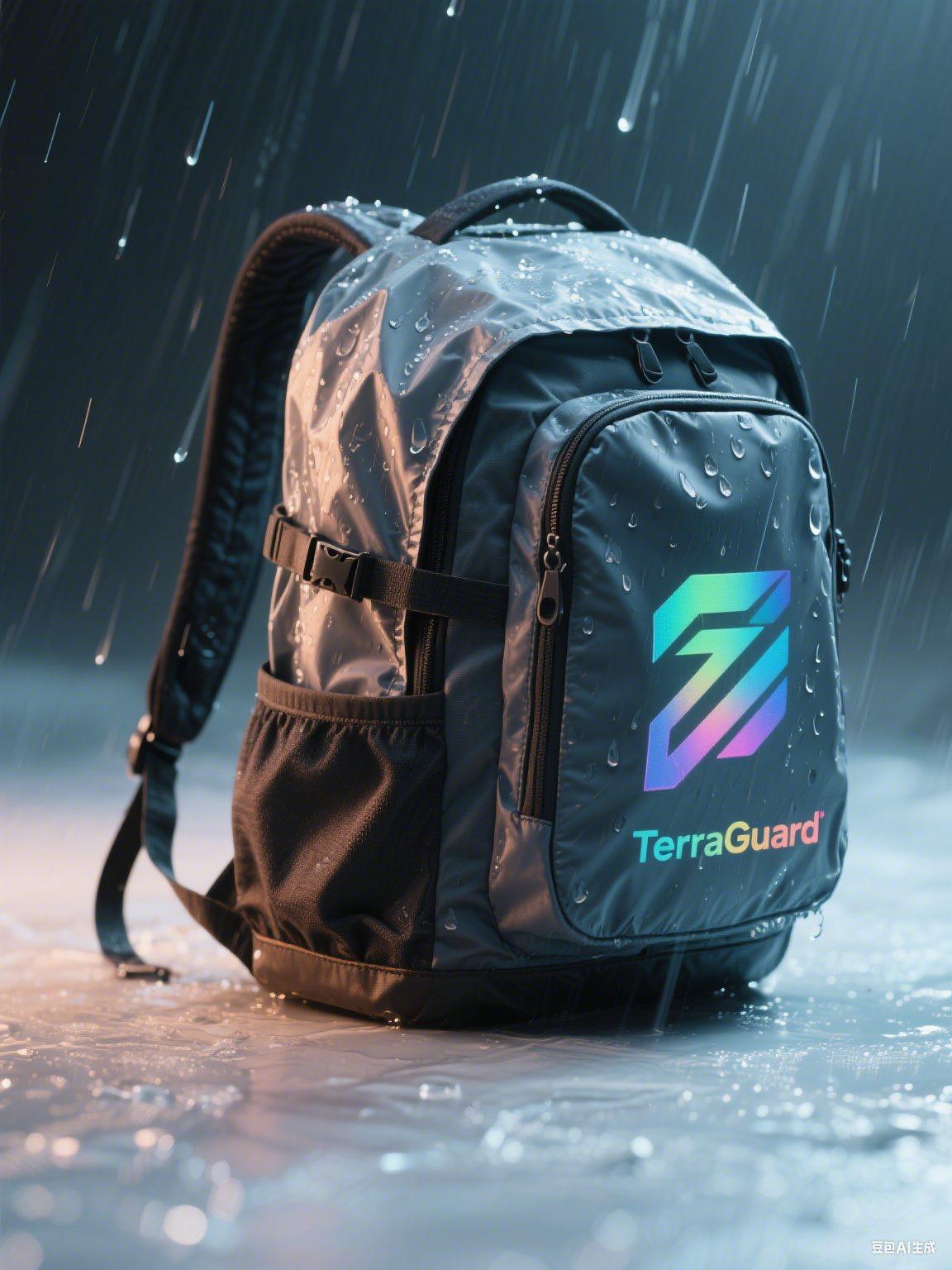
- What packaging has to do for a campaign reward
- The primary pack decision
- Void control and damage rates
- Inserts: what to include and in what order
- Carton spec, quantity per carton and marking
- Volumetric weight and the freight line
- Labelling, compliance and market requirements
- The packing SOP that keeps five hundred units identical
- Transit testing before the first carton ships
- QC checks on the packing line
- The checklist to send with your RFQ
- Packing calendar and cost effect
What packaging has to do for a campaign reward
Packaging on a crowdfunding reward does four jobs, and they are not equally obvious. It protects the unit through a journey that typically includes a container, a port, a warehouse and a last-mile network. It presents the brand at the moment of opening, which for most backers is the only physical contact they will ever have with the campaign. It carries information the bag itself cannot carry, and it has to do all three at a cost and a volume that the freight line will tolerate.
The fourth job is the one most often missed: packaging has to make the unit packable at speed, by people who have never seen the product before. A reward that needs three hands and a judgement call to pack will be packed inconsistently across five hundred units, and inconsistency at the packing line is what produces the mixed reviews that follow an otherwise sound production run. That is why the packing specification belongs in the tech pack rather than in an email to the warehouse.
The cost consequence is worth stating early because it shapes every decision below. Packaging sits on three cost lines at once: the material cost of the pack and inserts, the labour minutes of assembly, and the volumetric weight of the finished carton. A decision that looks cheap on material can be expensive on volume, and the only way to know is to model all three. The rewards fulfilment page covers the receiving and dispatch side; this article covers what has to be specified before goods leave production.
- Minimum order quantity
- 500 pcs per style / colourway
- Sampling
- 6-10 working days (12-15 for complex builds)
- Bulk production
- 35-50 days after deposit + approved pre-production sample
- Inspection
- AQL 2.5 to ISO 2859-1
- Trade term
- FOB Xiamen
- Payment
- T/T 30/70
- Production floor
- 4,950 m² SGS-verified, 137 staff, 7 lines, 149 machines
- Monthly capacity
- 200,000 pcs per month
- Programme contact
- service@junyuanbags.com
Key takeaways on reward packaging
- Specify four layers: primary pack, void control, insert set and carton spec, each as its own line in the pack.
- Fix the insert order and photograph it; an insert placed behind the product is an insert nobody reads.
- Test one fully packed carton to ISTA 3A before the run ships, not after the first damage report.
- Carton dimensions drive volumetric weight, which usually drives freight more than mass does.
- Write the packing sequence as a photographed SOP so five hundred units are packed identically.
The primary pack decision
The primary pack is the layer that touches the bag. Three options cover almost every campaign reward, and the choice is driven by the bag's construction and by the promise the campaign makes rather than by cost alone. A structured bag that has been compressed to save volume will not recover its shape, and a premium bag in a plain polybag contradicts the specification work that went into it. Format matters here too: a packable pouch and a structured travel bag need fundamentally different packs.
| Option | Protection | Presentation | Volume effect | Best for |
|---|---|---|---|---|
| Clear LDPE polybag | Good against dirt and moisture | Minimal | Lowest | Standard reward tiers |
| Polybag with printed warning | Good, plus safety marking | Low | Lowest | Any market with suffocation rules |
| Kraft sleeve or band | Moderate | Good, retail-adjacent | Low | Mid and premium tiers |
| Printed mailer or box | High | Strong | High | Premium tiers, gift positioning |
| Recycled paper sleeve | Moderate | Values-led | Low to moderate | Eco-positioned campaigns |
| Reusable dust bag | Moderate, plus keepsake value | Strong | Moderate | Premium and limited editions |
Two rules cut through that table. First, wherever a polybag is used, it must carry the suffocation warning required in most destination markets, printed or applied, and that is a specification line rather than an afterthought. Second, wherever the campaign makes a sustainability claim, the primary pack is the first place a backer looks for confirmation, and virgin plastic packaging under a recycled-content claim is the single most common inconsistency on campaign rewards.
Void control and damage rates
Damage in transit is overwhelmingly caused by movement rather than by impact. A unit that can shift inside its carton will find the corner of the box, repeatedly, across an eighteen-day ocean leg and a last-mile network. Void control is therefore the highest-return element of the packing specification, and it is usually the cheapest: either size the carton to the units, or fill the space deliberately.
| Method | Damage control | Cost effect | Note |
|---|---|---|---|
| Carton sized to unit count | Best | Lowest | Requires a carton spec, not a stock box |
| Paper void fill | Good | Low to moderate | Recyclable; adds pack-out minutes |
| Air pillows | Moderate | Low | Can burst at altitude; check the market |
| Bubble wrap per unit | High | High | Adds material and labour minutes |
| Nested units | Good where geometry allows | Lowest | Only for soft, flat-packing bags |
| Foam corner inserts | High | High | Rarely justified below premium tiers |
Quantify the target rather than hoping. A well-specified carton on a soft bag programme should arrive with a damage rate below 0.5%; above 2% the packing specification is wrong and the replacements will cost more than the fix. Ask for damage to be logged by category at the fulfilment warehouse for the first sixty days, because that log is the only evidence you will have when deciding whether to change the spec on re-order.
Inserts: what to include and in what order
Inserts carry what the bag cannot: the specification, the care instruction, the brand story and the contact route. The failure mode is not including too few, it is including them in the wrong order or in the wrong place, so the card that matters most ends up behind the product and is never read. Fix the order in the specification and photograph the finished pack as the reference.
- Care and composition card first, placed so it is visible when the bag is lifted out.
- Specification card second, stating dimensions, capacity, weight and fibre composition.
- Founder or thank-you note third, with a direct contact route and a stated response time.
- Any promotional or re-order card last, so it never displaces the information cards.
- Hang tag attached to the bag itself rather than placed loose in the pack.
- Nothing loose at the bottom of the pack; loose cards are the most common complaint.
| Insert | Stock and size | Must contain | Common omission |
|---|---|---|---|
| Care card | 250 gsm, A6 | Wash temperature, drying method, no-iron note | The no-iron instruction over printed areas |
| Spec card | 300 gsm, A5 or A6 | Dimensions in cm, capacity, weight, composition | Composition stated as a percentage |
| Thank-you note | 120 gsm, A6 | Founder name, direct email, response commitment | A contact route that is actually monitored |
| Warranty card | 250 gsm, A6 | Term in months, what is covered, claim route | Who pays return freight |
| Re-order card | 250 gsm, A6 | Where to buy, any backer discount code | An expiry date on the code |
| Compliance label | As required by market | Importer details, fibre content, country of origin | Required only where the market demands it |
Specifying the care card, spec card and thank-you note on the same stock, in one print run and approved at the same time as the pre-production sample, removes two of three set-up charges and keeps colour consistent. It also saves roughly three to five days in the approval window. Card artwork follows the same file rules as any other print or embroidery element on the bag.
Carton spec, quantity per carton and marking
The master carton is where protection, freight cost and warehouse handling all meet. Three numbers define it: pieces per carton, carton dimensions in centimetres, and carton weight. All three have to be right before the freight quote is finalised, because volumetric weight is calculated from the dimensions and a carton sized to a round number rather than to the units can cost more to ship than it costs to make.
- State pieces per carton to the unit, not to a convenient number such as 20 or 25.
- Specify carton board grade and wall construction appropriate to the stacked weight.
- Define carton dimensions in centimetres and require confirmation before the freight booking.
- Set a maximum carton weight, typically 15-20 kg, for safe manual handling at the warehouse.
- Specify marking: style number, colourway, quantity, carton number of total, and destination.
- Require sealing method and tape pattern to be stated, and require photographs at loading.
Marking is more than labelling. A carton marked only with a style code becomes unidentifiable in a warehouse that is receiving three colourways of the same style, and the resulting miscount shows up as a shortage weeks later at dispatch. Mark every carton with the style, the colourway name, the quantity inside and a sequential carton number, and require the packing list to match those marks exactly.
Volumetric weight and the freight line
Bags are charged on volume more often than on mass, and the difference is the reason a packing decision belongs in a cost discussion. Volumetric weight is calculated from carton dimensions, and a structured bag packed at low density can be charged at several times its actual weight. Three specification decisions change that number materially: whether the bag ships flat or assembled, how much void is left, and how the units are nested.
| Decision | Volume effect | Cost effect | Trade-off |
|---|---|---|---|
| Ship flat rather than assembled | Reduces height per unit | Large on structured bags | May add an assembly step at dispatch |
| Size carton to unit count | Removes dead space | Moderate to large | Requires a non-stock carton |
| Nest soft units | Reduces per-unit volume | Moderate | Only where geometry allows |
| Compress with a strap or band | Reduces height | Moderate | Risk of creasing; test first |
| Remove rigid inserts | Large reduction | Large | Loses protection; test to ISTA 3A |
| Reduce carton count, larger boxes | Small improvement | Small | Handling weight rises |
The practical approach is to quote freight twice: once on the packing specification as designed, and once on the most compressed variant that still passes a transit test. The difference is often several hundred dollars on a 500 pcs shipment, and knowing it converts a packing argument into a number. Where a compression strap is considered, test it: creasing that appears after a compressed ocean leg is a far more expensive problem than the freight saved.
Labelling, compliance and market requirements
Packaging carries compliance obligations that the bag itself may not. Fibre composition, country of origin and importer identification are required in most destination markets, and several require specific warnings on flexible plastic packaging. Getting this right is not optional, and it is far cheaper to specify at the packaging stage than to relabel at the destination port.
- Confirm whether the destination market requires a suffocation warning on polybags, and specify it printed or applied.
- State fibre composition as a percentage on the sewn-in label and on the packaging consistently.
- Include country of origin and importer or responsible economic operator details where required.
- Check REACH and EU GPSR obligations for the EU, and CPSIA and Prop 65 for the US.
- Keep one compliance file per style with the packaging artwork as approved, alongside the label artwork.
- Confirm whether retail packaging needs to be marked with a barcode or an SKU for the fulfilment partner.
- Keep the approved packaging artwork in the same compliance file as the bag specification you submitted for quotation.
The packing SOP that keeps five hundred units identical
A packing standard operating procedure is a photographed sequence, not a paragraph of instructions. Written as steps with a photograph at each, it is trainable in an afternoon, auditable during the run, and reproducible on re-order. Without it, five hundred units are packed five hundred slightly different ways, and the variation shows up in damage rates and in backer photographs.
- Unit inspected and aired; any creasing from bulk packing relaxed before inserting.
- Hang tag attached at the stated position, with the string or rivet secured as specified.
- Care card placed first in the pack, positioned so it is visible on opening.
- Specification and thank-you cards placed in the stated order behind the care card.
- Bag inserted flat with the branded face oriented as photographed in the reference.
- Void fill applied to the stated amount, carton closed, sealed, marked and weighed.
Require the SOP to be agreed during the pre-production sample stage rather than at packing, and require the first ten packed units to be photographed against it for approval before the rest of the run is packed. That single checkpoint catches insert-order errors, orientation errors and marking errors while they are still cheap to fix. Our QA and QC page shows how the checkpoint fits into the wider inspection plan.
Transit testing before the first carton ships
One packed carton, tested before the run ships, prevents most of what goes wrong in transit. A drop test on each face plus a vibration or compression sequence approximates what the journey will do, and it finds three specific things that no visual inspection will: insufficient void control, carton board too light for the stacked weight, and closures or handles that deform under compression.
| Test | Method | Pass criterion | Reference |
|---|---|---|---|
| Drop test | One drop per face and one per corner at the specified height | No unit damage; carton intact | ISTA 3A sequence |
| Compression | Load to the stacked height for the transit duration | No carton collapse | ISTA 3A sequence |
| Vibration | Random vibration for the specified duration | No closure failure or abrasion | ISTA 3A sequence |
| Closure check | Operate every closure after testing | Fully functional | Internal method |
| Print check | Inspect printed panels for scuff and blocking | No transfer or blocking | Internal method |
| Crease check | Inspect fabric after unpacking | No permanent creasing | Internal method |
A drop test performed on a sample carton packed with sample units is not evidence about the production carton. Test a carton from the production run, packed to the production SOP with the production void fill, and record the carton specification with the result. Changes to board grade, carton size or void fill invalidate the test.
QC checks on the packing line
Packing defects are systematic, so they need hold points rather than sampling alone. A missing insert, once it starts, continues until someone notices. Three checkpoints catch the pattern while it is still small, and each one is a five-minute activity on a packing line.
| Hold point | Frequency | What to check | Action on failure |
|---|---|---|---|
| First ten units | Once, at line start | Full SOP against the photographed reference | Stop, retrain, repack |
| Every fiftieth unit | Through the run | Insert count, orientation, marking | Stop, inspect the last fifty |
| Carton weigh check | Every tenth carton | Weight against the stated carton weight | Investigate for missing units |
| Seal and mark audit | Every carton at closing | Marking legible, seal complete | Remark before loading |
| Final count | At container loading | Carton count against the packing list | Reconcile before release |
| Pre-shipment inspection | Once, before release | Whole unit and pack to AQL 2.5 | Report before balance payment |
The checklist to send with your RFQ
Packaging is quoted more accurately when it is specified. Add the items below to the RFQ and the returned quotation will include the pack, the insert print run and the carton, rather than a unit price that assumes a polybag and a stock carton. That is the difference between a landed cost model you can trust and one you discover is wrong at the freight quote.
- Primary pack type, material and thickness, with the suffocation warning specified where a polybag is used.
- Insert list with stock weights, sizes, colour count and the required print quantity.
- Insert order, stated as a numbered sequence with a reference photograph where one exists.
- Carton specification: pieces per carton, dimensions in centimetres, board grade and maximum weight.
- Carton marking content and format, including style, colourway, quantity and sequential numbering.
- Transit test requirement, named to ISTA 3A or a stated internal equivalent, with pass criteria.
- Compliance marking required for the destination market, confirmed in writing before the print run.
Packing calendar and cost effect
Packing adds days in three places and it is routinely omitted from the schedule. The insert print run needs to be approved with the pre-production sample, the carton has to be specified before the freight booking, and the packing itself occupies the back end of the production window. Miss the first and the cards arrive after the bags; miss the second and the freight quote changes after it has been used to set the pledge price. Both are avoided by fixing the pack during sample prototyping, at the same approval gate as the pre-production sample.
| Stage | Timing | Packing activity | Gate |
|---|---|---|---|
| Specification lock | Day 0 | Pack, insert and carton spec issued with the tech pack | Quotation includes packaging |
| Sampling round one | 6-10 working days | Sample packed to the draft SOP | Draft SOP photographed |
| Insert print proof | With sampling round two | Cards printed and approved | Proof approved in writing |
| Pre-production approval | Before deposit | PPS packed to the final SOP | Written approval gates T/T 30/70 deposit |
| Carton confirmation | Before freight booking | Dimensions and weight confirmed | Freight quoted on real numbers |
| Bulk packing | Days 35-45 | Units packed to the SOP with hold points | First ten units approved |
| Transit test | Before loading | One production carton tested to ISTA 3A | Result recorded |
| Inspection and release | Days 42-50 | AQL 2.5 to ISO 2859-1 | Report issued before balance payment |
The cost effect of doing all of this is small and the cost of not doing it is large. Packaging material and labour typically add a small percentage to landed unit cost, while a single percentage point of avoidable transit damage on a 500 pcs run means five units to replace, five outbound shipments, five support conversations and five reviews that mention the packaging. The checklist above is the whole of the work required.
- Crowdfunding rewards fulfilment
- Custom bags for Kickstarter campaigns
- Kickstarter campaign bag QA and QC
- Print and embroidery for custom bags
- Material customisation for Kickstarter bags
- Custom bag categories
- Crowdfunding bag guide
- Request a quotation
Specify the pack before you quote the freight
Send us your bag specification, target quantity and destination market. As your production partner we will return a packing specification with primary pack, insert set and carton dimensions, plus a unit cost and a production window. Write to service@junyuanbags.com or use the quotation form.
Frequently Asked Questions
What are the four layers of bag reward packaging?
Primary pack, void control, insert set and carton specification. Each one does a different job and each needs its own line in the tech pack. Omitting the carton dimension line is the most common error, because it is what the freight quote is calculated from.
Should bag rewards ship flat or assembled?
Ship flat wherever the construction allows it, because height drives volumetric weight and therefore freight cost. Test first: a structured bag compressed for transit may not recover its shape, and creasing that appears after an ocean leg costs more than the freight saved.
What order should inserts be placed in the pack?
Care and composition card first, where it is visible when the bag is lifted out; specification card second; founder note third; promotional card last. Nothing should sit loose at the bottom, because loose cards are the most common packaging complaint.
How many units should go in a master carton?
Set the quantity to the units rather than to a convenient round number, and keep the finished carton at 15-20 kg for safe manual handling. Confirm the resulting dimensions in centimetres before the freight booking, because volumetric weight is calculated from them.
What transit test should a packed carton pass?
A sequence to ISTA 3A covering drop, compression and random vibration is the usual benchmark for parcel shipments of this kind. Test a carton taken from the production run, packed to the production SOP with the production void fill, and record the carton specification alongside the result.
What damage rate should a packed bag reward target?
A damage rate below 0.5% is achievable on a well-specified soft bag programme, with cartons sized to the units and void properly controlled. Above 2% the packing specification is wrong, and the replacements, outbound shipments and support time will cost more than fixing the specification would have.
Do polybags need a suffocation warning?
Most destination markets require a warning on flexible plastic packaging above a stated size, and it applies whether the bag ships to a consumer or to a warehouse. Specify it as a printed or applied marking in the packaging specification rather than adding it later, because relabelling at the destination port is expensive.
Should the insert set be printed in one run?
Yes. Printing the care, specification and thank-you cards on the same stock, in one print run, removes two of three set-up charges and keeps colour consistent across the set. It also saves roughly three to five days in the approval window, because one proof covers all three.
How is packaging specified in an RFQ?
State the primary pack type and material thickness, the insert list with stock weights, sizes and print quantities, the insert order, the carton specification with dimensions and maximum weight, the carton marking content, the transit test required, and any compliance marking the destination market needs.
When should the carton specification be confirmed?
Before the freight booking and ideally before the pledge price is published. Carton dimensions drive volumetric weight, which usually drives freight more than mass does, so a later change moves the landed cost after the campaign has promised a price.
What should carton marking include?
Style number, colourway name, quantity inside and a sequential carton number of total, plus the destination. A carton marked only with a style code becomes unidentifiable when three colourways arrive together, and the miscount surfaces as a shortage at dispatch.
How often should the packing line be checked?
Approve the first ten units against the photographed SOP, then audit every fiftieth unit through the run and weigh every tenth carton. Packing defects are systematic rather than random, so hold points catch them in a way that end-of-run sampling does not.
People Also Ask
Do I need retail packaging for a Kickstarter bag reward?
Not necessarily. A polybag with a printed care card protects the unit and carries the required information at the lowest volume and cost. Move to a sleeve, band or printed mailer only when the pledge tier and brand promise justify the added material and freight.
How do I stop bags arriving creased?
Control void so the unit cannot shift, avoid compression straps unless tested, size the carton to the units, and run a drop and vibration sequence on one production carton before the run ships.
What weight should a shipping carton be?
Keep it to 15-20 kg for safe manual handling at the fulfilment warehouse. Set pieces per carton to reach that weight band rather than to a round number, then confirm the dimensions before the freight booking.
Should inserts be inside the bag or in the pack?
Inside the pack, positioned so the care card is visible when the bag is lifted out. Cards placed inside the bag itself are often missed entirely, and loose cards at the bottom of the pack are the most common packaging complaint.
Can packaging be changed after the campaign funds?
Only with difficulty. Insert print runs and carton orders are committed with bulk, and a change after deposit usually means a new print run plus a delay. Decide the packaging during sampling, well before the pre-production sample is approved.