Custom Briefcases for Kickstarter
The MOQ for custom briefcases on a Kickstarter campaign is 500 pcs per style and colourway. Sampling runs 6-10 working days, or 12-15 for structured builds with moulded panels, and production 35-50 days after deposit and approved pre-production sample. Every shipment is inspected at AQL 2.5 to ISO 2859-1, moves FOB Xiamen, and is paid by T/T 30/70. Briefcases are judged on structure: a work bag that slumps on the desk or lets a laptop corner deform fails the reward promise no matter how good the fabric is. This page covers the specification, costing and QC decisions behind a briefcase programme.
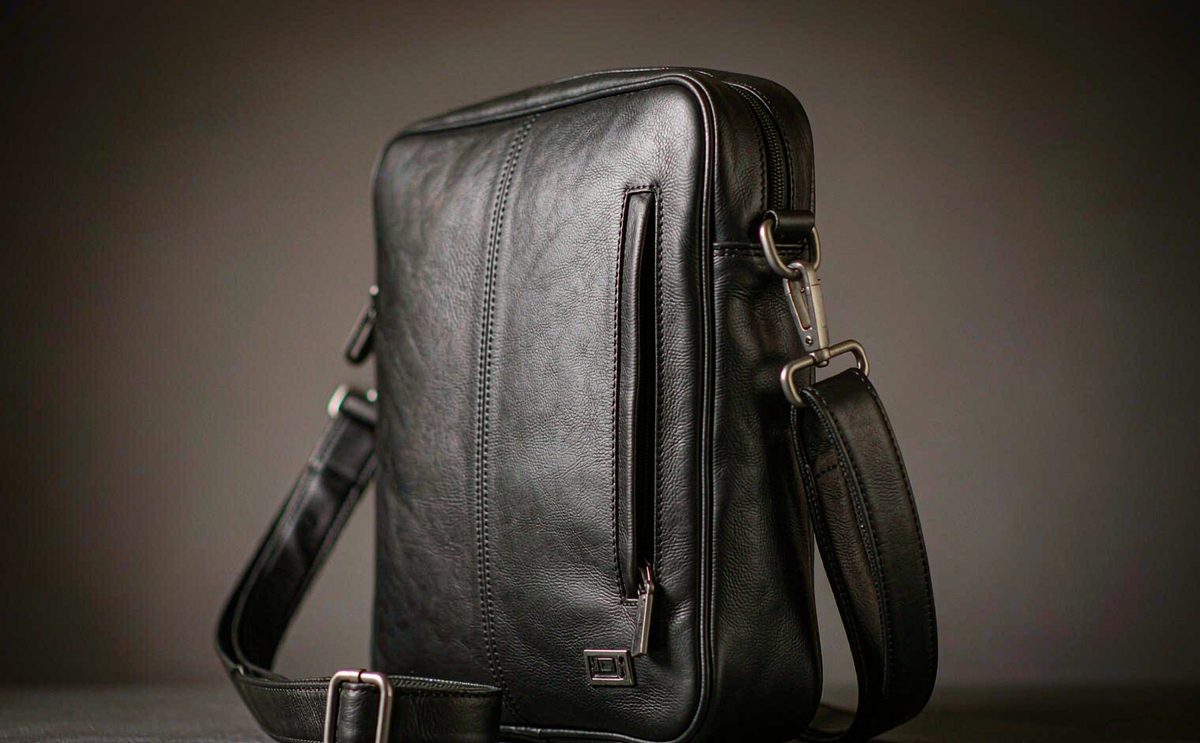
Key takeaways
- MOQ is 500 pcs per style and colourway; each colourway carries its own minimum.
- Sampling takes 6-10 working days, stretching to 12-15 where moulded panels or metal frames are involved.
- production 35-50 days after deposit and approved pre-production sample.
- Pre-shipment inspection is set at AQL 2.5 to ISO 2859-1 with a photographic report before balance payment.
- Shipments move FOB Xiamen under T/T 30/70 payment terms.
- Structure costs money: a floating laptop cradle and reinforced handle plate are what separate a premium briefcase from a flat sleeve.
Where a briefcase reward sits in a campaign reward ladder
A briefcase is a premium-tier reward. Backers paying above a certain threshold expect a structured bag with a real laptop cradle, metal hardware and clean edge finishing, and they compare it against retail bags at two to three times the reward price. That expectation is the opportunity and the risk. Get the structure right and the reward reviews itself; get it wrong and the campaign acquires a reputation for a flimsy bag with a premium price tag.
From a sourcing standpoint, briefcases sit between soft goods and luggage. They need the stiffening and panel engineering of luggage with the material and branding flexibility of a soft bag. Our production team therefore costs them on three lines rather than two: shell material, internal structure and hardware. A creator who budgets only for shell and hardware will find the quotation short of what the design actually needs.
There is a second commercial reason to plan carefully. Structured bags do not pack flat, which means carton volume per unit is fixed at design stage. Unit cost, freight cost and warehouse cost are all locked the moment the silhouette is signed off. Creators building a full reward ladder can compare this against softer, flatter tiers on the custom bags for Kickstarter programme page.
Structure, stiffening and the shape the backer expects
Structure is what a backer notices first. A briefcase that holds a straight edge when empty and does not collapse when set down reads as premium. That comes from three components working together: a stiffening board in the front and back panels, an internal frame or welt that defines the base, and a lining bonded to the shell so the two move as one. Remove any one of them and the bag loses its silhouette within weeks of daily use.
| Component | Typical specification | Rigidity | Weight impact | Cost index |
|---|---|---|---|---|
| EVA sheet | 2.0-3.0 mm, die-cut to panel | Medium | Low | 1.0 |
| PE board | 1.2-2.0 mm, heat-formed | Medium-high | Medium | 1.2 |
| PP honeycomb | 3.0-5.0 mm panel | High | Low | 1.6 |
| Moulded EVA shell | Compression moulded, 4-8 mm | Very high | Medium | 2.4 |
| Aluminium welt frame | Extruded frame at the mouth | Very high | High | 3.0 |
| Floating laptop cradle | Suspended 10 mm from the base | n/a | Low | 1.3 |
A floating laptop cradle deserves separate mention. Suspending the device sleeve roughly 10 mm above the base means a dropped bag does not transmit the impact straight into the device corner. It costs about 30% more than a flat sleeve but removes the most common damage complaint on work-bag rewards. Where a campaign promises device protection, this is the cheapest specification that makes the promise true.
Laptop compartment sizing and device fit tolerance
Sizing a laptop compartment is a tolerance exercise, not a marketing exercise. A 16-inch sleeve should be dimensioned to the device family, not to the diagonal printed on the box, and it must account for the lining thickness, the padding compression over time, and the zipper bite that eats into the opening. We ask creators to state the largest device the reward must accept and the thinnest device it must still hold securely, then design the opening to the first and the padding to the second.
- Internal clear dimension: add 6-10 mm to the device width and depth, otherwise a hard case will not slide in.
- Padding: 6-8 mm closed-cell foam on the device faces, 10 mm at the base where impact lands.
- Opening: a gusseted or three-sided zipper gives more usable width than a top-only opening at the same external size.
- Retention: a light elastic or webbing tab stops a thin device rattling in a sleeve sized for a thicker one.
- Corner reinforcement: the two lower corners take the impact, so radius and reinforce them rather than squaring them off.
Publish the device range, not a single diagonal. Stating that a compartment accepts up to a 16-inch laptop while remaining snug on a 13-inch device is a defensible claim, and it is the kind of detail that reduces the return rate after fulfilment. Device-fit rewards overlap heavily with the custom laptop bags for Kickstarter category, which covers the same engineering in a softer silhouette.
Hardware, handles and the parts that carry the load
Handles and hardware fail before fabric does. A briefcase carries more static weight than a backpack, because the load hangs from one point rather than being distributed across shoulders. That makes the handle attachment the critical joint in the whole bag: it has to be stitched through a reinforcement plate, not sewn into the shell alone. Specify the handle core, the wrap material, the stitch pattern and the load rating, and test to that rating.
| Component | Entry specification | Premium specification | Load implication |
|---|---|---|---|
| Handle core | 25 mm webbing | Leather-wrapped steel core | Comfort under load above 4 kg |
| Handle attachment | Bartack into shell | Bartack through PE plate | Determines safe working load |
| Zipper | Coil #5 | Metal #8 with branded pull | Mouth retention over time |
| Feet | Four plastic studs | Five metal studs | Base abrasion when set down |
| Closure | Plastic side-release | Magnetic or twist-lock | Perceived quality and rattle |
| Shoulder strap | Fixed webbing | Detachable padded strap | Load distribution on the commute |
Specify a handle load test in the tech pack and run it on the pre-production sample and again during inline QC. A briefcase that passes a visual inspection can still fail at the handle root under a 6 kg static load. The test costs minutes at sampling and saves an entire batch of warranty claims once the bags are with backers.
Sampling a structured briefcase: what to approve
Structured builds need more sampling discipline than flat bags, because corrections take longer. Standard sampling is 6-10 working days; add moulded panels, a metal frame or a leather-wrapped handle and the window stretches to 12-15. Two rounds is normal: the first validates the silhouette, panel rigidity and internal layout, the second validates the corrected hardware, edge finishing and logo placement against bulk materials.
- Round one: assess panel rigidity, base definition and whether the bag stands unaided when empty.
- Round one testing: insert the largest and thinnest device in the stated range and check retention and corner clearance.
- Round two: confirm hardware finish, edge paint or binding, lining fit and stitch consistency at the corners.
- Approval: sign the pre-production sample, which becomes the physical reference for the AQL 2.5 inspection.
- Freeze: lock the tech pack so stitch-per-inch, tolerance and packing method cannot drift during bulk.
production 35-50 days after deposit and approved pre-production sample, so the clock starts only when that physical reference exists. Do not release the deposit on a photograph or a render. The stage-by-stage gate sequence is documented on the crowdfunding bag sample prototyping page.
MOQ and unit cost structure for a structured bag
The minimum order is 500 pcs per style and colourway. Structured bags carry higher setup content than flat bags, because panel dies, moulds and jigs have to be made before the first unit is sewn. That is precisely why the 500 pc threshold exists: below it, the setup cost per unit makes the reward price unworkable. A creator asking what is the MOQ for custom briefcases should also ask what the tooling is amortised against, because the second order has no tooling line to recover.
| Cost driver | What changes | Effect on unit cost |
|---|---|---|
| Shell material | Polyester twill to full-grain leather | +40% to +320% |
| Internal structure | EVA sheet to moulded shell | +12% to +140% |
| Hardware grade | Plastic to metal twist-lock | +10% to +45% |
| Lining | Plain taffeta to branded jacquard | +$0.40 to +$2.80 |
| Edge finishing | Turned and stitched to edge painted | +$0.60 to +$2.20 |
| Order volume | 500 pcs to 3,000 pcs | -8% to -20% |
Insist on a cost breakdown rather than a headline figure. Fabric, structure, hardware, lining, labour, tooling, testing, packing and freight should each appear as a line, because that structure is what lets you re-quote one variable instead of the whole bag. It is also the only way to see whether a competing quote is genuinely cheaper or simply omits the testing and inspection lines that a serious programme includes.
Budget every reward from the landed unit cost backwards, including freight, duties, platform fees and a contingency line.
Kickstarter Creator Handbook
Production scheduling and the launch-to-delivery window
Launch-to-delivery planning is where most premium-tier rewards run into trouble. production 35-50 days after deposit and approved pre-production sample, inspection and packing add 3-5 days, and transit adds 12-38 days depending on mode and destination. A campaign promising delivery 90 days after close therefore has very little slack once two sampling rounds are accounted for. The reliable route is to finish sampling before launch and pre-book materials against a forecast.
| Stage | Working days | Owner |
|---|---|---|
| RFQ, tech pack review and tooling plan | 3-5 | Creator and production partner |
| Material sourcing and shade approval | 5-8 | Production team |
| Sampling round one | 6-10 | Production team |
| Device fit test and correction | 3-7 | Creator |
| Pre-production sample and approval | 6-15 | Both |
| Bulk production | 35-50 | Production team |
| AQL 2.5 inspection and packing | 3-5 | QC team |
| Freight, customs and fulfilment | 12-38 | Freight and fulfilment partners |
Where the reward ships as a kit rather than a single unit — briefcase plus a smaller accessory, for example — the packing and addressing operation has to be specified and costed separately. The crowdfunding rewards fulfilment page covers kitting, address capture and the DDP route for backers who will not accept a surprise duty invoice at the door.
Inspection at AQL 2.5 on a structured build
Pre-shipment inspection runs at AQL 2.5 to ISO 2859-1. The standard defines the sample size, the accept and reject numbers and the defect classification, so the outcome does not depend on opinion. Critical defects — a broken twist-lock, a detached handle, a sharp metal edge — are zero tolerance. Major defects such as a visible seam pucker on a front panel or a misaligned logo are capped by the AQL 2.5 table. Minor defects such as a stray thread receive a higher allowance but must still be logged.
- Incoming check: shell shade, coating adhesion, board thickness and lining weight against the approved swatch.
- Inline check: handle bartack count, panel alignment and edge finishing on the first 50 units off the line.
- Structure check: panel rigidity and base definition on a statistical sample, not just on the sample room piece.
- Load check: handle and strap tested to the specified rating, typically 6 kg static for a briefcase.
- Final AQL 2.5 inspection: random carton selection, defect logging and a photographic report before release.
- Packaging check: carton grade, inner protection and unit count verified against the packing specification.
A hand-made sample is usually better than the average bulk unit. That is why the pre-production sample built from bulk materials on production jigs is the correct approval reference. Requesting that inline and final inspection check panel rigidity across a statistical sample is the practical defence against a batch that drifts from the piece you signed off.
Full detail on inspection stages, defect classification and how to read a pre-shipment report is on the Kickstarter campaign bag QA/QC page, including what to do when a batch lands marginally under the accept threshold.
Compliance, packaging and presentation
A premium reward is judged on arrival. Structured bags need corner protection, a dust bag or tissue wrap and a carton that will not crush under container stacking. Presentation packaging is a costed line, not an afterthought, and it interacts with compliance: any claim about leather content, recycled content or coating chemistry has to be documented for the market the backer is in.
- Carton grade: five-ply export carton rated for the stacking height in a full container.
- Inner protection: corner boards or foam where a metal foot or lock could imprint a neighbouring unit.
- Presentation: tissue wrap or dust bag, with a care card carrying the compliance and material declaration.
- Documentation: REACH, CPSIA or Prop 65 as required by destination, plus EU GPSR information where applicable.
- Drop test: ISTA 3A on the packed carton where the reward is positioned as a premium item.
Programmes of this type are run from a 4,950 m² SGS-verified production floor staffed by 137 people across 7 production lines and 149 machines, delivering 200,000 pcs of monthly capacity. Established in 2014 with trading roots reaching back to 2004, the team has supported more than 20 crowdfunding campaigns. That headroom matters when a premium tier overfunds and the re-order needs to double without losing the delivery window.
How to choose a production partner for a briefcase programme
How to choose between bidders on a structured bag comes down to evidence rather than enthusiasm. Will the bidder quote from a tech pack or only from a photograph? Will they share the inspection report before the balance payment? Do they understand panel engineering, or are they treating a briefcase as a large pouch with a handle? A supplier shortlist built on photograph quotes tends to collapse at sampling, when the real structure cost appears.
- Request a line-by-line cost breakdown including tooling, testing, packing and freight.
- Confirm the inspection plan references a named standard and that you receive the report before the 70% balance.
- Ask what the handle and strap load test is, and at what weight it is run.
- Ask how tooling is amortised across the first order and whether the re-order carries the same tooling line.
- Ask for the re-order price band in writing while the first purchase order is still open.
Material and branding decisions for this category are covered in more depth on the material customization for Kickstarter bags and print and embroidery for custom bags pages. For the full category map of what else can share a production line, see custom bag categories.
Reorder planning and volume pricing
Post-campaign demand is where a premium tier either compounds or stalls. Once the pattern, tooling and jigs exist, incremental volume moves faster and carries no fresh setup cost, which is why volume pricing improves. Treat the re-order as a separate commercial negotiation with its own quotation, because fabric, freight and currency all move between the first and second orders. A production partner should be willing to commit to a volume band in writing rather than a single figure.
- Minimum order quantity
- 500 pcs per style / colourway
- Sampling lead time
- 6-10 working days (12-15 for structured builds)
- Bulk production
- 35-50 days after deposit and approved pre-production sample
- Inspection standard
- AQL 2.5 to ISO 2859-1
- Trade term
- FOB Xiamen
- Payment terms
- T/T 30/70
- Production capacity
- 200,000 pcs per month, 7 lines, 149 machines
- Facility
- 4,950 m² SGS-verified floor, 137 staff
- Programme experience
- 20+ crowdfunding campaigns supported since 2014
Request a briefcase quotation
Send the silhouette, external dimensions, largest supported device, hardware preference, quantity per colourway, destination market and target reward price. The team will return a structured quotation, a tooling plan, a sampling schedule and the inspection regime that will govern the order. If the reward ladder includes a second softer tier, a short call is usually faster than a fortnight of email.
- Custom laptop bags for Kickstarter
- Custom bags for Kickstarter programmes
- Low MOQ bag production for creators
- Sample prototyping for crowdfunding bags
- QA and QC for campaign bags
- Crowdfunding rewards fulfilment
- Request a quotation
Request a briefcase quotation
Email service@junyuanbags.com with your tech pack, quantity per colourway, largest supported device and target delivery month. A campaign bag specialist will return a cost breakdown and sampling schedule within two working days.
Frequently Asked Questions
What is the MOQ for custom briefcases on a crowdfunding order?
The minimum order is 500 pcs per style and colourway. Structured bags carry panel dies, moulds and jigs, so a separate colourway resets the 500 pc minimum because the line has to be re-set. Most first campaigns run one hero SKU at 500 pcs and add colourways on the re-order once demand is proven.
How long does it take to sample a structured briefcase?
Standard sampling is 6-10 working days from approved artwork and confirmed materials. Moulded panels, a metal mouth frame or a leather-wrapped handle extend that to 12-15 working days, because tooling has to be made and tested first. Budget 20-30 working days for a full two-round sampling stage.
How much does a custom briefcase cost to produce per unit?
Unit cost is driven by shell, structure, hardware, lining and edge finishing. Moving from polyester twill to full-grain leather adds 40% to 320%; going from EVA sheet to a moulded shell adds 12% to 140%. Raising volume from 500 to 3,000 pcs typically reduces unit cost by 8% to 20%.
What laptop size should a briefcase compartment be specified for?
Specify the largest and thinnest device the reward must accept, then add 6-10 mm of internal clearance to the larger one. Use 6-8 mm closed-cell foam on the device faces and 10 mm at the base. A three-sided zipper gives more usable width than a top-only opening at the same external size.
Why does a floating laptop cradle cost more than a flat sleeve?
A floating cradle suspends the sleeve roughly 10 mm above the base so a dropped bag does not transmit impact into the device corner. It costs about 30% more than a flat sleeve because of the extra panel, webbing and labour. It removes the most common damage complaint on work-bag rewards.
What inspection standard applies before a briefcase shipment is released?
Pre-shipment inspection runs at AQL 2.5 to ISO 2859-1, which defines sample size, accept and reject counts and defect classification. Critical defects such as a detached handle or broken lock are zero tolerance. You receive a photographic report before the 70% balance payment is released.
How is the handle load-tested during sampling and production?
Specify a static load test in the tech pack, typically 6 kg for a briefcase, and run it on the pre-production sample and again during inline QC. The handle must be bartacked through a reinforcement plate rather than sewn into the shell alone, because the handle root is the critical joint in the bag.
When should a briefcase purchase order be placed relative to the campaign?
Finish sampling before launch so the pre-production sample exists when funds clear. production 35-50 days after deposit and approval, inspection and packing add 3-5 days, and transit adds 12-38 days. A 90-day delivery promise leaves very little slack once two sampling rounds are counted.
Do briefcases need compliance documentation for US and EU backers?
Yes. Assemble a REACH declaration, CPSIA or Prop 65 documentation and EU GPSR product information as required by destination, plus OEKO-TEX Standard 100 for textiles where applicable. Confirm destination markets in the RFQ, because the compliance file must be built before production rather than after inspection.
How does tooling affect the price of the second briefcase order?
Panel dies, moulds and jigs are amortised across the first 500 pcs, so the re-order carries no equivalent tooling line. Combined with a volume increase from 500 to 3,000 pcs reducing unit cost by 8% to 20%, the second order is typically noticeably cheaper per unit than the first.
What packaging protects a structured briefcase in transit?
Use a five-ply export carton rated for container stacking height, corner boards or foam where a metal foot or lock could imprint a neighbouring unit, and tissue wrap or a dust bag inside. Where the reward is premium, specify an ISTA 3A drop test on the packed carton.
Which logo method suits a leather or coated briefcase shell?
Debossing or foil stamping suits leather and coated shells and typically adds $1.60 to $2.60 per unit. Embroidery adds roughly $1.20 but perforates the shell, which matters on water-resistant builds. A metal badge reads most premium at about $2.40 and avoids perforation entirely.
People Also Ask
Are briefcases a good premium Kickstarter reward?
Briefcases suit a premium tier because backers compare them against retail bags at two to three times the reward price. The risk is structure: a bag that slumps when set down fails the promise. Budget for internal structure as a separate cost line, not just fabric and hardware.
How do I stop a briefcase losing its shape?
Shape comes from three components working together: a stiffening board in the front and back panels, an internal welt or frame defining the base, and a lining bonded to the shell. Removing any one of them causes the silhouette to collapse within weeks of daily use.
What is the difference between water resistant and waterproof for a work bag?
Water resistant means a coated shell with taped seams that survives rain on a commute. Waterproof requires welded seams and a water-resistant zipper. On a structured briefcase, waterproofing adds meaningfully to unit cost and sampling time, so match the claim to what the build supports.
How much clearance does a laptop sleeve need?
Add 6-10 mm to the device width and depth for internal clearance, use 6-8 mm closed-cell foam on the faces and 10 mm at the base, and account for zipper bite eating into the opening. A three-sided zipper maximises usable width at a given external size.
Can I get a briefcase made in two colourways in one order?
Yes, but each colourway carries its own 500 pc minimum because the line is re-set and material re-booked. Most first campaigns run one colourway at 500 pcs, then add the second on the re-order once the pattern and tooling are proven.