Custom Laptop Sleeves for Kickstarter
How do you spec a custom laptop sleeve that fits on the first run? You size to internal clearance, not to the screen diagonal. A 13.6-inch chassis needs roughly 1.0-1.5 cm of clearance, 4 mm of EPE foam absorbs everyday knocks without bulk, and a #5 nylon coil zip survives the cycle test. Our production team runs sleeves at 500 pcs per style / colourway, sampling in 6-10 working days and production 35-50 days at AQL 2.5 (ISO 2859-1).
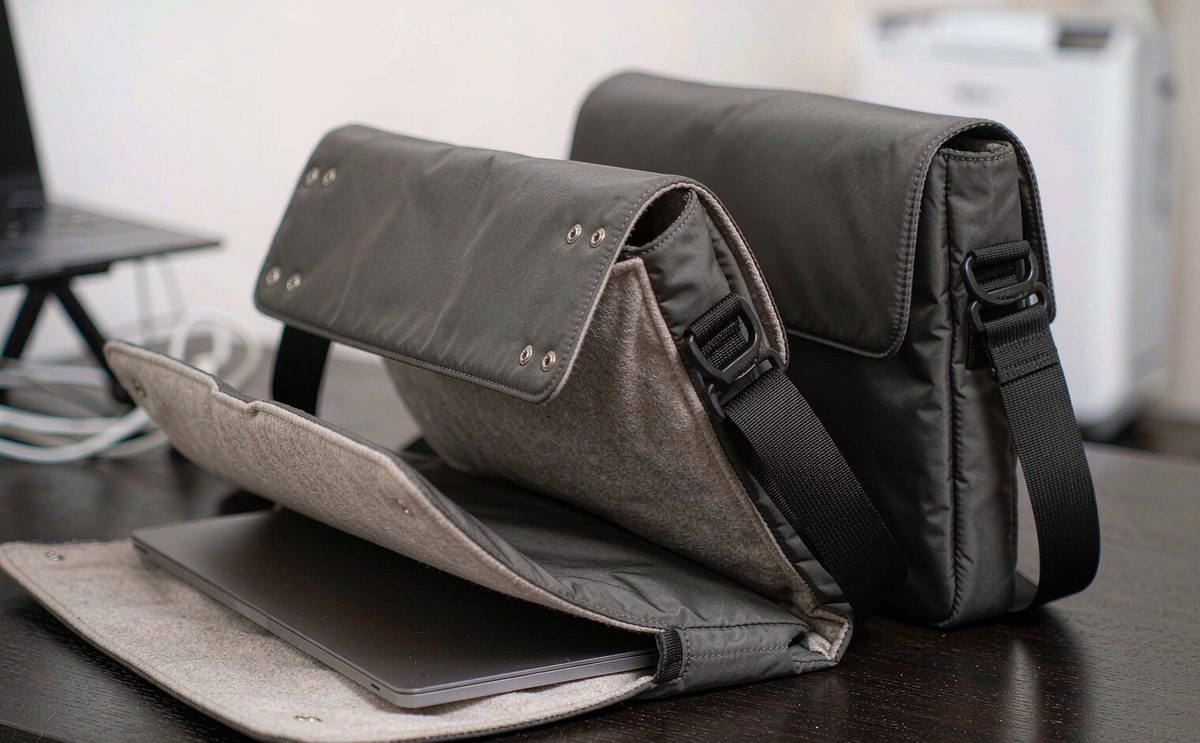
- Minimum order quantity
- 500 pcs per style / colourway
- Sampling
- 6-10 working days (12-15 for complex builds)
- Bulk production
- 35-50 days after deposit + approved pre-production sample
- Inspection
- AQL 2.5 to ISO 2859-1
- Trade term
- FOB Xiamen
- Payment
- T/T 30/70
- Production floor
- 4,950 m² SGS-verified, 137 staff, 7 lines, 149 machines
- Monthly capacity
- 200,000 pcs per month
- Programme contact
- service@junyuanbags.com
Key takeaways before you spec a laptop sleeve
- Size to the largest chassis you promise to fit, then add 1.0-1.5 cm of internal clearance in width and depth.
- MOQ is 500 pcs per style and colourway, so a three-size range is normally three separate commitments.
- 4 mm of EPE foam at 18-25 kg/m³ is the everyday default; 8 mm turns the sleeve into a case.
- A #5 nylon coil zip with bar-tacked ends gives the best value-to-defect ratio on a structured sleeve.
- Publish internal dimensions with a tolerance, because backers test fit the day the parcel lands.
Why a laptop sleeve is the lowest-risk reward SKU you can spec
A laptop sleeve is the simplest structured product in a reward line-up, and that is precisely why it deserves a careful specification. Two shell panels, one foam layer, one lining and one closure. There is no harness, no frame sheet and no moulded back panel. It samples quickly, corrects cheaply in round two, and produces a short defect list at inspection. For a creator placing a first production order, that risk profile matters more than shaving a few cents off unit cost.
It also solves a merchandising problem most campaigns hit. A sleeve is the natural companion to a custom laptop bag or a commuter backpack, it fills the gap between a sticker tier and a full bag tier, and it can share the shell fabric, hardware family and branding method of the hero SKU. Our custom bags for Kickstarter page sets out how multi-SKU programmes are booked into one production window.
Sizing to the device, not to the screen diagonal
The most common specification error on this format is sizing to a screen diagonal instead of to a chassis footprint. A 13-inch laptop is not 13 inches wide; the diagonal measures the screen while the chassis is wider and deeper. A 13.6-inch MacBook Air measures roughly 30.4 x 21.5 cm, a 14-inch MacBook Pro roughly 31.3 x 22.1 cm, and a 16-inch MacBook Pro roughly 35.6 x 24.8 cm. Those footprints differ by more than 5 cm of length.
Work backwards from the largest device you promise to fit. Add 1.0-1.5 cm of internal clearance across the width and the same across the depth, then state the result as an internal dimension with a tolerance of plus or minus 5 mm. A sleeve that is 3 mm too narrow becomes a return request, whereas one that is 5 mm generous is a non-event. Always publish internal dimensions, never external.
| Device class | Internal size (cm) | Foam build | Unit weight |
|---|---|---|---|
| 11 to 12 inch ultrabook | 29.0 x 20.5 | 3 mm EPE | 130 - 170 g |
| 13.6 inch MacBook Air class | 31.5 x 22.5 | 4 mm EPE | 165 - 210 g |
| 14 inch MacBook Pro class | 32.5 x 23.0 | 4-5 mm EPE | 190 - 240 g |
| 15 to 16 inch MacBook Pro class | 37.0 x 26.0 | 5 mm EPE | 240 - 300 g |
| 15 inch Windows, thicker chassis | 37.0 x 26.5 | 5 mm EPE | 250 - 310 g |
| 16 inch with charger pocket | 39.0 x 27.0 | 5-6 mm EPE | 300 - 380 g |
- Size to the largest chassis in your compatibility list, including rubber feet and hinge overhang.
- Add 1.0-1.5 cm of internal clearance in width and depth, then state a tolerance of +/- 5 mm.
- Publish internal dimensions so a backer can check compatibility before pledging.
- Confirm the fit-test device with your production partner before the pre-production sample is cut.
- Remember that foam compresses under zip tension, so a tight fit gets tighter once loaded.
Foam, padding and what drop protection actually requires
Padding is where a sleeve either justifies its price or becomes a decorated envelope. The default is closed-cell EPE foam laminated to the shell at 3, 4, 5 or 8 mm. Three millimetres is a scratch layer, four is the everyday default, five is what most backers expect, and eight turns the product into a semi-rigid case with a real increase in bulk. Density matters as much as thickness: 18 to 25 kg per cubic metre is the working range.
Neoprene is the main alternative and behaves differently. A 3 to 5 mm SBR sheet with a jersey face on both sides is self-lining and stretches to accommodate slightly oversized devices, but it has a softer silhouette that some brands read as less premium. Quilted wadding suits sleeves that are design objects rather than protection products. In every case, the corners are where drops actually land.
Impact concentrates on a chassis corner, not the flat face. A second foam patch of 15-20 mm at each of the four corners adds 8-15 g and roughly 6-9% to unit cost, and removes the largest share of transit damage claims. Specify it as a separate component with its own placement dimension, not as a note in the margin.
Shell and lining materials for a production sleeve
| Specification | Unit weight | Cost index | Best for |
|---|---|---|---|
| 300D polyester, PU coated, tricot lining | 150 - 200 g | 1.00 | Default everyday sleeve |
| 600D polyester, heavy PU, brushed tricot | 220 - 290 g | 1.20 | Rugged or outdoor positioning |
| Neoprene SBR 4 mm, jersey both faces | 190 - 250 g | 1.10 | Stretch fit, soft silhouette |
| Wool felt 3 mm, unlined | 210 - 270 g | 1.45 | Design-led premium tier |
| PU leather shell, microfibre suede lining | 260 - 340 g | 1.55 | Executive or retail tier |
| rPET shell with rPET lining | 165 - 220 g | 1.25 | Sustainability-led campaigns |
The lining is not decoration; its job is to stop the shell coating abrading an anodised surface over thousands of insertion cycles. A 150D brushed tricot is the default and costs very little, while a microfibre suede reads premium but shows soiling. If the sleeve shares a material family with the rest of the reward set, take the whole programme from one material customisation shortlist so a single shade approval covers every SKU.
Closures compared: zip, flap and magnetic
| Closure | Cost index | Defect risk | Perceived value | Best for |
|---|---|---|---|---|
| Open top, no closure | 1.00 | Low | Low to medium | Neoprene stretch sleeves |
| Envelope flap, hook and loop | 1.10 | Low | Medium | Value tiers and felt sleeves |
| Flap with concealed magnet | 1.30 | Medium | High | Minimal premium designs |
| Zip, #3 nylon coil, three sides | 1.25 | Medium | High | Slim structured sleeves |
| Zip, #5 nylon coil, three sides | 1.35 | Medium | Highest | Default structured sleeve |
| Water-resistant coil zip with garage | 1.55 | High | Highest | Outdoor and commute tiers |
A three-sided zip is the default on a structured sleeve because it lets the panel open flat, which makes insertion easier and photographs well. The failure mode is concentrated at the two zip ends, where the tape terminates into the seam. Require a bar-tack at both ends and a zip garage at the top stop, and specify the puller separately, because a bare metal puller striking an aluminium lid is a scratch complaint waiting to happen.
- Specify a bar-tack at both zip ends; it removes the most common defect class on this format.
- Add a zip garage at the top stop so the slider cannot contact the device surface.
- Choose a fabric puller rather than bare metal where the sleeve sits against an anodised lid.
- Cycle every zip a minimum of 20 times during inspection and record any catch or skip.
Branding a flat panel without distorting it
A sleeve panel looks like the easiest branding surface in the range and is in fact one of the trickier ones, because the panel is laminated to foam. Heat and pressure from a transfer or a large screen-print block can compress the foam unevenly and leave a visible ghost around the print edge. The safe routes are a debossed PU patch or a woven label sewn into a seam, both of which sit on top of the laminate rather than pressing into it.
Where print is the right call, cap the block at roughly 25-30% of the panel and keep it clear of the zip line by at least 15 mm, because the seam allowance behind the tape is where registration drifts. Pin every coordinate to a measured distance from a stated seam rather than to a photograph. The full method comparison sits on our print and embroidery page.
On a foam-laminated sleeve a woven label sewn into a side seam survives abrasion, adds no compression risk and costs a fraction of a print setup. Use it as the primary brand mark and treat the panel print as secondary. Programmes that do this consistently report fewer print-related inspection holds and faster sample approval.
Packing, carton yield and freight behaviour
Sleeves are one of the few reward formats where packing density genuinely works in your favour. A 13-inch sleeve folds flat to roughly 1.2-1.8 cm, so 50 units stack into a carton of about 60 x 40 x 30 cm, which is 0.072 m3. At the standard 6,000 volumetric divisor that is 12.0 kg of billable weight against an actual gross mass of around 12.5 kg. Actual and volumetric weight sit close together, which is what you want when the forwarder quotes.
- Bulk pack flat at 40-60 pieces per export carton, folded once at most.
- Use a double-wall export carton where cartons are stacked high in a container.
- Individual polybagging adds roughly 0.04-0.07 USD per unit and reduces handling marks.
- Confirm carton dimensions on the packing list so volumetric weight can be quoted accurately.
- Our rewards fulfilment page covers the packing spec format we ask for.
QC gates that decide a sleeve run
Pre-shipment inspection runs at AQL 2.5 to ISO 2859-1, general inspection level II, single sampling plan. Define the defect classes before production starts, not at the gate. Critical is a closure that does not function or foam missing from a panel. Major is an internal dimension outside tolerance, a print defect on the logo, foam delamination or an out-of-tolerance seam. Minor is a loose thread or slight shade variation between panels.
- Confirm carton count, packing list and shipping marks before any carton is opened.
- Measure internal width and depth on three units per drawn carton against the stated tolerance.
- Fit-test the actual declared device in three units and record any insertion resistance.
- Cycle every zip a minimum of 20 times and check that both stops hold under load.
- Inspect the print block for registration, coverage and foam compression ghosting at the edge.
- Verify the branding coordinate against the pack, measured from a stated seam.
An in-line check during the sewing window is worth more than a heavier final gate here, because the two dominant defects, a missing bar-tack at a zip end and foam delamination from an overheated press, are both correctable at the station. A failed final inspection typically costs 10-15 days in rework. The defect taxonomy we log is set out on the QA and QC page.
Cost breakdown and volume pricing
On a 500 pcs run a structured 300D polyester sleeve with 4 mm EPE foam, a tricot lining and a #5 coil zip typically quotes in the 2.80 to 6.20 USD ex-works band. The bottom of the band is an unlined neoprene stretch sleeve with a woven label; the top is a PU leather shell with a microfibre lining and a water-resistant zip. Volume pricing moves in steps, with the first meaningful step at 1,000 pcs and a second around 3,000 pcs.
| Quantity | Ex-works unit cost (USD) | What changes |
|---|---|---|
| 500 pcs | 2.80 - 6.20 | Baseline, setup spread over the minimum |
| 1,000 pcs | 2.55 - 5.65 | Better marker yield, setup across 2x units |
| 3,000 pcs | 2.35 - 5.20 | Dedicated line, foam bought in full rolls |
| 5,000 pcs | 2.20 - 4.90 | Material at roll-lot pricing |
| 10,000 pcs | 2.05 - 4.65 | Full-line booking, tooling amortised |
Sampling, compliance and the RFQ checklist
Sampling runs 6-10 working days per round from a released tech pack, extending to 12-15 working days where a moulded corner, a concealed magnet or a PU leather shell is involved. Budget two rounds, so 12-20 working days of calendar, and use round one to test the fit with the actual device. production 35-50 days after two conditions are met together: the 30% deposit under T/T 30/70 has landed, and the pre-production sample has been approved in writing.
A sleeve approved flat on a table is not approved. Insert the largest chassis in your compatibility list, close the zip, carry the sleeve under an arm and leave it in a bag overnight. Most fit and closure complaints trace back to a sample that was only ever assessed empty, and a second sampling round costs far less than a re-order.
Compliance follows the destination market rather than the product category. United States shipments fall under California Prop 65 where a listed substance is present above threshold, and CPSIA where an item is intended for children. European Union shipments fall under REACH Annex XVII and the EU GPSR for general product safety, with OEKO-TEX Standard 100 covering textile components. State the destination in the RFQ so the right material is quoted rather than retrofitted, and note that country-of-origin marking must be applied at the point of manufacture, which means it has to be in the tech pack before carton marking is printed.
- Internal dimensions in centimetres with a tolerance, plus the largest device the sleeve must fit.
- Shell by denier, weave and coating; foam by thickness and density; lining by denier and finish.
- Closure: zip gauge, tape colour, puller type, stop type, bar-tack and garage specification.
- Branding method, maximum print block size, and placement measured from a stated seam.
- Packing specification: pieces per polybag, per inner and per carton, with carton dimensions.
- Quantity per size and colourway against the 500 pcs minimum, and the target delivery month.
- Inspection standard, trade term, destination market and required compliance documentation.
- Custom bags for Kickstarter campaigns
- Custom laptop bags for Kickstarter
- Custom backpacks for Kickstarter
- Material customisation for Kickstarter bags
- Print and embroidery options for custom bags
- Crowdfunding bag sample prototyping
- QA, QC and inspection on campaign bag runs
- Request a quotation
Spec a laptop sleeve that fits on the first run
Send us the device compatibility list, the foam build and the quantity per colourway. As your production partner we will return a unit cost, a sampling estimate and a packed carton specification. Write to service@junyuanbags.com or use the quotation form.
Frequently Asked Questions
What is the MOQ for custom laptop sleeves on a Kickstarter campaign?
The minimum is 500 pcs per style and per colourway. A three-size range covering 13, 14 and 16 inch devices counts as three separate 500 pcs commitments unless the sizes are booked as colourway splits inside one production run. Most creators launch one size at 500 pcs and add the second on re-order.
How much clearance should a laptop sleeve have around the device?
Add 1.0-1.5 cm of internal clearance across both the width and the depth of the largest chassis you promise to fit. A 13.6-inch MacBook Air measures roughly 30.4 x 21.5 cm, so the sleeve internal size lands near 31.5 x 22.5 cm. State the dimension with a tolerance of plus or minus 5 mm.
How much does a custom laptop sleeve cost to produce?
On a 500 pcs run a structured 300D polyester sleeve with 4 mm EPE foam, a tricot lining and a #5 coil zip typically quotes between 2.80 and 6.20 USD ex-works. At 3,000 pcs the same build usually drops to 2.35 - 5.20 USD, because material is bought in full rolls and a line can be dedicated.
Which foam thickness should I specify for a laptop sleeve?
Four millimetres of EPE foam at 18-25 kg/m³ density is the everyday default and absorbs normal knocks without bulk. Three millimetres is only a scratch layer. Five millimetres is what most backers expect from a device sleeve, and 8 mm turns the product into a semi-rigid case with noticeably higher freight volume.
How long does sampling take for a custom laptop sleeve?
Sampling runs 6-10 working days per round from a released tech pack. A moulded corner, a concealed magnet or a PU leather shell stretches that to 12-15 working days. Budget two rounds, so 12-20 working days of calendar, and fit-test with the actual device in round one.
Which zip should I use on a structured laptop sleeve?
A #5 nylon coil zip running three sides is the default at a cost index of 1.35, because it lets the panel open flat. A #3 coil suits a slim sleeve at 1.25. Specify a bar-tack at both ends, a zip garage at the top stop, and a fabric puller rather than bare metal against an anodised lid.
Can a laptop sleeve share a production run with a backpack?
Yes, and it is usually the cheapest way to add the SKU. Sharing the shell fabric, hardware family and branding method means one material purchase order, one shade approval and one consolidated container. Book both SKUs inside the same 35-50 day production window rather than as two separate orders.
How heavy is a custom laptop sleeve for freight planning?
A 13-inch sleeve typically weighs 165-210 g and a 15 to 16 inch sleeve 240-300 g. Fifty units pack into a carton of about 60 x 40 x 30 cm, which is 0.072 m3 and roughly 12.5 kg gross. Actual and volumetric weight sit close together at the standard 6,000 divisor.
What inspection standard applies to a laptop sleeve order?
AQL 2.5 to ISO 2859-1 at general inspection level II, single sampling plan. Define critical defects as a non-functioning closure or missing foam, major defects as out-of-tolerance internal dimensions or foam delamination, and minor defects as loose threads or shade variation. Name the standard in the purchase order.
Can a laptop sleeve be made from recycled fabric?
Yes. An rPET shell with an rPET lining typically weighs 165-220 g and adds roughly 25% to unit cost versus a virgin 300D build. Confirm the recycled content percentage in writing, keep the traceability documentation, and phrase the claim precisely on the campaign page rather than using a general term.
What compliance applies to laptop sleeves shipped into the US and EU?
United States shipments fall under California Prop 65 where a listed substance is present above threshold, and CPSIA where an item is intended for children. European Union shipments fall under REACH Annex XVII and the EU GPSR. OEKO-TEX Standard 100 covers textile components. State the destination in the RFQ.
When does bulk production actually start on a sleeve order?
production 35-50 days after two conditions are met together: the 30% deposit under T/T 30/70 has landed, and the pre-production sample has been approved in writing. Neither condition alone starts the clock. Get the slot confirmed in writing with a start date, a completion date and an inspection date.
People Also Ask
Are laptop sleeves a good standalone Kickstarter reward?
They work best as a companion SKU. A sleeve alone rarely funds a campaign, but paired with a backpack or laptop bag it fills the mid tier and shares the same shell fabric, hardware and branding, so the whole set can be produced in one window.
Should I publish internal or external sleeve dimensions?
Publish internal dimensions with a tolerance. Internal dimensions are what the backer measures against their own device, and stating a plus or minus 5 mm tolerance protects you when a chassis from a different brand sits slightly larger.
What lining prevents scratches inside a laptop sleeve?
A 150D brushed tricot is the default and costs very little. It stops the shell coating abrading an anodised surface over thousands of insertion cycles. Microfibre suede feels more premium but shows soiling and is harder to keep consistent across a large run.
Is a magnetic flap closure safe next to a laptop?
A concealed magnet in the flap is fine in normal use, but avoid placing it directly over the storage area or near a card with a magnetic stripe. Most programmes use two small magnets set 30-40 mm in from the closing edge.
Do laptop sleeves count as their own MOQ?
Yes. Each size and colourway is counted separately against the 500 pcs minimum, so a three-size sleeve range is normally three commitments. All three can still be produced inside one booked window if they are quoted together.