Backer Shipping Cost: How to Price Shipping Into Reward Tiers
Shipping should be priced into the reward tier at launch, not collected after funding. A bag that costs 18 USD to make can cost 9 to 34 USD to land on a backer's doorstep once freight, duty, storage, materials and postage are counted, and that second number is the one campaigns underprice. This guide sets out the landed cost stack, compares free, flat and zoned shipping models, and shows the arithmetic for a 1,200-backer campaign so you can set a tier price that survives contact with real invoices.
- Why shipping belongs inside the reward tier price
- The true landed cost stack for one delivered bag
- Three pricing models: free, flat and zoned
- Building a zoned table from real backer geography
- The undercharging trap and how campaigns fall in
- Free shipping is a marketing decision
- Currency, VAT and platform fee interactions
- Multi-item rewards, add-ons and dimensional weight
- How stretch goals change the shipping profile
- Writing shipping cost on the campaign page
- Collecting address and upcharge data after funding
- A worked example at 1,200 backers
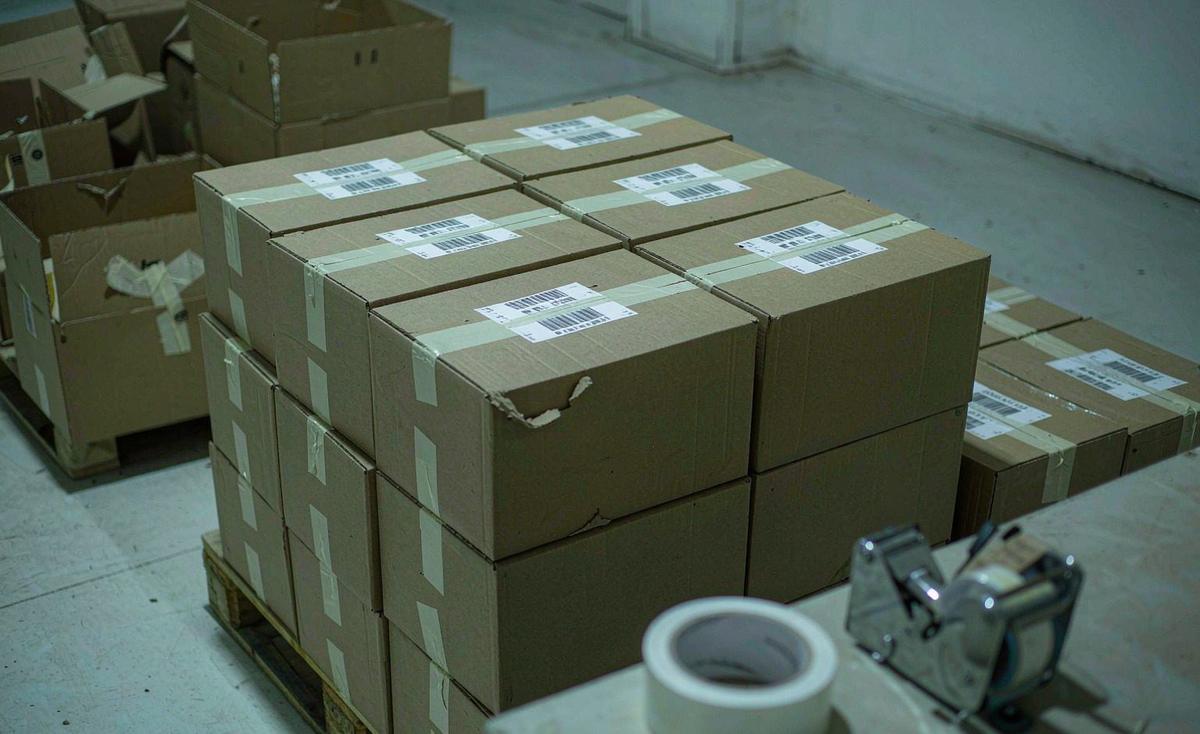
Price the landed cost, not the unit cost. On international bag rewards the two numbers can differ by more than the production cost itself.
Why shipping belongs inside the reward tier price
There are two ways to handle shipping in a campaign. The first is to price it in: the reward tier includes delivery, and the backer pays one number. The second is to collect it later: the campaign charges a low reward price and then collects shipping in the pledge manager after funding. Both are common, but only the first is honest about what the campaign is selling, and only the first avoids the conversation where a backer discovers in month nine that the 59 USD bag actually costs 59 plus 31.
Collecting shipping later is not inherently wrong, but it must be disclosed clearly on the campaign page with a realistic range, and the range must be one you can defend. Campaigns that write shipping will be calculated after the campaign and then charge 30 USD on a 59 USD reward generate chargebacks, refund requests and comment sections that damage the next project. The reputational cost is larger than the margin that the low headline price bought.
There is a second reason to price it in, which is arithmetic. Platform fees are charged on the amount collected. Shipping collected later through a pledge manager usually still bears a payment processing fee but not the platform percentage, so on paper collecting later looks cheaper. In practice the difference is 3 to 5 percent of a number you have under-estimated, which is a small saving against a large risk. Our campaign bag specialist raises the landed cost question at the quotation stage rather than at dispatch, because that is when the tier structure is still changeable. The end-to-end cost picture is set out in the crowdfunding rewards fulfilment guide.
The true landed cost stack for one delivered bag
Most creators know their unit production cost. Far fewer know their landed cost, which is what a single bag costs from the production line to the backer's hands, divided by the number of units actually delivered. The stack has seven lines and missing any one of them produces a tier price that loses money at scale. Write them out before you set a price, then check the total against what you intend to charge.
- Unit production cost
- 8 to 34 USD depending on style and specification
- Origin inland and export handling
- 0.30 to 0.90 USD per unit
- Freight, sea or air
- 1.20 to 12.00 USD per unit
- Duty and import VAT
- 1.50 to 9.00 USD per unit where applicable
- Warehousing and handling
- 1.00 to 3.50 USD per unit
- Packing materials and pick and pack
- 1.80 to 7.60 USD per parcel
- Postage to the backer
- 6 to 60 USD by zone
Add the low end and the high end separately and the picture is clear. A simple drawstring bag at the low end lands at roughly 20 to 25 USD per delivered unit. A structured 30 litre backpack shipped to a market with VAT lands at 45 to 75 USD. The spread between the cheapest and most expensive backer is roughly threefold, which is the core difficulty: one tier price cannot be correct for every destination, and pretending otherwise is where campaigns lose money.
Notice also which lines are controllable and which are not. Production cost is fixed once the sample is signed. Freight is partly controllable through mode and compression. Postage is controllable through zone design and carrier selection, and it is the largest single line for international backers. Duty is almost fixed. So the two levers that actually move landed cost are packaging dimensions and zone structure, which is why both appear repeatedly in the global bag shipping guide.
Three pricing models: free, flat and zoned
There are three ways to present shipping, and each has a place. Free shipping means one price, delivery included, worldwide. Flat shipping means one price plus a single delivery fee regardless of destination. Zoned shipping means one price plus a delivery fee that varies by region. The choice is a choice about who subsidises whom, and the honest way to evaluate it is to calculate the subsidy per backer under each model.
| Model | Backer sees | Campaign risk | Where it works |
|---|---|---|---|
| Free worldwide | One all-in price | High: up to 34 USD per hard-zone backer absorbed | Domestic-only or high-margin rewards |
| Flat worldwide | Price plus 12 to 18 USD | Medium: cross-subsidy of 8 to 20 USD per parcel | Small campaigns with a concentrated base |
| Zoned | Price plus 6 to 45 USD by region | Low: each zone priced to its own cost | Any campaign above a few hundred backers |
| Domestic free, zoned abroad | Free at home, zoned abroad | Low to medium | Campaigns with a strong home market |
Free worldwide shipping is the most attractive model to backers and the most dangerous to campaigns. It works when the reward margin is high enough to absorb a 34 USD outlier, or when the backer base is 85 percent or more in one low-cost zone. It fails when a campaign with a 22 USD landed cost domestically ships 12 percent of its parcels to destinations costing 34 to 60 USD each. At 1,200 backers that tail is 144 parcels and a 1,700 to 5,200 USD unbudgeted loss.
Zoned shipping is the model that survives contact with invoices, and it is less off-putting than creators fear. Backers in high-cost regions already know that shipping to them costs more, because they pay it on every international order they place. What they object to is not a zoned fee, it is a zoned fee that was disclosed as free, or a fee that arrives nine months later with no warning. Disclosure and accuracy matter far more than the model itself.
Building a zoned table from real backer geography
A zoned table is built from four inputs: your expected backer distribution by region, the landed postage cost per region, the duty position per region, and the margin you need to hold. Start with a realistic distribution rather than an optimistic one. If this is your first campaign, assume 40 to 55 percent domestic, 25 to 35 percent in nearby low-cost regions, and 15 to 25 percent spread across higher-cost regions, then refine it once pledges start arriving.
Next, get postage quotes per zone for your actual packed weight and dimensions, not for a generic 1 kilogram parcel. A bag is bulky, so the dimensional weight is frequently 1.5 to 2.5 times the actual weight, and quoting on the actual weight understates postage by 30 to 60 percent. Then add duty: either prepay it and include it in the zone fee, or state clearly that duty is payable on delivery. Mixing the two within one zone is the worst option, because backers in the same country then pay different amounts for reasons they cannot see.
Finally, set zone fees as bands rather than as exact costs, and round up. A zone whose true cost is 18.40 USD should carry a fee of 21 or 22 USD, because the variance within a zone is real: a parcel to a rural address in a large country costs more than one to a city. Bands also absorb rate changes between campaign launch and dispatch, which on a nine-month gap can be 8 to 15 percent. Under-pricing by 2 USD per parcel to make the table look tidier costs 2,400 USD at 1,200 backers.
The undercharging trap and how campaigns fall in
Undercharging shipping is the most common financial error in physical reward campaigns, and it is almost always caused by one of four things. The first is quoting postage on actual rather than dimensional weight. The second is budgeting for a single destination, usually the campaign's home country, and applying it worldwide. The third is forgetting the destination-side costs entirely, meaning storage, pick and pack, and materials. The fourth is assuming a launch-date rate will still hold nine months later.
The mechanism of the trap is that the error is invisible at launch and catastrophic at dispatch. A campaign that undercharges by 6 USD per parcel on 1,200 parcels has a 7,200 USD hole that only becomes visible when the postage invoices arrive, at which point the options are to absorb it, to ask backers for more, or to delay dispatch while funds are raised. All three are bad, and the second is the one that produces the comment section that defines the campaign.
The prevention is unglamorous. Get real quotes before launch for your three largest expected zones. Add 10 to 15 percent for rate movement. Add a contingency of 4 to 6 percent for re-ships and address exceptions. Then set the tier price from that number rather than from your competitor's tier price. Campaigns that benchmark against other campaigns' shipping fees are benchmarking against numbers that were themselves frequently under-estimated, which is how an error becomes an industry norm. The cheapest insurance is a second quotation: ask two forwarders or two warehouses to price the same lane and compare loaded numbers rather than headline rates.
Free shipping is a marketing decision
Free shipping increases conversion. It also transfers all variance risk to the campaign. Treating it as a marketing spend rather than as a pricing decision makes the trade-off explicit: you are buying conversion with a known subsidy, and you should know what that subsidy costs before you commit to it. Calculate it as the difference between your zoned cost and the price you would otherwise charge, multiplied by expected volume.
A workable compromise is free shipping within a defined region and zoned shipping outside it. This captures most of the conversion benefit, because the majority of backers are usually in the home region, while capping the exposure to the expensive tail. State the boundary precisely: free shipping to United States addresses, with a fee of X to Canada and Y elsewhere. Precision here prevents the argument where a backer in a territory of a listed country expects the domestic rate.
There is a psychological detail worth using. Backers respond better to a higher reward price with free shipping than to a lower price with a shipping fee, even when the total is identical, which is why bundling works. But bundling only works if the bundled number is correct for the destinations you actually serve. Bundle for your cheapest 70 percent, then charge a fee for the rest, and say so on the page in one sentence rather than in a footnote. Model the subsidy explicitly as a marketing cost with a cap, for example 4,000 USD, and stop extending free shipping to any zone once the cap is reached.
Currency, VAT and platform fee interactions
Three financial mechanics interact with shipping price and are routinely missed. The first is currency. A campaign that prices in USD and collects in USD but pays postage in EUR or GBP carries a currency risk on the largest single line in the landed cost. A 6 percent adverse move over nine months on 18,000 USD of postage is 1,080 USD. Either price with a currency buffer or, where possible, settle postage in the currency you collected.
The second is VAT. In the European Union and the United Kingdom, import VAT applies to the value of the goods including freight, and in many cases the platform or the seller is responsible for collecting and remitting it. Rates run 17 to 25 percent. If your reward price does not account for it, you are effectively selling at a loss in those markets. This is a distinct issue from duty and it is handled separately, which is why the customs and duties guide treats them as two lines.
The third is platform and payment fees. Platform percentages of roughly 5 percent plus payment processing of 3 to 5 percent apply to the amounts collected, including collected shipping in most configurations. On a 79 USD reward with 18 USD shipping, that is 4.85 USD of fees on the shipping component alone. Build shipping into the tier price and the fee base changes, so model both configurations before deciding which to use, rather than assuming that collecting later is automatically cheaper.
Multi-item rewards, add-ons and dimensional weight
Shipping a single bag is one calculation. Shipping a bag plus a pouch plus a strap is a different one, because both the weight and the packing time change, and because the parcel may move into a larger size band. Ask two questions for every multi-item tier: what is the combined packed weight, and what is the smallest mailer or carton that fits the combination without compressing the bag to a shape a backer would object to.
The arithmetic is not linear. A 0.9 kg bag and a 0.15 kg pouch do not produce a 1.05 kg parcel, because the combination needs a larger mailer and the dimensional weight of the larger mailer can exceed the sum of the parts. Measure the actual combination during sampling and quote against that, not against the sum of the components. This is also the point at which the kitting cost line appears, since multi-line orders take 1.5 to 3 times the pick time of a single line, as set out in the kitting and labelling guide.
Charge for add-ons in one of two clean ways. Either price each add-on with its own incremental shipping amount, which is accurate but adds survey complexity, or offer free add-on shipping up to a threshold and charge beyond it. The second is simpler for backers and works well when add-ons are small and light. Whichever you choose, decide before the campaign launches, because changing the add-on shipping rule after funding is a change to what backers believe they bought.
How stretch goals change the shipping profile
Stretch goals are usually designed as product upgrades, and their shipping impact is ignored. A stretch goal that adds a strap, a pouch or a second colourway changes the packed weight and the pick complexity of every parcel, including the ones for backers who pledged before the goal was unlocked. If a goal adds 0.2 kg and moves the parcel into a higher dimensional band, it can add 2 to 6 USD per parcel across the whole campaign, which at 1,500 backers is 3,000 to 9,000 USD that nobody budgeted.
Design stretch goals with shipping in mind and you get a better campaign for it. Prefer goals that change colour or trim, which add almost nothing to weight, over goals that add bulk. Where a goal does add an item, either build its shipping cost into the unlock threshold calculation or make it an optional paid add-on. Announcing that a stretch goal is unlocked and free is popular; announcing three months later that it carries a 7 USD shipping charge is not.
There is a production-side interaction too. A stretch goal that adds a new colourway adds a style and colourway run with its own minimum of 500 pcs per style and colourway, and its own 6 to 10 working day sampling window if the item is custom. A goal that adds a new component style can therefore change both the production schedule and the shipping profile at the same time, which is worth checking before the goal is written on the page rather than after it funds.
Writing shipping cost on the campaign page
The campaign page should answer four questions about shipping in plain language: what the fee is to each zone, whether duty and taxes are included, when delivery is expected, and what happens if a backer moves or does not respond to the survey. Answering all four in one short section removes most of the post-campaign correspondence, and it costs about 120 words of page space.
- State the zone fees as numbers rather than as a formula. Backers will not calculate from a table of weights.
- Say whether duty is included. If it is not, say that the backer may be charged on delivery, and give the likely range.
- Give a delivery month, not a delivery date, and add a sentence about what could move it.
- Explain the survey. Tell backers that addresses are collected after the campaign and that there is a deadline.
- State the unclaimed policy. What happens to a reward if a backer never completes the survey, and after how long.
Write the section once and reuse it in the first three campaign updates, because backers read updates more carefully than they read the page. Consistency matters: if the page says delivery in March and update four says April, the campaign has created a promise problem that no amount of explanation will fix. Set the promise from the fulfillment timeline you have actually built, then hold it. Repeat the same four answers inside the pledge manager survey, because that is the document backers re-read before dispatch rather than the campaign page.
Collecting address and upcharge data after funding
Even campaigns that price shipping into the tier need to collect two things after funding: the delivery address and any variable charges, such as add-ons sold in the pledge manager or a duty and tax amount that depends on destination. The collection mechanism is the pledge manager survey, and its design determines how much of the data arrives clean. Poorly designed surveys produce 3 to 8 percent unusable address records, each of which costs 15 to 25 minutes to repair.
Set the survey to collect the address in the destination's own format with validation on postal codes, require a telephone number for courier destinations, and re-confirm addresses 10 to 14 days before dispatch, when 70 to 90 percent of movers are caught. The mechanics are covered in the pledge manager integration guide, which also covers upgrade orders and late pledges.
On variable charges, prefer collecting them in the survey at the time the destination is confirmed rather than at dispatch. Collecting later means either invoicing backers directly, which many will ignore, or absorbing the cost. Where duty and tax must be collected, calculate it in the survey from the declared destination and the reward value, and state that it is an estimate subject to the assessed value at import, which protects you against the 10 to 20 percent of cases where the assessment differs. Lock the data 72 hours before each dispatch wave and process later changes as a second wave, because a manifest that keeps changing is a manifest that produces mis-shipped parcels.
A worked example at 1,200 backers
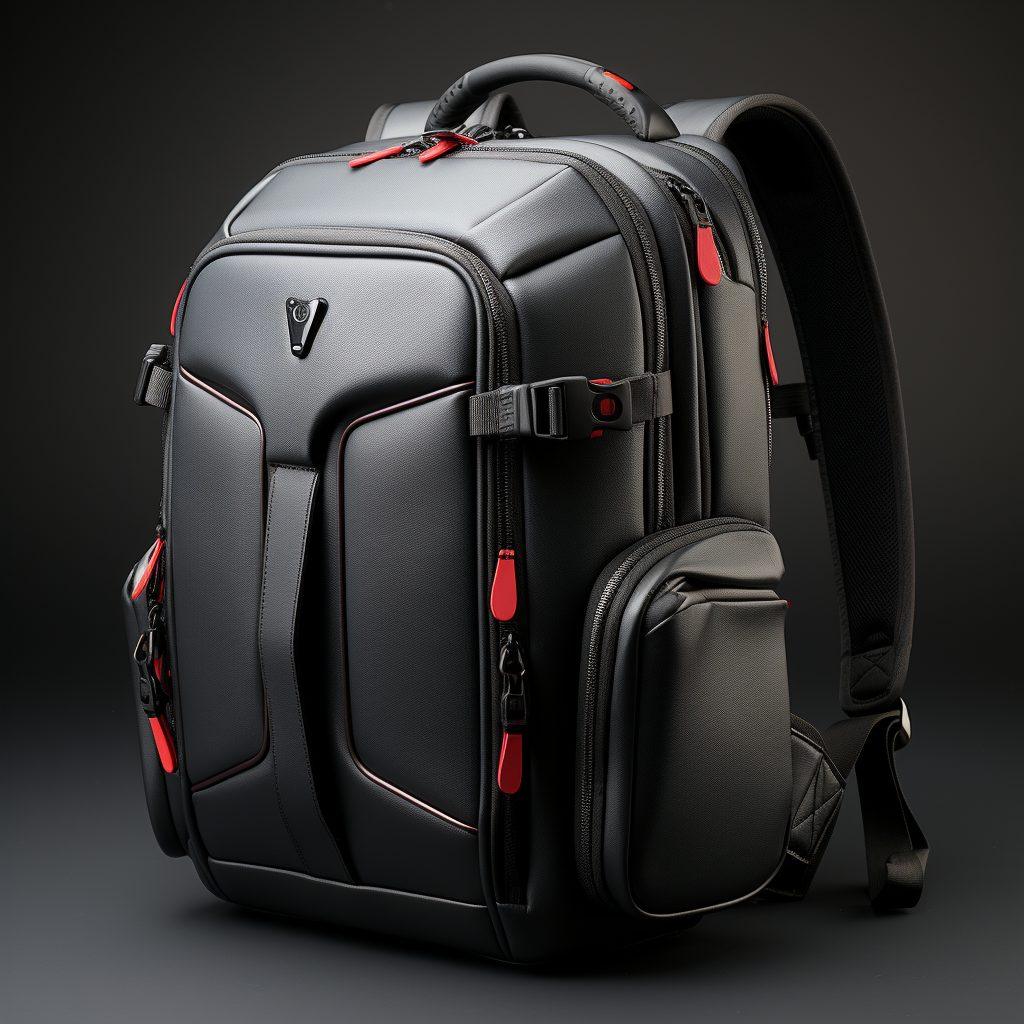
Take a 30 litre backpack with a production cost of 21 USD, packed weight 0.9 kg, packed dimensions 45 by 30 by 25 centimetres, giving a dimensional weight of 6.75 kg and a chargeable weight of 6.75 kg on air-based services and roughly 0.9 kg on postal services. Assume 1,200 backers: 55 percent domestic, 25 percent in low-cost international regions, 15 percent in VAT markets, and 5 percent in high-friction destinations.
| Zone | Backers | Landed cost per unit | Suggested fee | Contribution |
|---|---|---|---|---|
| Domestic | 660 | 32.40 USD | Included at 89 USD | 37,360 USD |
| Low-cost international | 300 | 41.80 USD | 14 USD | 18,360 USD |
| VAT markets, duties paid | 180 | 58.20 USD | 32 USD | 5,544 USD |
| High-friction | 60 | 74.60 USD | 48 USD | minus 1,596 USD |
The table shows two things that campaigns miss. The first is that the high-friction zone loses money even with a 48 USD fee, which is normal and acceptable provided the loss is known and capped. The second is that the domestic zone carries the whole margin at an 89 USD tier price against a 32.40 USD landed cost, which is why a domestic-focused campaign can offer free shipping while a globally distributed one cannot.
Total contribution across the four zones is roughly 59,700 USD against production and fulfilment costs of about 47,900 USD, leaving 11,800 USD before platform fees, payment processing, sampling, photography and contingency. That is a thin but workable margin, and it only exists because the zone fees were set from quoted costs rather than from a competitor's page. If you want this arithmetic run against your own bag specification, send us a brief through the quote page with your style, dimensions and expected backer split.
Key takeaways
- S
- e
- t
- t
- i
- e
- r
- p
- r
- i
- c
- e
- s
- f
- r
- o
- m
- q
- u
- o
- t
- e
- d
- l
- a
- n
- d
- e
- d
- c
- o
- s
- t
- p
- e
- r
- z
- o
- n
- e
- ,
- a
- d
- d
- 1
- 0
- t
- o
- 1
- 5
- p
- e
- r
- c
- e
- n
- t
- f
- o
- r
- r
- a
- t
- e
- m
- o
- v
- e
- m
- e
- n
- t
- ,
- a
- n
- d
- c
- a
- p
- t
- h
- e
- e
- x
- p
- o
- s
- u
- r
- e
- t
- o
- h
- i
- g
- h
- -
- f
- r
- i
- c
- t
- i
- o
- n
- d
- e
- s
- t
- i
- n
- a
- t
- i
- o
- n
- s
- w
- i
- t
- h
- a
- s
- t
- a
- t
- e
- d
- f
- e
- e
- .
Send us your bag specification and expected backer split and we will model landed cost per zone for your tiers.
Frequently Asked Questions
How much does it cost to ship one bag to a backer?
Landed cost per delivered unit runs roughly 20 to 25 USD for a simple domestic drawstring bag and 45 to 75 USD for a structured backpack delivered into a VAT market. The stack is production 8 to 34 USD, origin handling 0.30 to 0.90, freight 1.20 to 12.00, duty and VAT 1.50 to 9.00, warehousing 1.00 to 3.50, pick and pack 1.80 to 7.60, and postage 6 to 60 USD by zone.
Should shipping be included in the reward price or charged separately?
Including it is safer, because backers see one honest number and the campaign avoids a later conversation about additional charges. Collecting it later saves 3 to 5 percent in platform fees but creates reputational risk. If you collect later, disclose a realistic range on the campaign page and make sure the range is one you can defend nine months on.
Is free worldwide shipping sustainable for a bag campaign?
Only with a high margin or a concentrated backer base. If your domestic landed cost is 22 USD and 12 percent of parcels cost 34 to 60 USD each, the tail costs 1,700 to 5,200 USD at 1,200 backers. A better compromise is free shipping in your home region with zoned fees elsewhere, which captures the conversion benefit and caps the exposure.
How do I set zoned shipping fees?
Get quotes for your actual packed weight and dimensions in your three largest zones, add 10 to 15 percent for rate movement over the campaign-to-dispatch gap, add 4 to 6 percent for re-ships and address exceptions, then round up into bands. A zone costing 18.40 USD should carry a fee of 21 or 22 USD, because variance within a zone is real.
Why do campaigns undercharge for shipping?
Four causes: quoting on actual rather than dimensional weight, which understates postage by 30 to 60 percent for bulky bags; budgeting for one destination and applying it worldwide; forgetting destination-side costs such as storage and pick and pack; and assuming launch-date rates hold for nine months, when movement of 8 to 15 percent is normal. The cheapest insurance is a second quotation on the same lane, compared on loaded numbers rather than headline rates.
Does dimensional weight really matter that much?
Yes. A bag is bulky, and dimensional weight is frequently 1.5 to 2.5 times actual weight. A 45 by 30 by 25 centimetre parcel has a dimensional weight of 6.75 kg against an actual weight of 0.9 kg. Compressing the bag and sizing the mailer correctly is the largest single controllable lever on postage cost. Measure the packed parcel during sampling and quote against that, not against the sum of the components.
How do stretch goals affect shipping cost?
A goal that adds a pouch or strap can add 0.2 kg and move every parcel into a higher size band, adding 2 to 6 USD across the whole campaign, which is 3,000 to 9,000 USD at 1,500 backers. Prefer goals that change colour or trim, which add almost no weight, and note that a new colourway also needs its own 500 pcs minimum.
Should duty be included in the shipping fee or paid on delivery?
Include it for VAT and high-friction markets. Refusal rates on unpaid-duty postal services run 10 to 25 percent against 1 to 4 percent on prepaid services. Import duty on bags runs 3 to 20 percent of declared value and EU or UK import VAT adds 17 to 25 percent, so a backer asked to pay at the door often refuses the parcel.
How do platform and payment fees interact with shipping?
Platform percentages of about 5 percent plus payment processing of 3 to 5 percent usually apply to collected shipping as well. On a 79 USD reward with 18 USD shipping, that is roughly 4.85 USD on the shipping component alone. Model both bundled and unbundled configurations before assuming that collecting shipping later is cheaper. Model both bundled and unbundled configurations before assuming that collecting shipping later is cheaper.
What currency risk does a campaign carry on shipping?
If you collect in USD and pay postage in EUR or GBP, a 6 percent adverse move over nine months on 18,000 USD of postage is 1,080 USD. Either build a currency buffer into the zone fee or settle postage in the currency you collected. The risk sits on the largest single line in the landed cost stack, so it is worth managing deliberately.
How should add-on shipping be charged?
Either give each add-on its own incremental shipping amount, which is accurate but adds survey complexity, or offer free add-on shipping up to a weight or count threshold. Do not price add-ons as the sum of component weights, because the combination needs a larger mailer and dimensional weight can exceed the sum of the parts. Measure the actual combination during sampling.
What should the campaign page say about shipping?
Four things in plain language: the fee to each zone as a number, whether duty and taxes are included, a delivery month rather than a date, and what happens if a backer moves or never completes the survey. About 120 words covering those four points removes most post-campaign correspondence. Repeat the same four answers inside the survey, since that is the document backers re-read before dispatch.
People Also Ask
How much should I charge for shipping on a bag reward?
Roughly 6 to 11 USD domestic, 13 to 22 USD to low-cost international, 24 to 38 USD to VAT markets with duty prepaid, and 30 to 60 USD to high-friction destinations.
Is free shipping worth it?
It lifts conversion but transfers all variance risk to you. Free within your home region plus zoned fees elsewhere captures most of the benefit and caps the exposure.
Should I collect shipping during or after the campaign?
During, ideally. It gives backers one honest number and avoids a later request for more money, which is the single most damaging conversation a campaign can have.
What is dimensional weight?
A billing weight based on parcel size rather than scale weight. Carriers charge the greater of the two, and bulky bags are frequently billed at 1.5 to 2.5 times their actual weight.
Do stretch goals raise shipping costs?
Yes if they add items. Adding 0.2 kg can move every parcel into a higher band, adding 2 to 6 USD each. Colour and trim goals add almost nothing.
How much VAT applies to bags imported into the EU?
Import VAT runs 17 to 25 percent of the value including freight, on top of duty of roughly 3 to 20 percent depending on classification.
When should I confirm backer addresses?
Re-confirm 10 to 14 days before dispatch, which catches 70 to 90 percent of movers, and lock the data 72 hours before each wave.