Merchandise Rewards Fulfillment: Kitting, Labeling and Tracking
Kitting, labelling and tracking are the three warehouse operations that decide whether a merchandise reward programme runs cleanly or bleeds money. Kitting is the assembly of a backer's exact combination of colourways and add-ons into one parcel. Labelling is the set of identifiers on the product, the inner bag and the outer carton that let a scanner and a carrier know what is inside. Tracking is the data handover that turns a dispatched parcel into a visible one. Done properly, error rates stay under 1 percent. Done casually, they run 3 to 6 percent and cost more than the pick-and-pack fee.
- What kitting means in a rewards fulfillment context
- Build the kit matrix before anything is packed
- Pre-kit at origin or kit at the warehouse
- Kitting station design: six elements
- Labelling the product, the bag and the carton
- Barcodes, SKUs and scan verification
- Tracking: what the backer sees and when
- Exception handling: shortages, damage and corrections
- Counting and reconciliation
- The documentation pack that travels with goods
- Cost and time per kit at three volumes
- The kitting failures that recur

Every fulfilment error is cheaper to prevent at the kitting bench than to repair after dispatch, by a factor of roughly ten.
What kitting means in a rewards fulfillment context
Kitting is the assembly of everything a single backer is owed into one shippable unit. For a bag campaign that sounds simple until you count the combinations. A campaign with three colourways, two sizes and three optional add-ons has 18 single-item variants before you even bundle them, and the moment two backers with the same pledge level choose different colourways, the warehouse is no longer picking boxes of identical units. It is assembling unique kits against a per-backer record.
This is why kitting is priced separately from pick and pack. A single-line pick, meaning one item into one mailer, takes 40 to 70 seconds and goes wrong around 0.3 to 1 percent of the time. A four-line kit, meaning a bag, a pouch, an insert card and a strap packed together, takes 90 to 170 seconds and goes wrong 1.5 to 4 percent of the time when assembled by hand without scan verification. The rate, not the minutes, is what costs money, because every error becomes a return leg and a replacement leg.
There is a distinction worth holding onto between kitting and packing, because conflating them causes disputes with warehouses. Kitting is deciding what goes in and confirming that it is correct. Packing is closing the parcel, applying the label and making it ready for the carrier. A warehouse quoting pick and pack is quoting the second. If your reward involves more than one item per backer, you need kitting quoted explicitly, with the line count stated, or you will be bagged as a single-line order and the extra work will be absorbed badly.
Build the kit matrix before anything is packed
The kit matrix is a single table listing every combination you will ship: one row per distinct kit, with the SKU of each component, the quantity, the inner packaging and the target carton or mailer. It is the document the warehouse builds its pick faces from, and it is the thing that turns a pledge manager export into a pickable instruction. The wider flow around it is set out in the crowdfunding rewards fulfilment guide. Build it before goods arrive, not on the morning the first carton is opened.
Start from the pledge manager export, group by the exact combination of choices rather than by pledge level, and count each group. You will usually find that a campaign with 14 nominal reward tiers actually ships between 8 and 30 distinct kits, and that two or three of those kits cover 60 to 75 percent of backers. That concentration is useful: it tells you which kits can be pre-assembled in bulk and which must be assembled to order.
| Kit code | Contents | Backers | Share | Assembly method |
|---|---|---|---|---|
| K-01 | Backpack black, no add-ons | 285 | 32 percent | Pre-kit in bulk at origin |
| K-02 | Backpack grey, no add-ons | 198 | 22 percent | Pre-kit in bulk at origin |
| K-03 | Backpack black plus pouch | 141 | 16 percent | Pre-kit in bulk at origin |
| K-04 | Backpack grey plus pouch | 96 | 11 percent | Pre-kit in bulk at origin |
| K-05 | Backpack any colour plus pouch plus strap | 112 | 12 percent | Kitted to order at warehouse |
| K-06 | Backpack plus patch set, gift message | 68 | 7 percent | Kitted to order with insert |
The last column is the decision that matters. Kits covering more than roughly 8 to 10 percent of backers are usually worth pre-assembling in bulk, because the time saved at the bench exceeds the time spent pre-assembling, and because pre-assembled kits can be counted once and then treated as a single SKU. Everything below that threshold is better assembled to order, since holding 40 pre-built variants occupies the bench and increases the chance somebody grabs the wrong one.
Pre-kit at origin or kit at the warehouse
Pre-kitting at origin means the components are assembled before the goods are exported: the pouch goes inside the backpack, the insert card goes in the front pocket, the whole assembly goes into its retail poly bag, and the carton contains finished kits rather than loose components. The advantage is that assembly happens where labour is available and where the people doing it made the product. The disadvantage is that any late change to the kit definition is now a change on the other side of the world, and any error is replicated across the whole consignment rather than one parcel.
Kitting at the destination warehouse is the opposite trade. It costs more per unit, typically 0.90 to 2.40 USD against 0.35 to 0.90 USD at origin, but it keeps flexibility until the last moment and it means an error affects one parcel and is caught by scan verification. It is the right choice when add-ons are sold late, when the mix is genuinely unpredictable, or when the packaging is bulky enough that shipping components flat and assembling later saves meaningful freight.
A useful hybrid is to pre-kit the stable core at origin and kit the variable parts at the warehouse. The backpack and its insert card go together at origin, because that combination was fixed at the sampling stage and will not change. Add-ons such as patches, straps or pouches travel separately in clearly marked cartons and are added at the bench against the backer record. Our production team confirms this split when the MOQ of 500 pcs per style and colourway is released, because the add-on quantities are separate style runs with their own minimums and their own 6 to 10 working day sampling window if they are custom.
Kitting station design: six elements
A kitting bench that is laid out well produces error rates under 1 percent with untrained temporary staff. A bench laid out badly produces 4 percent error rates with experienced staff. The difference is almost entirely in whether the layout makes the correct action the easy action and the incorrect action visibly wrong. Six elements are consistently present in stations that perform.
- One kit in progress at a time. A bench holding two open kits is the single largest source of swapped components. Finish, close and set aside before starting the next.
- Bins labelled on the front and the top, showing the SKU, the colourway name in words and a photograph. Staff should never identify a colourway by memory.
- A physical count-out, where the operator removes the exact number of components for the batch before starting, rather than picking from an open bin continuously.
- A scan verification step on at least the highest-value component, so the system confirms the SKU before the parcel closes.
- A photograph of the reference kit pinned at eye level, showing the finished assembly with the insert card in the correct pocket and the fold direction.
- A defect tray, separate from the bench, so a damaged component is removed from circulation immediately instead of being set aside and later picked up by mistake.
Add a scale if dimensional weight matters to your carrier mix. Weighing every completed kit for the first 50 units establishes a billable weight baseline and catches the case where somebody has used the oversized mailer by habit. On international lanes a 200 gram error per parcel is worth 2 to 6 USD, so at 800 parcels the scale pays for itself many times over. This is the same lever described in the global bag shipping guide, where compression and mailer choice move landed cost more than service selection.
Labelling the product, the bag and the carton
Three layers of labelling matter, and each serves a different reader. The product label, meaning the sewn-in or printed brand and care label on the bag itself, is for the backer and for customs. The inner poly bag label is for the warehouse and the scanner. The outer carton label is for the freight forwarder, the customs officer and the receiving warehouse. Missing any one of the three creates a specific and predictable failure.
On the product, the minimum is fibre content, country of origin and care instructions, plus any compliance marking required in the destination market. These are production-stage decisions, not fulfilment-stage ones, and they have to be settled during sampling because a label is sewn in during assembly. Our sourcing partner raises the required marking at the point the tech pack is signed, since adding it later means reopening a completed production run.
On the inner bag, put a scannable barcode with the SKU and a human-readable colourway name. Human-readable text is not optional: scanners fail, labels print badly, and the fallback is always a person reading the bag. On the outer carton, put the carton number in the form 3 of 47, the purchase order or campaign reference, the country of origin, the net and gross weight in kilograms, and the carton dimensions in centimetres. That last set is what the freight forwarder needs to book space, and a missing gross weight is the most common cause of a booking delay at origin. Number cartons sequentially and keep the sequence unbroken, because a gap in the sequence is the fastest way to spot a missing carton at destination before the receiving warehouse signs for the consignment.

Barcodes, SKUs and scan verification
You do not need GS1-registered barcodes for a crowdfunding dispatch, but you do need unique, stable, internally consistent SKUs. A workable scheme for a bag campaign is style, colourway, size and add-on flag: BK30-BLK-OS-00 for a 30 litre black backpack, one size, no add-ons. Keep it under 16 characters so it prints legibly on a 40 by 30 mm label, and avoid characters that scanners and spreadsheets treat differently, such as the letter O next to the digit 0.
Scan verification is the step that converts a 2 to 4 percent error rate into a 0.3 to 1 percent one, and it is usually the cheapest control available. The rule is simple: the operator scans the highest-value component before closing the parcel, and the system confirms it against the order record. Where a full warehouse management system is not available, a spreadsheet with a scan column and a conditional format that flags a mismatch achieves most of the benefit for no licence cost.
Verify in two places rather than one. Scan at kit assembly, which catches the wrong colourway, and scan again at manifest, which catches the wrong parcel going to the wrong backer. The second check is the one that prevents the worst outcome in the whole programme: a backer receiving somebody else's reward, discovering it, and posting about it. At 900 backers the two-scan approach adds 3 to 5 hours to the programme and removes a failure mode that typically costs 6 to 14 hours per incident to repair.
Tracking: what the backer sees and when
Tracking is a data handover with three steps: the carrier generates a reference when it accepts the manifest, the warehouse uploads that reference against the backer record, and the pledge manager or your own notification system emails the backer. Each step can fail independently, and the most common failure is the second one, where references are generated but never uploaded, so parcels are moving while backers believe nothing has happened.
Upload timing matters more than creators expect. Carrier references typically do not return scan events for the first 12 to 48 hours after manifest acceptance. If you upload immediately, a backer clicking through on day one sees an empty tracking page and opens a ticket. Wait until the first scan event appears, then upload in batches of 100 to 300, which also lets you spot a systematic problem, such as a whole batch showing no movement, before 900 people have been told to look.
Set expectations in the same message. Say which service the parcel is on, whether tracking will update to the doorstep or stop at the destination depot, and give a contact date: if your parcel has not moved by 14 days, write to us. Campaigns that include a contact date in the dispatch notification generate 30 to 50 percent fewer tickets than those that do not, because most backer anxiety is about not knowing when to worry rather than about the parcel itself. The backer communication playbook covers this in more depth.
Exception handling: shortages, damage and corrections
Three exceptions account for almost all of the work after dispatch begins. Shortages occur when a colourway runs out before the last backer is served, usually because the order quantity was calculated on pledged units rather than on pledged units plus spare. Damage occurs in transit and is discovered by the backer. Address corrections occur when a backer moves between pledging and dispatch, which at six to nine months of elapsed time is more common than most creators expect.
For shortages, hold back a reserve before dispatch rather than discovering the gap at the end. A reserve of 3 to 5 percent of total units covers replacements and damaged-in-transit claims, and it should be physically separated and labelled so nobody picks into it by accident. For damage, decide the policy before dispatch: replacement from reserve with a prepaid return label only where the item is genuinely unusable, and a partial refund where a scuff or crease does not affect function.
For address corrections, set a hard cut-off and enforce it. Accept changes until 72 hours before each dispatch wave, then close the window and process later requests as a second wave. The cost of holding a wave for one more week of stragglers is higher than the cost of re-shipping the 2 to 4 percent who ask late, and the discipline keeps the manifest clean. Where a parcel has already gone out to a wrong address, most carriers allow one redirect attempt for 6 to 18 USD, which is cheaper than a full re-ship at 14 to 26 USD.
Counting and reconciliation
Inventory drifts. Cartons are opened, units are pulled for photography or for a replacement, and the stock count in the system stops matching the stock on the shelf. Reconcile on three cycles: a daily count of the components issued to the bench, a weekly full count of every SKU, and a final reconciliation at dispatch close that accounts for every unit as shipped, in reserve, damaged or missing.
The daily count is the one that catches problems early, and it takes 10 to 15 minutes. Count what was issued in the morning, count what remains at close, subtract the number of completed kits, and the difference should be zero. Any non-zero difference means components are being taken from the bench for reasons nobody has recorded, and it is far better to find that on day two than at final reconciliation when 40 units are unaccounted for.
Final reconciliation is also the point at which you learn the true unit economics of the programme. Divide the total landed cost, meaning production, freight, duty, storage, materials and postage, by the number of units actually delivered rather than the number ordered. The gap between the two numbers is 3 to 8 percent on a typical campaign, and it is the number that should inform the reward pricing on the next project rather than the optimistic one calculated before dispatch. Record it in writing while the detail is still fresh, because six months later the only thing anybody remembers is the headline unit cost, and that is the number that quietly misprices the second campaign.
The documentation pack that travels with goods
Bulk stock moving into a fulfilment hub travels with a documentation pack, and an incomplete pack is the most common reason a consignment sits at a port for four to nine days accruing storage. The standard set is a commercial invoice, a packing list, a certificate of origin where a preferential rate is claimed, and the bill of lading or airway bill. Where the destination requires it, add any product-specific declaration.
Two details cause most of the avoidable delay. The first is a mismatch between the commercial invoice and the packing list, where the invoice says 47 cartons and the packing list says 46, or the weights differ by more than 5 percent. Customs systems compare them automatically and a mismatch triggers a manual review. The second is a vague goods description: writing bag accessories rather than backpacks, polyester, 30 litre invites a classification query.
Describe the goods the way a customs officer would classify them: the product name, the material composition by percentage, the intended use and the unit quantity. Keep the declared value consistent with what the backer paid, because under-declaring to reduce duty is a risk that lands months later as a penalty and a seizure, not as a saving. Our programme coordinator issues the pack against FOB Xiamen terms with the forwarder nominated by the creator, so the handover is clean and the clearance record matches the shipment. Send the pack as a single PDF to the forwarder and the receiving warehouse at least five working days before the vessel sails, because a correction made before departure costs nothing while the same correction after arrival costs demurrage and a week of delay.
Cost and time per kit at three volumes
The table below gives indicative kitting and labelling cost and time for a two-component bag kit, meaning a bag plus an insert card and one add-on, assembled at a destination warehouse. Pre-kitting at origin typically halves the assembly cost but adds it to the production programme instead. Use the ranges to test whether a quote is reasonable rather than as a budget.
| Volume | Assembly time per kit | Kitting cost per kit | Labelling and scanning | Expected error rate |
|---|---|---|---|---|
| 300 kits | 110 to 170 seconds | 1.60 to 3.20 USD | 0.35 to 0.80 USD | 1.5 to 3 percent unverified |
| 1,000 kits | 95 to 150 seconds | 1.30 to 2.60 USD | 0.30 to 0.70 USD | 0.8 to 2 percent unverified |
| 3,000 kits | 80 to 130 seconds | 1.00 to 2.10 USD | 0.25 to 0.60 USD | 0.3 to 1 percent with scan verification |
Notice that the per-kit cost falls only modestly with volume while the error rate falls sharply. That is the argument for spending on verification rather than negotiating harder on the fee: at 1,000 kits, moving from a 2 percent to a 0.8 percent error rate removes 12 incidents, each worth 14 to 26 USD plus correspondence, which is 170 to 310 USD saved for a control that costs 30 to 70 USD to implement.
Set against that the cost of getting the kit definition wrong at origin. Assembling 1,000 kits with the wrong insert card, or with the pouch in the wrong colourway, is not a warehouse problem, it is a rework problem across a finished consignment. This is precisely why the approved sample matters: sign off the exact kit contents during the 6 to 10 working day sampling window, photograph the approved assembly, and make that photograph the reference at the bench.
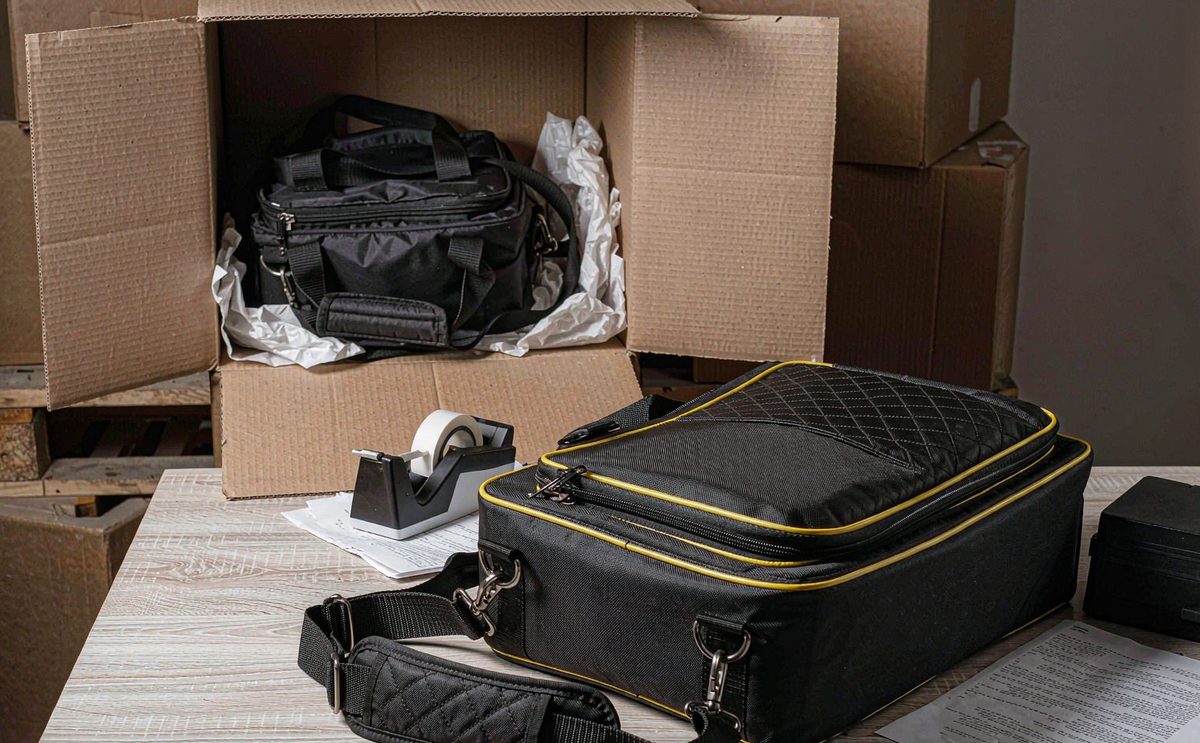
The kitting failures that recur
Six failures account for most of what goes wrong, and all six are visible in advance. The first is add-ons arriving in a different carton from the main goods and being released to the bench late, which stalls kitting for days. The second is two colourways that look similar under warehouse lighting, typically charcoal and black, or navy and midnight, being stored in adjacent bins.
The third is insert cards printed without a version date, so an old card with a superseded care instruction ends up in a current parcel. The fourth is a kit matrix built on pledge levels rather than on actual combinations, which understates the number of distinct kits by 30 to 50 percent. The fifth is no reserve, so the last 20 backers wait three weeks while a replacement run is arranged. The sixth is poly bags ordered to the flat dimensions of the bag rather than the folded dimensions, so nothing fits and the bench improvises.
A single control prevents most of them. Run a pilot batch of 25 kits through the full process, from carton opening to manifest upload, before releasing the rest. Time it, count the errors, weigh five completed parcels and read the tracking page as a backer would. A pilot run takes half a day and surfaces the fitting problem, the lighting problem and the version problem while there is still time to fix them cheaply. Campaigns that skip it discover the same issues at parcel 400, when every fix is a rework.
Key takeaways
- B
- u
- i
- l
- d
- t
- h
- e
- k
- i
- t
- m
- a
- t
- r
- i
- x
- o
- n
- r
- e
- a
- l
- c
- o
- m
- b
- i
- n
- a
- t
- i
- o
- n
- s
- ,
- v
- e
- r
- i
- f
- y
- w
- i
- t
- h
- a
- s
- c
- a
- n
- a
- t
- a
- s
- s
- e
- m
- b
- l
- y
- a
- n
- d
- a
- g
- a
- i
- n
- a
- t
- m
- a
- n
- i
- f
- e
- s
- t
- ,
- a
- n
- d
- r
- u
- n
- 2
- 5
- p
- i
- l
- o
- t
- k
- i
- t
- s
- b
- e
- f
- o
- r
- e
- r
- e
- l
- e
- a
- s
- i
- n
- g
- t
- h
- e
- b
- a
- t
- c
- h
- .
Send us your reward tier structure and add-on list and we will turn it into a kit matrix you can hand straight to a warehouse.
Frequently Asked Questions
What is kitting in rewards fulfillment?
Kitting is assembling everything one backer is owed into a single shippable unit. A bag campaign with three colourways, two sizes and three add-ons can ship 8 to 30 distinct kits even with only a handful of pledge levels. Kitting is priced separately from pick and pack, because a four-line kit takes 90 to 170 seconds and errors 1.5 to 4 percent of the time versus 40 to 70 seconds and 0.3 to 1 percent for a single-line pick.
Should bags be pre-kitted at origin or kitted at the warehouse?
Pre-kit the stable core at origin at 0.35 to 0.90 USD per kit and kit variable add-ons at the warehouse at 0.90 to 2.40 USD. Origin assembly is cheaper and the people doing it made the product, but an error replicates across the whole consignment. Warehouse kitting costs more and keeps flexibility, and an error affects one parcel that scan verification can catch.
How do I build a kit matrix?
Export the pledge manager data, group by the exact combination of choices rather than by pledge level, and count each group. Then list every distinct kit with component SKUs, quantities, inner packaging and target mailer. Grouping by pledge level understates the number of distinct kits by 30 to 50 percent, which is the most common planning error in merchandise fulfillment.
What labels does a bag reward need?
Three layers. On the product, fibre content, country of origin and care instructions, settled at sampling because labels are sewn in during assembly. On the inner poly bag, a scannable barcode plus a human-readable colourway name. On the outer carton, carton number as 3 of 47, campaign reference, country of origin, net and gross weight and dimensions. Number cartons sequentially, so a gap in the sequence reveals a missing carton before the warehouse signs for it.
Do I need GS1 barcodes for a crowdfunding dispatch?
No. You need unique, stable, internally consistent SKUs under 16 characters, such as BK30-BLK-OS-00. Avoid characters that scanners and spreadsheets confuse, like the letter O beside the digit 0. The control that matters is scan verification: scanning the highest-value component before closing cuts error rates from 2 to 4 percent down to 0.3 to 1 percent. Verify twice, at assembly and again at manifest, which cuts error rates from 2 to 4 percent to under 1 percent.
When should tracking numbers be uploaded?
After the first scan event appears, not at manifest acceptance, because carrier references usually show nothing for the first 12 to 48 hours. Upload in batches of 100 to 300 so a systematic problem, such as a whole batch not moving, is caught before hundreds of backers are told to look. Include a contact date in the notification. Include a contact date in the notification, so backers know when it is reasonable to start worrying.
How much spare stock should a merchandise campaign hold?
Three to five percent of total units, physically separated and labelled so nobody picks into it by accident. That covers replacements and damage in transit, which runs 0.5 to 2 percent for soft goods. Without a reserve, the last 20 backers wait three weeks while a replacement run is arranged, which is the most visible failure a campaign can have.
What causes the most kitting errors?
Two similar colourways in adjacent bins, typically charcoal and black or navy and midnight, is the classic one. Others are add-ons arriving in a separate carton and released late, insert cards printed without a version date, and poly bags ordered to flat rather than folded bag dimensions so nothing fits. All are visible in advance during a pilot run. A pilot batch of 25 kits surfaces all of them in half a day, while the fixes are still cheap.
How long does kitting take per parcel?
A single-line pick takes 40 to 70 seconds. A two-component bag kit takes 95 to 150 seconds at 1,000 units and 80 to 130 seconds at 3,000 units as the bench learns the assembly. A four-line kit with multiple add-ons takes 90 to 170 seconds. Multi-line orders need 1.5 to 3 times the pick time of a single-line order.
What documents travel with bulk stock into a fulfillment hub?
A commercial invoice, a packing list, a certificate of origin where a preferential rate is claimed, and the bill of lading or airway bill. The two most common causes of avoidable delay are a mismatch between invoice and packing list carton counts or weights, and a vague goods description such as bag accessories instead of backpacks, polyester, 30 litre. Send the pack as one PDF five working days before departure, when corrections cost nothing.
How often should inventory be reconciled?
Three cycles. A daily count of components issued to the bench, taking 10 to 15 minutes, catches drift on day two. A weekly full count of every SKU keeps the system honest. A final reconciliation at dispatch close accounts for every unit as shipped, in reserve, damaged or missing, and gives the true landed cost per delivered unit. Record the true landed cost per delivered unit while the detail is fresh, for pricing the next campaign.
How does kitting interact with MOQ and sampling?
Add-ons are separate style runs with their own minimum of 500 pcs per style and colourway and their own sampling window of 6 to 10 working days, or 12 to 15 for complex items. Sign off the exact kit contents during that window and photograph the approved assembly, because assembling 1,000 kits with the wrong insert is a rework across a finished consignment, not a warehouse fix.
People Also Ask
What is a kit in fulfillment?
Everything one backer is owed, assembled into one shippable unit. A campaign with a few pledge levels can still ship dozens of distinct kits.
Is kitting the same as pick and pack?
No. Kitting decides and confirms what goes in; packing closes and labels the parcel. A pick-and-pack quote usually covers only the second.
How much does kitting cost per kit?
Typically 1.00 to 3.20 USD depending on line count and volume, plus 0.25 to 0.80 USD for labelling and scanning. Origin pre-kitting is roughly half the cost.
Why scan twice?
Scanning at assembly catches the wrong colourway; scanning at manifest catches the wrong parcel going to the wrong backer. Together they cut errors from 2 to 4 percent to under 1 percent.
Should I run a pilot batch?
Yes. Twenty-five kits through the full process takes half a day and surfaces fitting, lighting and version problems while fixes are still cheap.
What goes on the carton label?
Carton number as 3 of 47, campaign reference, country of origin, net and gross weight in kilograms, and dimensions in centimetres.
How much reserve stock is enough?
Three to five percent of units, kept separate and clearly labelled so it is not picked into by accident.