Rewards Fulfillment Services for Bags: Do It Yourself or Outsource?
Whether a bag campaign should run rewards fulfillment itself or outsource it is decided by four numbers: backer count, destination spread, colourway count and the hours you can realistically give it. Below about 400 backers in one or two regions, doing it yourself costs 40 to 70 hours and very little cash. Above roughly 1,200 backers across four or more regions, a third-party warehouse usually costs less once mis-picks, re-ships and support tickets are counted. This guide gives the thresholds, the fee lines and the break-even arithmetic.
- What a rewards fulfillment service actually handles
- The four numbers that decide the answer
- Doing it yourself at 300 backers
- Where do-it-yourself breaks at 1,000 and 3,000
- The costs creators forget when pricing their own time
- What an outsourced fulfillment partner charges, line by line
- Break-even maths: where the two curves cross
- Warehouse location: origin versus a regional hub
- What you give up when you outsource
- The hybrid model most bag campaigns actually use
- Bag-specific factors that change the answer
- Seven questions to ask before you sign
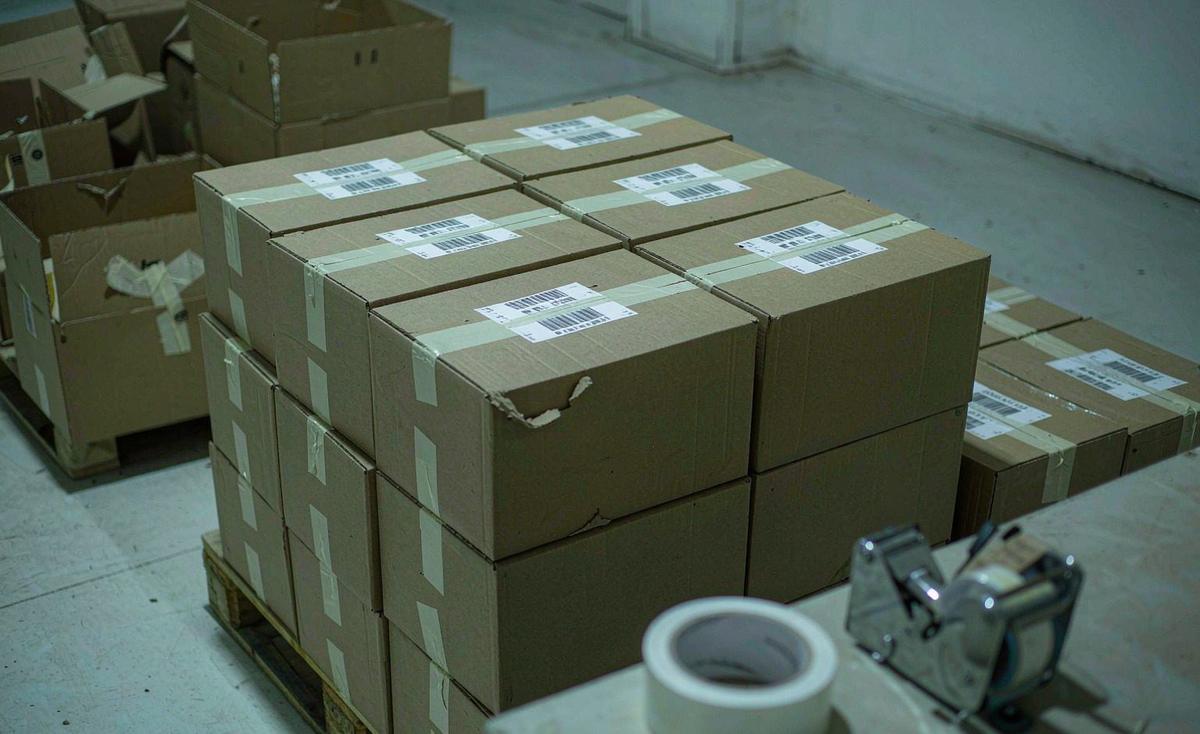
The fulfilment decision is a maths problem before it is a logistics problem. Get the four numbers right and the answer is usually obvious.
What a rewards fulfillment service actually handles
Rewards fulfillment is the set of operations that sit between the finished carton and the backer's doorstep. Inbound receipt, count verification against the packing list, storage, pick and pack, kitting, labelling, carrier handover, tracking upload and returns handling all belong to it. What does not belong to it is anything that happens before the goods leave the production programme: material sourcing, sampling, mass production and inspection are upstream, and mixing the two is the most common reason campaign budgets go wrong. Our production team works to FOB Xiamen terms, which means our responsibility ends when the goods are handed to your nominated freight forwarder at the port of loading.
That boundary matters more than most first-time creators expect. A bag campaign that raises 180,000 USD can lose three weeks simply because nobody had formally decided who books the vessel, who clears customs in the destination country, who pays duty and who owns the stock between clearance and the first parcel going out. Those four questions are fulfillment questions, not production questions, and they need owners before the campaign closes. Our programme coordinator raises them with every creator at the point where the T/T 30/70 deposit is released, because that is roughly seven to nine weeks before cartons are ready.
A concrete scope helps. For a campaign with 900 backers, three colourways and one add-on pouch, a typical fulfillment scope is: receive and count 55 to 70 cartons, hold inventory for three to eight weeks, pick one bag plus one insert card per order, apply the carrier label, manifest 900 to 1,000 parcels, upload tracking to the pledge manager, hold 3 to 5 percent spare stock for replacements, and process 20 to 45 support tickets about addresses or damage. Every one of those lines has a cost in cash or hours, and the only question is who pays it.
The four numbers that decide the answer
The first number is backer count, and it drives everything else because nearly all fulfillment work scales per parcel. The second is destination spread: 600 backers all in the United States is a very different operation from 600 backers in 28 countries, because the second version multiplies customs paperwork, carrier options, duty questions and support volume. The third is SKU complexity, by which we mean how many distinct style and colourway combinations plus add-ons you are shipping, since every extra combination adds a pick decision and a mis-pick risk.
The fourth number is the one creators never write down: how many hours per week you and your team can genuinely give to packing, for how many consecutive weeks. A campaign that needs 90 hours of packing spread over two people and six weeks is manageable. The same 90 hours compressed into nine days around a full-time job and a day job deadline is not, and the failure mode is predictable: parcels go out untracked, addresses are copied by hand, and the support inbox fills faster than the parcels leave.
| Backers | Destination regions | Colourways and add-ons | Practical recommendation |
|---|---|---|---|
| Under 300 | 1 to 2 | 1 to 3 | Do it yourself from a spare room or a storage unit |
| 300 to 800 | 2 to 3 | 3 to 6 | Do it yourself with hired help on packing weekends |
| 800 to 1,500 | 3 to 5 | 4 to 8 | Hybrid: bulk ship to one hub, outsource the parcels |
| 1,500 to 3,000 | 4 or more | 6 to 12 | Outsource to a regional 3PL with two hubs |
| Above 3,000 | 5 or more | Any | Outsource, with a dedicated account manager and SLA |
Read the table as a starting position rather than a verdict. A 500-backer campaign with eight colourways, a matching pouch add-on and backers in 30 countries is harder to fulfil in a spare room than a 900-backer campaign with two colourways and 85 percent of backers in one country. If two of the four numbers sit in the row below yours, plan for that row instead. The full end-to-end picture is mapped in the crowdfunding rewards fulfilment guide, which covers the flow from production release through to the last parcel.
Doing it yourself at 300 backers
At 300 backers the arithmetic favours doing it yourself, and it is not close. Assume one backpack per backer, one insert card, one poly mailer, one thermal label, and a domestic or regional carrier account. Packing a bag is slower than packing a T-shirt because soft goods need to be folded, rolled or stuffed to a presentable shape and then closed without creasing, so budget 2.5 to 4 minutes per parcel including the label and the manifest entry. Three hundred parcels therefore takes 13 to 20 hours of packing, not two.
Around the packing sits everything else. Receiving and counting 18 to 24 cartons takes 2 to 3 hours. Building the shipping manifest from pledge manager data takes 3 to 5 hours the first time, because the export rarely matches the carrier template and somebody has to clean up apartment numbers, missing postal codes and backers who typed their address into the wrong field. Uploading tracking back to the pledge manager takes another 1 to 2 hours. Support during the two weeks after dispatch typically runs 6 to 10 hours at this scale.
- Packing
- 13 to 20 hours at 300 backers
- Inbound receipt and count
- 2 to 3 hours
- Manifest preparation and address cleaning
- 3 to 5 hours
- Tracking upload
- 1 to 2 hours
- Post-dispatch support
- 6 to 10 hours
- Total
- 25 to 40 hours
Twenty-five to forty hours is a long weekend and a few evenings, which is why the do-it-yourself answer is correct at this scale. The cash cost is also modest: roughly 120 to 260 USD in poly mailers, labels and void fill, plus postage. If you value your own time at 40 USD an hour, the imputed labour cost is 1,000 to 1,600 USD, but most creators treat that as the cost of learning the process, and that is a reasonable position to take the first time.
Where do-it-yourself breaks at 1,000 and 3,000
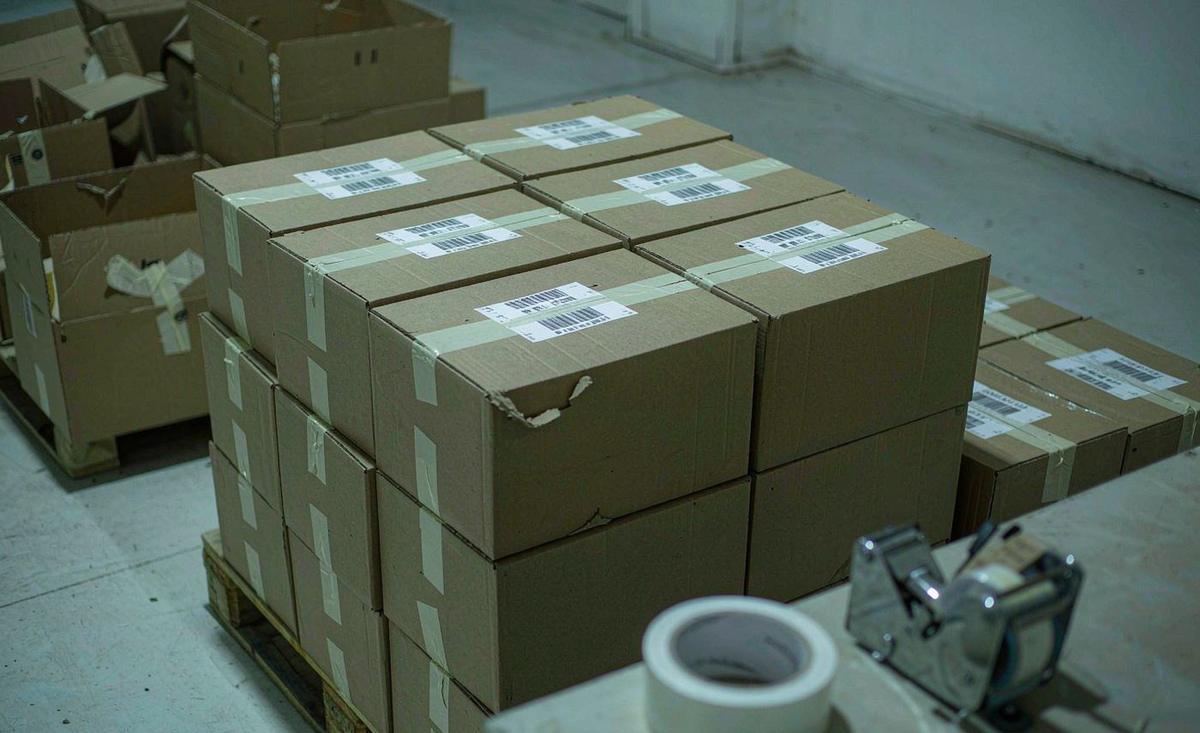
The do-it-yourself model does not fail dramatically, it fails by accumulation. At 1,000 backers the packing alone is 42 to 67 hours. Carton count rises to 55 to 75, which is roughly 4 to 6 pallets and needs somewhere between 6 and 10 square metres of dry, secure floor space for three to eight weeks. Most spare rooms and garages can absorb that, but a flat with a landlord cannot, and a self-storage unit at 90 to 220 USD a month is the first cash line that creators forget to budget.
At 3,000 backers the model breaks properly. Packing runs 125 to 200 hours, which is five working weeks for one person or a serious volunteer operation. Cartons reach 160 to 210, which is 12 to 16 pallets and a genuine warehouse requirement. Address exceptions alone, meaning undeliverable parcels returned to sender or held at a depot, typically run 2 to 5 percent at this scale, so 60 to 150 parcels need individual attention. Those parcels each cost a re-ship of 9 to 22 USD plus 15 to 25 minutes of correspondence.
There is also a cash-flow shape to this. Do-it-yourself fulfillment pushes cost later but concentrates it: you pay postage for 3,000 parcels in a two-week window, which can be 24,000 to 60,000 USD depending on zone and service. A third-party warehouse with a carrier account spreads the same postage across the same window but adds the ability to invoice weekly against inventory you have already paid for, which is easier to reconcile against the campaign funds you are holding. Creators who misjudge this are the ones who end up asking backers to pay additional shipping after funding, and the reputation cost of that is far larger than the fee stack they were trying to avoid.
The costs creators forget when pricing their own time
The comparison between doing it yourself and outsourcing is usually done on pick-and-pack fees alone, which flatters the do-it-yourself route. A fair comparison includes at least six lines that never appear in a spreadsheet. Once they are written down, the gap between the two options narrows by 20 to 40 percent at almost every volume.
- Storage: self-storage or a garage conversion at 90 to 220 USD per month, typically needed for 2 to 4 months, plus the cost of shelving and a pallet jack or a hand truck.
- Packing materials bought at retail: poly mailers, thermal labels, void fill and tape bought in small quantities cost 2 to 3 times the per-unit price a warehouse pays at volume.
- Mis-picks: hand-picking with three or more colourways produces mis-pick rates of roughly 1 to 3 percent. Every mis-pick costs a return leg plus a replacement leg, so 14 to 26 USD each at 1,000 backers.
- Re-ships for address errors: 2 to 5 percent of addresses need correction or a second attempt, at 9 to 22 USD per parcel.
- Support time: expect one ticket for every 8 to 15 parcels in the three weeks after dispatch, at 6 to 12 minutes each.
- Postage at retail rates: a warehouse passes on a negotiated carrier rate that is commonly 15 to 40 percent below the counter rate for the same service.
Add those up for a 1,000-backer campaign and the hidden lines come to roughly 2,400 to 6,800 USD depending on how many go wrong. That is the same order of magnitude as the quoted pick-and-pack fee, which is why the honest answer at 1,000 backers is usually hybrid rather than pure do-it-yourself. The merchandise rewards fulfilment workflow goes through the kitting and labelling steps that generate most of those exception costs, and it is worth reading before you commit to either route.
What an outsourced fulfillment partner charges, line by line
A third-party logistics provider does not quote one number. It quotes a stack, and understanding the stack is the difference between a sensible quote and a nasty invoice eight weeks later. The lines below are the ones that appear in almost every bag campaign quotation, with typical ranges for a soft goods reward in a US or EU warehouse. Treat the ranges as industry ranges rather than quotes, because location, season and carrier mix move them.
| Fee line | Typical range | Notes for bags |
|---|---|---|
| Inbound receipt, per carton | 2 to 6 USD | Charged for unloading, counting and putting away |
| Storage, per pallet per month | 18 to 45 USD | Bags are light but bulky, so pallet count drives cost |
| Pick and pack, first item | 2.50 to 5.00 USD | Rises 0.40 to 1.20 USD per additional item |
| Packing materials, per parcel | 0.80 to 2.60 USD | Poly mailer or carton, label, void fill |
| Postage, per parcel | 6 to 28 USD | Depends on zone, weight and service level |
| Returns processing, per unit | 3 to 8 USD | Inspect, re-bag, restock or quarantine |
| Account or monthly minimum | 150 to 600 USD | Applies when monthly volume is low |
Two of those lines are where bag programmes get surprised. Storage is the first: bags are light but bulky, so a 3,000-unit programme occupies 12 to 16 pallets where 3,000 phone cases might occupy two. At 30 USD per pallet per month and four months of storage, that is 1,440 to 1,920 USD before a single parcel is picked. The second is the account minimum, which quietly penalises campaigns that trickle: if you ship 40 parcels a week for six months instead of 900 in a fortnight, the minimum can add 20 to 40 percent to your effective per-parcel cost.
Ask for the quote as a fully loaded per-parcel number at your actual expected volume, then ask for the same number at half that volume, because campaigns frequently under-deliver on backer count relative to the stretch-goal plan. A quote that looks excellent at 3,000 parcels and terrible at 1,200 parcels is a quote with fixed costs in it, and you want to know that before you sign rather than after.
Break-even maths: where the two curves cross
Do-it-yourself cost is mostly variable with a step change for storage: it rises per parcel and jumps when you need space. Outsourced cost has a fixed component, the account set-up, the minimum and the receiving fee, plus a variable component that is usually lower per parcel than your own retail postage. The two curves therefore cross somewhere, and for bag rewards that crossing point sits between roughly 700 and 1,400 parcels depending on destination spread.
| Backers | DIY total cost | 3PL total cost | DIY hours |
|---|---|---|---|
| 300 | 3,100 to 5,400 USD | 4,600 to 7,100 USD | 25 to 40 |
| 700 | 7,200 to 12,400 USD | 9,800 to 15,200 USD | 58 to 92 |
| 1,200 | 12,400 to 21,000 USD | 15,600 to 23,400 USD | 100 to 160 |
| 2,000 | 20,600 to 34,800 USD | 24,100 to 35,900 USD | 165 to 265 |
| 3,000 | 30,900 to 52,200 USD | 34,800 to 51,600 USD | 250 to 400 |
On cash alone the two options are close, and at the top of the range outsourcing wins. The deciding factor is the hours column. At 3,000 backers the do-it-yourself route needs 250 to 400 hours, which is two to three months of full-time work for one person. Very few campaign teams have that capacity, and the teams that try it usually discover the real cost later, in the form of a four-week dispatch delay and a support backlog. The detailed volume-by-volume comparison at 500, 1,000 and 5,000 units is worth reading alongside this section if you are near the crossing point.
Warehouse location: origin versus a regional hub
Bags are made in one place and backers live everywhere, so the first strategic decision is where the stock sits when the first parcel goes out. Shipping direct from origin works when parcels are small, duty exposure is low and backers accept 8 to 20 day transit. It becomes painful when a third of your backers are in the European Union, because import VAT and the handling fee charged by the carrier on each parcel create a wave of support tickets and refusals.
The alternative is to bulk ship under FOB Xiamen terms to a regional hub, clear customs once as a commercial import, pay duty once on the consignment, and then dispatch domestically from inside the region. The economics favour this once a single region holds more than roughly 250 to 350 parcels, because one customs entry costs less than 300 parcel-level clearances and domestic postage is usually 40 to 65 percent cheaper than an international small packet at the same weight.
The mode you choose to move bulk stock into the hub is its own decision. Sea freight is slow but cheap per unit, air freight is fast and roughly 4 to 7 times the cost per kilogram, and a hybrid split sends an air advance shipment to the earliest backers while the sea consignment follows. The trade-offs are laid out in the air, sea and hybrid freight comparison, and they interact directly with your fulfillment timeline, because a sea consignment that misses a cut-off can cost you three weeks.
What you give up when you outsource
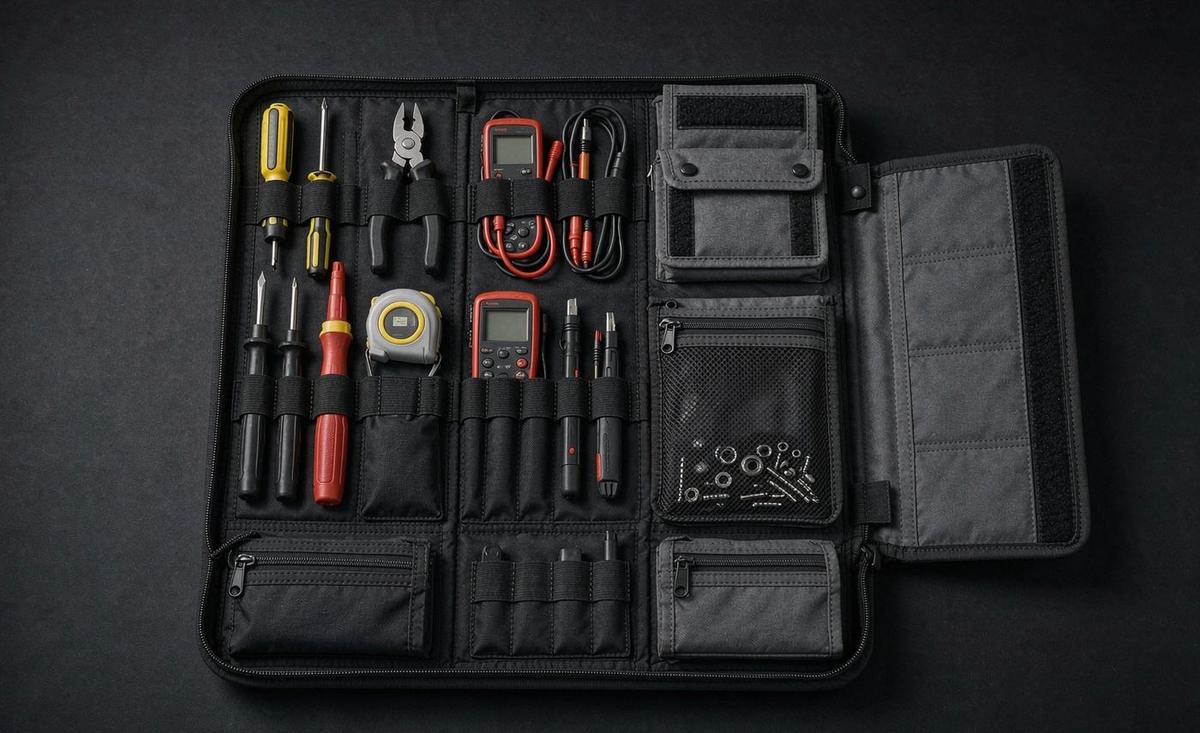
Outsourcing buys capacity and carrier rates, and it costs you three things: visibility, packaging control and response speed. Visibility is the first casualty. When you pack your own parcels you know within an hour that a colourway is short or that 40 units have a scuffed panel. When a warehouse packs them, that information arrives as a weekly inventory report, by which time 300 parcels have gone out and the problem is now a support problem rather than a picking problem.
Packaging control is the second. A warehouse will use its standard mailer and its standard void fill unless you specify otherwise in writing and, ideally, supply the material yourself. For a bag reward this is a real loss, because the unboxing moment is the first physical contact a backer has with your brand and a generic grey mailer squanders it. If you want a branded poly bag, a printed insert card or a specific fold, supply it and get the packing instruction written into the statement of work with a photograph.
Response speed is the third. A mis-pick you notice yourself can be corrected before dispatch. A mis-pick the warehouse notices becomes a support ticket, a return label and a replacement parcel, which is 3 to 6 days and 20 to 40 USD. Mitigate all three by asking for a named account contact, a written cut-off time for same-day dispatch, a photograph of the first packed parcel before the batch is released, and weekly stock counts you can reconcile yourself. Read the pre-shipment inspection scope before goods leave origin, because goods received damaged at a warehouse are far harder to claim for than goods inspected before loading.
The hybrid model most bag campaigns actually use
The model we see work most often is neither pure self-fulfilment nor full outsourcing. Bulk stock moves from origin to one regional hub under a single customs entry. The hub receives, counts and stores. The campaign team then handles the parts that need judgement: branded packing, insert cards, any kitting where two or more items go together, and the first 50 parcels as a live test before the batch is released. The hub handles label application, manifesting, carrier handover and returns.
This split keeps the brand-sensitive work in your hands and the repetitive work with the party that has the carrier rates and the scanners. It also caps the fixed cost, because you are buying a subset of services rather than a full managed contract. In cost terms a hybrid arrangement typically lands 10 to 25 percent below a full-service quote at the same volume, and it adds 1 to 3 days to the schedule, which most campaigns can absorb if the production programme finished on plan.
The second common hybrid is geographic. A US-based creator fulfils domestic parcels from a garage and outsources the European, UK and Asia-Pacific parcels to a hub in each region. This works because the domestic leg is the one where you have the best carrier rates and the shortest feedback loop, while the international legs are the ones where customs paperwork and duty handling eat the most time. If you go this route, make sure the spare stock for replacements is split geographically too, because a replacement sent internationally for a domestic mis-pick costs more than the original parcel.
Bag-specific factors that change the answer
Bags behave differently from flat merchandise in four ways that push the decision. First, dimensional weight: a soft bag compresses, so a vacuum or compression pack can cut the billable weight by 15 to 35 percent on air and express services, but only if somebody actually compresses it. Second, presentation: a bag that arrives creased or misshapen generates a return request even though it is functionally fine, so stuffing and folding instruction matter more than for a flat item.
Third, add-ons. Bag campaigns routinely sell a matching pouch, a strap, a packing cube set or a patch as separate add-ons, which turns a single-item pick into a multi-item kit. Kitting accuracy falls as line count rises, and multi-line orders typically need 1.5 to 3 times the pick time of a single-line order. Fourth, the packaging decision itself: a poly mailer is 0.80 to 1.60 USD and adequate for a soft duffle, while a printed carton at 2.20 to 4.50 USD is right for a structured backpack. The packaging choice is covered in detail in the guide to poly bags, cartons and inserts.
There is one more factor specific to this product category. Because a bag is a considered purchase with a price point commonly between 35 and 180 USD, backers notice condition issues far more than they would on a 12 USD item. That raises the value of inspection at origin rather than at destination. Our production partner runs final inspection to AQL 2.5 to ISO 2859-1 before loading, which costs a fraction of a destination-side returns operation and removes the single largest source of downstream support tickets.
Seven questions to ask before you sign
Fulfillment contracts are short and the mistakes are expensive. Before you sign anything, get written answers to the questions below. If a provider cannot answer one of them in writing, treat that as information about how the relationship will run when something goes wrong at 2,000 parcels.
- What is the fully loaded cost per parcel at my expected volume, and again at half that volume?
- What are the cut-off times for same-day dispatch, and what happens to parcels that miss them?
- Will you use my packaging if I supply it, and is there a receiving fee for that material?
- How are multi-item kits picked, and what is your measured mis-pick rate on orders with three or more lines?
- How quickly is inventory data visible to me, and can I reconcile stock counts myself each week?
- What is the returns process, including inspection, restocking and quarantine, and what does each step cost?
- Who is my named contact, and what is the escalation path if a batch is dispatched incorrectly?
Bring the answers back to one number: the fully loaded cost per delivered parcel, including the share of storage, receiving and minimums. Compare that against your own honest estimate, including the value of your time and the cost of the exceptions you will cause. Whichever number is lower usually wins, provided the timeline still holds. If you want a second opinion on the fulfilment side of a bag programme before you commit, send us a brief through the quote page with your backer count, destination split and colourway list, and a campaign bag specialist will come back with a loaded per-parcel estimate.
Key takeaways
- B
- e
- l
- o
- w
- r
- o
- u
- g
- h
- l
- y
- 4
- 0
- 0
- b
- a
- c
- k
- e
- r
- s
- i
- n
- o
- n
- e
- o
- r
- t
- w
- o
- r
- e
- g
- i
- o
- n
- s
- ,
- f
- u
- l
- f
- i
- l
- i
- t
- y
- o
- u
- r
- s
- e
- l
- f
- .
- A
- b
- o
- v
- e
- r
- o
- u
- g
- h
- l
- y
- 1
- ,
- 2
- 0
- 0
- b
- a
- c
- k
- e
- r
- s
- a
- c
- r
- o
- s
- s
- f
- o
- u
- r
- o
- r
- m
- o
- r
- e
- r
- e
- g
- i
- o
- n
- s
- ,
- o
- u
- t
- s
- o
- u
- r
- c
- e
- .
- I
- n
- b
- e
- t
- w
- e
- e
- n
- ,
- g
- o
- h
- y
- b
- r
- i
- d
- .
Send us your backer count, destination split and colourway list and we will model both routes for your bag campaign.
Frequently Asked Questions
At what backer count should a bag campaign stop fulfilling rewards itself?
For most bag campaigns the practical crossover sits between 700 and 1,400 parcels. Below 400 backers in one or two regions, self-fulfilment costs 25 to 40 hours and wins clearly on cash. Above 1,200 backers the packing alone is 100 to 160 hours, and the exception handling at 2 to 5 percent of parcels adds 2,400 to 6,800 USD in re-ships. Destination spread moves the crossover down: 900 backers in 25 countries is harder than 1,400 backers in one country.
How much does outsourced fulfillment cost per parcel for a bag reward?
A fully loaded figure for a soft goods reward in a US or EU warehouse typically runs 14 to 32 USD per parcel including postage, with pick and pack at 2.50 to 5.00 USD, materials at 0.80 to 2.60 USD and postage at 6 to 28 USD depending on zone. Storage adds 18 to 45 USD per pallet per month, and a monthly minimum of 150 to 600 USD applies at low volume. Always ask for the loaded number at your expected volume and at half of it.
Is it cheaper to ship bags directly from origin or through a regional warehouse?
Direct from origin works when parcels are small, duty exposure is low and backers accept 8 to 20 day transit. A regional hub wins once a single region holds more than about 250 to 350 parcels, because one commercial customs entry replaces hundreds of parcel-level clearances and domestic postage is typically 40 to 65 percent cheaper than an international small packet at the same weight.
How many hours does packing 1,000 bag rewards take?
Packing alone takes 42 to 67 hours, because a bag has to be folded, stuffed to shape and closed without creasing, at 2.5 to 4 minutes per parcel. Adding inbound receipt, manifest preparation, address cleaning, tracking upload and post-dispatch support brings the realistic total to 100 to 160 hours. That is two to four working weeks for one person, which is why 1,000 backers is where hybrid arrangements start to make sense.
What is a mis-pick and how much does one cost a campaign?
A mis-pick is a parcel packed with the wrong colourway, size or add-on. Hand-picking with three or more colourways produces mis-pick rates of roughly 1 to 3 percent, and each one costs a return leg plus a replacement leg of 14 to 26 USD, plus 15 to 25 minutes of correspondence. At 1,000 backers a 2 percent mis-pick rate is 20 parcels and roughly 300 to 520 USD, before counting the reputational cost.
Do fulfillment warehouses accept branded packaging supplied by the creator?
Most do, but it has to be agreed in writing and the material usually arrives as a separate inbound receipt with its own fee of 2 to 6 USD per carton. Supply a photograph of a correctly packed parcel and a one-page packing instruction with the statement of work. Without that, the warehouse uses its standard mailer and void fill, and the unboxing moment that a 35 to 180 USD bag reward depends on is lost.
How much spare stock should a bag campaign hold for replacements?
Hold 3 to 5 percent of total units as spare stock, which is 30 to 50 units at 1,000 backers. Split it geographically if you fulfil from more than one hub, because a replacement shipped internationally for a domestic mis-pick costs more than the original parcel. Spare stock is also the buffer for damage in transit, which on soft goods runs 0.5 to 2 percent depending on packaging and carrier.
What does FOB Xiamen mean for the fulfillment plan?
FOB Xiamen means responsibility for the goods transfers to your nominated freight forwarder once they are loaded at the port of Xiamen. From that point the campaign owns ocean or air freight, customs clearance, duty, inland transport and parcel delivery. It is the boundary between production and fulfillment, and it is the reason the freight, customs and warehouse decisions need owners before the production programme finishes, not after.
How does dimensional weight affect bag fulfillment costs?
Carriers bill on the greater of actual and dimensional weight, so a bulky but light bag can be charged as if it weighed several kilograms. Compressing or vacuum packing a soft bag can reduce billable weight by 15 to 35 percent on air and express services. This matters most on international legs, where a 200 gram reduction in billable weight can move the per-parcel cost by 2 to 6 USD at 1,000 parcels.
Can a campaign fulfil some regions itself and outsource the rest?
Yes, and it is one of the two most common hybrid models. Fulfil your home region yourself, where you have the best carrier rates and the shortest feedback loop, and outsource the regions where customs paperwork and duty handling consume the most time. Keep spare replacement stock in each region, and hold one set of packing instructions so the unboxing experience is identical wherever the parcel originates.
What should be inspected before goods leave origin for a fulfillment hub?
Final inspection to AQL 2.5 to ISO 2859-1 before loading is the single highest-value check, covering stitch integrity, hardware function, colour consistency against the approved reference and carton count. Goods received damaged at a destination warehouse are far harder to claim against than goods inspected before loading. Pair it with a photographic record of the packing method so the receiving warehouse has a reference for condition.
How long does the fulfillment stage add to a bag campaign timeline?
Budget 3 to 6 weeks from carton readiness to the last parcel dispatched. That covers 2 to 5 days for inbound receipt and count, 1 to 2 weeks for dispatch waves, and 8 to 20 days of transit depending on service. Sea freight into a hub adds 25 to 40 days before that clock starts, which is why most campaigns air-freight an advance shipment for the earliest backers and follow with the sea consignment.
People Also Ask
Is it cheaper to fulfil Kickstarter rewards yourself?
Usually yes below about 400 backers, where self-fulfilment costs 25 to 40 hours and very little cash. Above roughly 1,200 backers the hours and exception costs overtake the fee stack.
What does a 3PL charge to pick and pack one bag?
Typically 2.50 to 5.00 USD for the first item, plus 0.40 to 1.20 USD per additional item, plus 0.80 to 2.60 USD for materials and postage on top.
How much storage do 1,000 bags need?
Roughly 55 to 75 cartons, or 4 to 6 pallets, which is 6 to 10 square metres of dry secure space held for three to eight weeks.
Should bags ship direct from China to backers?
It works for small parcels with low duty exposure and patient backers. Once a region holds 250 to 350 parcels a regional hub is usually cheaper and generates far fewer support tickets.
What percentage of backer parcels go wrong?
Plan for 2 to 5 percent address exceptions and 1 to 3 percent mis-picks. At 1,000 backers that is 30 to 80 parcels needing individual attention.
How much spare stock should I hold?
Three to five percent of total units, split by region if you use more than one hub. At 1,000 backers that is 30 to 50 units.
Do I need a warehouse if I only have 500 backers?
Not usually. A spare room or a storage unit handles 25 to 35 cartons, and the packing runs 21 to 34 hours, which most teams can absorb over two weekends.