Kickstarter Logistics for Creators: Air, Sea and Hybrid Freight
Moving 500 to 5,000 bags from the production programme to a fulfilment hub is one freight decision, and it is usually made too late. Air freight costs roughly 4 to 7 times sea per kilogram and takes 5 to 12 days door to door against 28 to 45 for sea, but bags are bulky and bill on volumetric weight, so the real gap is often wider than the rate card suggests. This guide gives the cost maths at three volumes, the hybrid split that most campaigns should use, and the cut-offs that quietly cost three weeks when missed.
- The two freight decisions every bag campaign makes
- Air freight: cost, transit and when it is right
- Sea freight: LCL versus FCL
- The hybrid split: air advance plus sea main
- Cost comparison at 500, 1,500 and 5,000 units
- Transit time maths: door to hub
- Volumetric weight: why bags bill like foam
- Cut-offs, sailing schedules and the missed vessel
- Customs clearance: one entry versus many
- Packaging for freight: cartons, pallets and moisture
- Insurance, incoterms and who owns the risk
- A mode decision tree for bag campaigns
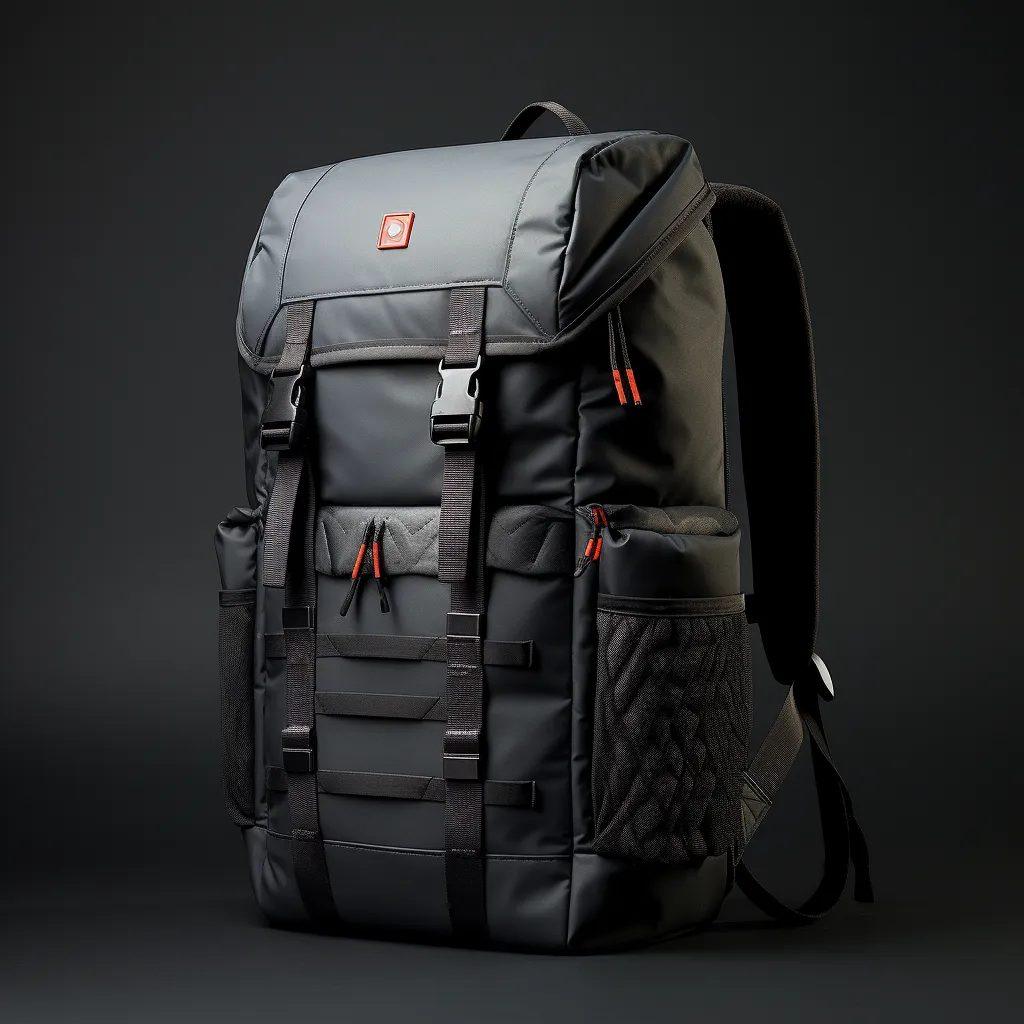
Compare freight modes on volumetric weight and door-to-hub days, not on the per-kilogram rate alone.
The two freight decisions every bag campaign makes
Every campaign makes two freight decisions, and they are frequently confused with each other. The first is how bulk stock moves from the production programme to a fulfilment hub: air, sea or a hybrid of both. The second is how individual parcels move from the hub to each backer, which is a postal or courier decision covered elsewhere. Getting the first wrong costs three to six weeks and a four-figure sum. Getting it right is mostly a matter of doing the arithmetic early enough that the mode is chosen rather than inherited.
The two decisions interact, and the interaction is where campaigns lose money. Cheap sea freight into a hub buys a low per-unit cost and a long lead time, which forces the parcel leg to be compressed into a short window. Expensive air freight buys schedule slack, which lets the parcel leg run in relaxed waves with lower exception rates. Optimising one leg in isolation usually produces a worse total outcome than balancing both, because the cost of a delayed dispatch is measured in refunds and reputation rather than in freight dollars.
There is also a cash-flow dimension that first-time creators rarely model. Air freight is paid in one lump close to dispatch, while sea freight is cheaper but the stock sits in transit for a month and a half, during which the campaign has already spent its funds and its backers are already asking questions. Our programme coordinator walks creators through both the cost and the timing before the T/T 30/70 balance is due, because that is the last point at which changing the plan is free. The full sequence of stages is described in the crowdfunding rewards fulfilment guide.
Air freight: cost, transit and when it is right
Air freight for a bag programme is typically quoted at 4.50 to 9.00 USD per chargeable kilogram on consolidated services, with express courier air running 8 to 16 USD per kilogram. Transit is genuinely fast: 1 to 3 days in the air, plus 1 to 3 days for origin handling and export clearance, plus 2 to 6 days for destination clearance and inland delivery, giving 5 to 12 working days door to hub on a normal lane. Schedules run daily or several times weekly, so a missed cut-off costs 24 to 72 hours rather than a week.
Air is the right answer in four situations. When the total consignment is small enough that volumetric weight does not dominate, generally under 300 to 500 kg chargeable. When the campaign has already slipped and the dispatch promise is at risk. When a portion of stock needs to arrive early for photography, review units or an early-backer wave. And when the destination hub has a hard deadline, such as a pre-booked warehouse slot or a seasonal retail window.
The disadvantage is straightforward and it is price. A 1,500-unit backpack programme at roughly 0.9 kg packed and a volumetric factor that doubles it produces about 2,700 chargeable kilograms, which at 6 USD per kilogram is 16,200 USD in air freight. The same goods by sea would cost 2,400 to 4,500 USD. That 12,000 to 14,000 USD difference is roughly 8 to 9 USD per unit, which on a 79 USD reward tier is the difference between a healthy margin and none.
Sea freight: LCL versus FCL
Sea freight comes in two forms. Less than container load, meaning your cartons share a container with other shippers, is charged per cubic metre with a minimum of one or two cubic metres plus a set of fixed fees. Full container load means you pay for the whole container regardless of how much you put in it. The crossover sits around 12 to 18 cubic metres for a 20 foot container and 25 to 30 cubic metres for a 40 foot high cube.
Bag programmes are bulky, so they reach the FCL threshold sooner than creators expect. A carton holding 20 folded backpacks measures roughly 60 by 40 by 40 centimetres, which is 0.096 cubic metres. Sixty cartons, or 1,200 bags, is 5.8 cubic metres and comfortably LCL. Two hundred cartons, or 4,000 bags, is 19.2 cubic metres, which is a 20 foot container. Any campaign above roughly 3,000 units of a full-size bag should price FCL as well as LCL, because the per-unit cost often drops 20 to 40 percent at the threshold.
| Consignment | Volume | Mode | Freight cost | Door to hub |
|---|---|---|---|---|
| 500 bags | 2.4 cbm | LCL | 700 to 1,400 USD | 28 to 40 days |
| 1,500 bags | 7.2 cbm | LCL | 1,800 to 3,200 USD | 30 to 42 days |
| 3,000 bags | 14.4 cbm | LCL or 20ft FCL | 2,600 to 4,800 USD | 32 to 45 days |
| 5,000 bags | 24.0 cbm | 40ft FCL | 3,400 to 6,200 USD | 33 to 48 days |
The fixed fees matter as much as the freight rate on an LCL shipment. Origin handling, documentation, destination terminal handling, delivery order and inland delivery together commonly add 450 to 900 USD regardless of volume, which is why a 2 cubic metre shipment costs 700 to 1,400 USD rather than 200. Ask for an all-in door-to-hub quote rather than a port-to-port rate, because the gap between the two is where budgets break.
The hybrid split: air advance plus sea main
The hybrid model is the one most bag campaigns should default to, and it is simple in principle. A consignment is split: an air advance shipment carries enough units for the earliest backers, typically 10 to 25 percent of the total, and the sea consignment carries the remainder. The air portion lands in 5 to 12 days and starts delivery while the sea portion is still on the water, which converts a six-week wait into a two-week first delivery and a staggered completion.
The economics work because the air portion is small. On a 2,000-unit programme, air-freighting 300 units costs roughly 2,700 to 5,400 USD, while sea-freighting the remaining 1,700 costs 2,000 to 3,600. Total freight of 4,700 to 9,000 USD against 14,000 to 18,000 USD for all-air, with the first deliveries happening three to five weeks earlier than an all-sea plan. The premium over pure sea is 2,700 to 5,400 USD, which is 1.35 to 2.70 USD per unit and is usually recoverable in the reward price.
Deciding the split size is a question about your backer mix rather than about freight. Look at the distribution of dispatch priority: if 200 backers are in your home region and will be the loudest voice in the comments, size the air shipment to cover those 200 plus a reserve. If your backers are geographically uniform, size it to cover roughly two weeks of dispatch capacity at the hub, so the packing line never stops waiting for stock. Our production team can release the air portion as a partial shipment from the same production run, which avoids running a second 35 to 50 day cycle.
Cost comparison at 500, 1,500 and 5,000 units
The table below compares all-air, all-sea and hybrid freight for a backpack programme at three volumes, using a packed weight of 0.9 kg per unit and a volumetric ratio of 2.0, which is typical for a soft bag that has not been compressed. Figures are indicative door-to-hub costs including origin and destination handling but excluding duty and the parcel leg. Use them to size the decision before requesting quotations.
| Units | All air | All sea | Hybrid 20 percent air | Sea days saved by hybrid |
|---|---|---|---|---|
| 500 | 3,600 to 7,200 USD | 700 to 1,400 USD | 1,400 to 2,700 USD | 21 to 30 days |
| 1,500 | 10,800 to 21,600 USD | 1,800 to 3,200 USD | 3,900 to 7,100 USD | 21 to 30 days |
| 5,000 | 36,000 to 72,000 USD | 3,400 to 6,200 USD | 10,600 to 20,000 USD | 24 to 33 days |
Two patterns are worth noticing. The first is that all-air stops being a serious option above about 1,000 units, because the freight alone approaches or exceeds the production cost of the goods. The second is that the hybrid premium over all-sea grows in absolute terms much more slowly than the all-air premium, which means the effective cost of buying three to four weeks of schedule is roughly 1.50 to 3.00 USD per unit at any volume.
Compare that per-unit cost against the alternative use of the same money. Three weeks of schedule slack reduces the number of backers who request refunds during the wait, and refund rates during a long silence commonly run 1 to 4 percent of backers. At 1,500 backers on a 79 USD tier, a 2 percent refund reduction is worth 2,370 USD, which roughly equals the entire hybrid premium. That is the argument for hybrid as a default rather than as an exception.
Transit time maths: door to hub
Transit quotes are given port to port or airport to airport, and campaigns plan against them as if they were door to door. They are not. A realistic door-to-hub figure adds four components to the headline number: origin inland transport and export clearance of 2 to 5 days, the main carriage leg, destination clearance and customs examination of 2 to 8 days, and destination inland delivery and warehouse booking of 2 to 5 days.
So a 30 day sea transit is realistically a 36 to 48 day door-to-hub move, and a 2 day air leg is a 5 to 12 day door-to-hub move. The variance is larger on sea, because a vessel can be delayed at an intermediate port, roll over to the next sailing, or be held for a customs examination at destination. Plan against the upper half of the range and treat the lower half as a bonus rather than a plan.
Build the number backwards into the campaign schedule. If you promised delivery in a given month, subtract 36 to 48 days for sea, 7 to 15 days for warehouse receipt and kitting, and 10 to 20 days for dispatch waves and parcel transit. What remains is the date production must finish, and that is the date to work backwards from when booking the production slot. Campaigns that do this arithmetic before the campaign launches are the ones that deliver on the promise they made. Treat the production finish date as the anchor of the whole schedule and work everything else backwards from it, including the freight booking and the warehouse slot.
Volumetric weight: why bags bill like foam
Freight is charged on the greater of actual weight and volumetric weight, and volumetric weight is calculated as length times width times height in centimetres divided by a divisor, typically 5,000 for air and expressed in cubic metres for sea. A carton of 60 by 40 by 40 centimetres has a volume of 96,000 cubic centimetres, which divided by 5,000 gives 19.2 volumetric kilograms. Twenty folded backpacks in that carton weigh about 18 kilograms actual, so the carton bills at 19.2 kilograms and the ratio is close to one.
Now change one variable: pack the same bags uncompressed, in a carton of 70 by 50 by 50 centimetres. Volumetric weight rises to 35 kilograms against 18 actual, a ratio of nearly 2.0, and the air freight bill for that carton nearly doubles. This is the single largest controllable variable in bag freight, and it is decided by the packing specification rather than by the carrier. Compressing bags, reducing carton height by 10 centimetres, or increasing units per carton from 20 to 24 all move the ratio materially.
The practical steps are simple. Compress or roll soft bags where the material tolerates it. Size cartons to the folded bag rather than to a standard. Test three carton configurations during sampling and measure the volumetric ratio of each, then specify the winner in the tech pack. On a 1,500-unit air shipment, moving the ratio from 2.0 to 1.4 cuts chargeable weight by 30 percent, which is 3,000 to 6,500 USD. That is more than most campaigns save through any negotiation.
Cut-offs, sailing schedules and the missed vessel
Sea freight runs to sailing schedules with cut-offs, and the cut-off is not the departure date. For an LCL shipment the cargo cut-off is typically 3 to 5 working days before departure, and the documentation cut-off is 1 to 2 days before that. Missing it means the consignment rolls to the next sailing, which on a weekly service costs seven days and on a fortnightly service costs fourteen. Miss it twice and a 30 day plan becomes a 58 day plan.
This is why the production finish date must include slack before the freight cut-off rather than landing on it. Our production team targets a finish date five to seven working days before the booked cut-off, because the things that push a finish date are ordinary: a hardware shipment arriving two days late, a re-inspection after a minor AQL 2.5 to ISO 2859-1 finding, or a public holiday that nobody accounted for.
Air has shorter but more frequent cut-offs, typically 24 to 48 hours before departure with multiple departures per week, which is one of the reasons air is forgiving of schedule slips. The discipline that matters for both modes is to book space rather than to hope for it. In peak season, roughly September to December, space on both air and sea lanes is scarce and rates can rise 30 to 80 percent. Book three to four weeks ahead in that window and treat the booking as a fixed cost of the campaign. Where a lane offers both direct and transhipment services, pay the small premium for the direct one, because each additional port call adds another roll-over opportunity and a few days you did not plan for.
Customs clearance: one entry versus many
Bulk freight into a hub clears as one commercial import. Parcels sent directly to backers clear individually. The cost difference is substantial and it drives the entire hub decision. A single commercial entry costs 150 to 400 USD in broker fees plus duty and VAT on the consignment value, while 1,200 individual parcel clearances each attract a carrier handling fee of 12 to 25 USD whether or not duty is due, which is 14,400 to 30,000 USD.
Beyond cost, there is a risk difference. A single entry is examined once, and if the paperwork is correct it clears in 1 to 5 days. Individual parcels are each a separate clearance event with a separate probability of examination, and a 2 percent examination rate on 1,200 parcels means 24 parcels sitting in a customs shed generating support tickets. Consolidating into one entry removes that entire class of problem.
The consolidation does require correct classification. Bags are classified by material and construction, and duty rates on bags and luggage vary from roughly 3 to 20 percent depending on the destination tariff line and the material. Get the classification confirmed by your broker before the goods ship, declare the commercial value accurately, and keep the commercial invoice, packing list and certificate of origin consistent. Under-declaring is not a saving, it is a deferred penalty. A broker can usually confirm a classification within 24 to 48 hours from a specification sheet, so send one during sampling rather than at packing, and keep the confirmed ruling on file with the shipment documents.
Packaging for freight: cartons, pallets and moisture
Freight packaging has a different job from retail packaging. It has to survive 30 to 45 days in a container, stacking under other cargo, humidity swings and two or three handling events. The specification that matters is board grade, carton size, units per carton and palletisation. A five-ply carton with a burst strength appropriate to the stack height is standard for export; a three-ply carton that looks fine on a bench will deform under a two-metre stack.
Moisture is the quiet failure. A container crossing an ocean experiences condensation, and bags packed with any residual moisture can arrive with mildew or with a smell that backers notice immediately. Standard mitigations are a polythene liner inside the carton, silica gel sachets at one per 0.05 cubic metres, and confirming that goods are dry before they are packed. Cartons should also be strapped or stretch-wrapped to the pallet rather than stacked loose, because loose cartons in an LCL container are the most common cause of crushed corners.
Palletisation decisions affect cost as well as condition. Standard export pallets are 1.20 by 1.00 metres and hold roughly 1.6 to 1.8 cubic metres stacked to 1.6 metres. Palletised cargo loads and unloads faster and is damaged less, but it occupies slightly more volume than loose cartons, so on an LCL shipment priced per cubic metre there is a small trade-off. Above about 8 cubic metres, palletise. Below that, ask the forwarder, because the answer depends on how the consolidation is built. Mark every carton with its sequence number and keep a photographic record of the loaded pallet, which is the evidence you need if a damage claim arises later.
Insurance, incoterms and who owns the risk
Cargo insurance costs 0.3 to 0.8 percent of declared value and is the cheapest line in the whole freight budget relative to what it covers. A container loss, a fire, a container lost overboard or a major water damage event is rare, but a 40,000 USD uninsured loss ends a campaign. Insure for the commercial value plus freight plus 10 percent, which is the standard basis, and name the campaign entity as the beneficiary.
Incoterms define where risk transfers. Under FOB Xiamen, the seller's responsibility ends when goods are loaded on board the vessel at Xiamen and the buyer, meaning the campaign, owns everything from that point: main carriage, insurance, destination charges and clearance. Under CIF the seller pays carriage and insurance to the destination port but risk still transfers at loading, which surprises people. Under DDP the seller or their agent handles everything including duty, which is convenient and priced accordingly.
For crowdfunding programmes, FOB is the usual and usually the right choice, because it keeps the freight decision, the carrier and the customs relationship in the campaign's hands, where the rest of the fulfilment plan also sits. It does mean the campaign needs a freight forwarder and a customs broker, or one firm providing both. Appoint them before production finishes, not after, because the documentation they need is produced during packing and cannot be reconstructed later. Ask the forwarder to confirm in writing which charges are included in the quotation and which are billed at destination, since destination-side surprises are the most common source of a freight budget overrun.
A mode decision tree for bag campaigns
The decision reduces to four questions, answerable in about twenty minutes with a calculator and your unit count. First, how many units and what is the packed carton volume? Second, how many days are there between production finish and your promised delivery month? Third, what is the value per unit, which sets how much freight you can absorb? Fourth, is your backer base concentrated enough that a partial early shipment satisfies the loudest voices?
- Under 300 units, or under about 150 kg chargeable: ship air. Sea fixed fees make small LCL shipments poor value.
- 300 to 1,000 units with more than 90 days of slack: ship sea, all of it, and use the saving elsewhere.
- 300 to 1,000 units with less than 90 days of slack: hybrid with a 20 to 25 percent air advance.
- 1,000 to 3,000 units: hybrid as the default, with the air portion sized to your home-region backers.
- Above 3,000 units: price FCL against LCL, ship the bulk by sea, and air-freight a review and early-backer batch.
- Any volume where the dispatch promise is already at risk: buy air on the portion that unblocks the promise, and sea on the rest.
Whichever branch you land on, write the decision down with its date, its cost and its arrival date, and put it in the campaign update schedule. Freight is the longest single line in a campaign calendar and the one most likely to be invisible to backers until it goes wrong. If you want a second opinion on the mode for your programme, send us a brief through the quote page with your unit count, packed carton dimensions and target delivery month, and a campaign bag specialist will model the three options against your fulfillment timeline.
Key takeaways
- D
- e
- f
- a
- u
- l
- t
- t
- o
- h
- y
- b
- r
- i
- d
- :
- a
- i
- r
- -
- f
- r
- e
- i
- g
- h
- t
- 1
- 0
- t
- o
- 2
- 5
- p
- e
- r
- c
- e
- n
- t
- f
- o
- r
- t
- h
- e
- e
- a
- r
- l
- i
- e
- s
- t
- b
- a
- c
- k
- e
- r
- s
- ,
- s
- h
- i
- p
- t
- h
- e
- r
- e
- s
- t
- b
- y
- s
- e
- a
- ,
- a
- n
- d
- c
- o
- m
- p
- r
- e
- s
- s
- c
- a
- r
- t
- o
- n
- s
- t
- o
- c
- u
- t
- v
- o
- l
- u
- m
- e
- t
- r
- i
- c
- w
- e
- i
- g
- h
- t
- .
Send us your unit count and carton dimensions and we will price air, sea and hybrid against your delivery month.
Frequently Asked Questions
How much does it cost to freight 1,500 bags from China to a US hub?
Indicatively 1,800 to 3,200 USD all-in by sea LCL at roughly 7.2 cubic metres, 10,800 to 21,600 USD by air at about 2,700 chargeable kilograms, and 3,900 to 7,100 USD for a hybrid with a 20 percent air advance. Sea takes 30 to 42 days door to hub, air 5 to 12, and hybrid gets the first units moving three to four weeks sooner than an all-sea plan.
When is air freight worth it for a bag campaign?
When the consignment is under about 150 to 300 kg chargeable, when the schedule has already slipped and a delivery promise is at risk, when early stock is needed for review units or photography, or when the hub has a hard deadline. Above roughly 1,000 units, air freight approaches the production cost of the goods and stops being a serious option for the whole consignment.
What is the difference between LCL and FCL?
Less than container load means your cartons share a container and you pay per cubic metre plus fixed fees of 450 to 900 USD. Full container load means you pay for the whole container. The crossover is around 12 to 18 cubic metres for a 20 foot container and 25 to 30 for a 40 foot high cube, and crossing it typically cuts per-unit cost by 20 to 40 percent.
How is volumetric weight calculated for bags?
Length times width times height in centimetres divided by 5,000 for air freight. A 60 by 40 by 40 centimetre carton of 20 folded backpacks is 19.2 volumetric kilograms against about 18 actual, a ratio near one. Packed loosely in a 70 by 50 by 50 carton the same goods bill at 35 volumetric kilograms, so compression and carton sizing are the largest controllable freight variables.
How long does sea freight really take door to hub?
Add four components to the port-to-port figure: origin inland and export clearance 2 to 5 days, the main leg, destination clearance and possible examination 2 to 8 days, and inland delivery plus warehouse booking 2 to 5 days. A quoted 30 day sea transit is realistically 36 to 48 days door to hub, and the variance is larger on sea than on air.
What happens if a shipment misses the cargo cut-off?
The consignment rolls to the next sailing. On a weekly service that costs seven days, on a fortnightly service fourteen, and twice missed turns a 30 day plan into a 58 day one. LCL cargo cut-offs are typically 3 to 5 working days before departure with documentation due 1 to 2 days before that, so production should finish five to seven working days ahead of the cut-off.
Is it cheaper to clear one bulk shipment or many parcels?
One bulk entry. A single commercial entry costs 150 to 400 USD in broker fees plus duty and VAT. Individual parcels each attract carrier handling fees of 12 to 25 USD whether or not duty is due, which is 14,400 to 30,000 USD at 1,200 parcels. Consolidation also removes the class of problem where a percentage of parcels are examined and sit in a customs shed.
How much does cargo insurance cost?
Typically 0.3 to 0.8 percent of declared value, insured for commercial value plus freight plus 10 percent. On a 40,000 USD consignment that is 120 to 320 USD. Container loss is rare, but an uninsured total loss ends a campaign, which makes insurance the cheapest line in the freight budget relative to what it covers. Name the campaign entity as beneficiary and insure the full commercial value plus freight, not a nominal figure.
What does FOB Xiamen mean for a campaign?
Responsibility transfers to the campaign once goods are loaded on board at Xiamen. From that point the campaign owns main carriage, insurance, destination charges, customs clearance and duty. It keeps the freight and customs decisions with the rest of the fulfilment plan, and it means the campaign needs a forwarder and a broker appointed before production finishes. Appoint a forwarder and a broker before production finishes, because the documents are produced during packing.
How should bags be packed for a sea container?
Use a five-ply export carton sized to the folded bag rather than a standard size, add a polythene liner and silica gel at roughly one sachet per 0.05 cubic metres, confirm goods are dry before packing, and strap or stretch-wrap cartons to 1.20 by 1.00 metre pallets above about 8 cubic metres. Loose cartons in an LCL container are the most common cause of crushed corners.
Should a campaign ship air or sea if it is already late?
Split it. Air-freight the portion that unblocks the delivery promise, typically the home-region backers or the earliest wave, and sea-freight the remainder. The premium for a 20 to 25 percent air advance runs 1.50 to 3.00 USD per unit, which is usually less than the refund cost of a three-week silence. Compare that premium against refund rates during a long silence, which commonly run 1 to 4 percent of backers.
How far ahead should freight space be booked?
Three to four weeks ahead in the September to December peak, when space on both air and sea lanes is scarce and rates can rise 30 to 80 percent. Outside peak, one to two weeks is usually sufficient for sea and 48 to 72 hours for air. Treat the booking as a fixed campaign cost rather than something to arrange at the last minute.
People Also Ask
Is sea or air better for bag rewards?
Sea for the bulk at 1,800 to 3,200 USD per 1,500 units, air for speed at 5 to 12 days. Most campaigns should use a hybrid with a 10 to 25 percent air advance.
How much is air freight per kilogram?
Consolidated air runs 4.50 to 9.00 USD per chargeable kilogram and express courier air 8 to 16 USD. Chargeable means volumetric or actual, whichever is greater.
Why is my freight quote higher than expected?
Usually volumetric weight. A loosely packed bag carton can bill at nearly double its actual weight, and fixed destination fees of 450 to 900 USD apply regardless of volume.
How long does a 20ft container take?
Main leg transit of 25 to 35 days, plus 2 to 5 days origin, 2 to 8 days clearance and 2 to 5 days inland delivery, giving 33 to 48 days door to hub.
Do I need cargo insurance?
Yes. At 0.3 to 0.8 percent of value it is cheap relative to a total loss, which is an event that ends a campaign rather than delays it.
When does palletising make sense?
Above about 8 cubic metres. Palletised cargo loads faster and is damaged less, though it occupies slightly more volume than loose cartons on an LCL shipment.
Can part of an order ship early?
Yes. A partial release from the same production run avoids a second 35 to 50 day cycle and is the basis of the air advance model.