Custom Bag Packaging for Fulfillment: Poly Bags, Cartons and Inserts
Fulfillment packaging has a different job from retail packaging: it has to survive freight, keep the bag presentable and keep billable weight down. The three decisions that matter are the inner poly bag, the outer carton and the inserts, and each has a specification that can be written down. A poly bag of 0.04 to 0.06 mm with a resealable closure costs 0.12 to 0.55 USD, a five-ply export carton costs 1.20 to 3.40 USD, and compression of the bag inside the mailer can cut billable weight by 15 to 35 percent.
- Fulfillment packaging is a different brief
- The poly bag: thickness, size and closure
- Compression and void: cutting dimensional weight
- Cartons: board grade, size and units per carton
- Inserts: cards, care instructions and brand material
- Labels and barcode placement on the pack
- Protection: moisture, abrasion and hardware marking
- Sustainability claims and what they commit you to
- Cost per unit across four specifications
- Packaging large-format and structured bags
- Decisions that belong in the sampling window
- A packaging specification sheet
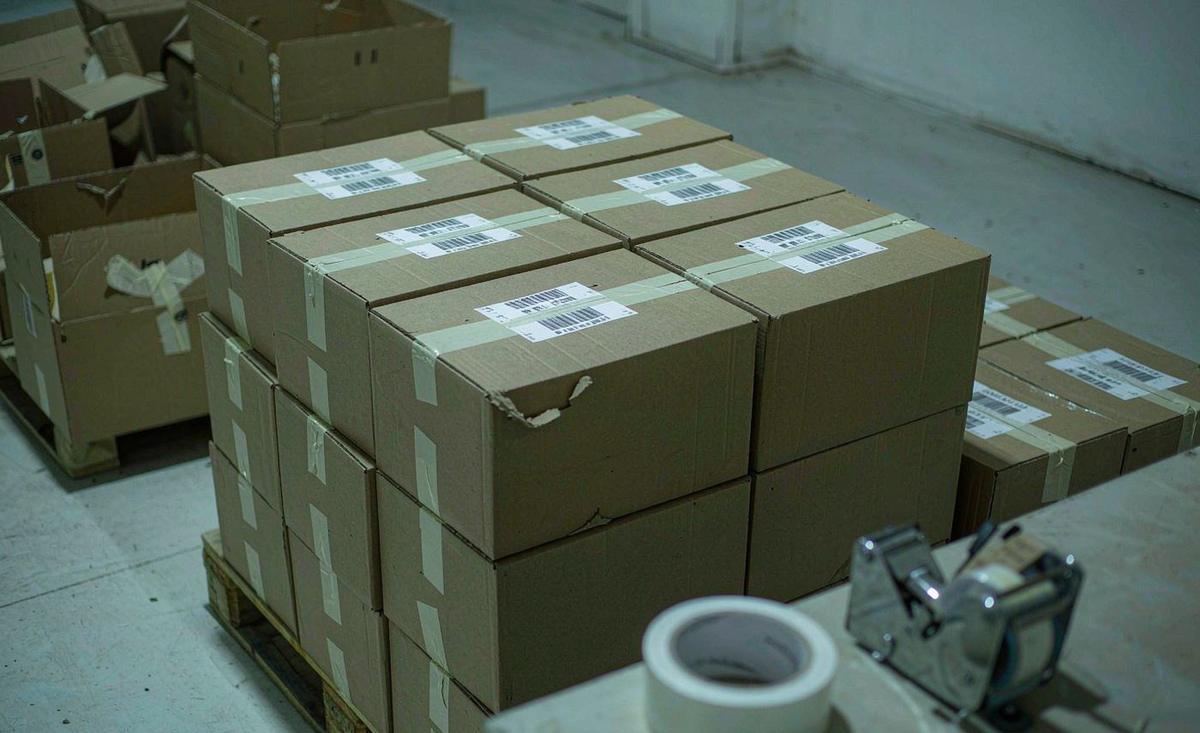
Specify packaging in millimetres, microns and grams before sampling closes. Everything else about it can be adjusted later, but the carton size cannot.
Fulfillment packaging is a different brief
Retail packaging is designed to sell a product from a shelf. Fulfillment packaging is designed to move one unit through a freight network and arrive presentable, and the two objectives produce different answers. A retail hangtag and a rigid printed box look excellent in a photograph and add 180 to 400 grams, several centimetres of height and 2.50 to 6.00 USD per unit, none of which survive contact with a dimensional weight calculation on an international lane. The crowdfunding rewards fulfilment guide shows where packaging sits in the wider dispatch flow.
The brief for fulfillment packaging has four requirements in a fixed order. First, protect the bag through 30 to 45 days of freight plus two or three handling events. Second, present it so a backer opening the parcel sees a product that looks considered rather than crushed. Third, keep billable weight and volume as low as the first two allow. Fourth, carry the labelling that the warehouse, the carrier and customs each need to read.
Notice that the brand experience is second, not last, and that it is achievable cheaply. A folded bag inside a clean poly mailer with a single well printed insert card reads as premium, because the backer is looking at the bag rather than at the packaging. What damages the experience is not a plain mailer, it is a bag that arrives creased, damp or with hardware pressed into the panel, and all three are prevented by specification rather than by spending more. The order matters when two requirements conflict, and they do conflict, because the smallest possible parcel is rarely the one that protects best. Resolve it in favour of condition: a damaged bag costs 14 to 26 USD and a replacement, while a slightly larger parcel costs 1 to 4 USD more.
The poly bag: thickness, size and closure
The inner poly bag is the layer that touches the product, and it does three jobs: it keeps the bag clean, it stops the fabric abrading against the mailer or carton during transit, and it holds the contents together if the outer packaging is damaged. It is specified by material, thickness, dimensions and closure type, and all four should be written into the tech pack rather than left to whoever is packing on the day.
Thickness is measured in millimetres or microns and the working range for bag rewards is 0.04 to 0.06 mm, which is 40 to 60 microns. Below 0.04 mm the bag tears in transit at a rate you will notice in the returns inbox. Above 0.08 mm it adds weight and cost for no benefit. Recycled LDPE and PE blends are both workable, and the choice is usually driven by the sustainability position rather than by performance, since the two behave similarly in transit.
Size should be derived from the folded bag, not from the flat bag. Measure the bag folded the way you intend to ship it, add 20 to 30 mm on width and height for ease of insertion, and specify that. A poly bag ordered to flat dimensions is 30 to 60 percent larger than necessary, which adds material cost, adds volume inside the mailer, and lets the bag move around during transit. Closure options are a self-seal adhesive strip, a resealable zip, or a simple flap, and the resealable zip is worth the 0.04 to 0.12 USD premium because many backers reuse the bag for packing.
Compression and void: cutting dimensional weight
Carriers bill on the greater of actual and dimensional weight, and dimensional weight for a soft bag is the largest controllable variable in the entire landed cost stack. A 30 litre backpack folded flat weighs 0.9 kg and measures roughly 45 by 30 by 20 centimetres. Shipped loosely stuffed in a mailer sized to the flat bag, it measures 55 by 40 by 30 centimetres and bills at roughly 13 kilograms dimensional on a 5,000 divisor. That difference, not the service choice, is what sets the postage cost.
Three methods reduce it and they can be combined. Fold the bag to its intended shipping shape and specify that shape in the packing instruction. Roll rather than fold soft duffles and totes, which produces a smaller profile and fewer creases. Where the material tolerates it and the style is not structured, compression packing or a vacuum pack reduces volume by 30 to 50 percent, with the caveat that a vacuum-packed bag needs a few hours to recover its shape and should be packed so that it is not creased along a single hard line.
Void fill is the counterpart and it is where campaigns waste money. The instinct is to pad heavily, but over-padding increases volume and therefore cost, and a bag is already its own cushioning. The rule is to fill only the space that would otherwise allow the bag to shift, which for a correctly sized mailer is usually nothing at all. Where padding is genuinely needed, use a single sheet of tissue or a paper wrap rather than loose fill, because loose fill migrates and looks poor on opening.
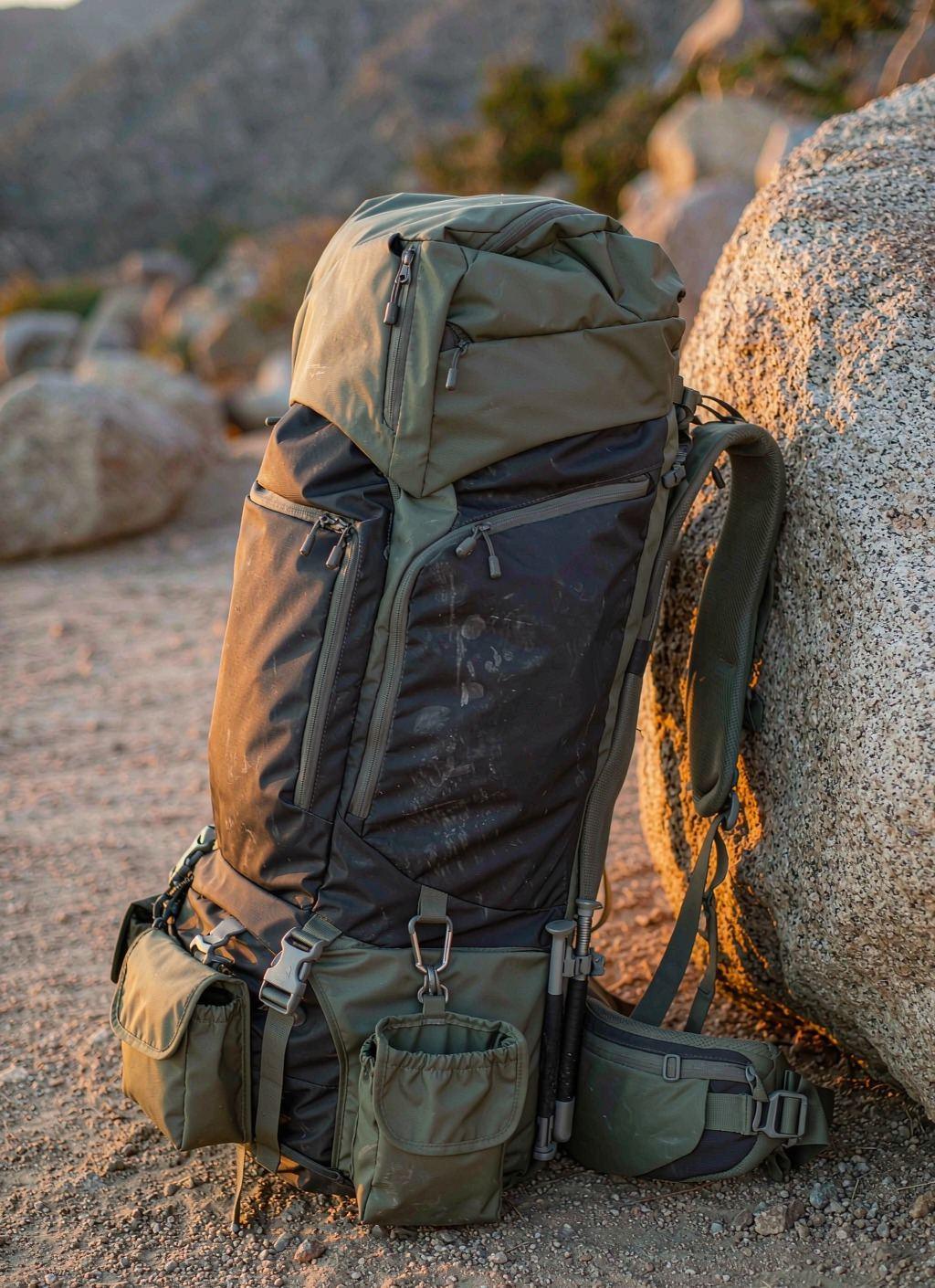
Cartons: board grade, size and units per carton
The outer carton is specified by board grade, internal dimensions and units per carton, and it serves freight rather than the backer. Board grade is described by ply and by burst strength. A three-ply carton is adequate for a light domestic parcel and inadequate for export. A five-ply carton with a bursting strength appropriate to a two metre stack height is the standard for a sea container, and it costs 1.20 to 3.40 USD per carton depending on size and quantity.
Internal dimensions should be derived from the units per carton rather than the reverse. Decide how many folded bags in their poly bags fit comfortably, then size the carton to that number plus 10 to 15 mm of tolerance. Twenty folded backpacks typically fit a 60 by 40 by 40 centimetre carton, which is 0.096 cubic metres. Twenty-four in a slightly taller carton may reduce total carton count by 17 percent, which is worth testing during sampling because freight is charged per cubic metre.
Units per carton also sets the granularity of your inventory. A carton of 20 means stock can be counted and moved in twenties, which is convenient at 1,000 units and coarse at 300. A carton of 10 gives finer control and more cartons to handle. For most bag campaigns between 10 and 25 units per carton is the workable range, and the number should be one that divides evenly into your expected total so the last carton is not half empty and therefore crushable.
Inserts: cards, care instructions and brand material
Inserts are the cheapest way to make a plain parcel feel considered, and they are also the most common source of a version control failure. A campaign typically wants three things inside: a care instruction card, a brand or thank you card, and any documentation the destination requires. Print them together as one folded card where possible, because a single insert is cheaper, faster to pack and impossible to mix up.
Specification is straightforward: 250 to 350 gsm card, folded or flat, printed one or two sides, at a size that fits the bag's front pocket or sits on top of the folded bag without bending. A 105 by 148 millimetre folded card is a common choice and costs 0.06 to 0.22 USD at quantities above 500. Below 500 units the unit cost rises sharply, which is worth knowing because it interacts with the MOQ of 500 pcs per style and colourway on the bag itself.
Version control is the failure mode. Put a version date or code on the card, in small type, and record which version went into which carton group. When a care instruction or a brand detail changes, old stock becomes visibly distinguishable from new. The other discipline is to have the insert inserted at a defined point in the process, either at origin during packing or at the bench during kitting, and never both, because two insertion points means two chances to use the wrong version. Decide that point during kitting design rather than on the day, and write it into the packing instruction with the version code beside it.
Labels and barcode placement on the pack
Three labels matter on a fulfillment pack, and their placement determines whether they can be read at speed. The product or inner bag label carries the SKU barcode and the colourway name in words. The mailer or parcel label carries the carrier's barcode and the address. The carton label carries the carton sequence, origin, weights and dimensions. Each is read by a different party at a different moment, and each should be placed where that party looks.
Put the SKU barcode on the poly bag on the largest flat face, oriented so it reads horizontally when the bag is lying flat, and repeat the colourway name in text beside it. Avoid placing it across a fold or a curve, because a scanner at 90 to 170 seconds per kit does not have time to flatten a bag to read a label. Keep at least 6 millimetres of quiet zone around the barcode and print at a resolution that survives the printer being low on toner.
On the mailer, place the carrier label on the largest face, not on a seam or across a corner, and keep it flat and unwrinkled. A label wrapped around an edge is the most common cause of an unreadable scan at the depot, and an unreadable scan means a manual sort and a delay of one to three days. On the carton, put the shipping marks on two adjacent sides rather than one, so the carton can be identified whether it is stacked or standing.
Protection: moisture, abrasion and hardware marking
Three damage types account for most condition complaints on delivered bags, and each has a specific cause and a specific fix. Moisture damage appears as mildew or a musty smell and comes from goods packed with residual humidity and shipped through a container that condenses. Abrasion appears as scuffed panels or rubbed coating and comes from the bag moving against the packaging or against a neighbouring bag. Hardware marking appears as a permanent impression of a buckle or zip pull pressed into a fabric panel.
Moisture is prevented by three cheap controls: confirm goods are dry before packing, add silica gel at roughly one sachet per 0.05 cubic metres of carton volume, and use a polythene liner inside the export carton on sea shipments. The liner costs 0.15 to 0.40 USD per carton and is the single highest value item in the whole packaging budget relative to what it prevents, because a mildewed bag is a total loss rather than a partial one.
Abrasion and hardware marking are prevented by packing method rather than by material. Fold so that hardware faces inward, away from the outer fabric. Insert a single sheet of tissue between metal hardware and any panel it would otherwise press against. For structured bags with moulded panels or rigid frames, ship them unpacked inside a carton rather than compressed, and accept the higher dimensional weight, because a creased moulded panel cannot be recovered and a slightly higher postage bill can. Where two bags share one carton, separate them with a sheet of tissue so coating finishes do not rub against each other over a long transit.
Sustainability claims and what they commit you to
Packaging is where most campaigns make their sustainability claims, and it is also where those claims are easiest to get wrong. A claim is a commitment about the material and about its end of life, and a backer who reads recycled on a poly bag is entitled to ask what proportion and what certification. Make only the claims you can evidence with a document from the material supplier, and keep that document with the shipment records.
The three workable claims for bag packaging are: recycled content with a stated percentage, usually 30 to 100 percent post-consumer or post-industrial; recyclability in a stated stream, meaning the material is accepted by kerbside or store-drop-off systems in the destination market; and reduced material use, meaning you have demonstrably reduced thickness or volume against a baseline. The third is the easiest to substantiate and the least likely to be challenged.
Be careful with compostable and biodegradable claims, because they are conditional. Many compostable films only break down in industrial composting facilities, which are not available to most backers, and a bag that goes to landfill does not compost. If you use such a material, say so precisely rather than relying on the word compostable alone. Vague environmental claims are a growing compliance risk in several markets and a reputational one everywhere. Keep a supplier declaration for every material you make a claim about, filed with the shipment documents, and review the wording once more before dispatch rather than once at launch, because supplier formulations change and a declaration from twelve months ago may no longer describe what was actually used.
Cost per unit across four specifications
The table below gives indicative packaging cost per delivered unit for four common specifications, at quantities above 500 units. The figures cover the inner poly bag, the outer mailer or carton, the insert card, the labels and the void fill where used. They exclude postage, which is set by weight and zone and is covered in the backer shipping cost guide.
| Specification | Components | Cost per unit | Typical use |
|---|---|---|---|
| Minimal | Poly bag 0.04 mm, mailer, one label | 0.55 to 1.30 USD | Drawstring bags, flat totes, pouches |
| Standard | Poly bag 0.05 mm, mailer, insert card, two labels | 0.95 to 2.10 USD | Backpacks, duffles, weekenders |
| Structured | Poly bag, carton, tissue, insert, corner protection | 2.20 to 4.60 USD | Moulded or framed travel bags |
| Premium | Recycled poly, printed carton, two inserts, tissue | 3.40 to 6.80 USD | High-priced rewards above 150 USD |
The interesting comparison is between the standard and premium specifications on a mid-priced reward. The premium option costs 2.45 to 4.70 USD more per unit and is visible to the backer for about forty seconds. That money buys something, but at 1,500 units it is 3,675 to 7,050 USD, which is roughly the cost of air-freighting an advance shipment or of absorbing duties in one zone. Spend it where the backer's experience is actually at risk, which is usually condition on arrival rather than packaging finish.
There is one exception worth making. If your reward price is above roughly 150 USD, or if your brand positioning depends on the unboxing, the premium specification is defensible and probably necessary. Backers paying that much expect the parcel to feel like a retail purchase, and the gap between a plain mailer and a printed carton is proportionate to the price. Below that threshold, put the money into condition protection and postage reliability instead.
Packaging large-format and structured bags
Large-format bags, meaning wheeled duffles, ski and snowboard bags, and anything over roughly 1.0 metre in length, break the standard packaging assumptions. They cannot be poly mailed, they attract oversized surcharges of 25 to 60 USD per parcel on courier services, and they are refused by some postal products above specific length and girth limits. Packaging decisions for these styles are freight decisions and should be made with the shipping limits in front of you.
The key specification is the packed length plus girth, because that is the number carriers use. Postal products commonly cap length at 1.05 metres and length plus girth at 2.0 metres, while couriers accept up to 2.7 metres with a surcharge. A 1.1 metre duffle rolled and packed diagonally in a correctly sized carton can fall inside the postal limit, while the same bag packed flat falls outside it. Test both orientations during sampling and record the measurements.
Structured bags have the opposite problem: they cannot be compressed at all, so their packaging has to protect shape rather than reduce volume. Use a carton sized to the bag with 20 to 30 mm of tolerance, tissue between hardware and panels, and corner protection on any edge that would otherwise take the impact. Accept the dimensional weight, because the alternative is a crushed frame and a replacement, which costs 14 to 26 USD plus the original parcel and the goodwill of one backer. Where a large-format style will push a significant share of parcels into oversized surcharges, say so on the campaign page and restrict the reward to the zones where the economics work, rather than discovering the surcharge at manifest. Photograph the approved folding method at sampling and pin that photograph at the bench, since most condition complaints trace back to an operator folding differently from the person who was shown how.
Decisions that belong in the sampling window
Four packaging decisions have to be made during sampling, which runs 6 to 10 working days for a standard style and 12 to 15 for a complex one, and none of them can be made later without cost. The first is the folded shipping dimensions, because they set the poly bag size and the mailer size. The second is the hardware orientation, because folding hardware inward is a folding instruction that has to be tested on the actual product.
The third is the carton configuration, meaning units per carton and internal dimensions, because it sets freight volume and has to be measured with real goods rather than estimated. The fourth is the insert card content and version, because printing has its own lead time of 5 to 12 working days and cannot begin until the text is final. Our sourcing partner raises all four at the point the tech pack is signed, since each one becomes expensive once the production run has started.
The practical method is to use the approved sample as a test article. Fold it, pack it in three candidate configurations, weigh and measure each, and photograph the result. Twenty minutes with a tape measure and a scale at sampling produces a specification that holds for the whole programme, and it is the difference between a packing instruction that says pack carefully and one that says fold in half along the base seam, roll from the top, insert hardware side inward. The same twenty minutes should produce the packed weight and dimensions that go onto the specification sheet, measured on a scale rather than estimated from a drawing.
A packaging specification sheet
The output of all of this is one page that goes to the warehouse, the freight forwarder and the production programme. It removes the need for judgement at the bench, which is what keeps error rates and damage rates low. Write it in the format below, attach the photographs from the sampling test, and treat any change to it as a version change that has to be communicated to all three parties.
- Product style and SKU
- Reference, colourway list
- Fold method
- Written steps plus a photograph of the folded bag
- Inner poly bag
- Material, thickness in mm, dimensions, closure type
- Outer mailer or carton
- Type, internal dimensions, board grade if a carton
- Void fill and protection
- Tissue, corner protection, silica gel quantity
- Inserts
- Card specification, version code, insertion point
- Labels
- SKU label placement, carrier label face, carton marks
- Packed weight and dimensions
- Grams and centimetres, measured not estimated
Send the sheet to the warehouse with the pre-advice, at least a week before goods arrive, and ask for confirmation that they can work to it. A warehouse that receives a specification in advance can lay out bins and pick faces correctly on day one, and one that receives goods first and instructions second will improvise, and improvisation at 1,500 units is where mis-picks and condition complaints come from. The wider receiving process is described in the kitting and labelling guide.
If you are specifying packaging for a bag campaign and want the dimensions checked against freight and postage limits before sampling closes, send us a brief through the quote page with your style, target packed dimensions and destination zones, and a campaign bag specialist will test the configurations against the fulfillment timeline you are working to.
Key takeaways
- M
- e
- a
- s
- u
- r
- e
- t
- h
- e
- f
- o
- l
- d
- e
- d
- b
- a
- g
- ,
- s
- i
- z
- e
- t
- h
- e
- p
- o
- l
- y
- b
- a
- g
- a
- n
- d
- m
- a
- i
- l
- e
- r
- t
- o
- i
- t
- ,
- p
- r
- o
- t
- e
- c
- t
- a
- g
- a
- i
- n
- s
- t
- m
- o
- i
- s
- t
- u
- r
- e
- a
- n
- d
- h
- a
- r
- d
- w
- a
- r
- e
- m
- a
- r
- k
- i
- n
- g
- ,
- a
- n
- d
- w
- r
- i
- t
- e
- i
- t
- a
- l
- l
- o
- n
- t
- o
- o
- n
- e
- s
- p
- e
- c
- i
- f
- i
- c
- a
- t
- i
- o
- n
- s
- h
- e
- e
- t
- .
Send us your style and target packed dimensions and we will test packaging configurations against freight and postage limits.
Frequently Asked Questions
What thickness should a poly bag be for shipping bags?
Between 0.04 and 0.06 mm, which is 40 to 60 microns. Below 0.04 mm the bag tears in transit at a rate you will notice in the returns inbox. Above 0.08 mm it adds weight and cost for no benefit. Recycled LDPE and PE blends behave similarly in transit, so the choice between them is usually driven by the sustainability position rather than performance.
How do I reduce dimensional weight when shipping bags?
Fold the bag to its intended shipping shape, roll soft duffles and totes rather than folding them, and use compression or vacuum packing where the material tolerates it. A 30 litre backpack folded flat can bill at 0.9 kg or, shipped loosely stuffed, at roughly 13 kg dimensional on a 5,000 divisor. That difference, rather than the service choice, sets the postage cost.
What board grade should an export carton be?
A five-ply carton with a bursting strength suited to a two metre stack height, costing 1.20 to 3.40 USD per carton depending on size and quantity. A three-ply carton is adequate for light domestic parcels and inadequate for sea freight, where it deforms under stacking. Derive the internal dimensions from units per carton rather than the reverse, and test 20 against 24 units.
How much does fulfillment packaging cost per unit?
Indicatively 0.55 to 1.30 USD for a minimal specification, 0.95 to 2.10 for standard, 2.20 to 4.60 for structured and 3.40 to 6.80 for premium, at quantities above 500 units. The figures cover the poly bag, the mailer or carton, the insert, the labels and void fill, and exclude postage, which is set by weight and zone. Send the sheet to the warehouse with the pre-advice, a week before goods arrive, and get written confirmation.
Should bag rewards use a poly mailer or a carton?
A poly mailer for soft bags that compress, which is cheaper and lighter. A carton for structured bags with moulded panels or frames, which cannot be compressed and need shape protection. Postal products commonly cap length at 1.05 metres and length plus girth at 2.0 metres, so a large-format bag may need to be packed in a carton to meet the limit.
How do I stop bags arriving creased or musty?
Creasing is prevented by the fold method and by not compressing structured styles. Mustiness comes from residual humidity in a container that condenses, and is prevented by confirming goods are dry before packing, adding silica gel at roughly one sachet per 0.05 cubic metres, and using a polythene liner at 0.15 to 0.40 USD per carton on sea shipments. Photograph the approved fold at sampling and pin it at the bench, so every operator folds the same way.
Where should barcodes be placed on a bag pack?
On the poly bag, on the largest flat face, oriented horizontally with at least 6 millimetres of quiet zone, and with the colourway name printed as text beside it. Never across a fold or a curve, because a scanner at 90 to 170 seconds per kit cannot stop to flatten a bag. On the mailer, place the carrier label flat on the largest face, not across a seam.
What should be on the insert card?
Care instructions, a brand or thank you message, and any documentation the destination requires. Print them as one folded card of 250 to 350 gsm at a size that fits the front pocket, typically 105 by 148 millimetres, costing 0.06 to 0.22 USD above 500 units. Put a version code on the card in small type so old stock is distinguishable after a change.
When should packaging decisions be made?
During the 6 to 10 working day sampling window, or 12 to 15 for complex styles. The folded shipping dimensions, hardware orientation, carton configuration and insert content all have to be settled then, because each becomes expensive once production starts. Fold the approved sample, pack it three ways, weigh and measure each, and photograph the result. The same twenty minutes should produce the measured packed weight and dimensions for the specification sheet.
Are compostable mailers a good idea for bag rewards?
Only with precise wording. Many compostable films break down only in industrial composting facilities that most backers cannot access, and material sent to landfill does not compost. Use recycled content with a stated percentage, recyclability in a stated stream, or demonstrably reduced material use, and keep the supplier document that supports the claim with the shipment records. Keep the supplier declaration with the shipment records and review the wording once more before dispatch.
How many bags should go in one export carton?
Between 10 and 25 for most styles, and the number should divide evenly into the expected total so the last carton is not half empty and crushable. Twenty folded backpacks typically fit a 60 by 40 by 40 centimetre carton at 0.096 cubic metres. Testing 24 units in a slightly taller carton can cut total carton count by about 17 percent.
What is a packaging specification sheet?
One page sent to the warehouse, the forwarder and the production programme, listing style and SKU, fold method with a photograph, poly bag material and dimensions, mailer or carton specification, void fill and protection, inserts with version code, label placement, and measured packed weight and dimensions. Send it a week before goods arrive and get written confirmation that it can be worked to.
People Also Ask
What thickness poly bag for shipping?
0.04 to 0.06 mm. Thinner tears, thicker wastes money, and recycled blends perform the same in transit.
Mailer or carton for a backpack?
A poly mailer if it compresses, a carton if it has moulded panels or a frame that would crease under compression.
How do I lower shipping weight on bags?
Fold to a defined shape, roll soft styles, compress where the fabric tolerates it, and size the mailer to the folded bag.
How much is packaging per bag?
Roughly 0.55 to 2.10 USD for most soft bag rewards, rising to 2.20 to 6.80 USD for structured or premium specifications.
Do I need silica gel in the carton?
Yes for sea freight. About one sachet per 0.05 cubic metres, plus a polythene liner, prevents mildew from container condensation.
Can I claim the packaging is recyclable?
Only with a stated stream and a supplier document. Avoid bare compostable claims, which usually require industrial facilities backers do not have.
When is packaging specified?
During the 6 to 10 working day sampling window. Fold, pack and measure the approved sample before production starts.