Bag Campaign Conversion Rates: Reward Design That Moves Numbers
Reward design is the part of a campaign page that moves numbers fastest, because it sits directly between a visitor's interest and their money. Tier count changes how many visitors decide at all, the hero tier price sets the average pledge that most backers pay, bundles and add-ons raise revenue per backer without raising traffic, and the way shipping is presented changes both conversion and net margin. Publicly observable campaign data suggests page conversion sits in the low single digits overall and that average pledge is far more responsive to reward structure than to copy. This guide sets out what each reward decision does to the numbers, states the ranges we use with their basis, and shows where a conversion gain would quietly break the production plan that has to deliver it.
- What conversion means on a reward campaign
- The three conversion rates that matter
- Tier count and the paradox of choice
- Price anchoring and the hero tier
- Bundles, multiples and average pledge
- Add-ons: pledge manager versus page
- Shipping presentation and conversion
- Early birds, scarcity and what they cost
- Reward design as a production constraint
- Testing reward design before launch
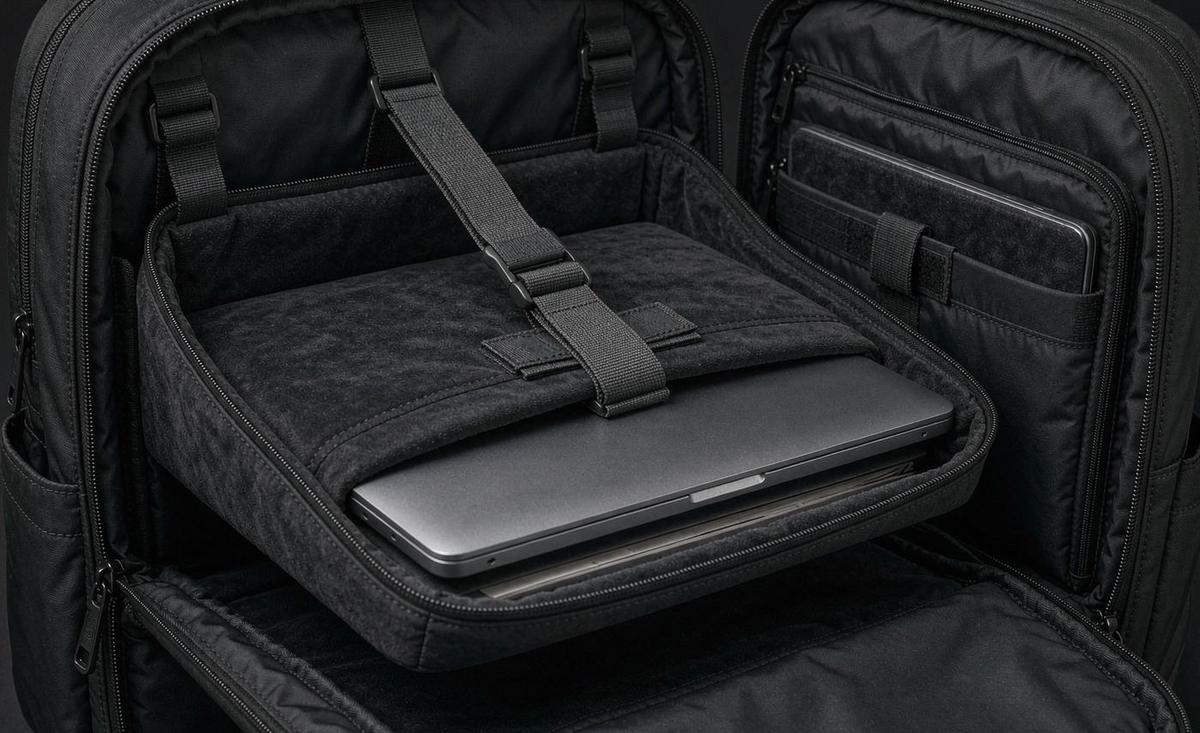
Most conversion advice for crowdfunding is written about traffic, and most of the money is actually decided by the reward column. A visitor who has read the page, watched the video and wants the product still has to choose a tier, and that choice is where campaigns lose people. The number of tiers, the price of the tier most people choose, whether shipping is included, and whether add-ons exist all change both the share of visitors who pledge and the amount each one pays. This article treats reward design as a conversion instrument and as a production commitment at the same time, because it is both, and because the two are routinely optimised separately. It belongs with the crowdfunding bag guide and with the reward tier structure guide, and every figure here is a range with a stated basis rather than a measurement.
Every conversion decision is also a production decision. A tier that adds a colourway adds an order with its own 500 pcs per style and colourway minimum.
What conversion means on a reward campaign
Conversion on a crowdfunding page is not one number, and treating it as one is the reason traffic plans go wrong. There is the visitor-to-pledge rate, which is what most people mean. There is the visitor-to-follower rate, which measures interest without commitment and is a useful leading indicator during a pre-launch page. And there is the pledge-to-completion rate through the pledge manager, which is the one that determines how many units are actually ordered and is frequently overlooked until it is too late.
The third rate deserves more attention than it gets, because it is where a funded campaign can quietly become an unfunded order. A backer who pledges on the campaign has expressed intent; a backer who completes the pledge manager has committed to a colourway, an address and often a set of add-ons. Publicly reported pledge manager behaviour suggests completion is high but never complete, and that some share of pledges drop out or change configuration. Our programme coordinator plans the order against completed configurations rather than against raw pledge counts for exactly this reason.
There is also a device dimension that reward design interacts with directly. A meaningful share of campaign traffic arrives on a phone, where the reward column is a vertical list that has to be scrolled, and where only the first tier or two are visible without effort. That argues for putting the hero tier first or marking it clearly, and it argues against a long column where the option most backers want sits below the fold. In our observation, tier order on mobile changes which tier is chosen, not merely how many people choose.
There is also a time dimension. Conversion is not constant across a campaign: it is typically highest in the first 48 hours when the existing list arrives, falls through the middle period, and rises again at the end. A single conversion figure applied across the whole run will misestimate both the opening and the middle, which is why the traffic plan should be built in phases rather than with one multiplier.
The three conversion rates that matter
Visitor-to-pledge is the headline number, and publicly reported crowdfunding figures typically put it in the low single digits as a percentage of page visitors, with wide variation by traffic source. A warm email list converts far above that figure, cold paid traffic typically below it, and platform discovery somewhere between. The practical use of this range is not to forecast but to structure the traffic plan by source, because a plan built on one blended rate will either overestimate cold traffic or underestimate the list.
Pledge-to-completion through the pledge manager is the second rate, and in our observation it is usually high, with the residual made up of dropped pledges, failed payments and address problems. The actions available to a creator are concrete: send the pledge manager promptly, keep it open long enough, communicate the deadline clearly, and follow up with non-completers individually. Each of those is worth more than any amount of page optimisation, because the visitors in question have already said yes.
The third rate is the one reward design controls most directly: revenue per visitor, which is conversion multiplied by average pledge. A page that converts at a lower rate but at a higher average pledge can outperform one that converts well at a low price, and for a physical reward the higher-pledge version is usually better, because it means fewer units to produce and ship for the same money. That is the number our campaign bag specialist watches when reviewing a tier structure.
- Track visitor-to-pledge by traffic source, not as one blended figure
- Track pledge-to-completion in the pledge manager, because that sets the order quantity
- Track revenue per visitor, which is conversion times average pledge
- Expect conversion to be highest in the first 48 hours and again at the end
- Plan the order against completed configurations, not raw pledge counts
Tier count and the paradox of choice
Public campaign data suggests most funded campaigns offer a modest number of reward tiers and that pledges concentrate heavily in one or two of them. The behavioural explanation is familiar from retail: a long list of similar options increases the cognitive cost of deciding and produces deferral rather than choice. For a bag campaign the effect is compounded, because the options differ in colourway and configuration as well as in price, and a visitor who has to decide six things at once often decides nothing.
In our observation, three to five core tiers is the range that works for carry campaigns, with a clear hero tier that most backers choose and one or two tiers above and below it to capture the edges. Below three tiers the page looks thin and offers no upgrade path; above five the decision cost rises and the production variant count rises with it. The concentration of pledges in the hero tier is what makes its price the most important number on the page.
The production argument for a short tier list is stronger than the behavioural one. Each tier that offers a distinct colourway or configuration is a production variant, and each variant has to clear 500 pcs per style and per colourway to be made at all. A campaign with eight tiers across four colourways can sell well in total and still have no single variant large enough to order. Reducing tier count is the cheapest way to protect the production plan, and it usually costs nothing in conversion.
Price anchoring and the hero tier
The hero tier is the one most backers choose, and its price effectively sets the average pledge. Two decisions determine it: where it sits relative to the retail price a comparable bag commands, and what sits above it. An upper tier at a noticeably higher price makes the hero tier look reasonable by comparison, which is the anchoring effect, and it captures the small share of backers who want the premium version regardless of price.
Setting the hero price is a margin decision before it is a marketing decision. The floor is the landed unit cost, which at a 500 pcs per style and per colourway minimum includes fabric, hardware, labour, decoration, packaging and freight, plus sampling and tooling amortised across the run, plus platform and payment fees of roughly a tenth of the raise, plus a contingency. A hero price set below that floor converts well and loses money on every unit, and the loss scales with success.
The upper end is set by what the audience will bear, and the only reliable way to find it is to test before launch rather than to guess during the campaign. Public campaign data suggests carry rewards cluster in a band above commodity retail and below premium luxury, and the campaigns at the top of that band justify the price with specification rather than with story. The pricing mechanics are worked through in Kickstarter Reward Pricing: What Backers Pay for Bags and the tier mechanics in Custom Backpack Rewards: Pricing Tiers That Boost Pledges.
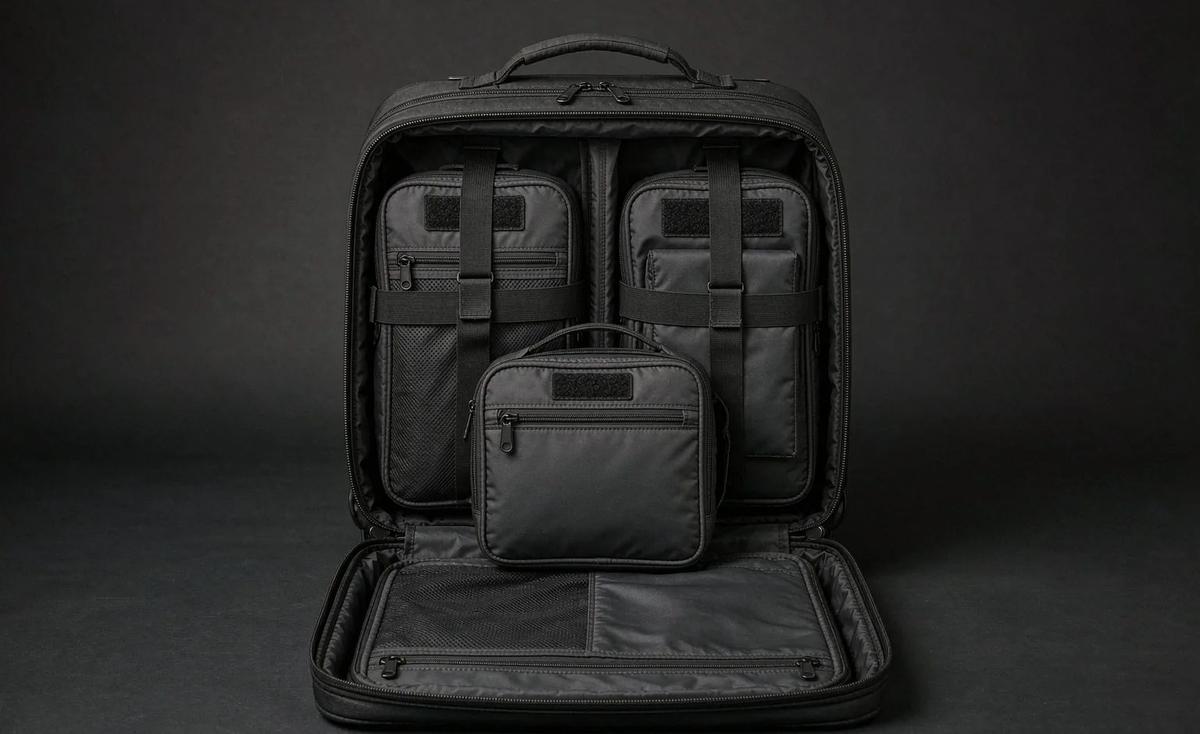
Bundles, multiples and average pledge
Bundles are the most reliable way to raise average pledge without raising traffic. Public campaign data suggests a substantial share of backers will choose a bundle over a single unit when the additional items are genuinely complementary, and the campaigns with the highest average pledges in the carry category are almost always selling a system rather than a single bag. A travel pack with a packing cube and a wash kit solves more of the backer's problem than the pack alone, and it does so at a price that still reads as good value against buying the pieces separately.
The distinction between complementary and filler is where campaigns go wrong. A second identical bag is filler; a pouch that solves a different problem is complementary. In our observation, filler bundles raise the headline price and produce lower satisfaction, which shows up later in comments and in re-order rates. Complementary bundles raise both price and satisfaction, and they create a natural second purchase later, because the backer now owns part of a system.
The production consequence of a bundle is a per-component minimum. A three-piece bundle at a 500 pcs per style and per colourway minimum is three orders, and if one component is only available inside the bundle while another is also sold separately, the volume split between them will not match. Our sourcing partner recommends designing bundles so that every component can be ordered at a quantity that clears its own minimum, which usually means limiting bundles to components that are also available as add-ons.
| Lever | Effect on conversion | Effect on average pledge | Production consequence |
|---|---|---|---|
| Fewer tiers | Neutral to positive | Slight increase through concentration | Fewer variants, easier to clear the minimum |
| Clear hero tier | Positive, reduces decision cost | Sets the average pledge | Concentrates volume in one variant |
| Upper anchor tier | Neutral | Positive, some backers upgrade | May add a variant if configuration differs |
| Complementary bundle | Neutral to positive | Strong increase | One minimum per component plus kitting |
| Filler bundle | Negative over time | Increase, with lower satisfaction | Same as bundle, with higher complaint risk |
| Add-ons in pledge manager | Positive on page simplicity | Increase through post-campaign sales | Adds a second ordering decision after funding |
| Shipping shown separately | Slight decrease in headline appeal | Lower pledge, cleaner margin | No change to production, changes zone planning |
| Shallow early bird | Positive at launch | Slight decrease | No production change if allocation is limited |
Add-ons: pledge manager versus page
Add-ons can be sold on the campaign page as additional pledge levels or collected later in the pledge manager, and the two placements behave very differently. On the page, each add-on is another tier and another decision, and it fragments the pledge distribution. In the pledge manager, add-ons are presented after the backer has already committed, when the decision is additive rather than comparative, and publicly reported pledge manager behaviour suggests a meaningful share of backers add items at that stage.
There is a conversion advantage too, and it is the reason the placement is standard rather than merely convenient. A backer comparing five pledge levels is choosing between alternatives, and every alternative is a chance to choose nothing. A backer who has already pledged and is then offered an additional item is deciding whether to add, which is a smaller and easier decision. Publicly reported pledge manager behaviour suggests a meaningful share of backers add items at that stage, and in our observation the add-on attach rate frequently exceeds what the same items would have sold as campaign tiers.
There is a second advantage to the pledge manager that matters more operationally. Add-ons collected after funding can be counted before the production order is placed, which means the order reflects real demand for each component rather than a projection. Add-ons sold on the page create the same volume uncertainty as any other tier, but with less data attached, because the campaign page records a pledge rather than a configuration.
The cost of the pledge manager approach is timing. Add-on revenue arrives later, the pledge manager period has to be long enough to collect it, and every week added to that period is a week added to the delivery date. Our programme coordinator recommends a pledge manager window of roughly two to four weeks as the practical compromise, long enough for completion and add-on selection and short enough to protect the 35 to 50 day bulk window and the freight booking.
Shipping presentation and conversion
Shipping can be bundled into the reward price, charged separately at a flat rate, or charged by zone in the pledge manager. Each has a different effect on the numbers. Bundling produces the highest headline price and the cleanest looking page, but it requires the creator to carry the variance of a global shipping cost inside a single price, which is how reward margins quietly disappear. Charging by zone produces the lowest headline price and the most accurate cost recovery.
Publicly reported backer geography consistently shows one market dominating and a secondary group of markets behind it, which means a bundled global price is effectively a transfer from the dominant market to the secondary ones. In our observation, campaigns with a high share of backers in the dominant market lose money on bundling, and campaigns with a dispersed audience lose more. The zone approach is more work and it is the right answer for anything above a trivial shipping cost.
There is a third option that works well for bags with a wide zone spread: a stated flat contribution on the page plus the true zone cost collected in the pledge manager. It keeps the page honest, because the backer sees that shipping exists, and it keeps the arithmetic accurate, because the real cost is recovered later. The risk is the same as with any two-stage charge, which is a backer feeling surprised, so the flat figure should be described as a contribution rather than as the total.
There is a conversion cost to charging separately, and it should be stated plainly rather than hidden. A backer who sees a price and then discovers a shipping charge at checkout feels differently from one who saw both from the start. The mitigation is to state shipping prominently on the page rather than only at checkout, which costs a little appeal and avoids the worse outcome of a surprise. The regional behaviour is documented in Bag Crowdfunding Fulfilment Data: On-Time Rates by Region.
Early birds, scarcity and what they cost
A finite early-bird allocation is the standard urgency mechanism on reward campaigns and it works, in the sense that it concentrates pledges at the start and produces the opening wave that publicly observable funding curves show. The mechanism is genuine scarcity: a limited number of units at a lower price, available to people who act quickly. What it costs is margin on the units sold at the discount, and the cost is not linear.
At a 500 pcs per style and per colourway minimum, unit cost is set by the minimum rather than by volume efficiencies available at higher quantities, so a discount of the same percentage costs the same per unit but represents a larger share of a thinner margin. In our observation, early-bird discounts that are safe at several thousand units can make a minimum-volume programme marginal. The mitigation is a shallow discount on a small allocation rather than a deep one on a large one.
There is a second cost that is easier to miss, which is that a deep early bird anchors the product low. Backers who arrive after the allocation is gone see a higher price and may read it as an increase rather than as a return to the intended price, and the comments will reflect that. In our observation, a shallow discount of roughly a tenth avoids both problems: it rewards early action without establishing a reference price that the campaign then has to defend.
Scarcity claims also have to be true, and this is worth stating because it is easy to get wrong accidentally. If a campaign says a colourway is limited and then unlocks it as a stretch goal, backers who paid early for exclusivity notice. If an early-bird allocation is silently expanded, the same. Our campaign bag specialist advises creators to decide the allocation rules before launch and to write them into the campaign copy, because improvised scarcity is a comments-section problem that no amount of production quality fixes later.
Reward design as a production constraint
This is the section that reward design advice usually omits. Every tier, colourway, bundle component and add-on is a line in a production order, and the order has to be placed against a 500 pcs per style and per colourway minimum with a 6 to 10 working day sampling cycle and a 35 to 50 day bulk window behind it. A tier structure designed purely for conversion can produce an order that cannot be made, and the failure appears after the money has been collected, which is the worst possible time.
The arithmetic is simple and worth doing before the page is published. Take the pessimistic backer estimate, distribute it across the tiers and colourways in the proportions the structure encourages, and check whether every variant clears the minimum. If two of five variants fall short, the options are to drop them, to consolidate them into one colourway, or to restructure the tiers so that the choice happens after funding. All three are easy before launch and difficult after it.
There is a second constraint on timing. Bundles and add-ons add a kitting operation between the end of bulk and the freight booking, and add-on collection adds weeks to the pledge manager period. Both are affordable and both must be in the calendar. Inspection under AQL 2.5 to ISO 2859-1, terms of FOB Xiamen with T/T 30/70, and the freight legs that follow the factory gate all sit behind those two steps, and none of them compress.
Key takeaways
- D
- e
- s
- i
- g
- n
- t
- h
- e
- t
- i
- e
- r
- s
- t
- r
- u
- c
- t
- u
- r
- e
- a
- n
- d
- c
- h
- e
- c
- k
- i
- t
- a
- g
- a
- i
- n
- s
- t
- t
- h
- e
- m
- i
- n
- i
- m
- u
- m
- i
- n
- t
- h
- e
- s
- a
- m
- e
- s
- i
- t
- t
- i
- n
- g
- .
- A
- c
- o
- n
- v
- e
- r
- s
- i
- o
- n
- g
- a
- i
- n
- t
- h
- a
- t
- b
- r
- e
- a
- k
- s
- t
- h
- e
- p
- r
- o
- d
- u
- c
- t
- i
- o
- n
- p
- l
- a
- n
- i
- s
- n
- o
- t
- a
- g
- a
- i
- n
- .
Testing reward design before launch
Reward design can be tested before launch, and it should be, because the page is the one element of a campaign that can be changed cheaply before funding and not at all afterwards. The simplest test is a landing page with the tier structure and prices stated, sent to the pre-launch list, with a question about which option they would choose. The result is noisy but directional, and a structure that produces a clear majority for one tier is a structure that will convert.
A waitlist or a reservation page is the stronger version of the same test, because it asks for something closer to money. Public campaign data suggests pre-launch interest of this kind is one of the better available predictors of campaign performance, and in our observation creators who run it rarely launch with a badly wrong price. The product validation work covers the mechanics, and physical reward conversion covers why a bag performs differently from digital perks.
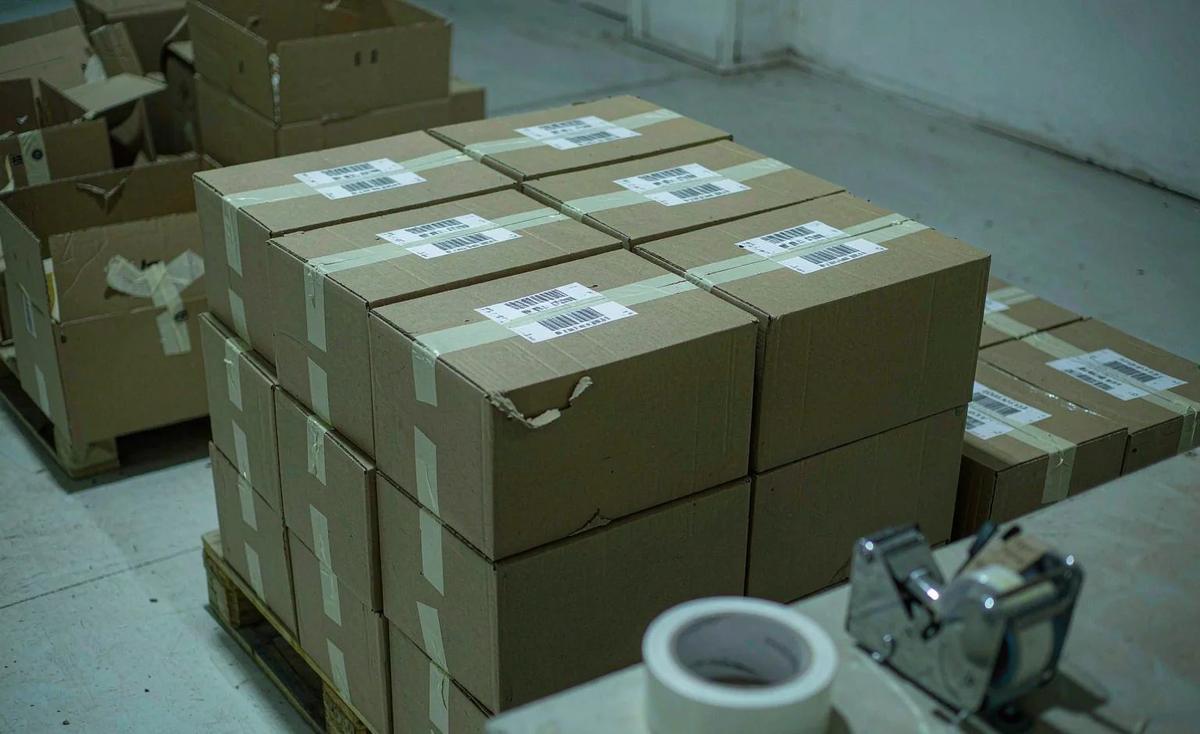
The last test is the production one, and it is the easiest to skip. Send the finished tier structure to your production partner and ask two questions: how many separate orders does this create, and does the pessimistic case clear the minimum in every variant. Those two answers take a day and they are the difference between a reward column that converts and a reward column that converts and then cannot be delivered. Our production team runs this check as part of every programme review, alongside the constants of 500 pcs per style and per colourway, 6 to 10 working days sampling, 12 to 15 working days for complex builds, and 35 to 50 days bulk.
Send us your tier structure and we will tell you how many production orders it creates and whether every variant clears the minimum.
Frequently Asked Questions
What is a typical conversion rate for a bag campaign page?
Publicly reported crowdfunding figures typically put page conversion in the low single digits as a percentage of visitors, with wide variation by source. A warm list converts far above that, cold paid traffic below it, and platform discovery between. Build the plan by source rather than with one blended rate.
How many reward tiers should a bag campaign offer?
Three to five core tiers is the range we see working, with pledges concentrating in one hero tier. Below three the page looks thin, and above five the decision cost rises along with the number of production variants that each need to clear the 500 pcs per style and colourway minimum.
Should I bundle shipping into the reward price?
Usually not for a bag, because shipping variance between zones is large and bundling transfers cost from the dominant market to secondary ones. Publicly reported backer geography shows one market dominating, so a bundled price tends to lose money on the majority of units.
Do bundles really increase average pledge?
Yes, when the components are complementary. Public campaign data suggests the highest average pledges in carry come from systems rather than single bags. Filler bundles raise the headline price but produce lower satisfaction and weaker re-orders, so the distinction matters.
Where should add-ons be sold?
In the pledge manager rather than on the campaign page. Add-ons collected after funding can be counted before the production order is placed, and they are presented when the decision is additive rather than comparative. The cost is a longer pledge manager period before bulk starts.
How long should the pledge manager stay open?
Roughly two to four weeks is the practical compromise in our observation: long enough for completion and add-on selection, short enough to protect the 35 to 50 day bulk window and the freight booking. Every extra week is a week on the delivery date.
How deep should an early-bird discount be?
Shallow, on a small allocation. At a 500-piece minimum the unit cost is set by the minimum rather than by volume efficiency, so a discount that is comfortable at several thousand units can leave a minimum-volume programme marginal.
Can a reward tier break my production plan?
Yes. Every tier that offers a distinct colourway or configuration is a variant that must clear 500 pcs per style and per colourway. A campaign with several tiers across four colourways can sell well in total while no single variant is large enough to order.
What is revenue per visitor and why does it matter?
It is conversion multiplied by average pledge. A page converting at a lower rate with a higher average pledge can outperform the reverse, and for a physical reward the higher-pledge version is usually better because it means fewer units to produce and ship for the same money.
How do I test my reward design before launch?
Put the tier structure and prices on a landing page and ask your pre-launch list which they would choose. A stronger version is a waitlist or reservation, which asks for something closer to money and is one of the better available predictors.
Does a bundle change my production order?
Yes. Each component is a separate SKU with its own minimum, and a bundle that is the only route to one component creates a volume split that may not match. Design bundles so every component can be ordered at a quantity that clears its own minimum.
What happens if a variant does not clear the minimum?
You have three options: drop it, consolidate it into another colourway, or move the choice into the pledge manager so it is counted before ordering. All three are straightforward before launch and difficult after funding, which is why the check belongs in the design stage.
People Also Ask
What is a good conversion rate for Kickstarter?
Publicly reported figures put page conversion in the low single digits overall, varying widely by traffic source. Model warm list, cold advertising and discovery separately instead of using one blended rate.
How many reward tiers is best?
Three to five core tiers, with a clear hero tier that most backers choose. Fewer tiers also means fewer production variants, which helps each colourway clear the 500-piece minimum.
Should shipping be free?
Free shipping is really bundled shipping, and for bags the zone variance is large enough to erode margin. Charging by zone in the pledge manager is more accurate and usually better for a physical reward.
Do bundles sell better than single items?
Complementary bundles raise average pledge and satisfaction. Filler bundles raise the price without raising satisfaction, so design bundles around solving additional problems rather than adding units.
Should add-ons be on the campaign page?
Usually better in the pledge manager, where choices are counted before the production order is placed and the decision is additive rather than comparative.
How big should my early-bird discount be?
Shallow and on a limited allocation. Deep discounts that work at high volume can push a minimum-volume order into negative margin because the minimum sets the unit cost.
How do I know if my reward design will work?
Test it on your pre-launch list before launch. Ask which tier they would choose, and if a waitlist or reservation is possible, that is a stronger signal still.