Bag Campaign Update Data: How Post-Funding Updates Affect Backer Trust
Post-funding updates are the cheapest trust instrument available to a bag creator and the most commonly neglected. Public campaign data suggests update cadence after funding is one of the strongest observable correlates of backer sentiment, though no platform publishes a verified figure for the bag category. In our observation across supported campaigns, the campaigns that communicate process rather than milestones absorb delays far better than the campaigns that go quiet. This article sets out a cadence, the content types that work, how to write delay news, and a template library for the first 90 days after funding.
- Why Post-Funding Updates Are a Trust Instrument
- What Public Observation Suggests About Update Cadence
- The Update Calendar We Recommend
- What to Show in Each Update Type
- Writing About Production Without Over-Promising
- How to Structure and Time Delay News
- Update Metrics Worth Tracking
- Updates and Refund Requests
- Photography and Proof Assets
- A Template Library for the First 90 Days
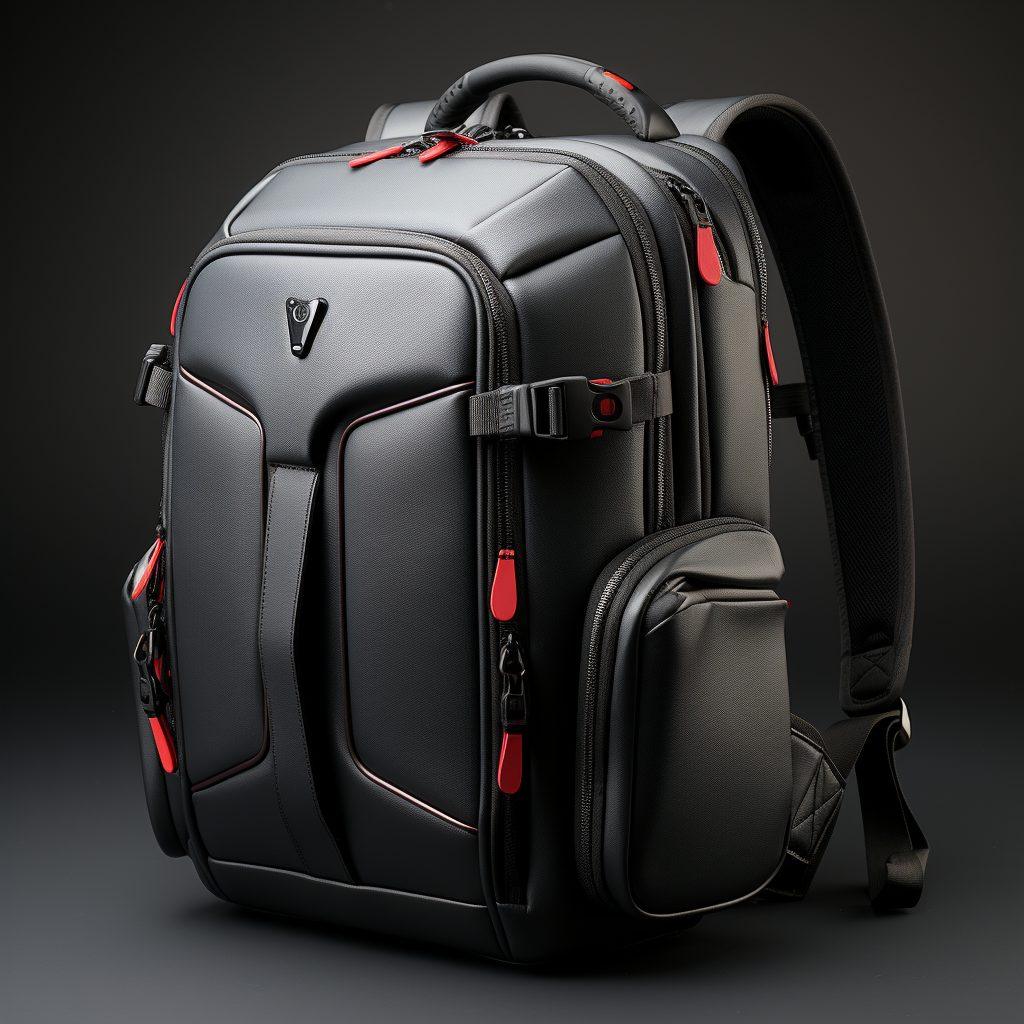
The period between a campaign closing and the first backer receiving a bag is the longest and most fragile stretch in the entire project. Nothing visibly happens for weeks, the creator has spent the money, and the backer has nothing but a page and a promise. Updates are the only thing that occupies that gap. This article treats them as an operational discipline rather than as a messaging exercise, and it sets out the cadence, content and templates our team uses with creators. The wider timeline sits inside the crowdfunding bag guide.
Why Post-Funding Updates Are a Trust Instrument
A crowdfunding backer is not a retail customer. A retail customer exchanges money for goods simultaneously and never has to trust the seller. A backer hands over money months in advance and receives, in return, a promise and whatever reassurance the creator chooses to provide. That asymmetry is the defining feature of the category, and updates are the mechanism that reduces it. Every update is a small deposit into an account that the delivery either repays or does not.
The trust mechanism works through a specific channel: demonstrated progress. An update that shows material arriving, cutting starting or a first article being measured is evidence that the programme is real and moving. An update that says things are going well is not evidence of anything, and experienced backers discount it accordingly. The difference matters more than the frequency, and it is the reason our team pushes creators toward photographs of process rather than statements of confidence.
There is a second mechanism that is less obvious but equally important: updates reduce the cost of bad news. A campaign that has communicated reliably for two months has accumulated goodwill, and a delay announced into that goodwill is absorbed. The same delay announced into six weeks of silence is not absorbed; it is read as confirmation of a suspicion that has been building. Goodwill is built before it is needed, which is the argument for updating during the quiet weeks when there is apparently nothing to say.
The third mechanism is practical rather than psychological. Updates answer questions at scale. A single update that states the packing plan answers the same question for every backer who was about to ask it, which removes comment volume, reduces support load, and frees the creator to do the work. Campaigns that update poorly do not just have worse sentiment; they have more support work, which slows the very production they are anxious about.
What Public Observation Suggests About Update Cadence
It is important to separate what is observable from what is measured. No platform publishes a verified dataset linking update frequency to outcomes for the bag category, and third-party trackers that discuss engagement typically mix categories. What public campaign data does support is a directional pattern: campaigns with regular post-funding updates appear to sustain better comment sentiment and experience fewer escalation events than campaigns that go quiet. We describe direction, not magnitude.
The methodological caution is significant here, because the obvious confound is severe. Well-run campaigns both communicate more and perform better, so any observed association between updates and outcomes is partly a reflection of underlying competence rather than a causal effect of communication. We therefore do not claim that updating more causes better outcomes. We claim something weaker and more defensible: silence is read as bad news, and that reading is cheap to prevent.
No platform publishes verified update-frequency statistics for bags; the defensible claim is that silence is read as bad news, not that a specific cadence produces a measured lift.
With that limit stated, our own observational sense of cadence is as follows. Campaigns that update roughly every one to two weeks during production appear to hold sentiment steady. Campaigns that update only at milestones appear to accumulate anxiety between milestones. Campaigns that update very frequently, more than once or twice a week, appear to drift into noise, and the signal value of each update falls. There is a middle band, and it is wider than most creators assume.
The seasonal caveat matters too. Sentiment tolerance is not constant across the wait; it typically decays as the stated delivery date approaches and passes. An update cadence that felt sufficient in month one will feel insufficient in month four if the date has slipped. Our team therefore recommends increasing frequency as the delivery date approaches rather than holding it flat, which is the opposite of what most creators do.
The Update Calendar We Recommend
The calendar below is built around the production milestones a bag programme actually passes through, which means it doubles as a production plan. If you cannot write a given update because the milestone has not happened, that is itself information: the programme is behind. Our programme coordinator uses this calendar as a progress check as much as a communications schedule.
| Timing | Trigger | Update content |
|---|---|---|
| Within 72 hours of close | Campaign closes | Thanks, pledge manager timing, what happens next |
| Week two | Pledge manager open | Variant confirmation, address lock date, production start date |
| Week four | Material booked and arriving | Photographs of material, confirmation of quantities |
| Week six | Cutting and sewing start | Floor photography, first-article explanation |
| Week eight | First article approved | Photograph against the sealed sample, inspection standard |
| Week twelve | Production complete and inspected | AQL 2.5 result summary, packing start |
| Week fourteen | Shipment dispatched | FOB Xiamen departure, freight method, estimated arrival |
| On arrival | Hubs received | Last-mile handover, tracking, what to do if damaged |
Two entries in that calendar do disproportionate work. The first-article update is the single most valuable one, because it is the moment the backer learns that the creator is checking quality rather than hoping for it. Showing a unit being measured against a sealed reference sample, and naming the inspection standard as AQL 2.5 to ISO 2859-1, converts an abstract quality claim into a visible process.
The shipment update is the second. It converts an abstraction, the bag is coming, into a concrete event with a date and a method. Naming FOB Xiamen departure and the freight method gives backers something they can reason about, and it sets expectations for the customs and last-mile stretch that follows, which is where most backer anxiety concentrates. The fulfilment data review covers how that final stretch actually performs by region.
The calendar assumes a standard programme. If your project involves complex sampling at 12 to 15 working days per round, or custom tooling, insert an update at each approval gate, because those are the moments with the highest uncertainty and therefore the highest anxiety. An update that names a gate and states honestly that it has not yet passed is far better than silence while it is being resolved. If you want the underlying round counts, the sampling data review and the lead time data analysis both set out how long each gate typically takes.
What to Show in Each Update Type
Updates fail for predictable reasons: they are too long, they are too cheerful, or they contain no information. The content types below are the ones our team has found hold attention and convey progress. Each has a distinct job, and mixing them into one long post is the most common structural mistake. Separate posts, each with one job, perform better than a single comprehensive one.
- Process posts: a photograph plus three sentences stating what stage the programme is at and what happens next.
- Proof posts: inspection results, first-article measurements, or a material certificate, shown rather than described.
- Decision posts: explaining a change, why it was made, and what it means for the delivery date.
- Education posts: how a specific component is made or tested, which builds appreciation and buys goodwill.
- Logistics posts: packing, dispatch, customs and last-mile status, with dates and methods named.
- Acknowledgement posts: naming problems that backers have already noticed, before they escalate.
The last type is the one creators avoid and the one that pays best. If a hundred backers have spotted the same issue in an earlier photograph, naming it first is not an admission of failure; it is evidence that the creator is paying attention. Backers are far more forgiving of a problem the creator found than of a problem they had to report, and the update that names it typically generates more goodwill than three positive ones.
Length matters less than structure, but structure matters a lot. Our working format is: one sentence of status, one photograph, three sentences of what happens next, and one sentence repeating the current delivery estimate. That is under 150 words and can be written in five minutes, which is the point. An update that takes forty minutes to write will not survive month three, and consistency beats polish.
Writing About Production Without Over-Promising
The most common way updates destroy trust is not silence; it is over-promising in writing. A creator who says production is on schedule in week six, because they hope it is, has created a written commitment that will be quoted back at them in week twelve. The discipline is to report what is true at the moment of writing and to attach the condition that could change it.
The practical technique is to state stage and condition separately. Production has started is a stage. Production has started and runs 35 to 50 days, so we expect completion between these two dates is a stage plus a condition. The second formulation is only slightly longer and it is honest in a way the first is not, and it means that when the date moves within the stated range, nothing has been broken.
- State the stage, not the feeling: material has arrived, cutting has started, first article is under review.
- Attach the range, not a single date: mass production runs 35 to 50 days, inspection follows.
- Name the dependency: hardware arrival, inspection result, freight booking.
- Repeat the current estimate in every post, so the latest number is always the visible one.
- Never write a confidence word such as on track unless you have checked the schedule that day.
There is a specific temptation worth naming, because it catches almost everyone. When a milestone is reached early, the instinct is to bring the delivery date forward in the update. Resist it. Production has many remaining steps, and an early milestone usually means one step went well rather than that the whole programme is ahead. Pulling the date forward and then missing it costs far more than holding the original estimate and delivering early.
The same discipline applies to quality claims. If you state that every bag is inspected, be able to say to what standard and by whom. Our reference is AQL 2.5 to ISO 2859-1, and we recommend naming it, because a named standard is checkable while a general assurance is not. The QC data article explains what a pass rate actually means in practice, which is more nuanced than most campaign pages suggest.
How to Structure and Time Delay News
Every long campaign eventually faces a delay, and the question is not whether but how it is communicated. The structure that works has four parts, in this order: what happened, why it happened, what the new date is, and what has been done to prevent recurrence. Skipping the third part is the most common error, because creators want to explain before committing, and backers read that as evasion.
Timing is as important as structure. Delay news should go out as soon as the delay is known with reasonable confidence, not when it is confirmed beyond doubt. The instinct to wait for certainty is understandable and wrong: backers who learn later that the creator knew earlier will treat the delay as a cover-up, and the cover-up does more damage than the delay. Announce on knowledge, and update if the knowledge improves.
One specific piece of framing helps. Distinguish between a delay caused by something inside the programme and one caused by something outside it. A material shortage, a failed inspection round or a re-sample are internal and the creator owns them. A port closure, a customs change or a carrier failure are external and can be named as such without sounding like an excuse. Backers accept external causes more readily, but only from creators who have also owned the internal ones.
Announce a delay when you know it, not when it is certain: backers forgive a slipped date far more readily than they forgive a late disclosure.
The final element is the compensation question, and our advice is to decide it before announcing rather than in the comments afterwards. Compensation does not have to be monetary; a small accessory, an upgrade in packaging, or simply an honest acknowledgement frequently suffices. What does not work is announcing a delay with no acknowledgement at all, because the absence reads as indifference regardless of the reason given.
Update Metrics Worth Tracking
Updates can be managed like any other channel, which means they can be measured. The metrics below are observable without any special tooling, and each maps to a decision. Our team reviews them with creators at each production gate, because a channel that is not measured tends to decay at exactly the moment it matters most.
- Comment sentiment
- Direction of comment tone, read qualitatively rather than scored
- Question repetition
- How often the same question recurs after an update
- Refund request rate
- Requests per hundred backers, tracked weekly
- Update reach
- Views or opens relative to backer count, where the platform exposes it
- Support volume
- Direct messages and emails per week, which should fall after good updates
Question repetition is the most immediately useful of these. If the same question keeps appearing after you have posted about it, the answer was either not visible or not clear, and the fix is to put it in the first line rather than the fourth. Our team treats recurring questions as a copy problem on the creator's side rather than as an attention problem on the backer's side, which is both kinder and more actionable.
Refund request rate is the outcome metric, and it moves slowly, so it should be read as a trend over weeks rather than days. A rising rate is usually a lagging indicator of something that started weeks earlier, which is another argument for consistent updating rather than reactive bursts. Our observation is that refund requests cluster after periods of silence rather than after bad news, though we do not claim a measured relationship.
One caution on measurement: do not over-read the first 48 hours. Update reach and comment volume vary with day of week and time of day, and a post that underperforms on a Sunday evening says nothing about its content. Compare like with like, and if you are going to test anything, test the day and time before you conclude anything about the message.

Updates and Refund Requests
Refund requests are the visible symptom of trust failure, and they are worth understanding structurally. Most refund requests in bag campaigns are not triggered by a specific defect, because the backer has not received the product yet. They are triggered by a loss of confidence that the product will arrive at all. That is why updates, which address confidence rather than quality, are the main lever available before delivery.
The clustering pattern is consistent in our observation. Requests tend to spike after a silent period, after a missed stated date, and after a vague update that raises more questions than it answers. They tend to fall after a specific, dated update with a photograph. None of this requires the underlying situation to have improved; it requires the backer's uncertainty to have reduced, which is a different and cheaper thing to achieve.
- Answer the uncertainty, not the question: most requests ask for money because they cannot get information.
- Set a policy early: state how refunds are handled before anyone asks, and apply it consistently.
- Respond to requests personally: a form reply to a worried backer converts a soft concern into a hard cancellation.
- Name the date again: a repeated, current estimate is the single most effective reducer of requests.
The policy point deserves emphasis because it is usually handled badly. A creator with no stated refund policy is forced to improvise under pressure, and improvised decisions are inconsistent, which generates complaints from backers who were treated differently. A short policy stated in the campaign page and repeated in the first post-funding update removes that entire category of problem for the cost of two sentences.
There is also a production consequence to refund requests that is easy to miss. Every refund changes the quantity, and changes to quantity late in the programme affect packing, carton count and freight consolidation. Our programme coordinator therefore asks for a refund cut-off date relative to the packing start, so that the final quantity is fixed while it can still be acted on.
Photography and Proof Assets
Photography is what separates an update that works from one that does not, and the bar is lower than creators assume. A phone photograph of material on a bench, of units on a line, or of a carton being sealed is sufficient. What matters is that it is specific and dated, not that it is beautiful. A polished studio shot of nothing in particular is worth less than a mediocre shot of something real.
- Material arrival: fabric rolls, webbing, hardware in bags, with a date reference.
- Cutting and sewing: the line working, even if partially, which demonstrates activity rather than inventory.
- First article: the unit being measured against the sealed reference sample.
- Inspection: units on a table with gauges or checklists visible.
- Packing: cartons being filled and sealed, with destination marking visible.
- Dispatch: the loaded container or the handover document, with identifying detail obscured.
Two practical cautions. First, obscure anything commercially sensitive: documents showing prices, supplier names or full container numbers should be cropped. Second, do not photograph anything you are not prepared to explain. A photograph of a stack of units invites the question of why they are stacked rather than packed, and a creator who cannot answer will wish they had posted something simpler.
The proof assets that go beyond photography are worth preparing in advance: the inspection report summary, the material certificate if one exists, and the written defect definitions agreed before production. Having these ready means that when trust wobbles, the response is a document rather than an argument. Our team supplies a summary of the AQL 2.5 to ISO 2859-1 result as standard, precisely so that the creator has something to show.
A Template Library for the First 90 Days
The reason updates stop is that writing them from scratch is expensive at exactly the moment the creator is busiest. Templates solve that. The library below covers the first 90 days after funding, each entry is under 150 words in use, and each can be filled in with the specific facts of your programme. Prepare them during pre-launch, when there is time, rather than during production, when there is not.
| Template | When to use | Core content |
|---|---|---|
| Close and thanks | Within 72 hours of close | Result, pledge manager timing, next milestone date |
| Pledge manager open | When it opens | Variant confirmation, address lock date, add-on reminder |
| Material arrived | On arrival | Photograph, quantity confirmation, next stage |
| Production started | On cutting start | Photograph, 35 to 50 day window, dependency note |
| First article approved | On approval | Photograph against reference sample, AQL 2.5 named |
| Inspection complete | On result | Summary of result, packing start date |
| Dispatched | On FOB Xiamen departure | Method, date, estimated arrival window |
| Delay notice | When known | Cause, new date, mitigation, acknowledgement |
The delay template is the one to write before you need it, for the same reason that fire drills exist. Writing delay copy while calm produces something measured and complete; writing it while managing the delay produces something defensive. Our team asks creators to draft their delay notice during pre-launch, leave it unfilled, and never expect to use it. Roughly half of them do end up using it, and it reads better because it was written in advance.
One final piece of advice on the library: keep a running log. A single pinned update or a simple document listing every milestone with its date creates a permanent record that backers can check, and it removes the need to repeat history in every post. Creators who maintain a log report fewer repeated questions, and the log itself becomes evidence of diligence during any difficult stretch.
Send us your production start date and delivery estimate, and our programme coordinator will map the milestone update calendar against your actual production schedule.
Frequently Asked Questions
How often should I post updates after my bag campaign funds?
Roughly every one to two weeks during production, increasing as the delivery date approaches. That cadence is our observational recommendation rather than a measured result, because no platform publishes verified update-frequency data for the bag category. The defensible claim is narrower and still important: silence is read as bad news, and preventing that reading is cheap relative to the damage it causes.
What should the first post-funding update say?
Within 72 hours of close, state the result, when the pledge manager opens, when addresses lock, and when production starts. That is under 150 words and it answers the four questions every new backer has. Repeat the delivery estimate in it, and repeat it in every subsequent update so the latest number is always the one visible to anyone reading only the most recent post.
Should I post updates when nothing has happened?
Yes, and this is the most common failure point. Report process rather than milestones: material booked, cutting scheduled, inspection planned. If you genuinely cannot write an update because a milestone has not occurred, that is information that the programme is behind, and it is better to know that than to discover it later through backer complaints. A standing cadence also stops you having to decide each week whether there is enough news to warrant writing.
How do I write about production without over-promising?
State stage and condition separately. Production has started is a stage; production has started and runs 35 to 50 days is a stage with a condition attached. Never use a confidence word such as on track unless you have checked the schedule that day, and resist pulling the delivery date forward when one early milestone goes well. Attaching the range also means that movement inside it is not a broken promise when it happens.
When should I announce a delay?
As soon as you know it with reasonable confidence, not when it is certain. Backers who later learn that you knew earlier treat the delay as a cover-up, and the cover-up damages trust more than the slip. Structure it as what happened, why, the new date, and what has been done to prevent recurrence, and give the new date early rather than last.
What is the most valuable single update to post?
The first-article update. Show the unit being measured against a sealed reference sample and name the inspection standard, which for our programme is AQL 2.5 to ISO 2859-1. It converts an abstract quality claim into a visible process, and it is the moment backers learn that quality is being checked rather than hoped for. Backers who see a measurement being taken stop asking whether quality was checked at all.
Do updates actually reduce refund requests?
In our observation, yes, because most pre-delivery refund requests are triggered by lost confidence rather than by a known defect. Requests tend to cluster after silent periods and fall after specific, dated updates with photographs. We do not claim a measured relationship, since requests also depend on price, timing and audience, but the direction is consistent enough to act on.
What kind of photography works best in updates?
Specific and dated beats polished. A phone photograph of material on a bench, of the line working, or of cartons being sealed is sufficient and often more persuasive than a studio shot of nothing in particular. Crop out anything commercially sensitive such as prices or container numbers, and avoid photographing anything you cannot explain if asked. A dated photograph also gives you a record you can refer back to if a question resurfaces months later.
Should I offer compensation when I announce a delay?
Decide before announcing rather than improvising in the comments. Compensation does not have to be monetary; an accessory, a packaging upgrade or a genuine acknowledgement often suffices. What does not work is announcing a delay with no acknowledgement at all, because the absence reads as indifference regardless of how good the explanation is. Deciding in advance also keeps the response consistent across backers, which prevents complaints about unequal treatment.
How long should a campaign update be?
Under 150 words in most cases. Our working format is one sentence of status, one photograph, three sentences on what happens next, and one sentence repeating the current delivery estimate. That takes about five minutes to write, which is the point, because an update that takes forty minutes will not survive month three and consistency matters more than polish. Readers scroll, so the status sentence has to carry the message on its own even if nothing else is read.
Is there verified data linking update frequency to campaign success?
No. No platform publishes a verified dataset for the bag category, and third-party figures mix categories. The obvious confound is that well-run campaigns both communicate more and perform better, so any observed association partly reflects underlying competence. We therefore make a weaker and more defensible claim: silence is interpreted as bad news and is cheap to prevent. Treat any specific percentage you see quoted online about update engagement as an estimate rather than as a fact.
What should I prepare before launch to make updating easier?
A template library covering the first 90 days, a milestone log, and a drafted delay notice you hope never to send. Preparing them during pre-launch costs a few hours when you have time; writing them during production costs far more and produces worse copy. Also prepare the inspection summary and defect definitions so you have documents to show, not arguments to make.
People Also Ask
How often should a funded campaign post updates?
About every one to two weeks during production, more often as the delivery date nears. There is no verified platform statistic for bags; the safe principle is that silence reads as bad news.
What makes a good campaign update?
Specific status, one photograph, what happens next, and the current delivery estimate. Under 150 words, written in five minutes, posted consistently.
How do I announce a shipping delay?
State what happened, why, the new date, and the mitigation. Announce when you know, not when it is certain, and give the date early in the post rather than last.
Do updates reduce refund requests?
In our observation yes, because most pre-delivery refund requests stem from lost confidence rather than a known defect. Specific dated updates tend to reduce them.
What should I photograph for updates?
Material arrival, the line working, the first article being measured, inspection, packing and dispatch. Specific and dated beats polished and generic.
Should I promise an earlier date if a milestone is early?
No. One early milestone rarely means the whole programme is ahead, and missing a pulled-forward date costs more trust than delivering early against the original estimate.
Is there data proving updates improve outcomes?
No verified bag-category data exists. Well-run campaigns both communicate more and perform better, so the association is partly a reflection of competence rather than a proven effect.