Bag Manufacturing Lead Time Data: Reality Versus Creator Expectations
Creators typically expect a bag to be produced in three to four weeks. Mass production actually runs 35 to 50 days, and that window is only one segment of the total: material booking, tooling, inspection, freight and customs sit around it. The gap between expectation and reality is not caused by slow factories but by segments creators never put on the calendar. This article breaks the total into its parts, shows which segments are controllable, and gives a backwards scheduling method with explicit buffer. Production parameters here are our own operating standards; the expectation figures are observational ranges.
- The Expectation Gap in Numbers
- Where the 35 to 50 Days Actually Go
- Material Lead Time: The Hidden First Segment
- Tooling and Custom Hardware Segments
- Colourway Count and MOQ Effects on the Calendar
- Seasonal Load and Capacity Planning
- Inspection Time Inside the Window
- Beyond FOB: Freight, Customs and Last Mile
- Building a Backwards Schedule
- Buffer Design: How Much Slack to Carry
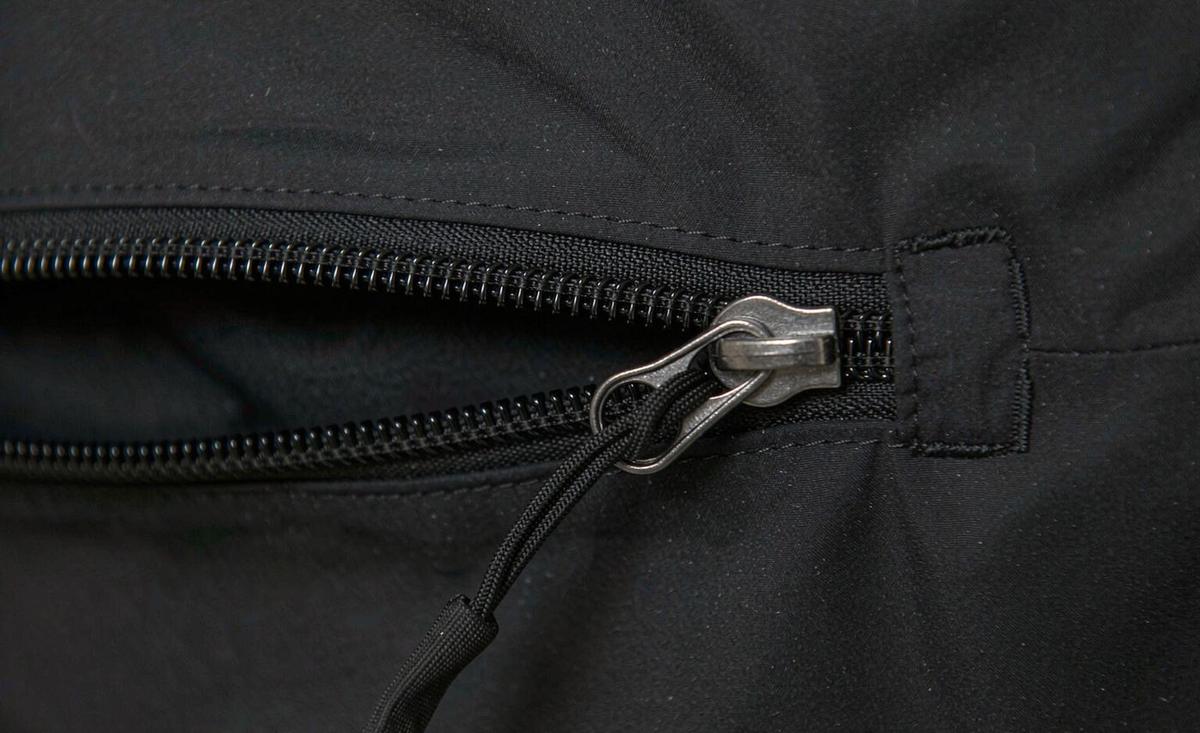
Ask a first-time creator how long it takes to make 2,000 bags and the answer is usually somewhere between three and six weeks. That answer is not unreasonable from the outside: a bag looks like a simple object, and the sewing itself is fast. What the estimate misses is that sewing is a minority of the elapsed time, and that the segments surrounding it, material booking, tooling, inspection, freight and customs, are ones the creator has probably never scheduled. This article puts every segment on the calendar. The wider campaign sequence is set out in the crowdfunding bag guide.
The Expectation Gap in Numbers
The gap has a simple shape. A creator's mental model is that production begins when the campaign ends and that the bag is finished when the last unit is sewn. The reality is that production effectively begins when material is booked, which should happen during the campaign, and it is not finished until the goods have cleared customs at their destination hub. The difference between those two models is frequently two months or more.
In our observation across supported campaigns, the expectation stated most often is around four weeks from order to dispatch. Our stated mass production window is 35 to 50 days, which is already longer, and it excludes material lead time, inspection and freight. A creator holding the four week expectation will therefore set a delivery promise that is missed before anything goes wrong, which is the most common origin of the late-delivery complaints that dominate bag campaign comment sections.
| Segment | Typical creator expectation | Observed reality |
|---|---|---|
| Material booking to arrival | Not scheduled | Commonly 1 to 3 weeks, longer for speciality fabric |
| Tooling if required | Not scheduled | Commonly 2 to 4 weeks where hardware is custom |
| Mass production | 3 to 4 weeks | 35 to 50 days |
| Inspection and correction | Not scheduled | Several days plus any rework |
| Freight to destination hub | Not scheduled or underestimated | Several weeks by sea, days by air |
| Customs and last mile | Not scheduled | Commonly 1 to 2 weeks |
The most useful single insight in that table is not any individual row but the pattern: the segments creators schedule are the ones that happen inside a workshop, and the segments they miss are the ones that happen outside it. Almost all schedule risk in bag programmes lives outside the workshop, in material availability, freight and customs, and almost all creator attention is directed inside it.
The production window of 35 to 50 days is a commitment; the expectation gap comes from the segments around it, which most creators never put on the calendar.
There is also a psychological component worth naming. Creators set delivery promises from optimism partly because a longer promise feels less attractive on the campaign page. That is a real tension and it has a real cost: a later promise made honestly performs far better with backers than an earlier promise that is missed, but the earlier promise converts slightly better on the day. Our team's position is that the conversion benefit is smaller than the reputational cost, and we advise creators to take the longer date.
Where the 35 to 50 Days Actually Go
Treating the production window as a single block makes it impossible to manage. It is a sequence of stages, each with its own characteristics and its own failure modes. The breakdown below is the standard path for a mid-complexity backpack run and it explains why the window has a range rather than a single value: the early stages are fairly fixed while the later stages scale with quantity.
- Material release and inspection: fabric, lining, webbing and hardware are checked on arrival and released to cutting.
- Cutting: panels are cut to marker, bundled and issued, with quantity driving duration.
- Printing, embroidery or branding: applied before assembly where the construction requires it.
- Assembly: the sewing line builds units through stations, the longest single stage.
- Finishing and hardware: final fittings, trimming and thread clearing.
- Internal checking: units are checked before packing, with defects routed to rework.
- Packing: units are bagged, boxed and marked to the destination split.
The range within 35 to 50 days comes mostly from quantity and from how many colourways are running. A single colourway run of 1,000 units sits near the bottom of the window; three colourways totalling 4,000 units sits near the top. That is because cutting, printing and packing all scale with unit count, and because each additional colourway adds changeover time on the line.
Two stages deserve special attention because they generate most of the internal variance. Printing and branding is the first: a screen print, a heat transfer or an embroidery operation sits between cutting and assembly, and if it is done by a partner process it introduces a dependency outside the main line. Internal checking is the second, because the time it takes depends on the defect rate found, which is not known in advance.
The practical implication is that a creator should ask which stages are on the critical path for their specific product rather than assuming the whole window is uniform. For a plain bag with no printing, assembly dominates. For a bag with a sublimated panel and an embroidered logo, the branding stages may dominate, and reducing quantity will not compress the schedule much at all.
Material Lead Time: The Hidden First Segment
Material is the most commonly missed segment and the one with the widest variance. Standard polyester or nylon in a common colour may be available within days. A specific recycled fabric, a coated canvas in a custom colour, or a branded zipper in a particular finish may take weeks, and in some cases must be made to order. If the material is not booked before the campaign closes, it becomes the first item on the critical path and the production window cannot start.
This is why our sourcing partner places a provisional material hold during the campaign rather than waiting for the final count. The hold is booked against a conservative forecast, with a top-up planned if the campaign overperforms. The alternative, waiting for certainty, converts a known lead time into an unknown delay at exactly the moment the schedule is tightest.
- Stock fabric in a common colour: typically available in days, lowest risk on the calendar.
- Stock fabric in a custom colour: commonly one to three weeks, because dyeing is a separate process.
- Speciality or certified material: commonly several weeks, and occasionally made to order.
- Standard hardware from catalogue: typically days, and the reason we recommend standard hardware.
- Custom hardware: commonly two to four weeks including tooling, which puts it on the critical path.
The custom colour row is the one that surprises creators most, because a colour choice feels like a design decision rather than a schedule decision. It is both. Choosing a fabric that must be dyed to order adds a process that cannot be compressed by paying more, because dyeing has its own queue and its own minimum. For a first campaign with a fixed launch and delivery date, selecting from available colourways is one of the most effective schedule protections available.
Material also has a quality dimension that interacts with time. A substituted material, used because the specified one was unavailable, invalidates the approved sample, because the sample was approved with the original. That forces a re-approval and potentially a re-sample at 6 to 10 working days, which is how a material shortcut becomes a schedule problem. Confirm availability before the sample round starts, not after.
Tooling and Custom Hardware Segments
Tooling is the segment that most reliably breaks first campaigns. A custom buckle, a branded zipper pull or a moulded component requires a tool to be made, and that tool has its own lead time, its own cost and its own iteration risk. If the first tool produces a part that does not fit correctly, it must be modified and re-approved, and that loop can consume several weeks with no visibility from the creator's side.
The recommendation for a first bag campaign is straightforward: use standard hardware from a catalogue and apply branding through a label, a pull or a print that does not require a tool. This is not a compromise on quality; most of the hardware on premium bags is standard catalogue hardware with branding applied. It removes an entire risk category from the schedule, and the visual difference is usually invisible to backers.
| Decision | Added lead time | Iteration risk | Recommendation |
|---|---|---|---|
| Stock fabric, common colour | Minimal | Low | Preferred for first campaigns |
| Custom dyed fabric | Weeks | Medium | Only if central to the product |
| Standard hardware | Minimal | Low | Preferred, brand with a label or print |
| Custom buckle or pull | 2 to 4 weeks | High | Avoid on a first campaign |
| Moulded component | Several weeks | High | Avoid unless it defines the product |
Where custom hardware genuinely is the product, the mitigation is sequencing rather than avoidance. Develop the tool in parallel with the main bag sample, so that a tooling iteration runs alongside sampling rather than after it. Our team splits those tracks deliberately, and we tell creators honestly when a component decision has put the schedule at risk rather than absorbing the problem silently.
One more tooling consideration is worth stating because it is invisible until it matters: tool ownership and reuse. A tool made for a first campaign belongs to somebody, and if it is not available for a second production wave months later, the whole tooling segment repeats. Establish ownership in writing before tooling begins, particularly if a continued-sales or second-wave run is planned.
Colourway Count and MOQ Effects on the Calendar
Colourway count affects the calendar in two ways that are usually conflated. The first is the MOQ of 500 pcs per style and per colourway, which is a commercial constraint: every colourway is a 500 unit commitment. The second is changeover, which is a schedule constraint: each additional colourway adds line changeovers across cutting, printing and assembly, and those changeovers consume capacity without producing units.
In practice the schedule effect is smaller than the commercial effect for a first campaign, but it is not zero. Three colourways on a run of 3,000 units typically sit near the top of the 35 to 50 day window, while one colourway at the same total sits nearer the bottom. The difference is a week or so, which matters when the delivery promise has already been set tightly.
The commercial effect is the one that actually breaks campaigns. A creator who promises four colourways and raises enough for 1,400 units cannot produce four colourways at 500 each. The options are to drop a colourway, to produce below minimum at a punitive unit cost, or to absorb a loss, and all three are worse than having launched with two. The MOQ explanation walks through the arithmetic.
The scheduling recommendation follows directly: plan two colourways, treat the third as a stretch unlock, and confirm that the pledged count already covers 500 units of it before announcing it. That keeps every produced variant above the minimum across a wide range of outcomes and keeps the production plan stable enough to schedule. The stretch goal data article covers how unlocks interact with the production plan.
Seasonal Load and Capacity Planning
Production capacity is not constant across the year, and this is the segment most creators never consider at all. Bag production, like most cut-and-sew work, has seasonal peaks driven by retail calendars, and a campaign that closes into a peak period may find slots unavailable regardless of how good the order is. This is not a pricing problem; it is a calendar problem, and the mitigation is early reservation.
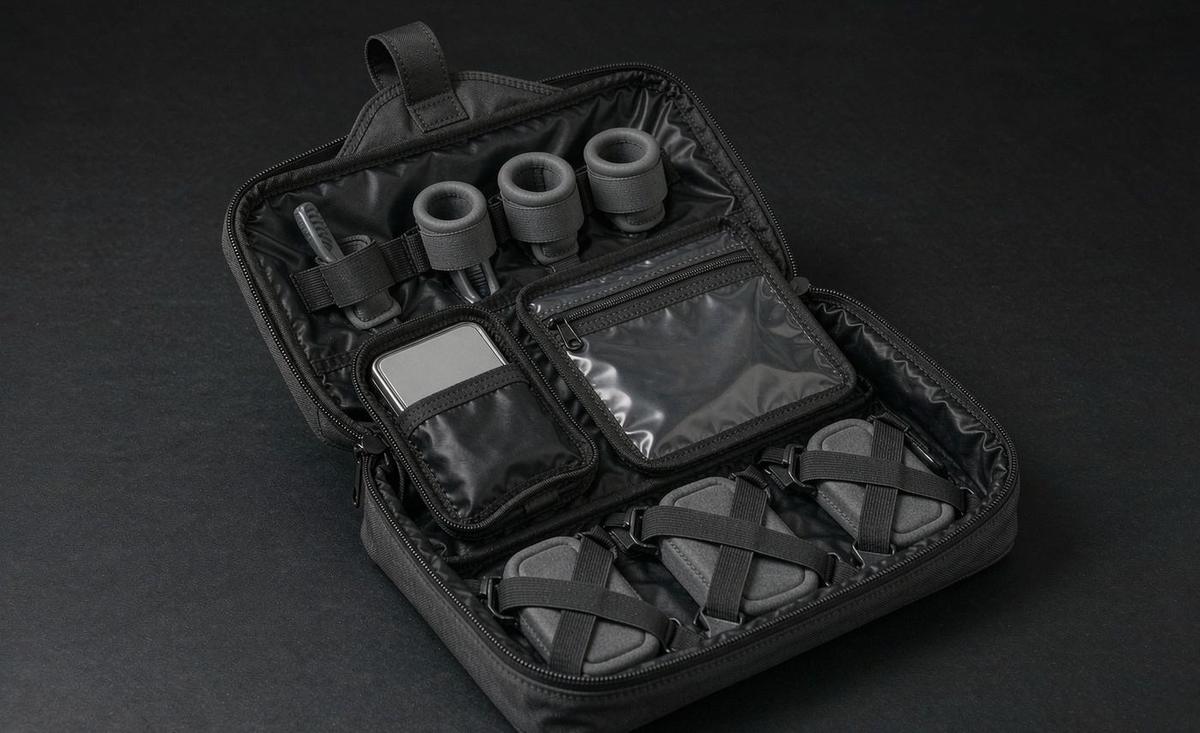
Our production programme runs 7 lines, 149 machines and 137 staff across a 4,950 m² SGS-verified facility, with stated capacity of 200,000 pcs per month. Even at that scale, a slot is a calendar item rather than an infinite resource, and a creator who books after close rather than during the campaign is queuing behind everyone who did the same. Reserving during the campaign costs nothing and protects weeks.
- Mass production window
- 35 to 50 days
- Monthly capacity
- 200,000 pcs per month
- Lines
- 7 lines
- Machines
- 149 machines
- Staff
- 137 staff
- Facility
- 4,950 m² SGS-verified
The practical rule we give creators is to treat the production slot as a booking made during the campaign against a conservative volume band, then confirm the final quantity at close. That is the same staged-commitment logic used for material, and it works for the same reason: the item that must be reserved early is reserved against a conservative number, and the item that needs precision is decided when precision exists.
There is also a holiday dimension that catches international campaigns every year. Factory closures for national holidays affect not only production but also material suppliers and freight operators, and the effect extends weeks either side of the closure as work is pulled forward and then catches up. Our programme coordinator flags these windows to creators at planning stage, because a campaign closing just before one will feel a delay that has nothing to do with its own performance.
Inspection Time Inside the Window
Inspection is frequently treated as something that happens after production, which makes it invisible in the schedule and then surprising when it takes time. It is a stage with a real duration, and it has a branch: if the result fails, there is rework and re-inspection, and that loop can add a week or more. Planning for inspection and planning for the possibility of rework are different things.
Our standard is AQL 2.5 to ISO 2859-1, which defines the sample size and the acceptance thresholds. The inspection itself is quick once units are presented; the variable is what happens next. If the result is a pass, the run moves to packing. If it is a fail, the affected quantity must be sorted, reworked or replaced, and the re-inspection follows. That branch is the reason inspection should be scheduled with slack rather than as a same-day step.
- First-article check at the start of production against the sealed approved sample, which catches interpretation errors early.
- In-process checking during assembly, which prevents defects from propagating through the whole run.
- Final inspection to AQL 2.5 to ISO 2859-1 before packing, with written critical, major and minor definitions.
- Rework and re-inspection as a planned branch rather than as an emergency, with time reserved for it.
The first-article check is the highest-value item on that list and the cheapest. It is a single unit pulled at the start of production and compared against the sealed sample using the same checklist used for approval. It takes under an hour and it catches the two failures that ruin runs: a substituted material and a construction interpretation that differs from the sample. The first article inspection article covers the sequence.
For creators who want to understand what inspection results actually mean, the QC data article explains why a pass rate figure is less informative than it appears, and the AQL article sets out how the standard is applied to crowdfunding runs specifically.
Beyond FOB: Freight, Customs and Last Mile
FOB Xiamen marks the point at which goods leave the origin port, and a surprising number of creators treat it as the point at which delivery is effectively done. It is not. From FOB, the shipment still travels, clears customs, moves to a regional hub, and then moves again to the backer. Our trade terms are FOB Xiamen with T/T 30/70 payment, and everything after the port is a separate set of durations with separate risks.
| Segment | Typical duration | Main driver |
|---|---|---|
| Origin handling and loading | Days | Carrier schedule and cut-off dates |
| Sea freight to destination | Several weeks | Route, carrier and port congestion |
| Air freight alternative | Days | Cost, used when the schedule is tight |
| Customs clearance | Days to weeks | Documentation accuracy and inspection selection |
| Hub handling and distribution | Days to weeks | Hub location and carrier capacity |
| Last-mile delivery | Days to weeks | Destination country and service level |
Sea freight is the default for bag campaigns because the volumes and weight make air freight expensive, but sea freight has the widest duration variance of any segment in the whole programme. Port congestion, carrier schedule changes and weather all move it, and none of those is controllable by the creator or by us. This is the strongest argument for buffer: it is the one segment where being right on average does not help.
Customs is the second uncontrollable segment and the one most influenced by preparation. Accurate commercial invoices, correct classification and consistent declared values prevent most holds. Our team prepares documentation as part of the packing specification rather than at dispatch, because a documentation error discovered at customs is far more expensive than one caught before the container is sealed.
For creators planning fulfilment, the fulfilment data review sets out how on-time performance actually varies by destination region, and the shipping cost article covers how the freight decision interacts with reward pricing.
Building a Backwards Schedule
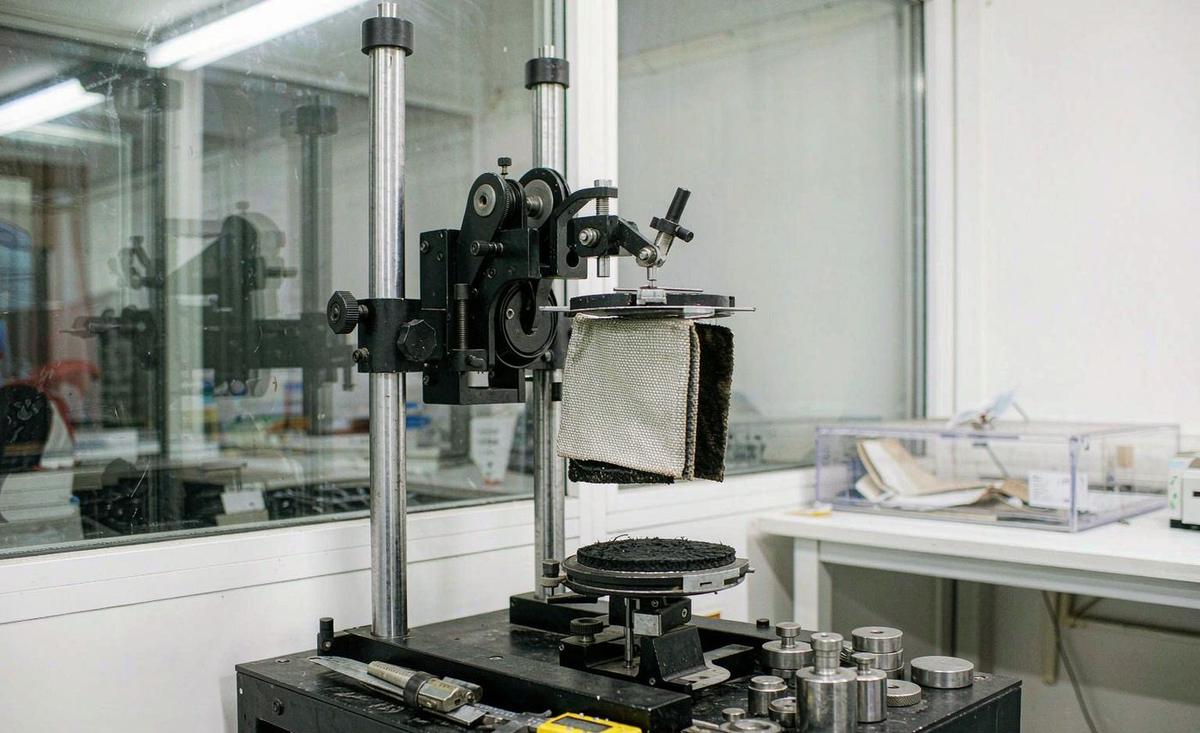
The method that prevents most of these problems is simple and consistently skipped: build the schedule backwards from the delivery date rather than forwards from the campaign close. Take the date you want to deliver, subtract each segment in reverse order, and see what start date the arithmetic requires. If that start date is before your campaign closes, the promise is not achievable and you need to move the date, not compress the segments.
- Fix the delivery month you are committing to, stated as a month rather than a day where possible.
- Subtract last mile and customs, using the widest realistic duration rather than the typical one.
- Subtract freight, sea by default, with air as a contingency rather than as the plan.
- Subtract inspection, including a reserved branch for rework and re-inspection.
- Subtract mass production of 35 to 50 days, using the top of the range if you have multiple colourways.
- Subtract material and tooling lead time, which must complete before production can start.
- Subtract sampling at 6 to 10 working days per round, or 12 to 15 for complex styles.
- The resulting date is the latest possible campaign close; if it is earlier than your plan, change the plan.
The reason to state the delivery as a month rather than a day is that it converts a hard commitment into a range that survives normal variance. A promise of March survives a two week freight slip; a promise of 8 March does not. Backers read a month as honest and a specific day as a guarantee, and the difference in conversion between them is, in our observation, much smaller than the difference in stress.
There is one subtlety in the backwards method worth flagging: some segments can overlap. Material booking overlaps with the campaign. Sampling overlaps with pre-launch. Tooling can overlap with sampling if the tracks are split deliberately. A schedule that treats every segment as strictly sequential will produce an unnecessarily pessimistic result, so identify the overlaps explicitly rather than assuming them.
Buffer Design: How Much Slack to Carry
Buffer is not padding and it is not incompetence; it is the correct response to segments with uncontrollable variance. The question is how much and where. Our approach is to allocate buffer proportionally to variance rather than spreading it evenly, because an even spread puts slack where it is not needed and leaves it absent where it is. Material, freight and customs get most of it; production gets some; sampling gets a little.
- Material and hardware: the largest buffer, because availability and dyeing queues are outside anyone's control.
- Freight and customs: the second largest, because port and inspection variance is wide and unforecastable.
- Production: a modest buffer inside the 35 to 50 day window, mostly for the rework branch.
- Sampling: a smaller buffer, mainly to absorb a failed round.
- Total across a first campaign: commonly several weeks, and more if custom hardware is involved.
The most common buffer mistake is spending it early. A creator who has built six weeks of slack and then uses three of them to bring the launch forward has converted buffer into schedule, and the remaining three weeks will not cover a freight slip. Our team treats buffer as a reserved quantity that is reported separately from the forecast, precisely so nobody spends it without deciding to.
The second mistake is hiding it. A creator who builds buffer and then quotes the optimistic date to backers has not built buffer at all; they have built a secret that will be discovered. Buffer only works if the published date already includes it, which means publishing a date that is later than the arithmetic minimum. That is uncomfortable and it is correct.
The final point is about communication rather than arithmetic. A schedule with buffer is also a schedule with options, and those options should be visible. If freight is running early, saying so is a gift to backer sentiment. If it is running late and the buffer absorbs it, saying that too, because a delay absorbed silently is indistinguishable from competence, and competence is worth reporting.
Send us your target delivery month, colourway count and component choices, and our programme coordinator will build the backwards schedule and tell you how much buffer your plan actually needs.
Frequently Asked Questions
How long does it really take to produce a bag order?
Mass production runs 35 to 50 days for our programme, and that is the sewing, finishing and packing segment only. Material lead time, tooling if required, inspection, freight, customs and last mile sit around it. A realistic first campaign from close to delivery is therefore several months, not the three or four weeks most creators initially expect when they set their delivery promise.
Why is the production window a range rather than a fixed number?
Because quantity and colourway count drive it. A single colourway run of 1,000 units sits near the bottom of the 35 to 50 day window; three colourways totalling 4,000 units sits near the top. Cutting, printing and packing all scale with unit count, and each additional colourway adds changeover time on the line without producing units. A bag with sublimated panels or embroidery may be constrained by the branding stages instead, where reducing quantity barely compresses the schedule at all.
When should material be booked for a campaign order?
During the campaign, against a conservative forecast, with a top-up planned if it overperforms. Waiting for the final count converts a known lead time into an unknown delay at the tightest point in the schedule. A custom dyed fabric can add one to three weeks, and a speciality or certified material can add several, which is why availability must be confirmed before sampling rather than after.
Does custom hardware always delay a bag campaign?
Not always, but it is the segment most reliably responsible for first campaign delays. A custom buckle or moulded component needs tooling with its own lead time, cost and iteration risk, and a tool that produces a slightly wrong part must be modified and re-approved. Standard catalogue hardware with applied branding removes the category entirely and looks nearly identical to backers.
How does colourway count affect the production schedule?
Two ways. Commercially, the minimum is 500 pcs per style and per colourway, so each colourway is a real commitment. On the calendar, each colourway adds changeovers across cutting, printing and assembly. Three colourways at 3,000 units typically sit near the top of the 35 to 50 day window, while one colourway at the same total sits nearer the bottom.
Is inspection included in the production window?
Inspection is a separate stage with its own duration and a branch. Our standard is AQL 2.5 to ISO 2859-1, and once units are presented the inspection itself is quick. The variable is the rework branch: if the result fails, the affected quantity must be sorted, reworked or replaced and then re-inspected, which is why inspection should be scheduled with reserved slack rather than as a same-day step.
What happens after FOB Xiamen?
Quite a lot. From FOB Xiamen, the shipment travels by sea, clears customs at the destination, moves to a regional hub, and then moves again to the backer. Sea freight has the widest duration variance of any segment in the programme, and customs duration depends heavily on documentation accuracy, which is why we prepare documents as part of the packing specification rather than at dispatch.
How do I build a realistic delivery date for my campaign?
Build it backwards. Fix the delivery month, then subtract last mile and customs, freight, inspection with a rework branch, mass production of 35 to 50 days, material and tooling lead time, and sampling at 6 to 10 working days per round. The resulting date is your latest possible close; if it is earlier than your plan, move the date rather than compress the segments.
How much buffer should I carry on a first bag campaign?
Commonly several weeks in total, allocated proportionally to variance rather than spread evenly. Material and hardware get the largest share, freight and customs the second largest, production a modest amount mostly for the rework branch, and sampling a smaller amount. More is needed if custom hardware or a custom dyed fabric is involved, because both sit outside anyone's direct control.
Should I publish a delivery month or a specific date?
A month, where possible. It converts a hard commitment into a range that survives normal variance: a promise of March absorbs a two week freight slip, while a promise of 8 March does not. In our observation the conversion difference between the two is much smaller than the difference in stress, and the month reads as honest rather than evasive.
Can production start before the campaign closes?
Mass production should not, because it needs a confirmed quantity and a confirmed destination split to pack correctly. But preparation can and should: sampling completes before launch, material is held during the campaign, and the production slot is reserved against a conservative volume band. That staged commitment is what allows a 35 to 50 day run to begin soon after close.
Do factory holidays affect my delivery date?
Yes, and the effect extends weeks either side of the closure as work is pulled forward and then catches up. National holidays also affect material suppliers and freight operators, not only assembly. Our programme coordinator flags these windows at planning stage, because a campaign closing just before one will experience a delay that has nothing to do with its own performance.
People Also Ask
How long does bag manufacturing take?
Mass production is 35 to 50 days. Add material lead time, tooling if needed, inspection, freight and customs, and a realistic campaign-to-delivery timeline runs several months.
What is included in FOB Xiamen?
Goods delivered to the origin port and loaded. Freight, customs, hub handling and last-mile delivery are all separate segments after that point.
When should I book material for my order?
During the campaign, against a conservative forecast. Custom dyed fabric adds one to three weeks and speciality material can add several, so confirm availability before sampling starts.
Does adding a colourway delay production?
Slightly, through line changeovers, and it also commits you to another 500 pcs minimum. Plan two colourways and treat a third as a stretch unlock.
How much buffer should a bag campaign carry?
Several weeks in total, weighted toward material, freight and customs rather than spread evenly. More if custom hardware or custom dyed fabric is involved.
Should I promise a delivery month or a day?
A month. It absorbs normal variance and reads as honest, while a specific day converts into a guarantee that a freight slip will break.
Is inspection part of the production window?
It is a separate stage with a rework branch. Inspect to AQL 2.5 to ISO 2859-1 and reserve time for the possibility of rework and re-inspection.