Abrasion, Tear and Tensile: Bag Material Durability Testing Standards
Durability testing turns a feeling about quality into a number you can write into a specification. Abrasion testing rubs a fabric until it changes and counts the cycles, tear testing measures the force needed to propagate a cut, and tensile and seam testing pull a specimen until something gives. Each method has a published standard behind it, and each result is meaningless without the method reference and a pass criterion attached. For a crowdfunding reward bag the value is not academic: it lets you compare two material options before 500 units are cut, and it gives you a written reference if a batch behaves differently in month nine. This guide explains the test families, the standards they sit under, how to read a report, and how to turn results into specification lines that hold at production volume.
- What durability testing tells you that inspection cannot
- Abrasion testing: Martindale, Wyzenbeek and cycle counts
- Tear strength: Elmendorf and tongue tear methods
- Tensile, grab test and seam strength measurement
- Coating, laminate and hydrolysis: the late failures
- Hardware cycles: zippers, buckles and webbing abrasion
- Building a test plan from the bill of materials
- Reading a test report: method, units and criteria
- Budgeting testing inside the sampling window
- Turning results into specification lines
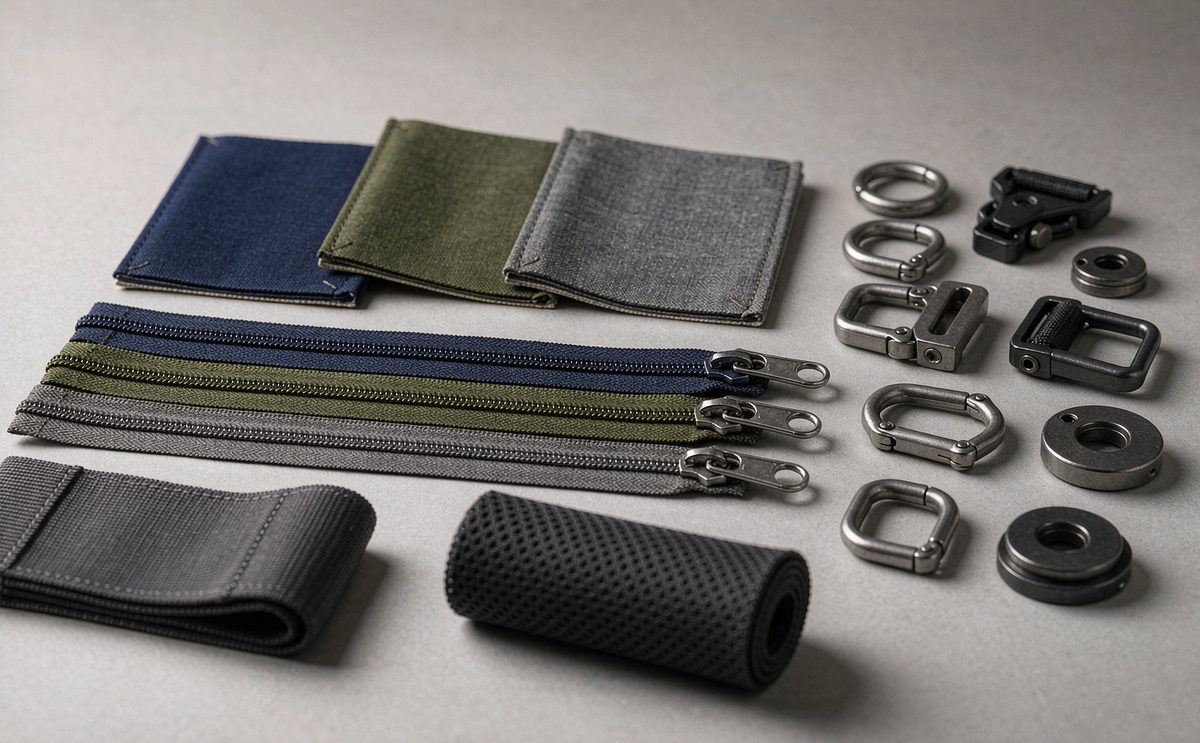
There is a persistent confusion in reward bag programmes between inspection and testing, and it costs money. Inspection opens finished units and counts defects, which answers the question of whether this particular run was made carefully. Testing stresses materials and components until something changes, which answers the question of whether the design will survive a year of use. A batch can pass inspection under AQL 2.5 to ISO 2859-1 and still fail in the field because its coating hydrolyses or its abrasion resistance was never adequate. This article is about the second question, and it sits alongside the wider custom bag programme for Kickstarter rewards rather than replacing the inspection framework. Everything described here can be arranged during the 6 to 10 working day sampling window, and the results feed directly into the specification that governs the 35 to 50 day bulk run.
Never accept a test result without the method reference beside it. The same fabric tested under two different abrasion methods produces two different numbers, and neither is wrong.
What durability testing tells you that inspection cannot
The difference is temporal. Inspection is a photograph taken at the end of production, while testing is a forecast. A fabric that meets its tensile requirement today will very likely meet it next month, but a coating that barely passes adhesion may fail within weeks in a humid climate, and no visual check at the packing table can see that coming. When backers receive rewards in month nine and complain in month twelve, inspection records will not explain why, because the units were made correctly and the specification was wrong.
The second difference is what happens when something fails. A failed inspection means sorting or remaking a specific lot, which is expensive but contained and recoverable. A failed material property usually means the specification itself is wrong, so the remedy touches every unit already made and every unit planned. That asymmetry explains why our production team pushes material testing to the pre-production stage, where changing a specification costs another round of development rather than a full replacement run at 500 units plus freight.
The third difference is that some properties cannot be checked on finished units at all. You cannot pull a strap to destruction to find out where it fails if the strap is sewn into a bag you intend to ship, and you cannot measure tear strength by looking at a panel. These are destructive tests on specimens, which means they have to be run on material before or alongside production, and they have to be requested deliberately. A workshop that is not asked will not volunteer them, and the default outcome is a bag that nobody can say anything quantitative about.
Abrasion testing: Martindale, Wyzenbeek and cycle counts
Abrasion testing rubs a mounted fabric specimen against a standard abradant under a defined pressure until a defined endpoint is reached, and reports the number of cycles survived. The two methods a bag creator will encounter most often are the Martindale method, which rubs in a complex Lissajous figure and is common in Europe and in general textile work, and the Wyzenbeek or oscillating cylinder method, which rubs back and forth along one axis and is common in upholstery and in North American specifications. The two produce different numbers for the same fabric, and the relationship between them is not a simple conversion, which is why the method has to be stated.
The endpoint matters as much as the method. A test can be stopped at yarn breakage, at a defined change in appearance, at a colour change measured against a grey scale, or at a fixed cycle count with the specimen then assessed. Each produces a valid result and each answers a different question. For a reward bag, the commercially useful endpoint is usually appearance change rather than destruction, because a backer notices a panel going shiny or fuzzy long before it holes. In our observation, panels that carry against a desk, a car seat or a gym floor are the ones where abrasion rating genuinely predicts satisfaction.
Practical guidance follows from this. Specify abrasion by method, abradant, pressure, endpoint and a minimum cycle count, and apply it to the panels that will actually be rubbed rather than to the whole bag uniformly. A backpack base and shoulder strap undersides need a higher rating than a top lid. Our sourcing partner will usually recommend testing the base panel and the strap separately from the body fabric, because mixing one fabric across all panels means over-specifying most of the bag to protect two areas.
- State the method (Martindale or Wyzenbeek) and the abradant on the specification
- Define the endpoint: appearance change, yarn breakage, or a fixed cycle count
- Test the base panel and strap separately from the body fabric
- Test the decorated panel, because print and embroidery change abrasion behaviour
- Record the rating alongside the fabric reference so re-orders can be matched
Tear strength: Elmendorf and tongue tear methods
Tear strength answers a specific question: once a fabric has been cut or punctured, how much force does it take to keep the damage running? This is the property that decides whether a small nick at a corner becomes a long rip, and it is different from tensile strength, which measures resistance to being pulled apart from a sound state. Two fabrics can have identical tensile results and completely different tear behaviour, and the one with poor tear resistance is the one that produces dramatic failure photographs in backer comments.
The two common approaches are the Elmendorf or falling pendulum method, which measures the energy absorbed as a pendulum tears through a notched specimen, and the tongue or trapezoid tear method, which pulls a cut tongue of fabric apart in a tensile machine and records the force profile. The Elmendorf result is a single energy figure in centinewtons or grams force and is quick and repeatable. The tongue tear result is a force curve, which is more informative about how the tear propagates but harder to reduce to a single pass or fail number.
Tear behaviour interacts strongly with construction, and this is where reward bags usually go wrong. A fabric with excellent tear strength will still tear from a stitch line if the seam is dense enough to perforate it, and it will tear from a corner if the corner concentrates load without reinforcement. Ripstop constructions exist precisely to interrupt tear propagation, which is why a lightweight ripstop nylon can outperform a heavier plain-weave fabric on this property. Choosing fabric on denier alone, a very common shortcut, misses this entirely. The comparison is worked through in Ripstop Nylon vs 1680D Polyester: Reward Bag Fabrics.
Tensile, grab test and seam strength measurement
Tensile testing pulls a specimen until it breaks and records the maximum force, usually in newtons, together with the elongation at break. There are two main gripping arrangements. A strip test grips the full width of a cut strip, which gives a clean material property but requires the specimen to be cut down. A grab test clamps only the central portion of a wider specimen, leaving the outer yarns to contribute, and it is generally more representative of how a loaded panel actually behaves. For bag fabrics the grab test is the more useful of the two, and it is the one our production team specifies by default.
Seam strength is measured separately and is almost always the lower number. A specimen is prepared with the production seam in the middle, pulled in a tensile machine, and the result is compared with the fabric's own strength. Seam efficiency, expressed as a percentage of the fabric strength, is the useful derived figure, because it tells you how much of the material's capability the seam actually delivers. A seam that delivers only half the fabric strength means the panel is effectively half as strong as the datasheet suggests, and no amount of fabric upgrading fixes that.
Seam slippage is the related property that causes quiet dissatisfaction. Under load, the yarns of a loosely woven fabric can slide at the seam, opening a gap that does not tear but looks broken and lets contents escape. It is more common on slippery linings and on lightweight coated fabrics than on canvas. The remedy is usually a wider allowance, a different seam construction or a denser stitch, which is why slippage results should be read together with the construction decisions described in the bag construction guide rather than treated as a pure material problem.
Coating, laminate and hydrolysis: the late failures
Coated and laminated fabrics introduce failure modes that no strength test predicts. A polyurethane coating can hydrolyse, breaking down under warmth and humidity into a sticky or flaking surface, sometimes within months and often after the goods have already shipped. This is a chemistry problem rather than a mechanics problem, and it is the reason accelerated ageing or hydrolysis testing exists as a separate category. Any reward bag with a PU-coated shell that will be shipped by sea to a humid destination deserves this test, because the failure arrives after the money has been spent and the reviews have been written.
Coating adhesion is measured separately, commonly with a peel or a cross-cut tape test, and it predicts whether a laminate will delaminate in use rather than in storage. Delamination shows up as bubbling or as a cloudy separation between layers, typically starting at flex points such as a roll-top closure or a fold line. Public test data and in-house cycling both suggest that flex resistance and coating adhesion together predict this better than either alone, which is why the two are usually specified as a pair for waterproof shells.
There is a colour dimension too. Rubbing fastness, light fastness and water fastness are measured on a grey scale or a blue wool scale, and they determine whether a dark lining bleeds onto contents, whether a bright panel fades in the sun, and whether a print transfers. These are rating scales rather than pass or fail measurements, so they need a minimum rating attached to become a specification. The rating approach is explained in Bag Print Quality: Colour Fastness and Wash Test Ratings, and the wider material framework is set out in Bag Material Testing: Fabric, Zipper and Print Adhesion.
Hardware cycles: zippers, buckles and webbing abrasion
Hardware has its own durability vocabulary, and it is counted in cycles rather than in force. A zipper is opened and closed repeatedly, typically thousands of times, and assessed for smooth operation, slider wear, tape damage and element loss. A buckle is engaged and released a defined number of times and checked for cracking or loss of retention. A strap adjuster is cycled under load and checked for slip. These are cheap tests and they catch the components that generate the most backer complaints relative to their cost.
Webbing abrasion is the overlooked one. Webbing runs against clothing, against bag edges and through adjusters, and a webbing that pills or fuzes looks old quickly even though it has lost little strength. Abrasion testing on webbing is straightforward, and the result interacts with the adjuster design: a sharp-edged adjuster will abrade a webbing far faster than a rounded one. Where a design uses a slider, our campaign bag specialist asks for the webbing and the adjuster to be assessed together rather than separately.
Cycles also apply to the whole assembly. Flex testing loads a bag and moves it repeatedly to simulate carrying, and drop testing drops a loaded bag from a defined height onto a defined surface. Both are used more for comparative purposes than for pass or fail, and both are most valuable when run on the pre-production sample rather than on a material swatch, because they capture the interaction between fabric, seam and hardware. Component-level testing is covered in Bag Hardware Sampling: Zippers, Buckles and D-Rings, and cycle-based programmes are described in Custom Bag Durability: 20,000 Flex and 5,000 Cycles.
Building a test plan from the bill of materials
A test plan should be built from the bill of materials rather than from a standard package, because a package tests what is cheap to test rather than what matters for your bag. Walk the BOM line by line and ask two questions about each entry: what is the most likely way this fails, and is there a test that predicts it. Shell fabric suggests abrasion and tear. Lining suggests rubbing fastness and seam slippage. Coating suggests adhesion and hydrolysis. Zippers suggest cycles. Straps and handles suggest tensile and seam strength. Print suggests adhesion and wash. Each answer becomes a line in the plan.
Prioritisation matters because budget and time are finite. In our observation, the five tests that most often change a decision on a crowdfunding reward bag are abrasion on the base and strap panels, seam strength at the handle anchors, coating adhesion on waterproof shells, zipper cycles, and rubbing fastness on dark linings. Those five cover the majority of real-world complaints while remaining affordable at a 500-piece programme. Everything else can be added when a specific risk justifies it, such as hydrolysis for a humid shipping destination or light fastness for a beach product.
Sampling for testing is its own logistics question. Tests need specimens, and specimens need to come from the material that will actually be used in production, not from a generic swatch of similar fabric. Ask for retained specimens from the production fabric lot and keep a set alongside the golden sample. Our programme coordinator keeps labelled retained specimens for every approved programme, because the fastest way to resolve a later dispute is to retest the same lot rather than argue about whether the material changed.
| Test family | Typical method reference | What it predicts | Priority for reward bags | Reported as |
|---|---|---|---|---|
| Abrasion | Martindale or Wyzenbeek | Panel going shiny, fuzzy or holed | High on base and strap panels | Cycles to a defined endpoint |
| Tear strength | Elmendorf or tongue tear | A nick becoming a long rip | High on lightweight shells | Force or energy |
| Tensile, grab | Grab test in a tensile machine | Panel tearing under load | Medium, usually spec-driven | Newtons |
| Seam strength | Seam grab or seam slippage | Seam opening before fabric fails | High at handle anchors | Newtons and seam efficiency |
| Coating adhesion | Peel or cross-cut tape | Delamination and flaking | High on waterproof shells | Rating or bond strength |
| Hydrolysis | Accelerated humidity ageing | Coating breakdown after shipping | High for humid destinations | Pass or fail after ageing |
| Colour fastness | Grey scale rubbing, light, water | Bleeding, fading, transfer | High on dark linings and prints | Rating 1 to 5 |
| Hardware cycles | Zipper and buckle cycling | Slider wear, cracking, slip | High on all closures | Cycles to failure or defined state |
Key takeaways
- B
- u
- i
- l
- d
- t
- h
- e
- t
- e
- s
- t
- p
- l
- a
- n
- f
- r
- o
- m
- t
- h
- e
- b
- i
- l
- l
- o
- f
- m
- a
- t
- e
- r
- i
- a
- l
- s
- a
- n
- d
- p
- r
- i
- o
- r
- i
- t
- i
- s
- e
- b
- y
- c
- o
- m
- p
- l
- a
- i
- n
- t
- r
- i
- s
- k
- ,
- n
- o
- t
- b
- y
- w
- h
- a
- t
- a
- s
- t
- a
- n
- d
- a
- r
- d
- p
- a
- c
- k
- a
- g
- e
- h
- a
- p
- p
- e
- n
- s
- t
- o
- i
- n
- c
- l
- u
- d
- e
- .
Reading a test report: method, units and criteria
A usable test report contains five things: the method reference, the specimen description, the conditioning state, the result with units, and the pass criterion it was judged against. Missing any one of these and the document cannot be used to resolve a dispute. The method reference is the most commonly omitted and the most important, because the same fabric tested under two methods produces different numbers and both are correct. Conditioning matters because textile results shift with moisture content, which is why specimens are conditioned to a standard atmosphere before testing.
Units deserve attention because confusion here is common and expensive. Tear results may be reported in newtons, in grams force or in centinewtons depending on the method and the laboratory. Abrasion results are cycles, which sounds unambiguous until you discover that one laboratory stops at yarn breakage and another stops at a defined appearance change. Colour fastness is a rating scale, where a higher number is better, and it is easy to misread as a measurement. Ask the laboratory to state units and endpoint explicitly on every line.
A pass criterion is what converts a result into a specification. Fifteen thousand cycles means nothing until someone decides whether 15,000 is acceptable, and that decision belongs to the creator and the programme rather than to the laboratory. Our sourcing partner recommends setting criteria by reference to the product promise: a bag marketed for daily commuting needs a higher abrasion rating than one marketed for occasional travel, and a bag sold as waterproof needs coating adhesion with a defined minimum. Write the criterion down at pre-production, before any result exists to negotiate around.
Budgeting testing inside the sampling window
Testing has both a cost and a schedule, and both should be planned rather than discovered. Straightforward material tests are modest per line and can usually be turned around within the standard 6 to 10 working day sampling window, while complex builds, ageing tests and full assembly cycling typically need 12 to 15 working days or longer because the test itself takes calendar time. Hydrolysis and light fastness are the two that most often surprise creators, since accelerated ageing cannot be compressed.
The sequencing question is whether to test before or with sampling. Testing material options before the first sample is cheaper, because a swatch costs far less than a made-up bag, and it lets the sample be built from the material that already passed. Testing the pre-production sample afterwards is more realistic, because it captures seams, decoration and assembly. The usual compromise is to screen materials on swatches first and then confirm the two or three most important properties on the pre-production sample, which fits both budgets and calendars.
There is also a decision about who pays and what happens on failure. Most programmes treat testing as part of development and fold it into the sampling cost, which is reasonable when the tests are chosen deliberately and kept to the priority list. Where a test is added late or repeated after a specification change, the cost is usually charged to the change. Discussing this at the start avoids the awkward conversation later, and it encourages both sides to agree the pass criteria before the first specimen goes to the laboratory.
Turning results into specification lines
A test result becomes useful when it is written into the specification as a requirement with a method, a minimum and a frequency. An example of a usable line is: base panel fabric, abrasion resistance minimum X cycles under the named method, tested on the production lot, one test per colourway per production run. An unusable line is: durable fabric. The first can be verified, quoted and enforced, and the second cannot. Every line you write should be one that a third party could check without asking you what you meant.
Frequency is the part most often forgotten. Testing the development fabric once proves nothing about the third production run, and material substitution between runs is a real risk in any supply chain. Specify a frequency that matches the risk: every lot for high-risk properties such as coating adhesion, and periodic or change-triggered testing for stable properties such as tensile on a long-running fabric. Our production team records the frequency on the same sheet as the specification so it survives staff changes on both sides.
The commercial frame around testing is the same as around everything else in a reward programme. Minimum order is 500 pcs per style and per colourway, sampling runs 6 to 10 working days and 12 to 15 working days for complex builds, bulk runs 35 to 50 days, inspection is held to AQL 2.5 to ISO 2859-1, and terms are FOB Xiamen with T/T 30/70. Testing adds a small amount of calendar and cost inside that frame and removes a large amount of risk from it. For creators who want a structured starting point, Custom Bag Quality Assurance: Build a QA Plan sets the testing and inspection pieces next to each other.
Share your bill of materials and we will propose a prioritised test plan with methods, minimums and the calendar cost of each line.
Frequently Asked Questions
What is the difference between abrasion testing and tear testing?
Abrasion testing rubs a fabric and counts cycles until a defined change, which predicts surface wear such as a panel going shiny or fuzzy. Tear testing measures the force needed to propagate an existing cut, which predicts whether a nick becomes a long rip. Both matter, and they often rank fabrics differently.
Which abrasion method should I specify, Martindale or Wyzenbeek?
Either is valid as long as it is named and the endpoint is defined. Martindale is common in Europe and general textile work and rubs in a Lissajous figure, while Wyzenbeek rubs along one axis and is common in North American upholstery specifications. The numbers are not directly convertible between methods.
Is a higher denier fabric always more durable?
No. Denier describes yarn thickness, not construction or finish. A lightweight ripstop can outperform a heavier plain weave on tear propagation, and coating, weave density and seam behaviour all influence real durability. This is why choosing fabric on denier alone is a common and expensive shortcut.
How long do material tests take?
Straightforward tests on fabric usually fit inside the 6 to 10 working day sampling window. Accelerated ageing such as hydrolysis or light fastness cannot be compressed and typically needs 12 to 15 working days or longer. Plan those first, because they are the most likely to delay a sample approval.
Should I test materials before or after the sample is made?
Both, in sequence. Screen candidate materials on swatches before the first sample so you do not build from a material that cannot pass, then confirm the two or three most important properties on the pre-production sample where seams, decoration and assembly are included.
What is seam efficiency and why does it matter?
Seam efficiency is the strength of a seamed specimen expressed as a percentage of the strength of the fabric itself. It tells you how much of the material capability the seam actually delivers. A seam delivering half the fabric strength means the panel is effectively half as strong as the datasheet suggests.
Do I need hydrolysis testing for my reward bag?
If the bag has a polyurethane coating and will be shipped by sea or stored in a warm humid climate, yes. Hydrolysis breaks coatings down into a sticky or flaking surface, often after the goods have shipped. It is a chemistry failure that no strength test predicts and no visual inspection at packing will catch.
How often should production lots be retested?
Match frequency to risk. High-risk properties such as coating adhesion and print adhesion are worth testing every lot, while stable properties such as tensile on a long-running fabric can be tested periodically or when the material source changes. Write the frequency into the specification so it survives staff changes.
What should a test report contain to be usable?
Five things: the method reference, the specimen description, the conditioning state, the result with units, and the pass criterion it was judged against. Omitting the method is the most common problem, because the same fabric tested under two methods gives two different numbers and both are correct.
Can testing replace inspection under AQL 2.5?
No, they answer different questions. Inspection counts defects on finished units and tells you whether a run was made carefully. Testing stresses materials and predicts field performance. A batch can pass inspection and still fail in use because the specification was wrong, so both are needed.
Does decoration change test results?
It can. Print films and embroidery change the abrasion behaviour of a panel, and dense stitching can create a tear line. Always test the decorated panel rather than the plain substrate for abrasion and adhesion, because the decorated surface is what the backer actually uses.
Who pays for testing on a 500-piece programme?
Most programmes treat agreed testing as part of development and fold it into sampling cost. Tests added late or repeated after a specification change are usually charged to the change. Agreeing this at the start, along with the pass criteria, avoids disputes later and keeps the plan to a deliberate list.
People Also Ask
What is abrasion resistance in bags?
It is the number of rub cycles a fabric survives before reaching a defined change such as yarn breakage or visible surface wear. It predicts how quickly a panel goes shiny, fuzzy or holed in daily use.
What does tear strength mean?
It measures how much force is needed to keep a cut or puncture running through a fabric. High tear strength stops a small nick from becoming a long rip, and it is a different property from tensile strength.
Is 600D polyester strong enough for a backpack?
It is commonly used and generally adequate for daily carry, but durability depends on weave, coating and seam construction as much as on denier. Test the assembled panel and its seams rather than relying on the denier number alone.
Why do PU-coated bags go sticky?
Polyurethane coatings can hydrolyse under warmth and humidity, breaking down into a sticky or flaking surface. It is a chemistry failure that accelerated ageing testing can predict before the goods ship.
How many zipper cycles should a bag survive?
Programmes commonly test in the low thousands of open and close cycles, with the criterion set to match how often the bag will be opened daily. The useful step is to name a cycle count and an acceptable end state.
What is a grab test?
A tensile test that clamps only the central portion of a fabric specimen, leaving the outer yarns to contribute. It reflects how a loaded panel behaves more closely than a strip test that grips the full width.
Do I need laboratory tests for a 500-piece order?
You need at least a short priority list, because 500 units is enough volume for a material mistake to reach hundreds of backers. Screen materials on swatches first, then confirm key properties on the pre-production sample.