Bag Prototype Design Review: How to Test Fit, Feel and Function
A prototype arrives and the creator knows within seconds whether they like it. That instinct is real and it is not enough, because it cannot be translated into a correction. A structured review separates the three things a bag has to do: it has to fit the body it is carried on, it has to feel right at the points where it touches, and it has to function under the load the campaign promises. This article gives a protocol for each: who wears it, with what, for how long, what gets measured, what gets scored, and how the findings become a revision brief a production team can act on without a second round of guesswork.
- What a prototype review is for
- Preparing the review: the kit you need
- Fit testing: the bag against the body
- Fit testing: the bag against the load
- Feel: fabric hand, straps and contact points
- Function: closures, adjusters and access
- Function: organisation and reachability
- Durability signals you can read on a prototype
- Scoring the review: a simple protocol
- Common findings and what they mean
- Turning findings into a revision brief

What a prototype review is for
A prototype review converts an opinion into a specification change. The instinct that forms in the first ten seconds is valuable as a signal, because a bag that feels wrong usually is wrong, but it is useless as an instruction. The review exists to find out which of the three jobs the bag is failing: fit, feel or function. Each has a different correction, and mixing them is why some prototypes go through four rounds without getting better.
The three jobs are genuinely distinct. Fit is dimensional and geometric: does the bag sit correctly on the body it was designed for, and does it hold the load it was designed to hold. Feel is tactile: how the strap sits on a shoulder, how the handle sits in a hand, how the back panel behaves against a shirt. Function is mechanical: does every closure work, does every pocket do its job, is everything reachable when the bag is full. A bag can pass two and fail one, and the failing one determines what happens next.
Why the distinction matters commercially is that the corrections cost different amounts. A fit issue usually needs a pattern change and costs a sampling window of 6-10 working days. A feel issue often needs a component or padding change and costs less. A function issue might need only a setting change and cost almost nothing. Reviewing without separating the three means everything gets treated as expensive, or worse, nothing does.
The review also has a documentary purpose. It produces the evidence for the feedback round that follows, and a review run properly generates notes that are already in the right shape: located, measured, classified and photographed. A creator who reviews well writes the feedback in an hour instead of a week, and the prototyping programme moves in one round instead of three.
Preparing the review: the kit you need
Most bad reviews are badly prepared rather than badly executed. The sample arrives, the creator looks at it empty, forms an impression and sends a note. Everything that makes a review useful requires a small amount of preparation, and the preparation can be done in the days before the parcel arrives rather than after it.
- The specification sheet, printed, with the tolerance column visible.
- A tape measure and a small ruler, plus a spring scale or a set of known weights.
- The actual load: the laptop, camera, bottle, jacket or shoes the campaign names.
- Two or three testers of different heights and builds, not just the creator.
- A mirror or a phone camera on a tripod, for wear positions that cannot be self-observed.
- A printed feedback sheet with numbered lines, and a pen.
- A scale for weighing the empty bag, and one for weighing it loaded.
The testers matter more than anything else on that list. A creator who reviews on their own body reviews for one body, and a bag sold to backers will be carried by many. Two testers at different heights will find strap-length and torso-fit issues that one tester cannot, and the cost of a second tester is a coffee.
The load matters for the same reason. Reviewing a bag empty tells you almost nothing about fit, because a bag changes shape when it is full. The panel that sits flat when empty bulges when loaded, the strap that feels comfortable empty digs in when the bag weighs eight kilograms, and the pocket that is easy to reach empty becomes tight when the main compartment is full. If the campaign promises the bag carries a 16-inch laptop, a charger, a bottle and a jacket, that is what goes in it.
The printed specification is the last essential item and the one most often missing. Reviewing against a memory of what was asked for produces agreement; reviewing against a printed sheet produces findings. Reading the specification aloud while another person holds the bag is the single most productive twenty minutes in the whole review.
Fit testing: the bag against the body
Fit testing answers whether the bag sits where it was designed to sit on the person carrying it. It is geometric rather than aesthetic, and most of it can be measured or photographed rather than felt. The tests below cover the four bag families that dominate crowdfunding, and each has a small number of decisive observations.
| Family | Decisive observation | Common failure | Correction class |
|---|---|---|---|
| Backpack | Top of the panel relative to the shoulders, strap root position | Sits low, pulls away from the back | Strap geometry, pattern |
| Sling or crossbody | Where the body of the bag lands on the torso | Rides too high or swings forward | Strap length and angle |
| Duffel | Handle clearance and how it hangs when carried | Handle too short, bag drags | Handle drop, pattern |
| Tote | Shoulder drop and how it sits against the hip | Strap slides, opening gapes | Strap length, closure |
| Waist pack | Position on the hip and stability when loaded | Rotates around the waist | Strap width, stabiliser |
For a backpack, three observations carry most of the information. Where the top of the back panel sits relative to the shoulder line: too high and it restricts movement, too low and it pulls away from the body. Where the strap roots sit relative to the top of the panel: too narrow and the bag tips, too wide and the straps slide off. And whether the load sits close to the back or hangs away from it, which is a function of panel stiffness and strap geometry rather than of strap padding.
Symmetry is the fourth observation and the one photographs expose. Left and right strap lengths, panel alignment across the centre seam, pocket height on both sides: a 5 mm asymmetry is invisible on a bench and obvious on a body. Measuring both sides and recording both figures takes a minute and prevents the most screenshot-able defect a bag can have.
Wear time is the variable most reviews skip. A bag that feels fine for thirty seconds discomforts after twenty minutes, because pressure points take time to declare themselves. A structured review should include at least one continuous wear period of fifteen to twenty minutes with the full intended load, and ideally a walk rather than standing still, because gait changes how a bag behaves.
Fit testing: the bag against the load
The second fit test is not against a body but against the things the bag has to contain. This is where campaigns get into trouble after funding, because a capacity claim that is arithmetically true can still fail in use. A bag can hold the stated volume and still not hold the stated objects, because objects have shapes and volume does not.
- Load the bag with the actual items the campaign names, not with approximations.
- Close every closure and check whether it closes without strain.
- Check whether the load sits where the design intends, or slumps.
- Check whether internal pockets remain reachable with the main compartment full.
- Weigh the loaded bag and record the figure against any weight claim on the page.
- Photograph the loaded bag from the front and in profile, with the items visible.
The slump test deserves emphasis. A bag that holds its shape empty and slumps loaded has a stiffness problem rather than a capacity problem, and the correction is a stiffener, an interfacing weight or a panel shape rather than more litres. Creators often ask for a bigger bag when what they need is a better-structured one.
Reachability is the finding that generates the most post-delivery complaints. A pocket that is easy to reach when the bag is half full becomes unreachable when it is full, because the main compartment expands into it. Testing pockets with the bag fully loaded, in the order a user would actually reach for things, is the version of the test that predicts the backer experience.
Weight deserves a note because it is a claim that is rarely checked. An empty bag weight quoted on a campaign page should be verified on a scale, and a loaded weight should be calculated for the realistic case. A backpack whose empty weight is 200 g heavier than the page says will produce comments, because backers who chose a bag for lightness check.
Feel: fabric hand, straps and contact points
Feel is the hardest of the three to specify and the easiest to get wrong, because it has no units. The way to make it tractable is to break it into contact points: every place the bag touches a person. Each contact point has a small number of properties that can be described comparatively against the approved reference rather than absolutely.
- Shoulder contact: strap width, padding thickness, edge finish, and whether the edge rolls under load.
- Back contact: panel stiffness, surface texture, breathability, and whether it holds shape against the body.
- Hand contact: handle core, wrap material, diameter, and how it sits in a closed hand.
- Hip or waist contact: strap width, stiffness, and whether it rolls or digs at the edges.
- Grab contact: any lift handle or loop, and whether it is comfortable with the bag loaded.
Strap feel is the most consequential and the most often misdiagnosed. A strap that digs in is usually too narrow rather than insufficiently padded, because padding that is too thick on a narrow strap creates a hard edge. A strap that slides is usually a webbing surface problem rather than a hardware problem. Naming the property that causes the feeling is what makes the correction cheap.
Fabric hand is the other feel category, and it is a legitimate specification item when attached to a reference. A shell that feels stiffer than the approved swatch may have a heavier coating, a different backing or a different calender finish, all of which are checkable against the material reference. Describing hand comparatively, against the swatch, converts a taste question into a conformance question.
Edge finish is a feel issue that photographs do not capture and hands find immediately. A webbing edge that is heat-cut rather than turned will feel sharp against a neck or an arm. A binding that is too stiff will abrade. These are small components with disproportionate effect on perceived quality, and they are cheap to change at prototype stage. The material guidance covers how the reference for each is established.
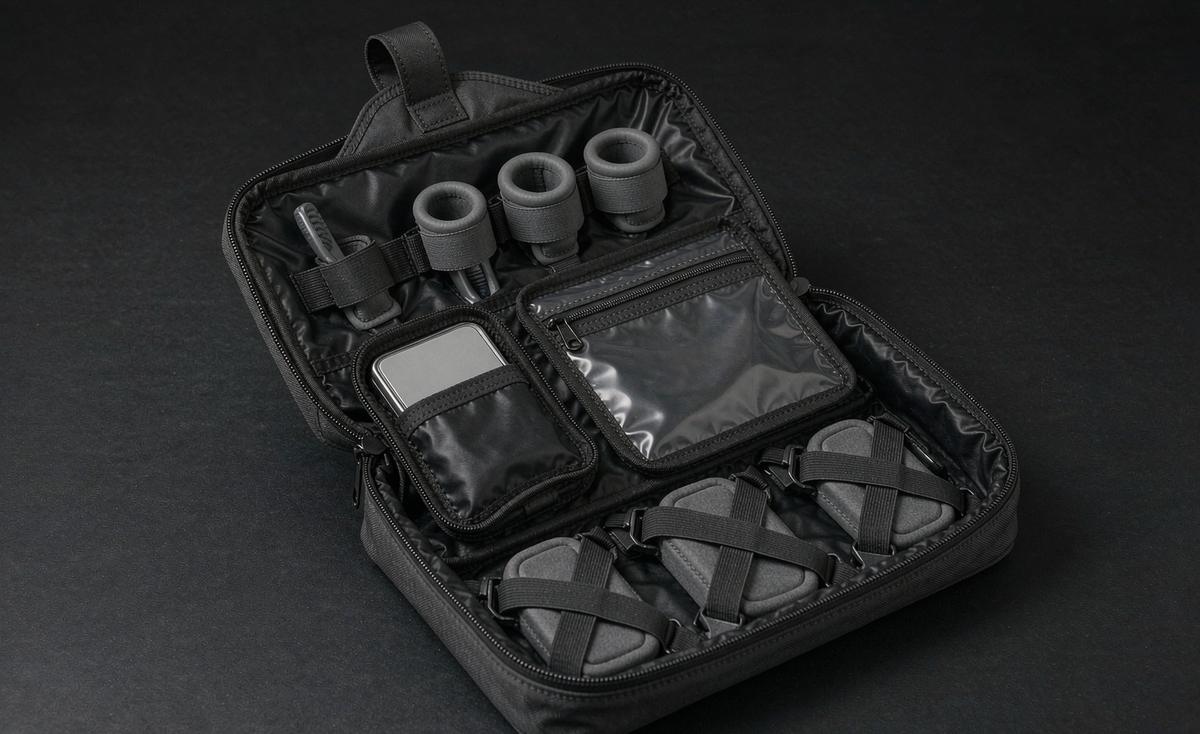
Function: closures, adjusters and access
Function testing treats the bag as a machine. Every moving part is cycled, every adjustment is tested under load, and every access path is used with the bag full. Cycle counts below are typical workshop practice for soft goods rather than a fixed standard, and the right number depends on the component and the price point.
| Component | Test | Failure signal | Likely cause |
|---|---|---|---|
| Main zipper | Cycle on a loaded bag | Catches or snags | Tape tension or insertion |
| Zipper puller | Pull and release cycles | Deforms or detaches | Gauge or puller quality |
| Strap adjuster | Slide under load | Slips back | Webbing surface or hardware |
| Buckle | Engage and release cycles | Stiff or unclear lock | Hardware selection |
| Magnetic closure | Cycle and check retention | Weak after cycles | Magnet grade or placement |
| Lift handle | Load to campaign weight | Root distortion | Reinforcement or pattern |
The instruction to test zippers on a loaded bag rather than an empty one is the single most useful line in this section. A zipper on an empty bag runs along a relaxed tape; the same zipper on a full bag runs under tension, and snagging, waviness and catch points appear only in the tensioned case. Testing the relaxed case predicts nothing about the backer experience.
Adjusters deserve the same logic. A strap adjuster that holds when the bag is empty and slips when it is loaded is a common finding, and it is usually a webbing surface issue rather than a hardware one: some webbing weaves simply grip less than others. Testing under load is the only way to find it, and the correction is often a webbing specification change rather than a new buckle.
Access is the third function category and the one that decides whether a bag is pleasant to live with. Open the bag the way a user would, in the position a user would hold it, and take out the things a user would need. A main compartment that requires the bag to be set down, a pocket that needs two hands, a closure that cannot be worked one-handed: each is a genuine finding, and each is usually cheap to correct at prototype stage.
Function: organisation and reachability
Organisation is where a bag design either earns its price or loses it, and it is the category most often over-designed. More pockets is not better organisation. Better organisation is fewer pockets, each with a clear purpose, each reachable in the position the user will actually be in. Reviewing organisation means testing purpose and reach for every pocket rather than counting them.
Start by listing every compartment and asking what it is for. If the answer is general storage, the pocket is competing with the main compartment and probably should not exist. If the answer is a specific item, test that item: a 16-inch laptop in the laptop sleeve, a passport in the passport pocket, a bottle in the bottle pocket, a phone in the phone pocket. A named pocket that does not hold its named item is a defect, not a preference.
- Every pocket has one named purpose, tested with the named item.
- Every pocket is reachable in the position the user will be in when they need it.
- Frequently needed items are reachable without setting the bag down.
- Valuable items sit in a pocket that closes, and against the back where applicable.
- Wet or dirty items have a separated space that can be wiped.
- Keys and small items have a dedicated space rather than the bottom of the main compartment.
The most common organisational finding on a prototype is the unreachable pocket: a pocket specified on the drawing, correctly sewn, and unusable because the main compartment expands into it when loaded. It is a pattern-level problem rather than a sewing problem, and it is found only by loading the bag and reaching in, which is why the loaded test sits at the centre of the protocol.
The second most common is the redundant pocket. Campaign pages often promise a pocket count as a feature, and a higher count reads as better value. In use, a bag with fourteen pockets loses things, because every item has too many plausible homes. Our campaign bag specialist will usually raise this when a brief specifies an unusually high count, because the cheaper and better answer is often fewer pockets with clearer purposes.
Durability signals you can read on a prototype
A prototype cannot be tested to destruction, but it can be read for the signals that predict how it will age. Six observation points give most of the information, and none of them require equipment beyond a hand and a lamp. All of them are cheaper to address at prototype stage than to discover in a warranty claim.
- Attachment points: strap roots, handle roots and webbing ends. Look for bar tacks, and pull firmly.
- Seam behaviour: flex a seam and watch whether it grins, puckers or holds flat.
- Edge finish: run a thumb along bound, turned and raw edges for roughness or fraying.
- Lining fit: check for slack at corners, pulled fabric and trapped material.
- Hardware attachment: twist and pull each rivet, D-ring and slider to see whether it rotates or deforms.
- Interior finishing: look for loose threads, chalk marks, adhesive residue and untrimmed allowances.
The pull test at attachment points is the most informative single action in the review. Grasp a strap root and pull firmly along the load direction. Nothing should move, nothing should distort the panel, and no stitch should show. A strap root that visibly lifts under hand pressure will fail under a loaded bag, and the correction is reinforcement rather than a stronger strap.
Seam grinning is the second. Flexing a seam and seeing the stitch line open to show thread is a signal that the stitch density or the seam allowance is wrong for the fabric weight. It is invisible in a photograph, obvious in use, and it produces the exact failure a backer photographs and posts: a seam that has opened after two weeks.
Hardware attachment is the third and the least examined. A rivet that rotates, a D-ring that deforms under a thumb, a slider that has visible moulding flash: each is a small finding that predicts a real failure. These are the checks the first article inspection formalises later, and finding them at prototype stage is cheaper than finding them at the bulk gate.
Scoring the review: a simple protocol
Scoring turns a review into a decision. Without it, the loudest finding wins, which usually means the most visible cosmetic issue gets fixed and the strap root that will fail in month three does not. A simple score across the three categories, with a mandatory flag for safety and claim failures, is enough to order a revision brief correctly.
| Category | Score 1-5 | Weight | Flag if |
|---|---|---|---|
| Fit on the body | 1-5 | High | Breaks a stated fit claim |
| Fit against the load | 1-5 | High | Named item does not fit |
| Feel at contact points | 1-5 | Medium | Abrades or digs under load |
| Closure function | 1-5 | High | Fails a cycle test |
| Organisation and reach | 1-5 | Medium | A named pocket unusable |
| Durability signals | 1-5 | High | Attachment fails a pull test |
| Match to campaign page | 1-5 | High | Any claim unverifiable |
The flag column is what makes the sheet useful. Any flagged item is mandatory regardless of its score, because it concerns safety, a stated claim or the page promise. Everything else is ordered by weighted score, and the revision brief addresses the mandatory items first and the highest-weighted remainder second.
Scoring by two testers independently and then comparing is a useful refinement, because disagreement is informative. If one tester scores fit at 2 and another at 4, the bag fits one body and not another, which is a finding in itself and often the most valuable result of the whole review. Testers of different heights and builds are a diagnostic tool, not a formality.
The match-to-campaign-page row is the one creators add last and should add first. Every claim on the page should be verifiable on the prototype: the litre figure, the laptop size, the pocket count, the weight, the colour name, the closure type. Any that cannot be verified is a page edit, and the page edit is far cheaper before launch than after delivery.
Common findings and what they mean
A review protocol is most useful when it comes with a translation table, because a finding is only valuable if it points at a cause. The patterns below recur across bag prototypes, and each has a short list of likely causes that a production team can work through in one pass.
| Finding | Most likely cause | Second possibility | Correction class |
|---|---|---|---|
| Bag pulls away from the back | Strap roots too narrow | Panel too flexible | Pattern or stiffener |
| Strap digs into the shoulder | Strap too narrow | Padding too thick for the width | Component |
| Strap slides off | Root angle too wide | Webbing too slippery | Pattern or webbing |
| Zipper snags when loaded | Tape under tension | Insertion waviness | Construction |
| Adjuster slips under load | Webbing surface | Hardware grip insufficient | Webbing or hardware |
| Pocket unreachable when full | Compartment expansion | Pocket too shallow | Pattern |
| Panel slumps when loaded | Insufficient stiffener | Interfacing too light | Component |
| Handle root distorts | Insufficient reinforcement | Root width too narrow | Pattern or reinforcement |
Notice how often the likely cause is a pattern or component decision rather than a workmanship problem. That is good news, because pattern and component changes are predictable in cost and calendar, whereas workmanship problems are harder to control. It is also why the review should be written up as findings against causes rather than as a general expression of dissatisfaction.
The correction class column is the one that drives the conversation with the production team. A component change is usually cheap and quick. A pattern change costs a sampling window of 6-10 working days, or 12-15 for a complex build, and it delays the start of the 35-50 day bulk run. Asking which class each finding falls into before requesting it is the cheapest planning question available.
One finding deserves a caution: a bag that fails on feel alone is often a bag that is nearly right. Feel is the most subjective category and the one where a creator's personal preference can diverge from the market's. If the fit and function scores are high and only feel is low, consider whether the change is worth a sampling window before requesting it, and whether the pre-production sample can carry the adjustment instead of a further prototype.
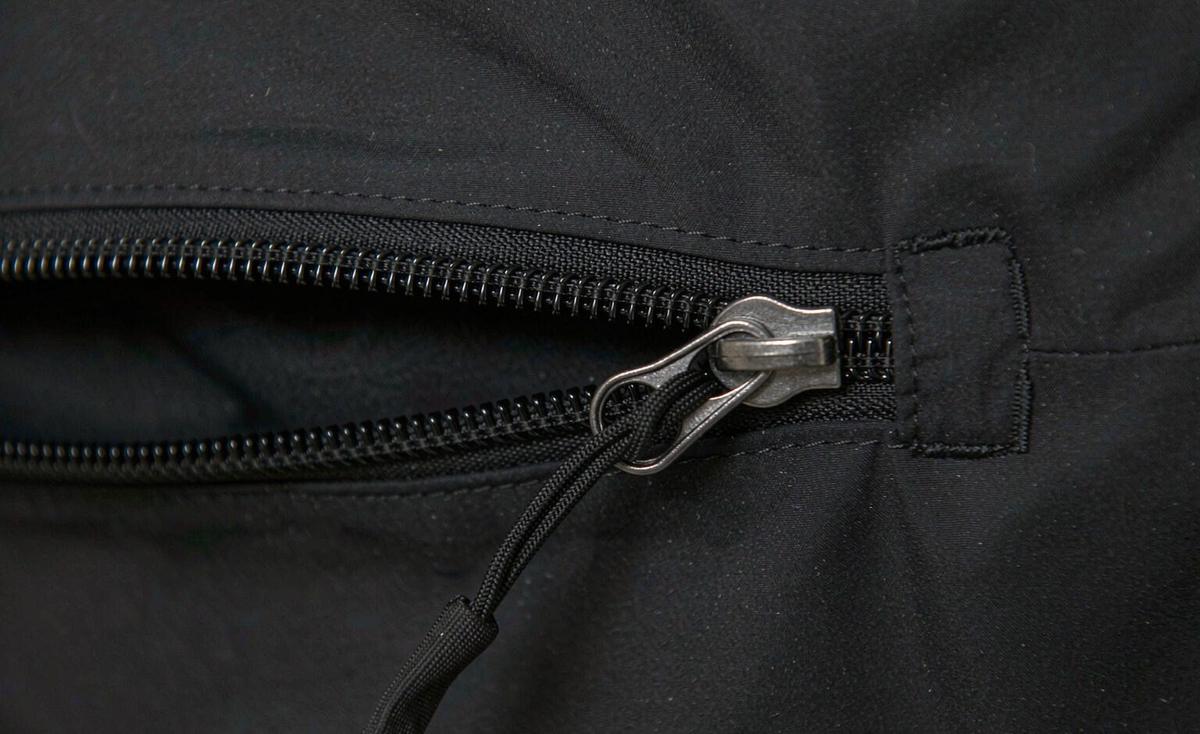
Turning findings into a revision brief
The review ends when the findings become a brief. The format that works is the same one that works for any feedback: one numbered line per finding, with location, observation, expected value, severity and a frame reference. A review run with the score sheet already produces most of this, and converting it takes an hour rather than a week.
- Number every finding in the order of the score sheet, mandatory items first.
- Give each a location by measurement from a stated datum, not by description.
- State the observation as a fact and the expected value from the specification.
- Classify severity: must fix, should fix, nice to have, question, or confirm.
- Attach a frame reference for each, ideally two frames: wide to locate, close with scale.
- Leave a blank column for the team to state cost and calendar per item.
The confirm items matter as much as the corrections. Most of a prototype is right, and listing what is approved tells the team to leave it alone. Without that list, a revision that fixes one thing often changes three things that were already correct, and the next round is spent undoing damage rather than making progress.
Then send the brief as one consolidated round rather than as a stream of observations. Each streamed batch restarts work that has already begun, and each restart costs days. One numbered brief gets one numbered response, and the response should state for each item what will change, whether price is affected and whether the calendar moves.
After the revision, the programme moves toward the pre-production gate and the 35-50 day bulk window, with the approved unit retained as the reference and the finished lot inspected at AQL 2.5 to ISO 2859-1. A review done properly means that gate is reached in one round instead of three, which is usually the difference between a campaign that ships on the promised date and one that does not.
Want a structured review before your first revision round? Send the prototype findings, the score sheet and the campaign claims through the contact quotation form and we will classify each item by cause, cost and calendar.
Frequently Asked Questions
What is a bag prototype design review?
A structured evaluation of a first sewn sample across three jobs: fit against the body and against the load, feel at every contact point, and function of closures, adjusters and access. It converts an instinct into located, measured, classified findings that a production team can correct in one round.
How long should I wear a prototype before judging it?
At least fifteen to twenty minutes continuously with the full intended load, and ideally while walking rather than standing. Pressure points take time to declare themselves, and a bag that feels fine for thirty seconds often discomforts after twenty minutes. Gait also changes how a bag behaves.
Why review the bag loaded rather than empty?
A bag changes shape when it is full. Panels bulge, straps dig in, pockets become unreachable and zippers run under tension. A zipper that runs smoothly on a relaxed tape can snag on a tensioned one, and a pocket that is easy to reach half full becomes unusable when the main compartment expands into it.
How many people should test a bag prototype?
At least two, of different heights and builds. A creator reviewing on their own body reviews for one body, while the bag will be carried by many. Disagreement between testers is informative: if one scores fit at 2 and another at 4, the bag fits one body and not another.
What does fit mean for a backpack?
Three observations carry most of it: where the top of the back panel sits relative to the shoulder line, where the strap roots sit relative to the top of the panel, and whether the load sits close to the back or hangs away from it. A fourth is symmetry, because a 5 mm difference between left and right is invisible on a bench and obvious on a body.
How do I specify feel when it has no units?
Break it into contact points and describe each comparatively against the approved reference. Shoulder contact covers strap width, padding thickness and edge roll. Hand contact covers handle core and diameter. Back contact covers stiffness, texture and breathability. Describing hand against a swatch turns a taste question into a conformance question.
What is the most useful single function test?
Cycling the main zipper on a loaded rather than empty bag. It predicts the backer experience because the tape is under tension, which is when snagging, waviness and catch points appear. The same logic applies to adjusters: test whether they slip under load, not when the bag is empty.
Why do more pockets make a bag worse?
Because every item then has too many plausible homes and things get lost. Better organisation is fewer pockets with clearer purposes, each reachable in the position the user will be in. A named pocket that does not hold its named item is a defect, and a pocket unreachable when the bag is full is a pattern problem.
What durability signals can I read on a prototype?
Pull firmly at strap roots, handle roots and webbing ends and check for bar tacks and movement. Flex seams and watch for grinning or pucker. Run a thumb along edges for roughness. Check lining fit at corners. Twist each rivet and D-ring. Look inside for loose threads and untrimmed allowances.
How should I score a prototype review?
Score one to five across fit on the body, fit against the load, feel at contact points, closure function, organisation and reach, durability signals, and match to the campaign page. Add a mandatory flag for anything affecting safety, a stated claim or a page promise, and order the revision brief by flag first, weighted score second.
What causes a strap that digs into the shoulder?
Usually a strap that is too narrow rather than insufficiently padded, because thick padding on a narrow strap creates a hard edge. A strap that slides off is usually a root angle or a webbing surface issue rather than a hardware one. Naming the property that causes the feeling is what makes the correction cheap.
How does a review affect my production schedule?
Directly, through the correction class of each finding. A component change is usually cheap and quick. A pattern change costs a sampling window of 6-10 working days, or 12-15 for a complex build, and delays the 35-50 day bulk run. Ask which class each finding falls into before requesting it.
People Also Ask
What are the three tests for a bag prototype?
Fit against the body and the load, feel at every contact point, and function of closures, adjusters and access.
Should I test a bag empty or loaded?
Loaded, with the actual items the campaign names. A bag changes shape when full, and most failures appear only under load.
How long should a wear test last?
Fifteen to twenty minutes continuously with the full load, and ideally walking, because gait changes how a bag behaves.
What is seam grinning?
A seam that opens to show thread when flexed. It signals stitch density or seam allowance is wrong for the fabric weight.
Why does my zipper snag only when the bag is full?
Because the tape is under tension. Test closures on a loaded bag, which is the condition that predicts the backer experience.
How do I test strap attachment strength?
Grasp the root and pull firmly along the load direction. Nothing should move, distort the panel or show stitch.
Is more pockets better for a campaign bag?
No. Fewer pockets with clearer purposes beats a high count, and a page promising a high count often reads better than it functions.