25 Checks to Clear Before Your Bag Order Leaves Production
A bag QC checklist is a written list of checks that must be evidenced before balance payment is released and cartons leave the production floor. The answer to what creators should check is this: five clusters of five checks each, covering documents, fabrics, seams, hardware and packing, run against a signed reference sample rather than a photograph. Every check below is countable, so nothing depends on interpretation. The list assumes a minimum of 500 pcs per style and colourway and an inspection standard built to AQL 2.5 to ISO 2859-1, and it is designed to be completed in a single working session with a tape measure and the approved sample in hand.
- Why a written checklist beats a verbal assurance
- Checks 1 to 5: documents and the approved reference
- Checks 6 to 10: fabric, lining and colour compliance
- Checks 11 to 15: seams, webbing and load paths
- Checks 16 to 20: zippers, hardware and closures
- Checks 21 to 25: branding, dimensions and packing
- Turning the checklist into a payment gate
- How many units to open under AQL 2.5
- Who runs which check
- The failures that repeat and what they cost
- Running the checklist without flying out
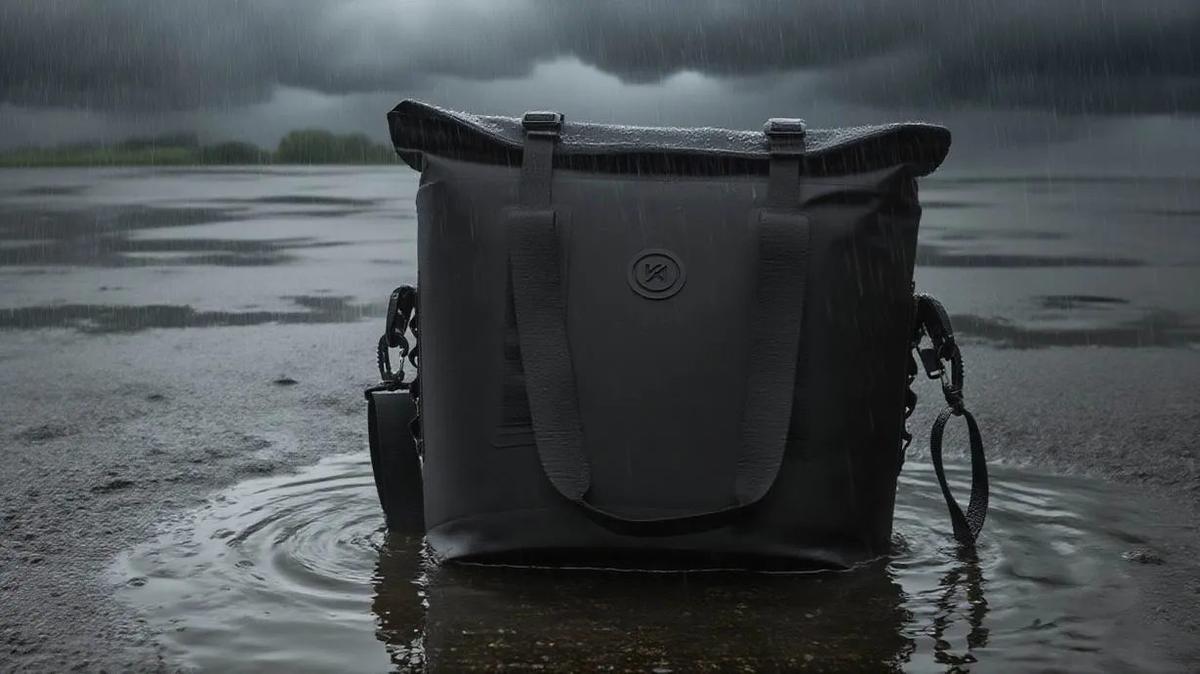
Every bag order leaves the building the same way: cartons are sealed, a booking is confirmed, and the balance payment is released. What decides whether those cartons contain the bag you actually approved is not an assurance given on a video call, but the set of written checks you ran while the goods were still within reach. These 25 checks are ordered so that the expensive failures surface early, grouped into five clusters that one person can work through in a single session with a tape measure, the approved sample and this page open. They assume a minimum order of 500 pcs per style and colourway and an inspection standard built to AQL 2.5 to ISO 2859-1. Use them together with the wider framework in Bag QC and Compliance for Kickstarter Campaigns, which places inspection inside the full campaign calendar.
Why a written checklist beats a verbal assurance
Verbal assurances fail in a predictable way. Nobody sets out to mislead; everybody remembers differently. The account contact remembers agreeing that the logo would be centred, you remember agreeing that it would be level, and neither version was written down. By the time cartons are opened in a warehouse in Rotterdam or Long Beach, the gap between those two recollections has already been paid for, shipped and handed to a backer who will photograph it. A written checklist removes interpretation because every expectation becomes countable: a number, a tolerance, or a comparison against a physical unit that two people initialled and dated.
The second reason is leverage. Before you release the balance under standard T/T 30/70 terms, every defect found belongs to the people who made it. After release, it belongs to you, and you will be negotiating from another hemisphere with goods already booked onto a vessel. This is why the sequence below front-loads documents and materials: those failures affect every unit in the run, so they must be found while the goods are still yours to withhold payment on and still close enough to a sewing line to be corrected.
The third reason is repeatability. Campaigns re-order. A second run of 1,000 units usually has to match the first run exactly, because backers compare them publicly and because existing stock has to sit alongside new stock in the same shop. A completed checklist from run one is the cheapest specification available for run two, since it records what was actually accepted rather than what was intended. Our team keeps the signed checklist in the same archive folder as the counter-signed sample for exactly this purpose, and those files have settled specification arguments long after the original message threads became unreachable.
A checklist only has force when somebody signs and dates it. Unsigned, it is a memo that nobody is obliged to read twice.
Checks 1 to 5: documents and the approved reference
The opening five checks establish that everybody is building from the same file. None of them requires you to touch a finished bag, and together they take about 30 minutes. Skipped, they account for the largest single category of expensive error: producing 1,000 units faithfully to a specification that stopped being true two months earlier.
- Check 1, purchase order against bill of materials: compare line by line, including fabric denier and coating, lining type, webbing width, zipper gauge and type, foam density, label copy and carton specification. Every mismatch is a defect waiting to be built.
- Check 2, the signed reference unit: locate the sealed pre-production sample you approved, still intact and identifiable. All later visual and dimensional judgements are made against this physical unit, never against a photograph. The pre-production sample approval process explains how that unit is frozen.
- Check 3, revision numbers: confirm the current tech pack revision is the same revision that was used to cut the reference sample. One silent change to webbing width or pocket depth invalidates every approval given before it.
- Check 4, colour references: place the approved lab dip or reference chip against production fabric under consistent lighting, and record the grey scale reading rather than an impression.
- Check 5, compliance paperwork: confirm test reports and declarations exist, are dated within the production window, and describe the actual materials used rather than a generic version of the same bag.
Documents drift because campaigns drift. A colourway is added to protect a stretch goal, a logo is simplified to survive a small-scale print test, a fabric is substituted after a quotation shock, and each change reaches some pages but not others. Running these five comparisons at sample stage and once more when bulk begins costs nothing. Discovering the drift during final inspection costs an entire production window of 35 to 50 days plus the freight it displaced.
One habit that pays for itself: ask for all four documents to be reissued as one consolidated pack at the moment the sample is approved, instead of leaving them scattered across six months of correspondence. Where we are administering the programme, the campaign bag specialist consolidates those files and returns a single dated bundle that everyone then quotes from, which removes the possibility that two people are working from two different versions of the same order.
Checks 6 to 10: fabric, lining and colour compliance
Fabric is where cost pressure shows up first. Substitution is rarely announced as a substitution; it arrives as a supplier shortage with a suggestion that the alternative is equivalent. Equivalent measured by what? These five checks answer that question with numbers that a buyer can insist on before the cutting table starts work.
- Check 6, fabric specification: weigh a known area or count threads to confirm the denier and coating match the BOM. A 600D body swapped for 420D looks identical in a photograph and fails within three months of real use.
- Check 7, coating and finish: check water repellency and coating adhesion by tape test and light abrasion. Coatings that powder or flake at the fold line are a visible failure that backers notice within days.
- Check 8, shade consistency: compare body panels to each other and to the reference under the same light, front and back panels first. Variation between panels on one bag reads as a manufacturing fault even when it sits inside tolerance.
- Check 9, lining and interior: confirm lining colour, denier and any water-resistant finish, plus the absence of stray dye transfer onto light-coloured interiors, which is a common complaint on printed linings.
- Check 10, hand feel and odour: record how the material feels compared with the sample and note any strong solvent smell, which usually indicates incomplete curing and often improves only partially over time.
Campaign creators underestimate how much of a reward bag's perceived value sits in touch rather than appearance. Backers open the box, pick the bag up, and decide within seconds whether it feels like the thing they pledged for. A fabric that is technically within tolerance but noticeably thinner than the sample triggers exactly this verdict, and no amount of documentation afterwards repairs it. This is also why fabric selection guidance for reward bags should be read before the material is locked, not after it has been sewn.
Practical detail worth insisting on: keep one labelled swatch card for every material in the approved sample, signed at the same time. Six months later, when a re-order arrives and somebody claims the fabric has changed, that card settles the argument in minutes. Our production team keeps swatch cards alongside the reference unit for every campaign file, and they are included in the photographic pack sent before shipment.
Checks 11 to 15: seams, webbing and load paths
Structural failures are the ones that generate public complaints, because they happen in use and they happen repeatedly. A strap that pulls away from a loaded bag is not a cosmetic issue; it is a product that has failed its only job. These five checks deal with how panels are joined and how load travels through the structure.
- Check 11, stitch density: count stitches per inch at several points on each seam type. Low density saves machine time and is invisible until a seam opens under load.
- Check 12, seam construction: confirm whether seams are bound, taped, overlocked or raw, exactly as specified. An unbound internal seam is the most common silent downgrade in sewn products.
- Check 13, stress reinforcement: inspect bar tacks and box stitches at every handle, strap root, webbing end and pocket corner, and count reinforcement passes against the drawing.
- Check 14, webbing and tape: check width, thickness and weave against specification, plus cut ends for fraying and heat-sealing where specified.
- Check 15, load test: fill five random units to roughly twice the realistic carry weight and hold for a defined period, then re-inspect straps, handles and their attachment points.
Dimensional tolerance interacts with all of this. A strap specified at 25 mm and delivered at 22 mm changes how the bag carries and how the hardware fits, and it is the kind of difference that survives a photograph and fails in the hand. Where dimensions matter to function, write the tolerance into the tech pack rather than relying on a general statement, since size tolerance practice in fabric bags varies by material and by construction method.
There is a cost asymmetry worth understanding here. Reinforcement added at the specification stage typically adds a small amount to unit cost. The same reinforcement added after a strap has torn on 400 delivered units means a recall, replacement production and expedited freight, which usually costs several multiples of what the stitches would have cost. This is why we push creators to spend their negotiating energy on construction details rather than on trimming unit price by a few cents.
Checks 16 to 20: zippers, hardware and closures
Hardware is the second most substituted category after fabric, and it is also the most expensive to correct after assembly, because replacement requires unpicking finished construction. These checks are therefore disproportionately valuable relative to the time they take.
- Check 16, zipper specification: confirm gauge and type, whether coil or tooth, and the brand or grade agreed. A #5 coil and a #8 tooth are different products wearing similar clothes.
- Check 17, function across the run: run every sampled zipper through at least five full cycles, checking for catching, splitting behind the slider and stiff spots at tape joins.
- Check 18, sliders and pullers: check finish, plating consistency, logo debossing quality and puller attachment strength, including any branded puller which is frequently the first thing to fail.
- Check 19, metal hardware and compliance: confirm plating type and colour, check for sharp edges and burrs, and confirm that any compliance declaration covers the actual hardware batch used.
- Check 20, secondary closures: test buckles, snaps, magnets, cord locks and hook-and-loop closures through repeated cycles, since these are used far more often than the bag's main zipper.
A useful discipline is to treat hardware as a separate line item with its own declared specification, rather than an accessory of the bag. When hardware is listed explicitly on the BOM with grade and finish, substitution becomes a visible breach of contract rather than a matter of taste. It also makes re-ordering far easier, because replacement hardware can be bought to match without reverse engineering. Our sourcing partner records every trim against its own specification line for this reason.
Note also that hardware interacts with compliance obligations. Metal components and coatings are among the first things tested where a product is sold into markets with chemical restrictions, and a bag can fail a substance test purely because of a buckle. If any part of your audience sits in a regulated market, the hardware should be declared at quotation stage so testing can be booked in parallel with sampling rather than after it. Relevant regional regimes are summarised in Kickstarter tech bag logistics and compliance.
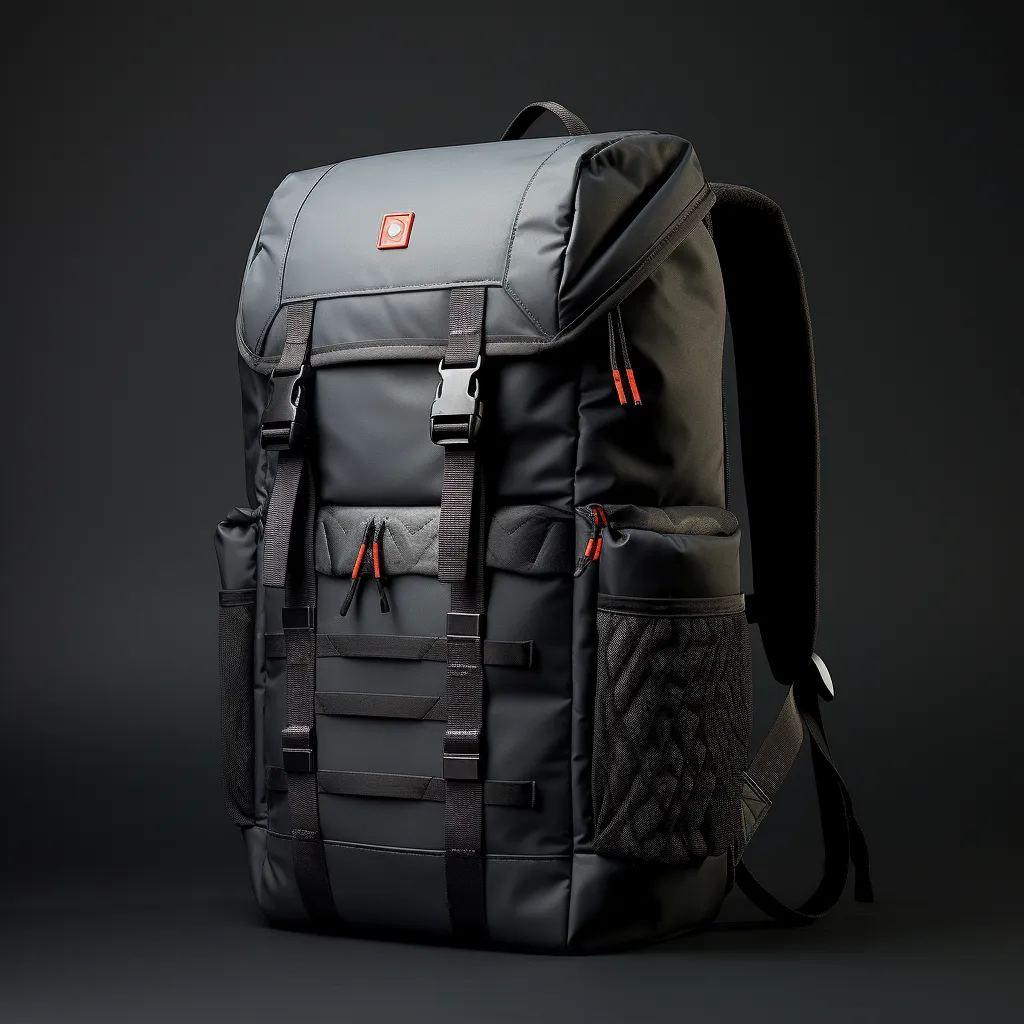
Checks 21 to 25: branding, dimensions and packing
The final cluster covers the parts backers see first and the parts that determine whether a pallet arrives usable. Branding errors are uniquely painful because they are both visible and permanent: a mis-centred logo cannot be corrected after shipment, and it sits in every unboxing photograph your campaign will ever receive.
- Check 21, logo placement: measure logo position, size, rotation and centring against the tech pack drawing on at least ten units, since placement drift accumulates as panels are cut.
- Check 22, print and embroidery quality: confirm colour match, edge definition, absence of cracking on flex prints, and stitch count and backing on embroidered marks.
- Check 23, dimensions and capacity: measure length, width, depth and strap length on five units and confirm each is inside the agreed tolerance band, recording actual values rather than pass or fail.
- Check 24, unit packing: confirm folding method, polybag thickness, barcode or label placement, desiccant use and any inserts or hang tags specified for the retail experience.
- Check 25, carton specification and marking: verify carton strength, units per carton, gross and net weights, shipper markings and any sequential numbering, then confirm the count matches the packing list.
Packing errors rarely damage the product, but they damage the operation downstream in ways that are expensive to unwind. A miscounted carton becomes a short delivery discovered at a fulfilment warehouse; wrong shipper marks become a customs query; a missing barcode becomes manual handling at every scan point. Our team runs carton verification as part of the same session rather than leaving it to the freight forwarder, using the principles set out in carton specification and marking.
Turning the checklist into a payment gate
A checklist changes behaviour only when it is attached to money. Under standard T/T 30/70 terms, the 30 percent deposit starts the order and the 70 percent balance releases it, which means the entire commercial leverage you hold sits in those last few days. The cleanest arrangement is to write into the purchase order that balance payment is due upon signature of the completed checklist and receipt of the inspection report, rather than merely upon notification that production has finished.
Under FOB Xiamen terms, the first 30 percent covers materials and line booking, and the balance is due before the goods are handed to your nominated forwarder. That handover point is exactly where control transfers, so everything you intend to enforce has to happen before it. Practically, this means booking inspection for the date production is reported complete, allowing a working day for the report, and allowing further days for any rework and re-inspection that follow.
Build the calendar backwards. A typical file runs 6 to 10 working days for sampling, or 12 to 15 working days where the construction is complex, then 35 to 50 days of bulk production, then inspection, rework if required, and consolidation before vessel departure. If you want the checklist signed two weeks before your promised backer delivery month, inspection has to be booked before bulk starts rather than when it finishes, because inspection slots and your own calendar do not wait for production to slip.
One clause that saves arguments later: specify in writing what happens when a check fails. Reasonable language covers sorting at the maker's cost, replacement of defective units from retained overage, or a partial credit agreed before shipment. Deciding this while everybody is still friendly is dramatically cheaper than deciding it after the cartons are sealed and the deadline is a week away.
How many units to open under AQL 2.5
The most frequent question we field is how many bags must actually be opened. The answer comes from ISO 2859-1 using general inspection level II and a stated acceptable quality limit. AQL 2.5 means that a lot whose true defect rate is about 2.5 percent would be accepted most of the time under this sampling plan. It is not a promise that 97.5 percent of units are perfect; it is a statistically defined, repeatable rule that both sides can audit.
Defects are classified as critical, major or minor, and they are counted against different limits. Critical defects, meaning unsafe or unlawful conditions such as a sharp internal component or a substance failure, carry an acceptance number of zero in most campaign contracts: one is one too many. Major defects, meaning failures a reasonable buyer would reject the unit for, are counted at 2.5. Minor defects, meaning workmanship issues a buyer would accept on a proportion of units, are typically counted at 4.0.
| Lot size (pcs) | Code letter | Sample size | AQL 2.5 accept / reject | AQL 4.0 accept / reject |
|---|---|---|---|---|
| 281 to 500 | H | 50 | 3 / 4 | 5 / 6 |
| 501 to 1,200 | J | 80 | 5 / 6 | 7 / 8 |
| 1,201 to 3,200 | K | 125 | 7 / 8 | 10 / 11 |
| 3,201 to 10,000 | L | 200 | 10 / 11 | 14 / 15 |
| 10,001 to 35,000 | M | 315 | 14 / 15 | 21 / 22 |
Read the table the way it is meant to be read. A first run of 500 pieces, which is the MOQ per style and colourway, requires 50 units opened, and four major defects reject the lot. A 2,000-piece reward fulfilment requires 125 opened, and eight majors reject it. Those numbers are small enough to be uncomfortable, which is precisely why the plan is written down: parties argue far less about a standard than about an opinion.
Two adjustments are worth specifying explicitly for crowdfunding work. First, agree that every critical and functional check listed here is run on every sampled unit, not just on a subset, because functional failures cluster and a plan that averages them out hides clusters. Second, agree what happens to the units that were opened for destructive testing: destruction removal is usually priced per unit and should be stated before the inspector arrives. More detail on what inspectors actually look at is covered in Kickstarter backpack QC under AQL 2.5.
Who runs which check
Quality is not one person's job, and campaigns that assume it is tend to discover gaps at the worst moment. A workable split assigns the checks by whoever can act on the result fastest. Document checks belong to whoever administers the file, because that party sees every revision as it happens. Material and construction checks belong to the people on the floor during cutting and assembly. And verification against your promises to backers belongs to a independent third party who has no stake in either the schedule or the relationship.
In practice, that means our production team runs document verification and first-piece checks internally before cutting, and again at the start of bulk, keeping the records in the campaign file. Independent inspection then runs the pre-shipment verification sampling. You or your appointed representative retain the client-side comparison: the reference unit, brand promise and user experience judgement that only you can make, since nobody else knows what you showed backers during the campaign.
Where the three overlap, insist on shared artefacts. The same reference sample number, the same revision code and the same tolerance table should appear in the internal check sheet, the third-party report and your own notes. When three parties write down three different numbers for the same dimension, that divergence is itself the finding, and it should be resolved before anything else is measured.
Finally, decide who has authority to stop shipment. It should be one named person on your side, and that name should appear in the purchase order. Committees do not stop shipments; individuals with a mandate do. Where a creator asks us to hold that mandate, our programme coordinator will only release against written instruction from that named person, which removes ambiguity at exactly the moment ambiguity is least affordable.
The failures that repeat and what they cost
Across 20+ campaigns our files cover, the same handful of failures account for most of the cost. The most common is logo placement drift, which appears when panels are cut from nested markers rather than single-ply, and which only becomes visible when ten units are measured rather than one. The second is lining substitution, usually in a hidden area such as a shoe compartment or internal divider, discovered by backers rather than inspectors.
The third is hardware downgrade, typically sliders and buckles swapped for visually identical parts that fail cycle testing. The fourth is carton count discrepancy, small in unit terms and enormous in fulfilment terms. The fifth is colour variation between batches, which becomes unavoidable whenever a second lot of fabric is bought without an agreed tolerance and without retained reference swatches.
Costs differ sharply by discovery point. A material problem found at first-piece stage costs a re-cut and a few days. The same problem found after packing means sorting, which typically runs at a daily labour rate per inspector, plus the delay of however long sorting takes. Found after shipment, it becomes replacement production at 35 to 50 days plus air freight if the promise date cannot move. The economics point in one obvious direction: check earlier than feels necessary, because later checks cost multiples rather than increments.
There is also a reputational multiplier. Backers forgive late far more readily than they forgive inconsistent, and a reward bag that noticeably differs between two shipping waves generates more complaints than a reward bag that arrives three weeks behind schedule. Consistency between waves is therefore worth protecting with the same rigour as first-run quality, which means the checklist should be repeated on re-orders rather than assumed.
Running the checklist without flying out
Most creators never visit the production floor, and the checklist has to work under that constraint. It does, provided you fix the evidence protocol in advance rather than improvising it during a video call. Specify the camera angle, the distance, the lighting, and the requirement that any measurement be shown with the tape visible and readable in frame alongside a card carrying the check number and the unit serial.
Where the checklist is run remotely, the photographic pack becomes the product witness. Agree before production which checks require a still photograph, which require a short video clip and which require a live view, and require that every image carry the check number, the unit number and a readable tape measure in frame. Unlabelled photographs are decoration rather than evidence, because nobody later can tell which unit they show or whether they were taken before or after rework.
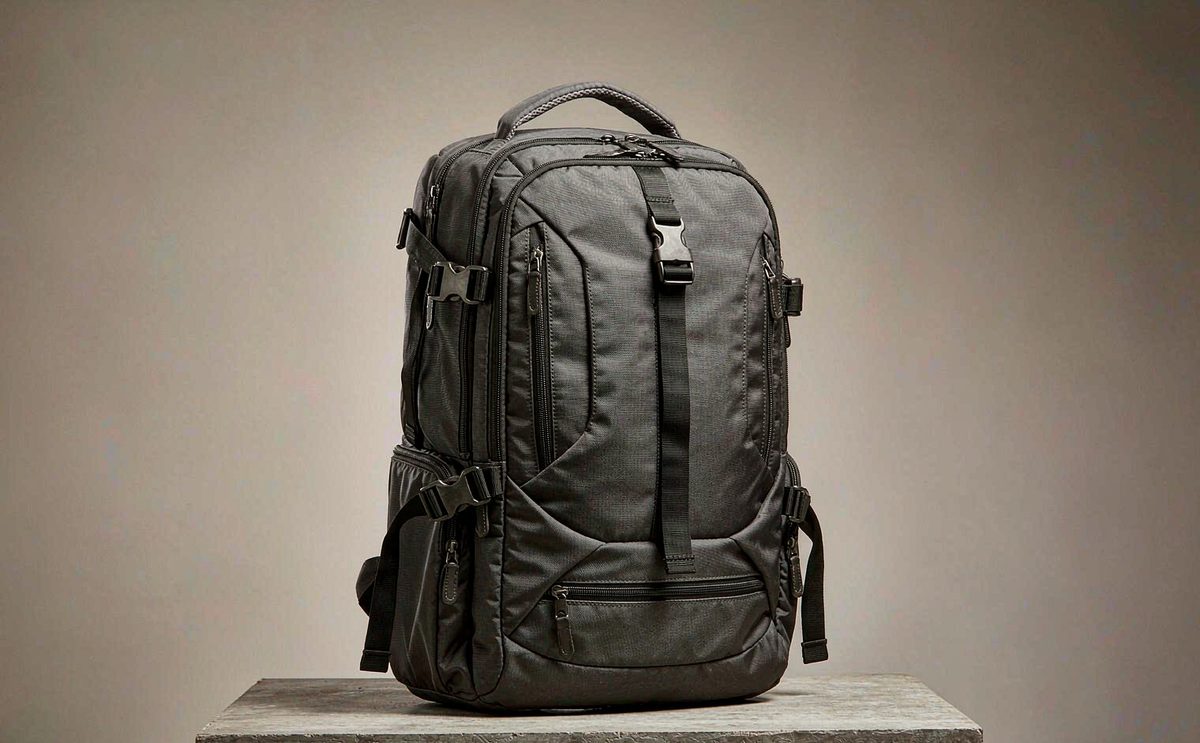
Ask for three artefacts, in this order. First, a photographed pack covering every check, organised by cluster, delivered for review before shipment rather than after. Second, a live walk-through of the first five units off the line, with you directing where to look, since live video cannot be staged in advance. Third, one physical random unit couriered to you at your own address, which costs a courier fee and about a week, and which tells you more than any photograph about hand feel and proportion.
Where geography allows, combine remote review with a booked third-party inspection on the ground, which is inexpensive relative to a campaign budget and is the one control that does not depend on goodwill. Between the two, the majority of failures listed above become visible before payment rather than after it. Our campaign bag specialist can arrange both artefacts as standard deliverables when asked during quotation rather than after production has begun.
Close the loop afterwards. Whatever the remote protocol missed, note it and add it as a standing check for next time, since every campaign produces at least one failure that no standard list anticipated. Checklists improve by subtraction and addition over runs, and the file you keep from this campaign is the specification you will quote from when you launch the next one, long after the cartons themselves are empty.
Want this checklist attached to your own purchase order with named checks, tolerances and inspection dates? Send the draft tech pack and target ship month through the quotation form or to service@junyuanbags.com, and we will return a file-ready version with numbers filled in.
Frequently Asked Questions
What is the most important check on a bag QC checklist?
Check 2, the signed reference sample, because every later judgement depends on it. Without a physical unit that both sides have initialled and dated, disputes become matters of opinion rather than measurement. Everything else on the list, from stitch density to logo placement, is a comparison between production output and that one unit.
How long does it take to run 25 checks on one shipment?
A trained inspector typically works through one of the 5 clusters in 30 to 45 minutes, so the full list takes roughly half a day for a 500-piece lot including measurement recording and photography. Document checks cluster add another 30 minutes if the file is organised. Add time for any rework discussion, which is usually longer than the inspection itself.
Does the 500-piece minimum mean I receive only 500 units to inspect?
No. The minimum of 500 pcs applies per style and per colourway, so three colourways of the same style means 1,500 pieces. For a 500-piece lot under ISO 2859-1 general level II, 50 units are opened and inspected. If four or more major defects are found, the lot is rejected under the AQL 2.5 acceptance plan.
Is AQL 2.5 strict enough for a crowdfunding reward bag?
AQL 2.5 is the mainstream apparel and bags standard and is appropriate for most campaigns. It defines a lot that is nominally 2.5 percent defective as acceptable most of the time. If your bag is positioned as premium or is priced above roughly USD 100 retail, tightening major defects to AQL 1.5 is worth the extra sampling and unit cost.
Can I add my own checks to this list?
Yes, and you should. Every campaign has features that standard lists do not anticipate: a specific magnet closure, a custom moulded puller, an unusual lining print. Add those as numbered checks with a tolerance and a reference, so they carry the same contractual weight as checks 1 to 25. Added checks with no measurable outcome tend to be ignored.
Who pays for rework when checks fail?
Responsibility should be written into the purchase order before production begins. Standard practice is that defects attributable to construction or materials specified in the tech pack are corrected at the maker's cost, including sorting labour and any replacement units. If the failure derives from a change you requested after approval, additional cost normally falls to you.
What evidence should I keep after the campaign ships?
Keep the signed reference unit, the swatch card, the completed checklist with signatures and dates, the third-party inspection report with photographs, and the packing list with carton counts. Store them together as one folder per production run. That bundle is what makes a re-order quote fast and what settles any dispute about what was originally agreed.
How do minor and major defects differ in practice?
A major defect is one a reasonable buyer would return the unit over: a split seam, a non-functioning zipper, a logo applied upside down. A minor defect is a workmanship issue below that threshold, for example a slightly uneven thread end or a small print imperfection invisible at arm's length. Majors are counted at AQL 2.5 and minors usually at AQL 4.0.
Can inspection happen before bulk production finishes?
Yes, and it should. A first-piece or during-production check at roughly 10 to 30 percent output catches material and construction errors while there is still time and material to correct them. The full pre-shipment inspection at AQL 2.5 remains necessary later, but by then it should be confirming rather than discovering, which is a far cheaper place to find a problem.
What tolerance should I allow on bag dimensions?
For soft sewn products, a tolerance of around 5 to 10 mm on body dimensions is common, larger on unstructured items and tighter on items that must fit an object such as a laptop sleeve. Write the figure into the tech pack per dimension rather than relying on a general statement. Straps and webbing should carry their own tolerance since dynamic fit differs from static fit.
Should every unit be checked or only a sample?
Sampling under ISO 2859-1 is statistically sound for most attributes, but certain checks are better run across the full lot. Functional checks such as zipper operation, buckle engagement and any electrical or water-resistant feature are commonly run at 100 percent because failures cluster and because a single unit failing in use becomes a public comment. Destructive checks obviously cannot be.
When should I book inspection relative to the production window?
Book the pre-shipment inspection date when bulk starts, nominally for the day production is reported complete, then hold at least a working day for the report and several days for any sorting or rework. Bulk runs 35 to 50 days after deposit and approved sample. Booking at the end invites scheduling conflicts exactly when your delivery promise cannot absorb delay.
People Also Ask
What is a bag QC checklist?
A written list of measurable checks run against a signed reference sample before balance payment and shipment. The standard campaign version contains 25 checks across five clusters: documents, materials, seams, hardware, and branding or packing.
How many bags are inspected under AQL 2.5?
For a 500-piece lot, 50 units under general inspection level II, with an acceptance number of 3 and rejection at 4 major defects. A 2,000-piece lot requires 125 units, accepting 7 majors and rejecting at 8.
What is the single most expensive QC mistake?
Approving a sample from photographs. Small differences in hand feel, proportion and print finish do not survive image compression, and by the time the difference is visible to backers, correcting it means replacement production rather than a re-cut.
Who should sign off production?
One named person on the creator side, identified in the purchase order. Internal checks by the production team and independent verification by a third party support that decision, but only the named person has authority to release goods.
Does inspection delay my shipment?
Only marginally if booked in advance. Allow one working day for the report and several more for any sorting or rework. The 35 to 50 day production window should already contain that allowance in your campaign calendar.
Should re-orders repeat the checklist?
Yes. Consistency between shipping waves matters more to backers than either wave being individually perfect, and repeating the same 25 checks against the retained reference unit is the only reliable way to achieve it.
What happens if a critical defect is found?
Critical defects such as unsafe components or substance failures carry a zero acceptance number in most campaign contracts. One instance rejects the lot, and the remedy is normally full sorting or replacement rather than partial acceptance.