Bag Sampling for Kickstarter: What the 6-10 Working Days Cover
Sampling is the stage where a bag design becomes a physical object you can approve, and on our programmes it runs 6-10 working days per round, or 12-15 working days for complex builds. The clock starts when the brief is complete, not when the first email arrives, and it stops whenever a decision is pending with you. This article explains what those days contain, which four pauses add weeks to a calendar, how the sampling window connects to the 35-50 day bulk production window, and how to plan a launch date backwards from a sample approval.
- What the 6-10 working days actually cover
- When the clock starts and what complete means
- Day by day: where the sampling days go
- Why complex builds need 12-15 working days
- The four pauses that add weeks
- Sampling rounds versus sampling days
- Fitting sampling into a launch calendar
- From approved sample to the 35-50 day window
- Rush requests: what can and cannot compress
- Writing a sampling brief that holds the date
- A worked timeline for a 16 week launch
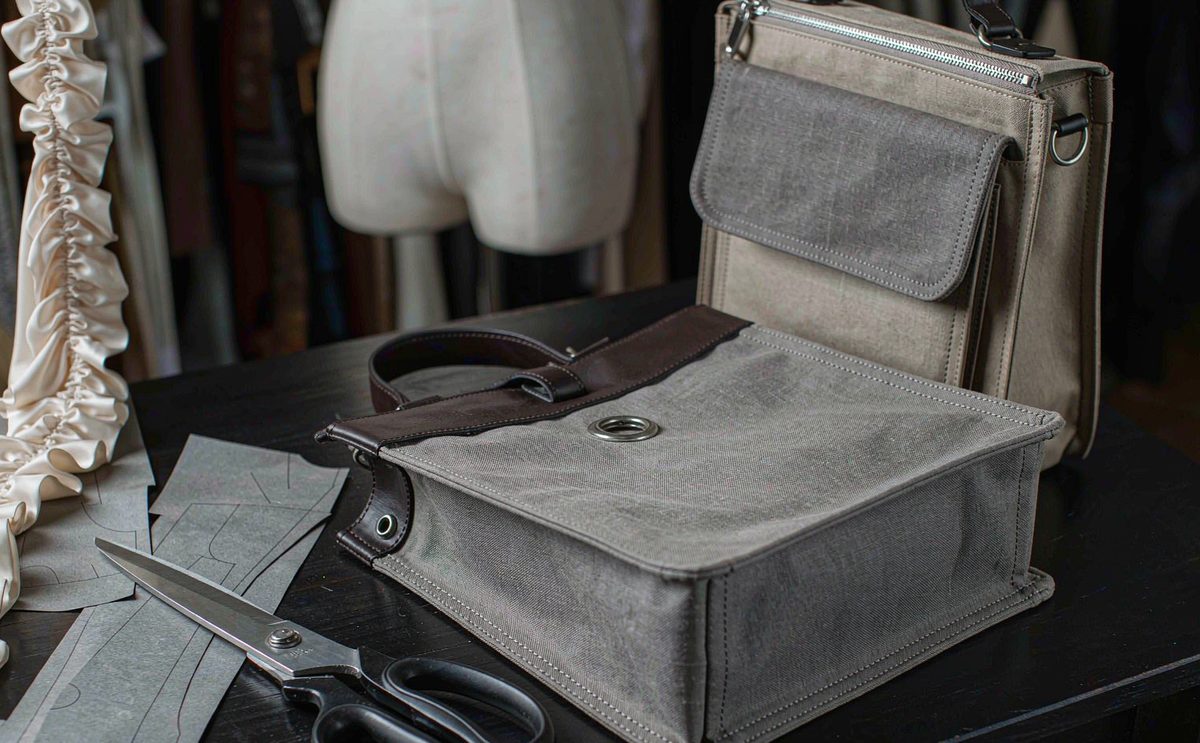
Sampling is the stage where a bag stops being a drawing and becomes an object you can hold, measure and photograph. On our programmes a standard sampling round runs 6-10 working days, and a complex build runs 12-15 working days. Those two numbers are the ones most creators ask about first, and they are the ones most often misread, because the window measures a specific span of work and not the total time between first contact and a sample in your hands.
What the 6-10 working days actually cover
The sampling window covers the physical build of one sample: pattern confirmation or pattern making, marker planning, material preparation, cutting, sewing, assembly, decoration application and a first internal check before the piece is packed and dispatched. It does not cover the courier transit to your address, and it does not cover the time a decision sits with you. Reading the number as door to door is the single most common cause of a slipped launch.
The window also assumes that the specification is settled. A sample built against a complete brief has all of its materials named, all of its hardware named, all of its dimensions stated and all of its decoration positions given as measurements. A sample built against a partial brief becomes a discovery exercise, and discovery is not something that fits inside ten days.
There is a useful way to think about it. The 6-10 working days are the time our production team needs to turn an agreed specification into a physical bag. Everything before that is specification work, and everything after that is decision and transit work. When a creator tells us sampling took five weeks, the build almost never took five weeks. The brief took five weeks, or a decision sat unanswered inside it.
The distinction matters for planning because the three kinds of time behave differently. Build time is predictable and we can commit to it. Specification time is in your hands and depends on how complete your tech pack is. Decision time is also in your hands, and it is the one that silently consumes calendars. You can find the full artefact list in our bag sampling and prototyping guide, which sits upstream of every sampling programme we run.
When the clock starts and what complete means
The clock starts on the day the brief is locked, which means materials, hardware, colour, dimensions, construction and decoration have all been confirmed in writing and any open question has an answer. It does not start on the day you send the first email, and it does not start on the day you pay a deposit. A deposit without a locked brief buys a place in the queue, not a finished sample.
Complete has a specific meaning in practice. The material must be named as a reference, not as a description. Nylon is a description; 420D nylon with a PU coating and a stated finish is a reference, and a reference is what our sourcing partner can actually buy. The same applies to hardware: a zip is a description, and a number five reversed coil zip with a specific puller in a specific finish is a reference.
- Materials named by reference, including weight, coating and finish.
- Hardware named by size and finish, including zip type, puller and plating.
- Dimensions given as measurements, not adjectives such as roomy or compact.
- Decoration positions given as coordinates from a stated edge.
- Colour matched to a physical or numbered standard, not a screen image.
- Quantity stated per style and colourway, with the 500 pcs minimum in mind.
Colour is the item that most often delays a lock. A screen colour is not a colour standard, because every display renders it differently and no mill can dye to a screenshot. A Pantone reference, a physical swatch or an approved lab dip is a standard. If your campaign depends on a specific shade, treat that shade as a specification item with its own approval step rather than a note on a drawing.
The practical habit is to send the brief, then ask one question: is anything still open? If the answer is yes, the clock has not started. Our programme coordinator will normally respond with a short list of open items and a proposed lock date, and that proposed date is the honest start of the window. Creators who work that way consistently get their samples inside the quoted range.
Day by day: where the sampling days go
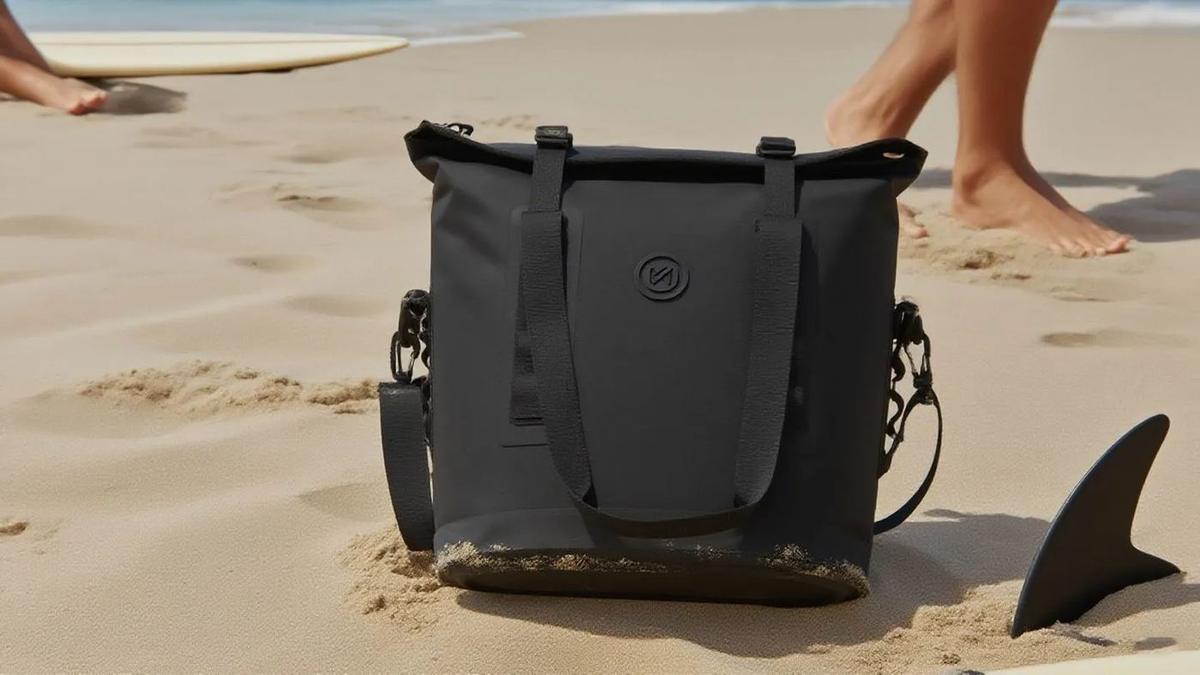
Creators often imagine sampling as one continuous block of sewing. It is better understood as five stages that run in sequence, with each one able to expand or contract depending on the design. Understanding the sequence tells you where a delay actually sits, and it tells you what a realistic update to your backers will say.
| Stage | Typical span | What happens | What can expand it |
|---|---|---|---|
| Pattern and marker | 1-2 days | Pattern confirmed or drafted, marker planned | New architecture, new panels |
| Material preparation | 1-3 days | Fabric, webbing, trims and hardware pulled | Custom dye, out of stock trim |
| Cutting and prep | 1 day | Panels cut, components kitted | Many small parts, bonded layers |
| Sewing and assembly | 2-3 days | Panels joined, lining set, hardware fitted | Complex internal layout |
| Decoration and check | 1-2 days | Logo applied, first internal check, packed | New setup, multi position artwork |
The first stage is where a new design costs the most time. If the construction is close to something already in production, the pattern stage is a confirmation and it is quick. If the bag uses a panel architecture that has not been made before, the pattern stage is drafting, and drafting is the reason the complex range exists at 12-15 working days rather than 6-10.
Material preparation is the stage with the widest variance, because it depends on the market rather than on the workshop. A stock fabric in a stock colour can be pulled in a day. A custom dyed fabric, a special weave webbing or a plated puller in a non standard finish can take considerably longer, and that time is outside the build window even though it will be reported as part of the sample lead time.
Sewing and assembly is usually the most predictable part of the sequence, and it is the part that scales least with complexity. A bag with twelve internal pockets does not take four times as long to sew as a bag with three, because the operations are small and sequential. What it does is add preparation and inspection time, which is why the variance shows up in the surrounding stages rather than in the middle of the build.
The final stage, decoration and internal check, is where most avoidable delays happen. A logo position that was described as centred rather than measured forces a judgement call, and a judgement call at the end of a build is either a rework or an argument. Measuring the position in the brief removes the judgement and usually removes a day. Our pre-production sample guide shows how the same measurement discipline carries into the approval artefact.
Why complex builds need 12-15 working days
The 12-15 working day range is not a penalty, it is a description of extra work. A build moves into that range when it needs new patterns, new tooling, a new assembly sequence, or a material that has to be prepared rather than pulled. Knowing which of those applies to your design lets you predict the range before you ask, instead of being surprised by it.
New patterns are the most common reason. A bag with an unusual silhouette, an integrated frame, a moulded back panel or an internal architecture that has no close precedent needs patterns drafted and tested. That drafting is iterative in a way that a confirmation is not, and the extra days reflect real work at the table rather than queue time.
- Moulded or structured components that need a tool before a part can be made.
- Bonded or welded construction that needs a new jig and a process test.
- Integrated frames, wheel housings or load bearing structures.
- Multi material shells with mismatched stretch that must be tested together.
- Electronics integration such as cable pass throughs or power bank pockets.
- Hardware that has to be custom finished rather than bought from stock.
Electronics are worth calling out separately, because they convert a bag programme into a bag plus accessory programme. A cable pass through is simple. A power bank pocket with a specific internal dimension is a specification item that must be checked against a real device, and if the device is not named by model the check cannot be made. Naming the device is a one line fix that removes a whole category of delay.
There is also a category that feels simple and is not: a bag that must fit a specific object. A camera insert, a laptop sleeve or a drone case is defined by the thing it carries, and that thing has tolerances. Send the object, or send its exact dimensions with the tolerance, or the sample will be built to an assumption and the assumption will be wrong by a few millimetres that matter.
The honest way to handle the uncertainty is to ask early. Send the design and ask whether it falls in the standard or the complex range, and accept the answer. A design that is quoted at 6-10 days and actually needs 12-15 will slip, and it will slip in the least convenient way, which is at the end when the date was already promised.
The four pauses that add weeks
Almost every blown sampling calendar we see is caused by one of four pauses, and all four sit outside the build window. They are worth naming because each one has a cheap fix, and because none of them is a production problem. If your sample is late, look here first.
The first pause is the unlocked brief. The sample is queued with two or three items still open, the workshop starts what it can, and then it stops when it reaches the open item. Three days of work spread across three weeks produces a sample that is technically three weeks late and was never late at all. Lock the brief, then start.
- Unlocked brief: open questions stop the build mid sequence. Fix by locking before the deposit.
- Pending decision: a sample waits for your approval of a substitution or a colour. Fix by naming a decision maker and a response window.
- Material unavailability: a named trim is out of stock and nobody has been authorised to substitute. Fix by pre approving one alternative.
- Artwork changes: the logo file changes after the sample is built. Fix by freezing artwork before the build starts.
The second pause, the pending decision, is the most invisible one. Our team asks whether a substitute webbing is acceptable. The question sits in an inbox for four days. Those four days are not build days and they are not transit days, but they land on the calendar all the same, and by the time the answer arrives the material window has moved.
The third pause is material unavailability, and it is the one where a small piece does the most damage. A bag can be ninety percent assembled and still be waiting on one buckle in one finish. The cheap fix is to pre approve an alternative for every named trim at the point of locking the brief, so that the substitution question never has to be asked.
The fourth pause is artwork change, and it is entirely preventable. Freeze the artwork file before the sample build starts. If the artwork is still being designed while the bag is being built, the sample that arrives is not the sample you need, and the next round costs another full window. The step by step sample process covers the ordering in detail.
Sampling rounds versus sampling days
This is the arithmetic that decides whether your campaign calendar works. A sampling round is one build of one sample at 6-10 working days. Most bag programmes need more than one round, because the first physical object teaches you things a drawing cannot. Three rounds at eight days each is twenty four working days, which is close to five calendar weeks, and that is before bulk production starts.
The mistake is budgeting one round. A creator who budgets one round and needs three discovers the shortfall at the worst possible moment, which is after the campaign page is already written and the launch date is already public. Budget for three rounds and you will either use them or be pleasantly early, and early is a far cheaper problem than late.
Rounds are also cheaper than they look when they are structured well. The first round establishes the architecture and the fit. The second round fixes the corrections. The third round confirms materials and decoration and becomes the reference for bulk. Each round has a narrow agenda, and a narrow agenda is what keeps a round inside the quoted window.
The counter example is the round with no agenda, where every open question is carried forward and the sample is expected to resolve all of them at once. Those rounds run long, produce long feedback lists and often spawn a fourth round. Our campaign bag specialist will normally push back on an unfocused round and ask for a short list instead, because a short list is faster for everyone.
There is a calendar rule of thumb that works well. Take your launch date, subtract the 35-50 day bulk window, subtract transit, then subtract three sampling rounds with decision time between them. What remains is the date your brief must be locked by. Working forward from today instead of backwards from launch is how calendars get built that cannot be met. The project timeline article shows the same arithmetic across a full programme.
Fitting sampling into a launch calendar
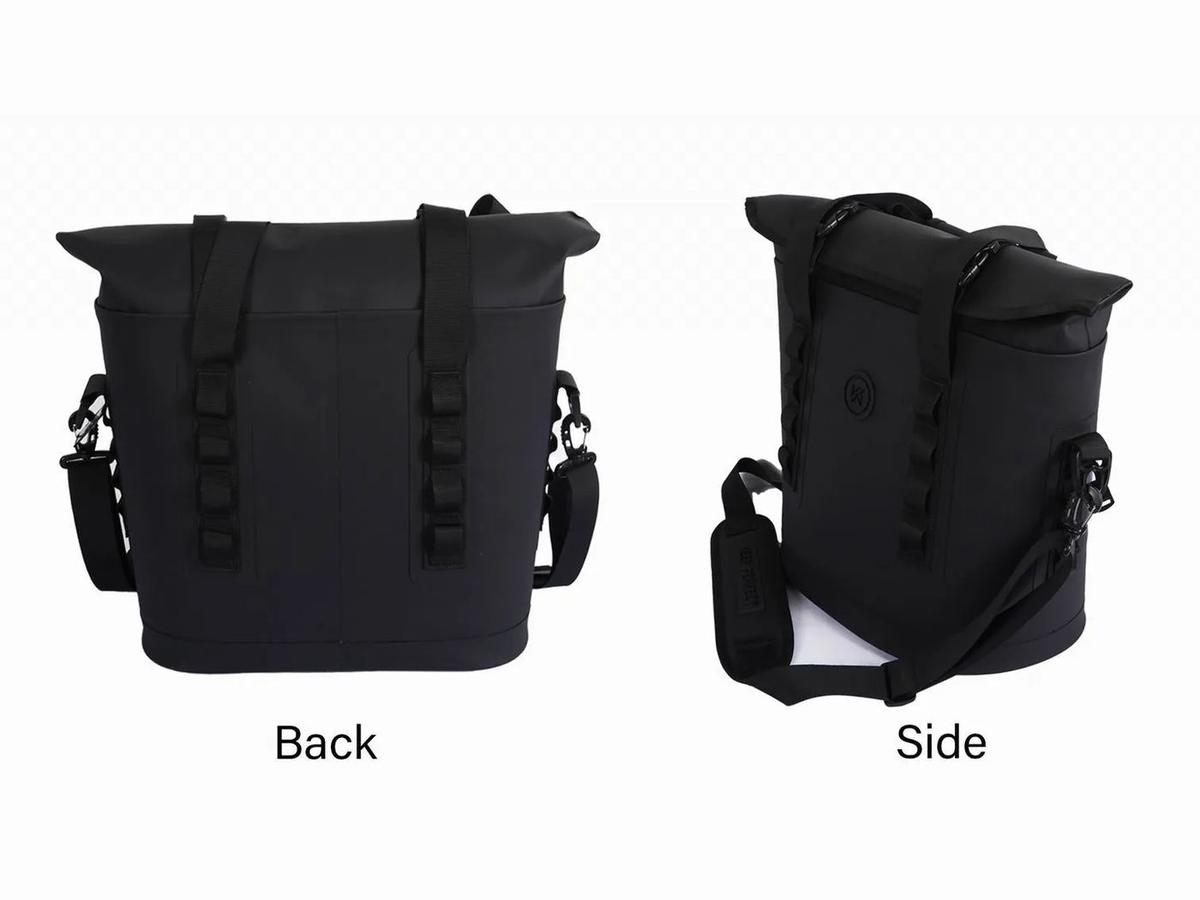
Sampling has two jobs in a campaign, and they pull in different directions. The first job is engineering: prove the bag can be built and built repeatedly. The second job is marketing: produce the object that appears in the campaign photography and video. Those jobs are usually served by different moments in the calendar, and confusing them is a common cause of unnecessary urgency.
For the engineering job, you need an approved sample before bulk production can be released. That sample is the reference against which the AQL 2.5 to ISO 2859-1 inspection will later judge the shipment, and it must exist physically and be agreed before the 35-50 day window starts. Nothing about bulk can proceed without it.
For the marketing job, you need a photogenic object early enough to shoot the page, and that object does not have to be the final approved sample. A near final sample that is visually correct is enough for photography in most cases, because the differences that matter to engineering are rarely visible in a campaign image. Planning the shoot against a near final sample takes weeks of pressure off the calendar.
| Job | What it needs | Earliest useful moment | Risk if skipped |
|---|---|---|---|
| Engineering approval | Approved reference sample | Before bulk release | No inspection standard |
| Campaign photography | Visually correct sample | 4-6 weeks before launch | Rushed or rendered images |
| Reward tier validation | Sample in hand, real weight | Before tier pricing | Wrong shipping estimate |
| Backer update content | Anything real and current | During campaign | Thin updates, doubt |
Reward tier validation is the third job and the one most often forgotten. A sample in hand gives you the packed weight and the packed cube, and those two numbers drive the reward price and the shipping estimate. Guessing them from a drawing produces a tier that looks profitable and is not. Weigh the sample, measure the carton it fits, and then set the price.
There is a sequencing point that saves real time here. Ask for a photography sample early in the sampling programme and a final approval sample later, and accept that they may be two physical pieces. Trying to make one piece serve both jobs usually means waiting for the final sample and then shooting in a hurry, which is the pattern that produces weak campaign imagery.
From approved sample to the 35-50 day window
Bulk production runs 35-50 days from deposit and approved sample. The phrase from deposit and approved sample is doing real work in that sentence, because the window does not start on the day you decide to proceed and it does not start on the day you transfer money. It starts when both conditions are true, and the second condition is the one that usually lags.
Approval has to be specific to start the clock. An email that says looks great is not an approval standard, because nobody downstream can inspect against it. An approval that names the sample, its revision, its date and its retained reference is a standard. Our team will normally retain the approved piece and mark it, so that the bulk lot can be compared against it rather than against a memory.
The retained reference is what makes the inspection meaningful later. When the finished lot is checked at AQL 2.5 to ISO 2859-1, the inspector is comparing what was made against what was approved. Without a retained physical reference that comparison becomes a matter of opinion, and opinion is where disputes come from.
Payment structure runs alongside this. The standard arrangement is T/T 30/70, with 30 percent paid to release the production slot and 70 percent against the balance before shipment under FOB Xiamen. The deposit is what buys the slot, and in a busy season the slot is the scarce resource. A brief that is locked early and a deposit that lands early is the most reliable way to protect a launch date.
One more calendar item belongs here: the pre-production sample. For a first production run on a new construction, a pre-production sample built on the bulk line with bulk materials is what separates a good first run from a problematic one. It adds time, and it is almost always worth it. The pre-production sample guide explains when to insist on one.
Rush requests: what can and cannot compress
Creators ask whether sampling can be rushed, and the honest answer is that some of it can and some of it cannot. Understanding which is which saves money, because paying for urgency in a place where urgency does nothing is a pure loss. The useful question is not can you go faster, it is where does the time actually go.
What can compress is queue time and, to a degree, preparation. A sample that would sit behind other work can be moved forward, and a workshop can prepare materials in parallel with pattern work if the specification is locked and stable. That is worth something, typically a few days, and it is the honest content of most rush arrangements.
- Queue position can move, and it is the most reliable source of saved days.
- Material preparation can run in parallel when the brief is locked.
- Sewing time compresses only marginally, because the operations are sequential.
- Courier transit can be upgraded, and that is usually the cheapest acceleration.
- Custom dye or tooling cannot be rushed, because the mill or toolmaker sets that clock.
- Decision time on your side cannot be bought, only disciplined.
What cannot compress is anything set by a third party clock. A mill dyeing to a lab dip, a toolmaker cutting a mould, a plater finishing hardware: those are external and a workshop has no lever over them. Asking for a rush on those items produces a confident answer and no actual acceleration, which is worse than an honest no.
The cheapest acceleration is almost always at the courier end, and it is frequently overlooked. Upgrading transit from a standard service to an express one can remove four to six days from the calendar at a fraction of the cost of workshop acceleration. If the sample is urgent, ask about the dispatch method at the same time as you ask about the build.
There is also a caution. Rushing sampling tends to increase the number of rounds rather than reduce the calendar, because a rushed round produces a rushed sample and a rushed sample produces more corrections. Two careful rounds frequently beat three hurried ones on both time and cost. Our production partner will usually say so when a rush is requested against a complex first build.
Writing a sampling brief that holds the date
The brief is the document that determines whether the quoted window survives contact with reality. A good brief is not long, it is complete. It answers the questions a pattern maker and a buyer would otherwise have to ask, and it does so before the build starts rather than during it.
Structure it in a fixed order so nothing is missed: construction, materials, hardware, dimensions, colour, decoration, packing and quantity. Every one of those eight headings has a right answer and several wrong ones, and the wrong ones are all descriptions where a reference was needed. Writing the brief as references is the whole skill.
- State the construction: panel architecture, closure type, internal layout, load path.
- Name the materials by reference with weight, coating and finish.
- Name the hardware by size, type and finish, including zips and pullers.
- Give dimensions in millimetres for the shell and every compartment.
- Fix the colour to a numbered or physical standard, with a lab dip if needed.
- Position the decoration by coordinates from a stated edge, with the method and size.
- Specify packing: polybag, carton count, label and barcode if required.
- State the quantity per style and per colourway against the 500 pcs minimum.
Two additions make the brief genuinely robust. The first is a substitution clause: for each named material or trim, name an acceptable alternative and say who may authorise it without asking you. The second is a tolerance statement: say what variation is acceptable, in millimetres or in shade, so that a borderline sample can be approved on measurement instead of on feeling.
The tolerance statement is the one creators resist and then thank us for. Without it, every sample review becomes a negotiation about whether a difference is acceptable. With it, the review is a comparison against a stated number. It converts a subjective process into an administrative one, and administrative processes are fast.
Finally, name a decision maker and a response window. Sampling calendars are damaged more by unanswered questions than by slow builds, and one person who answers within twenty four hours is worth more than any amount of workshop urgency. Our team will work to the window you give us, but we cannot answer your side of the conversation for you.
A worked timeline for a 16 week launch
Here is a realistic calendar built backwards from a launch date, using the standard figures. Assume a launch sixteen weeks out, one style in one colourway, and a design that falls in the standard sampling range. The numbers are illustrative rather than a promise, but the shape is what matters and it holds across most programmes.
Weeks one to two are specification: brief written, materials referenced, colour standard agreed, artwork frozen. Weeks three to six are sampling rounds, at 6-10 working days each with decision time between them. Week seven is approval and the pre-production decision. Weeks eight to fifteen are bulk production 35-50 days, with transit and fulfilment planning overlapping the tail.
| Week | Stage | Gate to pass | If it slips |
|---|---|---|---|
| 1-2 | Specification and brief lock | Materials referenced, artwork frozen | Push launch or cut a colourway |
| 3-4 | Sampling round one | Architecture and fit confirmed | Use round two to correct |
| 5-6 | Sampling rounds two and three | Reference sample approved | Photograph round two if needed |
| 7 | Approval and bulk release | Deposit paid, PPS decision made | Bulk slot may move |
| 8-14 | production 35-50 days | AQL 2.5 inspection passed | Expedite or re-inspect |
| 15 | Transit and warehouse booking | Carton data confirmed | Split shipment possible |
| 16 | Launch and fulfilment handover | Survey ready | Communicate early |
Notice where the slack lives. There is slack in weeks five and six, because a campaign can launch with a strong round two sample if round three is only cosmetic. There is no slack at all in week seven, because that is the gate into a 35-50 day window, and a week lost there is a week lost at the end.
The most useful thing a creator can take from this table is the location of the irreversible date. Bulk release is irreversible in the sense that the window is then fixed. Everything before it can be compressed by working harder. Everything after it can only be compressed by paying for freight or by shipping late.
If the calendar does not fit, the cheapest thing to cut is scope rather than time. One colourway instead of two, one capacity instead of two, one decoration method instead of three. Each of those removes a sampling track and an approval track, and the campaign page can still present the wider range as a stretch goal or a re-order. Our MOQ and sampling overview sets out how scope decisions interact with the minimum.
The summary version is short. Sampling is 6-10 working days, or 12-15 for complex builds, per round, from a locked brief to a dispatched piece. production 35-50 days from deposit and approved sample, at a 500 pcs minimum per style and per colourway, inspected to AQL 2.5 to ISO 2859-1, on FOB Xiamen and T/T 30/70. Plan backwards, budget three rounds, and lock the brief before you pay anything.
Want a sampling calendar built for your launch date? Send the design, the target month and the quantity plan through the contact quotation form or to service@junyuanbags.com, and we will return the round plan with the gates.
Frequently Asked Questions
How long does bag sampling take for a Kickstarter project?
A standard sampling round runs 6-10 working days from a locked brief to a dispatched sample. A complex build runs 12-15 working days. The clock starts when materials, hardware, dimensions, colour and decoration are all confirmed in writing. Transit and your own decision time are not included, so a three round programme with decisions between rounds is realistically four to six calendar weeks.
Does the 6-10 working days of sampling window include shipping to me?
No. The window covers the build: patterns, material preparation, cutting, sewing, decoration and the internal check before packing. Courier transit is additional and varies by service and destination. Upgrading transit is often the cheapest way to shorten the total calendar, because it can remove four to six days without touching the build sequence at all.
When does the sampling clock actually start?
It starts when the brief is locked, meaning every material is named by reference, every hardware item by size and finish, dimensions are given as measurements, colour is fixed to a numbered or physical standard, and decoration positions are stated as coordinates. A deposit without a locked brief secures a queue position but does not start the build window.
Why would my bag sample take 12-15 working days instead of 6-10?
Complex builds need extra work: new patterns drafted rather than confirmed, new tooling or jigs, bonded or welded construction, integrated frames or wheel housings, multi material shells with mismatched stretch, electronics integration, or hardware that must be custom finished rather than bought from stock.
What are the most common causes of a delayed bag sample?
Four pauses account for most delays. An unlocked brief with open questions stops the build mid sequence. A pending decision waits for your approval of a substitution. A named trim goes out of stock with no pre approved alternative. Artwork changes after the sample is built. All four are outside the build window and all four have cheap fixes.
How many sampling rounds should I budget for?
Budget three. A first round establishes architecture and fit, a second applies corrections, and a third confirms materials and decoration as the bulk reference. Three rounds at eight working days each is about twenty four working days, close to five calendar weeks, before the 35-50 day bulk window begins.
Can bag sampling be rushed?
Partly. Queue position can move and material preparation can run in parallel when the brief is locked, which is worth a few days. Sewing compresses only marginally because operations are sequential. Custom dyeing, tooling and plating cannot be rushed because a third party sets that clock. Rushing often increases the number of rounds rather than shortening the calendar.
How does sampling connect to bulk production timing?
production 35-50 days from deposit and approved sample, so the approval is the gate. Approval must name the sample, its revision and its retained reference so the lot can later be inspected against it at AQL 2.5 to ISO 2859-1. Without a retained physical reference, inspection becomes a matter of opinion rather than measurement.
Do I need a pre-production sample as well as a normal sample?
For a first run on a new construction, yes in most cases. A pre-production sample is built on the bulk line with bulk materials, and it is the piece that catches line-specific issues before 500 units are made. It adds time to the calendar and it is usually worth it, particularly where the construction is new or the materials are new to us.
Can I photograph a sample that is not finally approved?
Yes, and it is often the right move. A near final sample that is visually correct is usually sufficient for campaign photography, because the differences that matter to engineering are rarely visible in a campaign image. Ask for a photography sample early and a final approval sample later instead of waiting for one piece to serve both jobs.
What should a sampling brief contain to protect the timeline?
Eight headings: construction, materials by reference, hardware by size and finish, dimensions in millimetres, colour to a numbered or physical standard, decoration by coordinates, packing specification, and quantity per style and colourway. Add a substitution clause naming an approved alternative for each trim and a tolerance statement in millimetres or shade.
How should I plan a launch date around sampling and production?
Work backwards. Subtract the 35-50 day bulk window and transit, then subtract three sampling rounds with decision time between them. In a sixteen week plan, weeks one and two are specification, three to six are sampling, week seven is approval and bulk release, and weeks eight to fourteen are production. Week seven is the irreversible gate.
People Also Ask
How many days does a bag sample take?
6-10 working days for a standard build and 12-15 working days for a complex build, measured from a locked brief to dispatch. Transit and your decision time are additional.
When does the sample clock start?
On the day the brief is locked, with materials referenced, hardware specified, dimensions measured, colour fixed to a standard and decoration positioned by coordinates.
Does sampling time include shipping?
No. The window covers the build only. Upgrading the courier is usually the cheapest way to shorten the overall calendar.
How many sample rounds does a bag need?
Plan for three: architecture and fit, corrections, then confirmation as the bulk reference. Each round runs its own 6-10 working day window.
Can a bag sample be rushed?
Queue position and material preparation can compress. Sewing, custom dyeing and tooling largely cannot, and rushing often adds rounds rather than saving days.
What delays bag samples most often?
An unlocked brief, a pending decision, an out of stock trim with no approved alternative, and artwork that changes after the build starts.
What happens after I approve the sample?
Bulk production 35-50 days from deposit and approved sample, inspected to AQL 2.5 to ISO 2859-1 on FOB Xiamen terms.
Can I shoot campaign photos before final approval?
Yes. A visually correct near final sample is usually enough for photography, which takes weeks of pressure off the calendar.