How to Get a Bag Sample Before Your Campaign Goes Live
Getting a bag sample before launch is a sequence, not a single request. Define the reward and quantity, write a tech pack with materials named by reference, freeze the artwork, send an RFQ that can be compared, agree a round plan at 6-10 working days per round, review the piece against a written checklist, then approve it as the bulk reference. Skipping any step does not save time, it moves the cost into a later step where it is larger. This article walks the nine steps in order and names the mistakes that break each one.
- Why the sample must exist before the page is live
- Step 1: define the reward tier and quantity
- Step 2: write the tech pack
- Step 3: choose material and hardware references
- Step 4: freeze artwork and decoration positions
- Step 5: send the RFQ and read the quotation
- Step 6: confirm the round plan and the calendar
- Step 7: review the sample against a checklist
- Step 8: approve, revise or reject
- Step 9: convert the sample into a bulk specification
- The mistakes that break the process
Every creator who launches a bag campaign wants a physical sample in hand before the page goes live, and most are unsure what the path to it actually looks like. The path is short to describe and easy to get wrong: define the reward, specify it, quote it, build it, review it, approve it. Each step has a specific output, and each output is the input to the next. When a step is skipped, the missing output does not disappear, it reappears as a question during sampling.
Why the sample must exist before the page is live
A sample is not a formality. It is the object that tells you whether the bag can be built, what it weighs, how it packs, and what it actually costs at quantity. Launching without one means publishing a price, a shipping estimate and a delivery promise that are all based on a drawing. Those three numbers are the ones backers judge you on.
The weight and cube discovery is usually the most valuable part. A bag drawn at 22 litres and sampled at 22 litres can differ in packed weight by a surprising margin once lining, padding, hardware and webbing are counted, and packed weight drives both the reward price and the per backer shipping charge. Getting that wrong by even a small margin across 500 units is a real budget error.
There is also a trust dimension. Backers have been trained by delayed campaigns to look for evidence of a real product. A campaign page with photographs of a physical sample, handled and used, converts differently from one with renders. We have supported more than 20 crowdfunding campaigns and the pattern is consistent: real objects in real photographs answer doubts that renders do not.
The sampling stage itself is the right place to start reading. Our bag sampling and prototyping guide sets out the artefacts produced at each stage, from first fit through to the reference piece that bulk is measured against. Treat that as the map and this article as the walk.
There is a sequencing point that creators often get backwards. The sample should exist before the page is written, not after the campaign funds. A sample in hand lets you write accurate dimensions, honest shipping weights and a realistic delivery month. A campaign written from a drawing commits you to three numbers you have not verified, and all three are promises you will be held to.
Step 1: define the reward tier and quantity
Start with the commercial shape, not the bag. Which tier carries it, what does that tier pledge, and how many units do you realistically expect to ship. Those answers determine whether a custom bag is viable at all, because the locked minimum is 500 pcs per style and per colourway, and a tier that will only ever ship 150 units cannot absorb that commitment.
Write the number down as a range with a floor. A tier you believe will take 800 units might take 400. The floor is what you must be able to fund, and the floor is what determines whether you commit to one colourway or two. Two colourways at 500 each is 1000 units of commitment for a tier that might only take 600.
- Name the tier and the pledge level it carries.
- Estimate the expected units and, more importantly, the floor.
- Decide whether the bag is the hero reward or an add on.
- Count the colourways you are committing to, not the ones you would like.
- Check whether any accessory in the reward carries its own minimum.
- Note the delivery month you intend to promise publicly.
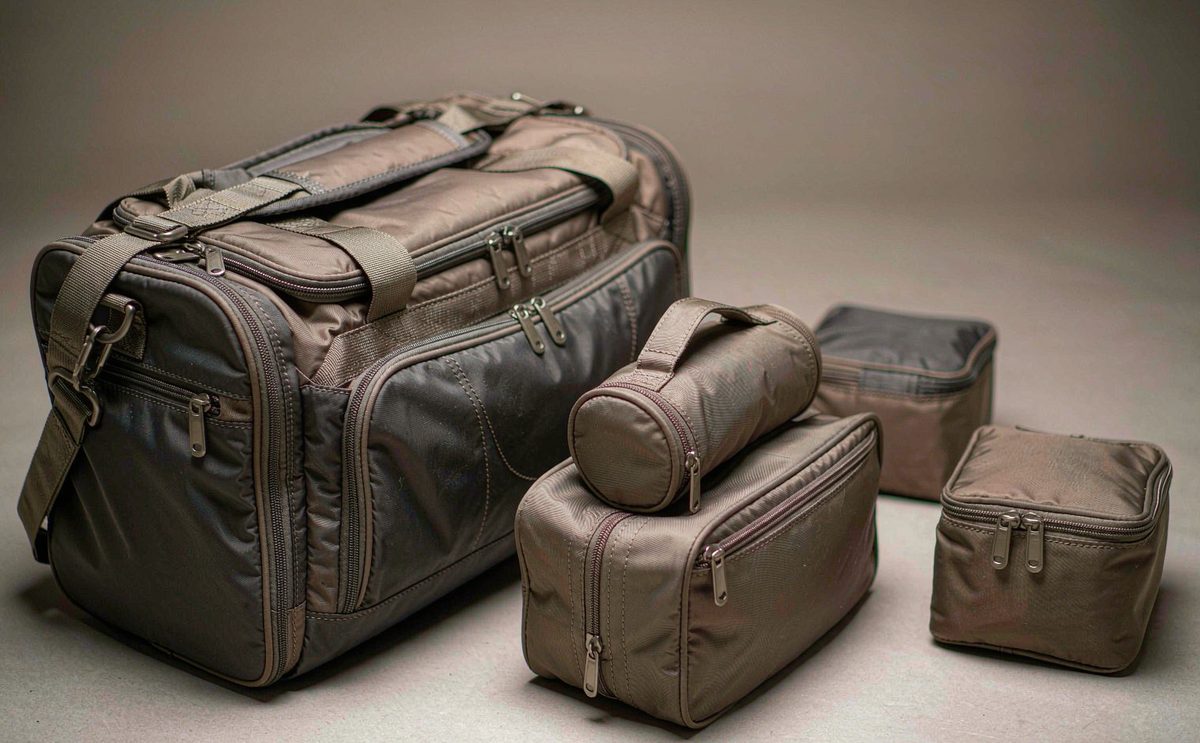
Accessories deserve a specific check at this stage. A matching pouch, a shoe compartment insert or a packing cube shown alongside the hero bag is a separate construction with its own patterns and materials, and it can carry its own minimum. Counting it as part of the bag is the error that turns a viable tier into a shortfall.
If the floor is below 500, the honest options are to raise the pledge level, merge colourways, or find a stock item that can be decorated. All three are legitimate and all three are cheaper than discovering the gap after the campaign funds. Our MOQ and colourway article explains what does and does not count toward the minimum.
The output of step one is a single line: one style, in one colourway, at 500 pcs, for a named tier, with a named delivery month. If you cannot write that line yet, the rest of the process will keep re-opening the same question.
Step 2: write the tech pack
The tech pack is the document that replaces conversation. It is what allows a pattern maker to draft, a buyer to source and a workshop to build without asking you questions, and the quality of the sample is almost entirely determined by the quality of this document. A sample built from a vague pack is a guess with stitching.
The pack needs a technical drawing with dimensions, a material list with references, a hardware list with sizes and finishes, a construction note, a colour standard, a decoration specification with coordinates, and a packing requirement. That is the minimum viable set. A pack missing any one of those will generate a question, and every question costs days.
Dimensions deserve particular care. Give external dimensions and internal compartment dimensions separately, in millimetres, with the compartment that matters most measured against the object it must hold. A laptop compartment described as fits a 15 inch laptop is not a specification; 380 mm by 265 mm by 25 mm is, and it can be checked with a ruler.
Construction notes are the section most often left blank, and they are the section that decides whether the bag survives use. State how panels are joined, whether seams are bound or overlocked, where reinforcement sits, how the straps are anchored and what load path carries the weight. Those five notes are what a pattern maker reads first, and leaving them out invites an assumption.
Our 12 section tech pack guide walks the full document section by section. For this step the point is narrower: finish the pack before you ask for a quotation, because a quotation prepared against an incomplete pack is a placeholder, and a placeholder price is not a number you can build a campaign budget on.
Step 3: choose material and hardware references
Materials and hardware are where a design becomes a supply chain. Every named item has to be sourced, and every sourced item has a lead time and possibly a minimum of its own. Choosing references rather than descriptions is what turns the design into something buyable, and it is also what makes the sample representative of bulk.
A reference means weight, coating, finish and where it is sourced. For fabric that is denier, weave, coating and finish, for example 420D nylon with a PU coating. For webbing it is width, weave and material. For hardware it is size, type and plating. A zip is not a zip: a number five reversed coil with a specific puller in a specific finish is a reference and a number five zip is a description.
| Item | Description, not usable | Reference, usable |
|---|---|---|
| Shell fabric | Water resistant nylon | 420D nylon, PU coated, matte finish |
| Lining | Soft lining | 210D polyester, matching shade |
| Webbing | Strong strap | 25 mm polyester webbing, black |
| Main zip | Heavy duty zip | No.5 reversed coil, black tape, metal puller |
| Buckles | Plastic buckles | 25 mm side release, black acetal |
| Label | Woven logo label | 25 mm woven label, two colours |
Stock versus custom is the decision hidden inside every line. A stock colour in a stock material can be pulled quickly and usually sits inside the standard sampling window of 6-10 working days. A custom dyed fabric or webbing carries a mill minimum, a lab dip approval and a longer lead time, and it can push the build into the 12-15 working day range or beyond.
If you are unsure which applies, ask. Our team will tell you which references in your pack are stock and which will need preparation, and that single answer often explains a price difference between two quotations that otherwise look identical. The material customisation guide covers the trade offs in more depth.
Step 4: freeze artwork and decoration positions
Decoration is the part of the specification that creators most often leave open, and it is the part that most often forces an extra sampling round. Freeze the artwork file, the method, the size and the position before the sample build starts. If any of those four is still moving, the sample that arrives is not the sample you need.
Position must be a measurement. Centre of the front panel is an opinion, and two people will place it differently. Sixty millimetres below the top edge, centred on the panel width, maximum height 25 millimetres is a specification, and it can be inspected. That difference sounds pedantic and it is the difference between an approval and an argument.
- Method: embroidery, woven label, heat transfer, screen print, silicone patch or metal plate.
- Artwork: the final file, in the format the method requires, at production resolution.
- Size: stated in millimetres, maximum height and width.
- Position: coordinates from a stated edge, not an adjective.
- Colour: matched to a numbered standard, with the thread or ink reference.
- Approval: a decorated sample, because decoration changes the surface.
Method choice has a physical consequence worth testing on the sample. Embroidery adds stiffness and pulls fabric, heat transfer sits on the surface and can crack on a soft shell, a woven label adds a seam, and a silicone patch adds thickness and weight. Testing the method on the actual material is the only way to know, and the sample is where that test happens.
There is a cost structure point too. One artwork in one position by one method is one setup spread across the run. A second artwork, a second position or a second method adds a setup and an approval. If your campaign offers personalisation or two logo variants, raise it at quotation stage rather than after the sample is approved.
Step 5: send the RFQ and read the quotation
An RFQ that produces comparable answers is a structured RFQ. Send the tech pack, the quantity per style and colourway, the target delivery month, the packing requirement, and the commercial assumptions you expect: AQL 2.5 to ISO 2859-1 inspection, FOB Xiamen terms and T/T 30/70 payment. Then ask for exclusions to be listed explicitly.
Reading the quotation is the skill most creators have not been taught. A single unit price is not a quotation. A usable quotation separates unit price, tooling or setup charges, sampling charges, packing, inspection and freight assumption, and it states what is not included. Two quotations that differ by a small unit price can differ by a large total once setups and packing are counted.
| Line | Why it matters | Red flag |
|---|---|---|
| Unit price at 500 pcs | The base number | Price without a quantity |
| Setup or tooling | One time, large on small runs | Buried inside the unit price |
| Sampling charge | Often refundable against bulk | Not stated at all |
| Packing basis | Drives cube and freight | Standard, undefined |
| Inspection standard | Defines acceptance | Not mentioned |
| Trade term and payment | Defines risk and cash flow | Missing or vague |
Ask specifically about the sampling charge and whether it is refundable against the bulk order, because that is a standard arrangement and it should be stated in writing rather than implied. Our sampling cost article sets out what creators typically pay and when the charge comes back to them.
Also ask how many rounds the price covers. A quotation that includes one sample and a quotation that includes three are different offers, and the difference is worth several weeks on the calendar. Getting this in writing before you commit is the cheapest insurance in the whole process.
Step 6: confirm the round plan and the calendar
Before the build starts, agree what each round is for. A round without an agenda produces a long feedback list and a follow up round. A round with three named questions produces three answers and a decision. This is the cheapest place to add discipline and the most commonly skipped.
The standard calendar is 6-10 working days per round for a standard build and 12-15 working days for a complex one, from a locked brief to dispatch. Transit and your review time are additional. Budget three rounds and treat any fewer as a bonus, because a calendar built around one round fails in public.
- Round one: architecture and fit. Does the shape work, does it carry what it must, does it sit on the body correctly.
- Round two: corrections. Apply the agreed changes, check them, confirm the internal layout.
- Round three: confirmation. Final materials, final decoration, packing check, becomes the bulk reference.
- Optional: pre-production sample built on the bulk line with bulk materials before the full run.
Assign a decision maker and a response window at this step as well. Sampling calendars are damaged far more by unanswered questions than by slow builds. One person who answers within twenty four hours is worth more than any workshop acceleration you could pay for.
Then write the launch date backwards. The bulk window is 35-50 days from deposit and approved sample, so subtract that, subtract transit, subtract three rounds with decision gaps, and you have the date the brief must be locked by. Our timeline article shows the same arithmetic with a worked sixteen week plan.
Step 7: review the sample against a checklist
The review is where a sample becomes a decision, and it should be done with tools rather than with feelings. A ruler, a scale, a tape, the object the bag must carry, and a written checklist. Photograph everything before you send feedback, because a photograph ends a disagreement faster than a sentence.
Structure the review in the same order as the specification: dimensions, materials, hardware, construction, decoration, function and packing. That order prevents the common failure mode, which is admiring the bag, noticing one cosmetic issue, and sending a feedback list that omits the structural item that actually matters.
- Dimensions: external and internal, measured, against the pack.
- Materials: shell, lining, webbing and trim against the approved references.
- Hardware: zip gauge, puller, buckles and any plating, checked by size.
- Construction: seam allowance, stitch density, reinforcement at stress points.
- Decoration: position by coordinates, size, colour and method.
- Function: does it carry the named object, does it open and close cleanly.
Two checks are consistently underdone. The first is the load test: put the intended weight in the bag, carry it, and look at where the straps meet the body. The second is the empty test: hold the bag empty and see whether it holds shape or collapses, because that is the condition most backers photograph.
Write feedback as a numbered list with a measurement and a requested change per item, and mark each as blocking or cosmetic. That distinction lets our production team act on the whole list at once instead of guessing which item matters. Our sample approval article goes deeper on stitch density, zippers and print registration.
Step 8: approve, revise or reject
There are only three honest outcomes and each has a correct form. Approve means the piece becomes the reference and the specification is frozen. Revise means a numbered change list and another round. Reject means the construction approach is wrong and the design needs rethinking, which is rare but happens.
An approval must be specific to be useful. Looks great is not an approval, because nobody downstream can inspect against it. An approval that names the sample, its revision, its date and its retained reference is a standard, and it is what the later AQL 2.5 to ISO 2859-1 inspection will compare the bulk lot against.
Ask for the approved piece to be retained and marked. A retained physical reference converts later disputes into measurements. Without one, an argument about whether the delivered bags match the sample is two memories in conflict, and that is a dispute nobody wins.
Revision is the normal outcome and it is not a failure. What matters is that the revision list is complete in one pass. Partial lists produce partial samples, and partial samples produce a fourth round. Take the extra day to make the list complete rather than the extra week to make a fourth sample.
Rejection is rare and usually means the construction approach rather than the execution is wrong: the bag cannot hold its shape, the load path does not work, or the material cannot do what the design asks. When that happens, the useful response is not another round of the same build but a conversation about the architecture, and our sourcing partner will say so plainly rather than build a fourth version of a design that does not work.
Whichever outcome applies, communicate it in writing and within the response window you agreed at step six. An approval or a change list that arrives promptly keeps the next round inside its quoted 6-10 working days, while a decision that sits for a week turns a manageable calendar into a tight one.
Step 9: convert the sample into a bulk specification
The final step is administrative and it is where most of the value of sampling is captured. Everything learned on the sample has to be written back into the specification, because bulk will be built from the document and not from the object. A sample approved without the document being updated is an approval that will not survive production.
Update the tech pack to the as approved state: revised dimensions, confirmed references, final coordinates, and any tolerance agreed during review. Add the packing specification, the carton count and the labelling requirement, because those determine freight as much as the bag does.
- Record the as approved dimensions and tolerances.
- Confirm material and hardware references against what the sample actually used.
- Fix the decoration coordinates and method in the document.
- Add packing, carton count and label or barcode requirements.
- State the inspection standard and the acceptance criteria.
- Confirm the commercial terms: FOB Xiamen, T/T 30/70, and the delivery month.
Then release bulk. Production runs 35-50 days from deposit and approved sample, and the deposit is what buys the slot. In a busy season the slot is the scarce resource, so a prompt release after approval protects the delivery month you promised publicly.
Finally, book the inspection. An AQL 2.5 to ISO 2859-1 inspection carried out against the retained reference is what makes a 500 unit run predictable. It is not a formality and it is not expensive relative to the cost of discovering a defect after 500 backers have received their rewards.
The mistakes that break the process
The same failures appear in campaign after campaign, and each one has a predictable cost. None of them is a manufacturing problem. All of them are specification or decision problems, which is good news, because those are the ones in your control.
The first is quoting before specifying. A creator sends a sketch and asks for a price, gets a placeholder, builds a budget on it, and then discovers the real number after the campaign is live. The fix is unglamorous: finish the pack first, then ask.
- Quoting before specifying: produces a placeholder price, not a budget.
- Descriptions instead of references: nylon is not a material specification.
- Unfrozen artwork: the logo changes after the sample is built, forcing another round.
- One round budgeted: three is normal, and the shortfall appears after launch is public.
- Approval without a retained reference: later inspection has nothing to compare against.
- Specification not updated after approval: bulk is built from the document, not the sample.
The fifth and sixth are the quiet ones. An approval that is not written down is not an approval, and a specification that is not updated after approval means the workshop builds to the old document. Both produce a bulk lot that differs from what you approved, and both are entirely preventable with an hour of writing.
If the sample arrives and it is simply wrong, say so plainly and ask what changed. Usually something in the specification was ambiguous and was resolved by assumption. Finding that ambiguity and writing the correct value into the pack is genuinely useful work, and it is much cheaper than the alternative of accepting a sample you do not want.
Ready to start step one? Send your tier plan, quantity and target delivery month through the contact quotation form or to service@junyuanbags.com and our campaign bag specialist will map the sampling steps for your design.
Frequently Asked Questions
What is the first step to getting a custom bag sample?
Define the reward tier and the quantity. Name the tier, estimate the expected units and the floor, count the colourways you are actually committing to, and check whether any accessory carries its own minimum. The output is one line: one style, one colourway, 500 pcs, for a named tier with a named delivery month.
Do I need a tech pack before asking for a sample?
Yes. A tech pack with a dimensioned drawing, a material list by reference, a hardware list by size and finish, a construction note, a colour standard, decoration coordinates and a packing requirement is what allows a sample to be built without questions. A quotation prepared against an incomplete pack is only a placeholder.
How much does a bag sample cost?
Sampling carries a charge that is typically credited back against the bulk order, and the amount depends on the construction, the materials and how many rounds are included. Always ask whether the sampling charge is refundable and how many rounds the quotation covers, and get both answers in writing before you commit.
How long does it take to get a bag sample?
6-10 working days per round for a standard build and 12-15 working days for a complex one, measured from a locked brief to dispatch. Transit and your review time are additional. Budget three rounds, which is roughly five calendar weeks before the 35-50 day bulk window starts.
Why is my quotation higher than the first one I received?
Because the first one was probably a placeholder. A comparable quotation separates unit price, setup or tooling, sampling, packing, inspection and freight assumption, and it lists exclusions. Two quotations that differ slightly on unit price can differ substantially once setups and packing are counted.
What should I check when the sample arrives?
Work through a checklist in specification order: dimensions external and internal, materials against references, hardware by size and finish, construction including stitch density and reinforcement, decoration position by coordinates, and function. Use a ruler, a scale and the object the bag must carry, and photograph everything before sending feedback.
How many sample rounds are normal?
Three. The first establishes architecture and fit, the second applies corrections, and the third confirms materials and decoration as the bulk reference. Budgeting one round is the most common calendar error, because the shortfall only appears after the launch date has been published.
What makes an approval valid for bulk production?
An approval that names the sample, its revision, its date and its retained reference. Have the approved piece retained and marked, because the AQL 2.5 to ISO 2859-1 inspection later compares the bulk lot against it. Without a retained physical reference, acceptance becomes a matter of opinion.
Should I update the tech pack after approving a sample?
Yes, and it is the step most often skipped. Bulk is built from the document, not from the object. Record the as approved dimensions and tolerances, confirm the references actually used, fix the decoration coordinates, and add packing, carton count and labelling before releasing production.
Can I get a sample if my tier will only ship 150 units?
You can get a sample, but the bulk commitment is 500 pcs per style and per colourway. If your floor is below that, consider raising the pledge level, merging colourways, or decorating a stock item. All three are cheaper than discovering the gap after the campaign funds.
Does a matching pouch or accessory need its own sample?
Usually yes. An accessory is a separate construction with its own patterns and materials, and it can carry its own minimum. If the campaign page shows it inside the reward, the purchase order must list it with its own quantity, and its own sampling round is normally the right call.
What happens between sample approval and delivery?
production 35-50 days from deposit and approved sample, on FOB Xiamen terms with T/T 30/70 payment. The deposit buys the production slot, so prompt release after approval protects your delivery month. Book the AQL 2.5 to ISO 2859-1 inspection against the retained reference before shipment.
People Also Ask
How do I get a sample of my bag design?
Define the tier and quantity, write a tech pack with references, freeze the artwork, send a structured RFQ, agree a round plan, review against a checklist and approve as the bulk reference.
What do I need before requesting a bag sample?
A dimensioned tech pack, materials and hardware named by reference, a fixed colour standard, a frozen artwork file with coordinates, and a quantity per style and colourway.
How long before launch should I start sampling?
At least eight to twelve weeks. Three rounds at 6-10 working days each plus decision time is about five weeks, and the 35-50 day bulk window follows.
Is the sampling fee refunded?
The sampling charge is typically credited against the bulk order. Ask in writing whether it is refundable and how many rounds the quotation covers.
Can I sample one colourway and produce two?
You can, but each colourway is its own 500 pcs commitment. Sampling one and pre pricing the second is a common way to keep the first run fundable.
What if the sample is not what I designed?
Send a numbered change list with measurements, marked blocking or cosmetic. Usually an ambiguous specification was resolved by assumption, and correcting the pack prevents a repeat.
Do I need a pre-production sample?
For a first run on a new construction, usually yes. It is built on the bulk line with bulk materials and catches line specific issues before 500 units are made.