Custom Bag Sampling Rounds: Why Three Rounds Is Normal and Good
Three sampling rounds is the normal pattern for a custom bag, and it is a sign of a healthy process rather than a struggling one. Round one proves architecture and fit, round two applies corrections, round three confirms materials and decoration as the golden reference. Each standard round runs 6-10 working days, or 12-15 for complex builds, so three rounds is about five calendar weeks before the 35-50 day bulk window. Budgeting one round is the most common cause of a campaign calendar that cannot be met.
- What a round actually is
- Round one: architecture and fit
- Round two: corrections and refinement
- Round three: confirmation and reference
- Why one round is not enough
- When a fourth round is a process problem
- The economics of a round
- How rounds map to the campaign calendar
- Running a round well
- Complex builds and the extra round
- A round plan template
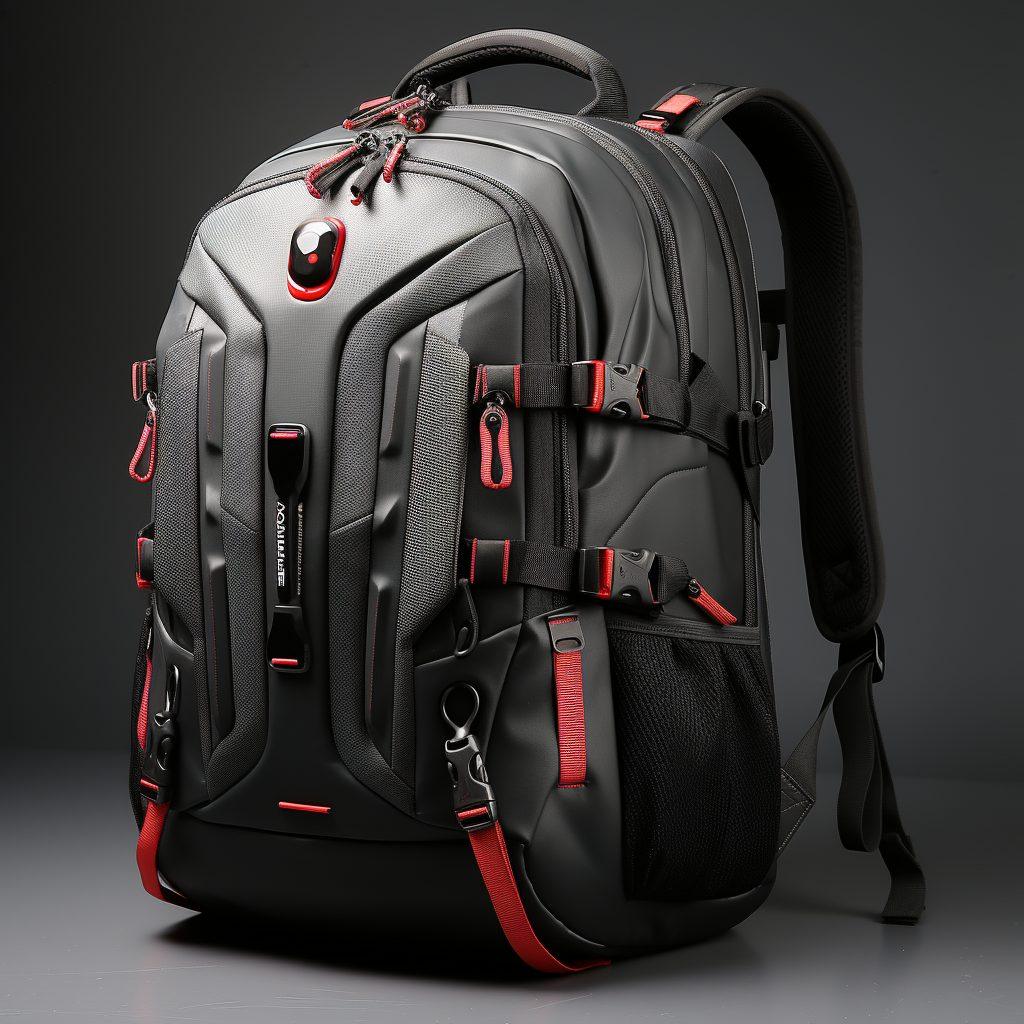
Creators arrive at sampling hoping for one round and are disappointed when it takes three. That disappointment is misplaced. Three rounds is the normal, healthy pattern for a custom bag, and it reflects the fact that a physical object teaches you things a drawing cannot. The problem is not that three rounds happen, it is that one round gets budgeted and the shortfall is discovered after the launch date is public.
What makes three rounds genuinely good rather than merely tolerable is that each one has a different job. A round with a narrow agenda produces answers. A round with a vague agenda produces comments, and comments produce another round. The number of rounds is largely determined by how well each one is framed before it starts.
What a round actually is
A round is one build of one sample against a defined specification, running 6-10 working days for a standard construction or 12-15 working days for a complex one. It starts when the brief for that round is agreed and it ends when the piece is dispatched. Your review time and the courier transit sit outside it.
A round is not a version number on a drawing and it is not a revision of the tech pack, although it usually produces one. It is a physical build, and that is precisely why it costs calendar time. Every round consumes material preparation, cutting, sewing, decoration and an internal check, and none of those can be skipped.
It helps to think of a round as a question put to the workshop. Round one asks whether this can be built and whether it works. Round two asks whether the corrections work. Round three asks whether this is what we will produce at 500 pcs. A round that asks all three at once gets a partial answer to each.
What a round is not is a failure. The word revision carries an implication of error that the process does not deserve. A first sample that needs changes is doing its job, which is to reveal what the drawing could not. Our bag sampling and prototyping guide sets the rounds inside the wider programme.
One practical point about counting. Creators and their production partners sometimes disagree about whether a programme took three rounds or four, and the disagreement is usually about what counts. A piece rebuilt because a material was substituted does not count as a round in our book, while a piece rebuilt to apply a change list does. Agreeing that definition at the start avoids an argument at the invoice.
Round one: architecture and fit
The first round has one question: does this construction work. Not whether the colour is right, not whether the logo is perfectly placed, but whether the bag can be assembled as drawn, whether it holds its intended shape, and whether it accepts what it is meant to carry. Everything else is secondary and should be treated as such.
The agenda for round one is short by design. Check the silhouette against the drawing, check the panel architecture, check that the compartments accept their intended contents with usable clearance, and check that the bag sits correctly when worn or carried. Those four checks are the whole job.
- Silhouette: does the built bag look like the drawing in three dimensions.
- Panel architecture: does the assembly sequence work as intended.
- Compartment fit: does the named object enter and exit with clearance.
- Carry: does the bag sit correctly on the body or in the hand.
- Weight: what does it actually weigh, against the target in the pack.
- Shape: does it hold shape empty, or collapse.
Material and colour at this stage are provisional. If the design is close to something known, the first sample is often built in the nearest available material rather than the final one, which is faster and cheaper. That is a deliberate choice and it should be stated in the round brief, so nobody mistakes an available fabric for the specified one.
The most valuable output of round one is usually a surprise. A pocket that reads well in a render turns out to be in the wrong place. A strap angle that looked comfortable is not. A closure that seemed neat is awkward to operate with one hand. Those discoveries are the entire point, and they cannot be made any other way.
Round two: corrections and refinement
Round two applies what round one revealed. Its brief is the change list from the first review, written as measurements with photographs, and its success condition is that every item on the list is measurably fixed. It is the most mechanical of the three rounds and, when the list was written well, the most predictable.
This is the round where materials usually become final. With the architecture settled, the specified fabric, lining, webbing and hardware can be committed to, and any custom colour or lab dip approval should land here rather than in round one. Material and colour are expensive to change, so they should be decided against a construction that is no longer moving.
- Apply the change list from round one, item by item.
- Commit the final materials now that the architecture is settled.
- Approve the lab dip or swatch if a custom colour is involved.
- Check the internal layout after any dimensional correction.
- Confirm the weight against the reward shipping assumption.
- Record measurements for the pack, ready for round three.
Decoration can be applied in round two, but it is often better to wait for round three. Applying decoration early means a change to the panel or the placement wastes a setup, and setups are a real line in the sampling cost. Where the placement depends on a dimensional correction, wait.
The failure mode for round two is the incomplete list. If the first review produced three blocking items and the creator sends two, the sample comes back with two fixed and one outstanding, and a fourth round appears. Completeness in one pass is worth more than speed. Our sample approval article sets out how to build that list.
There is also a discipline about scope creep. Round two is for the agreed list, not for new ideas that occurred to you while looking at the sample. New ideas belong in a written addendum that can be evaluated for cost and calendar, and most of them are better deferred to a re-order than absorbed into a launch programme.

Round three: confirmation and reference
Round three is the confirmation build, and its job is to produce the object that will govern production. It carries the final materials, the final colourway, the final decoration in its final position, and the final packing arrangement. If anything is still provisional after round three, it is not a golden sample yet.
The review for round three is a verification exercise rather than a discovery one. Work through the pack section by section and confirm each value: dimensions, stitch density, zipper gauge, registration coordinates, colourway elements, hardware, labelling and packing. Record the numbers.
- Final materials in the specified colourway.
- Final decoration in the specified position, verified by measurement.
- Final packing arrangement confirmed, carton data recorded.
- Measurements recorded for every value in the pack.
- Photographic record of the piece from all specified views.
- Retention: the piece is marked and kept as the reference.
Approval at the end of round three is what releases bulk. Production runs 35-50 days from deposit and approved sample, so the moment of approval is the gate. The approval should name the revision and date, confirm the retained reference, and state the AQL 2.5 to ISO 2859-1 inspection standard that the lot will be judged against.
Round three is also where the pre-production sample decision is made. For a first run on a new construction, a piece built on the bulk line with bulk materials catches line specific issues before 500 units are cut. It is an extra build and it is usually worth it. Our pre-production sample guide explains when to insist.
Why one round is not enough
Creators ask whether they can get it right in one round, and the honest answer is that it happens but it should not be planned for. A one round plan works when the construction is nearly identical to something already in production and the creator has done this before. For a first campaign with a new design, it does not.
The reason is not incompetence, it is information. A drawing cannot tell you how a fabric will behave, how a zip will run around a corner, or how a bag will sit on a body. Those things are only knowable physically, and the first physical encounter with a design always produces corrections. Planning for that is realism rather than pessimism.
| Question | Round that answers it | Why earlier rounds cannot |
|---|---|---|
| Can it be assembled as drawn? | One | Nothing physical exists yet |
| Does the compartment fit the device? | One | Drawings have no tolerance |
| Do the corrections work? | Two | The corrections did not exist yet |
| Is the specified fabric correct? | Two | Architecture was still moving |
| Is this what we will produce? | Three | Materials or decoration were provisional |
| Does the bulk line build it the same? | Pre-production | Earlier rounds were built differently |
The cost of the one round plan is paid at the worst time. A creator who budgets one round discovers the need for a second after the campaign page is written and the launch date is published. The choice then is to launch with an undeveloped product or to move a date that backers have already seen.
There is also a subtle cost. A one round mindset produces a rushed review, because the creator is trying to compress discovery into a single pass. Rushed reviews miss the structural item that matters, and the missed item then appears in bulk across 500 units rather than on one sample.
When a fourth round is a process problem
Three rounds is normal; four is a signal. That is not to say a fourth round never happens, because complex constructions genuinely need more. But when a fourth round appears on an ordinary bag, it is almost always caused by one of four process failures rather than by the difficulty of the design.
The first is the incomplete change list, which we have already covered and which accounts for most fourth rounds. The second is artwork that was never frozen, so each round carries a different version and the decoration never settles. The third is a decision maker who is unavailable, so questions sit and rounds proceed on assumptions.
- Incomplete change lists: partial corrections produce partial samples.
- Unfrozen artwork: each round decorates a different version.
- Unavailable decision maker: questions resolve as assumptions instead of answers.
- Moving scope: new requirements introduced mid round rather than deferred.
The fourth cause, moving scope, is the most damaging because it is the least visible. A creator sees the sample, has a genuinely good idea, and asks for it to be incorporated. The idea is incorporated, something else shifts as a consequence, and the next round is spent fixing the consequence rather than the original list.
The remedy is a written change freeze. Between round two and round three, no new requirements are accepted unless they are recorded as a formal addendum with a cost and a calendar effect attached. Most ideas survive being deferred, and the ones that matter are worth the formal route.
Our programme coordinator will usually say plainly when a programme is heading for a fourth round and why. That conversation is worth having early rather than discovering it in week six, because the fix is usually administrative rather than technical.
The economics of a round
A round costs calendar and it costs money, and both are worth pricing properly so the decision to run another one is made deliberately. The calendar cost is 6-10 working days for a standard build plus transit plus your review. The money cost is the material, labour and courier lines, since pattern and setup are one time costs already paid.
Set against that is the cost of not running the round, which is the cost of the defect surviving into bulk. A compartment that does not fit, a decoration position that is off or a strap that slips, multiplied by 500 units and discovered at the end of a 35-50 day window, is not comparable to the cost of one more sample.
| Finding | Cost if found in sampling | Cost if found in bulk |
|---|---|---|
| Compartment 5 mm too small | One correction round | Full lot unusable for its purpose |
| Decoration 10 mm off | One setup and one round | 500 units with the same offset |
| Strap slips under load | Reinforcement added in round two | Returns and backer complaints |
| Colour off shade | Lab dip or swatch approval | Whole lot disputed on delivery |
| Weight 200 g over target | Reward price corrected pre launch | Margin lost on every unit |
| Carton count optimistic | Packing spec corrected | Freight re-quoted, cube wrong |
The sampling charge is normally credited against the bulk order, so the money cost of a round is partly recoverable while the calendar cost is not. That asymmetry is worth noting: the expensive part of a round is the time, which is why protecting the calendar matters more than bargaining over the charge.
Commercial terms run alongside. Bulk is 500 pcs per style and per colourway on FOB Xiamen with T/T 30/70, and the 30% deposit buys the production slot. A round that slips into a busy season can cost more in slot availability than it costs in sampling charges. Our sampling cost article breaks down the money side.
How rounds map to the campaign calendar
Three rounds at eight working days each is about twenty four working days, which is close to five calendar weeks once review time and transit are counted. That sits before the bulk window, not inside it, so a realistic pre-launch programme from brief lock to delivery is roughly three to four months.
Planning backwards from the launch date is the reliable method. Subtract transit and fulfilment preparation, subtract the 35-50 day bulk window, subtract three rounds with decision gaps, and what remains is the date the brief must be locked by. Working forward from today tends to produce a plan that cannot be met.
- Weeks 1-2: specification, brief lock, artwork frozen.
- Weeks 3-4: round one, architecture and fit.
- Weeks 5-6: round two, corrections and final materials.
- Week 7: round three, confirmation, approval, bulk release.
- Weeks 8-14: production 35-50 days, inspection.
- Weeks 15-16: transit, warehouse booking, launch.
Where the calendar is tight, the cheapest thing to cut is scope rather than rounds. One colourway instead of two removes a whole approval track. One capacity instead of two removes a new style with its own patterns. Cutting a round, by contrast, removes the only mechanism you have for finding problems before 500 units exist.
Photography offers another release valve. A visually correct round two sample is usually good enough to shoot the campaign page, which decouples the marketing deadline from the engineering deadline. Our sampling timeline article shows the same arithmetic with a worked sixteen week plan.
One caution about compressing the gaps between rounds rather than the rounds themselves. Removing a day of review time to save a day of calendar is a false economy, because the review is where completeness comes from and incompleteness is what creates the extra round. Compress the decision time by answering quickly, not by reviewing less.

Running a round well
The number of rounds a programme needs is largely determined by process discipline rather than design difficulty. Four habits reliably keep a programme to three, and all four cost nothing but attention.
First, write the agenda for each round before it starts and share it. One sentence is enough: this round establishes whether the laptop compartment accepts the device with clearance and whether the strap angle works. A round with a stated agenda gets a straight answer.
- Write the agenda for the round before the build starts.
- Freeze artwork before any round that carries decoration.
- Send one complete change list with measurements and photographs.
- Answer questions within 24 hours and name one decision maker.
- Defer new ideas to a written addendum rather than absorbing them.
- Record measurements from every round into the pack.
Second, name one decision maker with a twenty four hour response window. Sampling calendars are damaged far more by unanswered questions than by slow builds, and a question that sits for four days turns a five week programme into a six week one without anyone having done anything wrong.
Third, pre authorise material substitutions. For each named trim, name an acceptable alternative and say who may authorise it without asking you. That single step removes the most common mid-build pause, and it costs one line in the brief.
Fourth, keep a single numbered document. Every round produces measurements, and if those live in emails they will be lost. Our campaign bag specialist keeps a round log with the revision history in one place, and creators who do the same on their side resolve disagreements in minutes rather than days.
Complex builds and the extra round
Some constructions genuinely need more than three rounds, and it is worth being able to tell in advance which ones those are. The signal is whether the round window is quoted at 6-10 working days or 12-15 working days, because the longer window marks a build with new patterns, new tooling or new processes.
Constructions that commonly need an extra round include moulded or structured components, bonded or welded assembly, integrated frames or wheel housings, multi material shells with mismatched stretch, and anything with electronics integration. Each of those introduces a variable that cannot be resolved on paper.
- Moulded panels that need a tool before a part can be made.
- Bonded or welded seams that need a process test on the real material.
- Integrated frames or load bearing structures.
- Mismatched stretch between two fabrics joined in one panel.
- Electronics integration with a device specific pocket.
- Custom finished hardware with its own lead time.
For these builds the extra round is not a failure of process, it is the cost of novelty. The right response is to budget it honestly at the start rather than to discover it in week five. A complex bag quoted at 12-15 days per round with four rounds budgeted is a plan that can be met.
Where a complex build is also the hero reward, consider whether a simpler variant can be developed alongside it. A simpler construction reaches approval faster, and it can carry the campaign if the complex one runs long. That is a hedge rather than a compromise, and it is cheap compared with a delayed delivery.
A round plan template
Here is the template we use, reduced to one line per round. It is deliberately boring, because a boring sampling programme is one that finishes on time. Fill it in before the first build starts and share it, so everyone is working to the same plan.
| Field | Round one | Round two | Round three |
|---|---|---|---|
| Purpose | Architecture and fit | Corrections | Confirmation and reference |
| Window | 6-10 days, or 12-15 complex | 6-10 days | 6-10 days |
| Materials | Nearest available | Final specified | Final, bulk intent |
| Decoration | None or provisional | Applied if placement is settled | Final, verified by measurement |
| Review output | Discovery list | Verification of the list | Measurement record |
| Gate to pass | Construction works | Every item measurably fixed | Approved and retained as reference |
Two columns matter more than the rest: purpose and gate. If you cannot state the gate for a round, the round has no end condition and it will drift. A stated gate is what converts a build into a decision.
Add a contingency line to the plan as well. One spare round, held in reserve and hopefully unused, is the difference between a plan that absorbs a surprise and a plan that breaks. Contingency in a calendar costs nothing until it is used, and then it costs exactly what it saved.
The summary is that three rounds is normal, four is a signal, and one is a gamble. Plan for three at 6-10 working days each, give each round a narrow agenda, send complete change lists, and answer questions quickly. That is the whole of it, and it is what separates a campaign that delivers on its date from one that explains itself in updates.
Want a round plan for your construction? Send the design, the target launch month and the quantity to the contact quotation form or service@junyuanbags.com and we will return the agenda and gates for each round.
Frequently Asked Questions
How many sampling rounds does a custom bag need?
Three is normal: one for architecture and fit, one for corrections, one for confirmation as the golden reference. Each standard round runs 6-10 working days, or 12-15 for complex builds, so three rounds is roughly five calendar weeks before the 35-50 day bulk window.
Why can't I get it right in one round?
Because a drawing cannot tell you how a fabric behaves, how a zip runs around a corner, or how a bag sits on a body. The first physical encounter with a design always produces corrections. A one round plan works only when the construction is nearly identical to something already in production.
Is needing three rounds a sign of a bad partner?
No. Three rounds is the normal pattern and a sign that the process is working. What signals a problem is a fourth round on an ordinary bag, which is usually caused by an incomplete change list, unfrozen artwork, an unavailable decision maker or scope introduced mid round.
What is the difference between a round and a revision?
A revision is a version of the document. A round is a physical build of one sample against a defined specification, running 6-10 working days for a standard construction. A round usually produces a document revision, but the two are not the same thing and only the round consumes production time.
What should round one achieve?
One question: does this construction work. Check the silhouette in three dimensions, the panel architecture, whether compartments accept their intended contents with usable clearance, and whether the bag sits correctly when carried. Material and colour are provisional at this stage.
When should materials and colour be finalised?
In round two, once the architecture has stopped moving. Committing to a custom colour or a lab dip in round one risks paying for it twice if a dimensional correction changes the panels. Decoration is often better in round three for the same reason.
What makes a fourth round necessary?
Complex constructions genuinely need more: moulded panels, bonded or welded seams, integrated frames, mismatched fabric stretch, electronics integration or custom finished hardware. Those builds are quoted at 12-15 working days per round and should have the extra round budgeted from the start.
How do I avoid needing a fourth round?
Send one complete change list with measurements and photographs, freeze artwork before any round that carries decoration, name one decision maker who answers within 24 hours, pre authorise material substitutions, and defer new ideas to a written addendum rather than absorbing them mid round.
How much calendar should I allow for sampling?
About five calendar weeks for three rounds at 6-10 working days each, plus transit and your review time. Plan backwards from launch: subtract transit, subtract the 35-50 day bulk window, subtract the rounds, and you have the date the brief must be locked by.
What is the gate between round three and bulk production?
A written approval naming the sample revision and date, with the piece retained and marked as the reference and the AQL 2.5 to ISO 2859-1 inspection standard stated. production 35-50 days from deposit and approved sample, so that approval is the gate.
Is a pre-production sample a fourth round?
It is a stricter build rather than a correction round: a piece made on the bulk line with bulk materials to catch line specific issues before 500 units are cut. For a first run on a new construction it is usually worth the extra time.
What if my launch date does not fit three rounds?
Cut scope rather than rounds. One colourway instead of two removes a whole approval track, and one capacity instead of two removes a new style with its own patterns. A visually correct round two sample can also carry the campaign photography while engineering continues.
People Also Ask
How many samples will I need?
Plan three: architecture and fit, corrections, then confirmation as the reference, at 6-10 working days each.
Why not one perfect sample?
A drawing cannot reveal fabric behaviour, zip run or carry comfort. The first physical build always produces corrections.
Is a fourth round bad?
On an ordinary bag it usually signals a process problem. On a complex build quoted at 12-15 days per round it is normal and should be budgeted.
When should I lock materials?
In round two, once the architecture has stopped moving. Locking a custom colour in round one risks paying for it twice.
How long is three rounds?
About five calendar weeks including transit and review, before the 35-50 day bulk production window begins.
How do I avoid extra rounds?
One complete change list with measurements, frozen artwork, one decision maker answering within 24 hours, and pre authorised substitutes.
What is the gate to bulk?
A written approval with a named revision, a retained reference and the AQL 2.5 to ISO 2859-1 standard stated.
What if my date will not fit?
Cut scope, not rounds. Fewer colourways or capacities removes whole approval tracks; cutting a round removes your only way to find problems.