Bag Sampling Lead Times: What Standard and Express Tracks Really Cost
A standard bag sample takes 6-10 working days and a complex build takes 12-15 working days, but those numbers describe production time only. The calendar a creator actually experiences also contains material sourcing, the sampling queue, courier transit, the review session and any feedback round, each of which can be longer than the sewing itself. This article breaks the window into its parts, explains which parts an express track can genuinely compress and which it cannot, and gives a reverse calendar method for working backwards from a fixed launch date. It also covers the point at which further sampling stops adding value and bulk should start.
- What a sampling window actually contains
- The standard track: six to ten working days
- The complex track: twelve to fifteen working days
- Where the days actually go
- What express can and cannot compress
- Queues, material availability and the hidden calendar
- Transit, review and the days nobody counts
- Building a reverse calendar from the launch date
- Feedback rounds multiply the window
- What express costs in cash and in risk
- When to stop sampling and start production
What a sampling window actually contains
When a sampling window is quoted as 6-10 working days, the number refers to the elapsed workshop time from a released specification to a finished sample. It does not include the days before the specification is released, the days the sample spends in transit, or the days the creator spends deciding what to do with it. Understanding that boundary is the difference between a sampling plan that works and one that slips by a month without anyone being obviously at fault.
The window starts when three things are true: the specification is at a numbered revision, the materials are available or confirmed as stock, and the decoration artwork is frozen. If any of those is outstanding, the clock has not started, regardless of what the calendar says. This is the most common source of a sampling dispute, because a creator counts from the day the brief was sent while the workshop counts from the day the brief became buildable.
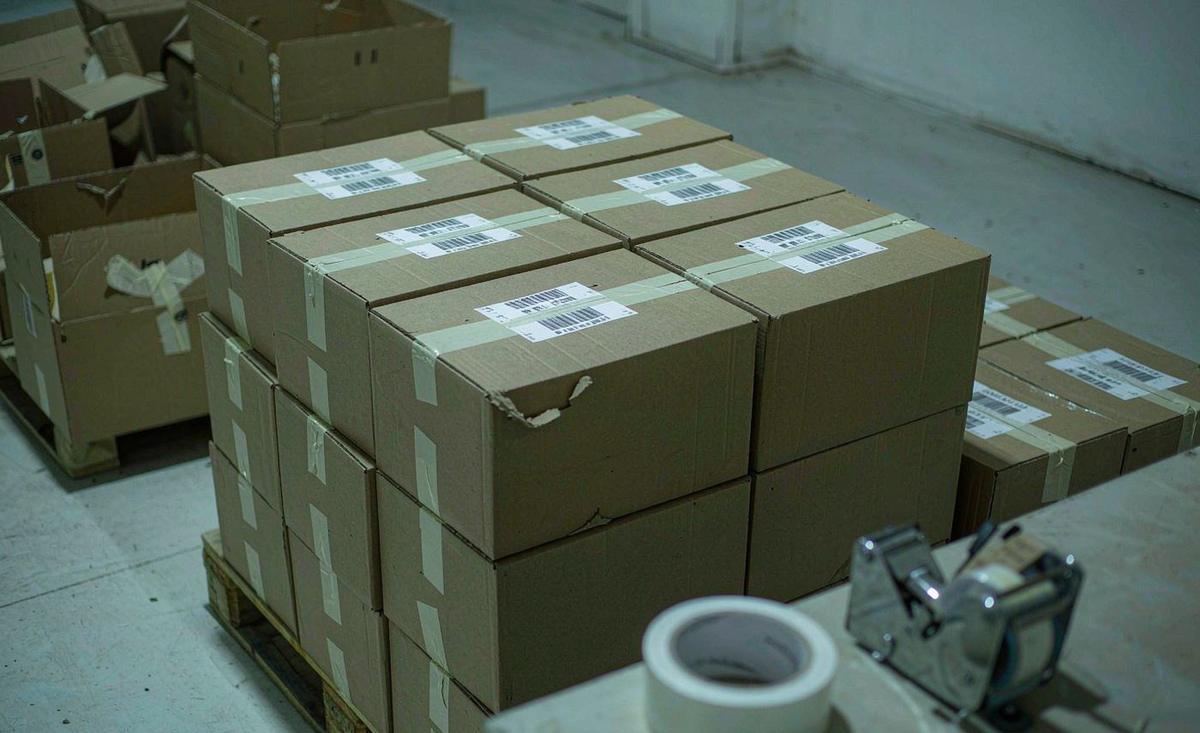
The window ends when the sample is finished and photographed, not when it reaches the creator's desk. Courier transit adds its own days, and international transit adds customs clearance on top. A 6-10 working day window with five days of transit and three days before the creator opens the parcel is a two-week-plus experience, not a week and a half.
That distinction matters because campaigns are planned in calendar weeks while sampling is quoted in working days. Six to ten working days is roughly one and a half to two calendar weeks once weekends are counted. Creators who convert the number incorrectly at the planning stage discover the gap when the launch date is already published, and the prototyping programme is the place to set the conversion correctly at the start.
The standard track: six to ten working days
The standard track applies to a bag whose construction is within the range the workshop already builds: a conventional panel architecture, standard materials from a stock range, hardware that is available, and decoration by a method already in use. Most crowdfunding rewards fall into this category, including commuter backpacks, duffels, totes, sling bags and pouches built with familiar methods.
Within the range, the variation from six to ten days comes from four factors. The number of panels affects cutting and assembly time. The number of pockets affects the sewing sequence. The amount of reinforcement affects both. And the decoration method affects the finishing stage, because embroidery and heat transfer add steps that a plain bag does not need. A simple flat pouch sits at the short end of the range and a multi-pocket backpack with a structured base sits at the long end.
| Build type | Typical position | Why | Planning note |
|---|---|---|---|
| Flat pouch or sleeve | 6-7 working days | Few panels, minimal reinforcement | Fastest first sample |
| Simple tote | 7-8 working days | Open construction, few seams | Handles dominate the time |
| Drawstring bag | 7-8 working days | Simple body, channel and cord | Cord sourcing can add days |
| Duffel, unstructured | 8-9 working days | Larger panels, more reinforcement | Base stiffener adds a step |
| Commuter backpack | 9-10 working days | Multi-panel, pockets, padding | Most common campaign case |
| Backpack with structured base | 10 working days | Frame or stiffener, complex sequence | Often reclassifies as complex |
Positions in that table are typical rather than guaranteed, and the right way to use them is as a planning assumption to be confirmed against the actual specification. A commuter backpack built with stock materials and one decoration position sits comfortably at nine to ten days. The same bag with a custom-dyed shell and a moulded logo plate moves out of the standard track entirely, because two of its inputs are no longer stock.
One habit shortens the standard track reliably: releasing the specification complete. A brief that arrives with the dimensions, materials, hardware references, colourway definition, decoration coordinates and packing rule all present can go straight to pattern work. A brief that arrives as a concept with details to be confirmed spends two to three days in clarification before any cutting happens, and that time is inside the creator's control rather than the workshop's.
The complex track: twelve to fifteen working days
The complex track exists for builds that need development rather than execution. The test is whether the sample requires something the workshop has not built before: a new frame architecture, a moulded or thermoformed component, a custom hardware item, a laminated or welded construction, a convertible mechanism, or a material that has to be sourced and tested before it can be cut.
- A moulded, thermoformed or die-cut structural component that does not exist yet.
- A convertible mechanism, such as a backpack that becomes a duffel with a stowable harness.
- A welded or laminated construction that needs process trials rather than sewing trials.
- A custom hardware item that has to be tooled, sampled and fitted.
- A material outside the stock range that needs sourcing, testing or a mill minimum.
- An integrated feature such as a power pass-through, a rigid camera insert or a ventilation channel.
The extra days are not slower sewing, they are trial cycles. A thermoformed panel needs a tooling trial and a fit trial. A welded seam needs a parameter trial to find the temperature and dwell time that hold without marking the face fabric. A convertible mechanism needs a cycle trial to confirm it survives repeated use. Each trial is a build-and-measure loop, and loops are what the additional four to five days buy.
Complex builds also carry a higher probability of a second round. That is not a quality failure, it is the nature of development work: the first trial establishes what is achievable and the second establishes whether the achievable version satisfies the campaign. Creators planning a complex build should plan for two windows of 12-15 working days rather than one, and treat a single-window outcome as the favourable case.
The honest advice for a complex build on a fixed launch date is to reduce scope rather than compress time. A convertible mechanism that adds five working days to sampling and a risk of a second round can often be replaced with a simpler equivalent that delivers most of the marketing value. Our campaign bag specialist will usually present that trade-off explicitly, because a launch date is a commitment to backers and a mechanism is a feature.
Where the days actually go
Breaking the window into stages is useful because it shows which stages can be overlapped and which cannot. Overlapping is the main way a sampling schedule is genuinely shortened, and it can only be done when the dependencies are understood. The table below is a typical distribution for a standard commuter backpack, expressed as working days within the quoted window.
| Stage | Days | Depends on | Can it overlap? |
|---|---|---|---|
| Pattern and marker preparation | 1-2 | Final specification | No, gates everything |
| Material picking and confirmation | 0.5-1 | Stock availability | Partly, with pattern work |
| Cutting | 0.5-1 | Completed markers | No |
| Sewing and assembly | 2-4 | Cut panels and crew | No, the longest stage |
| Decoration | 1-2 | Frozen artwork | Partly, on a test panel |
| Finishing, trimming and pressing | 0.5-1 | Assembled body | No |
| Internal check and photography | 0.5-1 | Finished unit | No |
Two overlaps are reliably available. Material picking can run alongside pattern preparation when the material references are already on the specification, and decoration setup can be trialled on a test panel while the body is being assembled. Both save around a day each, and both depend on the brief being complete rather than on paying for speed.
Sewing is the stage that resists compression, and it is worth understanding why. A sample bag is sewn by one person or a small team working through a sequence, and the sequence has steps that cannot be parallelised: a lining cannot be set until the shell panels are joined, and a base cannot be closed until the interior is finished. Adding a second sewer to a ten-step sequence saves far less than half the time, because the steps are ordered rather than independent.
The last row matters more than it looks. An internal check before the sample ships catches the obvious problems, so the creator receives a unit that is worth reviewing rather than one with a loose thread and a mis-set zipper that will dominate the review session. That half day is the cheapest defect prevention in the whole window.
What express can and cannot compress
Express sampling is real, and it is narrower than most creators assume. It works by prioritising the job in the queue, running the pattern and cutting stages ahead of other work, and sometimes adding a second operator to the finishing stages. It does not change the physics of the assembly sequence, and it cannot create a material that is not in stock.
| Element | Compressible? | How | Residual risk |
|---|---|---|---|
| Queue position | Yes | Priority scheduling | Displaces other jobs |
| Pattern preparation | Yes | Dedicated pattern maker | Revisions cost the same |
| Cutting | Partly | Priority on the cutting table | Minimal |
| Sewing sequence | Barely | Extra operator on parallel steps | Sequence still governs |
| Decoration setup | Partly | Trial on a test panel early | Artwork must be frozen |
| Custom material lead time | No | Must be sourced | Can dominate the window |
| Tooling for a new component | No | Must be made | Adds weeks, not days |
| Transit to the creator | Yes | Faster courier | Cost, not risk |
Read that table as a boundary. Express is effective on a standard build with stock materials and frozen artwork, where it can plausibly take two to three days out of the window. Express is nearly useless on a build waiting on a custom material or a tooled component, because those inputs sit outside the workshop entirely and no amount of internal priority moves them.
The residual risk column is the part to take seriously. Prioritising one job in the sampling queue displaces another, and if the displaced job belongs to a programme that was already committed, the schedule pressure reappears somewhere else. A responsible team will say what is being displaced rather than simply accepting the express request, which is why the honest answer to can you do it faster is often yes, and here is what it costs.
There is one form of express that costs nothing and is underused: freezing early. Artwork frozen before the pattern is released removes the decoration stage from the critical path. Materials chosen from the stock range remove the sourcing stage. Dimensions confirmed rather than tentative remove the pattern revision loop. A creator who does those three has usually saved more time than an express fee would buy.
Queues, material availability and the hidden calendar
The workshop calendar is not empty when a brief arrives, and the queue is the largest single variable most creators never see. A sampling window quoted as 6-10 working days assumes a slot is available. During peak periods, which for crowdfunding rewards cluster ahead of the major launch seasons, the wait for a slot can exceed the window itself.
The practical response is to ask about the slot at the same time as the price. Our programme coordinator quotes both, because a price without a slot date is not a plan. For a campaign with a published launch date, the slot date is the more important of the two numbers, and booking it early is free.
Material availability is the second hidden calendar. A stock colour from an existing range can usually be picked within a day. A custom dye carries a mill minimum expressed in metres or kilograms plus a lab-dip approval, and that process runs in weeks rather than days. A custom hardware item carries tooling time. None of these are sampling delays in the strict sense, but all of them land on the creator's calendar in exactly the same place.
- Ask whether each material reference is stock or custom before the window is quoted.
- Ask whether any hardware item needs tooling, and how long the tooling takes.
- Ask what the current sampling queue looks like for the week the brief would be released.
- Ask whether the decoration method is already in use or needs a new setup.
- Ask whether the courier transit estimate includes customs clearance at the destination.
Asking those five questions at brief stage takes one email and removes most of the surprise from the schedule. They also have a useful side effect: the answers usually reveal which parts of the specification are expensive in time, and a creator can then decide whether those parts are worth their cost before committing rather than after.
There is a seasonal dimension worth planning around. Production capacity runs at 200,000 pcs per month across the programme, but sampling capacity is a different and much smaller resource, and it is the one that constrains a launch calendar. Campaigns that book sampling well ahead of their launch season get a quieter queue and a faster effective window than campaigns that arrive at the same time as everyone else.
Transit, review and the days nobody counts
After the sample is finished, the calendar keeps running, and this is where most sampling plans lose their accuracy. Transit, customs, the review session, the feedback writing and the return transit of a corrected unit are all real days, and together they usually exceed the sewing window for a creator based outside Asia.
| Stage | Typical duration | Who controls it | Can it be shortened? |
|---|---|---|---|
| Courier transit out | 3-7 calendar days | Courier and customs | Yes, faster service at cost |
| Customs clearance | 1-3 days | Destination authority | Partly, with documents |
| Review session | 1-2 days | The creator | Yes, run it the day it arrives |
| Writing feedback | 1-3 days | The creator | Yes, consolidate in one pass |
| Return transit if needed | 3-7 calendar days | Courier | Yes, faster service at cost |
| Approval decision | 1-2 days | The creator | Yes, decide against criteria |
Notice how much of that table sits with the creator rather than with the workshop. The review session and the feedback writing are typically four to five days in a realistic plan, and they are entirely controllable. A creator who opens the parcel on the day it arrives and writes the feedback in one session takes one or two days. A creator who leaves it on a desk for a week takes eight.
Transit can be reduced by choosing the service deliberately, and the cost is usually small relative to the value of a launch slot. The other option, which costs nothing, is to accept photographs first and the physical unit second. A photographed sample can be reviewed for most issues, and the physical unit follows for the fit and feel checks that genuinely need hands.
The last row is the one that quietly costs the most. Approval against written criteria takes a day; approval by committee or by polling a community can take a week. Setting the criteria before the sample ships, and deciding who decides, is a planning task that belongs before the window opens rather than after it closes.
Building a reverse calendar from the launch date
The reliable way to plan sampling is backwards from the date that cannot move. For most campaigns that is the launch date, because marketing, community building and platform scheduling are already built around it. Working backwards converts a collection of durations into a latest possible start date, which is the only number that actually governs behaviour.
- Fix the launch date and the date the hero asset must be final.
- Subtract transit and review time to find when the sample must be finished.
- Subtract the sampling window, at 6-10 or 12-15 working days as applicable.
- Subtract one or two feedback rounds if the build warrants them.
- Subtract material sourcing or tooling time if anything is custom.
- Subtract the specification and artwork freeze time before the window opens.
- The date you land on is the latest possible brief release date. Add buffer.
Worked example, using typical figures: a launch in twelve weeks, a hero asset needed one week before launch, five days transit, two days review, one sampling window of ten working days for a commuter backpack, one feedback round of ten working days with five days transit each way, and one week to freeze specification and artwork. Counting backwards, the brief needs to be released roughly nine weeks before launch, and that is the number the creator should act on.
The buffer is not optional, and the reason is the feedback round. Every round adds a window plus two transits, and rounds are not predictable in advance. A campaign that plans one round and needs three will miss a fixed launch date by roughly a month. A campaign that plans two and needs one finishes early, which is a much better problem.
Then the bulk window sits after sampling, at 35-50 days from deposit and approved sample, and it has to be fitted into the delivery promise made on the campaign page. Creators who build the reverse calendar properly usually discover that the sampling plan and the delivery promise are the same plan, and the campaign timeline guidance traces how the two connect.
Feedback rounds multiply the window
A sampling window is a unit, and rounds are a multiplier. This is the single most important arithmetic in sampling planning, and it is the one most often ignored. One round is one window. Three rounds is three windows plus two extra pairs of transit legs, and the total is frequently longer than the bulk production run that follows.
| Rounds | Windows | Transit legs | Approximate elapsed | Note |
|---|---|---|---|---|
| 1 | 1 x 6-10 days | 1 out | 3-4 weeks | Plan for this |
| 2 | 2 x 6-10 days | 2 each way | 6-8 weeks | Common outcome |
| 3 | 3 x 6-10 days | 3 each way | 9-12 weeks | Costly but recoverable |
| 2 on a complex build | 2 x 12-15 days | 2 each way | 8-11 weeks | Plan two for complex |
| 3 on a complex build | 3 x 12-15 days | 3 each way | 12-16 weeks | Threatens the launch |
The way to reduce the multiplier is not to accept a worse bag, it is to make the first round count. A complete specification, a structured review session and consolidated numbered feedback are the three things that reliably produce a one-round outcome, and all three cost time before the sample rather than after it.
The second lever is to decide, before the sample arrives, which items are genuinely mandatory. A round driven by three must-fix items closes faster than a round driven by fifteen preferences, because the workshop can focus the rebuild. Listing severity is therefore a calendar tool as much as a communication one.
The third lever is to accept photographs for the final round. Once the bag is structurally and functionally correct, remaining items are usually cosmetic, and a photographic confirmation is enough to close the round without another physical transit. Our team offers this routinely, and it typically removes two weeks from a programme that would otherwise need a third round.
What express costs in cash and in risk
Express sampling has a price, and it is worth being clear that the price is not only money. Three costs should be weighed before asking for it: the fee itself, the displacement of other work, and the risk that a compressed window produces a sample that needs another round, which costs more than the time saved.
The fee is the visible part and is usually quoted as a supplement on the sampling charge. It buys priority in the queue and additional operators on the stages where that helps. It is worth paying when the alternative is missing a fixed launch date and the build is standard with stock materials.
Displacement is the invisible part. Prioritising one sample pushes another back, and if a campaign is on the receiving end of someone else's express request later, the same pressure returns. This is a fairness consideration rather than a technical one, but it explains why a good team will describe the trade-off rather than simply quoting a fee.
The risk part is the one that decides the question. A compressed window has less room for the internal check and for trial-and-error on unfamiliar details. On a standard build that risk is small. On a complex build it is significant, because the trials that the extra days buy are exactly what prevents a second round. Asking for express on a complex build often produces a faster first sample and a slower programme.
The decision rule we use is simple. Express a standard build when a fixed date is at risk. Do not express a complex build; reduce its scope instead. And in both cases, spend the first effort on freezing the specification, artwork and material choices, because that is free and it usually saves more than the fee would.
When to stop sampling and start production
Sampling can be overdone. There is a point at which another round costs more in calendar than it returns in product quality, and identifying that point is a judgement a creator has to make explicitly rather than by running out of time. Three tests help: does the remaining item affect function, does it affect the campaign promise, and would a backer notice.
- Passes a function test and a load test: stop, and go to pre-production.
- Matches the campaign promise on the page: stop, and go to pre-production.
- Remaining items are internal finishing nobody sees: stop.
- Remaining items are preferences rather than defects: stop.
- A dimension still breaks a stated device fit: continue.
- A closure or attachment still fails under load: continue.
The pre-production gate is the natural stopping point. A pre-production sample is built with production materials on production tooling, and it is the unit that becomes the approved reference for the bulk lot. Moving to it is not a compromise, it is the next stage, and many cosmetic refinements can be confirmed on that unit rather than on another prototype.
After approval, the 35-50 day bulk window opens, with deposit and balance under T/T 30/70 and FOB Xiamen terms, and the finished lot is inspected at AQL 2.5 to ISO 2859-1. Those are the commitments that follow the decision, and they are the reason the decision should be made against criteria rather than against a feeling that the bag could still be slightly nicer.
The last consideration is the campaign itself. A delivery promise made on the page is a commitment to backers, and every extra sampling round pushes it. Stopping at the right moment is not settling for less, it is choosing to deliver what was promised on the date it was promised. Our campaign bag specialist will say when that moment has arrived, and the pre-production check explains what happens on the other side of it.
Have a launch date and need to know when your brief has to be released? Send the target date, the build type and the material choices through the contact quotation form and we will return a reverse calendar with the slot date.
Frequently Asked Questions
How long does a custom bag sample take?
Six to ten working days for a standard build and twelve to fifteen working days for a complex build, measured from a released specification to a finished sample. That is workshop time only. The calendar a creator experiences also includes the sampling queue, courier transit of roughly three to seven days, customs clearance, the review session and any feedback round.
What counts as a complex build?
Anything needing development rather than execution: a moulded or thermoformed component, a convertible mechanism, a welded or laminated construction, a custom tooled hardware item, an integrated feature such as a rigid camera insert, or a material outside the stock range. Complex builds also carry a higher chance of a second round, so plan two windows.
When does the sampling clock start?
When the specification is at a numbered revision, the materials are available or confirmed as stock, and the decoration artwork is frozen. If any of those is outstanding the clock has not started, which is the most common source of a dispute about whether a sample was late.
Can I get a sample faster than the standard window?
Sometimes, on a standard build. Express buys priority in the sampling queue, dedicated pattern work and faster courier service, and it can plausibly remove two to three days. It does not compress the sewing sequence and it cannot create a material that is not in stock, so it helps little when the delay is sourcing or tooling.
How long does shipping add to the sampling time?
Typically three to seven calendar days each way for international courier, plus one to three days for customs clearance. Over two rounds that is two to three weeks of transit alone, which is why accepting photographic confirmation for a final cosmetic round saves more time than most express fees buy.
How many sampling rounds should I plan for?
One for a simple build with a complete specification, and two for a commuter backpack or anything complex. Rounds are a multiplier: each one adds a window plus two transit legs. Three rounds on a complex build can run twelve to sixteen weeks and will usually threaten a fixed launch date.
How does sampling affect my launch date?
Directly, because the hero asset usually needs a physical sample. Work backwards from the launch date: subtract the asset deadline, transit, review, the sampling window, one or two feedback rounds, and material or tooling time. The date you land on is the latest brief release date, and it is often eight to nine weeks before launch.
What delays sampling most often?
Material sourcing and artwork. A custom dye carries a mill minimum and a lab-dip approval measured in weeks, a tooled hardware item adds more, and artwork that is not frozen removes the decoration stage from the parallel path. Choosing stock materials and freezing artwork early usually saves more time than paying for express.
Is there a queue for sampling slots?
Yes, and during peak crowdfunding periods the wait for a slot can exceed the sampling window itself. Ask for the slot date at the same time as the price, because a price without a slot is not a plan. Booking a slot early costs nothing and is the cheapest schedule protection available.
Should I pay for express on a complex build?
Usually not. The extra days in a complex window exist for trial cycles on tooling, welding parameters or mechanisms, and compressing them produces a faster first sample and a slower programme. Reduce the scope instead: a simpler equivalent often delivers most of the marketing value without the trials.
Can I review a sample from photographs instead of in person?
For structure, dimensions, decoration and finish, yes. For fit against the body, strap comfort, fabric hand and load behaviour, you need the physical unit. A common hybrid is to review photographs first and let the physical unit follow, which removes a transit leg from the critical path.
When should I stop sampling and start production?
When the unit passes its function and load tests and matches what the campaign page promises. Remaining internal finishing or preferences are not worth another window. Move to a pre-production sample built with production materials, approve it as the reference, and open the 35-50 day bulk run inspected at AQL 2.5 to ISO 2859-1.
People Also Ask
What is the standard bag sampling time?
Six to ten working days of workshop time from a released specification to a finished sample.
How long for a complex bag sample?
Twelve to fifteen working days, because the extra days buy trial cycles on tooling, welding or mechanisms rather than slower sewing.
Does express sampling work?
On standard builds with stock materials, yes. On builds waiting for a custom material or tooling, it does almost nothing.
How long is sampling in calendar weeks?
Six to ten working days is about one and a half to two calendar weeks once weekends, transit and review are counted.
What is the biggest hidden delay?
Material sourcing and the sampling queue, followed by the days the sample sits on a desk before it is reviewed.
Should I plan one round or two?
One for simple builds with a complete specification, two for commuter backpacks and anything complex.
Can a sample be photographed instead of shipped?
For structure, dimensions and finish yes; for fit, comfort and fabric hand you need the physical unit.