Custom Bag CAD Development: From Sketch to the First Sewn Sample
Between a creator's sketch and the first sewn sample sits a stage most campaigns never see: CAD development. The drawing is converted into a technical pack, then into flat patterns with seam allowances and tolerances, then into markers that determine material yield, then into a cut file the workshop follows. This article walks the whole path and explains what each stage decides, because decisions made in the pattern are expensive to change later and cheap to change now. It also covers what CAD genuinely cannot tell you, which is why the sewn sample still has to exist before a campaign can promise anything.
- Why CAD sits between the sketch and the sample
- What a technical pack contains
- From sketch to flat pattern
- Seam allowances, notches and assembly logic
- Grading, markers and material yield
- Tolerances: what the pattern promises
- Digital material specification and 3D preview
- From pattern to cut: nesting and the cut file
- Where CAD prevents production errors
- What CAD cannot tell you
- Revision control: the pattern version is the product
- From CAD file to the first sewn sample

Why CAD sits between the sketch and the sample
A sketch communicates intent and cannot be manufactured. It shows proportion, features and mood, but it does not state how many panels the bag has, where each seam falls, what allowance each seam carries, or in what order the pieces are assembled. CAD development is the work of converting that intent into a set of manufacturable shapes, and it is the stage where most of the decisions that determine cost, quality and fit are actually made.
The reason it matters to a creator is leverage. A change made in the pattern costs a file edit. The same change made after a sample is sewn costs a sampling window of 6-10 working days, or 12-15 for a complex build. The same change made after bulk has started costs a partial write-off. Understanding where the CAD stage sits, and putting the difficult decisions into it, is the cheapest form of schedule protection available in a bag programme.
CAD also decides material consumption, which decides price. A pattern that nests efficiently uses less fabric per unit, and across a 500-pcs minimum per style and per colourway the difference compounds. Two patterns producing an identical bag can differ by a meaningful percentage in yield, and that difference appears directly in the unit price rather than in the sample.
Finally, CAD is what makes a re-order repeatable. A campaign that funds well usually re-orders, and a second run built from the same pattern file at the same revision repeats the first run. A second run built from a sample and a photograph repeats it approximately. The pattern file is the durable asset of the whole programme, and the prototyping track is where it gets created and versioned.
What a technical pack contains
The technical pack, usually shortened to tech pack, is the document that turns a sketch into instructions. It is the input to CAD development and the reference against which the finished bag is later checked, so it has to be complete enough that two different people reading it would build the same bag. Most sampling problems trace back to a tech pack that left something to interpretation.
| Section | Contents | Why it is needed | Common omission |
|---|---|---|---|
| Dimensions | Every measurement with a tolerance | Makes fit decidable | The tolerance column |
| Panel list | Every piece, named and numbered | Drives the pattern | Internal stiffener pieces |
| Materials | Reference per piece, with weight and coating | Drives cost and sourcing | Lining and interfacing |
| Hardware | Reference, finish and quantity per unit | Drives sourcing | Finishes that must match |
| Construction | Seam type, allowance and sequence per join | Drives assembly | The assembly sequence |
| Decoration | Artwork, method, position coordinates | Drives setup | The datum for position |
| Packing | Fold, polybag, carton quantity | Drives freight | Carton quantity |
The tolerance column is the omission that causes the most downstream damage. A dimension without a tolerance is not a specification, it is a wish, and it makes every later measurement arguable by both sides. Typical soft-goods starting points are plus or minus 5 mm on overall dimensions, plus or minus 3 mm on openings and handle drop, and plus or minus 2 mm on alignment and decoration position.
The panel list is the second omission that bites. Creators think in features, a bag has a laptop sleeve and two water bottle pockets, while a pattern thinks in pieces. A laptop sleeve is several panels plus a stiffener plus binding, and each one has to be in the list or the pattern maker will invent it, and the invented version may not be the one the campaign photograph shows.
The assembly sequence is the third and least intuitive. Two bags made from identical pieces, assembled in different orders, differ in how the interior finishes and how long they take to make. A sequence that allows a lining to be set flat before the shell is closed is faster and tidier than one that requires closing into a tight space. Putting the sequence in the pack, or asking the production team to specify it, is a real cost and quality decision.
From sketch to flat pattern
Flat pattern development is the craft at the centre of the stage. A three-dimensional bag is reduced to a set of two-dimensional shapes that, when sewn together, produce that shape. The pattern is not a drawing of the bag; it is a drawing of the pieces, and the relationship between the two is not obvious. A curved base, for example, may be produced by a flat base panel plus a gusset, or by two shaped panels, and the two produce visibly different bags.
- Block selection: start from an existing block close to the intended shape, or build a new one.
- Panel development: convert each surface of the bag into a flat shape with its allowance.
- Gusset and closure logic: decide how depth is created and how openings are finished.
- Notch and match points: add marks so pieces align correctly during assembly.
- Test fit in digital assembly: check that the pieces actually close into the intended volume.
- Grading if needed: create additional sizes from the base pattern.
Block selection is the first decision and it drives everything. Starting from an existing block that is close to the intended shape is faster and lower risk, because the block has already been proven in production. Building a new block is slower and carries more development risk, but it is the only option when the shape is genuinely new. A creator whose bag is a variation on a familiar shape should say so, because it moves the programme onto proven ground.
Notches and match points are the unglamorous part that determines whether a bag is symmetrical. A notch is a small mark on a pattern edge that tells the sewer where two pieces must meet. Without them, a sewer aligns by eye, and across 500 units eye-alignment produces variance. With them, alignment is mechanical, and the difference is visible in panel symmetry and in how a base sits.
The digital assembly check is the last step before cutting and it is more valuable than it sounds. Laying the flat pieces out in sequence and confirming that the perimeter of one piece matches the perimeter it joins is a check that catches most pattern errors. An error found here is a file edit; the same error found after cutting is wasted material and a day.
Seam allowances, notches and assembly logic
A seam allowance is the margin of fabric beyond the stitch line, and it is the difference between a pattern that produces a bag and a set of shapes that happens to look like one. Allowance width is not cosmetic. Too narrow and the seam is weak and may pull out; too wide and the interior is bulky, the seam is stiff, and material is wasted at the same time.
| Join type | Typical allowance | Reason | Failure if wrong |
|---|---|---|---|
| Plain interior seam | 10 mm | Balance of strength and bulk | Weak or bulky |
| Bound seam | 8-10 mm before binding | Binding covers the edge | Binding slips off |
| Turned and topstitched | 10-12 mm | Needs material to fold | Edge frays |
| Base insertion | 10 mm | Curved join needs control | Base puckers |
| Zipper insertion | 12-15 mm | Tape needs room to sit | Zipper sits proud |
| Strap attachment | 15-20 mm plus bar tack | Carries the load | Attachment fails |
Allowances in that table are typical starting points for soft goods rather than universal rules, and the right figure depends on the fabric weight and coating. A heavy coated woven needs a wider allowance than a light ripstop; a fabric that frays readily needs more than one that does not. What matters is that the figure is chosen and written rather than left to whoever is cutting.
Assembly logic is the companion decision and it is where cost is really set. The same bag can often be assembled in a sequence that allows most seams to be run flat on a machine, or in a sequence that requires several seams to be sewn into a confined three-dimensional space. The first is faster, tidier and more consistent. The second is slower and produces more variance. Asking which sequence the pattern implies is a legitimate and useful question.
Bar tacks and reinforcement belong in the pattern file, not in a general instruction. A bar tack is a short dense stitch used to reinforce a point of stress, and its position has to be marked on the pattern or drawn on the panels. Marking strap roots, handle roots, webbing ends and pocket corners in the file is what makes reinforcement consistent across 500 units rather than dependent on who is operating the machine.
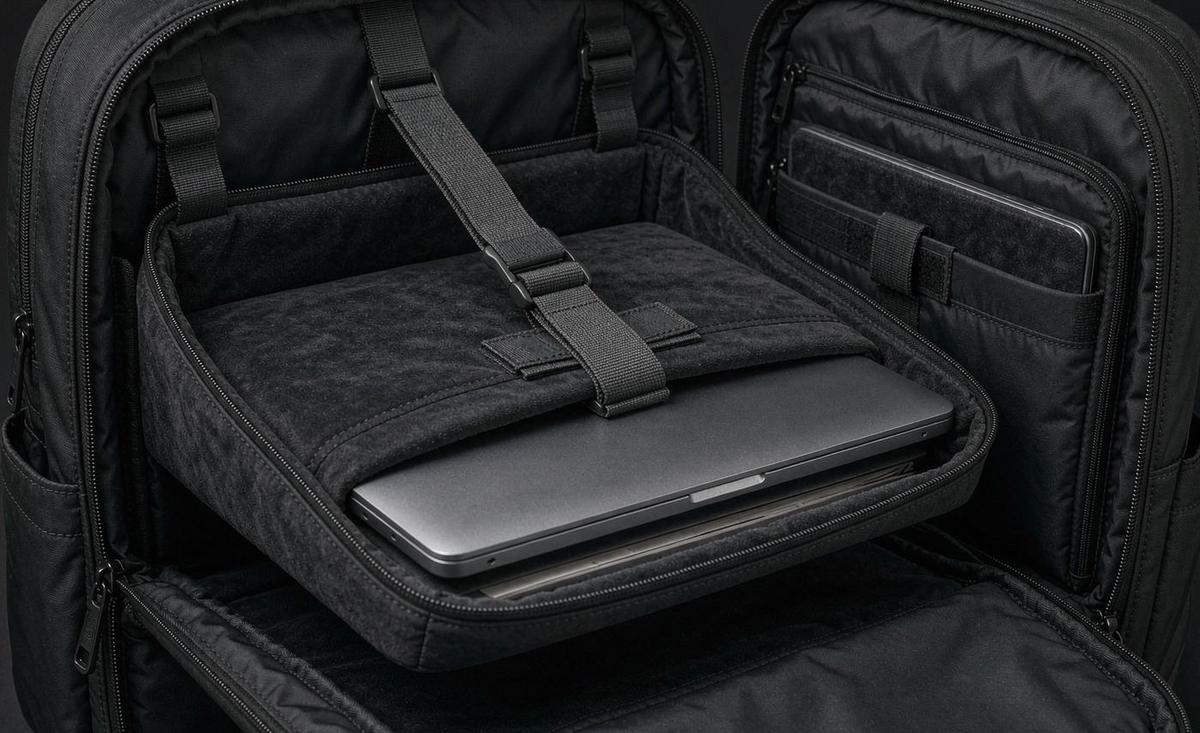
Grading, markers and material yield
Grading is creating additional sizes from a base pattern, and most bag campaigns need less of it than apparel does. A bag is usually one size, and where a campaign offers two capacities, those are normally two separate styles rather than two grades, because capacity changes panel architecture rather than scale. Understanding that distinction prevents a common misconception: two sizes of the same bag is two styles, each with its own 500-pcs minimum.
Markers are where yield is decided. A marker is the arrangement of pattern pieces on the material width, and the efficiency of that arrangement determines how much fabric each bag consumes. Nesting pieces tightly, respecting the grain direction and avoiding defects in the material, is a specialist task with a direct effect on unit price.
- Grain direction: most woven fabrics have a direction, and pieces must respect it or the bag will twist.
- Pattern repeat: a printed or striped fabric forces alignment, which reduces yield and raises consumption.
- Nap and pile: some materials have a surface direction that must be consistent across all pieces.
- Marker efficiency: the percentage of the material actually used by the pieces.
- Cutting waste: the offcut that cannot be reused, priced into the unit.
A printed or striped fabric deserves a specific warning, because it surprises creators. Matching a stripe or a repeat across panels requires more material than an unstructured arrangement, which means the same bag in a printed fabric costs more in material than the same bag in a plain one. It also requires the marker to place pieces at specific intervals, which reduces flexibility and can raise consumption noticeably.
Yield is worth asking about directly, because it is one of the few places where a design decision has an obvious price tag. moving a seam, splitting a panel or changing a gusset width can improve nesting, and across 500 units the saving is real. Our programme coordinator will flag where a small pattern change improves yield, and the cost structure of a campaign bag shows where that saving lands in the unit price.
Tolerances: what the pattern promises
A tolerance is the permitted variation around a stated measurement, and a pattern without tolerances is a pattern that cannot be inspected against. This is the single most useful thing a creator can put into a specification, and it is the one most often missing. Without it, every measurement taken later is arguable, and an argument about whether something is correct is longer than the correction itself.
Tolerances also have to be achievable, and achievability is a material property rather than a preference. A stiff coated woven holds a tight tolerance because it does not stretch or slip. A soft uncoated fabric moves under the presser foot and holds a looser one. A knit moves more again. Asking for plus or minus 2 mm on a soft material is asking for a re-cut rate rather than for precision, and the cost lands in the unit price.
| Material | Realistic tolerance | Why | Risk if too tight |
|---|---|---|---|
| Coated woven | Plus or minus 2-3 mm | Stable, does not slip | Low |
| Uncoated woven | Plus or minus 3-5 mm | Moves under the foot | Re-cuts |
| Ripstop nylon | Plus or minus 3-5 mm | Light and slippery | Alignment variance |
| Knit or stretch | Plus or minus 5-8 mm | Stretches during assembly | Panel distortion |
| Coated with stiffener | Plus or minus 2 mm | Structure holds shape | Low |
| Canvas, heavy | Plus or minus 5 mm | Bulk at seams | Seam thickness variance |
The third tolerance conversation is capacity. Litre figures are calculated rather than measured in most specifications, and the calculated figure and the usable figure diverge because objects have shapes. If a campaign states a litre figure, state how it was derived, and verify the stated items fit rather than verifying the arithmetic. A bag described as 22 L that cannot hold what the page shows is a promise problem regardless of the calculation.
Tolerances then travel into the inspection. The finished lot is judged at AQL 2.5 to ISO 2859-1 against the approved reference, and a dimension is only decidable if the tolerance was written first. This is why the pattern stage and the quality stage are the same conversation held at different times, and why the first article inspection opens by reading the tolerance column.
Digital material specification and 3D preview
Modern CAD for soft goods does more than produce shapes. The same file can carry material assignments, allowing a three-dimensional preview of the bag before anything is cut. For a campaign, that preview is what feeds the render assets discussed in the mockup decision, and it is available long before a physical sample exists.
The value is speed and the limit is accuracy, and both should be understood. A preview can be produced in days from a finished file, against the 6-10 working days needed for a physical sample. But a preview cannot show how a fabric drapes under its own weight, how a seam behaves under tension, how a strap sits on a shoulder, or how a colour reads under a particular light source. Those are physical properties, and no material library reproduces them reliably.
- Preview answers: proportion, panel layout, colourway logic, feature placement, scale.
- Preview cannot answer: drape, hand, seam behaviour, comfort, true colour under variable light.
- Use preview for: the campaign page early, the variant menu, the dimension diagram.
- Use the sample for: every claim a backer will verify by holding the bag.
- Never publish a preview as though it were a photograph of a finished product.
The colourway logic is worth separating out, because it is where digital previews earn their keep. Once the model exists, a new colourway is a material reassignment rather than a new build, so a full colourway menu can be shown at a fraction of the cost of physical samples. That is legitimate and valuable, provided the page states which colours are funded and which depend on the survey.
Material specification in the file is the second durable benefit. Recording the shell, lining, webbing, zip tape, thread and trim references against the pattern means the file carries the whole product definition. When a re-order arrives, reopening the file restores every decision rather than only the shapes, and that is what makes the second run match the first.
From pattern to cut: nesting and the cut file
Once the pattern and the marker are approved, the file drives the cutting. For sampling this may be a single-layer cut by hand or on a small table; for bulk it is a spreading and cutting operation across many layers. The transition is where a design that sampled well can still go wrong, because bulk cutting introduces variables that a single sample does not.
| Variable | Sampling | Bulk | Risk introduced |
|---|---|---|---|
| Layers | 1-2 | 20-60 typical | Layer shift |
| Method | Hand or single-ply | Spread and cut | Knife drag on lower plies |
| Tolerance | Tight, one piece | Wider across the stack | Top-to-bottom variance |
| Material | Any roll to hand | The production lot | Roll-to-roll shade variance |
| Notches | Cut by hand | Cut by machine | Notch depth variance |
| Speed | Slow, careful | Fast, sequenced | Alignment drift |
Layer shift is the classic bulk risk and it is controlled by how the material is spread and by how many plies are cut at once. Fewer plies mean less shift and a slower cut; more plies mean faster cutting and more variance at the bottom of the stack. The right number depends on the material, and it is a production decision rather than a pattern one, but it explains why a bulk unit can differ slightly from a perfect sample.
Knife drag is the second. Cutting through many layers pulls the blade slightly, so the bottom ply can be marginally different from the top. On a tight-tolerance coated woven this matters; on a soft bag with generous allowances it does not. This is another reason tolerances should be realistic rather than aspirational, because an unrealistic tolerance forces a slower, more expensive cut.
The cut file itself should be versioned and stored with the marker, because it is what gets used again on a re-order. A campaign that re-orders from a stored file gets the same yield and the same shapes. A campaign that re-orders from a photograph gets a re-derived pattern, and re-derivation is where a second run starts to drift from the first.
Where CAD prevents production errors
The value of doing this stage properly is not that it produces a nicer drawing, it is that it prevents a specific set of errors that otherwise surface later and cost real money. Six of them recur across bag programmes, and each is preventable at the file stage for the cost of a check.
- Mismatched perimeters: two pieces that should join have different edge lengths, found by a digital assembly check.
- Missing pieces: a stiffener, a binding or a facing that exists in the bag but not in the panel list.
- Grain errors: a piece placed against the grain, which makes the finished bag twist or hang unevenly.
- Decoration impossibilities: a logo positioned across a seam, a fold or a curve that cannot be embroidered flat.
- Hardware clearance: a pattern that does not leave room for the specified zipper tape, buckle or rivet.
- Assembly impossibilities: a sequence that requires sewing into a space a machine head cannot reach.
Decoration across a seam is one of the most common and one of the most expensive, because it is usually discovered only when the sample is decorated. A logo that spans two panels with a seam between them cannot be embroidered as one continuous mark at production speed, and the options are to move it, to split it, or to accept a visible break. Deciding that in the file costs nothing; deciding it after the sample costs a round.
Hardware clearance is similar. A pattern drawn without accounting for the width of a zipper tape, or for the body of a buckle, produces a bag where the hardware either does not fit or distorts the panel it is set into. Recording hardware dimensions in the file and checking the pattern against them is a five-minute check that prevents a rebuild.
The assembly impossibility is the one that costs the most in unit price. A sequence that requires a sewer to work inside a closed space is slow, and slow sequencing is priced into every one of the 500 units. Reviewing the sequence at pattern stage with the people who will actually sew it is the cheapest form of cost engineering in the programme.
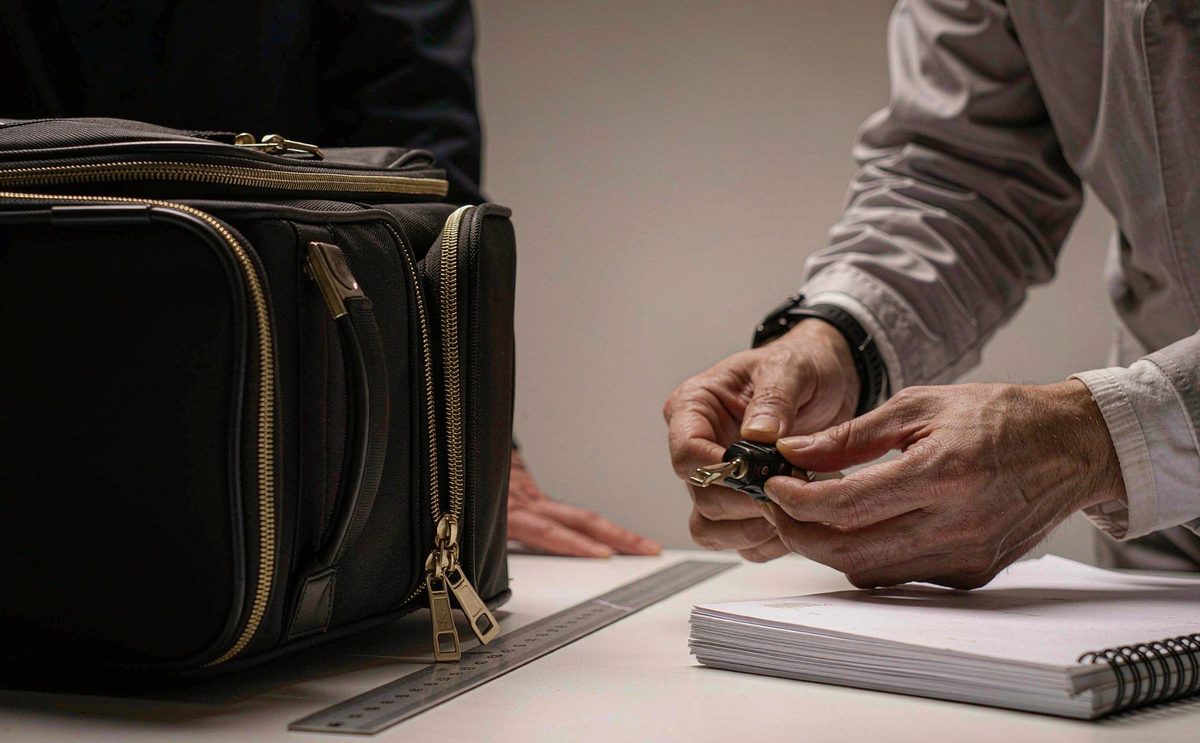
What CAD cannot tell you
CAD is powerful and it has a hard boundary, and knowing the boundary is what stops a campaign from promising something the file never proved. Four things cannot be determined digitally, and all four are things a backer will judge by holding the bag rather than by looking at it.
The first is drape. How a fabric falls under its own weight, how a panel behaves when the bag is empty versus full, whether a structured base holds or slumps: these depend on the material's bending behaviour, which material libraries approximate but do not reliably reproduce. A preview can look crisp and the physical bag can slouch, and nothing in the file predicts which.
The second is hand. How a fabric feels, how a strap edge sits against a neck, whether a handle is comfortable in a closed hand: these are tactile and comparative. They can be specified against a reference swatch but they cannot be simulated. This is why the approved physical reference remains the standard even for programmes with excellent digital assets.
The third is true colour. A screen colour is an interpretation, and a render colour is a second interpretation on top. Physical colour is defined by a lab-dip or a stock reference under a controlled light source, and it shifts with the light it is viewed under. No file resolves this, which is why physical references and controlled-light photography exist.
The fourth is durability. Seam strength, abrasion resistance, zipper life under tension and strap attachment behaviour are all physical outcomes of material, thread, stitch density and reinforcement. They can be specified and tested on a physical unit, and they cannot be inferred from a pattern. That is what the prototype review and the later load testing are for.
Revision control: the pattern version is the product
A bag programme generates revisions, and the pattern file is where they accumulate. Without version control, two people can be working from different understandings of the same bag, and the discrepancy surfaces as a bulk lot built to a revision nobody remembers agreeing. Three habits make version control real, and they cost minutes each.
- Number every pattern revision, and date it.
- Record what changed in each revision and why.
- Confirm in writing which revision a sample was built to.
- Store the superseded revisions rather than deleting them.
- Reopen the current revision at the start of every re-order.
- Never accept a verbal description of the current revision.
The second habit, recording why, is the one that pays off later. A pattern note saying the pocket depth was reduced by 20 mm at revision 4 explains a discrepancy that would otherwise look like an error. Without it, someone comparing an old sample with a new one sees a difference and cannot tell whether it was intentional.
The fifth habit protects the re-order, which is where most long-term value is lost. A campaign that funds well and re-orders in eight months needs the same file, at the same revision, with the same materials. If the file has drifted or the revision is unclear, the second run is approximate, and approximately is where complaints live. Our team opens every re-order by reopening the stored file rather than by rebuilding from a sample.
There is a commercial reason for the discipline too. A quotation is built against a specification and a pattern revision. A change requested after the quotation, without a revision number attached, is a change nobody has priced. Attaching the revision number to every change request is what keeps the price and the product aligned.
From CAD file to the first sewn sample
The output of the CAD stage is a cut file, a marker, a component list and a construction sequence, and those four go to the workshop. The first sewn sample is then built in 6-10 working days for a standard construction, or 12-15 working days for a complex one. Everything the file decided now becomes visible, and the review that follows is the first time anyone can check whether the decisions were right.
The first sample should be reviewed against the file as well as against the intention. If the bag measures differently from the pattern, that is a construction finding. If the bag measures exactly as the pattern specifies and still feels wrong, that is a design finding, and the correction belongs in the file rather than in the sewing. Distinguishing the two is what stops a programme from chasing the same problem through three rounds.
From there the programme moves through the revision, the pre-production gate and the production 35-50 days, with the lot inspected at AQL 2.5 to ISO 2859-1, deposit and balance under T/T 30/70, and trade terms at FOB Xiamen. The pattern file travels the whole way, and it is the one artefact that makes every stage repeatable rather than approximate.
The lesson for a creator is to invest in the stage they cannot see. The sketch is theirs and the sample is visible, but the pattern in between is where the bag is actually decided. Putting the difficult decisions there, with tolerances, material references and a version number, is the cheapest thing a campaign can do for its own schedule and its own re-order.
Have a sketch and need to know what it takes to become a pattern? Send the drawing, the dimensions and the material direction through the contact quotation form and we will tell you what the tech pack needs before CAD starts.
Frequently Asked Questions
What is CAD development for a custom bag?
The stage that converts a sketch into manufacturable flat patterns with seam allowances, notches and tolerances, then into markers and a cut file. It sits between the drawing and the first sewn sample, and it is where cost, fit and yield are actually decided. A change in the file costs an edit; the same change after a sample costs a sampling window.
What goes into a bag technical pack?
Dimensions with tolerances, a panel list naming every piece, material references per piece, hardware references and finishes, the construction sequence with seam types and allowances, decoration artwork with method and position coordinates, and the packing rule. Most sampling problems trace back to a pack that left something to interpretation.
Why does the tolerance column matter so much?
Because a dimension without a tolerance cannot be inspected. Typical soft-goods starting points are plus or minus 5 mm on overall dimensions, 3 mm on openings and handle drop, and 2 mm on alignment and decoration position. The right figure depends on the material, because a soft uncoated fabric will not hold a tight tolerance.
How does CAD affect the unit price?
Through marker yield. How efficiently the pattern pieces nest on the material width decides how much fabric each bag consumes, and across 500 pcs that compounds into the unit price. A printed or striped fabric reduces yield further, because pieces must be aligned to the repeat, which raises consumption.
Are two sizes of the same bag one style?
No. A capacity change alters panel architecture rather than scale, so it is normally a new style with its own pattern, its own sampling and its own minimum of 500 pcs per style and per colourway. Grading, which is scaling a pattern, applies far less in bags than it does in apparel.
What is a marker in bag production?
The arrangement of pattern pieces on the material width. It determines material yield, respects grain direction, and accommodates pattern repeats where the fabric has one. Marker efficiency is one of the few places where a small design change has a direct and visible effect on unit cost.
Can a 3D preview replace a physical sample?
No. A preview answers proportion, panel layout, colourway logic and scale, and it can be produced in days rather than the 6-10 working days a sample needs. It cannot show drape, hand, seam behaviour, comfort or true colour under variable light, which are exactly the properties a backer judges by holding the bag.
What production errors does CAD prevent?
Mismatched perimeters between pieces that should join, missing pieces such as stiffeners or facings, grain errors that make a bag twist, decoration positioned across a seam or fold, insufficient clearance for the specified hardware, and assembly sequences a machine head cannot physically reach.
Why can a logo not cross a seam?
It cannot be embroidered or printed as one continuous mark at production speed when a seam runs through it. The options are to move it, to split it deliberately, or to accept a visible break. Deciding that in the pattern file costs nothing, while deciding it after the sample costs a full revision round.
Why does a bulk bag differ slightly from a perfect sample?
Bulk cutting spreads many plies and cuts them together, which introduces layer shift and knife drag, so the bottom ply can differ marginally from the top. Roll-to-roll shade variance in the material adds a second variable. Realistic tolerances and a retained approved reference are what keep the difference acceptable.
What is pattern revision control and why does it matter?
Numbering and dating every pattern revision, recording what changed and why, and confirming which revision each sample was built to. Without it a bulk lot can be built to a revision nobody remembers agreeing. With it, a re-order eight months later reopens the same file and repeats the same bag.
How long does CAD take before sampling starts?
It depends on whether an existing block can be used. Working from a proven block close to the intended shape is faster and lower risk; building a new block for a genuinely new shape adds development time. Once the file is approved, the first sample takes 6-10 working days, or 12-15 for a complex build.
People Also Ask
What is a tech pack for a bag?
The document that turns a sketch into instructions: dimensions with tolerances, panel list, materials, hardware, construction sequence, decoration and packing.
What is a flat pattern?
The two-dimensional shapes that, when sewn together, produce the three-dimensional bag. It is a drawing of the pieces, not of the bag.
What is a marker?
The layout of pattern pieces on the material width. It decides material yield, which decides unit price.
What is a seam allowance?
The margin of fabric beyond the stitch line. Too narrow and the seam is weak, too wide and the interior is bulky.
What is a notch on a pattern?
A small mark on a pattern edge telling the sewer where two pieces must meet. It is what makes 500 units align the same way.
Can I skip CAD and go straight to a sample?
You can, but you lose the tolerance, yield and revision record, and a re-order then has to be re-derived from a physical sample.
Does a printed fabric cost more?
Usually yes in material terms, because matching a repeat reduces marker yield and raises consumption per unit.