Premium Nylon for Kickstarter Bags: When the Upgrade Pays For Itself
Branded premium nylon earns its premium in three campaign profiles: bags sold on abrasion or a warranty, bags where shell weight is contested, and premium reward tiers where backers expect named components. It is a poor buy for fashion-led totes, entry reward tiers and print-driven designs. You are paying for abrasion and tear performance per gram plus brand permission, not for water resistance, which comes from coating and seam construction. Require the article reference and a test report with the method named, upgrade thread and stitch with the fabric, and confirm permitted brand usage before artwork is finalised. MOQ is 500 pcs, sampling 6 to 10 working days, bulk 35 to 50 days.
- What Premium Branded Nylon Actually Is
- Abrasion per Gram: the Property You Are Actually Buying
- Denier Classes and Where They Sit in a Campaign Range
- The Cost Delta: What You Pay and Where It Lands
- When the Premium Is Justified: Four Campaign Profiles
- When It Is the Wrong Buy: Four Cases We Talk Creators Out Of
- Authenticity, Labelling and What You May Legally Claim
- Coatings, Finishes and Water Performance on Premium Nylon
- Construction Consequences: Thread, Needles and Seam Design
- Sampling, Evidence and the Approval Gate
- Writing the Premium Nylon Line Into Your Spec
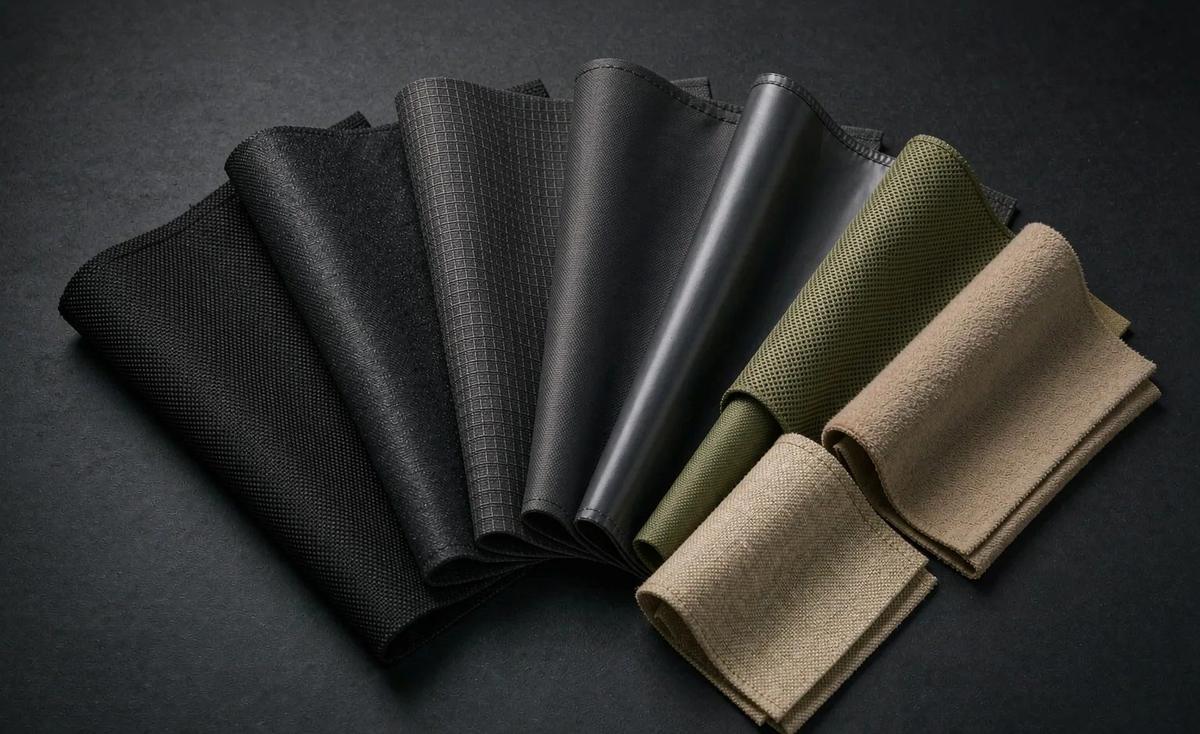
Premium branded nylon, the family most creators know by the Cordura name, is worth its premium in roughly three campaign profiles: bags sold on abrasion and a warranty promise, bags where every gram of shell weight is contested, and bags positioned at a price point where backers expect a named material. It is not worth it for a fashion-led tote, a giveaway-tier reward, or any design where the printed graphic is the product. The premium is typically paid for abrasion per gram and brand permission, not for water resistance, not for colour, and not for structure. This guide sets out the cost delta, the test evidence to demand before you pay it, and the campaigns where the money is better spent elsewhere.
Buying premium nylon is buying two things: certified abrasion performance and the right to use a name backers already trust. If your campaign uses neither, you are funding the brand owner, not your product.
What Premium Branded Nylon Actually Is
The confusion starts because the brand name is used as though it were a fibre. It is not. The brand covers a family of textured nylon fabrics, historically built on nylon 6.6, produced by licensed mills that must meet the brand owner's performance thresholds. The fabric you buy is therefore both a construction and a licence: the mill has qualified a specific article, and finished goods made from it can carry the brand name only under the terms of that programme.
That structure has a practical consequence for creators. You cannot simply ask for a heavy nylon and call it by the brand name. If your campaign page, hangtag or woven label is going to use the name, you need to be sourcing a qualified article from a licensed source with documentation, and you need to confirm what the brand owner permits in labelling. Ask your supplier for the article reference and the qualification evidence before you write the word into your campaign copy.
The construction itself matters independently of the brand. Air-jet textured yarns give the fabric a cotton-like hand with the strength of filament nylon, which is why these fabrics feel less slippery than a standard shiny nylon shell. Weave density, filament count and finish then determine the specific abrasion and tear behaviour. Two fabrics inside the same brand family can differ substantially, so the article number belongs on your tech pack, not just the brand word.
For the wider fibre decision, it helps to remember where nylon sits generally. Our comparison of nylon, polyester and recycled PET for crowdfunding backpacks covers the family trade-offs in detail, and the custom bags for Kickstarter campaigns overview places the shell decision inside the full scoping sequence.
Abrasion per Gram: the Property You Are Actually Buying
Strip away the branding and the engineering argument is simple. For a given fabric weight, nylon 6.6 delivers more abrasion resistance and higher tensile strength than polyester, because the polymer has higher tenacity and a more resilient molecular structure. That means a bag can be made lighter for the same service life, or longer-lived at the same weight. On a backpack that is worn daily, that difference is what backers feel in year two and year three.
The published evidence for any specific article is a test report, and the reports are only comparable when the method is named. For abrasion, results are normally given as cycles to a defined endpoint using Martindale or Wyzenbeek; for tear, as a force value using the Elmendorf or tongue-tear methods. Qualified premium articles commonly report abrasion results in the tens of thousands of cycles and tear strength in the tens of newtons and above, with the exact figures depending on denier and construction. Those are bands to confirm by report, not assumed values.
The counter-property is worth stating plainly because it surprises creators. Nylon absorbs more moisture than polyester and it is more sensitive to ultraviolet exposure. A wet nylon shell stretches slightly and takes longer to dry, and long-term sun exposure degrades nylon faster than polyester. Neither is disqualifying for a bag, but if your product lives outdoors permanently, such as a beach or bike-packing bag, the fibre choice deserves a second look.
- Buying: abrasion and tensile performance per gram of shell weight.
- Buying: brand permission, if your marketing will actually use the name.
- Not buying: water resistance, which comes from coating and seam construction.
- Trading off: higher moisture absorption and lower UV stability than polyester.
Denier Classes and Where They Sit in a Campaign Range
Premium nylon articles for bags are usually offered in a ladder of denier classes, with lighter classes around 330D to 500D for pack cloths and heavier classes around 1000D and above for base panels and hard-use gear. The lighter classes are where the material earns its reputation, because that is where a 500D nylon outperforms a much heavier polyester on abrasion while weighing less.
In a campaign range the usual shape is a lighter premium nylon on the body and either a heavier nylon or a cheaper heavy polyester on the base. That hybrid keeps the weight saving where backers feel it, on their shoulders, and puts cheap mass where the wear happens, on the ground. It also protects your unit cost, because the base panel is a small area relative to the whole shell.
Be careful with denier comparisons across fibres. A 500D nylon and a 500D polyester have the same yarn weight by definition but not the same performance, and a 1000D nylon is a very different product from a 1000D polyester in both hand and price. When you compare quotes, compare denier and fibre together, then ask for the abrasion and tear reports that settle it. Our comparison of ripstop nylon against 1680D polyester shows how misleading a denier-only comparison can be.
| Campaign profile | Premium nylon verdict | Reason |
|---|---|---|
| Technical everyday backpack | Usually yes | Abrasion per gram supports a multi-year promise |
| Travel and adventure bag | Usually yes | Weight saving matters and the name supports price |
| Tactical or tool bag | Yes | Abrasion is the product promise itself |
| Fashion-led tote or sling | Usually no | Hand and print dominate, abrasion is unused |
| Giveaway or entry reward tier | No | Cost per unit outweighs any benefit |
| All-over printed graphic bag | No | Nylon resists the print methods that carry graphics |
The Cost Delta: What You Pay and Where It Lands
Branded premium nylon typically costs a multiple of a comparable mid-weight polyester shell, and the multiple widens at heavier deniers and with special finishes. In planning terms, campaigns that switch a full shell from a standard polyester to a qualified premium nylon should expect the fabric line of the cost breakdown to move materially, which is why the decision has to be made against a target retail price rather than in isolation.
The important second-order effect is that the fabric is only part of the increase. Premium nylon usually needs matching thread, appropriate needle sizes, and sometimes a different seam construction to realise its strength. If you upgrade the shell but keep a thread that fails before the fabric does, you have paid for performance you cannot use. Budget the thread and the sewing specification with the fabric, not after it.
There is a mitigating factor that creators overlook: because premium nylon performs at lower weight, you can sometimes reduce the denier or drop a reinforcement layer and land at a similar total cost. A lighter shell also reduces finished bag weight, which cuts outbound freight and per-parcel shipping to backers. On a campaign shipping several thousand units internationally, the freight saving is not trivial and it belongs in the calculation.
Our working advice is to model the decision three ways: full premium shell, hybrid shell with premium body and standard base, and standard shell with a heavier denier. Compare landed cost per pledged unit including freight, not fabric price per yard. The middle option wins more often than creators expect, and it is the one we quote most often in practice.
When the Premium Is Justified: Four Campaign Profiles
Profile one is the abrasion-and-warranty campaign. If your page promises a multi-year guarantee, a repair programme or a lifetime replacement, the material is the evidence behind that promise. Premium nylon with a documented abrasion result is defensible in a way that a generic 900D polyester is not, and it reduces the cost of honouring the promise later.
Profile two is the weight-critical campaign. Bikepacking, one-bag travel, and commuter packs sold on grams all benefit from abrasion per gram. Here the premium buys a measurable specification advantage you can put in a comparison table on the campaign page, and backers in this segment read those tables carefully.
Profile three is the premium-price campaign. Above a certain pledge level, backers expect named components: a known fabric, a known zipper brand, a known buckle. Using a recognised material is partly a material decision and partly a risk-reduction device for the buyer. If your reward is priced two or three times the market average, the named fabric is part of justifying that price.
Profile four is the repeat-backer campaign. If you have run a previous campaign and your audience already knows what your bags are made of, changing materials downward is visible and costly. Consistency of material across a product family matters more here than the incremental cost, and we advise creators in this position to hold the specification and find the savings elsewhere in the build.
One test we apply with creators is simple and it settles most of these arguments quickly: write the sentence you intend to put on the campaign page about the material. If that sentence names a test result, a lifespan or a comparison that a backer could check, the premium is doing real work. If the sentence is an adjective, the money is usually better spent on lining, hardware or padding, all of which backers touch every day.
When It Is the Wrong Buy: Four Cases We Talk Creators Out Of
The first is the print-led campaign. Nylon is resistant to the processes that carry graphics. Sublimation bonds to polyester, not nylon, and screen printing on nylon needs specific ink systems and adhesion testing. If the artwork is the product, a polyester shell will give you better print fidelity for less money, and the abrasion performance you give up is not what backers are buying.
The second is the soft, draping product. Premium textured nylon has a distinctive hand that reads technical. On a sling, a belt bag or a fashion tote where the design language is soft and quiet, that hand works against the design. Creators sometimes specify the expensive fabric and then spend the rest of the development budget trying to make it behave like something cheaper.
The third is the giveaway or entry tier. If the bag is a secondary reward inside a larger pledge, backers will not evaluate its abrasion performance and your margin per unit is thinnest exactly where the premium hurts most. Spend the money on the hero product in the tier and keep the accessory honest and well made rather than over-specified.
The fourth is the campaign that will not use the name. If you are not going to reference the brand on the page, the hangtag or the label, you are paying for a permission you will not exercise. An unbranded high-tenacity nylon of similar construction may deliver most of the physical performance at a lower price, and that is usually the better buy in this case.
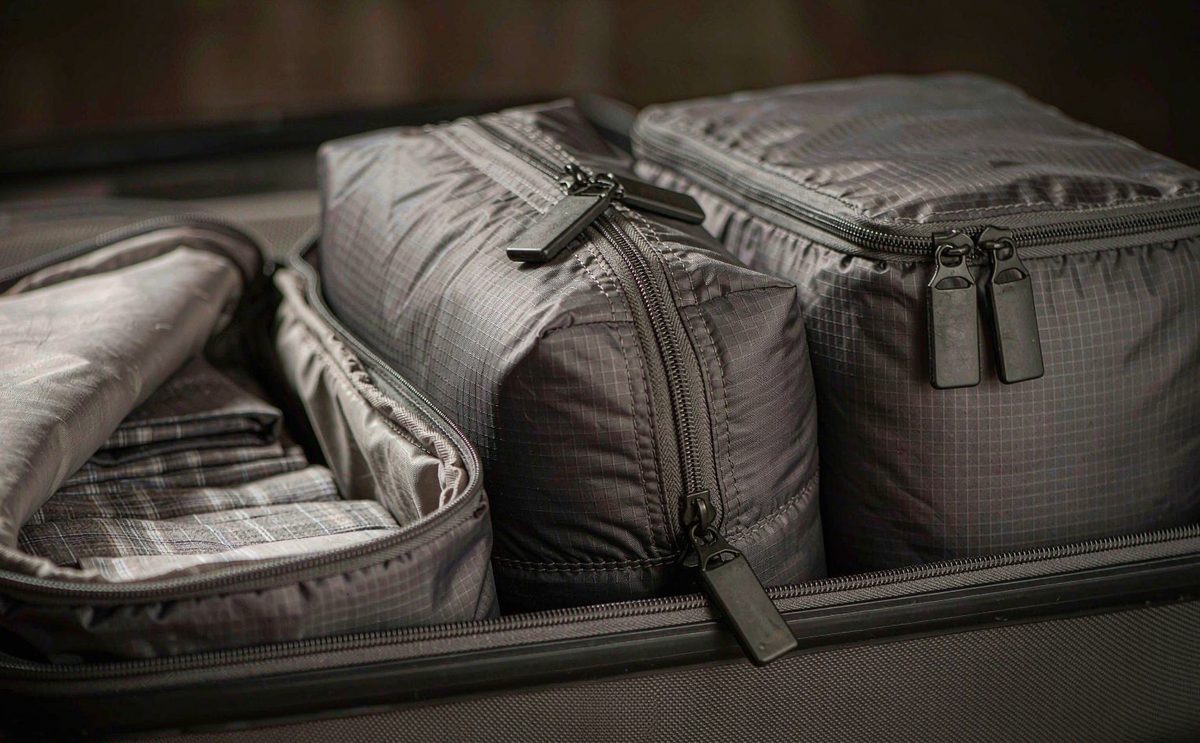
Authenticity, Labelling and What You May Legally Claim
This is the section creators most often skip, and it is where a premium material decision can turn into a legal and reputational problem. Using a brand name in marketing is governed by the brand owner's programme, not by your supplier's willingness to sell you the cloth. If you intend to print or weave the name anywhere on the product or the page, confirm the permitted usage and get the article documentation in writing before you commit.
The second risk is substitution. Because premium nylon commands a higher price, it is a category where unqualified look-alikes circulate, sometimes sold with loose language that implies brand equivalence. The defences are concrete: buy through a channel that can show the article reference and qualification, require the test report for that article, and verify the fabric on the pre-production sample rather than trusting the paperwork alone.
The third is claim discipline on the campaign page. Saying a bag uses a named fabric is a factual claim about composition and should be accurate. Saying it is indestructible, or quantifying a lifespan you have not tested, is a claim you cannot support. We advise creators to publish testable statements with the method attached, and to keep marketing adjectives separate from specification claims.
If sustainability is part of your story, note that premium nylon articles are also offered with recycled content and with specific finishing chemistries. Those variants carry their own documentation requirements, and the claims need to be traceable. Our guide to recycled PET bags and sustainability claims that hold up covers the documentation discipline involved.
Coatings, Finishes and Water Performance on Premium Nylon
A recurring misconception is that a premium shell fabric is also a waterproof one. It is not. Water resistance comes from the coating or laminate on the reverse face and the seam construction, and those are separate line items in the specification. An uncoated premium nylon will wet out in sustained rain exactly like any other woven fabric.
The usual options are PU coating for general water resistance, TPU laminate where you need weldability and better low-temperature flexibility, and a DWR face finish to make water bead and to keep the face from wetting out and looking saturated. Performance is measured by spray test rating and by hydrostatic head in millimetres, and the numbers you should target depend entirely on what your page promises.
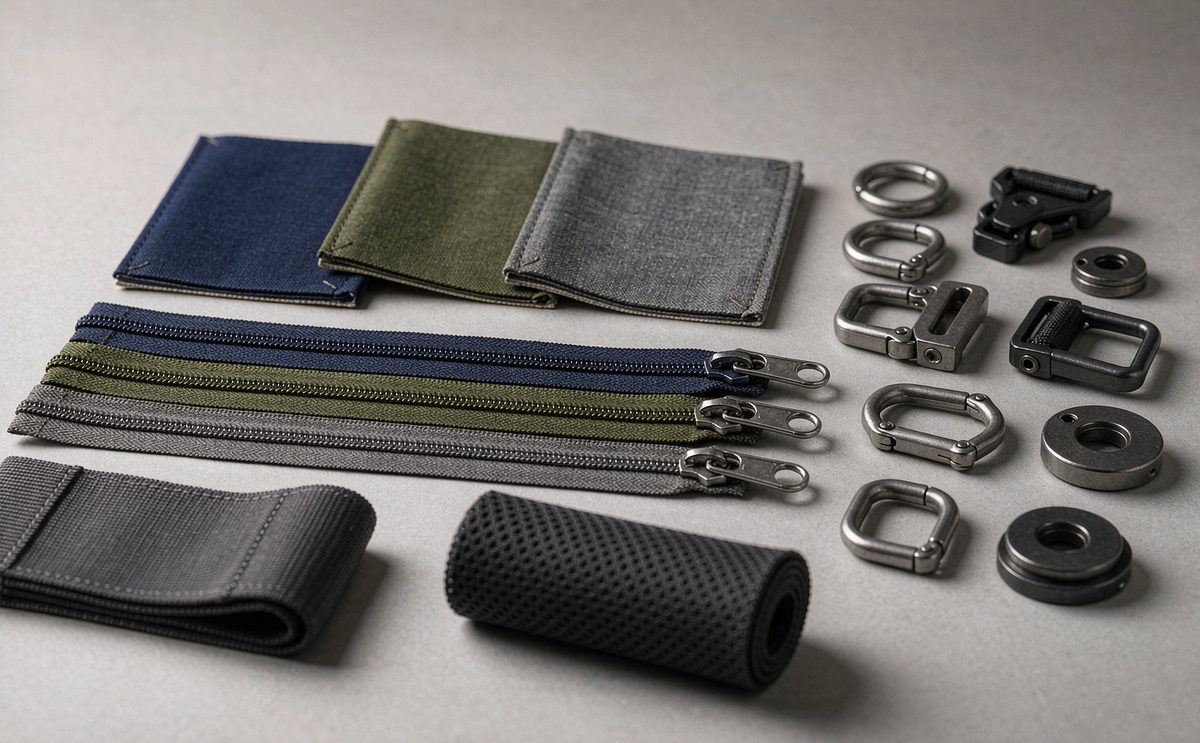
One nylon-specific note: because the fibre absorbs moisture, a wet shell can gain a small amount of weight and dimension, and drying takes longer than with polyester. That has a practical consequence for travel and gym bags, where a damp bag packed away is a mould and odour risk. If your product will routinely be packed wet, specify a lining and ventilation strategy as well as a shell coating.
Where genuine rain performance is the promise, the engineering is in the seams, not the fabric. Our guide to custom waterproof backpacks and seam construction sets out what taped seams, welded construction and storm flaps actually deliver, and our waterproof bag testing guide explains how those claims are verified, which is worth reading before you publish any water-related promise.
Construction Consequences: Thread, Needles and Seam Design
A premium shell only performs if the assembly around it performs. The first upgrade is thread. A bonded nylon or polyester thread of adequate ticket size should be specified so the seam is not the weakest element; if the fabric outlasts the thread by a wide margin, the extra fabric spend is wasted. Ask what thread is being used and at what ticket size.
The second is needle and stitch selection. Dense woven nylon is prone to needle heating and to skipped stitches if the needle is wrong, and every needle hole is a potential water path if the bag is coated. Stitch density matters too: closer stitching distributes load but perforates the fabric more. This is a genuine engineering trade-off, and it should be settled on a pre-production sample rather than left to the line.
The third is load path design. Premium nylon resists abrasion and tear, but a strap anchor still fails by pulling out of the panel. Reinforcement patches, bar-tacks, and load spread across a wider area do more for real-world durability than any fabric upgrade. Our companion guide on bag material testing for fabric and print adhesion describes the assembled tests that catch this.
Finally, consider abrasion against itself and against hardware. A premium shell will survive ground contact, but webbing rubbing on a metal ring, or a zipper pull dragging across a panel, will still wear it. Small design decisions such as a webbing keeper, a covered ring, or a protected zipper garage often extend real service life more than the fabric choice does.
Sampling, Evidence and the Approval Gate
The right way to buy a premium material is to make the evidence part of the sample approval, not a separate conversation. At sample stage you should hold the article reference, the abrasion and tear test report for that article, the coating specification with hydrostatic head or spray rating, and a signed physical swatch. If any of those are missing, you are approving a description rather than a material.
Sampling itself runs 6 to 10 working days for a standard build and 12 to 15 working days for complex constructions with moulded panels, padding or integrated hardware. Premium fabrics can add a little to that because the material is often procured to order rather than pulled from stock, so build the fabric lead time into the sampling window rather than assuming it is on the shelf.
Bulk production then runs 35 to 50 days from approved sample, and finished goods are inspected to AQL 2.5 to ISO 2859-1. For a premium shell the defects worth naming explicitly are shade variation, coating marks, needle hole damage at seams, and seam pucker. Because the unit cost is higher, it is worth agreeing a slightly tighter internal tolerance on cosmetic defects than the AQL threshold requires.
Commercials follow the standard structure: FOB Xiamen with T/T 30/70. With a premium fabric this matters more than usual, because the fabric must be booked and paid for well before the finished goods ship, and an unbooked dye lot is the most common cause of a slip in a 35 to 50 day programme.
Writing the Premium Nylon Line Into Your Spec
A premium material line has to be tighter than a generic one, because the price difference creates substitution pressure. Write the article reference, not only the brand word; the denier and construction; the coating type and performance target with method; the abrasion and tear minimums with the named test methods; and the thread and stitch specification that lets the fabric perform.
- Article reference and source: the qualified article, from a channel that can document it.
- Denier, weave and finish: so the fabric cannot be swapped for a look-alike of similar weight.
- Coating and water performance: type, target figure and the test method used to verify it.
- Abrasion and tear minimums: values with the method named, reported before bulk booking.
- Thread, needle and stitch: so the assembly is not the element that fails first.
- Physical standards: a signed swatch and a pre-production sample from the bulk fabric lot.
Two closing practicalities. First, if your marketing will use the brand name, confirm the permitted usage in writing before artwork is finalised. Second, keep the evidence pack with the tech pack, because if a backer or a retail partner ever asks what the bag is made of, the answer should be a document rather than a memory. Our campaign bag specialist can review a draft specification and flag what is missing; send us a brief through the contact page.
Weighing premium nylon against a standard shell? Send us your design, target price and quantity and we will model both options with landed cost.
Frequently Asked Questions
Is Cordura fabric worth the extra cost for a crowdfunding bag?
It is worth it in three cases: when your campaign sells on abrasion or a warranty, when shell weight is contested, and when the reward price point means backers expect named components. It is rarely worth it for fashion-led totes, entry reward tiers or print-led designs. Model the full shell, a hybrid build and a heavier standard shell before deciding.
What actually makes branded premium nylon more expensive?
You are paying for certified abrasion and tear performance per gram, for the licensed article qualification, and for a textured yarn construction that costs more to produce. You are not paying for water resistance, which comes from coating and seam construction, or for colour quality. That distinction is what makes the premium good value in some campaigns and wasted money in others.
Is premium nylon waterproof?
No. Water resistance comes from the coating or laminate on the reverse face plus seam construction, not from the base fabric. An uncoated premium nylon shell will wet out in sustained rain. If your page promises rain protection you need a PU coating or TPU laminate, taped or welded seams, and a storm flap over any exposed zipper. Nylon also absorbs moisture, so drying time matters.
How does nylon compare with polyester for abrasion resistance?
Nylon 6.6 generally delivers more abrasion resistance and higher tensile strength than polyester at the same fabric weight, which is the core engineering argument for the premium. The trade-offs are higher moisture absorption, slower drying and lower ultraviolet stability, so outdoor-permanent products deserve a second look. Always ask for abrasion and tear reports with the method named, because fibre family alone does not tell you how a specific construction performs.
Can I print a full-colour graphic on premium nylon fabric?
Not easily. Sublimation bonds to polyester rather than nylon, so all-over photographic graphics are a poor fit. Screen printing needs nylon-specific ink systems and adhesion testing, and heat transfer films need validation for flex cracking. For graphic-led designs a polyester shell usually gives better fidelity at lower cost, which is why we often talk creators out of the upgrade. Woven labels and silicone patches brand nylon far more reliably than printing does.
What denier of premium nylon should I use for a backpack?
Lighter classes around 330D to 500D suit pack cloths and body panels, where abrasion per gram delivers the advantage. Heavier classes around 1000D suit base panels and hard-use gear. Many campaigns use a lighter premium nylon body with a heavier or cheaper base, which keeps the weight saving where backers feel it and the cost down where wear concentrates. Confirm the denier in writing, because look-alike articles are sold at the same nominal weight.
How do I make sure I am getting genuine branded nylon and not a look-alike?
Buy through a channel that can show the article reference and qualification documentation, require the abrasion and tear test report for that specific article, and verify the fabric on a pre-production sample rather than trusting paperwork. Unqualified look-alikes circulate in this category, so treat documentation and physical verification as two separate gates you both need to pass. Keep the evidence pack with the tech pack for the life of the product.
Can I use the Cordura name on my campaign page and hangtag?
Using a brand name in marketing is governed by the brand owner's programme, not by your supplier. If you intend to print or weave the name on the product or use it in campaign copy, confirm the permitted usage and hold the article documentation in writing before artwork is finalised. Otherwise you risk publishing a claim you cannot support, and a marketplace or retail partner may ask you to substantiate it later.
Does using premium nylon increase the MOQ I have to order?
No. The MOQ stays at 500 pcs per style and per colourway. What can change underneath that figure is the mill's own minimum lot quantity for a specific article or colour, which is why unusual colours and low-volume variants sometimes carry a surcharge. Confirm both numbers when you request a quote, not after the campaign closes. It is also worth asking whether the article is held in stock, because a made-to-order fabric adds lead time before cutting begins.
How long does sampling and bulk take with a premium shell fabric?
Sampling runs 6 to 10 working days for standard builds and 12 to 15 working days for complex ones, with a little extra allowance because premium articles are often procured to order. Bulk runs 35 to 50 days from approved sample. Booking the fabric early is the single most reliable way to protect that schedule, because an unbooked dye lot is the most common cause of a slip in these programmes.
What inspection standard applies to bags made from premium nylon?
Finished goods are inspected to AQL 2.5 to ISO 2859-1. For a premium shell, name shade variation, coating marks, needle hole damage at seams and seam pucker as separate defect classes with limits. Because unit cost is higher, many creators also agree a tighter internal cosmetic tolerance than the AQL threshold alone would require. Verify the shell against the signed swatch at incoming inspection, because a substitution caught at cutting is far cheaper than one found in finished cartons.
Are there recycled or lower-impact versions of premium nylon?
Yes, branded nylon families are offered with recycled content and with specific finishing chemistries, and those variants carry their own documentation requirements. If sustainability is part of your campaign story, treat the claim as traceable documentation rather than a marketing line, and confirm what evidence the source can provide before you publish it. Documentation gaps here are a common reason a late campaign edit becomes necessary.
People Also Ask
Is Cordura worth it for a Kickstarter bag?
Yes if you sell on abrasion, weight or a warranty, and if you will actually use the brand name. No for fashion-led totes, entry tiers and print-heavy designs.
Is premium nylon waterproof?
Not by itself. Water resistance comes from the coating or laminate and from seam construction. An uncoated premium shell wets out in sustained rain.
What is better for a backpack, nylon or polyester?
Nylon usually wins on abrasion and strength per gram. Polyester wins on cost, print compatibility and ultraviolet stability. Choose by the campaign promise.
Can you print on nylon bags?
Screen print with nylon-specific inks or heat transfer films, both requiring adhesion testing. Sublimation does not bond to nylon, so all-over graphics suit polyester better.
How do I verify a branded fabric is genuine?
Require the article reference, the qualification documentation and the test report for that article, then verify against a pre-production sample rather than paperwork alone.
What denier nylon is best for a travel backpack?
Around 330D to 500D for body panels with a heavier class on the base. That keeps weight down where backers carry it and puts mass where wear concentrates.
Does premium fabric change the MOQ?
The minimum stays at 500 pcs per style and per colourway, though mills may apply their own minimum lot quantity per article or colour.