Custom Bag Sourcing in Xiamen: The 2026 Guide for Campaign Creators
Xiamen sits inside the Fujian bag cluster, the densest concentration of backpack, tote and duffle production capacity in China, and the port that gives the region its export advantage sits in the same city. This 2026 guide explains what the cluster actually makes, how it compares with Guangzhou and Pinghu, what the FOB Xiamen term means for your landed cost, what changed on material cost and compliance this year, and how to run a sourcing programme without boarding a plane. All figures reflect the terms we quote: 500 pcs per style and colourway, 6-10 working days per sampling round, 35-50 days bulk, AQL 2.5 to ISO 2859-1.
- Why Xiamen became a bag sourcing hub
- What the Fujian cluster actually produces
- Xiamen compared with Guangzhou and Pinghu
- The port effect and FOB Xiamen
- What 2026 changed
- Sourcing without flying there
- A realistic 2026 cost picture
- Compliance by destination market
- The 2026 sourcing timeline, week by week
- Direct workshop or sourcing partner
- Mistakes creators make in Fujian
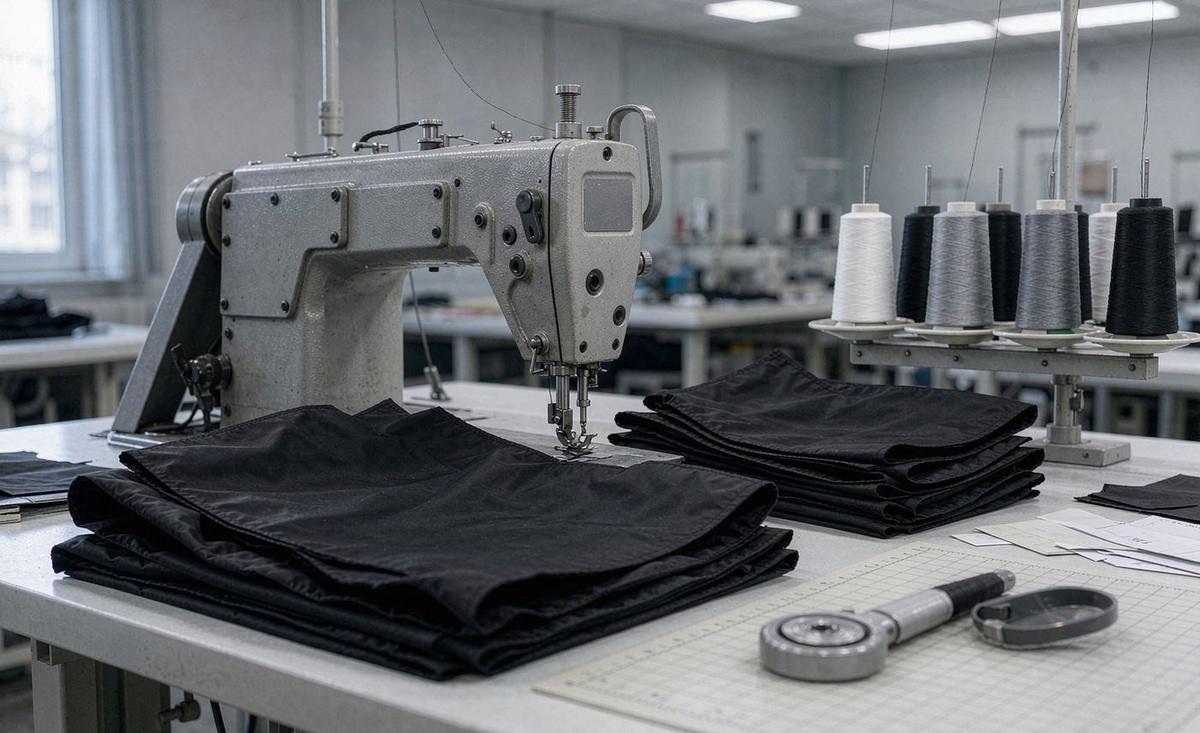
If you are sourcing a custom bag for a Kickstarter or Indiegogo campaign in 2026, the odds are good that your bag will be made in Fujian and shipped out of Xiamen. That is not an accident of geography; it is the result of forty years of concentrated capacity, a deep port, and a supply chain where fabric mills, hardware houses, print shops and assembly lines all sit within a short drive of each other. This guide explains what that means in practice for a creator running a first production programme, what changed this year, and how to run the process without boarding a plane. Start with the bag manufacturing guide for campaign creators if you are new to the vocabulary, then come back here for the regional detail.
Why Xiamen became a bag sourcing hub
Three things built the cluster, and all three still matter. The first is concentration. Within Fujian you can find weaving, dyeing, coating, webbing, zip and buckle production, printing, embroidery and final assembly without leaving the province. That shortens the physical distance between a fabric decision and a finished panel from weeks to days, and it means a material change during sampling does not reset the whole programme.
The second is port infrastructure. Xiamen is one of China's busiest container ports, with regular direct services to North America and Europe. For a creator this translates into more sailing options, shorter inland haulage, and less risk of missing a vessel because a truck was late. When your entire campaign reward tier is sitting in one container, sailing frequency is not a logistics detail, it is schedule insurance.
The third is export experience. Fujian workshops have shipped to Western retail and brand customers for decades, which means the documentation, packing standards and inspection vocabulary are already familiar. A partner in this cluster does not need to be taught what a Pantone reference is, what AQL 2.5 means, or why a packing list has to match the carton marks. That familiarity removes a layer of explanation from every exchange, and explanation is where delays hide.
- Material supply within the province, from fabric and webbing to zips, buckles and labels
- Direct container services and high sailing frequency out of Xiamen port
- Decades of export documentation practice for North American and European markets
- A labour pool with bag specific sewing skills rather than general garment skills
- Inspection and testing providers located close to production, not a flight away
What the Fujian cluster actually produces
Fujian is strong on soft and semi structured bags: backpacks, laptop bags, daypacks, totes, duffles, gym bags, cooler bags, messenger bags and outdoor packs. The floor we work through runs seven production lines with a stated monthly output of 200,000 pieces, which is typical of the mid sized operations in the cluster that suit campaign volumes rather than supermarket volumes.
| Product | Fit with the cluster | Notes for creators |
|---|---|---|
| Backpack and laptop bag | Excellent | Deep pattern and hardware supply, best sampling speed |
| Tote and shopper | Excellent | Simplest construction, fastest to quote and sample |
| Duffle and gym bag | Excellent | Watch webbing and zip gauge on load points |
| Cooler and lunch bag | Good | Lining and insulation sourcing needs extra days |
| Messenger and camera bag | Good | Padding and divider work adds operations and cost |
| Hard shell case | Poor | Moulding capacity sits elsewhere; expect longer lead times |
The caveat is worth stating plainly. If your product needs injection moulding for a hard shell, or heavy leather work, or a highly technical welded construction, the Fujian cluster is not automatically the best answer. Those capabilities exist but they are less dense, and a programme that needs them should expect longer sampling and a smaller set of viable partners. For the overwhelming majority of campaign rewards, which are soft goods with webbing, zips and a printed logo, the cluster is exactly right.
One more practical point about volume fit. The cluster is optimised for runs in the hundreds to tens of thousands per style. That is why the working minimum is expressed as 500 pcs per style and colourway: below that, the setup time on cutting and line changeover dominates the run time and the unit price stops making sense. Campaign reward tiers usually land in the 500 to 5,000 range per style, which sits in the middle of what the cluster does best.
Xiamen compared with Guangzhou and Pinghu
Creators comparing regions are usually choosing between Fujian, Guangdong around Guangzhou, and Zhejiang around Pinghu. All three make bags. They differ in what they are optimised for, and the differences matter at campaign volumes.
| Region | Strength | Trade-off |
|---|---|---|
| Fujian, Xiamen | Soft and semi structured bags, fast sampling, port frequency | Less depth on moulded and leather product |
| Guangdong, Guangzhou | Huge breadth, leather and fashion bags, material markets | More layers between buyer and floor, variable specialisation |
| Zhejiang, Pinghu | Luggage and trolley cases, high volume | Optimised for large runs, less flexible at 500 pcs |
For a creator, the deciding factor is usually not unit price, it is response quality at small volume. In Fujian, a 500 piece backpack is an ordinary enquiry. In a cluster optimised for 50,000 piece luggage runs, the same enquiry is a favour, and favours get quoted slowly and scheduled last. That difference shows up as two extra days per email exchange, and at twenty exchanges it is a month.
There is also a communication pattern worth knowing. Fujian workshops that serve export brands have English speaking programme staff as a norm rather than an exception, because their customers have required it for years. That matters more than creators expect: most schedule slippage in a bag programme comes from a misunderstood answer rather than from a slow machine, and misunderstood answers are a language problem before they are anything else.
If you want a deeper regional comparison including what to look for when a partner's address and production address differ, our China bag sourcing region guide covers the same ground with more detail on verification.
The port effect and FOB Xiamen
FOB Xiamen means the seller delivers the goods to the vessel at Xiamen and the buyer takes over cost and risk from that point. In practice it means your quotation covers production, packing, inland haulage to the port, export clearance and loading. Everything after that, meaning ocean freight, insurance, import duty, customs handling and last mile delivery to your fulfilment warehouse, is yours to plan and budget.
The reason to care about the named port rather than just FOB is that inland cost and risk differ. A workshop in Fujian quoting FOB Xiamen has a short haul to the terminal. The same workshop quoting FOB Shenzhen is adding a long truck journey and a different export routine, and that cost is either in the price or added later. When you compare two quotations, compare the same port, or you are comparing two different baskets of cost.
Freight volatility is the part that catches campaign budgets. Ocean rates move with capacity, and a rate quoted in March may not hold in September. Build your landed cost model with a freight range rather than a single number, and revisit it when you get within about eight weeks of shipping. A reward tier priced at a 14.80 USD unit with a 3.50 USD freight assumption can lose its margin entirely if freight doubles, and that is not a sourcing failure, it is a planning one.
- Confirm the port named in every quotation before comparing prices
- Model freight as a range, not a single figure, and revisit it eight weeks out
- Ask whether export clearance and inland haulage are included in the FOB price
- Budget duty separately by destination market, since rates differ by product classification
- Plan customs and last mile as their own line items with their own time allowance
What 2026 changed
Three shifts are worth knowing before you plan a 2026 programme. The first is material cost drift. Fabric and hardware prices have moved in both directions this year depending on the fibre and the finish, and a quotation held open for months is not a real quotation. Ask for a price validity period in writing, typically 30 days, and know that a quote older than that may come back revised.
The second is compliance tightening. Markets continue to add substance restrictions and labelling requirements, and enforcement has become more consistent. For a creator this means two things: specify compliance requirements at RFQ stage rather than after sampling, and allow calendar time for laboratory testing where it applies. Testing is not instantaneous and it is not part of an AQL inspection, so it needs its own slot in the plan.
The third is capacity availability. Lead times have normalised compared with the disruption years, but the queue has not disappeared; it has become more predictable. A 35-50 day bulk window is now a reliable planning number rather than an aspiration, provided the slot is booked against the three conditions that hold it: approved pre-production sample, cleared deposit and bulk materials in house.
There is a fourth shift that is softer but real: creators are arriving better prepared. Programmes that come in with a complete tech pack, quantity by colourway and a target ship month are moving noticeably faster than they did two years ago, because less of the calendar is spent on clarification. That is good news for anyone willing to do the preparation, and it widens the gap between prepared and unprepared campaigns rather than narrowing it.
- Sampling
- 6-10 working days per round, 12-15 complex
- Bulk production
- 35-50 days from material availability
- Minimum
- 500 pcs per style and colourway
- Inspection
- AQL 2.5 to ISO 2859-1
- Trade term
- FOB Xiamen, T/T 30/70
- Price validity
- Typically 30 days, ask in writing
Sourcing without flying there
Most creators will never visit. That is fine, and in our experience a well run remote programme beats a badly run visit, because a visit produces impressions while a remote process produces documents. What replaces the visit is a sequence of verifications that anyone can run from a laptop.
- Send a complete RFQ with drawing, dimensions, materials, quantity by colourway and target ship month
- Request a live, unedited video walkthrough at a time you choose, from cutting to sewing to packing
- Order a paid sample and evaluate it against a written checklist rather than a feeling
- Ask for the business licence and any audit report, and check that the names match
- Confirm bank details in the contract and verify any change by voice call
- Place the order with a written specification, AQL level, delivery definition and remedy clause
The video walkthrough is the single highest value step and it takes fifteen minutes. Ask to start at the cutting store, walk the sewing lines, stop at printing, and finish at packing and inspection. Ask the person holding the camera to ask an operator a question. A floor that is genuinely running your kind of product has answers immediately available, because the people doing the work know what they are doing and do not need to check with a sales office.
A visit does have one advantage worth being honest about: it tells you how the floor feels, and instinct built over years is real. But weigh it against cost and time. Our DIY visit versus partner guide works through that trade with actual numbers, and for most first time programmes the answer is to spend the visit budget on a second sampling round instead.
A realistic 2026 cost picture
Creators ask for a single price and get frustrated when they receive a range. The honest answer is that bag pricing is driven by five inputs, and until four of them are fixed the fifth cannot be quoted precisely. Those inputs are fabric, hardware, construction complexity, decoration and quantity. Change any one and the number moves.
| Product | Indicative FOB range | Main cost driver |
|---|---|---|
| Tote bag | Low single digits | Fabric weight and handle construction |
| Basic backpack | Low to mid teens | Panel count, padding and zip specification |
| Laptop backpack | Mid to high teens | Divider structure, padding and hardware |
| Duffle bag | Mid teens | Webbing, zip gauge and lining |
| Technical pack | High teens and above | Operations count and specialist materials |
Treat those ranges as orientation, not as a quotation, and note what makes them move. The largest single lever available to a creator is usually material choice and colourway count rather than haggling. Moving from a custom dyed fabric to a near stock shade can remove both cost and calendar time. Reducing from four colourways to two at 500 each keeps the total volume but halves the number of line setups, which is exactly why the minimum is stated per colourway.
The second lever is design simplification at the sampling stage. Every pocket, divider and reinforcement adds operations, and operations are labour. A campaign bag specialist will usually find two or three places where a design can lose an operation without the backer noticing, and each one removes cost from five hundred units. Our price estimate guide goes through the same exercise with worked examples.
Compliance by destination market
Compliance is not one thing, it is a set of requirements that differ by where the bags will be sold. Get this wrong and the problem is not a fine, it is a container that cannot be sold. The right time to raise it is at RFQ stage, because a requirement discovered after sampling can force a material change and restart the clock.
- State the destination markets in your RFQ, not just the ship to address
- Ask which substance restrictions apply to your materials in each market
- Confirm labelling requirements, including fibre content, country of origin and care information
- Ask whether any component needs a specific test report and who holds it
- Allow calendar time for laboratory testing as a separate line in the plan
Where children's products are involved the requirements are stricter and the testing is more specific, including small parts and drawstring rules in some markets. If your campaign has a kids variant, say so at the very start, because it changes component selection and it is much cheaper to design for than to retrofit.
Documentation should be treated as a deliverable, not as an afterthought. Ask for the packing list, commercial invoice and any test reports to be issued in the same format your customs broker expects, and confirm carton marks before packing rather than after. A mismatched packing list is one of the most common causes of a container sitting at a terminal accruing charges while two parties email about a spreadsheet.
The 2026 sourcing timeline, week by week
Working backwards from the date you promised backers is the only reliable way to plan. Here is what a realistic programme looks like when nothing goes wrong, and then what it looks like when one thing does.
| Weeks before delivery | Stage | What must be true |
|---|---|---|
| Week -20 | RFQ and quotation | Tech pack complete, quantities by colourway fixed |
| Week -17 | Sample round one | Materials and hardware specified by reference |
| Week -15 | Sample round two, if needed | All comments consolidated into one revision list |
| Week -13 | Pre-production sample approval | Signed sample held as the bulk reference |
| Week -12 | Deposit and material release | T/T 30 percent cleared |
| Week -11 to -5 | Bulk production | 35-50 days from material availability |
| Week -5 | Inspection at AQL 2.5 | Report issued before balance invoice |
| Week -4 | Balance payment and loading | T/T 70 percent against passed inspection |
| Week -1 to 0 | Freight, customs, fulfilment | Broker and warehouse booked in advance |
Now add the realistic version. Sampling runs 6-10 working days per round on a standard construction and 12-15 on a complex one, and most new designs need two rounds. Clearance takes one to three working days and does not run on bank holidays in either country. Freight and customs are variable by season. The plan above assumes one sampling round; budget two, and you will either finish early or finish on time rather than late.
The single most effective thing a creator can do to compress this timeline is to send a complete RFQ. Every unanswered field becomes a question, every question becomes a delay, and delays compound because they arrive sequentially rather than in parallel. Our complete RFQ guide lists the fields, and the 30 field template gives you a fill in version.
Direct workshop or sourcing partner
Creators often assume that going direct is always cheaper and that working through a partner always adds a margin. Both assumptions are incomplete. Going direct removes a layer, and it also removes the person whose job is to translate your intent into a specification, chase a material, and notice that a delivery date has quietly slipped.
The case for direct is strongest when you have run programmes before, when your tech pack is genuinely complete, when you have a contact on the floor who answers quickly, and when your volumes are large enough to command attention. Under those conditions a layer is a cost with no return.
The case for a partner is strongest on a first programme, on a complex construction, or when your timeline cannot absorb a slow exchange. The value is not mainly in price, it is in translation and escalation: someone who can say what the workshop actually meant, who can get an answer in hours rather than days, and who can escalate a schedule issue before it becomes a missed vessel. A sourcing partner that has supported 20 plus crowdfunding campaigns has also made most of the mistakes already, on someone else's programme.
Whichever route you take, hold onto the same three protections: a written specification, a named AQL level with the balance conditional on passing it, and a delivery definition tied to carrier handover. Those three are cheap to ask for and they are what actually determines whether the programme goes well. The supplier versus partner terminology guide explains what each of these business models is actually responsible for.
Mistakes creators make in Fujian
Six mistakes account for most of the pain we see on campaign programmes, and every one of them is avoidable with about an hour of preparation.
- Sending an RFQ without quantity by colourway, which makes the quote meaningless because setup cost cannot be estimated
- Approving colour from a screen, which no dye house can match and which always produces an argument later
- Skipping the pre-production sample to save ten days, then discovering a line specific fault across 500 units
- Comparing quotations on different trade terms, different ports or different hardware specifications
- Allowing the balance payment to be triggered by a shipping notice rather than a passed inspection report
- Planning freight, duty and fulfilment as one line called shipping, then discovering three separate bills
There is a seventh that is really a summary of the others: treating the first quotation as the beginning rather than the middle of the conversation. A good programme starts with a specification, moves through a sample, and ends with an inspection report. The price is one output of that process, not the process itself, and creators who internalise that end up with bags that arrive on time and look like the render.
Choose the cluster by what your product needs, choose the partner by how they answer a second question, and choose the schedule by working backwards from the promise.
Planning a 2026 campaign bag programme? Send your drawing, quantity by colourway and target ship month to the contact quotation form or service@junyuanbags.com and a campaign bag specialist will send back a costed plan with the critical path marked.
Frequently Asked Questions
Why is Xiamen a hub for bag sourcing?
Three reasons: concentrated material supply within Fujian, a deep container port with frequent direct sailings, and decades of export experience among local workshops that already understand Western documentation and inspection standards.
What products is the Fujian cluster best at?
Soft and semi structured bags: backpacks, laptop bags, daypacks, totes, duffles, gym bags, cooler bags and messenger bags. Moulded hard shell cases and heavy leather work are less dense in the region.
How does Xiamen compare with Guangzhou?
Guangzhou offers broader material markets and more leather and fashion capability, but often more layers between buyer and production floor. Fujian is usually faster and more specialised for soft bag programmes at campaign volumes.
What does FOB Xiamen include?
Production, packing, inland haulage to the terminal, export clearance and loading. Ocean freight, insurance, duty, customs handling and last mile delivery are the buyer's cost and planning responsibility.
Why must I compare quotations on the same port?
Because inland haulage and export routine differ by port. A FOB Shenzhen price from a Fujian workshop includes a long truck journey that an FOB Xiamen price does not, so the two baskets of cost are not comparable.
How much should I budget for a custom backpack in 2026?
Indicative FOB Xiamen ranges put a basic backpack in the low to mid teens and a laptop backpack in the mid to high teens at 500 to 2,000 units. Fabric, hardware, construction complexity and colourway count move the number most.
Can I source from Xiamen without visiting?
Yes. A complete RFQ, a live unedited video walkthrough, a paid sample evaluated against a checklist, licence and audit verification, and a written order with AQL and delivery terms replace most of the value of a visit.
What changed for bag sourcing in 2026?
Material cost drift means price validity periods matter more, compliance enforcement has become more consistent, and bulk lead times have normalised into a reliable 35-50 day window when the line slot is booked.
How long does a full sourcing programme take?
Plan roughly 20 weeks from a complete RFQ to delivery, assuming two sampling rounds. Sampling is 6-10 working days per round, or 12-15 on a complex construction, and production 35-50 days from material availability.
Should I go direct or use a sourcing partner?
Go direct when you have run programmes before, have a complete tech pack and a responsive contact on the floor. Use a partner on a first programme, on a complex construction, or when your timeline cannot absorb slow exchanges.
What compliance should I raise at RFQ stage?
Destination markets, applicable substance restrictions, labelling requirements including fibre content and origin, and any component test reports. Raising these early avoids a forced material change after sampling.
What is the biggest mistake creators make sourcing bags?
Treating the first quotation as the start rather than the middle of the conversation. A programme is specification, sample and inspection report; the price is one output of that process.
People Also Ask
Where are most custom campaign bags made?
In Fujian province around Xiamen, which concentrates fabric, hardware, printing and assembly supply with a major container port in the same city.
Is Xiamen or Guangzhou better for bags?
Xiamen for soft and semi structured bags at campaign volumes with faster sampling; Guangzhou for broader material choice and leather or fashion product.
What does FOB Xiamen mean?
The seller delivers to the vessel at Xiamen including export clearance and loading. Freight, insurance, duty and last mile delivery fall to the buyer.
Do I need to visit China to source bags?
No. A live video walkthrough, a paid sample and a written order with AQL and delivery terms cover most of what a visit would tell you.
How long does bag production take in 2026?
6-10 working days per sampling round, 12-15 when complex, and 35-50 days for bulk from material availability once the sample is approved and the deposit clears.
What is the minimum order for custom bags in Xiamen?
500 pcs per style and colourway, because setup time dominates the run time below that level.
Should I use a sourcing partner or go direct?
Direct if you have experience and a complete tech pack; a partner on a first programme, a complex build, or a tight timeline where escalation speed matters.