Makuake Bags: Entering Japan's Crowdfunding Market With Custom Products
Makuake is Japan's best-known reward crowdfunding platform and it runs on an all-or-nothing funding model, so a bag reward has to be costed, sampled and scheduled before the campaign opens. This article covers the parts that differ from a US or European campaign: a service fee of around 10 per cent plus tax with a possible handling fee on top depending on plan, yen-denominated reward pricing, higher finish expectations, Japanese-language labelling, and fulfilment either from inside Japan or across the border. Figures are as of writing; check the platform's current terms before you budget.
- Why Japan is a different reward market
- What Makuake is and how its funding model works
- The fee stack on a Japanese campaign
- Reward design for Japanese backers
- Quality expectations: what Japanese backers notice
- Language, labelling and documentation
- Sizing and design preferences in Japan
- Pricing the reward in yen
- Production planning: MOQ, colourways and the 500-piece floor
- Shipping and fulfilment into Japan
- Mapping sampling and bulk to a Makuake calendar
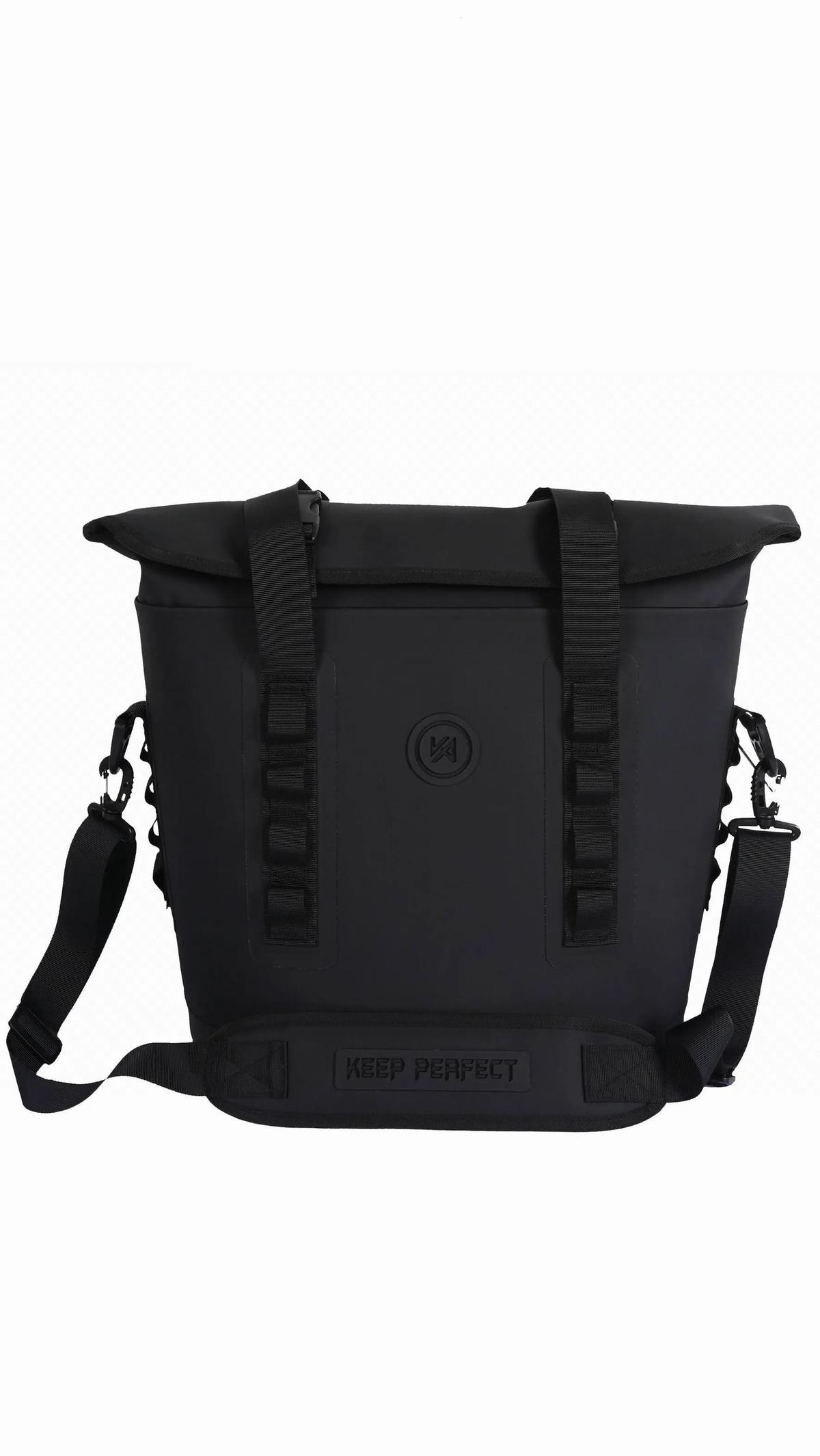
Running a bag reward on Makuake is not a translated version of a Kickstarter campaign. The funding model is different, the fee structure is different, the reward design logic is different, and the tolerance for a sloppy unboxing is much lower. Creators who port a Western campaign across unchanged tend to discover this at the worst possible moment, usually when backer comments start asking about materials in detail or when the fulfilment cost per unit turns out to be double the estimate. This article is written for creators planning custom bags for a Japanese launch, and it sits alongside the wider platform comparison in our Custom Bags for Indiegogo and Multi-Platform Crowdfunding hub.
All platform fee figures in this article are typical values as of writing and should be checked against Makuake's current terms before you budget. Platform commercial terms change, and the difference between a 10 per cent assumption and a 15 per cent reality is the difference between a profitable campaign and one that funds and loses money.
Why Japan is a different reward market
The first adjustment is psychological: Japanese backers are buying from a domestic platform where the norm is a high-finish product delivered on the promised date. Reward crowdfunding in Japan grew up alongside a retail sector where packaging is part of the product, and that expectation carries over. A bag that arrives in a thin poly mailer with a loose thread and a slightly crushed corner will generate comments even if the bag itself is structurally fine. That does not mean Japanese backers are harsh; it means the baseline is higher, and the budget and inspection plan have to reflect it rather than treat packaging as an afterthought.
The second adjustment is commercial. Japanese campaigns frequently price rewards higher than an equivalent Western tier, and backers accept that when the product justifies it. This changes the calculus on custom bags. Where a US campaign might use a simple cotton tote at a low tier, a Japanese campaign is more likely to succeed with one well-made bag at a mid tier than with three cheap variants. Fewer reward variants, better finished is the pattern that works, and it happens to suit production economics well, because the minimum order is 500 pieces per style and per colourway. Consolidating into one strong style with one or two colourways keeps you above that floor without fragmenting the run.
The third adjustment is about communication. Japanese backers read campaign pages closely and ask detailed questions during the live period, and they expect updates to be regular and specific. If your page says the bag is made from 12 oz canvas, somebody will ask what 12 oz means, whether the lining is included, and what the load capacity is. Answering those questions well is a competitive advantage on Makuake, because many campaigns do not. Practically, this means the specification should be settled before the page goes live, not during it, which is another argument for completing sampling before launch rather than after.
What Makuake is and how its funding model works
Makuake is a Japanese reward-based crowdfunding platform operated by CyberAgent Crowdfunding, and it is one of the largest in the country by funded volume. Its default funding model is all-or-nothing: if the campaign does not reach its target by the deadline, the pledges are not collected and the project does not fund. That single fact drives the whole planning sequence, because it means you need confidence in demand before you commit to production, and it means a campaign that stalls at 80 per cent produces nothing at all.
For a bag programme, the all-or-nothing structure has a specific consequence. You cannot treat the campaign as a demand test and then decide what to make. You must decide the style, the colourways and the quantity in advance, because the reward has to be described precisely on the page and the price has to be fixed in yen. The safe sequence is: sample before launch, quote before launch, set the target from known unit economics, then run the campaign. Sampling takes 6-10 working days for a standard construction and 12-15 working days for complex builds, which fits comfortably ahead of a launch if you plan for it.
It is worth knowing the neighbouring option. Campfire, another major Japanese platform, supports both all-or-nothing and all-in funding, and its service fee is typically in the region of 10-12 per cent as of writing. If your priority is to keep whatever is raised regardless of target, Campfire's all-in mode is structurally more forgiving; if your priority is the credibility signal of hitting a target, Makuake's all-or-nothing mode is the stronger frame. The reward production plan is essentially the same either way, so the choice should be made on funding risk rather than on the bag.
The fee stack on a Japanese campaign
Budgeting is where most first-time Japanese campaigns go wrong, because the fee stack is not the same shape as Kickstarter's. On Kickstarter the platform fee is typically 5 per cent of funds raised, with payment processing commonly around 3-5 per cent in the US. On Makuake, the headline is a service fee of around 10 per cent plus tax, and depending on the plan you select there may be an additional handling fee of around 15 per cent. Those two are not simply additive in every case, which is exactly why you must read the current plan terms rather than applying a rule of thumb. All figures here are as of writing; check the platform's current terms.
| Platform | Funding model | Platform or service fee (typical) | Payment processing (typical) | Notes |
|---|---|---|---|---|
| Makuake (Japan) | All-or-nothing | Around 10% plus tax | Included in or alongside the service fee depending on plan | A handling fee of around 15% may apply depending on plan; check current terms |
| Campfire (Japan) | All-or-nothing or all-in | Around 10-12% | Varies by plan | All-in mode keeps funds raised even if the target is missed |
| Kickstarter | All-or-nothing | Around 5% | Around 3-5% in the US | Widely used for international bag campaigns |
| Indiegogo | Fixed or flexible, and InDemand afterwards | Around 5% | Around 3-5% | InDemand typically continues at around 5% after the campaign |
The arithmetic matters more than the comparison. If your platform and handling costs land anywhere near 25 per cent of gross funds, then a campaign raising 5,000,000 yen retains materially less than a naive 5 per cent assumption suggests, and the unit cost of the bag has to be re-derived from the net figure rather than the gross. Work backwards: take the net funds after fees, subtract fulfilment cost per backer, subtract the landed unit cost of the bag including any inbound freight and duty, and only then decide whether the tier price works. Doing this in the other order is how campaigns fund and then discover they cannot afford the reward.
There is one more line that Japanese campaigns routinely underestimate: domestic fulfilment and packaging. If you ship into Japan and then distribute domestically, you pay inbound freight, import duty and consumption tax, a domestic fulfilment fee per parcel, and packaging materials. If you ship direct from China to each Japanese backer, you pay per-parcel international post. Both are viable; the difference is per-unit cost versus lead time and control. Model both before you fix the tier price. The mechanics of per-parcel economics are set out in Reward Packaging for International Backers and the costing template in How to Price Bag Rewards.
Reward design for Japanese backers
The design logic on Makuake rewards tends to invert the Western pattern. In the US and Europe, campaigns often succeed with a wide ladder of bag variants: a tote, a pouch, a backpack, each in several colours, with add-ons. In Japan, the same breadth reads as unfocused. The pattern that performs better is typically one hero bag, one or two colourways, and a small number of well-chosen accessories, with the page going deep on materials and construction rather than wide on variants.
- Lead with a single hero style and describe its construction in detail rather than listing five styles briefly.
- Limit colourways to one or two at launch; each colourway carries its own 500-piece minimum, so breadth costs real money.
- Offer a bundle tier that pairs the bag with a small matching pouch rather than a second full-size bag.
- State materials, dimensions in centimetres and weight explicitly; Japanese backers compare specification, not adjectives.
- Avoid stretch goals that add new colourways late, because they fragment the run and reset the sampling clock.
- Include a Japanese-language insert card; it is read, and it is the cheapest credibility you can buy.
The bundle approach deserves emphasis because it solves two problems at once. It raises average pledge value without adding a new style, and it lets you use a low-cost accessory such as a zipper pouch or a shoe bag to make the tier feel generous. A pouch shares the same fabric and the same print run, so it does not add a new material approval and does not add a new colourway minimum in the way a second bag colour would. Where a campaign does want a second style, the cost and complexity of doing so is covered in Custom Pouches for Kickstarter Add-ons and Choosing a Hero Reward Bag.
One trap to avoid: late stretch colours. A stretch goal that unlocks a third colourway sounds harmless on the page and is expensive in production, because a colourway is not a variant of a colour, it is a separate production run with its own minimum, its own fabric dye lot and its own approval. If you want to offer stretch colours, decide them before launch, quote them before launch, and only publish stretch goals you already know the cost of. Our campaign bag specialist will quote the full colourway set up front for exactly this reason.
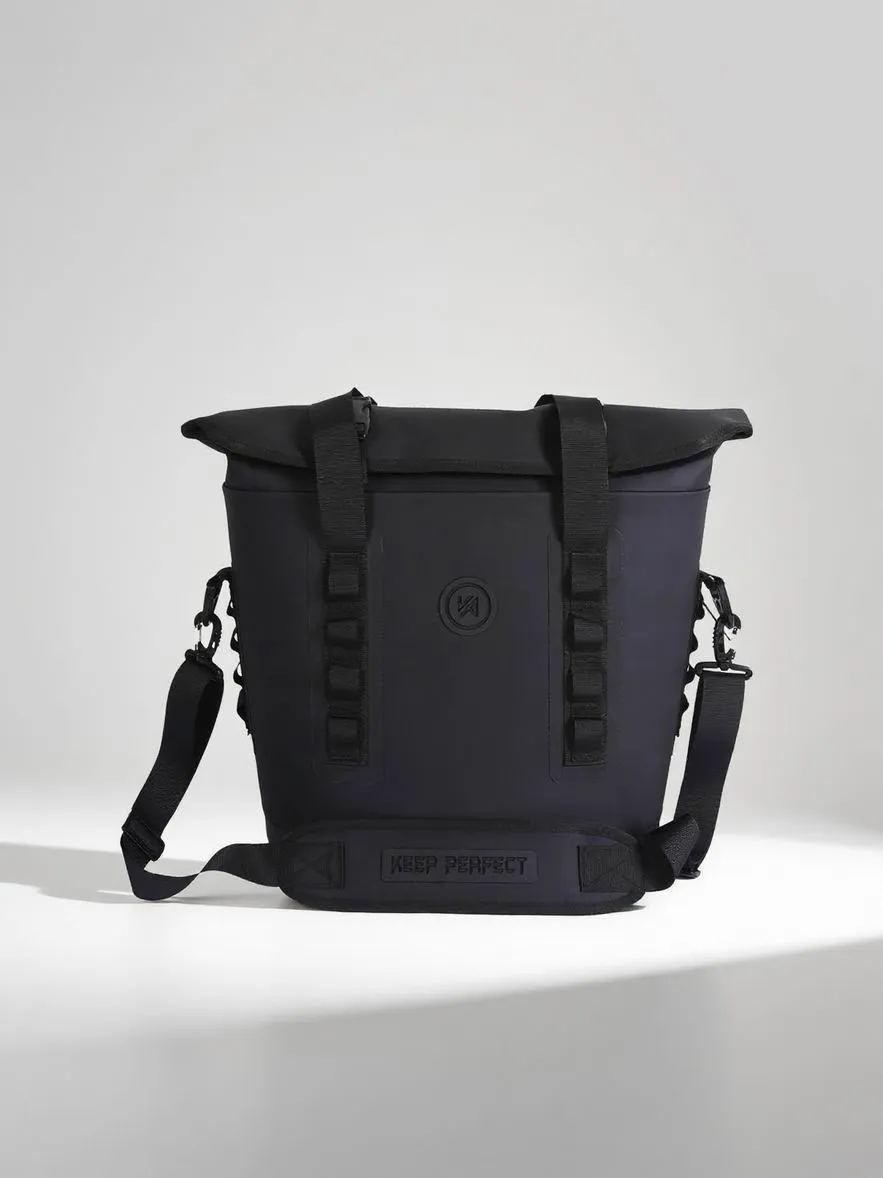
Quality expectations: what Japanese backers notice
If you take one operational decision from this article, make it this: raise the inspection standard for a Japanese campaign. Not because Japanese backers are unreasonable, but because the defects that generate complaints there are the ones a standard AQL pass will tolerate. Loose thread ends, uneven topstitch spacing and slight print offset are classified as minor defects and typically held to AQL 4.0. On a Western campaign those are usually absorbed without comment. On a Japanese campaign they are the difference between a page full of praise and a page full of photographs of thread ends.
The practical response is not to demand perfection, which is unachievable and expensive, but to move specific findings up a class in your written plan. A workable formulation for Japan is to hold major defects to AQL 2.5 to ISO 2859-1 as usual, and to tighten minors from AQL 4.0 to AQL 2.5 for surface finish items only: thread ends, topstitch consistency, print registration and visible shading. Everything else stays as normal. That targeted tightening is far cheaper than a blanket tightening across all classes, and it addresses the specific findings that drive Japanese backer complaints.
Add two process controls as well. The first is a 100 per cent visual sort on surface finish for the first campaign, over and above the AQL sample. On a 500-piece run this is a day or two of work and it is the single most effective intervention available. The second is a pre-shipment packing check that treats the carton and the inner packaging as inspectable items, because crushed corners and scuffed surfaces are a presentation failure rather than a product failure and they are entirely preventable. Both controls, and the numbers behind them, are described in Bag QC and Compliance for Kickstarter Campaigns and Carton Marking and Master Carton Specs.
Language, labelling and documentation
A Japanese campaign needs Japanese on the page, and it helps to have at least some Japanese in the box. The campaign page itself should be written or professionally reviewed by a native speaker; machine-translated pages are obvious and they undermine the finish signal you are trying to send. Beyond the page, three artefacts matter. A Japanese insert card describing materials and care. A Japanese-language hang tag or care label on the bag itself. And, where you make any material claim, documentation that supports it.
On claims, be conservative. Japan has specific consumer-facing rules around country-of-origin representation and around environmental and safety claims, and the safe posture is the same one we recommend everywhere: claim only what you can document, and keep the wording narrow. If you say recycled, hold the certificate that says recycled and make sure it covers the actual fabric lot. If you say organic cotton, hold the certificate. General guidance on defensible wording is in Eco-Friendly Claims for Reward Bags, and the branding artefacts themselves are covered in Woven Labels, Hang Tags and Inserts.
Documentation also matters for import. Shipping bags into Japan commercially means a commercial invoice, a packing list and a correct Harmonized System classification for the goods, and getting the classification or the declared value wrong delays clearance. Work with a customs broker rather than improvising, and give the broker the actual construction and material breakdown rather than a generic description. Our programme coordinator supplies the packing list and carton manifest in the format brokers expect; the classification and duty position should be confirmed with your broker before you quote the landed cost, because duty and consumption tax affect the tier price you publish.
Sizing and design preferences in Japan
Bag proportions that sell well in North America do not automatically sell well in Japan. Practically, the differences show up in three places. Everyday bags tend to be slightly smaller and lighter, because they are used on public transport and carried for long stretches. Organisation matters more, with a preference for internal dividers, pen slots and a place for a small bottle or a foldable umbrella. Restraint in branding is the norm, with a small woven label preferred over a large front print.
Those preferences have direct production consequences and they are worth designing in rather than bolting on. Internal organisation adds pattern pieces and sewing operations, which adds cost and adds operations where defects can occur, so it argues for a slightly higher unit budget and a stronger in-line check. A small woven label instead of a large print removes a print setup and removes print registration as a defect class entirely, which is a genuine quality win as well as an aesthetic one. Both changes are cheap to make at sampling stage and expensive to make after bulk cutting has started.
Measure in centimetres on the Japanese page, and give the weight. Japanese backers compare specification across campaigns, and a dimensions block that only gives inches forces them to convert, which loses sales. List external dimensions, and where capacity matters, give a litre figure or state what fits rather than giving an abstract number. Sizing guidance for reward tiers generally is set out in Choosing Bag Sizes for Backer Rewards, and the print-versus-label trade-off in Embroidered Logos on Bags.
Pricing the reward in yen
Price the reward in yen from the start, and do not derive it by converting a dollar price at today's rate. Campaigns run for weeks, and a currency move during the live period changes your margin on every pledge. Build the price from the cost side: landed unit cost in yen, plus per-backer domestic fulfilment, plus platform and handling fees as a percentage of the tier price, plus a margin line. Then sanity-check the resulting number against comparable Japanese campaigns at a similar specification.
- Establish the landed unit cost in yen, including inbound freight, duty and consumption tax.
- Add domestic fulfilment cost per backer, including packaging materials and the parcel fee.
- Add platform service fee and any handling fee as a percentage of gross pledge; verify the current rates before you commit.
- Add a contingency line of at least 5-8 per cent for rework, re-inspection and currency movement.
- Compare the result with comparable Japanese campaigns and adjust specification rather than margin if it does not fit.
Notice the order of the last step. If the arithmetic does not work, the correct response is usually to change the specification, not to cut margin. Reducing fabric weight, simplifying internal organisation, or dropping from two colourways to one will each move the unit cost materially, whereas shaving margin leaves you exposed to the first thing that goes wrong. On a run with a 500-piece minimum, a change of 100 yen per unit is 50,000 yen, which is a meaningful number against a contingency line.
One more pricing point specific to Japan: consumption tax and duty are real cash outflows at import, and they are frequently omitted from first-time budgets because creators assume the platform fee is the only deduction. Confirm the duty rate for your bag's HS classification with a broker, and remember that duty is assessed on the declared customs value, not on the retail price. Our sourcing partner quotes FOB Xiamen as standard, so the inbound freight, insurance, duty and tax to Japan are yours to model, and they should be modelled explicitly rather than absorbed into a rough multiplier.
Production planning: MOQ, colourways and the 500-piece floor
The production arithmetic does not change because the platform is Japanese, but the reward structure makes it bite differently. The minimum is 500 pieces per style and per colourway. A campaign offering one bag in one colourway needs 500 units to start. A campaign offering the same bag in three colours needs 1,500 units across the three runs, unless you consolidate. For a first Japanese campaign, consolidating is almost always right: it keeps you above the floor once, it keeps the dye lots consistent, and it keeps the inspection to a single lot rather than three.
Quantity planning should be driven by realistic backer numbers rather than optimism. On an all-or-nothing platform, the funded quantity is known at close, and production starts after that, which is one of the genuine advantages of the model: you can order to actual demand rather than forecast it. That means the sequence is campaign closes, final quantity confirmed, deposit paid, bulk production runs 35-50 days, then inbound freight to Japan. Build the published delivery date backwards from that, not forwards from the campaign close date, and add the inbound transit and clearance time explicitly.
Where a campaign wants to hedge, the usual approach is to order the confirmed backer quantity plus a small buffer for replacements and warranty units, typically in the range of 2-5 per cent. Ordering a large speculative surplus is rarely justified on a first Japanese campaign, because colourways may not repeat and because the storage cost in Japan is high. If you do want extra units for later retail or for a second platform, price them at the same time as the main run, since a separate small run later will hit the 500-piece floor again. More on quantity planning is in Bulk Custom Bags: How to Avoid Overordering.
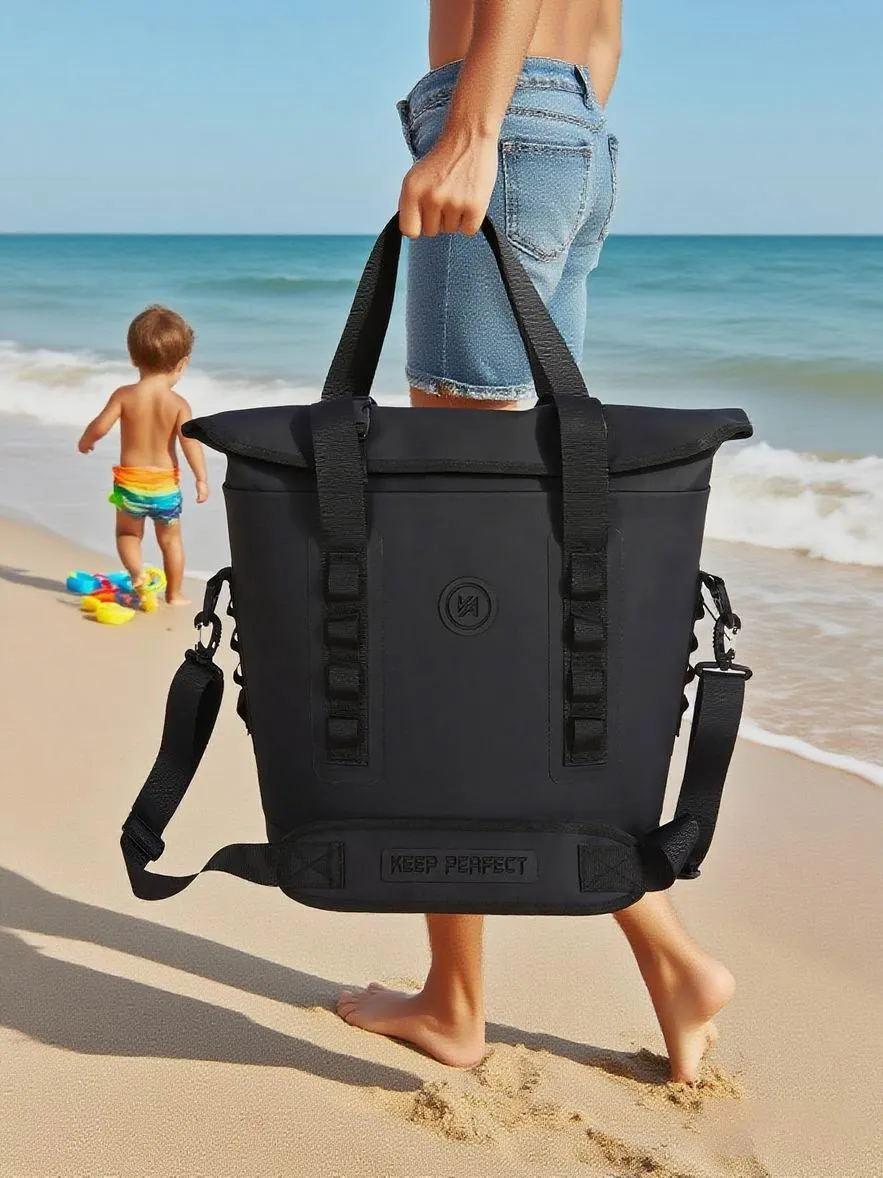
Shipping and fulfilment into Japan
There are two viable routes and the choice should be made on cost per unit, delivery promise and how much control you want over presentation. Route A is to ship one consolidated freight movement into Japan, clear customs, and then distribute domestically. Route B is to ship direct from the production country to each Japanese backer. Route A gives better per-unit economics at volume and much better control over packaging condition, at the cost of more setup work. Route B is simpler to start and slower and more variable per parcel.
| Route | Cost per unit | Transit and clearance | Control over presentation | Best when |
|---|---|---|---|---|
| Consolidated freight into Japan, then domestic distribution | Lower at volume; one clearance event rather than many | Freight transit plus customs clearance, then 1-3 days domestic | High; you can re-pack and add inserts before dispatch | Several hundred units or more, or when packaging condition matters |
| Direct parcel from production country to each backer | Higher per parcel; no import consolidation | Variable per parcel, typically longer and less predictable | Low; the bag ships in its outbound packing as made | Small runs, or when speed of setup matters more than unit cost |
For a bag reward where presentation drives satisfaction, Route A is usually the right answer above a few hundred units. It lets you add Japanese inserts, re-pack anything damaged in transit, and dispatch domestically with tracking that Japanese backers can follow. The trade-off is that you must set up a Japanese fulfilment arrangement in advance, and that setup should happen during the campaign rather than after it, because it is the single most common cause of a slipped delivery date on a first Japanese launch.
Whichever route you choose, protect the delivery promise with a pre-shipment check and a documented carton plan. Cartons should be counted, marked and photographed before they leave, and the count should reconcile to the packing list that your broker will use. Any discrepancy discovered after arrival in Japan is far more expensive to resolve than one discovered at origin. The packing and marking detail is in Carton Marking and Master Carton Specs, and broader fulfilment planning is in Crowdfunding Rewards Fulfilment.
Mapping sampling and bulk to a Makuake calendar
A Japanese campaign rewards preparation, and the calendar is where preparation shows. The sequence that works is: specification and quote before launch; sampling in 6-10 working days for standard constructions or 12-15 working days for complex ones, completed before the page goes live so the page can describe a real object; campaign runs; quantity confirmed at close; deposit and approved sample trigger bulk production of 35-50 days; inbound freight and clearance; domestic distribution.
Work backwards from the delivery date you intend to publish. If you promise delivery four months after campaign close, and production 35-50 days, freight and clearance take three to five weeks, and domestic distribution takes a week, then you have roughly four to six weeks of slack. That slack is not spare time; it is your rework and re-inspection allowance. A lot that fails final inspection and needs sorting will consume a week or more, and on a Japanese campaign you should plan for that possibility rather than assume a first-pass pass.
Two calendar rules follow from that. First, complete sampling before launch, not after. A page that describes a sample you have held, photographed and measured converts better and generates fewer awkward questions, and it means bulk can start the day the campaign closes. Second, publish a delivery month, not a delivery day. Japanese backers value reliability over optimism, and a month that you hit beats a date that you miss. If you state a month and then deliver early, the update writes itself.
If you are planning a Japanese launch and want the production side pressure-tested before you commit, send us the style, the target quantity and your intended delivery month. Our campaign bag specialist will return a sampling plan, a colourway cost comparison and a bulk schedule mapped to your calendar, quoted FOB Xiamen with T/T 30/70 terms. Start at Contact and Quote, or read the platform comparison first in Custom Bags for Indiegogo and Multi-Platform Crowdfunding.
Planning a Makuake or Campfire launch? Send us your style, quantity and target delivery month and our programme coordinator will return a sampling and bulk schedule mapped to your campaign calendar.
Frequently Asked Questions
What funding model does Makuake use?
Makuake runs on an all-or-nothing model as its standard: if the target is not reached by the deadline, pledges are not collected and the project does not fund. That means the reward specification, quantity and yen price should be settled before launch rather than decided from campaign results. Campfire, by contrast, supports both all-or-nothing and all-in funding.
What fees should I budget for on Makuake?
As of writing, Makuake's service fee is typically around 10 per cent plus tax, and depending on the plan an additional handling fee of around 15 per cent may apply. These are typical figures and you should check Makuake's current terms before budgeting, because the difference between a 10 per cent and a 25 per cent stack changes the whole unit cost model.
How is the fee stack different from Kickstarter?
Kickstarter typically charges around a 5 per cent platform fee plus payment processing commonly around 3-5 per cent in the US. Japanese platforms generally quote a service fee in the region of 10 per cent plus tax, sometimes with a separate handling fee depending on plan. Always model from net funds after fees, not from gross.
Do I need Japanese-language labelling on the bag?
Not legally in every case, but commercially it helps considerably. A Japanese care label or hang tag and a Japanese insert card describing materials and care are read, and they reinforce the finish signal. Keep any material or environmental claim narrow and hold the certificate that supports it.
Should I tighten the AQL for a Japanese campaign?
A targeted tightening is worthwhile. Keep majors at AQL 2.5 to ISO 2859-1 and tighten surface-finish minors from AQL 4.0 to around AQL 2.5 for thread ends, topstitch consistency, print registration and shading. A blanket tightening across all classes costs more and buys less.
How many colourways should a first Makuake bag reward have?
One or two. Each colourway carries its own 500-piece minimum, so a three-colour offer means three separate runs with three dye lots and three approvals. Decide any stretch colourways before launch and quote them before you publish them.
Can I order to actual demand rather than forecasting?
Yes, and this is an advantage of the all-or-nothing model. The funded quantity is known at campaign close, so you can confirm the exact quantity, pay the deposit and start production 35-50 days afterwards, adding a 2-5 per cent buffer for replacements.
Which fulfilment route into Japan is better for bags?
Consolidated freight into Japan followed by domestic distribution is usually better above a few hundred units, because per-unit cost is lower and you control packaging condition and can add Japanese inserts. Direct parcel from the production country is simpler to set up but costs more per unit and varies more.
How long does sampling take before a Japanese launch?
Standard constructions take 6-10 working days and complex builds 12-15 working days. Complete sampling before the page goes live, so the campaign can describe a real, measured object and bulk production can start the day the campaign closes.
How should I price the bag reward in yen?
Build up from cost rather than converting a dollar price. Take landed unit cost including freight, duty and consumption tax, add domestic fulfilment per backer, add the platform and handling fees as a percentage of gross, then add a 5-8 per cent contingency. If it does not work, change the specification rather than the margin.
What documentation is needed to import bags into Japan?
A commercial invoice, a packing list and a correct Harmonized System classification for the goods. Confirm the classification and duty position with a customs broker before you quote landed cost. Our team supplies the packing list and carton manifest in the format brokers expect.
Should I publish a delivery date or a delivery month?
A delivery month. Japanese backers value reliability over optimism, and a month you hit beats a date you miss. Build the month backwards from 35-50 days of bulk, three to five weeks of freight and clearance, and a week of domestic distribution, leaving slack for rework.
People Also Ask
Is Makuake all-or-nothing?
Yes, as its standard model. If the target is not reached by the deadline the project does not fund and pledges are not collected, so specification and pricing must be settled before launch.
What is the Makuake service fee?
Typically around 10 per cent plus tax as of writing, with a possible handling fee of around 15 per cent depending on plan. Check the platform's current terms before budgeting, as commercial terms change.
Can a non-Japanese creator run a Makuake campaign?
It is possible but demanding. The page must be in natural Japanese, backers ask detailed questions during the live period, and fulfilment into Japan needs setting up. Plan for a native-speaking reviewer and a local fulfilment route.
Why do Japanese backers care more about packaging?
Japanese retail norms treat packaging as part of the product, and that expectation carries into crowdfunding. A crushed carton or a loose thread generates comments even when the bag is structurally sound.
How many bags should I order for a Makuake campaign?
The confirmed backer quantity plus a 2-5 per cent buffer for replacements, subject to a 500-piece minimum per style and colourway. Avoid large speculative surplus on a first run.
Should bag dimensions be in centimetres for Japan?
Yes. List external dimensions in centimetres and give the weight, because Japanese backers compare specifications across campaigns and will not convert from inches.
Is a small woven label better than a large print for Japan?
Usually yes. Restrained branding is the norm, and a woven label removes a print setup and eliminates print registration as a defect class, which is a quality benefit as well as an aesthetic one.