Insulated Bag Materials: Foam Types and Cold-Keeping Performance
Cold retention is a system result, not a foam specification. Foam slows conduction, a reflective layer slows radiation, and a sealed liner and closure stop convective loss. Closed-cell polyethylene foam in the 5 to 8 mm band with a metallised film and welded liner seams is the working default for a soft reward cooler, with thermal conductivity typically around 0.035 to 0.045 watts per metre-kelvin. Publish any hour claim with a written protocol covering ambient temperature, load, coolant mass and end point, and leak test the finished bag. MOQ is 500 pcs, sampling 6 to 10 working days, bulk 35 to 50 days.
- How Insulation Actually Works in a Soft Bag
- Foam Types Compared: PE, EPE, XPE, EVA and PU
- Thickness, Density and the Diminishing Return Curve
- The Reflective Layer: Foil, Metallised Film and Its Limits
- The Liner: PEVA, TPU, Welded Seams and Food Contact
- Closures, Openings and the Air Exchange Problem
- Measuring Cold Retention: a Protocol You Can Defend
- Size, Load Ratio and the Physics of a Partly Full Bag
- Weight, Bulk and Packability Trade-offs
- Common Failure Modes in Insulated Reward Bags
- Sampling, Bulk and Writing the Insulation Spec
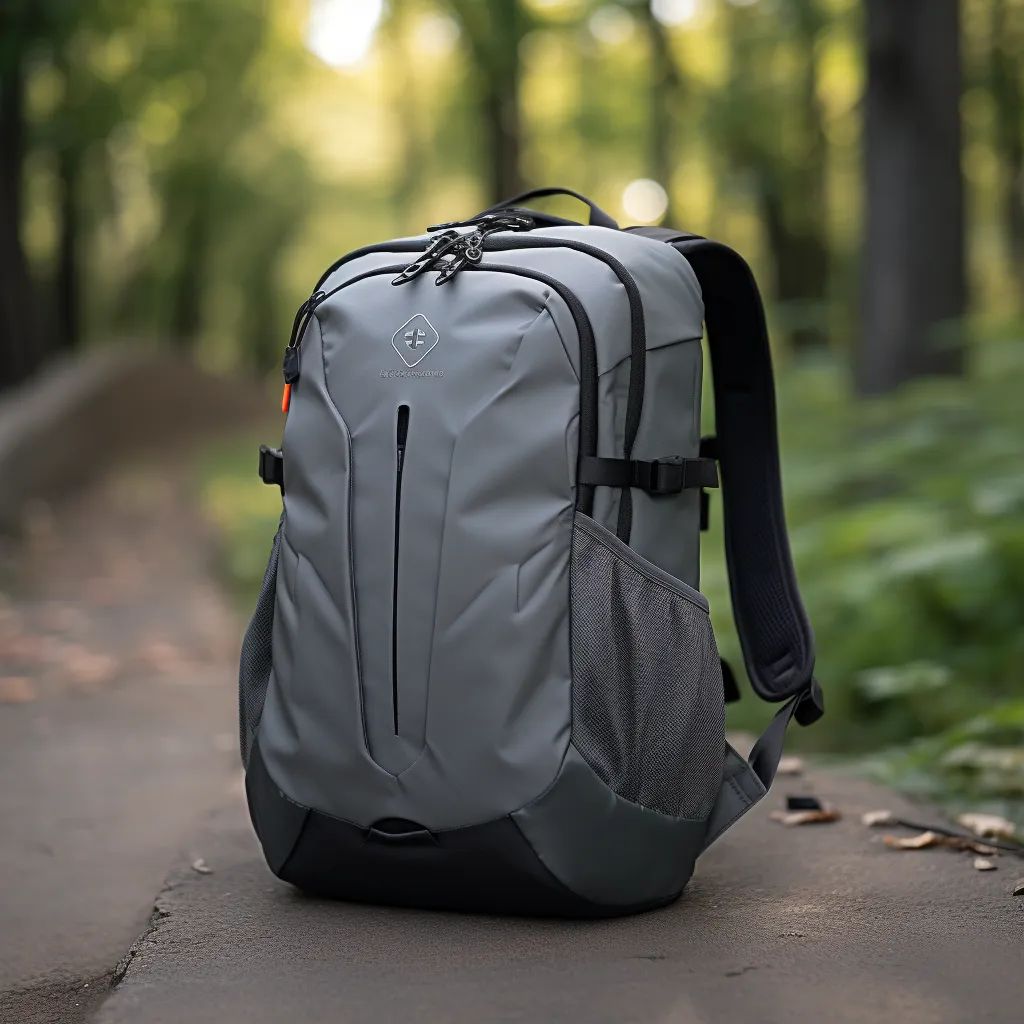
An insulated bag keeps things cold for four reasons working together, and only one of them is the foam. Foam slows conduction, a reflective layer slows radiation, a sealed liner stops convective loss and contains meltwater, and the closure stops air exchange. Campaigns that publish a cold-retention figure usually specify only the first, which is why the number disappoints in the field. For a soft reward bag, closed-cell foam of roughly 4 to 8 mm with a metallised film and a welded or taped liner is the working default, and the performance claim should always be tied to a written test protocol rather than to a foam thickness. This guide covers the foam types, the thickness curve, the liner and food-contact questions, and how to write a cold-retention test you can defend.
Cold retention is a system result. If you quote a number on the campaign page, quote the protocol with it, because every hour you claim depends on how it was measured.
How Insulation Actually Works in a Soft Bag
Heat moves into a cooler bag by three routes, and a soft bag has to address all three. Conduction is heat travelling through the bag wall, and it is what foam addresses. Radiation is heat arriving as infrared from the surroundings, and it is what a reflective film addresses. Convection is warm air entering and cold air escaping, and it is what the liner, the seam construction and the closure address.
A fourth mechanism is often overlooked: phase change and mass. Ice or a frozen gel pack absorbs a large amount of energy as it melts, and that latent heat dominates the early hours of any cooler bag's performance. A bag with more ice and less air will outperform a better insulated bag that is half empty, which is why load ratio matters more than most creators expect. Air inside the bag is the enemy; contents and ice are the thermal mass.
The practical implication for a campaign is that the bag is a system and the weakest element sets the result. A 10 mm foam wall with a zip that leaves a gap, or a liner whose seams are stitched rather than sealed, will underperform a 5 mm wall that is properly closed. When we review an insulated product, we look at the closure and the seam before we look at the foam thickness.
It also means the marketing story should be honest about what the bag does and does not promise. A soft cooler slows warming; it does not actively cool. Anything already cold stays cold longer, and anything at room temperature stays at room temperature. Our overview of custom bags for Kickstarter campaigns places insulated products inside the wider scoping sequence.
Foam Types Compared: PE, EPE, XPE, EVA and PU
Closed-cell foam is the standard because trapped gas in closed cells is a poor conductor and the structure does not absorb water. The most common family for bag insulation is polyethylene foam, supplied as expanded (EPE) or cross-linked (XPE or IXPE) sheet. Typical thermal conductivity for polyethylene foam falls roughly in the 0.035 to 0.045 watts per metre-kelvin band, close to the conductivity of still air, and the exact value depends on density, cell structure and the blowing agent used.
Cross-linked polyethylene, XPE, has a finer, more uniform cell structure than standard EPE. It is smoother, tougher, more dimensionally stable and it resists compression set better, which matters because insulation degrades when foam is crushed flat over time. It costs more. EPE is the cheaper workhorse and it is perfectly adequate where the foam is not load-bearing and the bag will not be compressed in storage.
EVA foam is denser, more rubbery and more expensive, and it appears in premium insulated products where the foam also provides structure or a soft touch surface. Its thermal conductivity sits in a similar band to polyethylene foam, so the reason to choose it is usually mechanical or tactile rather than thermal. Polyurethane foam, in flexible open cell form, is a poor insulator for this application because it absorbs water; closed-cell PU exists but is rarely the value choice for a soft bag.
| Foam | Typical conductivity band | Water absorption | Relative cost | Best use |
|---|---|---|---|---|
| EPE | About 0.035 to 0.045 W/mK | Very low | Low | General lunch and cooler bags |
| XPE / IXPE | About 0.035 to 0.045 W/mK | Very low | Mid | Premium bags, compression resistance |
| EVA | Similar to PE foams | Very low | Higher | Where foam adds structure or soft touch |
| EPS board | About 0.033 to 0.040 W/mK | Low but brittle | Low | Semi-rigid inserts and moulded coolers |
| Open-cell PU | Higher than PE foams | High | Low | Avoid in wet insulation applications |
Thickness, Density and the Diminishing Return Curve
Doubling foam thickness does not double performance, and understanding why saves money. Heat flow through a wall is proportional to the temperature difference and to the area, and inversely proportional to the thickness. That means each additional millimetre buys less than the one before it, while continuing to add cost, weight and bulk in a straight line.
In practice, soft insulated bags commonly use foam in the 3 to 10 mm band. Thin constructions around 3 to 4 mm suit a lunch sleeve or a bottle holder where packability matters; 5 to 8 mm is the mainstream range for lunch and cooler bags; and 8 to 12 mm appears in larger soft coolers where bulk is acceptable. Above roughly 10 mm the added thickness starts to fight the sewing and closing of the bag more than it helps the thermal result.
Density is the other lever and it is frequently ignored. A low-density foam can be made thick cheaply, but it compresses under load and loses thickness over time, so the insulation degrades with use. A slightly higher density at the same thickness holds its dimension better. Where a campaign promises long service life, specify density and compression behaviour, not thickness alone.
There is a related geometry effect that catches designers out: corners and edges lose heat faster than flat panels because of the area-to-volume ratio and because foam is compressed or absent at a folded edge. A bag with generous, well-padded corners performs better than the same bag with panels of identical thickness but crushed corners.
The Reflective Layer: Foil, Metallised Film and Its Limits
A reflective layer, typically a metallised polyester film or an aluminium foil laminate, reduces radiative heat transfer. It is genuinely useful and frequently over-credited. Its contribution is largest when there is an air gap on the warm side of the film, and it falls towards zero when the film is pressed directly against another solid layer, because then conduction dominates.
That is why the construction detail matters more than the material. A foil laminated to foam with no air gap behaves almost exactly like the foam alone. A foil facing an air cavity, or facing outward towards the sun, does real work. If your product is used outdoors in direct sun, the reflective layer is close to essential; if it lives in a shaded office or a backpack, its contribution is modest.
The second consideration is durability. Thin metallised film creases, and creasing cracks the metal layer, which both looks bad and reduces performance. Foil laminates bonded to a film or fabric substrate hold up better than unsupported foil. Where the liner will be wiped or scraped by contents, specify a laminate with a protective face.
Finally, a reflective layer does not make a bag waterproof or leak-proof. That is the liner's job, and it is the part of the specification most often confused with insulation. Our waterproof bag testing guide explains how the two properties are verified separately. Keep the two claims separate on the campaign page too, because a backer who reads reflective lining as leak-proof will be disappointed.
The Liner: PEVA, TPU, Welded Seams and Food Contact
The liner does three jobs: it contains meltwater, it provides a wipe-clean surface, and it closes the convection path. The common materials are PEVA or EVA film, which is cheap, flexible and widely used in lunch bags; TPU film laminate, which is tougher, clearer and weldable; and PE or PP film in lower-cost constructions. PVC film is also available and is increasingly avoided because of restrictions and market perception.
The critical construction question is welded versus sewn. A stitched seam in a liner leaks through the needle holes, and meltwater finding its way out of a cooler bag is one of the fastest routes to a one-star review. Welding, either by radio frequency or by heat, produces a continuous seal. Where a seam must be sewn for structural reasons, it should be taped afterwards. Our guide to custom waterproof backpacks and seam construction covers the same principle applied to shells.
Food contact is the compliance dimension that insulated products cannot skip. Any surface that touches food has to satisfy the regime of the market you sell into, which in practice means documented compliance for the EU and UK, the relevant US requirements for the American market, and specific national schemes such as LFGB where they apply. Ask for documentation on the film, the adhesive and any print on the food-contact side, not only on the film.
Two practical notes follow. Odour is a recurring complaint with cheap films, and it is worth specifying an odour criterion and testing after the bag has been closed in a warm environment. Cleanability matters too: a liner that cannot be wiped clean will stain, and stains in a food bag generate complaints faster than almost anything else.
Closures, Openings and the Air Exchange Problem
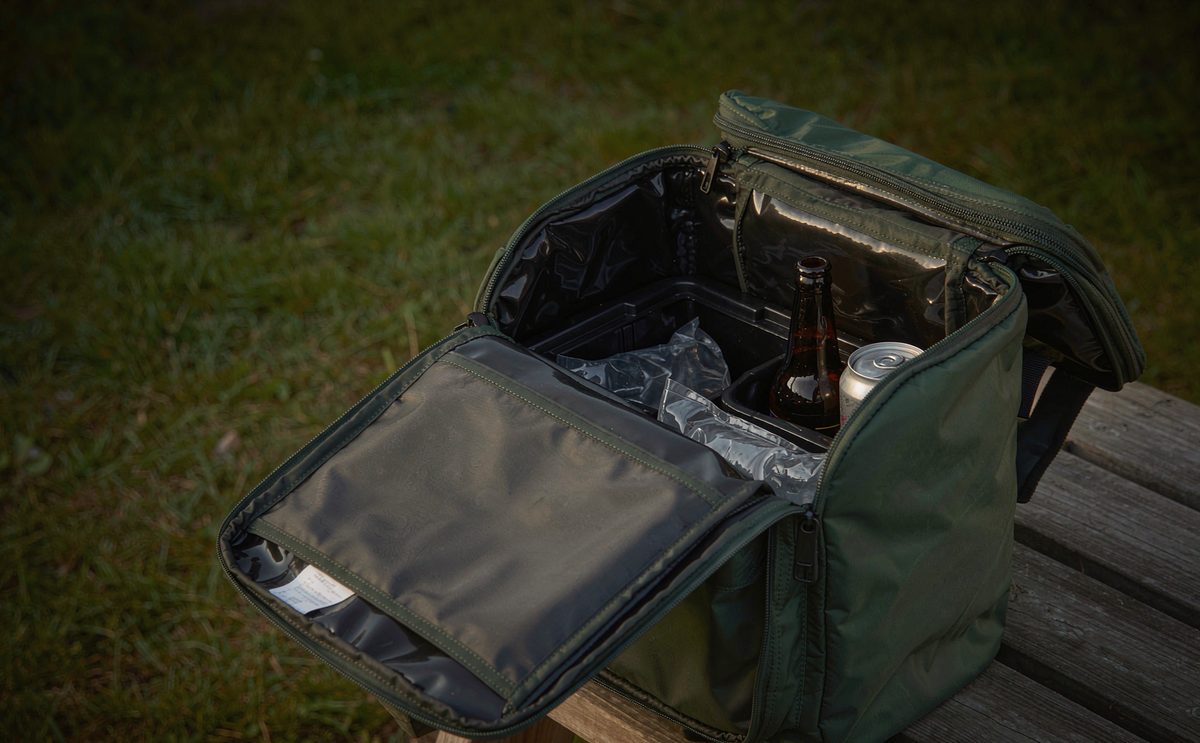
The closure is where most soft coolers lose their advantage. A standard coil zipper across the top of an insulated bag is a continuous air path and a conduction bridge. Options range from a zipper with a storm flap, which is the pragmatic mainstream choice, to a roll-top closure, which is excellent thermally and slower to use, to a magnetic or hook-and-loop closure, which is convenient and thermally weak.
Decide by use case. A lunch bag opened four times a day in an office wants convenience, and a zipper with a flap is right. A cooler taken to a beach or a campsite and opened rarely can justify a roll-top, and the thermal gain is real. A magnetic closure alone is not appropriate for a bag that must keep contents cold for hours.
There is also a geometry element: a top-opening box loses less cold air than a wide front-opening flap, because cold air sinks and stays in the box. If thermal performance is a headline claim, design the opening accordingly and say so in the campaign copy, because it is a demonstrable design decision rather than an adjective.
Finally, remember the zipper pulls and hardware in a cold, wet environment. Metal parts that corrode, and pulls that are hard to grip with cold or wet hands, generate complaints that have nothing to do with thermal performance but land on the same review. Test the closure with wet hands at sample stage, because that is the condition the product will actually be used in, and a stiff pull in the cold is a usability failure as much as a component one.
Measuring Cold Retention: a Protocol You Can Defend
There is no single universal standard for soft cooler performance, which is exactly why campaign claims vary so widely. The answer is to define your own protocol and publish it with the number. A defensible protocol states the ambient temperature, the starting temperature of the contents, the thermal mass and type of coolant, whether the bag was pre-conditioned, and the end point measured.
A typical protocol for a lunch bag would set an ambient temperature in the low twenties degrees Celsius, load the bag with a defined mass of contents pre-chilled to a refrigerator temperature, add a defined mass of frozen gel pack, close the bag, and log the internal temperature at fixed intervals until it reaches a defined threshold. The result is a time to threshold, and it is only meaningful with all those conditions attached.
Two protocol details change the answer more than most people expect. Ambient temperature is the biggest single variable: a result measured at 20 degrees does not predict a hot car or a beach. Coolant mass is the second: more gel pack adds hours, because latent heat dominates. If your campaign shows a test, show the set-up, because backers increasingly understand this.
- State the ambient temperature and hold it within a defined tolerance during the test.
- Define the load: mass, starting temperature, and how much of the bag volume it occupies.
- Define the coolant: type, mass and whether it was frozen solid at the start.
- Define the end point: the threshold temperature that stops the clock.
- Run repeats and report the range rather than a single best-case run.
Size, Load Ratio and the Physics of a Partly Full Bag
A cooler bag performs best when it is full. Empty air space is a volume that has to be cooled and that circulates whenever the bag is opened, so a half-empty bag warms faster than a full one of identical construction. This is not a marketing point, it is physics, and it belongs in the care instructions you ship with the product.
It also means right-sizing is a design decision. Offering three sizes in a campaign is appealing commercially, but the smallest size will be used fullest and will perform best relative to its volume, while the largest will often be used half empty. If you publish an hour figure, decide which size and which load it refers to, and say so.
Contents matter too. Canned or bottled drinks are a large thermal mass that holds temperature well; a sandwich is a small one that warms quickly. Frozen contents act as their own coolant. A campaign photograph showing a bag full of ice and bottles sets an expectation that a single sandwich will not meet, so match the imagery to the claim. Where a campaign offers several sizes, publish the figure for the size most likely to be filled rather than the largest, and say which you measured.
One more practical element: pre-chilling. A bag stored in a warm room starts warm, and the first hour of performance is spent cooling the bag itself. Advising backers to pre-chill an empty bag is a cheap, honest instruction that measurably improves the result.
Weight, Bulk and Packability Trade-offs
Insulation adds bulk before it adds weight, and bulk is what backers notice when a bag does not fit where they expected. A 5 mm foam wall on all six faces of a lunch bag consumes a surprising amount of internal volume relative to external dimensions, so the stated capacity should be the usable internal volume, measured, rather than the external dimensions multiplied out.
Packability is the trade-off. Thick insulation prevents a bag folding flat, which matters for shipping cost and for a backer who wants to store the bag. Some designs solve this with panels that fold, at the cost of thermal continuity at the fold. Others use removable rigid inserts, which pack better and clean better but add part count.
On freight, insulated bags are a classic case of a light, bulky product where volume rather than weight sets the cost. That affects both the outbound freight and the per-parcel cost to backers, and it is worth modelling before you commit to a size range, because a slightly larger bag can move a parcel into the next pricing band.
Where the product must also protect fragile contents, the foam specification overlaps with protective padding. Our guide to padded bag materials and foam density covers that side of the decision, and the same density and compression logic applies. Where one foam does both jobs, specify density and compression set, because padding that flattens loses insulating thickness at the same time.
A final practical point on shipping: insulated bags are usually volume-limited rather than weight-limited, so a design that nests or ships partially flattened can move materially more units per carton. That saving belongs in the landed cost calculation alongside the unit price.
Common Failure Modes in Insulated Reward Bags
The first and most common is leakage. Meltwater escapes through a stitched liner seam or through a corner that was folded rather than welded. The fix is construction: welded or taped seams, corners designed for sealing, and a leak test as part of approval. A simple inverted water test at sample stage catches most of it.
The second is delamination and creasing of the reflective layer, which looks like damage even when thermal performance is unaffected. Specifying a laminate with a protective face and designing fold lines away from the liner reduces it. The third is odour, usually from a cheap film or an adhesive, and it is best handled by specifying an odour criterion and testing a bag that has been closed and warmed.
The fourth is zipper failure in a cold, wet environment, and the fifth is condensation on the outside of the bag, which backers sometimes read as leakage. Condensation is physics: a cold interior in humid air will collect moisture on the outer surface unless the outer shell manages it. It is worth a line in the product copy.
Across all five, the pattern is that insulated products fail at the interfaces, not in the foam. Our bag material testing guide describes how to build those interface tests into approval, and our compliance checklist for US, EU and UK markets covers the documentation side. Most of these failures are caught by two cheap tests: an inverted water test for leakage and a warm closed-bag test for odour, both run before bulk approval.
Sampling, Bulk and Writing the Insulation Spec
Sampling runs 6 to 10 working days for standard builds and 12 to 15 working days for complex insulated products with welded liners, moulded inserts or custom closures. Bulk runs 35 to 50 days after approval. Insulated constructions often need tooling for welding jigs, and that tooling decision sits in front of sampling, so decide the liner construction early.
A complete insulation line names the foam type, thickness and density, the reflective layer construction, the liner material and seam method, the closure type, and the food-contact documentation for every layer that touches contents. Approve it against a physical sample, including a cut corner that shows the layer stack, because that is the fastest way to verify what was actually built.
At approval you should also hold a cold-retention test result run to your own written protocol and a leak test result on the finished bag. Both are cheap to run and both prevent the two failure modes that generate the worst reviews in this category.
Finished goods are inspected to AQL 2.5 to ISO 2859-1, with liner seam integrity, closure alignment and reflective-layer creasing named as defect classes. Commercials are standard across our programme: FOB Xiamen with T/T 30/70. Our programme coordinator can review an insulation specification before it goes out; send us a brief through the contact page.
Developing an insulated lunch or cooler bag reward? Send us your target capacity, performance claim and quantity and we will come back with a costed build.
Frequently Asked Questions
What foam is best for an insulated lunch bag?
Cross-linked polyethylene, XPE, is the best all-round choice because it has a fine cell structure, resists compression set and does not absorb water. Standard EPE is the cheaper workhorse and is adequate where the foam is not load-bearing. Typical conductivity for polyethylene foam falls around 0.035 to 0.045 watts per metre-kelvin, and thickness in the 5 to 8 mm band suits most lunch bags.
How thick should insulation be in a cooler bag?
Soft coolers commonly use foam in the 3 to 10 mm band. About 3 to 4 mm suits a packable lunch sleeve, 5 to 8 mm is the mainstream range for lunch and cooler bags, and 8 to 12 mm appears in larger soft coolers where bulk is acceptable. Beyond roughly 10 mm the added thickness adds cost and bulk faster than it adds performance.
Does doubling foam thickness double cold retention?
No. Heat flow through a wall is inversely proportional to thickness, so each extra millimetre buys less than the one before it, while cost, weight and bulk keep rising in a straight line. Gains usually come more cheaply from the closure, the seam construction and the reflective layer than from adding foam thickness. Diminishing returns are why the mainstream band sits where it does.
Does the reflective foil layer really help?
It helps with radiant heat, but only where there is an air gap on the warm side of the film. A foil laminated flat against foam with no air gap behaves almost like the foam alone. The reflective layer matters most outdoors in direct sun and least in a shaded office, and it does not make the bag leak-proof, which is the liner job. Specify the film as a laminate so it survives creasing.
Should an insulated bag liner be welded or stitched?
Welded or taped. A stitched liner seam leaks through the needle holes, and escaping meltwater is one of the fastest routes to a bad review on a cooler bag. Where a seam must be sewn for structural reasons, tape it afterwards. Test the finished bag with a simple inverted water test before approving the sample, and re-test the seam after any change of liner material.
What liner material is safe for food contact?
PEVA and TPU films are the common choices, and both can be supplied with documentation for the EU, UK and US food-contact regimes. The critical point is that compliance must cover the film, the adhesive and any print on the food-contact side, not just the film. Ask for documentation per layer before you publish any food-safe claim, including for any print or adhesive in contact with food.
How do I measure and publish cold retention honestly?
Define your own protocol and publish it with the number. State the ambient temperature, the starting temperature of the contents, the mass and type of coolant, whether the bag was pre-conditioned, and the threshold that stops the clock. Run repeats and report a range, because a single best-case run is not a claim you can defend, and state the ambient figure prominently next to the hours.
Why does my cooler bag perform worse when it is half empty?
Because air is the enemy. Empty space has to be cooled and it circulates whenever the bag opens, while contents and ice provide thermal mass. A full bag of identical construction outperforms a half-empty one. Right-sizing matters, which is why a capacity claim should be measured internally and matched to realistic contents. A full bag of identical construction outperforms a half-empty one, and advising backers to fill spare space with a bottle is cheap advice that measurably helps.
Is condensation on the outside of an insulated bag a defect?
Usually not, it is physics. A cold interior in humid air collects moisture on the outer surface unless the outer shell is designed to manage it. It is worth a line in the product copy so backers do not mistake it for leakage, and worth distinguishing clearly from a genuine leak through a liner seam, which wets the outside continuously rather than forming droplets.
What is the MOQ for a custom insulated bag?
The MOQ stays at 500 pcs per style and per colourway. The separate constraint is tooling for welding jigs and any moulded insert, which has to be amortised across the order and which sits in front of the 6 to 10 working day sampling window rather than inside it. Confirm tooling before you finalise the design, because a jig change late in the programme is expensive and slow.
How long does sampling and bulk take for an insulated bag?
Sampling runs 6 to 10 working days for standard builds and 12 to 15 working days for complex insulated products with welded liners, inserts or custom closures, with bulk at 35 to 50 days after approval. Welding tooling and any speciality film procurement are the items most likely to add time at the front end, so lock the liner construction before the campaign closes.
What inspection standard applies to insulated bag production?
Finished goods are inspected to AQL 2.5 to ISO 2859-1. Name liner seam integrity, closure alignment and reflective-layer creasing as their own defect classes with limits, and add a leak test at approval rather than relying on visual inspection. Insulated products fail at interfaces, so interface checks belong in the inspection plan alongside the visual criteria, and a cut-corner sample should be kept from the approved pre-production build for comparison.
People Also Ask
What is the best insulation foam for a lunch bag?
Cross-linked polyethylene, XPE, for compression resistance, or standard EPE where cost matters. Both sit around 0.035 to 0.045 W/mK conductivity.
How thick should cooler bag insulation be?
About 5 to 8 mm is the mainstream band for soft coolers. Thinner for packable sleeves, up to 10 to 12 mm for large soft coolers.
Does more foam always mean more cold time?
No, returns diminish with thickness. Closure, seam sealing and the reflective layer usually buy more performance per pound than extra millimetres of foam.
Should a cooler bag liner be welded?
Yes. Stitched liner seams leak through the needle holes. Weld or tape them, and leak test the finished bag before approval.
How do I publish an honest cold-retention claim?
Publish the protocol with the number: ambient temperature, load, coolant mass and end-point threshold, with repeats and a reported range.
Why does my cooler bag sweat on the outside?
Condensation from a cold interior in humid air. It is physics rather than leakage, and worth explaining in the product copy.
How many insulated bags do I need to order?
The minimum is 500 pcs per style and per colourway, with welding tooling costs amortised across the order on top.