Bag Campaign AOV Analysis: Add-Ons That Lift Average Order Value
Average order value is the most under-managed number in bag campaigns, because creators optimise backer count and treat the pledge value as fixed. It is not fixed. Small accessories, typically priced between 12 and 45 USD, are the most reliable lever available, and they lift campaign revenue without lifting the production minimums that make a bag programme hard. In our observation across supported campaigns, a well-built add-on ladder typically adds a meaningful but variable share to revenue. All figures here are observational ranges, not platform-published statistics, and every one should be tested against your own pledge data.
- What Average Order Value Means in a Bag Campaign
- Baseline AOV Bands We Typically Observe
- Add-On Families and the Value They Typically Add
- Why Small Add-Ons Outperform Large Ones
- The Unit Economics of an Add-On
- Add-Ons and the Production Plan
- Where Add-Ons Convert Best on the Page
- Add-Ons That Create Production and QC Risk
- Measuring AOV Week by Week
- Building an Add-On Ladder Before Launch
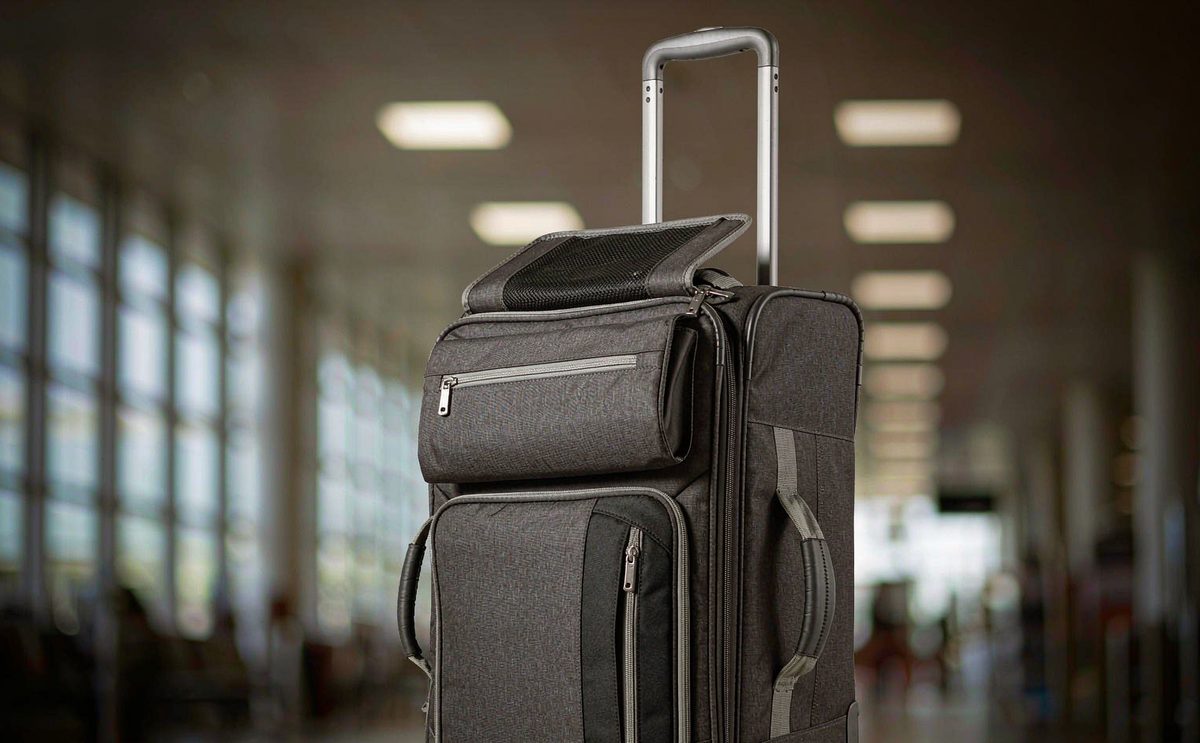
Most campaign dashboards show backer count and total raised, and creators watch those two numbers obsessively. Average order value, the third number that connects them, is usually left alone. That is a missed opportunity, because backer count is expensive to move and average order value is comparatively cheap. This article sets out which add-ons typically move it, what each one costs to produce, where they should sit on the page, and which ones quietly create risk. The wider campaign economics sit inside the crowdfunding bag guide.
What Average Order Value Means in a Bag Campaign
Average order value, or AOV, is total pledge revenue divided by the number of backers. It differs from average pledge value in one important respect for campaigns with a pledge manager: add-ons sold after the campaign closes count too. A creator who measures AOV only from the campaign platform will understate it, because a meaningful share of accessory purchases typically happens in the pledge manager rather than on the campaign page.
That distinction matters for planning. If a material share of accessory revenue arrives after close, then the accessory production quantity is not known at close, and the accessories cannot be ordered on the campaign quantity alone. Our team plans accessory quantities in two tranches for exactly this reason: one against campaign add-on sales, one against the pledge manager window. The pledge manager processing article covers the mechanics of that second window.
The second definitional point is shipping. Add-ons usually ship with the bag, so their revenue is not burdened with a separate shipping charge in most campaigns. That makes their contribution to contribution margin disproportionately large relative to their price. A 25 USD accessory that rides along in the same carton is frequently the most profitable line on the entire campaign, which is why AOV work pays attention to them rather than to the headline product.
There is also a behavioural reading of AOV worth making. Rising AOV late in a campaign typically indicates that the audience trusts the project enough to spend more, and it is one of the few observable sentiment signals available while the campaign is live. Public campaign data suggests that late-campaign upgrade behaviour is a meaningful indicator, though we do not quote a magnitude, because the effect varies enormously with product type and audience.
Baseline AOV Bands We Typically Observe
Before discussing add-ons, it helps to know what the starting point looks like. The bands below are observational ranges from campaigns our team has supported, and they are heavily dependent on the product price band. They are not platform-published statistics and they should be used as orientation only. A commuter backpack campaign and a premium travel pack campaign will sit at very different points, and the ratio between AOV and lead price is more informative than the absolute number.
| Product positioning | Lead reward price | Typical AOV before add-ons | Typical AOV with an add-on ladder |
|---|---|---|---|
| Entry commuter bag | 80 to 120 USD | Roughly 95 to 135 USD | Roughly 115 to 165 USD |
| Mid commuter backpack | 120 to 180 USD | Roughly 140 to 200 USD | Roughly 165 to 240 USD |
| Travel and tech pack | 180 to 280 USD | Roughly 200 to 310 USD | Roughly 235 to 365 USD |
| Premium or specialist | 280 USD and above | Roughly 300 to 400 USD | Roughly 340 to 470 USD |
Two patterns in that table are worth pulling out. First, the absolute lift grows with price, but the proportional lift is fairly stable, which suggests the mechanism is behavioural rather than price-driven: a fraction of backers will add an accessory regardless of the bag's price. Second, the spread within each band is wide, which means campaign-specific factors, page quality, audience warmth and add-on design, matter more than the category position.
Treat these bands as orientation: the spread within each band is wide, and your own launch-week data will be more informative than any category range.
The practical use of a baseline is to set a target. Our team typically asks a creator to state an AOV target before launch and to design the add-on ladder to make it reachable, rather than launching and discovering the number afterwards. A target also makes the weekly review meaningful, because a number with no target attached produces no decisions.
If you want the category context for where your product sits, the reward pricing data article sets out the price bands backers actually pay, and the benchmark review covers how those bands relate to campaign outcomes.
Add-On Families and the Value They Typically Add
Add-ons are not interchangeable. They fall into families with very different economics, very different production implications and very different appeal. The families below are the ones our production team sees most often in bag campaigns, ordered roughly by how reliably they sell. As always, the lift figures are observational ranges rather than measured results, and the ranking will differ for your product.
- Organisers and pouches: the most reliable family; they solve a real problem, they are cheap to make, and they pack inside the bag.
- Straps and harness accessories: strong for travel formats; they require load testing and hardware approval, so plan an extra check.
- Packing cubes and compression sacks: strong for travel formats and easy to produce from standard material.
- Tech accessories: cable rolls and sleeve inserts; strong for commuter and tech formats, with simple construction.
- Care and repair items: low price, low risk, modest uptake, useful as a cheap entry add-on.
- Branding and patch options: near-zero production cost, appeal varies with audience identity.
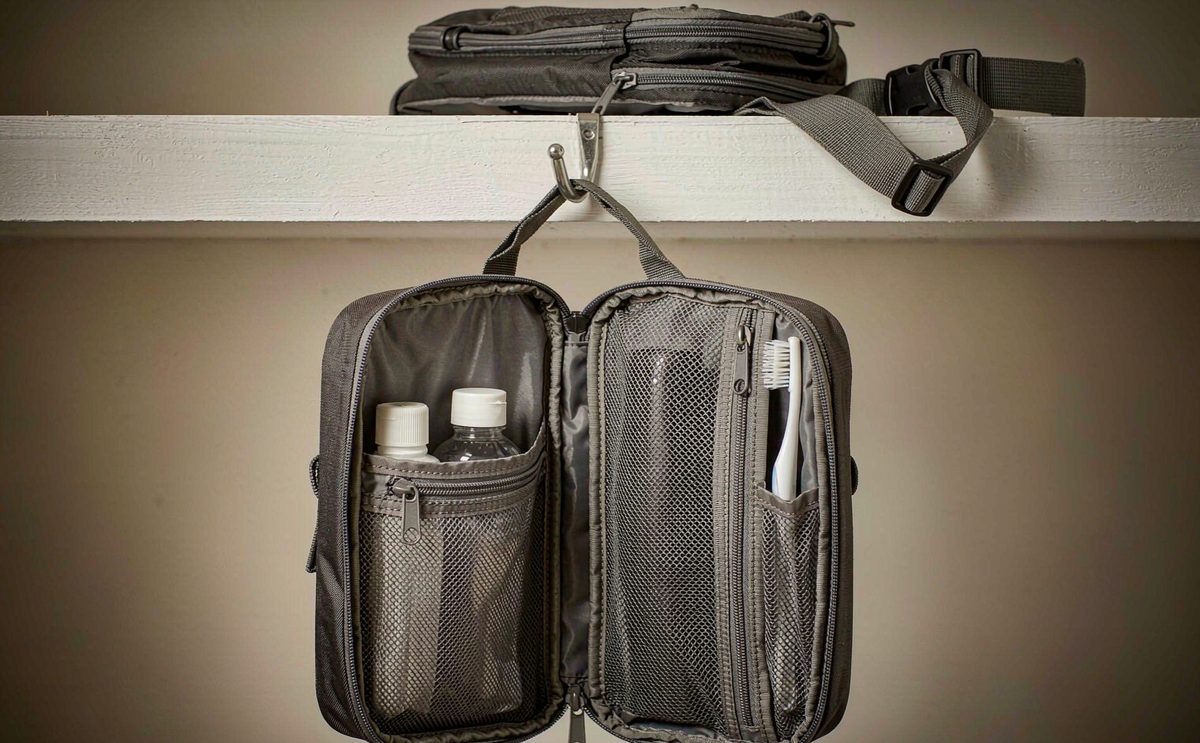
The reason organisers and pouches top the list is that they solve a problem the bag itself creates. A buyer who has just committed to carrying a laptop, a bottle and a charger is immediately aware that those items rattle together. A pouch that solves that is an easy yes, and it is cheap because it uses the same material as the bag, the same thread, and no hardware beyond a zipper.
Straps and harness accessories are the highest-value family and the most demanding. They carry load, which means they need a strength test and a hardware specification, and a failure in the field is a safety issue rather than a cosmetic one. Our team routes any load-bearing add-on through the same testing discipline as the main product, and we would rather decline an add-on than approve one that has not been tested.
Branding and patch options are worth a note because their economics are unusual. Embroidery, a woven label or a removable patch costs very little per unit and can be priced as an add-on at a healthy margin. The catch is that they introduce a variant into the production plan, and each variant needs its own counting. If the patch is applied at packing rather than at sewing, that risk largely disappears. The print and embroidery registration article covers where the risk sits.
Why Small Add-Ons Outperform Large Ones
The single most useful finding from our own observation is that small add-ons outperform large ones, and they do it for three separate reasons. The first is price psychology: an item priced at 20 to 40 USD sits below the threshold at which a buyer reopens the whole purchase decision. An item priced at 90 USD does not; it gets compared against the bag itself and frequently loses.
The second reason is shipping and packing. A pouch, a cable roll or a patch rides inside the main carton at effectively no extra freight cost. A large add-on, a second bag or a big duffle, does not; it changes the carton count and the freight calculation, which erodes the margin the add-on was supposed to create. Freight is the hidden tax on large add-ons, and it is the reason the arithmetic looks better than it is.
- Below the reconsideration threshold: small add-ons do not reopen the main purchase decision.
- No freight penalty: they ride inside the existing carton rather than adding one.
- No minimum exposure: accessories can often be produced in smaller runs than a colourway of the main bag.
- Faster approval: simple construction means fewer sampling rounds and less to inspect.
- Easier to drop: if an add-on undersells, dropping it is far cheaper than dropping a colourway.
The third reason is the most important and the least obvious: risk asymmetry. An add-on that undersells is a disappointment; a colourway that undersells is a 500 unit commitment that cannot be met. Because the MOQ is 500 pcs per style and per colourway for the main bag, every colourway is a large fixed bet, while an accessory is usually a much smaller one. Creators who want more revenue should therefore reach for accessories before they reach for colourways.
There is a counter-argument worth stating honestly: colourway unlocks generate campaign momentum in a way that accessories do not, because they are visible on the page and feel like a collective achievement. That is real. Our recommendation is not to abandon colourway unlocks, but to add the accessory ladder first, because it carries the revenue benefit without the minimum exposure, and then to use one colourway unlock for momentum.
The Unit Economics of an Add-On
An add-on should be priced from its own arithmetic rather than from what feels reasonable. The calculation has four lines: unit cost, platform fee and payment processing, packing and handling, and the contribution you want. Because the add-on ships inside the main carton, freight is usually zero at the margin, which is what makes modest-priced accessories so attractive.
| Line | Typical range | Note |
|---|---|---|
| Unit production cost | 3 to 9 USD | Depends on material, size and hardware |
| Platform and processing | Roughly 8 to 12 per cent | Varies by platform and payment method |
| Packing and handling | 0.3 to 1.0 USD | Bagging, labelling, insertion |
| Typical add-on price | 12 to 45 USD | Below the reconsideration threshold |
| Contribution per unit | Frequently 5 to 30 USD | Often the highest margin line in the campaign |
Two cautions on that table. First, the percentage for platform and processing changes over time and varies by platform and payment method, so check the current published schedule rather than relying on any figure quoted second-hand. Second, the contribution figure assumes the add-on ships inside the existing carton; if it forces a second carton for some backers, the contribution collapses and the add-on may become loss-making.
The pricing decision that follows from the arithmetic is usually to price the add-on well below what feels proportionate to its value. A pouch that feels like a 35 USD product is often better priced at 22 USD, because the goal is uptake rather than margin per unit, and the margin is already healthy. Our campaign bag specialist generally argues for the lower price on the first accessory in a ladder, and for higher prices on specialist items with low uptake expectations.
One more pricing note: state the add-on price in currency on the page and in the pledge manager, and state it again at checkout. Add-on abandonment in the pledge manager is frequently caused by surprise rather than by price, and a buyer who meets the number three times is less likely to feel ambushed. That is a communication fix, not a pricing one, and it is free.
Add-Ons and the Production Plan
Every add-on is a production line, not just a page element. It needs a specification, a sample, a quantity, a packing instruction and an inspection criterion. The common failure is treating add-ons as a marketing afterthought and discovering two weeks before shipment that nobody specified the pouch. Our programme coordinator puts every add-on on the same schedule as the main product, with a simplified version of the same controls.
- Specify it: dimensions, material, hardware, construction method, and how it is packed.
- Sample it: one round is usually enough, at 6 to 10 working days, and it should be photographed for the page.
- Count it: campaign add-on sales plus pledge manager sales, ordered in two tranches.
- Inspect it: the same AQL 2.5 to ISO 2859-1 reference applies, with defect definitions set in advance.
- Pack it: decide whether it goes inside the bag or alongside it, and write that into the packing spec.
The two-tranche ordering point deserves emphasis because it is where campaigns lose money in both directions. Ordering only the campaign quantity leaves you short when pledge manager sales arrive, and a top-up run for a small accessory is disproportionately expensive. Ordering the optimistic total leaves deadstock. Our compromise is to order the campaign quantity plus a conservative allowance, then top up once the pledge manager window has closed.
Material is the other production consideration, and it is a genuine opportunity. An accessory made from the same fabric as the main bag can be cut from the same booking, which reduces waste and simplifies colour matching. Our sourcing partner routinely looks for accessory designs that use main-run offcuts, because it turns what would be waste into the highest-margin line in the campaign.
The schedule implication is that add-on sampling should run in parallel with the main bag, not after it. Both take 6 to 10 working days, and running them together costs no extra calendar time, whereas running them sequentially adds a full round to the pre-launch schedule. For a complex accessory with custom hardware, allow 12 to 15 working days and start it earlier than the main bag.
Where Add-Ons Convert Best on the Page
Placement changes uptake substantially, and the two moments that matter are the campaign page and the pledge manager. On the campaign page, add-ons mentioned inside the reward tier description typically outperform add-ons described only in a separate section, because the buyer encounters the idea while already deciding. On the pledge manager, add-ons presented as a short list outperform add-ons presented as a grid, because a grid invites browsing rather than deciding.
- In the tier description: one sentence naming the accessory that pairs with that tier.
- In the first update after funding: a short post showing the accessory in use, with a photograph.
- In the pledge manager: a short list, three to five items, priced in currency, with a clear default.
- At checkout: a single optional prompt rather than a catalogue, to avoid decision fatigue.
- In the final-week update: a reminder that the pledge manager closes, framed as a deadline rather than a pitch.
Photography is the placement factor that matters most and the one most often missing. An accessory described in text is an abstraction; the same accessory photographed next to the bag, in hand, with something inside it, is a product. Our team builds accessory photography into the same session as the main product shoot, because adding a separate shoot later costs more than the accessory is worth.
One placement decision is counter-intuitive and worth testing: do not lead with the cheapest add-on. A very cheap item at the top of the list anchors the whole ladder low, and buyers who would have taken a 35 USD organiser settle for a 12 USD pouch instead. Our observation is that a mid-priced item at the top of the ladder performs better, with the cheap item available but not foregrounded.
Add-Ons That Create Production and QC Risk
Not every add-on is a good idea, and the ones that cause trouble share a profile: they introduce a new material, a new supplier, custom tooling, or a load-bearing claim. None of those is disqualifying on its own, but each adds a failure mode to a programme that already has enough, and the marginal revenue rarely justifies a marginal safety or schedule risk.
| Add-on type | Risk | Recommended handling |
|---|---|---|
| Pouch or organiser in main fabric | Low | Produce from main-run material, one sample round |
| Woven label or patch | Low | Apply at packing to avoid a sewing variant |
| Packing cubes | Low to medium | Confirm colour match against the main run |
| Strap or harness accessory | Medium to high | Load test plus hardware approval before offering |
| Custom moulded accessory | High | Decline for a first campaign; tooling and lead time |
| Electronics-integrated accessory | High | Compliance and safety obligations; usually avoid |
The load-bearing category is the one we push back on hardest. A strap, a harness or a clip that carries weight is a safety item, and a failure in the field produces the worst possible outcome for a first campaign. Any such add-on should be tested to a stated load and approved in writing, and the test result should be available to show backers. Our team applies the same discipline described in the safety standards article.
Electronics-integrated accessories are the second category we advise against for first campaigns, for a different reason: compliance. Anything with a battery, a light or a charging function carries regulatory obligations that vary by destination market, and those obligations are not solved by a good sample. The revenue from such an add-on rarely covers the compliance work, and the downside is a shipment held at a border.
Finally, there is a category of risk that is purely operational: the add-on that changes the packing plan. An accessory that ships separately from the bag, or that requires its own carton for some backers, doubles the number of packing permutations and multiplies the chance of a mis-pack. Keeping accessories small enough to go inside the bag is a design decision that pays off in the fulfilment warehouse.
Measuring AOV Week by Week
AOV should be reviewed weekly during a campaign, and the review should produce a decision rather than a comment. The metrics below are the ones our team tracks with creators. None of them requires a data analyst; all of them can be read off the campaign dashboard and the pledge manager export, and all of them are more useful watched as a trend than as a single value.
- AOV
- Total revenue divided by backer count, tracked weekly
- Add-on attach rate
- Share of backers taking at least one add-on
- Add-ons per backer
- Average count, which reveals ladder depth
- Revenue mix
- Share of revenue from accessories versus bags
- Late-campaign delta
- AOV change in the final ten days versus the first ten
The attach rate is the most actionable of those, because it responds to page changes within days. If attach rate is low while AOV is high, a small number of backers are buying a lot, and the ladder is not reaching the majority; the fix is usually placement or photography. If attach rate is high while AOV is flat, the ladder is working but the items are too cheap, and the fix is a higher-priced item at the top.
The late-campaign delta is the most diagnostic of sentiment. A rising AOV in the final ten days typically means the audience has decided to trust the project, and our observation is that it frequently precedes a strong close. We do not claim a predictive magnitude, because the pattern is inconsistent, but a falling AOV in the final week is worth investigating as a page problem rather than accepting as noise.
One measurement hygiene note: include pledge manager revenue in the final AOV calculation and exclude it when comparing week-on-week during the campaign. Mixing the two produces a number that appears to jump at close for no reason, and a creator who misreads that jump will draw the wrong conclusion about what worked.
Building an Add-On Ladder Before Launch
An add-on ladder is a deliberate sequence: three to five items, ordered so that each one makes the next more attractive, priced so that the first is easy and the last is aspirational. Building it before launch matters because every item needs a sample and a photograph, and both take time that does not exist once the campaign is live.
- Pick three to five items, drawn from the low and medium risk families rather than the high risk ones.
- Price the first item low, below the reconsideration threshold, to establish the buying habit.
- Place a mid-priced item second, because it usually carries the ladder economically.
- Add one aspirational item with low uptake expectations and healthy margin.
- Sample and photograph all of them before launch, at 6 to 10 working days per round.
- Write the pledge manager copy in advance, so the second window opens with the ladder already loaded.
The final step in that sequence is the one most often skipped and the one that costs the least to do. Pledge managers open within days of close, and a creator who has not prepared the accessory copy will spend the first two weeks of the highest-intent window writing it. Preparing it during pre-launch costs an afternoon and typically captures sales that would otherwise be lost to delay.
The last point is about discipline rather than design: do not add items to the ladder mid-campaign. Every addition is a production line that has not been sampled, specified or costed, and the revenue it generates rarely covers the disruption. If an add-on idea proves popular in the comments, note it for the second production wave rather than introducing it into a programme that is already committed. That second wave is the same one discussed in the case study.
Send us your bag specification and a list of candidate add-ons, and our campaign bag specialist will tell you which ones are producible at low risk inside your existing material booking.
Frequently Asked Questions
What is a good average order value for a bag campaign?
It depends entirely on your lead price. In our observation, a mid-priced commuter backpack campaign typically sits around 140 to 200 USD before add-ons and around 165 to 240 USD with a ladder in place. These are observational ranges from supported campaigns, not platform statistics, and the spread within each band is wide, so set your own target before launch rather than adopting a category figure.
Should add-on revenue be counted from the campaign or the pledge manager?
Both, but separately. A meaningful share of accessory purchases typically happens in the pledge manager rather than on the campaign page, so a campaign-only figure understates the result. Track them separately for week-on-week comparison during the campaign, then combine them for the final figure, otherwise the number appears to jump at close for no visible reason. Accessory quantities should be ordered in two tranches to cover both windows.
Which add-on sells most reliably for a bag campaign?
In our observation, organisers and pouches, because they solve a problem the bag itself creates and they can be cut from the same material booking as the main run. They use the same thread and no hardware beyond a zipper, which keeps both cost and risk low. Straps and packing cubes sell well for travel formats but carry more testing obligation.
Why do small add-ons outperform large ones?
Three reasons: they sit below the price at which a buyer reopens the purchase decision, they ride inside the existing carton so they carry no freight penalty, and they avoid the 500 pcs per colourway minimum that a new colourway of the main bag would trigger. The last point is the most important, because an underselling accessory is a disappointment while an underselling colourway is a fixed commitment.
How should I price an add-on?
From its own arithmetic: unit cost, platform and processing fees, packing and handling, and the contribution you want. Freight is usually zero at the margin because it ships inside the main carton. In practice this means pricing lower than feels proportionate; our team generally argues for the low price on the first item in a ladder and higher prices on specialist low-uptake items.
How many add-ons should a bag campaign offer?
Three to five, ordered as a ladder with a low-priced entry item, a mid-priced item that carries the economics, and one aspirational item. More than five tends to slow decision-making rather than increase revenue. Each item still needs a specification, a sample and a photograph, so the practical limit is set by how many you can prepare properly before launch.
When should add-on sampling happen?
In parallel with the main bag, not after it. Both run 6 to 10 working days per round, so running them together costs no extra calendar time, while running them sequentially adds a full round to the pre-launch schedule. A complex accessory with custom hardware needs 12 to 15 working days and should start earlier than the main product. Running them together costs no extra calendar time and keeps the pre-launch schedule intact.
Can I add a new add-on during the campaign?
We advise against it. Every addition is a production line that has not been sampled, specified or costed, and the revenue rarely covers the disruption to a programme that is already committed. If an idea proves popular in the comments, note it for the second production wave rather than introducing it mid-campaign into an approved plan. The same applies to colourways, which is why the stretch rule forbids construction changes after approval.
Which add-ons should a first campaign avoid?
Custom moulded accessories, because of tooling lead time, and electronics-integrated accessories, because of compliance obligations that vary by destination market. Load-bearing accessories such as straps and harnesses are workable but need a stated load test and written hardware approval before being offered, since a field failure is a safety issue rather than a cosmetic one. Both categories add a failure mode that the marginal accessory revenue rarely justifies on a first run.
How much margin does an add-on typically carry?
Frequently more than the bag itself, because there is no freight cost at the margin. A pouch costing 3 to 9 USD to produce and priced at 12 to 45 USD can contribute 5 to 30 USD per unit after fees. The percentage taken by platform and processing changes over time, so check the current published schedule rather than relying on any figure quoted second-hand.
How do I know if my add-on ladder is working?
Watch attach rate as well as AOV. A low attach rate with a high AOV means a few backers are buying a lot and the ladder is not reaching the majority, which is usually a placement or photography problem. A high attach rate with flat AOV means the ladder works but the items are priced too low, and the fix is a higher-priced item at the top.
Do add-ons affect the production minimums?
Usually favourably. The 500 pcs per style and per colourway minimum applies to the main bag, and accessories can generally be produced in smaller runs, which makes them a lower-risk way to add revenue. The exception is an accessory requiring custom tooling, which brings its own minimums and lead time and should generally be avoided on a first campaign. The 500 pcs minimum applies per style and per colourway of the main bag, not usually to a simple accessory.
People Also Ask
What is average order value in crowdfunding?
Total pledge revenue divided by backer count. Include pledge manager add-on sales in the final figure, but track them separately during the campaign for clean week-on-week comparison.
Do add-ons really increase campaign revenue?
Typically yes. Small accessories priced between 12 and 45 USD are the most reliable lever available, and they avoid the production minimums that make extra colourways risky.
What is a good add-on price for a bag campaign?
Usually 12 to 45 USD. The upper bound matters more than the lower: above roughly 45 USD the buyer reopens the whole purchase decision and the add-on often loses.
How many add-ons should I offer?
Three to five, arranged as a ladder. Each one still needs a sample and a photograph, so the real limit is how many you can prepare properly before launch.
Should add-ons use the same fabric as the bag?
Yes where possible. It simplifies colour matching, allows cutting from the same booking, and can turn main-run offcuts into the highest-margin line in the campaign.
Are electronics add-ons a bad idea?
Usually for a first campaign. Batteries, lights and charging functions carry compliance obligations that vary by market and are not solved by a good sample.
When do backers buy add-ons?
Both on the campaign page and in the pledge manager, with a meaningful share arriving after close. Order accessory quantities in two tranches to cover both windows.