Waterproof Fabric Bags: Coated Cloth, Seams and What the Rating Means
Waterproof is a claim a bag can fail while its fabric passes, because the fabric is rarely the weakest link. A coated nylon with a high hydrostatic head will still leak through its needle holes if the seams are not sealed, and it will still leak through a standard coil zip regardless of what the shell does. The three words to separate are water-repellent, water-resistant and waterproof, and the three components to specify are the base cloth, the coating and the closure. This guide covers each, the hydrostatic head number and what it actually measures, seam sealing and the operations it adds, and the claims a campaign page can defend.
- Three claims: repellent, resistant, waterproof
- Base cloth: nylon versus polyester for wet use
- Coatings: PU, TPU and PVC
- The hydrostatic head number
- Seams: the weakest link
- Zippers: the second weakest link
- Construction choices that keep water out
- Testing: spray, hydrostatic head and shower
- What a campaign page can honestly claim
- Cost and operations of a waterproof build
- A waterproof specification checklist
Three claims: repellent, resistant, waterproof
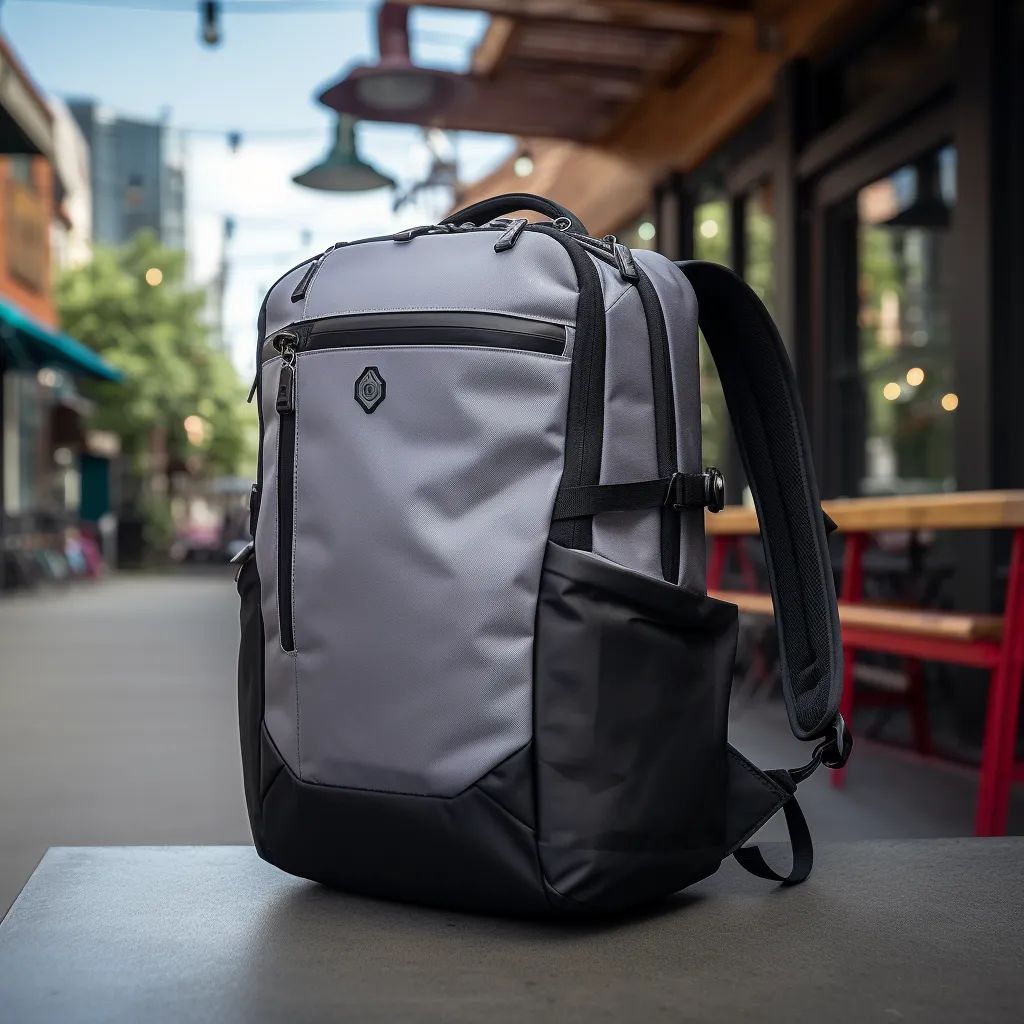
The three words are used interchangeably on campaign pages and they describe three different levels of performance. Water-repellent describes a finish that makes water bead and roll off a surface under light exposure, and it is the weakest of the three. Water-resistant describes a construction that resists water penetration under a defined and limited exposure, such as a spray test or a period of light rain. Waterproof describes a construction that prevents water penetration under a stated and more demanding condition, usually expressed as a hydrostatic head, and it is the only one of the three where a number belongs on the page.
The practical consequence is that a campaign page can be accurate in one sentence and misleading in the next. A bag can be made of a fabric rated to a high hydrostatic head and still be only water-resistant as a finished product, because the seams leak. It can also be genuinely waterproof at the seams and still wet out its contents through an open top, a mesh pocket or a zip. The correct unit is the finished bag, not the fabric, and the specific claim should be about what the finished bag can be shown to do.
There is a further distinction that matters and that is frequently conflated: waterproof is not the same as submersible. A bag that resists a sustained shower may not resist being immersed, and a bag that resists immersion at a shallow depth for a short period may not resist it at a greater one. An IP rating, where one is available for a bag, is stated as two digits covering dust and water and it is specific about the depth and the duration. Using a rating of that kind, or stating a duration and a condition in words, is more defensible than the single adjective. The campaign guide for custom bags covers how the material choice fits the wider product plan.
Base cloth: nylon versus polyester for wet use
The coating gets the specification and the base cloth gets the performance. A coated material is a composite, and the woven or knitted substrate underneath the coating carries the tear strength, the abrasion resistance and the dimensional stability. The two substrates that matter here are nylon and polyester, and for wet use they differ in three ways that are worth stating because they are the opposite of the way they are often presented.
Nylon has better abrasion resistance and better tear strength at the same weight, which is why it is the usual choice for a technical bag that will be dragged across a floor or a rock. It absorbs a little more water than polyester, and it is more prone to UV degradation over a long life. Polyester absorbs less water, holds its colour better under UV and is usually cheaper at the same specification, and it is somewhat less abrasion resistant. For a bag whose water performance comes from a coating, the substrate's own absorption matters less than it appears to, because the coating is doing the work.
Denier is the other variable and it is the one most often inflated on a page. Denier is a linear mass density of the yarn, and a higher number means a thicker yarn and, all else being equal, a heavier and stronger cloth. It does not measure water performance. A 420D cloth with a good coating will keep water out better than a 1000D cloth with a poor one, and a page that presents 1000D as a waterproof feature is presenting a durability number as a water number. Denier and the coating should be specified separately and described separately. The material testing reference covers the strength side.
Coatings: PU, TPU and PVC
The coating is what makes a cloth resist water, and the three common options differ in performance, in hand feel and in cost. Polyurethane coating is the default and the most widely used. It is applied to the reverse face of the cloth, it is light, it keeps the fabric flexible, and it is available in a wide range of ratings. A single-sided coating is usual for a bag, with the face fabric treated separately with a durable water-repellent finish so that water beads rather than soaking into the outer surface.
TPU coating or a TPU film laminate is the premium option. It is more durable, it is more resistant to hydrolysis than many PU coatings, and it stays flexible in the cold. It is also the material used in the weldable constructions that make a genuinely waterproof seam possible without tape. It costs more and it is usually available in a narrower stock colour range, which for a campaign with a fixed delivery promise is the more consequential of the two differences. PVC coating is the third option, it is heavy and it stiffens in the cold, and it is now uncommon on a consumer bag for those reasons.
The coating weight and the number of passes matter as much as the chemistry. A coating is specified by weight per unit area and it is often applied in more than one pass, and a two-pass or three-pass coating gives a higher and more even rating than a single heavy pass. The specification should therefore state the coating type, the number of passes and the resulting rating, not just the type. A quotation for PU-coated nylon can be met with a variety of constructions across a wide performance range, and only three lines on a document narrow it to the one that was intended.
The hydrostatic head number
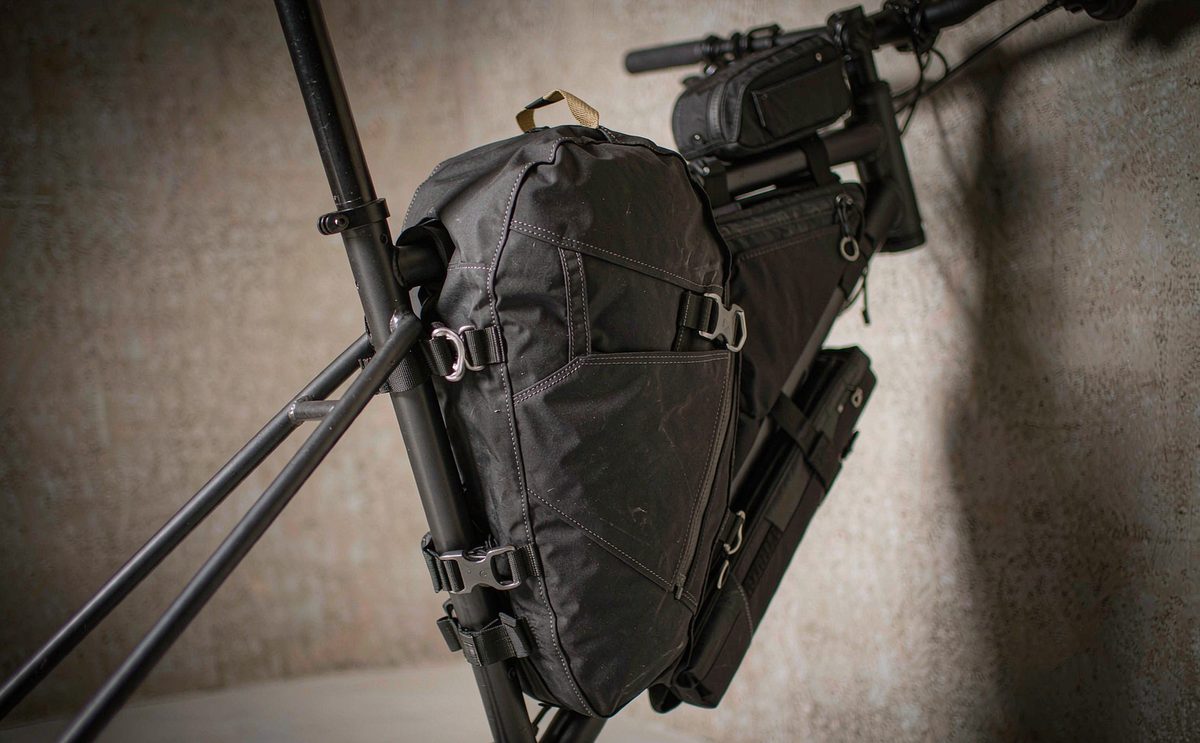
Hydrostatic head is the standard way of expressing how much water pressure a fabric will take before it leaks, and the test is simple to describe. A column of water is stood on the fabric and the height in millimetres at which the third drop of water passes through is the rating. A rating of 1,500 mm therefore means the fabric held a column of that height, and a rating of 10,000 mm means it held one of that height. The number is a measure of resistance to pressure, which is the reason it is a reasonable proxy for how a fabric behaves when a kneeling person leans on a wet bag.
| Rating | What it roughly corresponds to | Suitable for | Not suitable for |
|---|---|---|---|
| Under 1,000 mm | Light shower, no pressure | A liner, a dry bag inner, a packable shell | Anything load-bearing when wet |
| 1,500 mm | Light rain, brief exposure | A casual daypack shell | A bag that will be set down in water |
| 3,000 mm | Sustained rain, light pressure | Most everyday and travel bags | A bag that will be kneeled on or strapped tight |
| 5,000 mm | Sustained rain with pressure | A technical daypack, a cycling bag | Immersion |
| 10,000 mm and above | Heavy pressure when wet | A dry bag, a technical shell, a raft bag | Nothing it cannot do short of immersion |
Two cautions about that number. The first is that it measures the fabric, not the bag. A 5,000 mm fabric in a bag with unsealed seams and a standard zip is not a 5,000 mm bag, and any page that puts the fabric rating on the product is making a claim the product cannot meet. The second is that the rating is measured before abrasion, before washing and before UV exposure, all of which reduce it. A reasonable planning approach is to select a rating with margin above the requirement, because the margin is what the product will have left after a year.
Seams: the weakest link
A sewn seam in a coated fabric is a line of needle holes, and water under pressure will find them. This is the single most common reason a bag made of good waterproof fabric leaks, and the two solutions are different in cost and in performance. Tape sealing applies a waterproof tape over the seam on the inside of the bag, using heat and pressure. Welding joins the two panels without needle holes at all, using heat, high frequency or ultrasonic energy, and it requires a thermoplastic coating, which in practice means TPU.
Tape sealing is the more common of the two and it is available on most coated fabrics. The operation adds three things to the build: the tape, the labour to apply it and the equipment to apply it with the right heat and pressure. It also changes the assembly sequence, because a seam generally has to be taped after it is sewn and before the next panel is attached, which makes the assembly less forgiving of rework. The tape itself has a width and a specification, and a narrow tape applied off-centre will not cover the needle line, which is why the operation usually needs a jig or a guide.
Welded seams are stronger in performance and more expensive in every other respect. They need a TPU-coated or TPU-film material, they need welding equipment and tooling, and they constrain the design because a welded seam is a lap or a butt seam rather than the range of seams available to a sewing machine. For a genuinely waterproof product such as a dry bag, welding is the correct answer. For a bag that needs to resist heavy rain, tape sealing on a good coated cloth is the correct answer and it is considerably cheaper. The construction reference covers the sewn options and their trade-offs.
Zippers: the second weakest link
A zip is a moving gap, and it is the second place a waterproof bag leaks. There are three levels commonly available. A standard coil zip with a tape treated with a water-repellent finish sheds light rain and is the cheapest. A water-resistant zip, usually a coil zip with a coated tape and a close-fitting construction, resists sustained rain and is the sensible default for a bag making a weather claim. A genuinely waterproof zip, typically a moulded-tooth or a laminated type with a sealing structure, resists pressure and immersion and costs several times as much.
The water-resistant type is where most campaigns should land, and it is worth understanding why the waterproof type is rarely worth it. A waterproof zip is stiff, it needs more force to operate, it is usually available in fewer colours and lengths, and it costs a multiple of the water-resistant alternative. On a bag that will not be immersed, all of that is spent on performance the product will not use. The exception is a bag that will genuinely be submerged, such as a dry bag, where there is no alternative and the cost is part of the product.
There is one additional element that costs almost nothing and that is often omitted: a zip garage or a storm flap. A garage is a small covered pocket at the closed end of the zip where the slider parks, and a flap is a panel that covers the zip line. Either removes the direct path water takes to the slider, which is the weakest point of a water-resistant zip. Together with a sealed seam and a water-resistant zip, a flap makes a bag that will keep the contents dry in sustained rain at a fraction of the cost of a waterproof closure. The hardware sampling reference covers how to specify and test a zip before bulk.
Construction choices that keep water out
Beyond the fabric, the seams and the closure, four construction decisions determine whether the contents stay dry, and all four are made in the design stage rather than the specification stage. The first is the orientation of openings: a top-opening bag with a lid that overlaps the opening will shed water, and a top-opening bag with a flush closure will collect it. The second is the treatment of the base: a bag that will be set down in water needs a base panel with a turned and sealed seam, not a folded and stitched one.
The third is the penetration count. Every place something passes through the shell, whether it is a strap attachment, a buckle mounting, a drainage grommet or a label, is a potential leak and potentially a place that needs sealing. A design with fewer penetrations is both cheaper and more waterproof, and this is an argument for simplifying a design rather than for sealing it more thoroughly. The fourth is the pocket architecture: an external mesh pocket will hold water against the shell, and an external pocket made of the same coated fabric with a drain will not.
Two of those four have a specific cost consequence. A base panel with a turned and sealed seam requires the panel to be cut with allowance and the seam to be taped, which is two operations over a standard base. Fewer penetrations usually means fewer attachment operations, which is cheaper as well as more waterproof. The design decisions that improve water performance and the ones that reduce cost are therefore largely the same decisions, which is the useful thing to know at the design stage rather than after the sample comes back.
Testing: spray, hydrostatic head and shower
The three tests that matter for a water claim answer three different questions, and a campaign page is more credible if it names the one that was actually run. The spray test wets the fabric with a controlled spray and reports how much water is absorbed and whether the surface wets out. It is the cheapest and the fastest, and it measures the face finish rather than the coating. It is the right test for a water-repellent claim and the wrong one for anything stronger.
The hydrostatic head test measures the fabric as described above and reports the height held before penetration. It is the right test for a coating claim, and it is the right number to put on a page if a number is going on a page. The shower test wets a constructed item, often a filled bag, under a controlled spray for a stated period and then inspects the interior for water. It is the right test for a finished bag, which is the only one of the three that measures what a backer will experience.
The recommendation is to run the first two during development and the third at least once on a production-equivalent sample, and to treat the third as the one that governs the claim. A filled bag under a shower for a stated period is a repeatable test that a production team can run, and it catches the things the fabric tests cannot: a seam that was taped off-centre, a zip that leaks at the slider, a base panel that wets through at the fold. It also costs very little, and it converts a material claim into a product claim.
What a campaign page can honestly claim
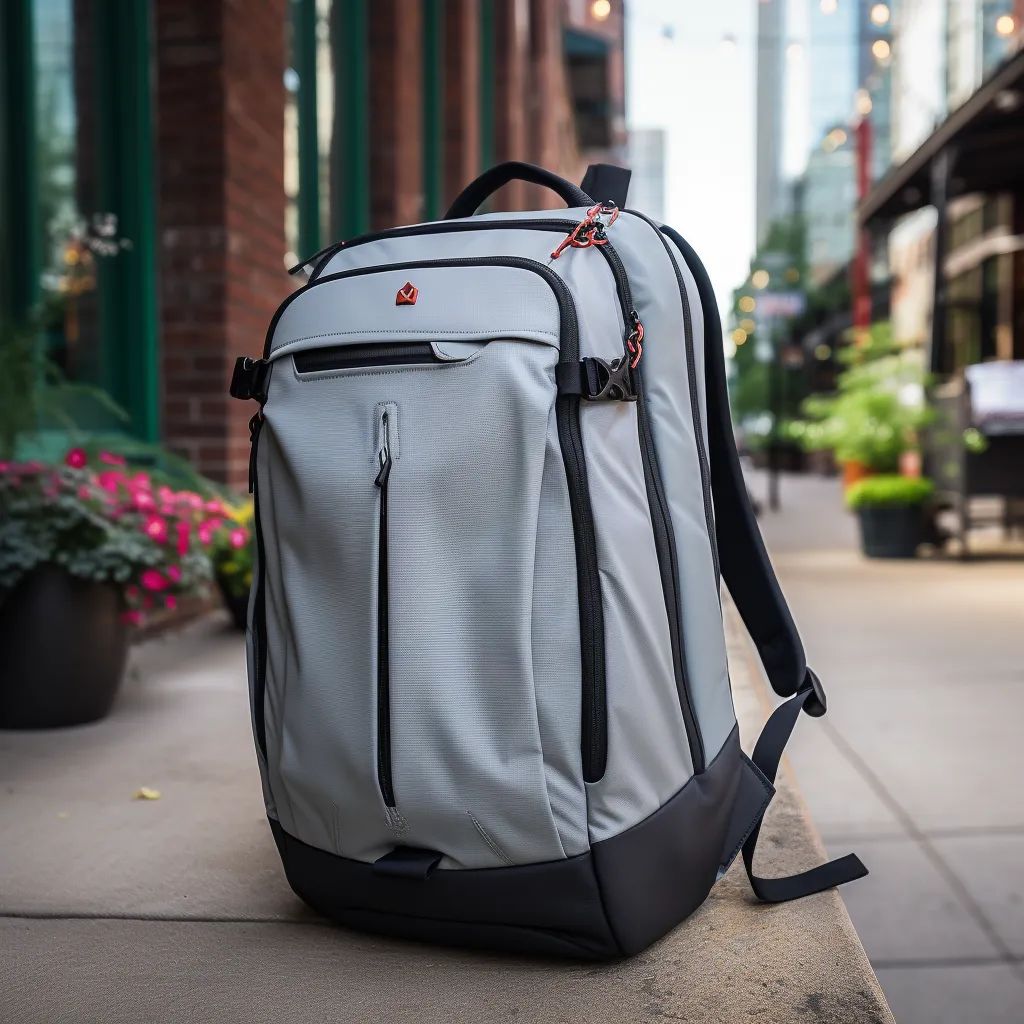
There are four claims a page can make in this area and all four can be true if the product supports them. The material claim states the base cloth, the coating and its rating, for example 420D nylon with a PU coating rated to 3,000 mm. The construction claim states what was done to the seams and the closure, for example taped internal seams and a water-resistant zip. The product claim states what the finished bag was tested to do, for example held dry under a stated shower for a stated period. And the limit claim states what it will not do, for example not intended for immersion.
The fourth is the one that separates a credible page from a forgettable one, and it is the one most campaigns omit because it feels like conceding something. It does not. Stating that a bag resists heavy rain and is not designed to be submerged is a stronger sales position than claiming waterproof and being unable to say what that means, and it pre-empts the review that would otherwise arrive. It also narrows the support burden, because a backer who was told the limit is unlikely to complain when they meet it.
There is one claim to avoid entirely, and it is the unqualified word waterproof on a product with untaped seams. That claim is common, it is the one a competitor will challenge, and it is the one most likely to generate a return. The alternatives are all short and all defensible: water-resistant, weather-resistant, shower-proof, or waterproof with the test stated. Each of those can be true. The unqualified version almost never is. For the laptop and device side of the same question, the padded laptop bag reference covers how a device compartment is protected.
Cost and operations of a waterproof build
The water performance in a bag costs money in four places, and understanding where makes the budget predictable. The coated fabric costs more than the same cloth uncoated, and the premium rises with the rating and the number of passes. Tape sealing adds the tape, the labour and the equipment, and it lengthens the assembly because it sits between operations. A water-resistant zip costs more than a standard one, and a waterproof zip costs several times that. And the welding route, where it is used, adds tooling and equipment that a sewn construction does not need.
The two costs that are most often underestimated are the tape-sealing labour and the sequence change. Taping is a skilled operation, because the heat and pressure have to be right or the tape either fails to bond or damages the coating, and it is not an operation that can be done at speed by an untrained operator. The sequence change matters because a seam that is taped after assembly may not be reachable, so the assembly order has to be planned around the taping, and that planning has to happen at the sample stage rather than at bulk.
The quantity question sits behind all of it. The minimum is 500 pcs per style and per colourway, and a waterproof build has more fixed cost in it than a sewn one, so at 500 units the fixed cost per unit is spread more thinly. The two moves that help are the usual ones and they work here: concentrate the quantity into one colourway, and select a coated fabric from the supplier's stock range rather than commissioning a custom colour, because a custom coated colour involves a lot minimum and a lead time that sits before the bulk window of 35 to 50 days.
A waterproof specification checklist
The list below is what a water-performance specification should contain, and it is ordered by the sequence in which it has to be decided. The first four items have to be settled before sampling, because they determine the sample that is made and the 6 to 10 working days that begin when the pack is confirmed, or 12 to 15 for a complex construction.
- Name the claim. Repellent, resistant or waterproof, and if waterproof, the condition it was tested under.
- Specify the composite. Base cloth and denier, coating type, number of passes and the resulting hydrostatic head rating.
- Specify the seams. Tape sealed, welded, or neither, and if taped, the tape width and where it is applied.
- Specify the closure. Standard, water-resistant or waterproof zip, plus a garage or a storm flap.
- Count the penetrations and decide which of them need sealing.
- Design the base with a turned and sealed seam if the bag will be set down in water.
- Inspect at AQL 2.5 to ISO 2859-1 and add a water check to the inspection, not only a visual one.
- State the limit on the page, including that the bag is not intended for immersion.
The single item that prevents most problems is the first, because it forces every subsequent decision to be consistent with a stated claim. A bag designed as water-resistant does not need a waterproof zip, does not need every seam taped and does not need a welded base, and it will be considerably cheaper and lighter than one that does. A bag designed as waterproof needs all of them and will cost what it costs. Deciding which one is being made, in writing, before the sample is requested, is the whole of the work.
Tell us the product, the conditions it will meet and the price point, and our team will specify the cloth, the seams and the closure as one package.
Frequently Asked Questions
What is the difference between water-resistant and waterproof?
Water-resistant means the construction resists penetration under a defined and limited exposure, such as a spray test or light rain. Waterproof means it prevents penetration under a stated and more demanding condition, usually expressed as a hydrostatic head. Neither is the same as submersible. A bag can be made of 5,000 mm fabric and still be only water-resistant if its seams are not sealed.
What hydrostatic head rating do I need?
It depends on the pressure the bag will meet. Around 1,500 mm suits light rain with brief exposure, 3,000 mm suits sustained rain with light pressure, and 5,000 mm suits sustained rain with the bag kneeled on or strapped tight. Ratings of 10,000 mm and above belong on dry bags and technical shells. Choose with margin, because abrasion, washing and UV all reduce the rating over time.
Why does my waterproof fabric bag still leak?
Usually the seams or the closure. A sewn seam is a line of needle holes, and there are typically 5 to 8 stitches per centimetre in each one. A sewn seam in a coated fabric is a line of needle holes, and water under pressure will find them. A standard coil zip is a moving gap. The fabric is rarely the weakest link, which is why a hydrostatic head rating on the fabric is not a rating on the bag.
Is taped or welded better?
Welded performs better and costs considerably more, often 2 to 3 times the seaming operation, and it needs a TPU-coated material plus welding equipment and tooling, and it constrains the design to lap or butt seams. Tape sealing works on most coated fabrics and is the right answer for resisting heavy rain. For a dry bag, weld. For a rain-resistant bag, tape.
Do I need a waterproof zip?
Usually not. A water-resistant coil zip with a coated tape resists sustained rain and is the sensible default for most bags making a weather claim. It usually costs 2 to 3 times a standard zip. A genuinely waterproof zip is stiff, needs more force to operate, comes in fewer colours and lengths, and costs several times as much. It is worth it only on a bag that will actually be submerged.
Is nylon or polyester better for a waterproof bag?
Nylon has better abrasion resistance and tear strength at the same weight and absorbs slightly more water, typically 3 to 4 percent by weight against under 1 percent for polyester. Polyester absorbs less, holds colour better under UV and is usually cheaper. For a coated bag the coating does the water work, so the substrate's absorption matters less than it appears. Denier is a durability number, not a water number.
Which test should I run?
Spray testing for a repellent claim, which measures the face finish. Hydrostatic head for a coating claim, reported in millimetres, with 3,000 mm the target for an everyday bag. And a shower test on a filled finished bag for a product claim, which is the one that catches an off-centre tape, a leaking slider and a base fold that wets through. Run the first two in development and the third on a production-equivalent sample.
What does denier tell me about water performance?
Nothing. Denier is the linear mass density of the yarn, so 420D means a thicker and stronger yarn than 210D, and it says nothing about water. A 420D cloth with a good coating will keep water out better than a 1000D cloth with a poor one. Two numbers, two different jobs. Specify denier and the coating separately, and describe them separately on the page.
How much does making a bag waterproof add to the cost?
It adds cost in four places: the coated fabric, which is typically 20 to 40 percent more than the same cloth uncoated; the tape plus the labour and the equipment; a water-resistant zip over a standard one; and welding tooling where welding is used. The two most underestimated are the taping labour, which is a skilled operation, and the assembly sequence change, because a seam taped after assembly may not be reachable.
Should I put a hydrostatic head number on my campaign page?
Yes, if it is the fabric rating and it is presented as the fabric rating. For an everyday bag, 3,000 mm is the level most products should target. Presenting a fabric number as a product claim is the common mistake, and it is the one a competitor or an informed backer will challenge. Better still is the product result: the test the finished bag passed, stated with its condition and duration.
What is a zip garage?
A small covered pocket at the closed end of a zip where the slider parks, typically 15 to 25 mm deep, and it removes the direct path water takes to the slider, which is the weakest point of a water-resistant zip. A storm flap covers the whole zip line. Either one costs very little and meaningfully improves real-world performance.
What should I say the bag cannot do?
That it is not intended for immersion, unless it was tested for it. A rating of 3,000 mm resists rain; it does not survive being submerged. Stating a limit is a stronger sales position than an unqualified waterproof claim, it is the claim most likely to be challenged, and it pre-empts the review. A backer who was told the limit rarely complains when they meet it.
People Also Ask
What does hydrostatic head mean?
The height in millimetres of a column of water a fabric holds before the third drop passes through. A 3,000 mm rating means it held that height.
Can a bag be waterproof without taped seams?
Not meaningfully. A sewn seam is a line of needle holes and water under pressure will find them. Welded seams avoid the holes but need a TPU material and different equipment.
Is 1000D nylon waterproof?
Not by itself. Denier is a yarn thickness and a durability measure. Water performance comes from the coating, its passes and the resulting rating.
Is TPU better than PU coating?
TPU is more durable, resists hydrolysis better and stays flexible in the cold, and it enables welding. It costs more and comes in fewer stock colours.
Do I need a waterproof zip for a rain-resistant bag?
No. A water-resistant coil zip with a coated tape is the sensible default, and adding a garage or a storm flap improves it further at almost no cost.
How much do taped seams add to the cost?
The tape, the skilled labour and the equipment, plus a sequence change, because a taped seam must be reachable when it is taped.
What is a shower test?
Wetting a filled, finished bag under a controlled spray for a stated period, then inspecting the interior. It is the only one of the three tests that measures what a backer experiences.