Why a Campaign Bag Specialist Beats a General Bag Source
A campaign bag partner beats a generalist bag source on four measurable points: a 500 pcs minimum per style and colourway instead of a 1,000 to 3,000 pcs floor, a 6-10 working days of sampling window that fits a live campaign film schedule, colourway splits inside one production run, and AQL 2.5 to ISO 2859-1 inspection that stays identical whether you order 500 or 5,000 units. Those four differences decide whether your reward ships on the date you published. This article compares the specialist and generalist routes point by point, with the numbers a creator can put into a budget sheet before requesting a quote.
- What a generalist bag source is optimising for
- What a campaign bag specialist optimises for instead
- MOQ 500 pcs is a fundraising number
- Sampling speed decides what you can promise
- Stretch goals, colourways and SKU arithmetic
- Documentation and compliance before backers ask
- Inspection standards that hold at campaign volume
- Freight, duties and the date you publish
- Communication cadence while the campaign is live
- Why the generalist quote looks cheaper
- How to test a partner before you commit
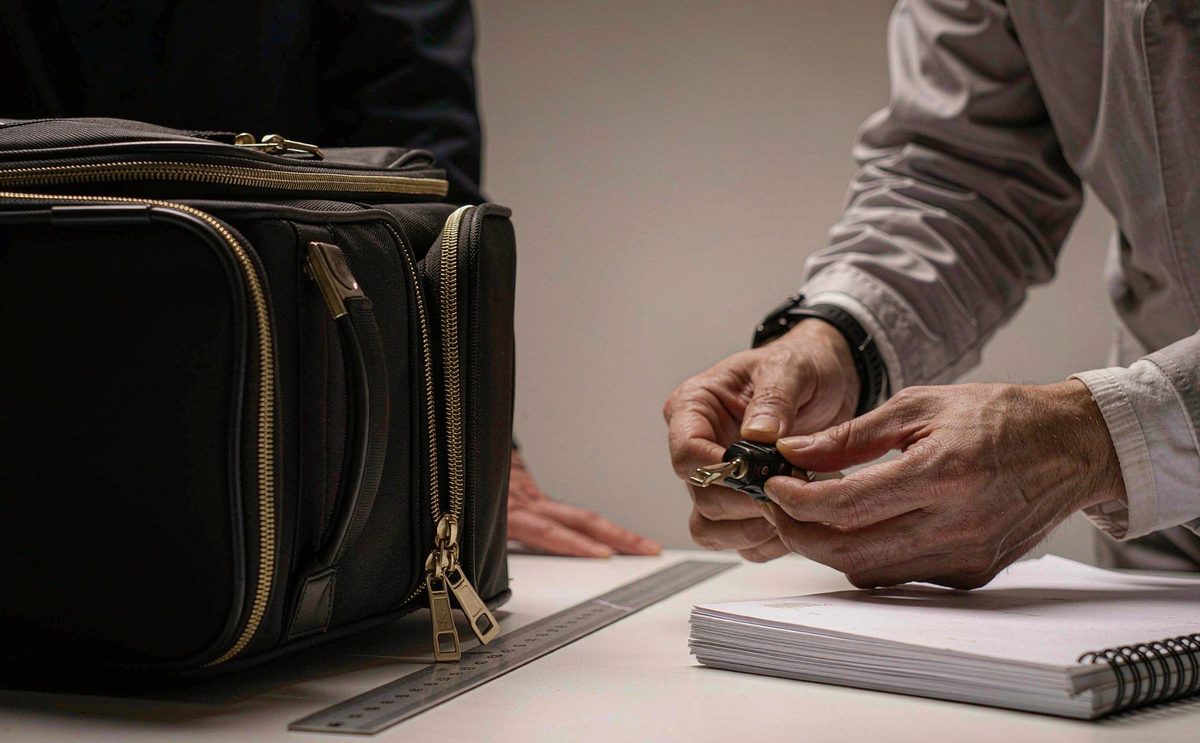
Every creator who launches a bag eventually faces the same sourcing fork: work with a partner who produces reward runs every week, or go to whoever quoted the lowest unit price. On a spreadsheet the second option often looks better, because a unit price is a single visible number while everything that actually decides whether your campaign survives - sampling speed, colourway flexibility, inspection rigour, response time during a live funding round - is invisible until something goes wrong. This article makes those invisible items explicit so you can compare two quotes on equal terms.
The distinction matters because a crowdfunding bag order has a shape that ordinary wholesale does not. It is a one-off run of 500 to 5,000 units, usually across one to four colourways, with a delivery date already published to several hundred people who have paid. There is no second season to fix mistakes in, and there is no safety margin between a slipped sample and a missed promise. A partner built for that shape behaves differently from one built for repeating the same style at 20,000 pcs twice a year.
What follows is not a defence of one route over another on price grounds. Sometimes the generalist genuinely is cheaper and you should take that deal. The point is that the comparison has to be made on landed cost, calendar risk and backer consequence, and those are the three areas where a campaign-specialised outfit consistently differs. Our team supports campaigns through a 500 pcs per style and per colourway minimum, a 6-10 working day sampling cycle and a 35-50 day bulk window, and each of those numbers exists because of the differences described below.
What a generalist bag source is optimising for
A general-purpose bag production line is an efficient machine for one job: running proven constructions at volume with minimal changeover. Its economics depend on long runs because the expensive moments in bag making are not the sewing hours, they are the setup - spreading and cutting markers, threading machines with the correct thread and needle combination, dialling in tension, running the first units and correcting them. Those costs are roughly fixed whether you then make 300 units or 30,000, so spreading them over more units is the whole basis of cheap unit pricing.
That structure produces predictable behaviour. Minimum order quantities land in the 1,000 to 3,000 pcs range per style, because below that the setup recovery makes the quote embarrassing for everyone. Colourways are treated as separate production lots, because each one interrupts the line. Custom anything - a shaped panel, a moulded zip pull, a printed lining - is discouraged unless the volume justifies the tooling. All of these are rational responses to cost structure, not bad practice.
Sampling behaves the same way. A generalist line schedules sampling around its production calendar, which means a new request usually waits for a slot rather than getting one immediately. Three to five weeks is a normal turnaround, sometimes longer during peak season, and revision rounds queue behind first requests because the same fitting room and technician serve the paying production orders first. None of this is incompetence; it is queuing discipline on a line that has other priorities.
For a brand running a known product with seasonal re-orders, that model works well and is often cheaper per unit. The difficulty appears only when the commercial calendar belongs to someone else. During a live campaign you cannot move your launch date to fit a production slot, you cannot consolidate four colourways into one because the backers voted for separate ones, and you cannot wait three weeks for a second sample when the video shoot is booked. See the fuller comparison of sourcing structures in Kickstarter bag sourcing routes.
What a campaign bag specialist optimises for instead
A campaign bag specialist optimises for calendar risk, because that is the only risk a creator actually carries. Every structural choice - how many units before the line will run, how quickly a sample leaves the fitting room, whether three colours can share one cutting session - is set so that a date printed on a campaign page can be met. Unit price is still negotiated hard, but not at the cost of the schedule, because a 4% saving that arrives 30 days late costs more than the saving.
The first visible difference is the minimum. Holding the line at 500 pcs per style and per colourway instead of 1,000 or 3,000 changes what a first campaign can afford to attempt. It also changes what you should attempt: at 500 pcs per colourway the sensible launch plan is one base colour plus unlocked colourways as stretch goals, rather than betting the whole budget across four shades. There is a detailed treatment of that arithmetic in bag MOQ explained.
The second difference is how the work is specified. A generalist expects you to arrive with an industry-ready specification; a specialist expects to build one with you. Our campaign bag specialist reviews sketches, suggests a construction that the available machines can hold to tolerance, proposes stock hardware where custom parts add cost without value, and flags anything that will not survive the wear patterns your audience will subject it to. That input costs nothing at brief stage and saves an entire sampling round later.
The third difference is scheduling honesty. A partner who handles reward runs weekly knows that the 35-50 day bulk window is only credible if fabric and hardware were booked before the deposit cleared, so they will press you for those decisions early rather than agreeing to everything and adjusting later. Compare that with a generalist quote that is silent on procurement lead time: silence usually means the window starts later than you think, because nothing has been reserved. The campaign bag manufacturing hub covers this sequencing in more depth.
MOQ 500 pcs is a fundraising number
Creators usually read MOQ as a purchasing constraint and miss that it is also a fundraising constraint. Your reward tier structure has to generate enough pledges to clear the minimum comfortably, with margin for the 3-8% of orders that cancel, refund or fail payment. If your cheapest bag tier is priced at 49 USD and your realistic backer count for that tier is 320 people, a 2,000 pcs minimum leaves you with inventory you funded and cannot ship, whereas a 500 pcs minimum clears with room to add a second colourway if funding runs hot.
Run the arithmetic backwards before you design the product: take the MOQ, add 10% for defects and replacements, divide by your expected unit take-up per tier, and check whether the resulting backer count matches your realistic traffic. This is the single calculation that separates campaigns that ship from campaigns that stall in the funding stretch, and it is why flexible minimums matter more than small discounts on unit price.
There is also a cash flow dimension. A 30% deposit on 500 pcs is a very different cheque from a 30% deposit on 3,000 pcs, and most first-time creators are funding that deposit from personal savings while the platform holds the pledges. Under T/T 30/70 the deposit releases materials and books the capacity, and the 70% balance falls due only after the inspection passes. Smaller minimums mean the deposit fits inside a personal budget rather than requiring bridge finance.
- Clear the minimum comfortably: target 1.2 to 1.5 times the minimum in real backers, not pledges, before counting the order as viable.
- Watch the per-colourway trap: three colours at 500 each is three lots, so launch one and unlock others with stretch funding.
- Hold 5-8% spare: defects, shipping damage and backer replacements come out of the same run.
- Re-orders are cheaper than over-ordering: a second 500 pcs run costs less than financing and storing 1,500 unsold units.
- Freeze the design before booking: a change after the deposit usually costs materials twice, and the calendar once.
None of these points argues for the smallest possible order. Ordering 5,000 pcs when 900 backers are realistic is worse than ordering 500 pcs when 700 backers are realistic. The argument is for a minimum that fits the shape of a campaign: one style, one colourway, repeatable in small increments, rather than one large bet placed before the market has voted. Our production team reviews the tier structure against this arithmetic whenever a brief arrives, and will say so plainly when the numbers do not support the plan.
Sampling speed decides what you can promise
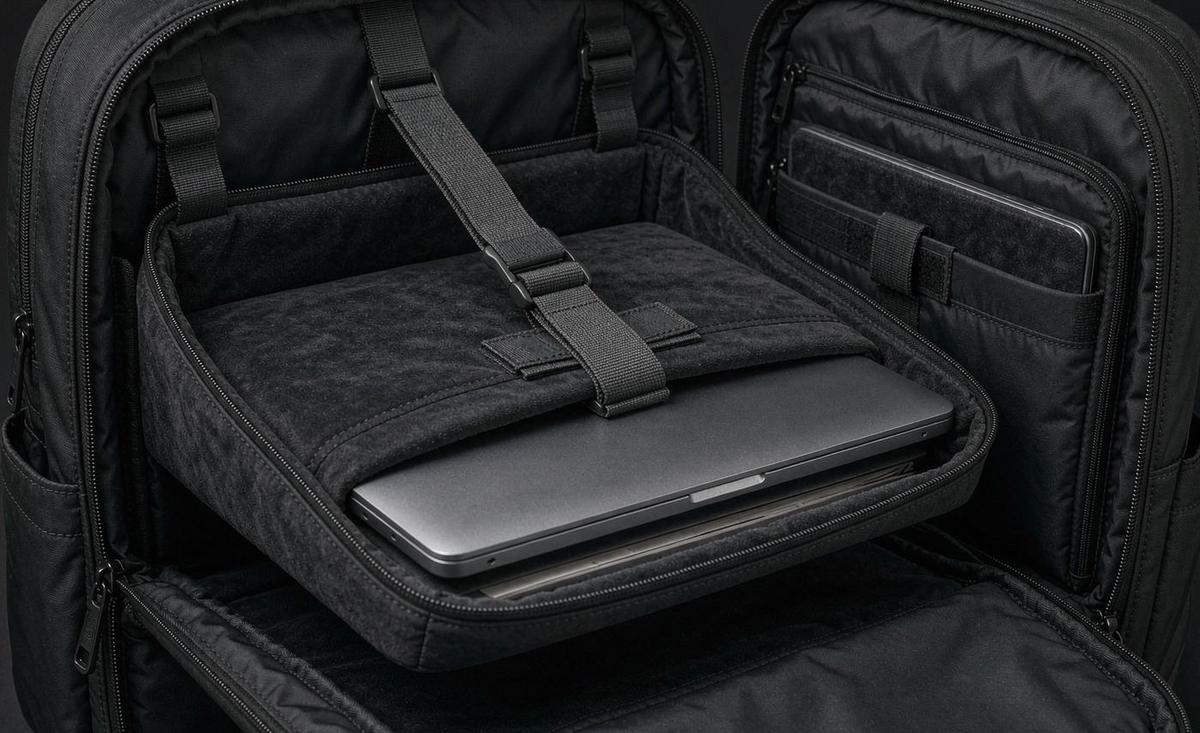
Sampling is where the calendar is won or lost, and the difference between a 6-10 working day window and a three to five week window is not merely comfort. A bag almost never launches on its first sample. First samples reveal handle problems, strap geometry errors, panel proportions that photograph badly and closures that fight the user. Budgeting for two correction rounds is normal practice, and three rounds is routine for anything with structure. Each round costs the same elapsed time, so the cycle time compounds quickly.
At 6-10 working days per round, two rounds consumes around four calendar weeks, which fits comfortably inside a 12-16 week pre-launch plan and still leaves time to shoot the final unit. At three to five weeks per round, the same two revisions consume two to three months, which pushes specimen photography past your launch date and forces you to shoot renders instead. Renders convert measurably worse than a real bag held in real hands, particularly for anything whose selling point is texture, drape or structure.
Speed also protects the video budget. A physical sample lets you film a genuine drop test, a genuine water test and a genuine packing sequence, and those shots are consistently the strongest performing ten seconds in successful bag campaigns. They are also impossible to fake convincingly. Getting there requires the sample to exist six to eight weeks before launch, which in turn requires the first round to start early with a complete tech pack behind it.
The single most effective thing a creator can do to protect the sampling window is to submit a complete specification. Incomplete dimensions, missing hardware call-outs and undecided fabric all translate into clarification emails, and each email costs a day. Our sourcing partner returns questions in one consolidated list rather than drip-feeding them, but the days are still days. The 12-section tech pack guide sets out exactly what that specification needs to contain.
Stretch goals, colourways and SKU arithmetic
Stretch goals are a campaign mechanic that general-purpose production handles badly. A three-colourway unlock structure means either three separate production lots or one lot that splits a dye run, and the second option is only available where the line is organised for it. Fabric is the constraint behind the constraint: dye houses commonly impose their own minimum per colour, typically 300-500 metres, so a colourway of 200 bags may not even be dyeable at a sensible price unless the fabric is already stocked in that shade.
The commercial consequence is that colourway decisions belong at quotation stage, not at fulfilment stage. If you promise a colourway unlock at 150% funding during week two of the campaign, you need to have told your partner the likely quantity before the campaign opened, so the fabric can be reserved or the stock alternative identified. Waiting until the unlock triggers, then asking, usually means adding 10-20 days for dyeing on top of the 35-50 day bulk window.
There is an alternative that experienced creators use more often than novices: unlock hardware and trim variations rather than full fabric colourways. Changing zip tape colour, puller finish, lining print or webbing shade produces a visually distinct variant at a fraction of the fabric complication, because those components are stocked in many colours and are not subject to dye minimums. It reads as a new reward level to backers and costs far less in calendar risk.
| Approach | Units per option | Typical added lead time | Suitability |
|---|---|---|---|
| Single base colourway | 500 pcs | 0 days | Best first campaign: lowest risk, cleanest budget |
| Two colourways, shared run | 300 + 200 pcs | 6-10 working days | Good for one stretch unlock with stocked shades |
| Three separate lots | 500 pcs each | 10-20 days | Only after a proven first funding result |
| Trim and hardware variants | 500 pcs shared shell | 0-5 days | Best value per visual change for backers |
| Custom dyed signature shade | 500 pcs plus dye minimum | 15-25 days | Requires a locked reward tier and early booking |
| Buyer-supplied fabric | 500 pcs | 20-40 days | Rarely worth the freight and inspection complexity |
Notice that none of these options is free in calendar terms, which is the honest point a generalist will often skip. The right question is not whether four colourways are possible - almost anything is possible with enough money and time - but which combinations fit inside the delivery date already published to your backers. Our programme coordinator maps unlock structures against fabric availability before the campaign opens precisely so those decisions have real data behind them.
Documentation and compliance before backers ask
Documentation is the difference between a smooth fulfilment month and a comment section full of demands. When a reward bag ships internationally, it can be asked to demonstrate what it is made of, whether it meets chemical restrictions for the destination market, and on what basis any environmental claim is made. A creator who cannot answer within a day has effectively conceded the point, however good the product is.
The documents worth requesting before shipment are specific: an inspection report against AQL 2.5 to ISO 2859-1, fabric composition and test data, any recycled content transaction certificate attached to an environmental claim, and chemical compliance reports appropriate to the destination. For the United States that usually means CPSIA concerns around lead and phthalates on coated fabrics and prints; for the European Union it means REACH documentation. Both are covered in detail in the compliance guides.
A specialist differs from a generalist here in that these documents are routine rather than exceptional. When the same team handles 20+ campaigns a year, standard test reports exist, staff know which labs cover which markets, and the report package ships with the order rather than being negotiated afterwards. That matters because retro-testing after shipment is expensive, sometimes impossible once the lot is dispersed, and always slower than testing before the run is packed.
One practical warning about claims. Any recycled content statement needs a transaction certificate that covers the specific lot, not a generic certificate from the fabric mill's marketing folder, and any water resistance claim needs the test method stated alongside it. Backers increasingly check. Building the documentation into the order at quotation stage costs little; assembling it under pressure after 400 people ask costs weeks.
Inspection standards that hold at campaign volume
Quality failure in a crowdfunding bag has an outsized consequence because the first several hundred people to receive it review it publicly, and one photographic defect becomes a comment thread that suppresses conversion for the rest of the campaign window. AQL exists precisely to make the acceptable defect level explicit and measurable, and AQL 2.5 to ISO 2859-1 at general inspection level II is the working standard used for consumer sewn goods.
What to insist on is that the standard does not soften with order size. Some sources apply looser criteria below a certain quantity on the argument that inspection cost is disproportionate on small runs; that argument is convenient for the seller and dangerous for the creator, because 500 units going to 500 reviewers is the highest-consequence shipment you will ever make. The standard at 500 should be identical to the standard at 5,000, and it should be written into the order with lot size, sample size and acceptance numbers stated.
Ask specifically about inspection timing as well as level. In-line inspection catches systematic errors while they can still be corrected; final inspection catches what slipped through before the cartons close. Both have a place in a reward run, and the difference between them is explained in in-line versus final inspection. A partner used to campaign volumes will usually schedule both without being asked, because re-shipping replacements into 30 countries costs more than either check.
Write the inspection level into the purchase order, not into an email. An agreed AQL that appears only in correspondence tends to evaporate the first time a lot runs late.
Freight, duties and the date you publish
The delivery date on your campaign page is a promise made before the product exists, and the fulfilment half of that promise is freight. Under FOB Xiamen the responsibility splits cleanly: your partner completes production, export clearance and loading, and you take ownership from the port onward, paying the carrier and any duties. That split is standard and fair, but it means the shipping method and its transit time are decisions you must make deliberately rather than inherit.
In practice most bags campaigns use a hybrid. Air freight moves 30-60% of units fast enough to hit the published date and satisfy the most vocal early reviewers, while the remainder travels by sea at a fraction of the per-unit cost and arrives two to four weeks later. Air freight typically costs three to six times more per kilogram, but on a 500 g packed bag the absolute difference is small enough that protecting your delivery promise usually wins. Whatever the split, book it before the 35-50 day bulk window ends, because post-production freight booking can add 10-14 days of its own.
Duties deserve a specific line in the budget because they are charged on the declared value and vary by destination classification. Bag categories differ materially between the United States, the United Kingdom and the European Union, and the wrong HS classification is both expensive and your liability as importer of record. Deciding early whether you will ship DDP, with duties prepaid so backers receive nothing further to pay, changes the pledge price you need. The customs and duties guide walks through the calculations.
Packaging is part of freight economics too. A 500 unit shipment packed flat uses substantially less volumetric space than the same units packed rigid, and on air freight volumetric weight is what you pay for. Discussing carton size at specification stage rather than after production is one of the quiet advantages of working with a team that ships to backers regularly, and it routinely saves 8-15% of freight cost on a small reward run.
Communication cadence while the campaign is live
There is a period of roughly 30-45 days during and immediately after a live campaign when a creator needs answers faster than normal business: a journalist wants the fabric story, a backer asks whether the bag fits a 16-inch laptop, a commenter demands the recycled content figure. A sourcing partner who replies within one working day during that period is worth more than one who saves a dollar per unit and takes four days. Ask about response commitment explicitly, and test it before you commit the order.
Good cadence is also proactive. A campaign-experienced partner will tell you when a component is at risk, when fabric stock is running short, or when a specification change would move your window, without waiting to be asked. That behaviour follows incentive: someone handling repeat re-orders and future campaigns has an interest in your second run, whereas a transactional quote has already been optimised for cost. Our team assigns a single named contact per programme so answers do not require re-explaining the project each time.
Set the cadence expectations in writing before the deposit: who is the contact, what is the committed response time, what triggers an unsolicited update, and how changes are documented. Four sentences at the start prevents most disputes later, and any reluctance to agree them is itself informative about how the relationship will feel during week three of a live campaign.
Tools matter less than discipline here. Shared photo folders dated by sampling round, one change log that both sides edit, and a standing 15-minute weekly call during the bulk window will prevent more problems than any project management software. What you are guarding against is not malice but drift: three small verbal approvals that never reach the written specification, each individually harmless and collectively a different product arriving in 500 boxes.
Why the generalist quote looks cheaper
When a generalist quote undercuts a specialist by 5-15%, that gap is real and usually has three identifiable sources. The first is setup recovery over a larger implied quantity: quotes often assume you will eventually order more than you asked, and the per-unit figure reflects that assumption. The second is specification drift, where the cheaper quote silently substituted a lighter lining, a generic zip chain or thinner webbing that meets your written dimension but not your intended standard. The third is omission, where tooling, testing, artwork setup or packing specification simply were not priced.
The correction is to compare landed cost, which means building a single sheet with unit price, tooling, testing, sample fees, freight, duties, inspection, replacement reserve and payment terms. Typical hidden additions run 0.20-0.60 USD per unit for packing specification work, several hundred to a few thousand dollars for custom tooling, and 200-600 USD per market for chemical testing. A quote that excludes three of those items is not cheaper; it is incomplete.
There is also a category of cost that only appears when things go wrong. If a lot fails inspection and must be re-run, a generalist calendar absorbs that delay into their next slot while you absorb it into your promise to hundreds of backers. If a substitute component fails in the field, replacements have to be produced and re-shipped at someone's cost. Put a probability on those events - realistic for a first design is that one of them happens - and the apparent saving usually disappears.
None of which means the cheapest quote is always wrong. If your design is simple, your colourway count is one, your timeline has slack and your backers are domestic, a generalist line can be a very good deal. The point is that you should reach that conclusion after completing the landed cost sheet, not before it, and that the honest way to compare is to send the same six-item brief to both and see who asks better questions. The sourcing red flags list covers what to watch for in either answer.
How to test a partner before you commit
Testing a partner is cheaper than discovering one. Start with a paid sample before any deposit: it costs real money, which filters both sides, and it exercises the entire working relationship in miniature. Watch how the brief is read, whether clarifying questions come in one consolidated list, whether the quote states what is excluded, and whether the delivered sample matches the specification you approved rather than the specification that was convenient.
Then verify the boring things. Request the inspection report template, not a promise about inspection. Ask which standard they use at 500 pcs and whether it changes with quantity. Confirm the legal entity you will be contracting with, the bank details you will be paying, and the name of the person accountable. Ask for three references from orders of similar size rather than similar fame, because 20,000 pcs experience does not transfer to a 500 pcs run.
- Send one identical brief to two or three candidates and score the replies on questions asked, not price offered.
- Buy one paid sample and evaluate it against your own written specification, line by line.
- Request the inspection template and confirm AQL 2.5 to ISO 2859-1 applies at your quantity.
- Check the hidden columns on every quote: tooling, testing, packing spec, artwork setup, freight basis.
- Ask for references at your volume and actually call them about delays, not about quality.
- Confirm terms in writing: MOQ per colourway, sampling days, bulk days, AQL, FOB point, T/T split.
- Test response time twice before the deposit; it will not improve once you have paid 30%.
The final test is behavioural: does anyone tell you that your plan is risky? A partner who agrees with everything - that three colourways at 400 units each is fine, that six weeks is enough for two sampling rounds, that a custom moulded puller adds no risk - is selling, not advising. On more than 20 campaigns supported since we began this work in 2014, the projects that shipped on time were the ones where somebody pushed back early on a timeline or a specification and got overruled politely.
Send our team your bag sketch, target quantity per colourway and delivery date, and we will return a landed cost sheet with the sampling window and bulk slot attached.
Frequently Asked Questions
What is the difference between a campaign bag specialist and a general bag source?
A generalist optimises for large repeat orders of proven styles, which usually means a minimum of 1,000 to 3,000 pcs per style and a sampling cycle built around seasonal calendars. A campaign bag specialist structures work around reward runs: 500 pcs per style and colourway, 6-10 working days of sampling, and a 35-50 day bulk window that is quoted against a published delivery promise rather than an internal forecast.
Can a creator order fewer than 500 pcs for a first campaign?
Below 500 pcs per style and colourway the unit cost rises steeply because cutting, printing plates and line setup are spread over too few units. Most first-time creators handle this by launching one colourway, then adding colours as stretch goals. A structured comparison of that trade-off appears in the guide to MOQ for custom bags on Kickstarter. If your budget cannot reach 500 units, the practical alternatives are a simpler construction that costs less per unit, or a single-colour launch with a lower count and a higher pledge price. Shipping 250 units that were priced for 500 usually loses money rather than avoiding risk.
How long does sampling take with a campaign bag partner?
Standard builds take 6-10 working days from an approved tech pack; complex constructions with moulded parts, bonded panels or custom hardware extend that to 12-15 working days. The clock starts when the specification is complete, which is why the single biggest cause of a slipped sample is an incomplete brief rather than a slow workroom. A second or third revision round takes the same elapsed time as the first, so a realistic plan budgets two rounds, which is 12-20 working days in total for a straightforward build and up to 30 days for a structured bag with tooling.
Why does sampling speed matter before the campaign even launches?
Backers fund what they can see. A physical sample shot 3-4 weeks before launch gives you real photography, a fit test and a wear test, all of which convert better than renders. Sampling in 6-10 working days leaves room for a second round of corrections, which most first designs need. Real units also let you run the tests backers ask about in the comments: how much the strap stretches under load, whether the lining survives a wet umbrella, and how the fabric behaves after a week of daily carry. Each answered question removes a purchase objection that a render cannot address.
Does a specialist quote a higher unit price than a generalist?
Sometimes higher at 500 pcs, because small runs carry more setup per unit, but the comparison often reverses once you add the hidden items: air freight when the generalist misses your window, a second sampling round at full cost, tooling you pay for twice, and replacements for defects found after delivery. Landed cost, not unit price, is the correct comparison.
What inspection standard should a reward bag run use?
AQL 2.5 to ISO 2859-1 with general inspection level II is the working standard for consumer sewn goods, and it should be applied at 500 pcs exactly as it is at 5,000 pcs. Ask for the lot size, the sample size and the acceptance number to be written into the order so there is no argument later about what was inspected.
How do colourways affect the 500 pcs minimum?
The minimum applies per style and per colourway, so three colours of one design is three separate lots unless your partner allows a split within a single run. Fabric dyeing has its own minimum too, commonly 300-500 metres per colour, which is the practical constraint behind colourway pricing. Where stock fabric in the wanted shade already exists, smaller splits are sometimes possible, because there is no dye lot to produce and the cutting room can lay several colours on one table in a single session.
What documents should a creator request before shipping rewards?
Request the inspection report against AQL 2.5, fabric composition data, any recycled content transaction certificate you are making claims about, and compliance reports for your destination market. Our programme coordinator can issue the set as one package rather than you chasing four people for four files. Keep the set on file rather than only in the shipment, because marketplaces, retail buyers and follow-up campaigns all ask for the same documents later, and re-testing an old lot costs more than ordering the report at production time.
Who handles freight and customs for a reward shipment?
Under FOB Xiamen, the buyer books onward freight from the port and pays the carrier and duties; your partner handles export clearance and loading. Many creators ship 30-60% of units by air to hit the delivery promise and the remainder by sea, which costs less per unit but adds 15-30 days in transit. Whichever structure you choose, record it in writing before the goods leave: the transfer point, who pays duties, who is importer of record, and what happens if a parcel is refused or returned by a backer in another country.
What payment terms are normal for a first crowdfunding order?
T/T 30/70 is standard: 30% deposit to release materials and book capacity, 70% balance against the passed inspection before loading. This structure protects both sides and matches the funding pattern of a campaign, where the pledge money arrives but should not be committed before quality is confirmed. Treat any request for full payment before inspection as a warning sign rather than a formality. The 70% balance is leverage that keeps defects, shortages and packing errors on the producer side of the ledger, where they can still be corrected.
How many crowdfunding campaigns has your production team supported?
Our production team has supported more than 20 crowdfunding campaigns across Kickstarter and Indiegogo, working with a facility of 4,950 m² SGS-verified floor space, 7 production lines and 149 machines with a monthly capacity of 200,000 pcs. That capacity matters less than the scheduling discipline it allows when your window is fixed. Experience shows up less in the headline number than in scheduling behaviour: whether fabric is reserved before the deposit clears, whether tooling capacity is booked for your window, and whether anybody tells you when a date is unrealistic.
What should I send to get an accurate quote quickly?
Send a dimensioned sketch or tech pack, target quantity per colourway, fabric preference, hardware list, artwork files, destination country and target delivery date. That six-item brief is enough for our sourcing partner to return a costed quote with the sampling window and the bulk window attached, usually within two working days. Missing artwork counts and unclear hardware grades are the two most common causes of a quote that later needs revising upward. Specifying both at the first exchange protects your budget and protects the sampling window at the same time.
People Also Ask
Is a specialist bag partner worth it for a small campaign?
Yes, when your run is under 5,000 pcs. The value sits in the 500 pcs minimum, faster sampling and split colourways, which are exactly the things a generalist cannot offer at your volume.
How do I check a bag partner is legitimate?
Ask for the inspection standard in writing, a recent report sample, photos of the line and three references from similar order sizes. Verify the business licence against the legal name on the contract.
What MOQ should a first-time creator plan for?
Plan 500 pcs of one colourway as your base tier, then add 200-300 pcs per unlocked colourway. Spread betting across four colours on a first run is the most common budgeting error.
Can I use my own fabric?
Occasionally, but buyer-supplied fabric usually adds cost and delay. Stock fabrics held by the partner workshop are cheaper and available immediately, which protects your sampling window.
How early should sourcing start before launch?
Start 12-16 weeks before launch. That gives two sampling rounds, a pre-production sample and enough slack for one correction cycle without touching your published delivery date.
What happens if my campaign funds beyond forecast?
Volume above forecast usually helps: higher quantities lower unit cost, and additional runs can be scheduled in the same 35-50 day window if fabric and hardware are already booked.
Should I pay for tooling before the campaign funds?
Pay for tooling only when the design is frozen. Tooling for custom hardware or moulded parts typically costs several hundred to a few thousand dollars and is non-refundable if the design changes.