Custom Bags for Subscription Boxes: A Repeat-Order MOQ Strategy
A subscription box needs bags every month, and no monthly quantity clears a 500-pcs minimum. The answer is to stop ordering monthly. Pool twelve months of volume into one production run at 1,000 to 3,000 pcs, hold the finished stock, and draw from it on a drop schedule. Use an evergreen base construction with the decoration changed per cycle, because a printed or labelled variant is a setup per artwork rather than a new colourway, and the minimum stays at 500 pcs per style and per colourway.
- Why Subscription Boxes Break the Usual MOQ Logic
- Pool the Year, Not the Month
- The Evergreen Base and the Variable Decoration
- Holding Stock: Who Stores It and What It Costs
- Planning the Drop Schedule Around Production
- When to Refresh the Design
- Cost Behaviour on a Repeat Programme
- Sizes and Materials That Survive Twelve Months
- Quality Consistency Across Rounds
- What to Ask For in a Repeat-Order Agreement

Why Subscription Boxes Break the Usual MOQ Logic
A subscription box brand has a requirement that no bag production structure is built for. It needs, say, 300 bags in January, 320 in February and 280 in March, and each of those quantities is below the 500 pcs per style and per colourway minimum. Ordered the obvious way, month by month, the programme is impossible or absurdly expensive.
The instinct of most founders at this point is to hunt for a lower minimum, and that instinct is usually wrong. A minimum exists because a production run carries a fixed setup cost, and a 300-piece run pays the same setup as a 500-piece run while spreading it across fewer units. The result is a unit price that makes the subscription economics fail, and it does not improve in the following month either.
The better move is to change the shape of the order rather than its size. A brand that pools twelve months of demand is not a 300-unit customer, it is a 3,000-unit customer who happens to consume the stock gradually. That reframing solves the minimum, improves the unit price, and removes eleven production conversations from the year.
There is a second structural problem that pooling solves at the same time, which is consistency. A bag ordered monthly is a bag re-specified monthly, and re-specifying means new material lots, new print approvals and new opportunities for the January bag and the June bag to differ. Subscribers notice. A pooled run is one material lot, one approval and one colour standard for the whole year.
And there is a third, which is the one that makes the economics work: a subscription brand knows its demand better than almost any other kind of buyer. Churn is measurable, growth is forecastable, and the twelve-month quantity can be estimated from data rather than guessed from a campaign. That is a genuinely different planning position, and it is worth using.
The pages most creators read about bag minimums are written for campaign creators, and the logic needs adapting for a subscription model. Our Low MOQ Bag Production for Creators page is the starting point, and the rest of this article is the adaptation.
Pool the Year, Not the Month
The core method is short enough to state in one sentence: add up the next twelve months, order that, and draw from it. The detail is in how you estimate the twelve months and how you handle the uncertainty.
| Input | Working figure | Note |
|---|---|---|
| Current subscribers | 300 | The known base at the time of ordering |
| Expected monthly churn | 5-8% of subscribers per month | Normal for consumer subscription boxes, and it varies widely by category |
| Expected monthly growth | 3-6% net in a healthy box | Growth offsets part of the churn, not all of it |
| Planning quantity for 12 months | 3,000 to 3,600 units | Roughly the base multiplied by twelve, adjusted for the trend |
| Order placed | 3,000 pcs in one or two colourways | One run, one material lot, one approval |
| Buffer for growth and breakage | 10-15% | Held as the second run, not ordered blind |
Two things about that table deserve emphasis. The planning quantity is deliberately not the optimistic one, because a subscription brand that grows faster than forecast can place a second run with four months of notice, while a brand that over-ordered cannot convert the surplus back into cash. And the buffer is held as a second order rather than folded into the first, which keeps the exposure smaller.
There is a variant of pooling worth considering for brands that are growing fast. Pool six months instead of twelve, and accept two production runs a year. The unit price is a little higher and the storage requirement is halved, and the brand gets two chances a year to change the design, the size or the material. For a box whose product mix changes seasonally, that flexibility is worth more than the marginal saving.
A second variant applies to boxes with a fixed calendar, such as a quarterly box with four shipments a year. Pool the four, which for a 700-subscriber quarterly box is 2,800 units in one run, and draw four times. The gaps between draws are longer, so the storage requirement is larger, but the production conversation happens once a year.
The one case where pooling fails is a box whose bag changes substantially every cycle. If the December box needs a velvet pouch and the March box a mesh tote, those are different constructions with different minimums, and pooling does not help. The answer in that case is the evergreen base described next, or a shift to fewer, more durable designs.
The Evergreen Base and the Variable Decoration
This is the single most useful idea in the article, and it is what makes a twelve-month programme affordable. Build one bag and change only what is on it.
The mechanism follows directly from how minimums attach. A colourway is a coordinated colour set, and changing the shell fabric opens a new one with its own 500 pcs. A printed or labelled variant is a setup per artwork and per position, and it does not open a new colourway. So a programme with one base shell and twelve printed designs is one colourway at 3,000 units, while a programme with twelve dyed shells is twelve colourways at 6,000 units.
| Element | Evergreen base with variable decoration | Separate design each cycle |
|---|---|---|
| Minimum exposure | 500 pcs per style and per colourway, once | 500 pcs per style and per colourway, per design |
| Total for twelve designs at 250 each | 3,000 pcs, one colourway | 6,000 pcs across twelve colourways |
| Print or decoration setup | One setup per artwork, twelve in the year | Twelve setups plus twelve material purchases |
| Sampling | One construction sample, then artwork approvals | A construction sample per design |
| Lead time per cycle | Artwork approval only | 6-10 working days minimum per new build |
| Consistency | One material lot for the year | Colour and hand feel drift across lots |
The comparison in that table is the whole argument. The evergreen approach costs twelve artwork setups, which are modest, and saves twelve construction samples, twelve material purchases and several thousand units of inventory. The design discipline it requires is that the base has to be good enough to carry twelve different appearances, which usually means a clean shape in a neutral colour with a well-placed print or label position.
Decoration methods differ in how well they suit this. Screen or transfer print suits it well, because the setup is per artwork and the position is fixed. Woven labels and patches suit it best of all, because a patch can be changed without touching the bag and its minimum is low. Embroidery suits it if the design is a wordmark that changes, less well if the artwork is complex. Sublimation suits it completely, since the print covers the panel and the base fabric never changes.
There is a practical constraint to plan around. If the decoration is applied to cut panels before assembly, as most printing and embroidery is, then the panels for each cycle have to be identified and kept together through the run. That is normal work for a production team, but it needs to be scheduled, and it means the monthly quantities should be declared at the time of the order rather than revealed one at a time.
Our Custom Printed Tote Bags: Sublimation vs Screen guide compares the two print methods on cost and durability, and Custom Backpack Branding: Logos, Embroidery and Patches covers the decoration options across bag types.
Holding Stock: Who Stores It and What It Costs
Pooling a year of volume creates an inventory problem that did not exist before, and it is worth pricing before you commit to the method. Three thousand bags occupies real space, and that space has a monthly cost wherever it sits.
There are three places the stock can sit. It can sit at the production site, released in tranches against your drop schedule. It can sit in a third-party warehouse near your subscribers. Or it can sit in your own space, if you have it. Each has a different cost and a different convenience, and the right one depends on where your subscribers are and how your fulfilment works.
The first option is often the most practical for a subscription brand shipping internationally, because the packing and the freight of each tranche can be arranged in one place and the storage cost during a production programme is usually modest compared with warehouse rates in the destination market. It also keeps the inventory out of your cash flow for longer, since you are not paying to store goods in an expensive market months before they are needed.
The second option suits brands whose subscribers are concentrated in one country and whose fulfilment is already handled by a 3PL. The bags sit with the rest of the inventory and are picked with the other items in the box, which saves a handling step. The cost is storage at local rates, which for a bulky product like a bag can be significant at 3,000 units.
Whichever arrangement you choose, two practical details decide whether it works. The first is carton design: goods stored for a year and drawn from monthly should be packed in cartons matched to a monthly draw quantity, so nobody is opening and resealing a carton twelve times. The second is stock rotation: the oldest cartons should be drawn first, particularly for coated or printed materials, which can mark if they are stored compressed for a long period.
There is also a cash point that surprises founders. Pooling a year means paying for a year. On T/T 30/70 terms the deposit is 30% of 3,000 units rather than of 300, and the balance is due before the first tranche ships rather than before the twelfth. That is a real financing requirement, and it should be compared honestly against the alternative of twelve small orders at a much worse unit price.
Planning the Drop Schedule Around Production
Once the stock exists, the operational question is how the monthly draws are scheduled. This is where a subscription programme either runs smoothly or produces a monthly scramble.
- Declare the tranche quantities with the order. Say how many units will be drawn in each cycle, so the packing, the decoration and the carton planning can all be arranged around it.
- Set a fixed monthly release date. A tranche released on the same date each month is plannable by everyone downstream; a tranche requested when someone remembers is not.
- Build the freight leg into the calendar. Each tranche is a shipment with its own transit time, and the transit time has to be counted backwards from the date the boxes are packed.
- Hold a reserve for the growth month. The month a box is featured somewhere and gains 200 subscribers is the month the schedule is tested, and a reserve tranche absorbs it.
- Schedule the next production run before the stock runs out. A run takes 35 to 50 days plus freight, so the re-order conversation happens months before the last tranche.
The fifth item is the one that subscription brands get wrong most often. Because the stock exists and is drawn gradually, it feels like there is plenty of time, and then the last tranche arrives and there are four months of subscribers with no bags. The right discipline is a rolling review: when the stock cover falls below six months, the next run is planned, and when it falls below four months, it is booked.
There is a freight optimisation available here too. If the tranches are small, it may be cheaper and simpler to ship two months at a time rather than one, and to hold two months of stock at the destination. The trade-off is storage cost against freight consolidation, and for a bulky product the consolidation usually wins.
Our Kickstarter Tote Logistics: Flat-Pack Shipping Economics page looks at how packing decisions change the freight calculation, and the same reasoning applies to a tranche schedule.
When to Refresh the Design
A twelve-month programme creates a tension. The economics favour one base for the whole year, and the subscribers want novelty. The resolution is to change the appearance on a cycle and the construction rarely.
The usual working pattern is a seasonal decoration refresh, four times a year, on an unchanged base. Each refresh is an artwork approval rather than a construction sample, so each costs days rather than weeks and none of them disturb the material lot. A subscriber sees a different bag each quarter and the brand sees one production run.
The second pattern is a limited variant for a milestone cycle, such as an anniversary or a holiday box. The variant is usually a decorated or accessory change on the same base, and it is planned at the same time as the main run so it shares the material purchase. A milestone variant produced separately, at 500 pcs of its own, is a different and more expensive proposition.
The third pattern is the full redesign, which should be rare and deliberate. It is the one that costs a new pattern, a new sample and a new material lot, and it should be timed to the point where the stock is nearly exhausted rather than to the middle of a programme. If a full redesign is coming, the right move is to shorten the current pool so that the old and the new do not overlap in storage.
A useful rule for deciding. If the change can be achieved with a piece of artwork, do it whenever you like. If it needs a new material, do it once a year. If it needs a new construction, do it when you are ready to re-book the whole programme, because that is what it will cost.
Cost Behaviour on a Repeat Programme
The cost structure of a pooled subscription order is different from a one-off campaign order, and the differences are worth understanding because they change what to negotiate.
The first difference is that the setup is amortised once. Pattern making, the construction sample and the first-piece approval are paid in the first run of a base and never again, as long as the construction holds. On a twelve-month programme that is a substantial saving, because the same setup is spread across the whole year's volume.
The second is that materials are bought at scale. Fabric, webbing and hardware for 3,000 units cost less per metre and per piece than the same items for 300, and the dye-lot minimums that dominate a small order stop being a constraint. This is the largest single saving available to a subscription brand and it is available precisely because the brand is committing to volume it can forecast.
The third is that labour does not improve much. The bag takes the minutes it takes, and the saving on a 3,000-piece run is materially about setup and materials rather than about sewing speed. Any quote that promises a dramatic labour saving at volume should be examined.
The fourth is that the decoration cost repeats. Each artwork is a setup, and four seasonal refreshes are four setups in a year. This is the one cost that scales with variety rather than with volume, and it is the reason to limit the number of distinct designs per cycle rather than to scatter them.
The fifth is storage, which is a cost a one-off campaign order does not carry, and which should be included in the comparison rather than discovered later. A pooled programme that saves 8% on the unit price and spends 4% on storage is still ahead, but the calculation has to be made with both numbers in it.
Our Small Brand Bags: 500 to 5,000 Pcs in 3 Re-orders page traces the cost curve across a growing brand's first re-orders, and the shape is the same for a subscription programme.
Sizes and Materials That Survive Twelve Months
Not every bag is a good twelve-month product. A subscription bag has to survive being stored for a year, handled by a pick-and-pack operation, and shipped inside a box with other products, and it has to look the same in month twelve as it did in month one.
On material, the requirements are colour stability and recovery from compression. Coated and laminated fabrics can mark if they are stored folded or compressed for a long period, so they need to be stored carefully and rotated. Light-coloured fabrics show handling marks more than mid tones. Natural fibres such as canvas handle storage well but are heavier, which matters in a box whose shipping cost is calculated on weight.
On size, the requirement is that the bag fits the box. This sounds trivial and it is a genuine design constraint worth stating in the brief. A bag specified at a size that leaves the outer carton oversized will raise the shipping cost of every box for twelve months, and that cost usually dwarfs the production saving you were chasing. Give your production partner the internal dimensions of the box and ask for a bag designed to them.
On construction, the requirement is durability under repeated handling. A subscription bag is picked, packed and shipped by people who are moving fast, and the operations that fail are the same ones that fail in any bag: the strap attachment, the binding ends and the zipper. A simple, well-reinforced construction with generous bar-tacks will outperform a clever one over twelve months.
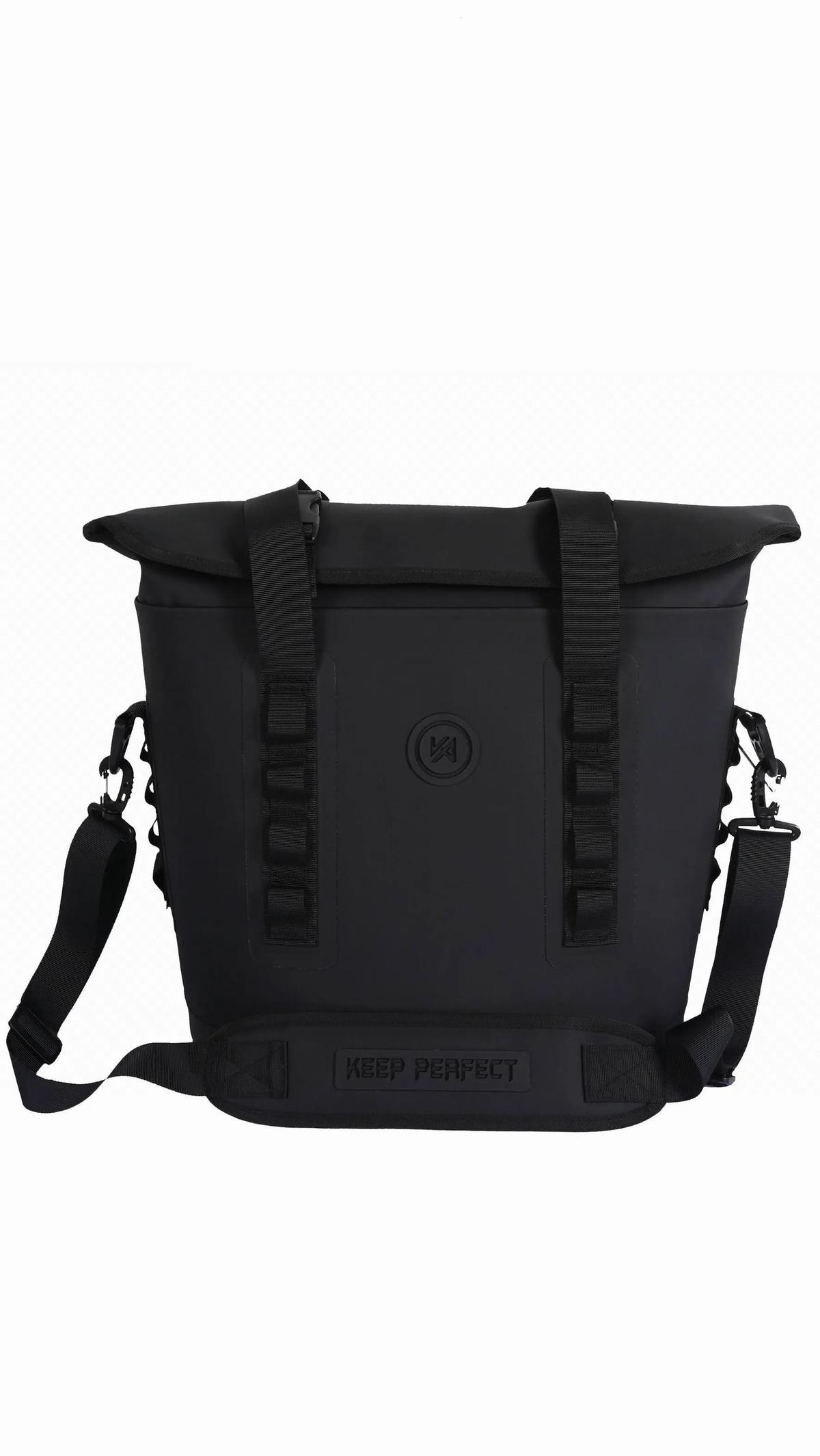
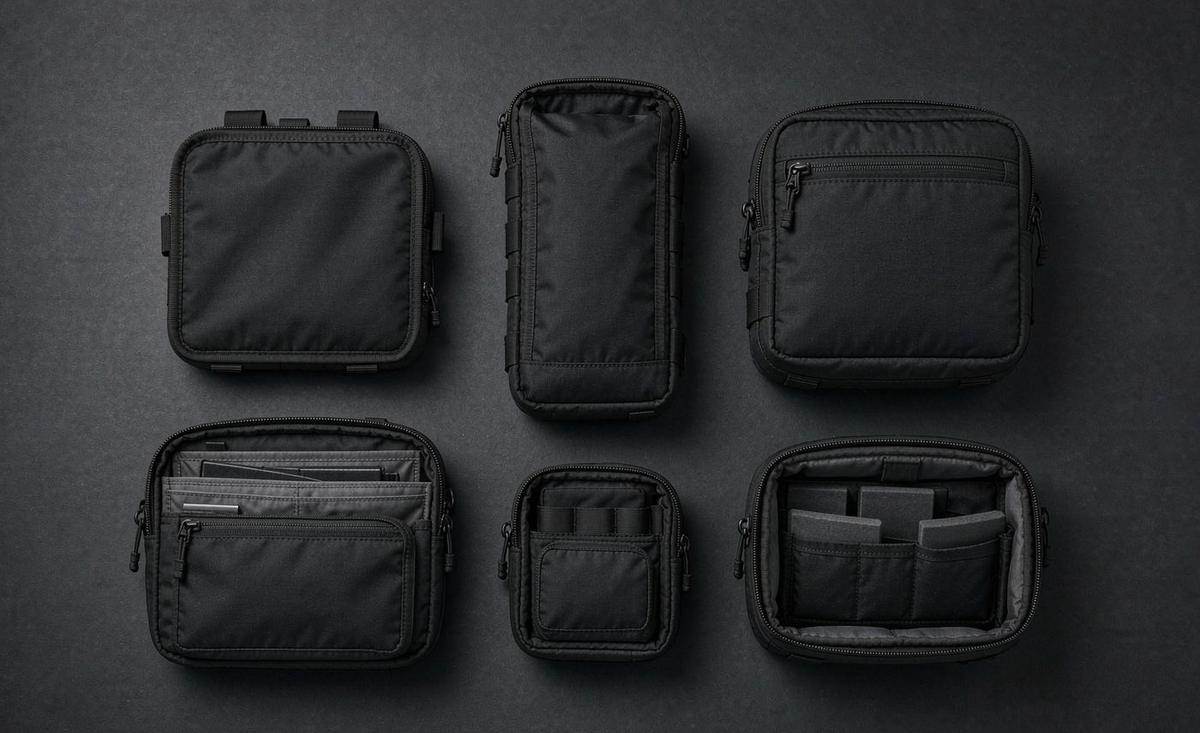
There is also a choice-of-product point specific to this model. The bag most often used in a subscription box is a flat or foldable item: a flat pouch, a foldable tote, a packing cube, a small cosmetic bag. These pack efficiently, survive storage, and are cheap to ship inside an outer carton. A structured bag costs more to freight and occupies more warehouse space for the whole year.
Our Custom Packing Cube Sets: Add-Ons That Lift AOV and Custom Mini Cosmetic Bags: The Perk That Scales pages look at two of the flat formats that suit this model.
Quality Consistency Across Rounds
For a subscriber, the bag in December is the same product as the bag in January, and a difference between them is a defect even if neither is individually faulty. Consistency is therefore a quality requirement in its own right for a repeat programme, and it needs its own controls.
The first control is the retained reference sample. The approved sample from the first run should be kept and used as the reference for every later run, and it should be compared against a sample from each new run before that run is released. Two bags side by side on a bench will tell you more than any report.
The second control is material lot recording. If a later run uses a different fabric lot, the difference is visible, and the way to manage it is to know about it in advance and to approve it before the run. A programme that records its lots can tell you which one your bag came from; one that cannot will be guessing when a subscriber complains.
The third control is the inspection standard, which should be stated once and applied to every tranche. Ours is AQL 2.5 to ISO 2859-1, and on a 3,000-piece base run that means a sample of 125 units with 7 major defects accepted and 8 rejected. Later tranches drawn from finished stock do not need re-inspection, but a later production run does, and it is inspected to the same standard.
The fourth control is the decoration check. When the artwork changes each cycle, the thing that goes wrong is the artwork: a colour that prints differently on a new lot, a placement that drifts, a registration that is off by a couple of millimetres. Approving a printed sample from each decoration cycle costs little and prevents the most common complaint a subscription brand receives.
Our Kickstarter Brand Merchandise: A Repeatable Bag Perk System page covers the repeatable-programme idea from the merchandise side, including how to keep a range coherent across cycles.
What to Ask For in a Repeat-Order Agreement
A subscription programme is not twelve orders, it is one agreement with twelve events in it. The agreement should contain five things, and asking for them up front is what makes the later cycles uneventful.
- A held construction, meaning the pattern, the materials and the approved sample are retained and reusable without re-sampling for as long as the programme runs.
- A tranche schedule, meaning the quantities and the release dates for each cycle are declared with the order and can be adjusted within a stated band.
- A price held for a stated period, typically twelve months, with a mechanism for what happens if a material cost moves materially.
- A reserved capacity slot for the next run, with a quantity band, a window and a trigger such as stock cover falling below four months.
- A named inspection standard and a retained reference sample, so every run is judged the same way and against the same object.
The first of those is the one that saves the most time over a year. Retaining a construction means the second run needs no construction sample, only a decoration approval, which shortens the cycle from the 6 to 10 working days of a build sample to whatever the artwork approval takes. It also means the materials, the colour and the hand feel are already agreed, which removes the most common source of disappointment.
The third is worth negotiating carefully. A price held for twelve months is valuable to a subscription brand because it makes the unit economics predictable, and it is available because the volume is predictable. What it cannot cover is a material cost that moves sharply, so the agreement should say what happens in that case, which is usually a review with notice rather than an immediate change.
The fourth is the one that protects the subscriber experience, because the failure mode of a pooled programme is the gap. A reserved slot with a trigger date means the next run is already in the calendar when it is needed, and the stock cover review that fires it is a five-minute monthly check.
If you are setting up a subscription programme now, the planning order is: choose a flat or foldable format, choose an evergreen base in a neutral colour, decide the decoration cycle, pool the year, and book the tranches. Our Custom Bags for Creators: Idea to Backer Doorstep page sets the wider sequence out for anyone who has not run a bag programme before.
Tell us your subscriber numbers and your cycle, and we will pool the year into one run with a tranche schedule and a reserved slot. Start at /contact-quote/.
Frequently Asked Questions
Can I order 300 bags a month for a subscription box?
Not economically, because 300 pcs is below the 500 pcs per style and per colourway minimum and a 300-piece run pays the same setup as a 500-piece one. Pool twelve months instead, order 3,000 pcs in one run, and draw from it monthly.
How much should I pool for a twelve-month programme?
Roughly your subscriber base multiplied by twelve, adjusted for the churn and growth trend, plus a 10 to 15% buffer held as a second run rather than ordered blind. For 300 subscribers that is typically a 3,000 to 3,600-unit plan.
What is an evergreen base?
One bag construction in one colourway whose appearance is changed by the decoration rather than by the material. Because a printed or labelled variant is a setup per artwork rather than a new colourway, twelve designs on one base is one colourway, not twelve.
Does changing the print each month create a new minimum?
No. Changing the artwork is a setup per artwork and per position, while changing the shell fabric is what opens a new colourway with its own 500 pcs. That difference is what makes a monthly decoration cycle affordable.
Which decoration methods suit a variable design cycle?
Woven labels and patches suit it best because they can be changed without touching the bag, then screen or transfer print, then sublimation, which covers the panel entirely. Embroidery suits a wordmark that changes and suits complex artwork less.
Where should I store the pooled stock?
Three options: at the production site with tranches released on a schedule, in a third-party warehouse near your subscribers, or in your own space. The right answer depends on where your subscribers are and how your fulfilment works.
When should I book the next production run?
Use a rolling review. When stock cover falls below six months, plan the run, and when it falls below four months, book it. A run takes 35 to 50 days plus freight, so the conversation happens months before the last tranche ships.
How often should I change the bag design?
Change the artwork seasonally, about four times a year, and change the construction rarely. A decoration refresh is an artwork approval, while a new material is a once-a-year decision and a new construction re-books the whole programme.
What size bag suits a subscription box?
A flat or foldable format: a flat pouch, a foldable tote, a packing cube or a small cosmetic bag. These pack efficiently, survive a year in storage and are cheap to ship, and they should be designed to the internal dimensions of your box.
How do I keep the bags consistent across runs?
Four controls: retain the approved sample and compare each new run against it, record the material lots, apply one inspection standard to every run, and approve a printed sample from each decoration cycle.
What is the AQL sample on a 3,000-piece run?
At AQL 2.5 to ISO 2859-1 and general inspection level II, a 1,201 to 3,200-piece lot takes a sample of 125 units, with 7 major defects accepted and 8 rejected.
How does pooling affect my cash flow?
It concentrates it. On T/T 30/70 terms the deposit is 30% of the full 3,000 units rather than of 300, and the balance is due before the first tranche ships. That is the real trade against twelve small orders at a much worse unit price.
People Also Ask
Can I order 300 bags a month?
Not economically. Pool the year into one 3,000-pcs run and draw monthly tranches from it.
What is an evergreen base bag?
One construction in one colourway whose look changes through decoration rather than material.
Does a new print each month need a new MOQ?
No. Artwork is a setup; a new shell colour is what creates a new colourway.
How many months should I pool?
Twelve for stability and the best unit price, six if you are growing fast or change the mix seasonally.
What bag suits a subscription box?
A flat or foldable format designed to the internal dimensions of your outer carton.
When should I reorder?
Plan at six months of stock cover and book at four, because a run takes 35 to 50 days plus freight.
How often should the design change?
The artwork about four times a year, the material once a year, the construction rarely.
How do I keep runs consistent?
Retain the reference sample, record material lots, apply one AQL standard and approve each decoration cycle.