GoFundMe Merch Bags: Reward Perks That Cover Campaign Costs
Yes, GoFundMe merch bags can cover campaign costs, but only if the perk is priced well below the donation and ordered at a viable quantity. A canvas tote that lands at 4.60 USD and ships for 3.90 USD inside a 25 USD donation leaves roughly 16 USD of contribution after payment processing. Multiply that across 900 donors and the campaign has paid for its own printing, packaging, shipping and ads, with cash left for the next run. This guide covers the cost model, bag selection, the 500 pcs per colourway minimum, the 6-10 working days of sampling window, the 35-50 day production calendar, branding options that survive a small budget, the fulfilment pipeline GoFundMe does not give you, and the tax and data compliance issues that catch organisers late.
- Why GoFundMe Is Different From Reward Crowdfunding
- What Covering Campaign Costs Actually Means
- The Merch Margin Maths for Cause Bags
- Choosing a Bag That Suits a Cause Campaign
- Pricing Perks Without Making Donations Feel Like Sales
- Minimums, Sampling and the Real Calendar
- Branding Options That Survive a Small Budget
- Fulfilment: Getting Perks to Individual Donors
- Receipts, Tax and Charitable Compliance
- A 90-Day Rolling Merch Plan for Ongoing Causes
- When Merch Is the Wrong Move
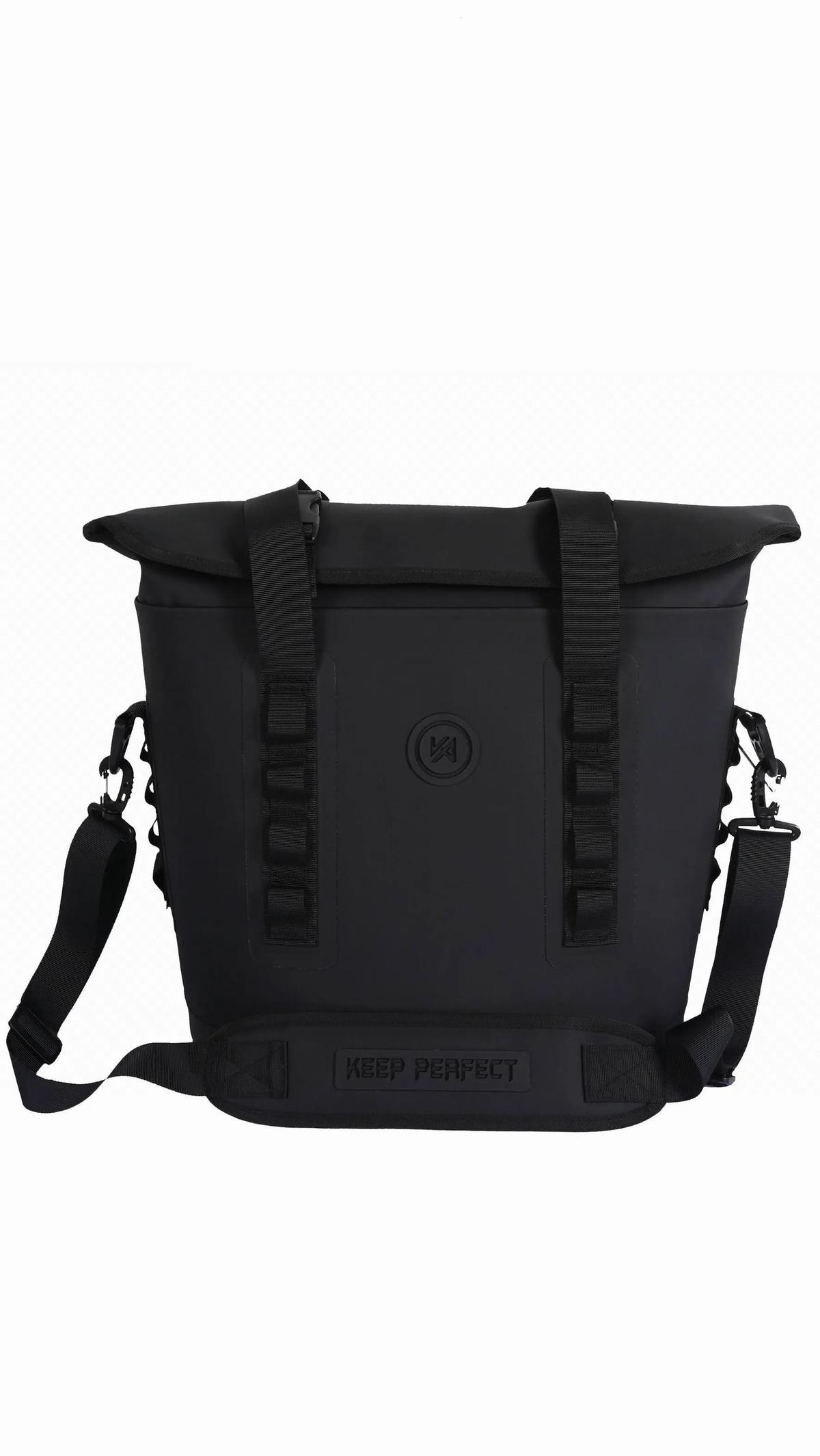
Yes. GoFundMe merch bags can cover campaign costs, but only when the perk sits below the donation it is attached to and is ordered at a quantity that keeps the landed unit cost low. A canvas tote that lands at 4.60 USD and ships for 3.90 USD inside a 25 USD donation leaves roughly 16 USD of contribution after payment processing. Multiply that across 900 donors and the campaign has funded its own printing, packaging, shipping and ads, and has cash left for the next run.
This guide is written for cause organisers, community groups, schools, animal rescues and memorial funds who want a physical thank-you gift without turning the donation page into a shop. It covers the cost model, the bag selection, the minimums, the branding options, the fulfilment pipeline and the compliance issues that most organisers discover too late.
Key takeaways
- T
- h
- e
- b
- a
- g
- i
- s
- n
- o
- t
- t
- h
- e
- p
- r
- o
- d
- u
- c
- t
- o
- n
- a
- c
- a
- u
- s
- e
- c
- a
- m
- p
- a
- i
- g
- n
- .
- T
- h
- e
- d
- o
- n
- a
- t
- i
- o
- n
- i
- s
- t
- h
- e
- p
- r
- o
- d
- u
- c
- t
- ,
- a
- n
- d
- t
- h
- e
- b
- a
- g
- i
- s
- t
- h
- e
- r
- e
- c
- e
- i
- p
- t
- t
- h
- e
- d
- o
- n
- o
- r
- k
- e
- e
- p
- s
- .
Why GoFundMe Is Different From Reward Crowdfunding
GoFundMe is a donation platform, not a reward platform. Donors give to a person or a cause, the organiser keeps whatever is raised, and there is no funding threshold to clear before money is released. That single structural difference changes how a bag perk should be designed, priced and delivered.
On a reward platform the backer is buying a product that does not exist yet, so the perk is the transaction. On GoFundMe the gift is the transaction and the bag is an acknowledgement of it. Organisers who copy a reward playbook across unchanged usually hit two problems at once: the perk absorbs too much of the donation, and total giving drops because the page starts to read like a shop.
The second structural difference is operational. Reward platforms ship with perk tiers, a pledge manager, address capture and a shipping flow. GoFundMe ships with none of that. There is no built-in tier builder, no post-campaign survey and no address export tied to a reward. If you promise a bag, you have to build the whole capture and fulfilment pipeline yourself, usually with a form, a spreadsheet and a shipping label tool.
That gap is where cause campaigns lose money. A donor who gives 50 USD and never submits an address still expects a bag, and chasing them costs staff time or ad spend. Plan for a non-response rate of 8 to 15 percent on the first capture attempt, and budget a second and third reminder before you write the address off.
Our team sees the same pattern with creators who run a reward campaign on Indiegogo and then add a GoFundMe page for the cause side. The multi-platform crowdfunding guide covers how the two models behave side by side. The short version is that the cause page needs its own fulfilment plan, because none of the reward infrastructure transfers across.
What Covering Campaign Costs Actually Means
Covering costs does not mean raising enough to pay for the bags. It means every donation leaves a positive contribution after the bag, the packaging, the postage and the payment fee have all been paid. Campaigns get this wrong by budgeting the bag and forgetting the other four lines.
The practical definition we use with organisers is contribution per donation. Contribution equals the donation, minus the landed unit cost of the bag, minus packaging and pick-pack labour, minus outbound postage, minus the payment processing fee, minus an allocated share of ad spend. Anything left over is real money for the cause.
A worked example at a 25 USD tier with a 4.60 USD landed tote, 0.55 USD packaging, 3.90 USD domestic postage, a 2.9 percent plus 0.30 USD processing fee, and 1.20 USD of allocated ad spend produces a contribution of about 14.45 USD. That is a 58 percent contribution rate, which is healthy. Drop the tier to 15 USD and the same bag leaves about 4.45 USD, a 30 percent rate, which stops covering anything once refunds and address chasing are added.
| Cost line | Typical range | Notes for organisers |
|---|---|---|
| Bag landed unit cost | 2.60 to 7.40 USD | Depends on style, fabric weight and print method |
| Packaging | 0.35 to 0.95 USD | Poly mailer, insert card, thank-you sticker |
| Outbound postage | 3.20 to 7.80 USD | Domestic first, international roughly double |
| Payment processing | 1.9 to 3.2 percent + fixed fee | Varies by country and processor |
| Address chasing and support | 0.40 to 1.60 USD per donor | Two reminder emails plus manual fixes |
| Allocated ad spend | 0.80 to 3.00 USD per donor | Only if you are running paid traffic |
The other definition that matters is coverage ratio, which is total contribution divided by total campaign operating cost. If your campaign spends 4,000 USD on ads, content, packaging and support and the perk programme generates 12,000 USD of contribution, the coverage ratio is 3.0 and the programme is doing its job. A ratio below 1.0 means the merch is being subsidised by donations that would have arrived anyway, which is the outcome organisers are trying to avoid.
Two failure modes show up again and again. The first is the free-bag threshold, where the organiser promises a bag to every donor regardless of amount. At a 4.60 USD landed cost plus 3.90 USD postage, a 10 USD donation produces a negative contribution of roughly 1.30 USD before any processing fee, so the campaign loses money on its smallest and most numerous donors. The second is the open-ended promise, where the organiser offers a bag without a closing date and is still shipping perks eight months later, long after the news cycle that funded the campaign has passed. Always set a perk window and state it on the page.
A perk that contributes less than 40 percent of the donation is not funding the campaign. It is a discount on the donation.
The Merch Margin Maths for Cause Bags
Unit cost on a sewn bag falls sharply between 500 and 3,000 pieces, then flattens. The drop is not linear. Most of the saving happens in the first step up, because cutting, printing setup and line changeover are fixed costs that get spread across more units.
The planning bands below are intended for budgeting only. They are typical ranges for simple styles in cotton canvas or polyester with a one-colour print, and they move with fabric prices, fabric weight and hardware count. Treat them as a starting point and replace them with real numbers once you have a written quote.
| Order band | Unit FOB band | Freight and duty allocation | Landed unit cost band |
|---|---|---|---|
| 300 pcs | 5.40 to 8.20 USD | 1.10 to 1.90 USD | 6.50 to 10.10 USD |
| 500 pcs | 3.90 to 6.10 USD | 0.75 to 1.35 USD | 4.65 to 7.45 USD |
| 1,000 pcs | 3.20 to 5.00 USD | 0.55 to 1.00 USD | 3.75 to 6.00 USD |
| 3,000 pcs | 2.75 to 4.30 USD | 0.42 to 0.80 USD | 3.17 to 5.10 USD |
| 5,000 pcs | 2.55 to 3.95 USD | 0.38 to 0.70 USD | 2.93 to 4.65 USD |
The 300-piece row is the trap. Below the 500 pcs per style and per colourway minimum the unit cost climbs by roughly 35 to 45 percent, because the line still has to be set up and the fabric still has to be bought in the same minimum lot. Organisers who order 250 bags to test demand pay a premium and then reorder at 500 anyway.
Shipping method matters as much as quantity. Sea freight on a 500-piece bag order typically allocates 0.55 to 1.10 USD per unit and takes 25 to 40 days port to port. Air freight on the same order allocates 2.10 to 4.40 USD per unit and takes 5 to 10 days. If the cause has a hard date, that date decides the freight mode, and the freight mode decides whether the contribution survives.
Volume is not the only lever. Specification changes move unit cost just as much as quantity does, and specification changes are free to make before sampling starts. Dropping from 12 oz canvas to 10 oz saves roughly 0.35 to 0.60 USD per unit. Removing a metal D-ring and a branded zip pull saves another 0.20 to 0.45 USD. Switching from a two-colour print to a one-colour print removes a screen and a pass, typically 0.25 to 0.50 USD. Three small specification decisions can move a 500-piece landed cost by 1.00 to 1.55 USD, which is the difference between a 25 USD threshold working and not working.
Duty and freight are the last two lines, and they are the ones organisers forget. Import duty on sewn bags varies by destination and by tariff classification, and it is assessed on the commercial invoice value, not on what you plan to charge. Ask for the HS classification in writing before you commit, because a misclassification discovered at customs is a cash problem on arrival, not a paperwork problem. Our customs and duties guide for reward bags covers how the calculation is built and what a duty-paid delivery option costs.
Choosing a Bag That Suits a Cause Campaign
Bag selection on a cause campaign is driven by three constraints: unit cost, shipping profile and emotional fit. Reward campaigns can justify a 45 USD technical backpack because the backer is buying gear. Cause campaigns rarely can, because the donor is giving 25 to 100 USD and expects most of it to reach the cause.
The styles that work repeatedly are flat, light and cheap to print. A 10 oz to 12 oz canvas tote ships flat, holds a large one-colour print and reads as a keepsake. A drawstring backpack suits schools, youth sport and animal rescue because it is unisex and one size fits all. A zippered flat pouch works for medical and medication organiser causes because it is genuinely useful and costs less than a structured bag. A light duffle is the right choice for disaster relief and community sport where the recipient needs to carry volume.
Styles that struggle are the ones with hardware, structure or size variance. Wheeled luggage, padded laptop backpacks and moulded cases all push the landed unit cost above 12 USD and the shipping weight above 1 kg, which makes the 25 USD tier unworkable. If your cause genuinely needs a technical bag, run it as a reward campaign on a reward platform instead, and see our Indiegogo bag programme notes for how that structure is built.
- Animal rescue: canvas tote with a one-colour emblem, 35 x 40 cm, ships flat
- School or youth programme: drawstring backpack in a single house colour, one size
- Medical or medication causes: zippered flat pouch with a clear interior pocket
- Memorial and bereavement: small keepsake pouch with a restrained, single-colour print
- Disaster relief: light duffle or laundry bag, water resistant, folds flat for storage
- Community sport: drawstring or duffle with a club name in one print colour
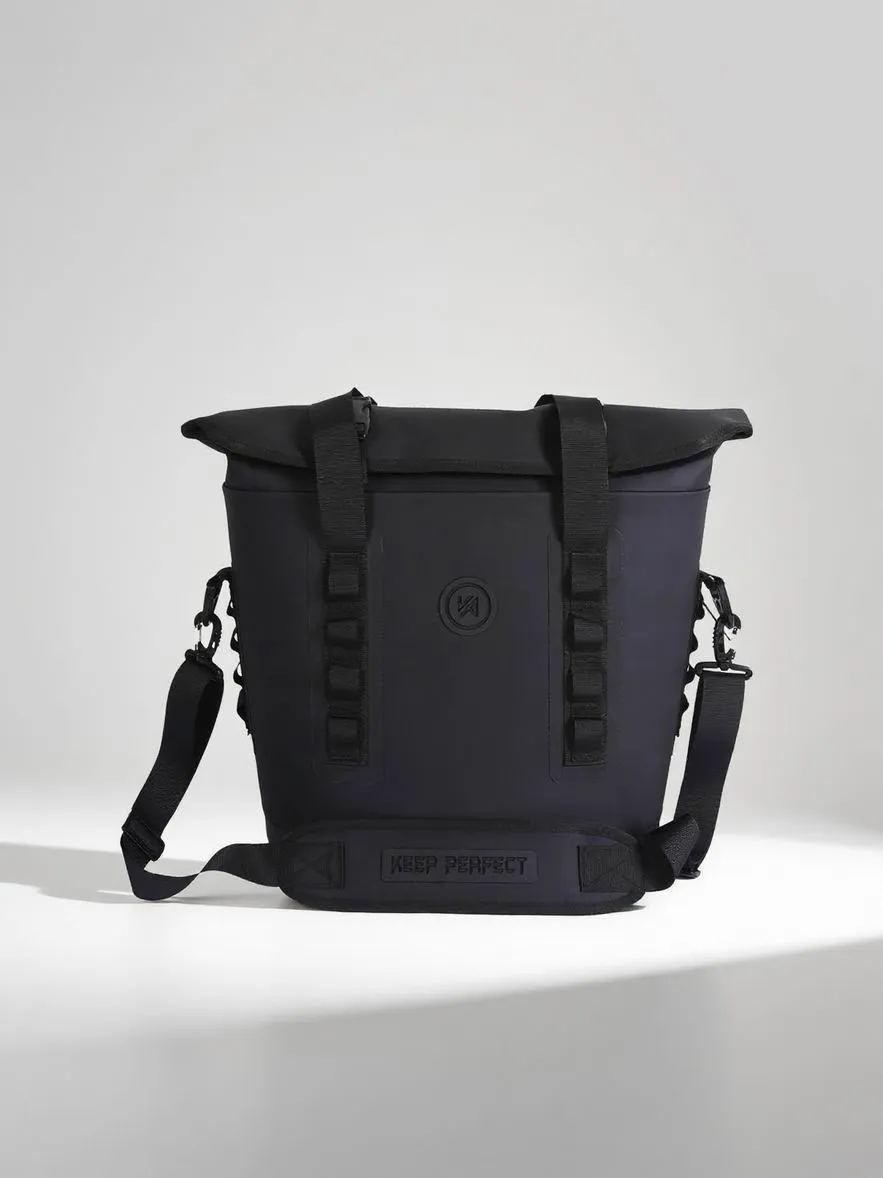
Pricing Perks Without Making Donations Feel Like Sales
Donor psychology on a cause page is different from backer psychology on a reward page. A backer wants maximum product for minimum money. A donor wants maximum impact, and a perk that looks too generous actually suppresses giving, because it reframes the gift as a purchase and the donor mentally discounts the donation by the retail value of the bag.
The rule of thumb we give organisers is that the perceived retail value of the perk should land between 15 and 25 percent of the donation. A 25 USD donation pairs with a bag that reads as a 5 to 7 USD gift. A 100 USD donation pairs with something that reads as a 15 to 25 USD gift. Above 25 percent, pure-gift donations fall. Below 10 percent, the perk feels like an afterthought and does not drive the tier upgrade.
Structure matters as much as ratio. The cleanest structure is a threshold, not a menu. Say give 50 USD or more and we will send you a tote, rather than offering a 50 USD bag tier, a 75 USD bag tier and a 100 USD bag tier. Thresholds keep the page about the cause and reduce the number of SKUs you have to buy, pack and track.
| Threshold | Suggested perk | Landed perk cost | Contribution after postage and fees |
|---|---|---|---|
| 25 USD | Drawstring backpack, one colour print | 3.40 to 4.80 USD | 12 to 15 USD |
| 50 USD | Canvas tote, one colour print | 4.40 to 6.20 USD | 35 to 41 USD |
| 100 USD | Tote plus zippered pouch bundle | 6.90 to 9.40 USD | 80 to 87 USD |
| 250 USD | Duffle plus pouch plus enamel pin | 12.40 to 16.80 USD | 210 to 224 USD |
| 500 USD | Two-duffle household pack | 20.80 to 27.50 USD | 440 to 458 USD |
Bundle carefully. Every extra component adds a pick operation and a packing error risk. Two components is comfortable for a volunteer team. Three is manageable with a printed packing slip. Four or more needs a scanned pack-out, which is where a merchandise fulfilment workflow starts to earn its keep.
Minimums, Sampling and the Real Calendar
The production calendar is the part organisers underestimate. The standard minimum is 500 pcs per style and per colourway. Sampling takes 6 to 10 working days for a straightforward style and 12 to 15 working days when patterns, moulded parts or unusual hardware are involved. Mass production takes 35 to 50 days after the pre-production sample is approved.
Read end to end, that is a realistic 50 to 75 days from approved artwork to goods packed and ready to ship, before any ocean transit. A cause campaign that launches on a news cycle and promises bags in three weeks will not hit it. Either build the calendar backwards from the date you need goods in hand, or promise a delivery window rather than a date.
Colourway arithmetic catches people out. The minimum applies per colourway, so a bag offered in black, navy and natural is a 1,500-piece order, not a 500-piece order. If you cannot fund 1,500 pieces, run one colourway and let donors choose a print design instead of a fabric colour. The bag MOQ explained guide walks through how the split works across sizes and SKUs.
- Minimum order quantity
- 500 pcs per style and per colourway
- Sampling lead time
- 6-10 working days standard, 12-15 working days complex
- Mass production
- 35-50 days after pre-production sample approval
- Inspection standard
- AQL 2.5 to ISO 2859-1
- Trade terms
- FOB Xiamen
- Payment terms
- T/T 30/70
- Monthly capacity
- 200,000 pcs
Inspection happens before the balance payment, not after. AQL 2.5 to ISO 2859-1 is the standard our production team works to, and the report is the document you use to decide whether to release the shipment. Read our AQL 2.5 explanation for campaign bags before you sign off, so you know what the sample size means and what a fail actually looks like.
Branding Options That Survive a Small Budget
Four decoration methods cover almost every cause campaign, and the choice is a trade between unit cost, setup cost and durability. Screen printing is the cheapest per unit above roughly 300 pieces and is the default for one or two spot colours. Heat transfer handles full-colour artwork and photographs with a lower setup cost, which suits short runs and complex designs. Embroidery reads as premium and typically adds 0.60 to 1.80 USD per unit, so it belongs on the 100 USD and above thresholds. A woven label costs 0.08 to 0.25 USD and is the cheapest way to make a plain bag feel branded.
The constraint that surprises organisers is variable data. Printing a different name, date or message on each bag is not viable at a 500-piece minimum, because every change is a setup change. If you want personalisation, keep the bag generic and personalise the insert card, the packing slip or a sticker instead. That way the run stays a single SKU and the personal touch costs 0.05 USD rather than 3.00 USD.
Artwork quality is the other silent cost. Vector files in AI, EPS or PDF reproduce cleanly. A 72 dpi PNG pulled from a social post does not, and the redraw time lands on your calendar. Our artwork file guide sets out what to send. If you are choosing between print methods, the screen print versus heat transfer comparison has the cost crossover points.
- Use one print colour wherever the design allows it. Each extra colour adds a screen and a pass.
- Keep the print area inside 25 x 25 cm on a tote so one screen covers multiple styles.
- Print on the flat panel, never across a seam, gusset or zip.
- Ask for a physical printed sample, not a digital mockup, before approving artwork.
- Put the cause name and a date on the bag. Undated bags feel like leftover stock.
Fulfilment: Getting Perks to Individual Donors
Because GoFundMe has no pledge manager, the capture layer is yours to build. The minimum viable version is a form that collects donor name, email, shipping address, phone number, the donation reference and any style or colour choice, wired to a spreadsheet. A slightly better version is a one-page store with the perk listed at 0.00 USD and a required address field, which removes the manual reconciliation step entirely.
Whichever you build, treat address quality as a cost line. Typical failure rates are 4 to 7 percent unusable addresses on the first pass, from missing postcodes, apartment numbers and country formatting errors. Budget a validation step and a second reminder sequence at day 7 and day 14. Our pledge manager integration notes describe the same data model, and the fields translate directly.
- Publish a single perk capture form and link it from the campaign description, every update and every thank-you email.
- Validate addresses as they arrive, not in bulk at the end. Fixing 40 addresses in week one is cheap.
- Send reminder one at day 7 and reminder two at day 14 to donors who have not submitted.
- Freeze the address file at your production order date and hold a 4 to 6 percent buffer for late submissions and replacements.
- Pack with a printed slip showing donor name, donation reference and contents, so a volunteer cannot mis-pack silently.
- Ship with tracked service above a 40 USD threshold and untracked below it if the contribution cannot carry tracking.
Postage is the largest single line after the bag itself. Flat-packing is the lever. A canvas tote folded flat with an insert card typically weighs 0.20 to 0.34 kg and ships as a large letter or small parcel. The same tote boxed with tissue and a rigid insert weighs 0.45 to 0.62 kg and crosses into a higher rate band. Our packaging for fulfilment guide covers the poly mailer and carton decision in detail, and the shipping weight estimation method will get you a freight quote before you commit.
Receipts, Tax and Charitable Compliance
Compliance is the section most organisers skip, and it is the one that creates the largest downside. When a donor receives goods in exchange for a contribution, the exchange is not a pure gift. In the United States, a charity must tell the donor the fair market value of what they received, and the deductible amount is the donation minus that value. A 100 USD donation with a bag whose fair market value is 18 USD produces an 82 USD deduction, and the receipt has to say so.
For personal GoFundMe campaigns the treatment is different again. Contributions to an individual are generally treated as personal gifts rather than charitable donations, so the donor usually cannot deduct them, and the tax treatment for the recipient depends on local rules. That is a question for a qualified adviser in your jurisdiction, not for a bag supplier, and this section is general information rather than tax advice.
Data protection applies regardless of tax status. Donor names and addresses are personal data. Under GDPR in the UK and EU, and under CCPA in California, you need a lawful basis to collect them, a retention period and a deletion step. Practically, that means storing the address file in one access-controlled location, deleting it 90 days after the last parcel ships, and never exporting it into a shared drive.
- State the fair market value of the perk on every receipt if you are a registered charity.
- Keep the landed cost invoice. It is the evidence for the fair market value figure.
- Store donor addresses in one place with restricted access and a defined deletion date.
- Publish a short privacy line on the perk form saying what you collect and how long you keep it.
- Do not sell, rent or share the donor list with a third party under any circumstances.
A 90-Day Rolling Merch Plan for Ongoing Causes
Cause campaigns are often evergreen rather than one-off, which suits merch better than a fixed-window campaign does. A rolling plan lets you reorder against real demand instead of guessing once and hoping.
Days 1 to 30 are validation. Publish the perk concept on the page and in updates, run a one-question interest form, and collect emails without taking money. Get written quotes for two styles, and start sampling on the one that wins. Sampling is 6 to 10 working days, so this phase fits inside a month comfortably.
Days 31 to 60 are capture. Open the perk form, publish the threshold, and drive donors to it with updates. Place the production order when committed perk volume crosses a threshold you can fund, typically 60 percent of your expected total. Production takes 35 to 50 days, so an order placed on day 45 lands around day 85 to 95.
Days 61 to 90 are fulfilment and reconciliation. Inspect to AQL 2.5, receive the goods, pack, ship, and then reconcile actual contribution per donation against the model. That reconciliation is the input to the next order. Our programme coordinator runs this loop with organisers who reorder every quarter, and the order process from quote to delivery shows where each step sits.
Cash flow is the constraint inside that loop. Payment terms are T/T 30/70, so 30 percent is due at order placement and 70 percent before shipment. On a 1,500-piece order at a 4.80 USD landed cost, that is roughly 2,160 USD up front and 5,040 USD at shipment, around seven weeks later. Organisers who plan the loop around donation income rather than around those two dates run into a shortfall at exactly the moment the goods are finished. Build the two payment dates into the appeal calendar and schedule an update push before each one.
Reordering is where the rolling model pays off. The second run reuses the approved pattern, the print screens and the approved pre-production sample, so sampling is usually a confirmation round of 3 to 5 working days rather than a fresh 6 to 10. That shortens the cycle by roughly two weeks and lets a quarterly appeal place its order later, against better demand data. Our re-order and stretch goal notes explain how a second run interacts with the minimum.
When Merch Is the Wrong Move
There are four situations where a bag actively hurts a cause campaign, and organisers should be willing to hear it.
The first is urgency. For a medical emergency, a disaster response or a funeral fund, donors want the money deployed immediately. A bag programme introduces a 50 to 75 day production calendar and a fulfilment burden at exactly the moment the organiser has the least capacity. If the need is measured in weeks, run a digital thank-you and revisit merch later.
The second is volume. Below roughly 300 committed donors, a 500-piece minimum leaves dead stock that ties up money the cause needs. Either wait until demand is proven, or pick a cheaper non-bag perk such as a sticker sheet, an enamel pin or a patch, all of which have far lower minimums and ship flat.
The third is address capture. If your donor base is older, less digital, or concentrated in regions with unreliable postal addressing, the non-response and failed-delivery rate will erode the contribution until the programme is net negative. Test the form with 50 donors before you order 500 bags.
The fourth is tone. For bereavement, serious illness and trauma causes, a loud branded tote reads badly. A restrained keepsake pouch with a single-colour print works, a bright bag with a slogan does not. When in doubt, ask five donors before you print five hundred bags.
If none of those four apply and your donor count justifies 500 pieces, a bag is one of the most durable thank-you gifts a cause can send, because it keeps working for years after the campaign closes.
Send us a brief with your donor estimate, target threshold and preferred style, and our campaign bag specialist will return a landed cost model you can put straight into the budget.
Frequently Asked Questions
Can GoFundMe merch bags really cover a campaign's costs?
Yes, when the perk is priced well below the donation and ordered at a viable quantity. In our model a 25 USD donation carrying a tote that lands at 4.60 USD and ships for 3.90 USD leaves roughly 14 to 16 USD of contribution after processing fees. Across 900 donors that is over 12,000 USD of real funding. Below a 40 percent contribution rate the perk stops funding anything.
What is the minimum order for cause campaign bags?
The standard minimum is 500 pcs per style and per colourway. That means a bag offered in black, navy and natural is a 1,500-piece order. Below 500 pieces the unit cost typically climbs by 35 to 45 percent because cutting, print setup and fabric lots are fixed. Order one colourway and vary the print design if your budget cannot carry three.
How long does it take to produce 500 printed tote bags?
Budget 50 to 75 days from approved artwork to packed goods. Sampling takes 6 to 10 working days for a standard style and 12 to 15 working days for a complex one. Mass production takes 35 to 50 days after the pre-production sample is approved. Ocean freight then adds 25 to 40 days, or air freight adds 5 to 10 days at a higher unit allocation.
Which bag style works best for a GoFundMe cause campaign?
Canvas totes and drawstring backpacks work best because they are unisex, one size fits all, ship flat and hold a cheap one-colour print. A 10 oz to 12 oz canvas tote typically lands in the 3.90 to 6.20 USD band at 500 to 1,000 pieces. Structured bags with wheels, padding or moulded shells push landed cost above 12 USD and break a 25 USD threshold.
How should I price a donation threshold so the bag still feels like a gift?
Keep the perceived retail value of the perk between 15 and 25 percent of the donation. A 25 USD threshold pairs with a bag that reads as a 5 to 7 USD gift; a 100 USD threshold pairs with something that reads as 15 to 25 USD. Above 25 percent, pure-gift donations fall because the page starts to look like a shop.
Does GoFundMe collect shipping addresses for perk fulfilment?
No. GoFundMe has no pledge manager, no perk tier builder and no address export tied to a reward. You must build the capture layer yourself with a form or a zero-value store listing. Plan for an 8 to 15 percent non-response rate on the first attempt and send reminders at day 7 and day 14.
Can I print a different name or message on each bag?
Not practically at a 500-piece minimum, because every change is a print setup change. Keep the bag design fixed and personalise the insert card, packing slip or a sticker instead. That costs roughly 0.05 USD per unit instead of 2 to 3 USD, and keeps the order as a single SKU that packs without errors.
What inspection standard should I require before paying the balance?
Require AQL 2.5 to ISO 2859-1 and hold the balance payment until the report is released. AQL 2.5 sets the sample size and the accept and reject numbers for major and minor defects. Inspect before the 70 percent balance, not after, because the report is your leverage if the run fails and needs rework.
Are donations still tax deductible if the donor receives a bag?
For a registered charity, the deductible amount is the donation minus the fair market value of the perk, and the receipt must state that value. A 100 USD donation with an 18 USD bag produces an 82 USD deduction. For personal GoFundMe campaigns, contributions are usually personal gifts rather than deductible donations. This is general information, so confirm with a qualified adviser.
How do I handle donor data protection when collecting addresses?
Treat donor names and addresses as personal data under GDPR in the UK and EU and CCPA in California. Store the file in one access-controlled location, set a retention period, and delete it 90 days after the last parcel ships. Publish a one-line privacy note on the perk form saying what you collect and how long you keep it.
What happens if I order 500 bags and only 300 donors claim one?
You hold 200 units of dead stock, which is why we recommend placing the production order once committed perk volume crosses roughly 60 percent of expected total. Leftover stock is not wasted if the cause is evergreen: plain colourways with an undated design can be re-offered at the next appeal, or sold at a later event to recover cost.
When should a cause campaign skip merch entirely?
Skip it when the need is urgent, when committed donors are below about 300, when address capture will be unreliable, or when the cause is bereavement or trauma and a loud branded bag would read badly. Cheaper alternatives with lower minimums include sticker sheets, enamel pins and woven patches, all of which ship flat and cost under 2 USD landed.
People Also Ask
What is a good perk for a GoFundMe campaign?
A flat-packing canvas tote or drawstring backpack with a one-colour print. It ships cheaply, suits any donor, and lands in the 3.90 to 6.20 USD band at 500 to 1,000 pieces.
How many bags should a cause campaign order first time?
Start at 500 pcs in one colourway. Splitting across three colourways triples the order to 1,500 pieces because the minimum applies per colourway.
Do GoFundMe donors expect a physical reward?
No. Donors give to the cause, so the bag is an acknowledgement rather than a purchase. Keep the perk value between 15 and 25 percent of the donation so the page still reads as a fundraiser.
Can I personalise each bag with a donor name?
Not at a 500-piece minimum. Print one fixed design on the bag and personalise the insert card or packing slip instead, at roughly 0.05 USD per unit.
How much does it cost to ship one tote bag to a donor?
Typically 3.20 to 7.80 USD domestically when folded flat with an insert card, and roughly double internationally. Boxing the same tote adds 0.20 to 0.28 kg and moves it into a higher rate band.
What is AQL 2.5 and why does it matter for 500 bags?
AQL 2.5 to ISO 2859-1 is the defect acceptance standard used for inspection before the balance payment. It defines the sample size and how many major and minor defects force a reject.
Should the bag be included in the donation or sold separately?
Include it as a threshold, for example give 50 USD or more and we will send a tote. Thresholds keep the page about the cause and reduce the number of SKUs you buy and pack.