Kickstarter Bag Returns: QC-Driven Quality and Backer Satisfaction
A bag return rate on a crowdfunding reward usually sits between 1 and 4 percent of delivered units when inspection is done properly, and it climbs past 8 percent when inspection is skipped or treated as paperwork. Returns come from a short list of repeat defects: seam failure, zipper malfunction, strap attachment, colour mismatch and packing errors. Inspection to AQL 2.5 to ISO 2859-1 does not guarantee zero returns, but it removes the defect clusters that turn a 2 percent rate into a 9 percent one. This page breaks down where returns originate, how to measure them honestly, and how to budget a replacement reserve with numbers you can defend to backers.
- What a return actually costs a campaign
- Where bag returns come from
- Why AQL 2.5 does not predict your return rate
- The defects that generate returns, ranked
- Sampling and first article prevention
- In-line checks versus final inspection
- Packaging, kitting and non-defect returns
- Setting a replacement reserve with numbers
- Backer satisfaction signals to measure
- A quality plan for your second campaign

What a Return Actually Costs a Campaign
Creators budget for the replacement unit and stop there. The real cost of a return has four components: the replacement product, the outbound shipping to the backer, the inbound shipping for the defective unit when you ask for it back, and the support time spent on the exchange. On a mid-priced reward bag the replacement unit is often the smallest of the four, which is why a small rise in return rate produces a disproportionately large hole in the campaign budget.
The second-order cost is harder to count and larger in practice. A backer who receives a faulty bag writes a comment, and comments on a live campaign page are read by people who have not pledged yet. On a second campaign those same backers are your earliest pledgers, and a 9 percent return rate in campaign one shows up as a slower funding curve in campaign two, because the same audience is being asked to trust the same brand again.
| Cost line | Per return | At 2 percent (40 units) | At 8 percent (160 units) |
|---|---|---|---|
| Replacement unit cost | 18 USD | 720 USD | 2,880 USD |
| Outbound replacement shipping | 12 USD | 480 USD | 1,920 USD |
| Inbound return shipping | 9 USD | 360 USD | 1,440 USD |
| Support time at 15 minutes per case | 6 USD | 240 USD | 960 USD |
| Total programme cost | 45 USD | 1,800 USD | 7,200 USD |
Read across the bottom row and the argument for inspection becomes arithmetic rather than opinion. The difference between a 2 percent and an 8 percent return rate on a 2,000 unit tier is 5,400 USD in direct cost, before any allowance for lost goodwill. That is roughly the same order of magnitude as a full pre-shipment inspection programme across several lots, and inspection is paid before the money is spent while returns are paid after.
Our programme coordinator asks every campaign to model this before sampling begins, because the model decides how tight the specification needs to be. A giveaway tote with a low retail value can tolerate a looser acceptance level, while a 120 USD technical backpack cannot, and the inspection budget should follow the return cost rather than the unit price.
Where Bag Returns Come From
Returns are not randomly distributed across defects. In our experience across crowdfunding reward programmes they cluster into five groups, and two of those groups are not manufacturing defects at all. Understanding which group a return belongs to changes the fix, because a defect group is solved in production while a non-defect group is solved in packing, listing copy or expectation setting.
- Construction failure: seam burst, strap pull-out, binding separation, handle detachment
- Hardware failure: zipper split, slider break, buckle crack, magnetic closure failure
- Appearance disappointment: colour mismatch against the campaign render, print misalignment, logo placement
- Fulfilment error: wrong colourway, wrong tier contents, missing accessory, duplicate shipment
- Expectation mismatch: the bag is the right product but the backer expected different capacity or dimensions
The first two groups are what a quality programme is designed to suppress, and they respond directly to inspection discipline. The third group responds to a golden sample and a colour reference standard agreed before bulk. The fourth is a packing control problem rather than a quality problem, and the fifth is a campaign page problem that no amount of inspection can fix. Mixing them together in a single return rate hides which lever to pull.
That classification is the first thing our campaign bag specialist asks for when a creator reports a rising return rate. Splitting 40 returns into five groups usually shows that 25 of them come from one group, and a single targeted fix then removes most of the cost. Treating all 40 as a generic quality failure leads to a costly and ineffective tightening of every specification at once.
For the formal side of how defects are classified and counted during inspection, our bag QC and compliance hub for Kickstarter campaigns sets out the critical, major and minor structure we work to, and where each defect class sits in the acceptance decision.
Why AQL 2.5 Does Not Predict Your Return Rate
AQL 2.5 is a decision rule about a lot, not a forecast of customer behaviour. Under AQL 2.5 to ISO 2859-1 with general level II single sampling, a lot of 500 pcs draws a sample of 50 and accepts up to 3 major defects, rejecting on 4. That rule says the lot is acceptable for shipment. It does not say that 2.5 percent of units are defective, and it certainly does not say that 2.5 percent of backers will ask for a replacement.
The gap comes from three places. First, sampling inspects a subset, so defects that sit outside the drawn cartons are not counted. Second, defects cluster: a single operator, a single fabric roll or a single hour of production can generate most of the faults in a lot, and a random sample will miss a cluster that a backer will eventually find. Third, appearance disappointment and expectation mismatch never appear in an inspection report at all.
The practical reading is that AQL 2.5 sets a floor, not a ceiling. A well-run programme treats the acceptance number as a signal to investigate rather than a pass mark to celebrate, which is why our inspectors report how many cartons were opened and where in the production sequence the defects appeared. A lot that accepts with 3 majors concentrated in one carton deserves a second look, while a lot that accepts with 1 major spread across ten cartons usually does not.
If you want the full mechanics of sample sizes, code letters and switching rules, read bag QC for Kickstarter: AQL 2.5 explained, and pair it with our guide to reading a bag QC report so the numbers on the page translate into decisions.
The Defects That Generate Returns, Ranked by Frequency
Ranking matters because it directs a limited inspection budget. Below is the ranking our team uses when planning what to check hardest on a reward bag, based on the defects that most often reach a backer rather than the defects that are most often found in the factory. The two lists are not the same, because factories catch their own obvious faults and backers receive what escapes.
| Defect | Share of returns | Where it escapes | Control that works |
|---|---|---|---|
| Strap or handle pull-out | 22 percent | Insufficient stitch penetration or missing bar tack | Bar tack specification plus pull test on first article |
| Zipper split or slider failure | 19 percent | Chain quality and slider alignment under load | Cycle test on hardware and brand-locked zipper |
| Seam burst at a stress corner | 16 percent | Seam allowance too narrow at the gusset | Seam allowance written into the spec sheet |
| Colour mismatch versus render | 14 percent | No signed colour reference standard | Golden sample signed before bulk release |
| Wrong colourway or tier contents | 12 percent | Packing line mixing similar colourways | Scan check at carton close by tier |
| Print or logo misalignment | 9 percent | Fixture drift during a long run | In-line check at run start and midpoint |
| Capacity or dimension disappointment | 8 percent | Listing copy written from a render | Measured dimensions published on the page |
The top three rows account for 57 percent of backer-reported returns and all three are construction or hardware issues that a properly specified first article would have caught. This is the core argument for spending inspection effort early: the same defect that costs 45 USD to resolve after delivery costs almost nothing to prevent during sampling, when a bar tack can be added to a spec sheet with a single line of text.
Note that the bottom two rows have no manufacturing fix. Publishing measured dimensions rather than rendered ones removes an entire category of disappointment returns, and it costs one afternoon of work on the campaign page. Our sourcing partner supplies those measured dimensions with the sample approval pack precisely so the listing can be corrected before pledges close rather than after.
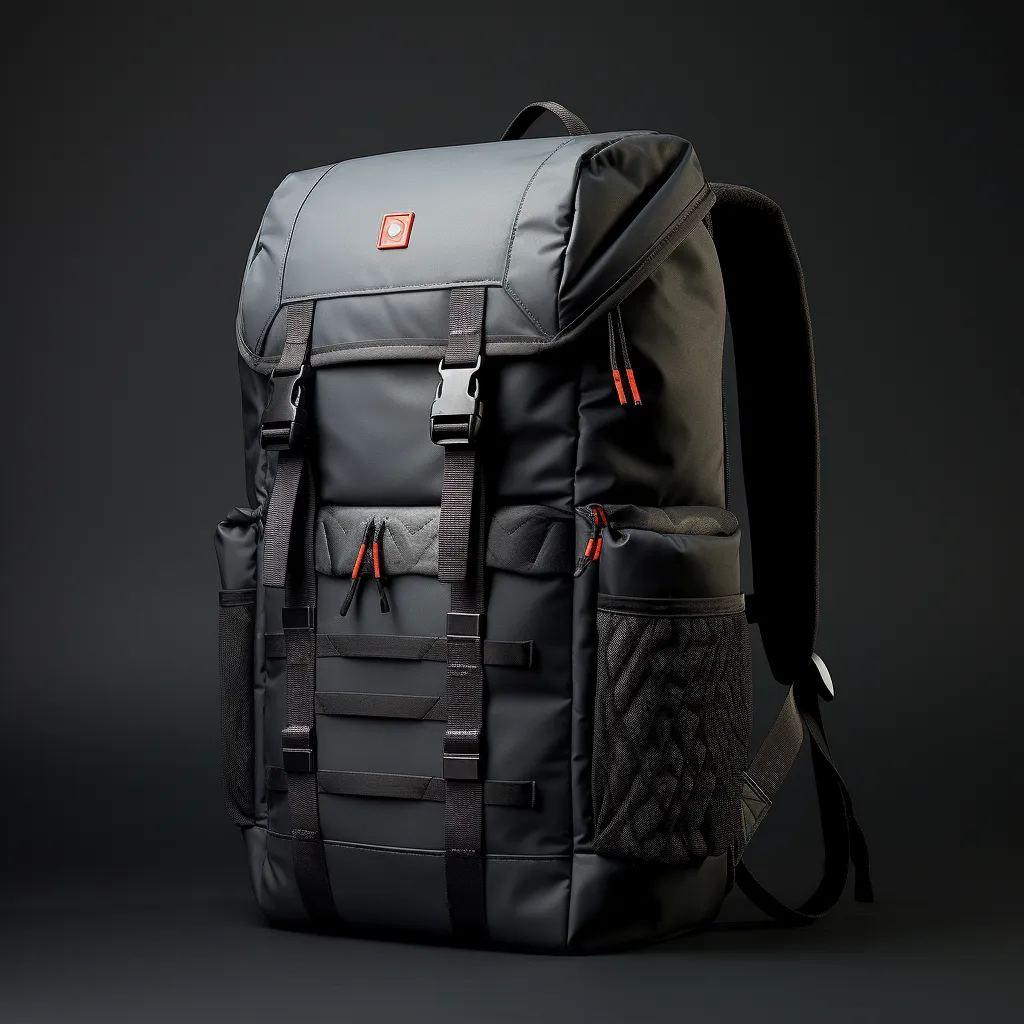
Sampling and First Article: Stopping Returns Before Bulk
Sampling is where return prevention is cheapest, because every decision is still reversible. Sampling runs 6 to 10 working days for a conventional build and 12 to 15 working days where the bag includes moulded panels, bonded seams or laminated foam. Inside that window the first article is the single most valuable artefact a campaign produces, because it is the physical reference against which bulk will later be judged.
- Build the first article from production-intent materials, not from substitute fabric that happens to be in stock
- Pull test every strap, handle and load-bearing junction and record the result rather than eyeballing it
- Cycle test every zipper and buckle on the sample, because hardware fatigue is invisible in a static photograph
- Photograph the sample against a signed colour reference under neutral lighting for the listing
- Publish measured dimensions, internal volume and weight from the sample, not from the design render
- Freeze the specification after approval, and treat any later change as a new revision requiring re-approval
Our production team issues the first article with a written specification sheet that lists seam allowance, stitch density, bar tack positions, hardware brand and fabric denier. That sheet is what turns a subjective argument about quality into an objective one during bulk. Without it, an inspection finding becomes a negotiation; with it, the finding is simply a measurement against an agreed number.
The commercial minimum applies at this stage as well. MOQ is 500 pcs per style and colourway, which means a campaign that wants four colourways of one bag is committing to 2,000 units across the style. Our campaign bag specialist recommends consolidating colourways at the first campaign precisely because each additional colourway multiplies packing complexity, and packing complexity is the fourth ranked source of returns.
For a detailed walkthrough of what happens at this gate, see what a first article inspection actually checks and acceptable defect tolerance on custom bags.
In-Line Checks Versus Final Inspection for Return Prevention
Final inspection catches defects that already exist. In-line checking prevents them from being made in volume. For return prevention the second is worth more, particularly on long runs where a fixture drifts, a needle dulls, or a fabric roll changes shade halfway through the order. A single in-line visit at the midpoint of a 35 to 50 day bulk run can prevent several hundred defective units from ever being finished.
- In-line at run start confirms the first off-tool units match the approved first article before volume builds
- In-line at the midpoint catches fixture drift, needle damage and shade variation between fabric rolls
- Final inspection to AQL 2.5 to ISO 2859-1 provides the release decision and the documented evidence
- Packing inspection confirms tier and colourway accuracy, which is a fulfilment control rather than a product control
- A pre-shipment check verifies carton count, label revision and packing list accuracy before the container closes
The sequencing matters more than the count. A programme with one in-line visit and one final inspection outperforms a programme with three final inspections, because the final inspection can only accept or reject a finished lot while the in-line visit can change what is still being made. Our programme coordinator schedules the in-line visit against the production calendar rather than against the shipment date.
Bulk runs 35 to 50 days, and the in-line visit is most valuable somewhere between day 12 and day 20 of that window, when enough units exist to show a trend and enough of the run remains to correct it. Our guide to in-line versus final inspection covers the scheduling logic, and pre-shipment inspection for Kickstarter bags covers the release gate itself.
Packaging, Kitting and the Returns That Are Not Defects
Roughly a fifth of backer-reported returns are not product defects. They are fulfilment errors: the wrong colourway in the box, a missing shoulder strap, a duplicate shipment, or a carton that arrived crushed. These returns are cheaper to fix than construction failures because the product is fine, but they are more damaging to trust because the backer reads them as carelessness rather than as a manufacturing variance.
Poly bag thickness, carton strength and void fill belong in the same specification as stitch density. A reward bag shipped in a mailer that is too thin arrives scuffed, and a scuffed arrival generates the same support ticket as a seam failure at the same cost. Our sourcing partner specifies packing materials against the shipping method, because a bag travelling by sea freight in a master carton and a bag travelling by air parcel face completely different hazards.
- Pack by tier and colourway with a scan check at carton close, not by visual count
- Keep similar colourways in physically separated packing zones to prevent silent mixing
- Specify carton burst strength against the actual freight method and transit time
- Include a packing slip that names the tier and colourway so the backer can self-verify
- Photograph the finished carton before sealing as evidence if a damage claim arrives
Where a campaign offers mixed colourway kits, the risk multiplies again. Our page on custom bag kitting and mixing colourways sets out how to structure those kits so the packing line can verify them, and custom bag packaging for fulfilment covers the material specification.
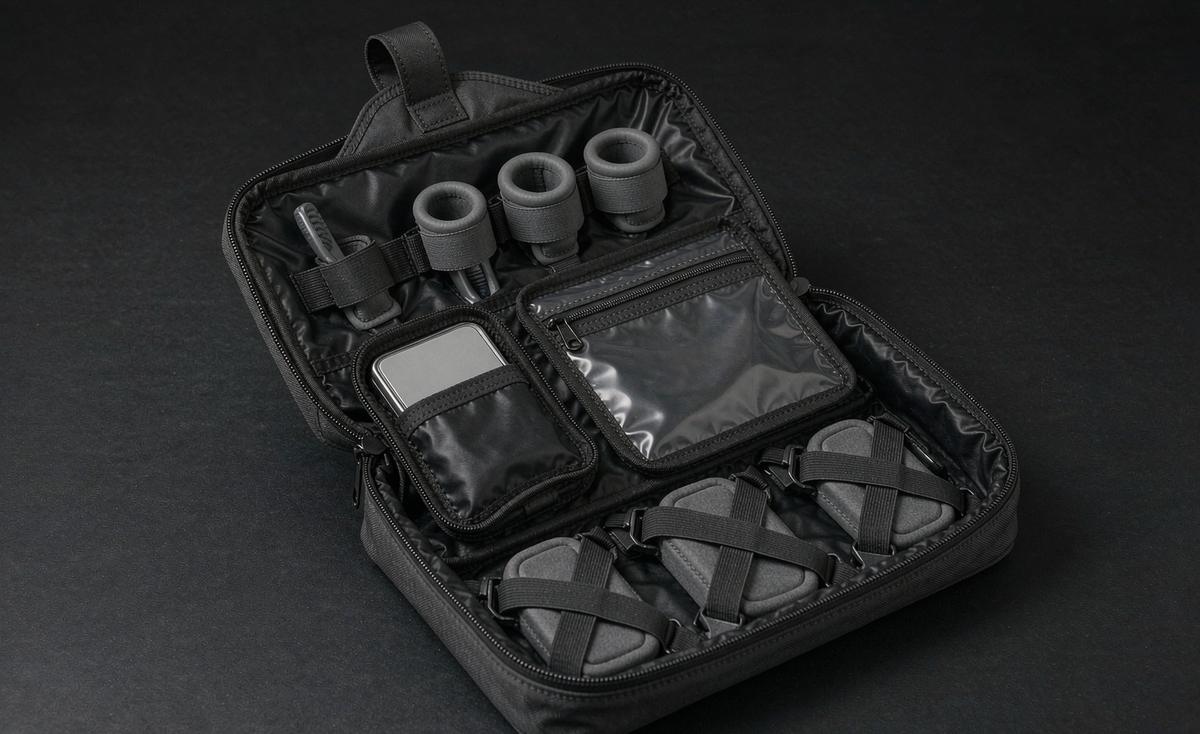
Setting a Replacement Reserve With Real Numbers
A replacement reserve is the number of spare units you hold to cover returns, damage in transit and re-work. The instinct is to pick a round figure such as 5 percent. A better approach builds the reserve from the return rate you actually expect, the transit risk on your chosen freight method, and the lead time to produce more if the reserve runs out.
- Base return rate expectation with inspection
- 1 to 4 percent of delivered units
- Return rate expectation without inspection
- 6 to 10 percent of delivered units
- Sea freight damage and loss allowance
- 0.5 to 1.5 percent of shipped units
- Air parcel damage and loss allowance
- 0.2 to 0.6 percent of shipped units
- Recommended reserve for a first campaign
- 3 to 5 percent of shipped units
- Recommended reserve for a complex technical bag
- 5 to 7 percent of shipped units
- Re-order lead time if the reserve is exhausted
- 35 to 50 days for bulk plus transit
The last row is the one that decides the reserve size. Because bulk runs 35 to 50 days, running out of spares in month two of delivery means a two month wait for a replacement production slot, by which time the return has become a refund request. Holding an extra 2 percent of units costs far less than refunding backers at retail value while a new run is scheduled.
Our team builds the reserve into the production quantity rather than treating it as a separate later order, because a separate order at 500 pcs minimum would almost always exceed the reserve requirement and would arrive after the return window had closed. The reserve units are produced in the same run, from the same material lot, and held for the campaign.
Payment structure supports this. Our terms are T/T 30/70, with the balance settled before shipment, and quotations are issued FOB Xiamen. Reserving 3 to 5 percent inside a single production run therefore costs one setup and one freight movement rather than two, which is the difference between a manageable line item and a budget overrun.
Backer Satisfaction Signals Worth Measuring
Return rate is a lagging indicator and a blunt one. A backer can be dissatisfied without returning anything, and dissatisfied backers are the ones who do not pledge again. The useful practice is to track a small set of signals during the delivery window and read them together, because individually each one is noisy and collectively they show a clear trend within two weeks of the first shipments landing.
- Return rate by defect group, updated weekly, not as a single end-of-campaign figure
- Support ticket volume per 100 delivered units, which rises before the return rate does
- Time to first response, because a slow response converts a minor complaint into a refund request
- Unprompted positive comments per 100 units, which predicts second campaign conversion
- Damage-in-transit reports by carrier, which identifies a freight problem rather than a product problem
- Repeat pledge intent from a short post-delivery survey sent four weeks after arrival
Ticket volume is the leading indicator our programme coordinator watches first. A spike in tickets about one specific issue, such as a strap, usually appears one to two weeks before the corresponding returns arrive, and it gives a window to publish a proactive note to backers explaining the fix. A campaign that communicates first receives fewer returns than one that waits.
The policy side of handling these cases is covered in Kickstarter returns and replacements: a practical bag policy, which sets out response templates, time windows and when a refund beats a replacement. Pair it with shipping reward bags to backers for the transit risk side of the same problem.
A Quality Plan for Your Second Campaign
The second campaign is where quality discipline pays compound interest. You already know which defects your audience reported, you already have a measured specification, and you already have a return rate to beat. The work is to convert that history into a tighter specification and a shorter approval chain, so campaign two raises quality while reducing the time spent arguing about it.
- Start from the campaign one defect tally and promote the top three defects to explicit specification lines
- Reuse the signed golden sample and colour reference rather than renegotiating colour from scratch
- Raise the inspection level on the tiers that generated the most returns, and hold it steady elsewhere
- Consolidate colourways if packing errors appeared, because packing errors scale with variety
- Publish measured dimensions and a realistic capacity statement based on delivered feedback
- Carry the replacement reserve forward, adjusted by the actual return rate you recorded
Campaigns that do this typically see the return rate fall by a third or more on the second run, because the specification is written from evidence rather than from assumption. The improvement is not mysterious: the two largest return categories are decided by a bar tack position and a zipper brand, and both are one line of text on a specification sheet once you know they matter.
Our production team keeps the specification and inspection history from each programme so the second run starts from the first run's evidence rather than from a blank page. If you are planning a follow-up and want the quality history reviewed before you quote, send the campaign one defect tally to our campaign bag specialist through the quote and contact page.
Send your tier count, colourway split and target delivery date for a return-risk assessment before sampling. Our campaign bag specialist will model the reserve and the inspection plan, or reach us at service@junyuanbags.com.
Key takeaways
- A 2 percent versus 8 percent return rate on 2,000 units is a 5,400 USD difference in direct cost
- Straps, zippers and seams account for 57 percent of backer-reported returns
- AQL 2.5 to ISO 2859-1 sets a release floor, not a forecast of return rate
- Sampling 6 to 10 working days, complex 12 to 15 working days, bulk 35 to 50 days
- MOQ 500 pcs per style and colourway, FOB Xiamen, T/T 30/70
Frequently Asked Questions
What is a normal return rate for a crowdfunding reward bag?
Between 1 and 4 percent of delivered units when a documented inspection programme is in place, rising to 6 or 10 percent when inspection is skipped. The range is wide because it depends on how tightly the specification was written during sampling and on how many colourways the packing line had to handle. Track returns by defect group rather than as a single number, because a single number hides whether the fix belongs in production or in packing.
Does AQL 2.5 inspection guarantee a low return rate?
No. AQL 2.5 to ISO 2859-1 is a decision rule for releasing a lot, not a forecast of customer behaviour. Under general level II a lot of 500 pcs draws 50 units and accepts 3 major defects. Sampling reads a subset, defects cluster by carton and operator, and appearance or expectation complaints never appear in an inspection report. Inspection sets a floor, and return rate is managed with a specification plus a reserve.
Which bag defects generate the most backer returns?
Strap and handle pull-out at roughly 22 percent of reported cases, zipper failure at 19 percent, and seam burst at a stress corner at 16 percent. Together those three account for 57 percent of returns and all three are preventable at the first article stage through a bar tack specification, a hardware cycle test and a written seam allowance. Colour mismatch and packing errors make up most of the remainder.
How many spare units should I hold for returns?
Between 3 and 5 percent of shipped units for a first campaign, and 5 to 7 percent for a complex technical bag with moulded panels or bonded seams. The reserve has to cover returns, transit damage of 0.5 to 1.5 percent by sea, and the fact that a re-order takes 35 to 50 days for bulk plus transit. Build the reserve into the production run rather than ordering separately later.
Are packing errors counted as quality defects?
They are counted in the return rate but they are not product defects, and separating them matters because the fix is different. Wrong colourway, missing accessory and duplicate shipment are packing control problems solved by scanning at carton close and by physically separating colourway zones. Treating them as manufacturing defects leads to tightening a specification that was never the cause.
How long does it take to produce replacement units?
Bulk production runs 35 to 50 days, and that clock starts only after a production slot is available, which is why running out of spares can mean a two month delay. Sampling alone is 6 to 10 working days, or 12 to 15 working days for complex builds. This lead time is the main argument for holding a reserve inside the original run instead of reacting afterwards.
What is the minimum order for a reward bag programme?
MOQ is 500 pcs per style and colourway, so four colourways of one style is a 2,000 unit commitment. Our campaign bag specialist usually recommends fewer colourways for a first campaign, because variety increases packing complexity and packing errors are the fourth largest source of returns. Consolidating colourways often improves both cost and satisfaction at once.
How do in-line checks reduce returns compared with final inspection?
Final inspection accepts or rejects finished goods, while in-line checking changes what is still being made. On a 35 to 50 day bulk run a midpoint visit catches fixture drift, needle damage and shade variation between fabric rolls before hundreds of units are affected. One in-line visit plus one final inspection typically outperforms three final inspections.
Should I ask backers to return the defective bag?
It depends on unit value and the defect. For a low-value item the inbound shipping cost can exceed the value of the returned unit, so asking the backer to donate or discard it is cheaper. For a high-value technical bag, or where you need the unit to diagnose a production fault, paying inbound shipping is worth it. Decide in advance and state it in the policy.
What should I measure besides return rate?
Support ticket volume per 100 delivered units is the leading indicator, because it rises one to two weeks before returns do. Also track time to first response, unprompted positive comments per 100 units, damage reports by carrier, and repeat pledge intent from a survey sent four weeks after delivery. Read together these show a trend within two weeks.
How does colour mismatch become a return reason?
When the campaign render and the delivered product differ, the backer reads it as a defect even though the bag meets specification. The control is a golden sample signed against a colour reference under neutral lighting before bulk release, plus listing photography taken from that physical sample rather than from a render. Publish measured dimensions from the same sample.
Can a second campaign reuse the first campaign's quality setup?
Yes, and it should. Promote the top three defects from the campaign one tally into explicit specification lines, reuse the signed golden sample and colour reference, and raise inspection on the tiers that generated the most returns. Campaigns that do this commonly cut the return rate by a third, because the specification is written from evidence.
People Also Ask
What is a good return rate for a Kickstarter bag reward?
Between 1 and 4 percent with a documented inspection programme, and 6 to 10 percent without one.
Why do bags get returned more than other rewards?
Because load-bearing junctions such as straps, handles and zippers fail under real use, and those three categories cause 57 percent of returns.
Does inspection remove the need for spare units?
No. Inspection lowers the return rate but a reserve of 3 to 5 percent still covers transit damage and re-work.
How much does one returned bag cost a campaign?
Around 45 USD all-in on a 39 USD bag, once replacement, two shipping legs and support time are counted.
What is the most common bag defect reported by backers?
Strap or handle pull-out, at roughly 22 percent of reported returns, usually from a missing bar tack.
When is the best time for an in-line inspection?
Between day 12 and day 20 of a 35 to 50 day bulk run, when a trend is visible and correction is still possible.