Low MOQ Duffle Bags: The Entry Strategy for Sport and Travel Startups
A duffle is the friendliest first bag a sport or travel startup can produce. It has no frame, no moulded back panel and no complex harness, so a structured 45-litre duffle can be sampled in 6 to 10 working days and produced in 35 to 50 days at 500 pcs per size and colourway. The entry strategy is to build one construction, offer it in two sizes that share most of their pattern, keep the shoe compartment as a defined option rather than a redesign, and spend the branding budget on patches and embroidery rather than moulded hardware.
- Why a Duffle Is the Friendliest First Bag to Produce
- What a 500-Pcs Duffle Order Looks Like
- Size Strategy: One Construction, Two Sizes
- The Shoe Compartment and Wet Pocket Decision
- Material Choices for Sport Versus Travel Duffles
- Carry-On Dimensions and the Travel Startup Constraint
- Branding a Duffle: Embroidery, Print and Patches at 500 Pcs
- Team and Club Orders: The Sport Route to Volume
- What a Duffle Costs and Why Size Drives It
- How to Write a Duffle Brief That Gets an Accurate Quote
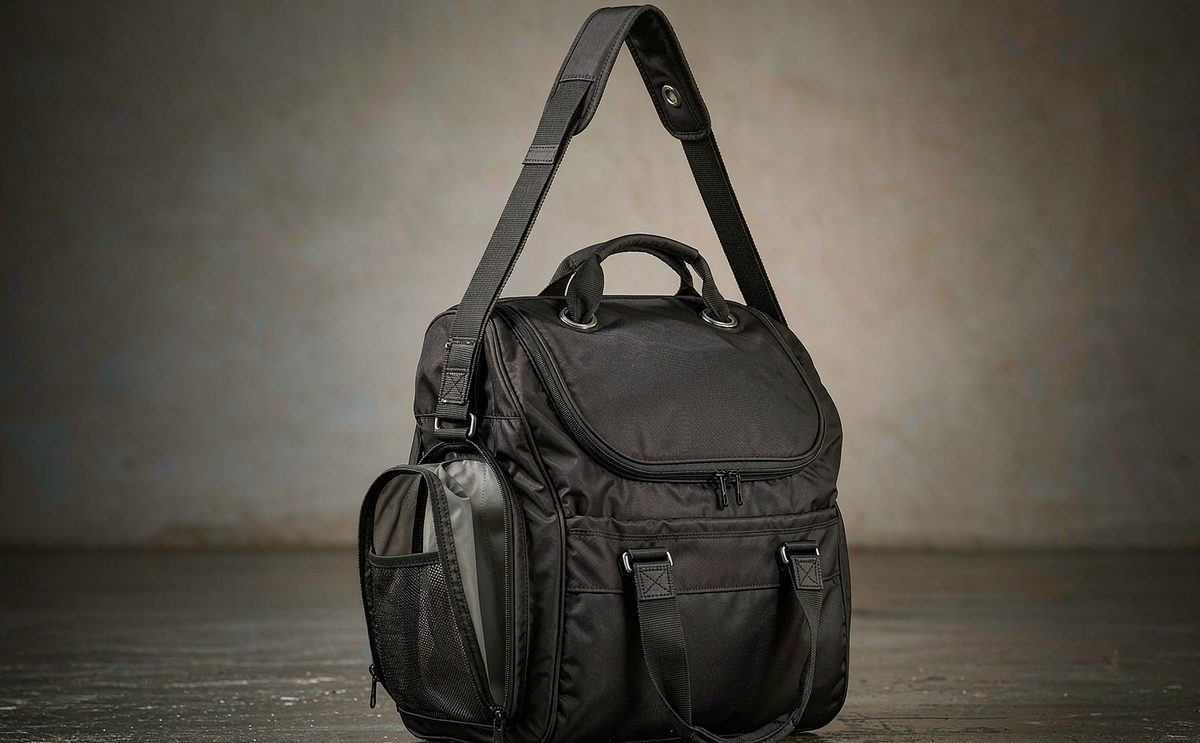
Why a Duffle Is the Friendliest First Bag to Produce
If you are choosing which bag to make first, the construction matters more than the category sounds. A duffle has no internal frame, no moulded back panel, no shoulder harness with load lifters, and no suspended laptop sleeve. It is, structurally, a shaped tube with ends, a zipper along the top, two handles and a strap. That simplicity is a genuine advantage at 500 pcs, and it shows up in the sampling time, the defect rate and the price.
Compare it with the alternatives. A technical travel backpack typically needs a moulded or foam back panel, a shaped harness, possibly an aluminium or plastic stay, and a dozen separate pockets each with its own pattern piece. Each of those is a place where a small run can go wrong, and each adds minutes to the sewing time. A hiking pack adds a frame and a load-transfer system. A camera bag adds a padded divider system with its own tooling. A duffle adds none of it.
The practical result is that a duffle is fast to sample. Because there is no moulded component to make, there is no tooling step waiting in front of the first stitch, and a first sample can be produced inside the 6 to 10 working days we quote for a standard build. A more complex duffle with a ventilated shoe compartment, a moulded base and a trolley sleeve sits at the 12 to 15 working days end, which is still fast for a bag with that much specification.
Duffles also carry high perceived value per unit of production effort. A bag that costs a certain amount to make can be photographed looking like a premium travel product, because the category reads as generous and substantial. That matters on a campaign page, where the reward tier has to look worth the pledge. A 40-litre bag looks like more product than a 20-litre one for a modest difference in material use.
The entry strategy this article sets out is aimed at two kinds of startup. The sport startup, typically a gym, a club, an academy or a fitness brand, whose first order often doubles as team kit and whose re-order is driven by seasons and new members. And the travel startup, whose duffle is a product in its own right and whose constraints are airline dimensions and the expectations of people who travel often. The two have different priorities and they should not brief the same bag.
Both of them, however, should start with the same question about the entry quantity, which is the one our Low MOQ Bag Production for Creators page answers at the programme level: 500 pcs per style and per colourway, and every size that differs enough to be its own construction counts as its own style.
What a 500-Pcs Duffle Order Looks Like
It is worth being concrete about what the entry order contains, because the phrase 500 pcs per style and per colourway is clearer in principle than in a specific case. A 500-piece duffle order is a single construction in a single coordinated colour set, and it normally includes the following.
- One construction in one colourway, at 500 units. A second colourway of the same bag is a second 500 pcs.
- Pattern and marker for that size, which is a one-off cost paid once and reused for every re-order.
- A pre-production sample inside the 6 to 10 working day sampling window, approved before bulk cutting starts.
- Material purchasing at 500 units, which is where the dye-lot and trim minimums discussed later appear.
- Final inspection to AQL 2.5 to ISO 2859-1, plus a small set of functional checks.
- Standard packing, usually individual polybags and an export carton, on FOB Xiamen terms.
What it does not include is worth listing too, because these are the items that inflate a first quote. Retail packaging with barcodes and printed inserts, custom moulded zipper pullers, trolley sleeves on every unit, bespoke dyed webbing in a brand colour, and individual retail boxes are all separate decisions with their own costs and minimums. A startup that asks for all of them on the first order is asking for a stage three specification at a stage one quantity.
There is one nuance about duffles that catches people out, and it is the packing volume. A 500-piece order of 45-litre duffles occupies a great deal of space, both in the warehouse and in the container. Duffles are usually shipped flat-packed or lightly folded, and most of them can be compressed considerably, but they are not as forgiving as a flat tote. This affects the freight quote more than the production quote, and it is worth asking about carton dimensions before you commit to a shipping mode.
Our Small Batch Bag Manufacturing: What 500 Pcs Includes page breaks the entry order down line by line for creators who have not placed one before, including what the inspection and packing line items cover.
Size Strategy: One Construction, Two Sizes
The single most important structural decision for a duffle startup is how many sizes to offer, because each size is potentially its own style with its own 500-pcs minimum. Get this wrong and a two-size range becomes a 1,000-piece commitment. Get it right and it stays at 500.
| Approach | What it costs in minimums | Best for |
|---|---|---|
| One size only | 500 pcs total | A first campaign with a single hero reward |
| Two sizes sharing most pattern pieces, treated as one style | 500 pcs total, split across sizes | Sport startups offering a junior and a senior kit bag |
| Two sizes with different constructions | 1,000 pcs, 500 each | Travel startups where the sizes are genuinely different products |
| Three sizes sharing pattern pieces | 500 pcs total if the range is planned as one style | Team kit ranges with small, medium and large |
| Three sizes with distinct features | 1,500 pcs | Established brands past their first two orders |
The distinction in that table is between a scaled pattern and a different construction. A 35-litre and a 45-litre duffle that are the same bag with the length changed can share the end panels, the handle construction, the strap and most of the trim, and a production team can treat them as one style produced at 500 units across the two sizes. A 20-litre gym bag and a 60-litre travel duffle with a different base, a different zipper path and a different handle attachment are two constructions, and they are two styles.
The practical advice for a first order is to scale rather than to diversify. Pick a base size that suits your primary customer, then scale the length to create the second size, and keep every component common between them. Common components matter as much as common pattern pieces, because they are what let the two sizes be cut from the same markers and sewn on the same stations without a changeover.
There is a commercial argument for the opposite approach too, and it applies to travel startups. If your 30-litre and your 60-litre products are aimed at different customers and will be photographed, priced and sold as different things, treating them as two styles is honest and it gives you a clean inventory picture. The price of that clarity is 1,000 units of commitment instead of 500. It is a real decision, not a technicality.
Sport startups usually land on the scaled approach, because a club kit range naturally wants small, medium and large versions of one bag, and because the re-order pattern is a whole-club order that will take all three sizes in one go. Our Custom Duffel Gym Bags: Sizes, Pockets and Materials guide goes through the size tiers commonly used in that category.
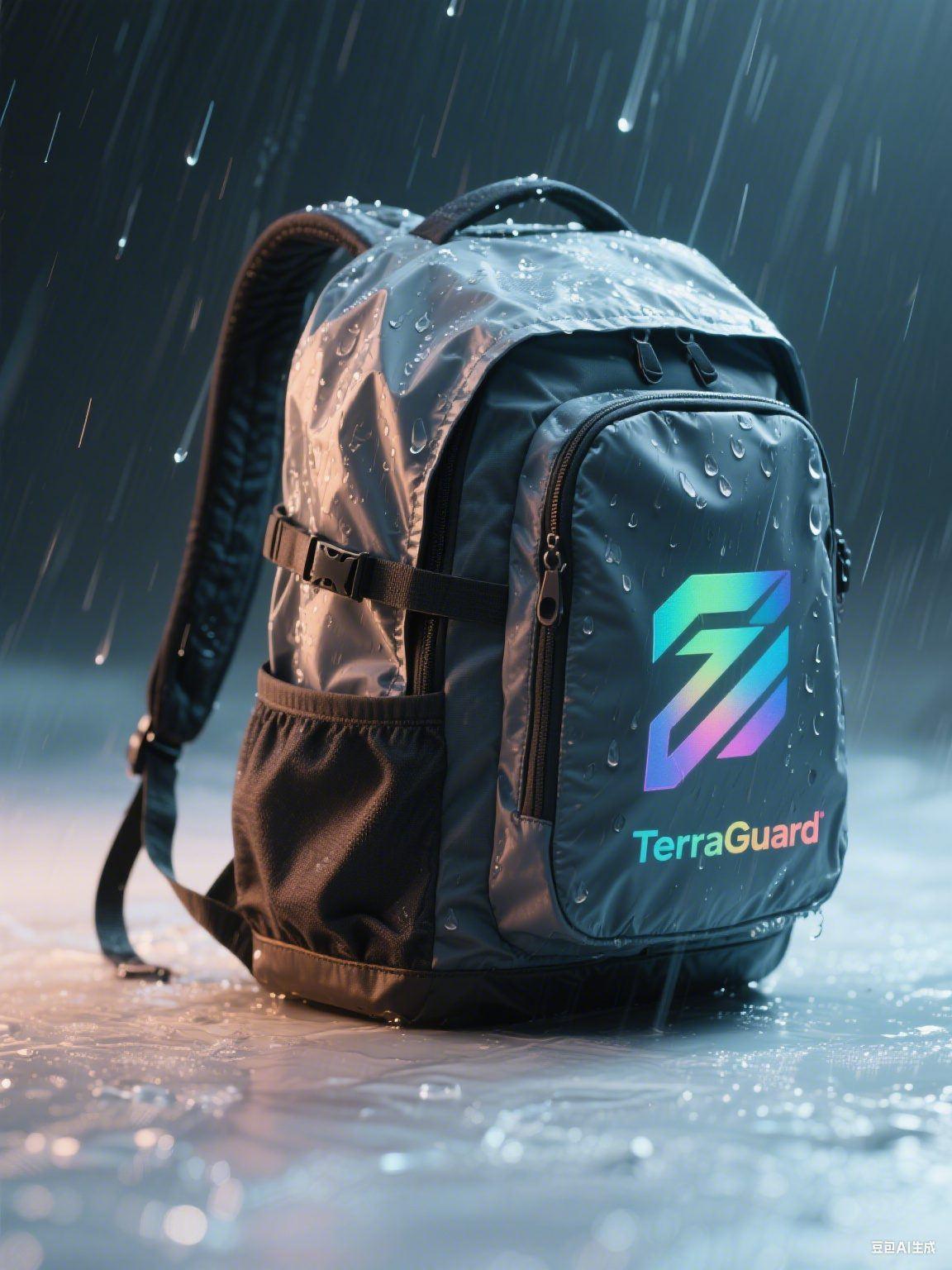
The Shoe Compartment and Wet Pocket Decision
Ask ten backers what they want in a duffle and seven of them will say a separate compartment for shoes or wet kit. It is the most requested feature in the category and it is also the one that most changes what you are producing, so it deserves a decision made deliberately rather than a default yes.
There are three ways to build it, and they sit at very different points on the cost and complexity curve. The first is an internal pocket at one end, open to the main compartment, which is the cheapest and adds only a lining panel and a seam. The second is a separate end compartment with its own zipper, accessed from outside, which is what most people mean by a shoe compartment and which needs its own end panel, its own zipper path and its own gusset. The third is a ventilated external compartment with mesh or eyelets, which adds the ventilation materials and usually a stiffener to stop it collapsing.
From a production point of view, the second and third options are the ones that move the bag out of the simple-build category and into the 12 to 15 working days sampling band. They add a zipper, which is the single most common source of functional defects in bags, and they add a structural seam at a stress point. Neither is a reason to avoid them, but both are reasons to test them properly before the bulk run.
There is a fourth route that is worth considering for a first order, which is to make the compartment a defined option in the specification rather than a permanent feature. If you plan a shoe compartment for the re-order but not for the first run, say so in the brief. The pattern work can be done in a way that accommodates it, and the first run stays simple and fast. Plenty of sport startups launch a clean bag and add the compartment in the second production round once they know what their customers actually say.
For the wet pocket specifically, the material decision matters more than the construction. A wipeable lining such as TPU-coated polyester or a lightweight taffeta costs little and prevents the usual complaint, which is that the wet pocket is not actually waterproof. A compartment lined in the same fabric as the bag will absorb moisture and will generate returns. If you are going to add the feature, add it properly.
Our Custom Duffel Bags With Shoe Compartments and Custom Wet-Dry Gym Bags for Crowdfunding pages take the feature apart in more detail, including the mesh and eyelet options.
Material Choices for Sport Versus Travel Duffles
Sport duffles and travel duffles are often the same shape and should not be the same material. The two use cases pull the specification in different directions, and a startup that serves both should think about which one it is really making.
| Material | Typical weight | Better for | Watch out for |
|---|---|---|---|
| 600D polyester | Mid weight, the category default | Both, and the safest first choice | Generic feel if the finish is plain |
| 900D or 1000D polyester | Heavier, more abrasion resistant | Sport and team kit with heavy use | Weight and stiffness in larger sizes |
| 420D nylon ripstop | Light and strong for the weight | Travel duffles where weight matters | Higher material cost than polyester |
| Canvas, 12oz to 16oz | Heavy, natural hand feel | Lifestyle and premium travel positions | Weight, drying time, colourfastness |
| TPU-coated or laminated fabric | Varies with the base fabric | Wet compartments and weather-resistant travel | Stiffer to sew, needs seam and coating checks |
| Recycled PET fabric | Comparable to virgin polyester of the same denier | Brands with a sustainability claim to make | Availability and certification documentation |
For a sport duffle, abrasion resistance and cleanability come first. The bag will be thrown into a boot, dragged across a floor and stuffed with damp kit, and a light fabric will show it within a season. A 900D or a coated 600D with a wipeable interior is the usual answer, and the extra weight is acceptable because the bag is carried short distances.
For a travel duffle, the calculus reverses because the bag itself has a weight budget. A traveller lifting the bag into an overhead locker cares about the empty weight in a way a gym user does not, and a 60-litre duffle in heavy canvas can weigh over a kilo before anything is put in it. Lighter nylons and ripstops earn their cost here, and so does any construction that removes a stiffener without weakening the base.
There is a shared trap for both. Coated and laminated fabrics, including TPU and PU coatings, are stiffer to sew and they are sensitive to needle heat and to seam pressure. A coating that is fine on a sample can show cracking or marking along a seam at production speed. This is exactly the kind of problem a 500-piece validation run surfaces, and it is why our production team will ask for a coating specification and a seam test before a bulk run on a laminated fabric.
Our Custom Backpack for Crowdfunding: Nylon vs Polyester vs PET page compares the base fabrics on cost, availability and hand feel, and the reasoning carries across to duffles directly.
Carry-On Dimensions and the Travel Startup Constraint
A travel duffle lives or dies on whether it fits the sizer at the gate, and this is a hard constraint rather than a preference. Most airlines publish a carry-on allowance in the region of 55 x 40 x 20 cm including wheels and handles, though the limits vary by carrier and by fare class, and some low-cost carriers are stricter than the majors.
The practical implication for a startup is to design to the published limit and then to a smaller working target. A bag specified at 55 cm will measure 55 cm plus the tolerance, plus whatever the packing does to it, and a rigid base or a stiff handle can push it over. A design target of 50 to 52 cm in length leaves room for the tolerance and for the bag being full, and it is a more useful number to give a production team than the airline maximum.
Softness is a feature here. A duffle that is entirely soft can be compressed into a sizer in a way a wheeled bag cannot, which is part of why duffles are popular with travellers who have been caught out by a strict gate. It is also a reason to avoid over-structuring the bag: a stiff base board and a rigid end panel will hold their shape in the sizer and will fail it, where the same bag without them would pass.
There is a second travel constraint that is easier to overlook, which is the personal-item sizer. Some travellers want a duffle that fits under the seat rather than in the locker, and that target is much smaller, typically around 40 x 30 x 15 cm. If your product proposition is the under-seat bag rather than the overhead bag, the entire size strategy changes, and this should be written into the brief in centimetres rather than implied.
Our Kickstarter Carry-On Bag: Airline Compliance Features page covers the compliance side in more depth, and Travel Backpack vs Carry-On Duffle for Kickstarter compares the two categories as campaign rewards.
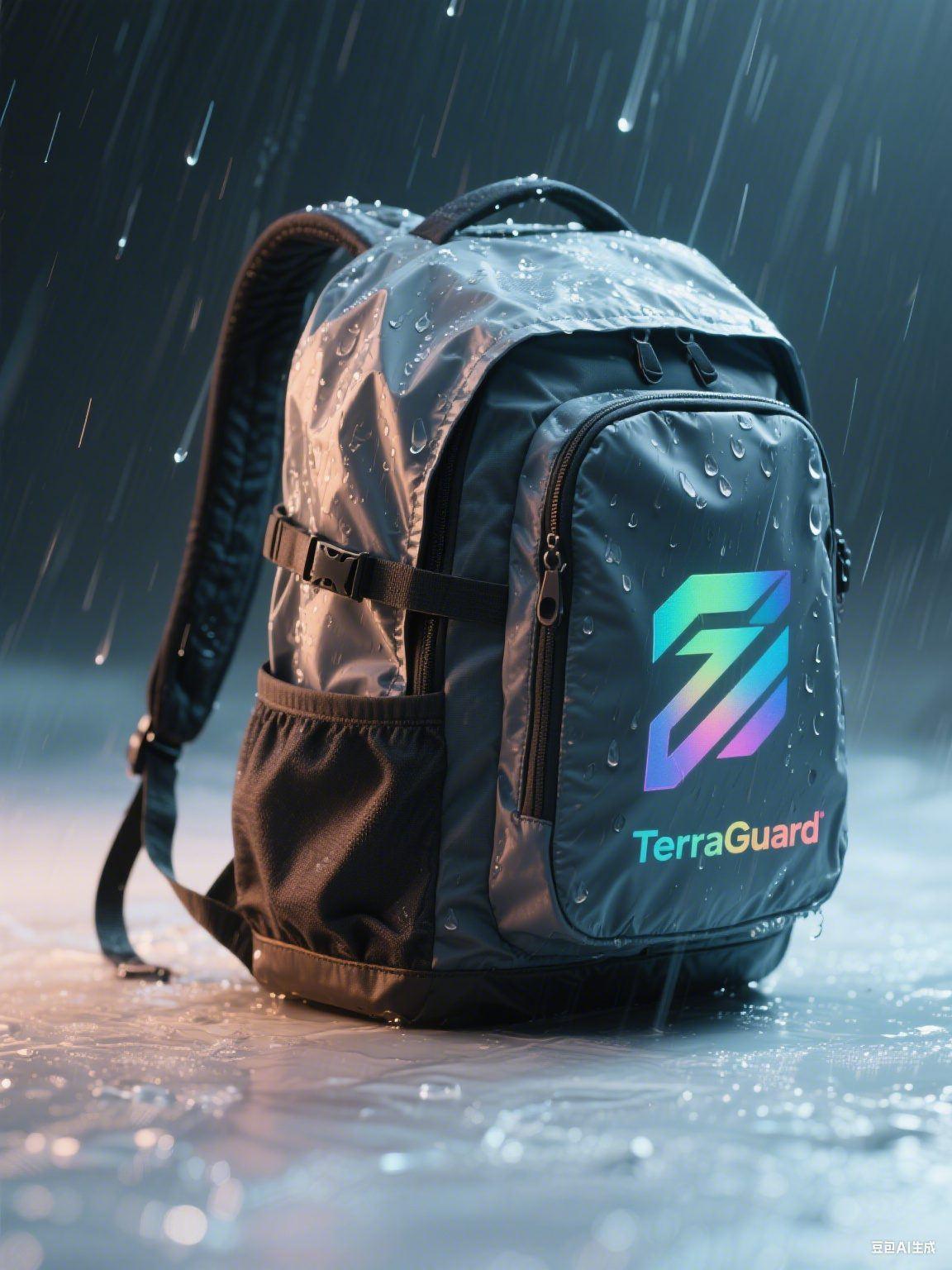
Branding a Duffle: Embroidery, Print and Patches at 500 Pcs
A duffle has a large, flat, uninterrupted side panel, which makes it one of the best branding surfaces in the bag category and one of the easiest to decorate economically. That is an advantage a startup should use, because decoration is where a small brand can look established without buying tooling.
- Embroidery gives the most permanent and most premium result, and it costs per thousand stitches plus a digitising setup per design. It suits a wordmark or a simple emblem on the side panel, and it is the default for team and club kit.
- Heat transfer and screen print give full-colour artwork at a lower unit cost, with a setup per artwork and per position. They suit detailed logos and photographic artwork, and they need a rub test on the finished fabric.
- Woven labels and patches are the cheapest route to a branded look, with a setup per artwork and low minimums. A woven patch sewn onto the side panel reads as a brand and can be changed without touching the bag.
- Rubber or PVC patches give a modern, raised look with a mould cost and a quantity minimum, so they belong to a later stage for most startups.
- Custom moulded zipper pullers are the most expensive option, with tooling and typically a 1,000 to 3,000 pcs minimum per design, and they are a stage three decision.
For a 500-piece first order, the usual recommendation is one embroidery or transfer on the side panel, plus a woven label on the front or on the strap. Two decoration positions are enough for a brand to look finished, and they keep the setup cost proportionate to the order. Adding a printed lining at 500 pcs is possible, but printed fabric carries its own print-lot minimum and it commits you to the artwork for that whole run.
There is a placement point specific to duffles that is worth getting right. Because the bag is often carried by the end handles or worn on the shoulder, the side panel that faces outward on the shoulder is the panel that gets seen. Decide which side that is before you specify the decoration position, because getting it wrong means your logo faces the wearer's body.
Our Custom Duffel Bag Branding: Logo Placement Guide walks through the positions and what each one costs, and Custom Backpack Branding: Logos, Embroidery and Patches covers the decoration methods across bag types.
Team and Club Orders: The Sport Route to Volume
For a sport startup, the most reliable path from 500 pcs to a steady business is the team order, and it changes how you should plan the range. A club, an academy or a gym with 200 members does not order one bag at a time, it orders a kit run, and that order arrives in one specification with one artwork.
The arithmetic is attractive. Two or three clubs placing 250 units each is a 500 to 750-piece order placed by someone else's demand, and it often arrives before you have finished your own campaign. It is also a re-order driver, because clubs reorder when they take on new members, usually on an annual cycle that you can plan around.
The production implications are specific. Team orders want one construction across sizes, which is the scaled-pattern approach already described. They want one artwork applied per club, which means an embroidery digitising setup per club logo and a per-position cost that has to be quoted separately. And they want names or numbers in many cases, which is the feature that most disrupts a small run, because personalisation is done either as a separate embroidery operation per unit or as a numbered patch applied after sewing.
The minimum still applies per style and per colourway, and this is where club orders usually need managing. A club that wants 60 bags in its own colour is asking for something that does not clear 500 pcs. The workable answers are to run the club colour as a shared run with other clubs in the same production window, to use the base colour with club-specific embroidery, or to consolidate several small clubs into one order placed by the brand rather than by each club. All three are normal, and all three are easier to arrange if the brand raises them before the clubs ask.
Our Custom Team Sports Bags for Kickstarter Clubs and Academies page covers the club route in detail, including how to structure the pricing so that a 250-unit club order is profitable.
What a Duffle Costs and Why Size Drives It
Two things drive most of the cost of a duffle, and they are not the ones creators usually guess. The first is fabric area, which scales with the size of the bag. The second is the zipper, which scales with the shape of the opening rather than with the size.
Fabric is straightforward to reason about. A 45-litre duffle uses substantially more shell, lining and webbing than a 25-litre one, and the cost moves roughly with it. This is the main reason a bigger duffle costs more, and it is the reason a size range has a price ladder that customers understand.
The zipper is less obvious and often more important. A straight top zipper across a 40 cm opening is one length of tape with one slider. A horseshoe or D-shaped opening that runs down both ends is a much longer zipper, needs two sliders, and takes considerably longer to sew because it changes direction at corners. A bag with a D-opening can carry a zipper cost two or three times that of a straight-opening bag of the same volume, plus the labour to install it.
Then there are the features. A shoe compartment adds a zipper and a panel. A moulded base adds a component and a stiffener operation. A padded shoulder strap adds a pad and its own webbing run. A trolley sleeve adds a panel and two seams. None of them is expensive individually, and they add up quickly when a startup asks for all of them on a 500-piece first order.
The cost behaviour across quantities is the same as in every bag category. Moving from 500 to 1,500 pcs brings the largest saving, mostly from material purchasing and absorbed setup rather than from labour. Anyone planning a duffle range should assume the first 500 will be the most expensive units they ever make, and should price the campaign around that rather than around a volume price they have not yet earned. Our Custom Duffle Bags for Kickstarter: Versatile Reward Picks page looks at the reward-tier pricing side.
How to Write a Duffle Brief That Gets an Accurate Quote
A duffle quote is only as good as the measurement list behind it. Bags are quoted from dimensions and components, and a brief without numbers comes back as an estimate with a wide range attached, which is not much use for setting a campaign price.
- State the dimensions in centimetres, length, height and depth, plus a tolerance. Say 50 x 28 x 26 cm plus or minus 1 cm rather than medium.
- State the capacity you are claiming, and confirm whether the measured size and the claimed capacity need to agree on the campaign page.
- Name the shell, lining and base materials by denier and coating, and say whether a recycled or branded fabric is required.
- Name the zipper path, straight or D-shaped, and the zipper type and size, because this is the biggest single cost variable.
- List the features individually: shoe compartment, wet pocket, end pockets, internal organisers, trolley sleeve, padded strap, base studs.
- Specify the decoration, method, position, size in centimetres, and number of positions, and attach the artwork.
- Give the quantity per size and per colour, not a total, and say which sizes share a pattern.
- Say what the constraints are, such as an airline carry-on limit or a target retail price, because those change the recommendations.
That last item is the one that improves a quote most. A brief that says the bag must fit a 55 x 40 x 20 cm sizer and land under a target cost will get a design recommendation built around those two constraints. A brief that says please quote a 45-litre duffle will get a technically correct quote for a bag that may not fit the sizer or the price.
It is also worth saying what you will do if the first quote is too high. A production team that knows the target price can come back with two alternatives, usually a simpler feature set and a different material, whereas a team that does not will simply quote and wait. Our programme coordinator will always ask which of the features are essential and which are negotiable, because that is where the saving usually is.
Finally, allow for the physical sample before you commit. A duffle is simple enough that the temptation is to skip straight to bulk on the strength of a rendering. The sample is where you discover whether 45 litres looks like 45 litres, whether the handles are comfortable loaded, and whether the shoe compartment is big enough for the shoes it is meant for. Those are not things a rendering can tell you.
Send us your dimensions, materials and feature list and we will come back with a 500-pcs duffle quote and two alternatives at lower cost. Start at /contact-quote/.
Frequently Asked Questions
Is a duffle a good first product for a bag startup?
Usually yes. It has no frame, no moulded back panel and no complex harness, so it samples inside 6 to 10 working days and carries fewer defect risks than a technical backpack. It also photographs as a large, generous product, which helps a reward tier look worth the pledge.
Does a second duffle size mean a second 500-pcs minimum?
It depends whether the sizes share a construction. Two sizes that are the same bag scaled in length, sharing end panels, handles, straps and trim, can be planned as one style at 500 pcs split across the sizes. Two sizes with different bases, zipper paths or handle attachments are two styles and need 500 pcs each.
Can I offer three sizes on a 500-piece order?
Yes, if they are scaled versions of one pattern and share their components, which is how a small, medium and large club kit range normally works. If each size has its own features, each becomes its own style and the order moves to 1,500 pcs.
How much does a shoe compartment add to a duffle?
It adds a zipper, an end panel, a gusset and a structural seam, and if it is ventilated it adds mesh or eyelets and usually a stiffener. It is the feature that most often moves a duffle from the 6 to 10 working day sampling band into the 12 to 15 working day one.
What material should a sport duffle use?
Abrasion resistance and cleanability come first, so 900D or a coated 600D polyester with a wipeable interior is the usual answer. The bag will be thrown into a boot and stuffed with damp kit, and a light fabric will show that within a season.
What material should a travel duffle use?
Weight comes first, because the traveller lifts the bag into an overhead locker. Lighter nylon and ripstop fabrics earn their extra cost in larger sizes, and over-structuring the bag works against it, since a soft duffle can be compressed into a sizer where a rigid one cannot.
What size is a carry-on duffle?
Most airlines publish a carry-on allowance around 55 x 40 x 20 cm, but the limits vary by carrier. The safer design target is 50 to 52 cm in length, which leaves room for the production tolerance and for the bag being full.
What is the cheapest way to brand a duffle at 500 pcs?
A woven label or a woven patch, because it carries a setup per artwork rather than a tooling or mould cost. Embroidery is the most premium option and costs per thousand stitches plus digitising, and custom moulded pullers should wait until volumes justify the tooling.
Can a club order 60 bags in its own colour?
Not as a standalone order, because 60 pcs does not clear the 500-pcs minimum. The workable options are to run the club colour in a shared production window with other clubs, to use the base colour with club-specific embroidery, or to consolidate several small clubs into one order.
What drives the cost of a duffle most?
Fabric area and the zipper. Fabric scales with the size of the bag, and the zipper scales with the shape of the opening, so a D-shaped opening costs several times a straight one of the same volume in both materials and labour.
How long does a 500-pcs duffle order take?
Allow 6 to 10 working days for sampling on a standard build, or 12 to 15 for a complex one, then 35 to 50 days for bulk. Freight and customs clearance to your destination sit on top of both.
Should I add a trolley sleeve to the first run?
Usually not. It adds a panel and two seams to every unit, and it is a feature that matters to a subset of travellers. It is a good candidate for the second production round once you know what your customers ask for.
People Also Ask
What is the MOQ for duffle bags?
500 pcs per size and per colourway. Sizes that share one construction can be combined into a single 500-pcs order.
Why are duffles easy to produce?
They have no frame, back panel or harness. That keeps sampling short and removes several of the places where a small run goes wrong.
Can I get two sizes in one 500-pcs order?
Yes, if they are scaled from one pattern and share their components. Different constructions mean 500 pcs each.
What size duffle is cabin approved?
Design to about 50 to 52 cm in length rather than the 55 cm maximum, so there is room for tolerance and for a full bag.
Is a shoe compartment worth the cost?
Backers ask for it constantly. Build it as a separate zipped end compartment with a wipeable or ventilated lining, and test it before bulk.
What fabric is best for a gym duffle?
900D or coated 600D polyester with a wipeable interior. Abrasion resistance and cleanability matter more than weight.
How do I brand a duffle cheaply?
A woven label plus one embroidery or transfer position. Save moulded pullers and rubber patches for a larger order.
Can small sports clubs order their own colour?
Only at 500 pcs. Below that, share a production window, use a base colour with club embroidery, or consolidate clubs.